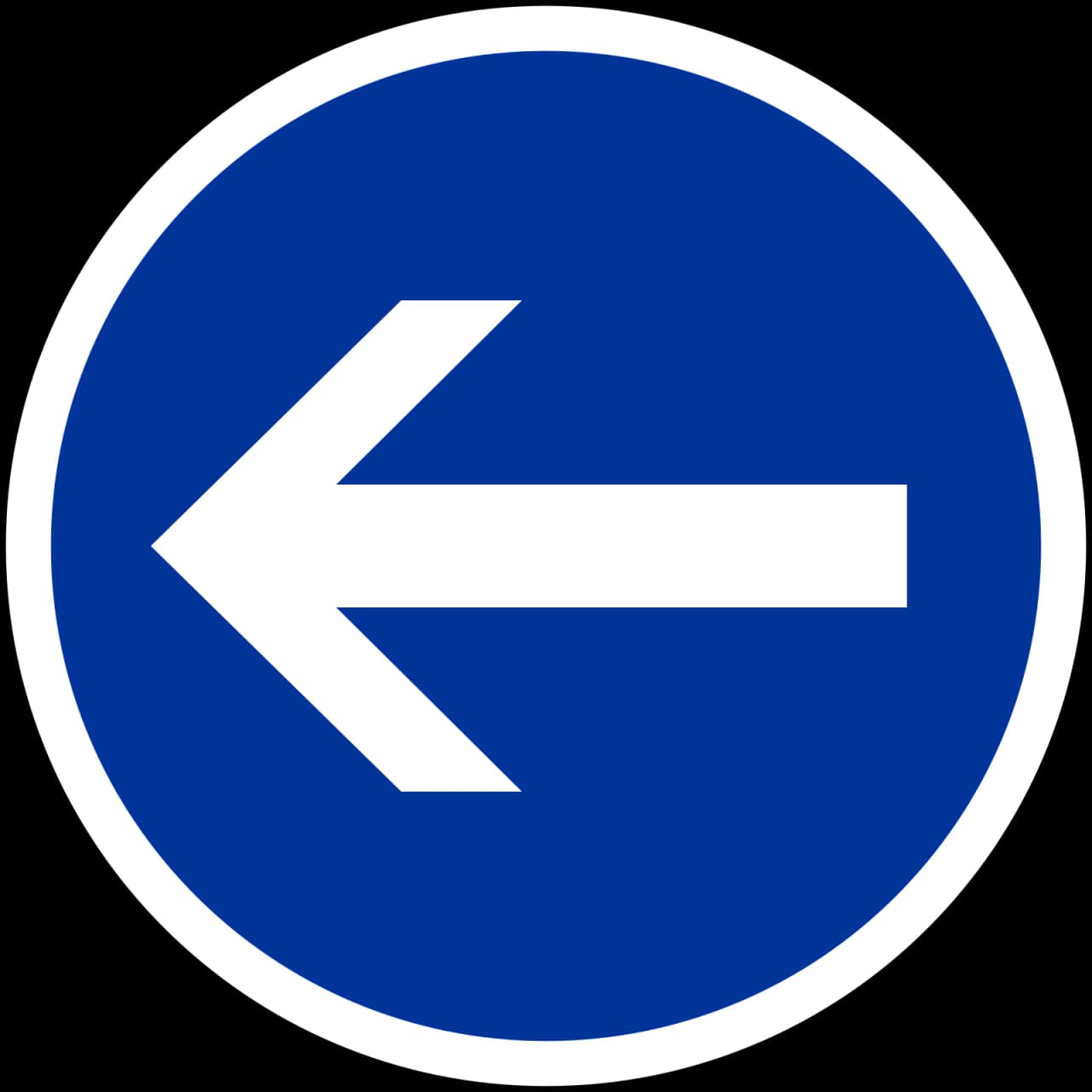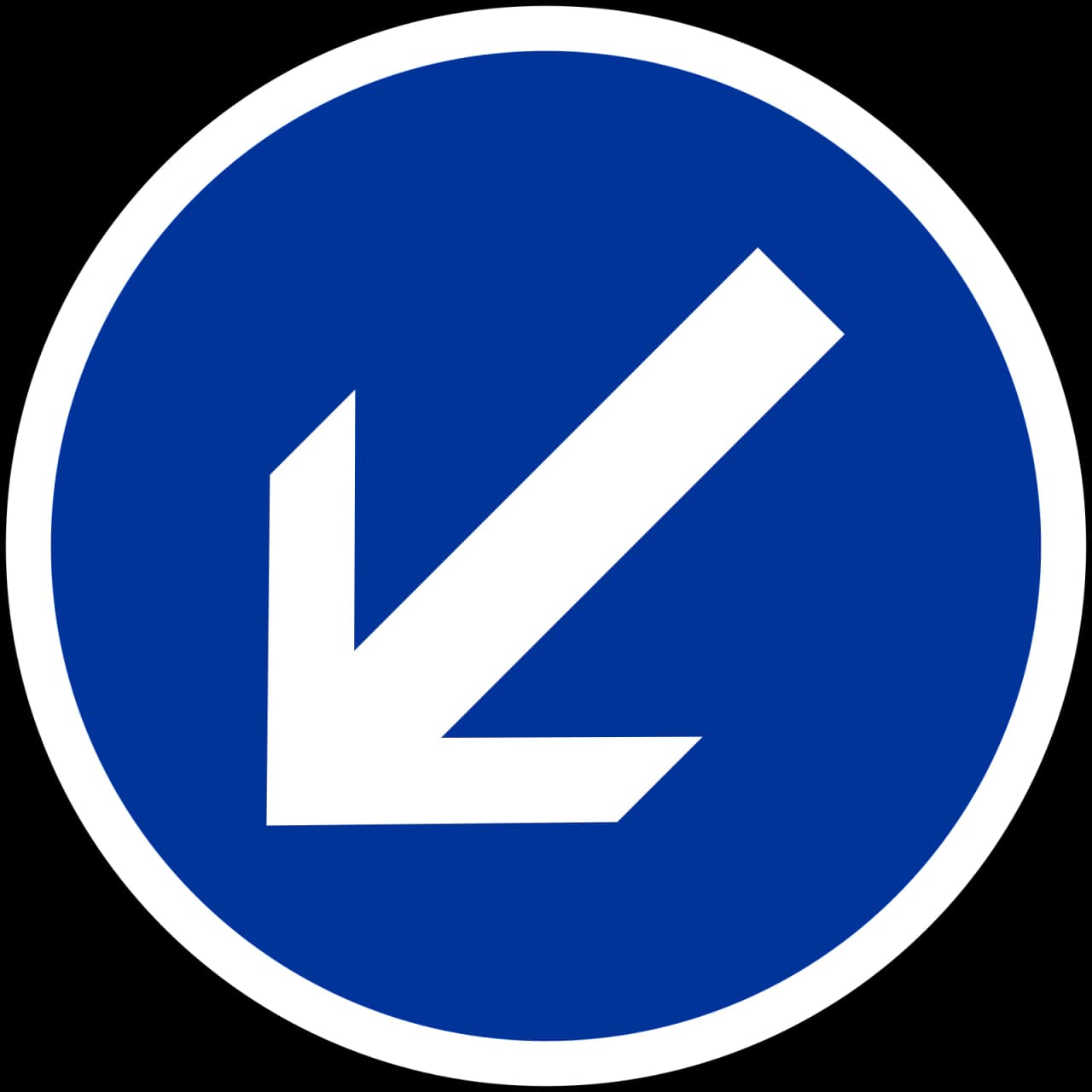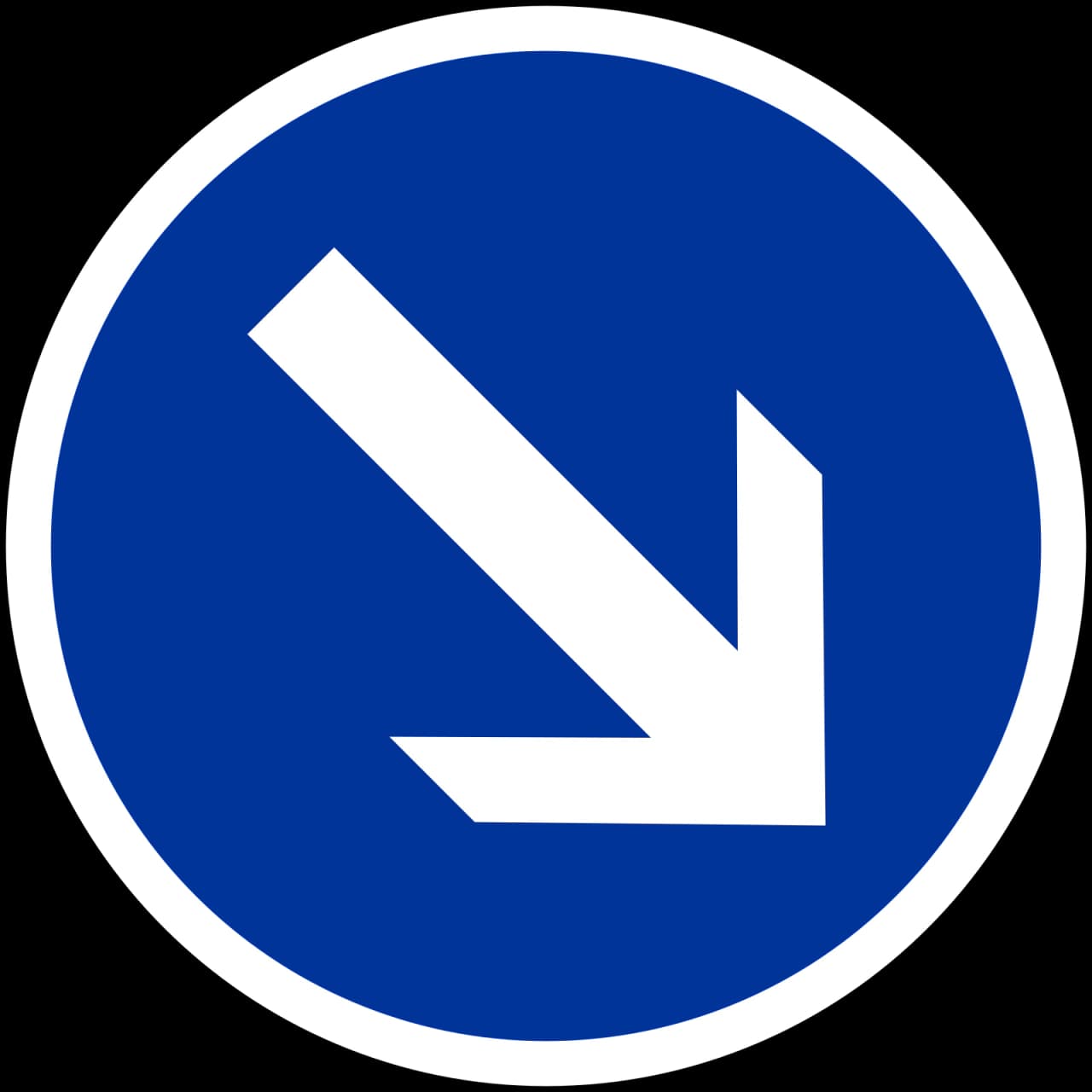
The B21e sign is a mandatory traffic sign in France, meaning you must follow the direction indicated, either left or right. These signs provide a positive instruction, unlike warning signs that advise caution. You must comply with this sign to ensure orderly traffic flow and safety, especially in complex junctions or specific road layouts. Always check your mirrors, signal, and make the required manoeuvre smoothly when you encounter this directive.
Mastering the 'Turn Left or Right' (B21e) sign is essential for your French driving theory test revision. Understanding this mandatory instruction ensures correct navigation and adherence to French traffic rules, vital for your upcoming theory exam.
Mandatory signs tell road users what they must do rather than what they must avoid. This sign can control direction of travel, required lanes, special routes for buses or trams, pedestrian or cycle facilities, snow chains, or minimum speed. A learner should read the sign early, confirm whether it applies to their vehicle, and follow the required movement smoothly. Official French sign code: B21e.
"Turn left or right" gives a positive instruction that the driver or named road user must follow. It may require a direction, lane, path, minimum speed, equipment, or reserved route.
Get clear, practical answers to the most common questions about the B21e - Turn left or right road sign. Learn how the sign works, what rules it represents, and how it affects real driving situations. This FAQ strengthens your understanding and supports accurate decision making for the French driving theory exam in France.
The B21e sign is a mandatory instruction meaning you must turn either left or right as indicated by the sign or road markings. It is not optional; you are required to follow the direction shown.
You must obey the B21e sign from the point where it is displayed, or from where road markings and the layout of the road clearly show the required direction. The obligation starts as soon as you see and understand the sign's instruction.
A common trap is confusing this mandatory sign with an informational sign. You must follow the instruction; choosing a different path is not allowed and could lead to a penalty or an accident. Also, failing to react promptly and smoothly after seeing the sign late can be a mistake in the theory exam.
No, you cannot choose not to turn if the B21e sign indicates left or right. This is a mandatory sign, and you are legally obliged to follow the specified direction. If you cannot comply, you may need to find an alternative route.
Generally, the B21e sign applies to all vehicles unless it is accompanied by a pictogram indicating a specific road user, such as a bus or a bicycle. Always check for such specific indicators to confirm if the instruction applies to you.
A clear reference image of the B21e - Turn left or right road sign used in France.
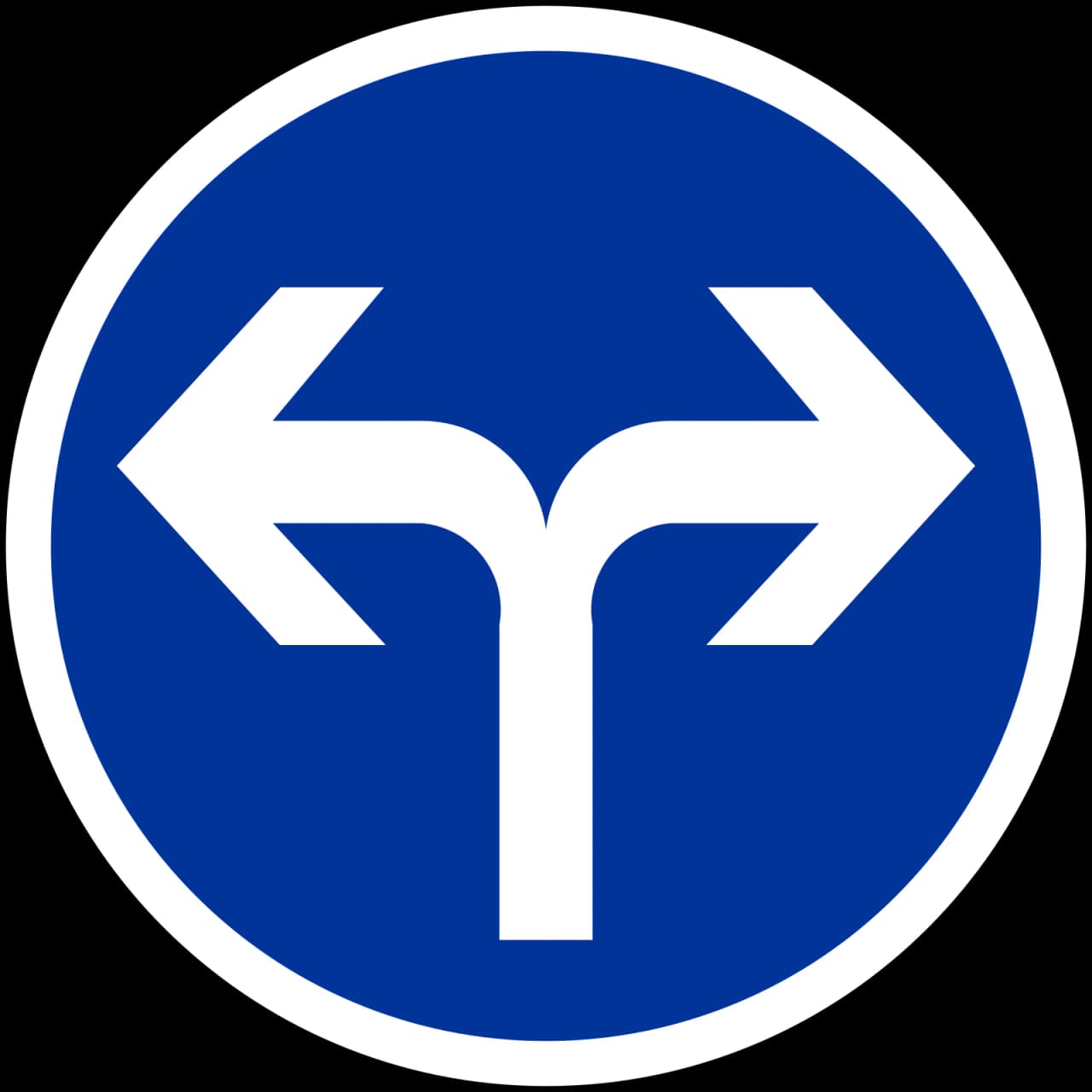
The B21e - Turn left or right road sign may also be known by these alternative names or terms.
The B21e - Turn left or right road sign is part of the France Mandatory Signs category, which groups together signs with similar rules and functions.
Comparing signs like 'Turn left or right' with others in the mandatory signs category sharpens your recall and reduces confusion. Effective traffic sign comparison is key for passing your theory test revision.
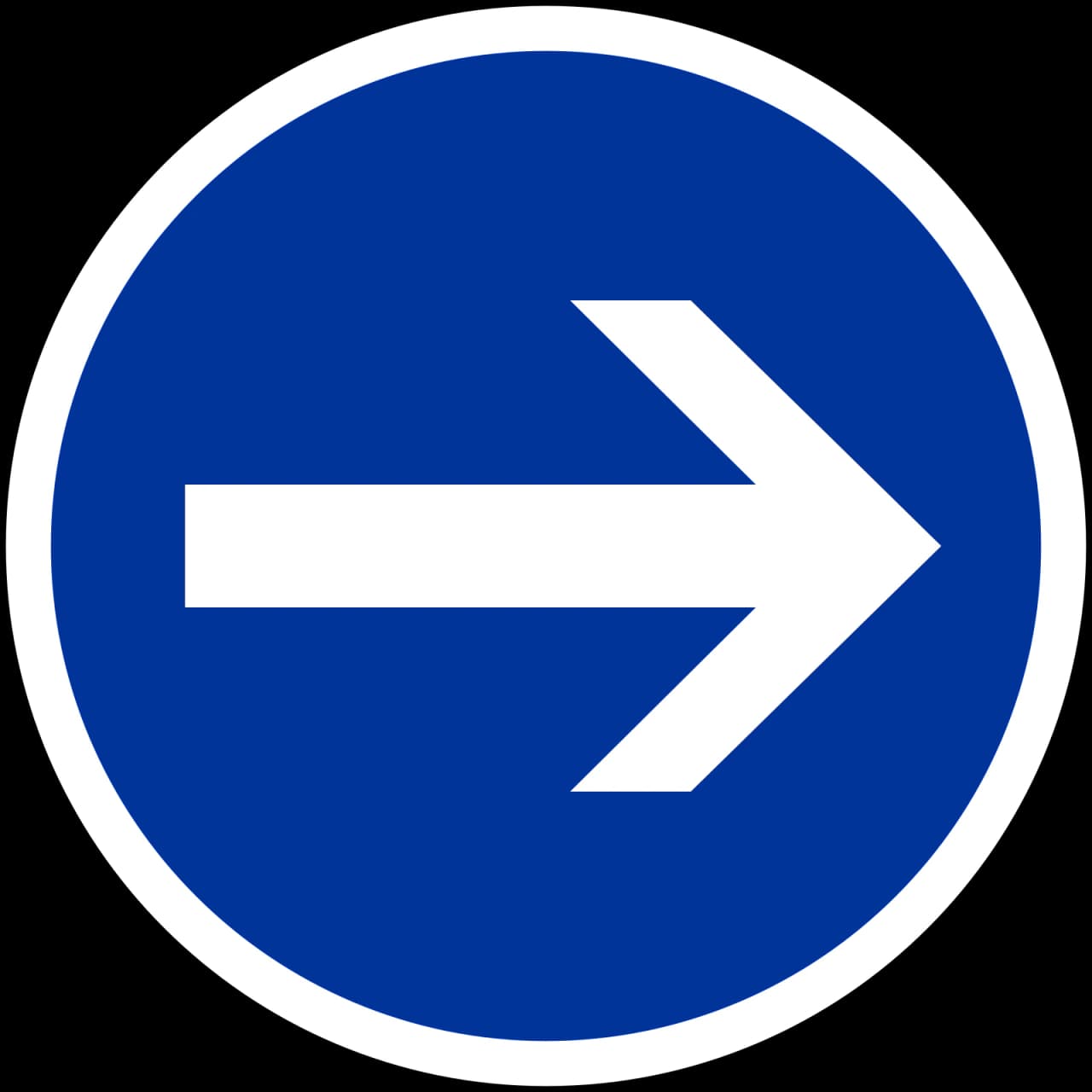
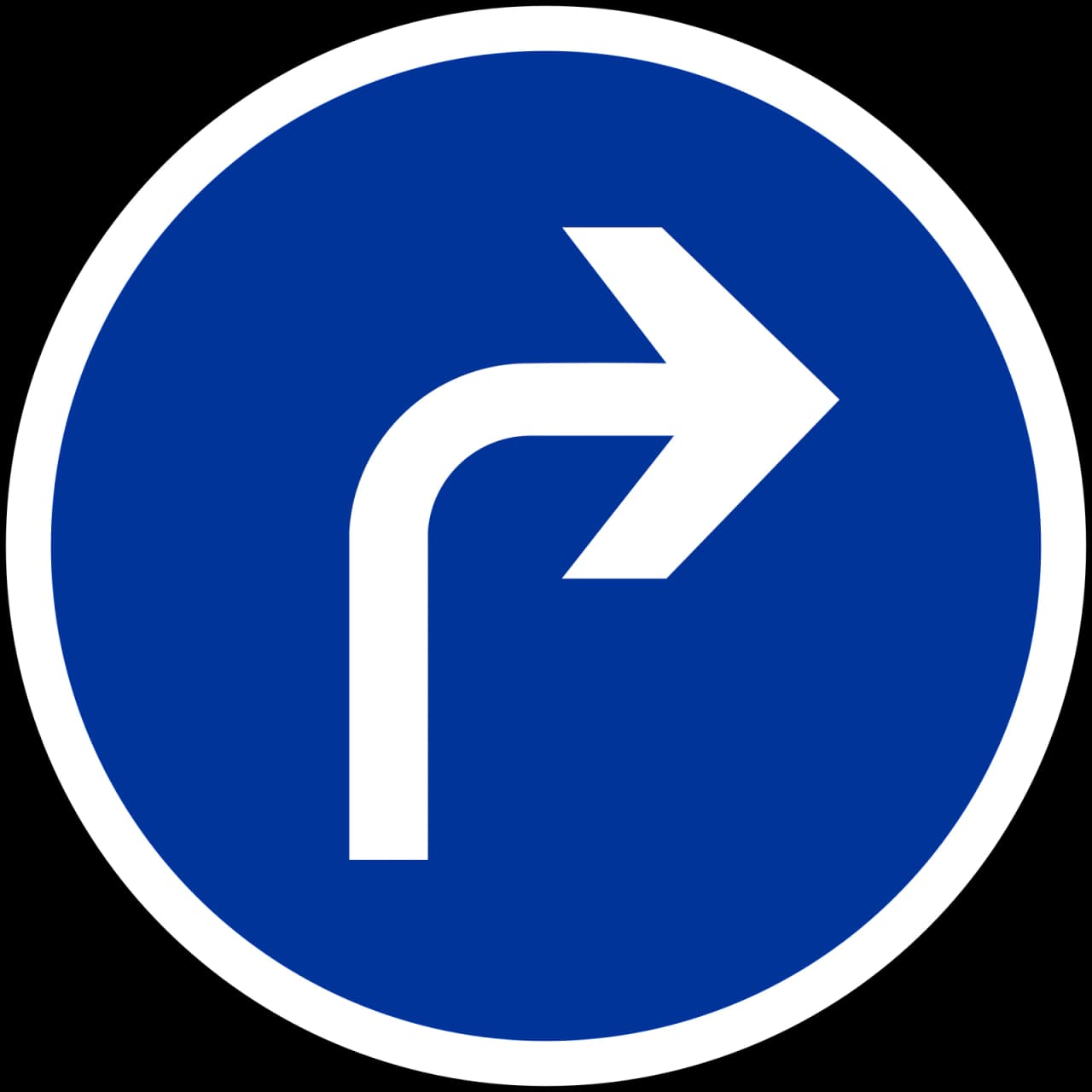
The B21-1 'Turn Right' sign: your mandatory direction in France.
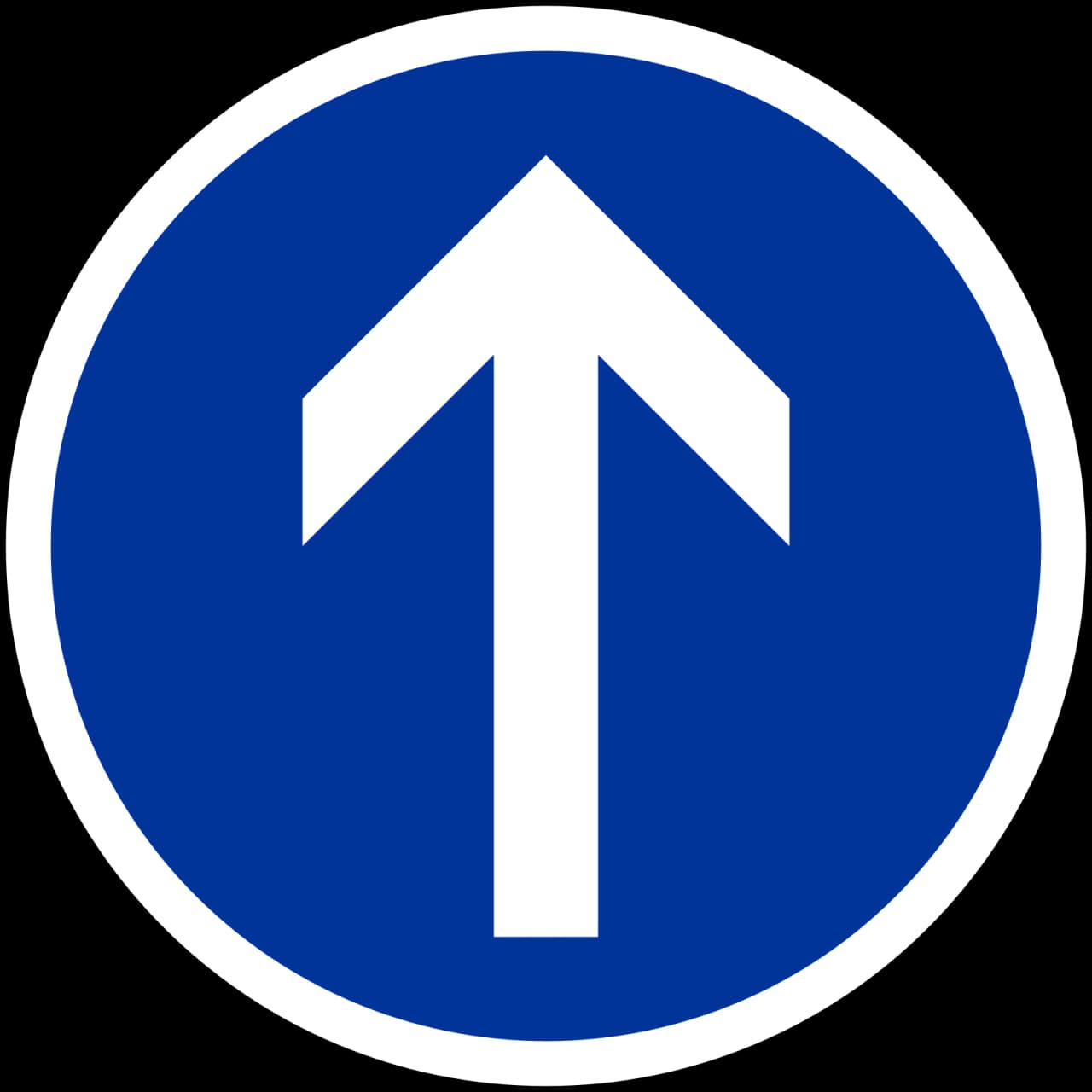
The B21b 'Ahead Only' Sign: A Mandatory Direction You Must Follow
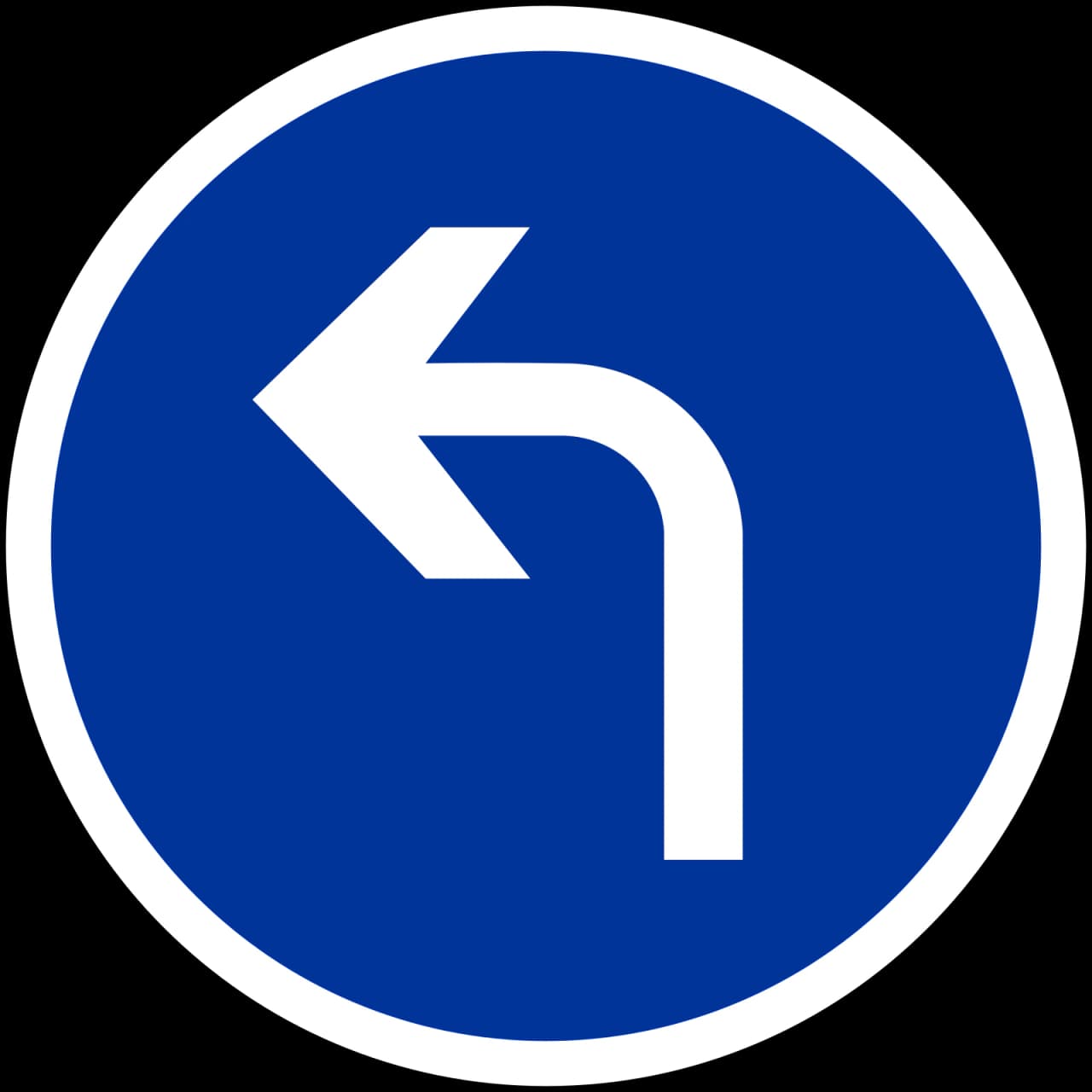
The B21c 'Turn Left Ahead' Sign: Your Mandatory Direction
Now that you've reviewed the full list of French road signs, enhance your understanding. Explore signs grouped by specific categories for deeper insights, test your recognition with practice questions, and solidify your knowledge for the Code de la route exam.
Browse All French Road Signs