
This unit delves into the critical aspects of controlling your speed and stopping safely on a motorcycle. You'll learn the nuances of braking systems, how to choose appropriate speeds for various conditions, and the vital importance of maintaining a safe distance from other vehicles. Mastering these skills is fundamental for safe riding and crucial for success in the German motorcycle theory exam.
Browse all lessons that make up Braking, Speed Choice, Following Distance and Emergency Control. Each lesson focuses on specific topics, learning objectives, and core concepts, helping you build essential knowledge and follow a clear, structured progression toward your study goals in Germany.
This lesson introduces the fundamentals of a motorcycle's braking system, emphasizing the dominant role of the front brake due to forward weight transfer during deceleration. It explains how to apply both front and rear brakes in a coordinated manner to achieve maximum, stable stopping power. The content also covers how to modulate brake pressure smoothly and progressively to avoid losing traction and locking a wheel.
This lesson explains the two components of total stopping distance: reaction distance and braking distance. It teaches learners how factors like speed, road conditions, and rider attentiveness influence how far the motorcycle travels before coming to a complete stop. By understanding these principles, riders can make better decisions about safe speeds and following distances to ensure they can stop in time.
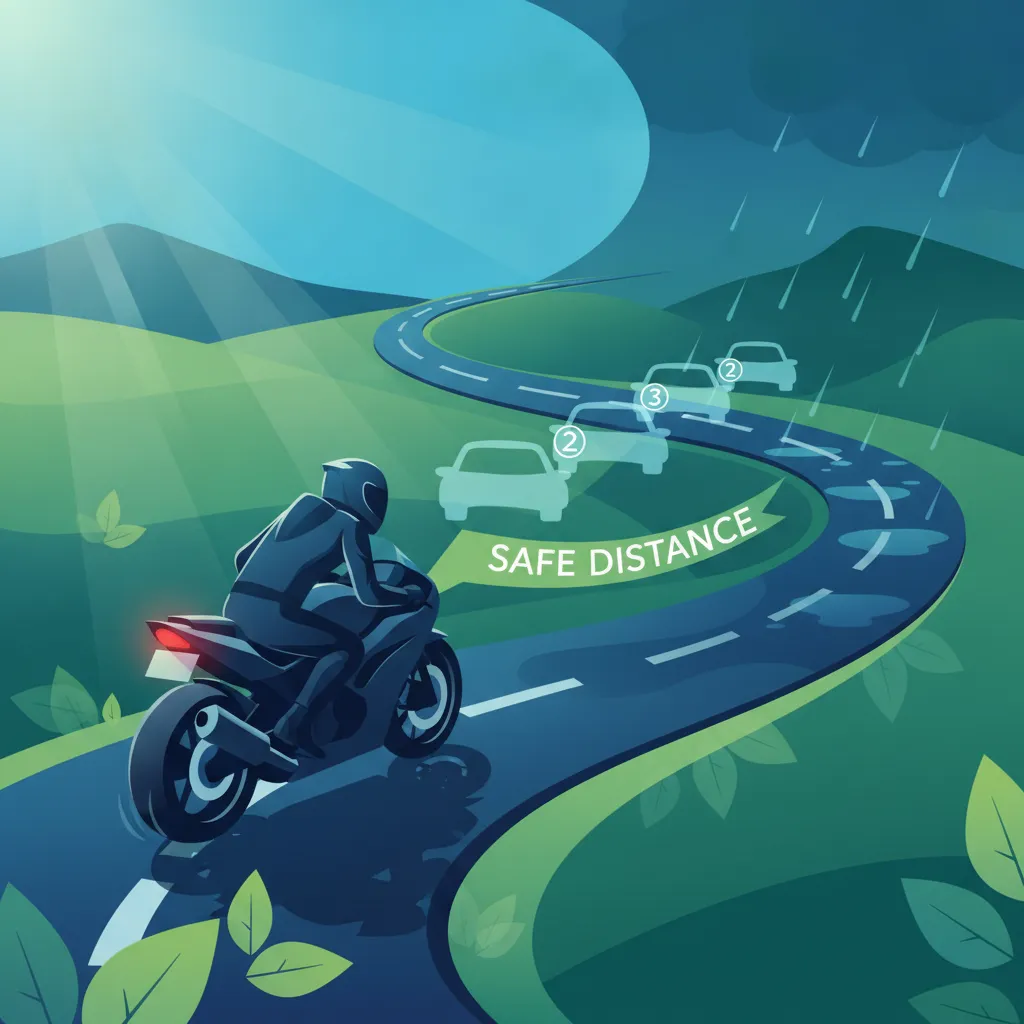
This lesson focuses on the critical safety practice of maintaining an adequate following distance from the vehicle ahead. It explains how to use the 'two-second rule' as a simple and effective method for judging a safe gap in ideal conditions. The content also covers why this distance must be increased significantly in adverse weather or poor visibility to allow for longer reaction and braking times.
This lesson provides instruction on how to react and perform an emergency stop in a critical situation. It covers the technique of applying maximum braking force progressively and firmly without locking the wheels. For motorcycles equipped with an Anti-lock Braking System (ABS), the lesson explains how the system works and how the rider should respond when it activates to maintain steering control.
Explore high-intent keywords and long-tail search topics learners use when researching Braking, Speed Choice, Following Distance and Emergency Control. These terms reflect how people search for reliable study materials, structured explanations, and unit-level theory preparation support in Germany.
Find clear answers to the most common questions learners ask about Braking, Speed Choice, Following Distance and Emergency Control. Understand how the unit is organized, what learning goals it supports, and how it contributes to your study progression with structured explanations and practical guidance tailored for learners in Germany.
The front brake provides the majority of the stopping power, typically around 70-80%, due to weight transfer during deceleration. The rear brake contributes to stability and can help modulate speed, but relying solely on it is inefficient and can lead to skidding. Proper use involves applying both brakes simultaneously, with a stronger emphasis on the front.
The two-second rule is a guideline for maintaining a safe following distance. To apply it, pick a fixed point (like a sign or road marking) the vehicle ahead passes. Count 'one-thousand-one, one-thousand-two'. If you pass the same point before you finish counting, you are too close. This allows ample time to react and brake safely, especially considering a motorcycle's stopping capabilities.
Choosing the right speed is crucial because it directly impacts your ability to react to hazards, your braking distance, and your control over the motorcycle, especially in corners or on varied surfaces. German traffic law requires riders to adapt their speed to conditions, visibility, and traffic, not just the posted limit. Riding too fast reduces reaction time and increases the severity of potential accidents.
If your motorcycle is equipped with ABS (Anti-lock Braking System), you should apply firm and consistent pressure to both the front and rear brake levers/pedals during an emergency stop. Do not pump the brakes. The ABS will prevent wheel lock-up, allowing you to maintain steering control while achieving maximum braking force. You might feel pulsing through the controls, which is normal.
Road conditions significantly impact stopping distance. Wet roads can double stopping distances, while gravel, sand, or ice can dramatically increase them or make effective braking impossible. Always anticipate reduced grip and increase your following distance and reduce your speed accordingly on slippery or uneven surfaces. The theory exam frequently tests understanding of these variations.
While German law emphasizes maintaining sufficient distance to avoid collision, it doesn't specify a fixed 'meter' rule for all situations. However, the two-second rule is the standard recommended practice taught for theory preparation, as it's adaptable to speed and conditions. The key principle is always to ensure you have adequate space to stop safely if the vehicle ahead brakes suddenly.
All included lessons
Lessons in Braking, Speed Choice, Following Distance and Emergency Control
See who benefits most from studying Braking, Speed Choice, Following Distance and Emergency Control. This overview explains how the unit supports different learning needs, what level of knowledge is helpful before starting, and how it fits into the overall study path in Germany.
This unit is essential for all learner motorcyclists in Germany preparing for their A1, A2, or A licence theory tests. It’s particularly beneficial for those who need to solidify their understanding of vehicle control fundamentals, safe speed management, and hazard avoidance techniques crucial for passing the exam and riding safely.

Ready to prepare for your German driving licence theory exam? Dive into our carefully structured courses to build your knowledge effectively. Select a course that matches your licence category and begin your systematic study path today for confident exam success.
Browse Driving Theory CoursesExplore all units and lessons included in this driving theory course.
Ready to prepare for your German driving licence theory exam? Dive into our carefully structured courses to build your knowledge effectively. Select a course that matches your licence category and begin your systematic study path today for confident exam success.
Browse Driving Theory Courses