
This lesson guides you through the physics of stopping a motorcycle, a critical skill for both your German theory exam and real-world safety. You will learn how to calculate reaction and braking distances while understanding how speed and conditions impact your ability to stop safely.
Lesson content overview
For any rider in the German Motorcycle Licence Theory Course, mastering the concepts of stopping distances and speed perception is fundamental to safe and responsible motorcycling. The ability to bring your motorcycle to a complete and controlled stop within the available clear road space is not merely a skill; it is a critical safety principle and a legal obligation. This lesson delves into the components that make up total stopping distance, exploring how both human factors and vehicle dynamics interact with environmental conditions to determine how far your motorcycle will travel before coming to a halt.
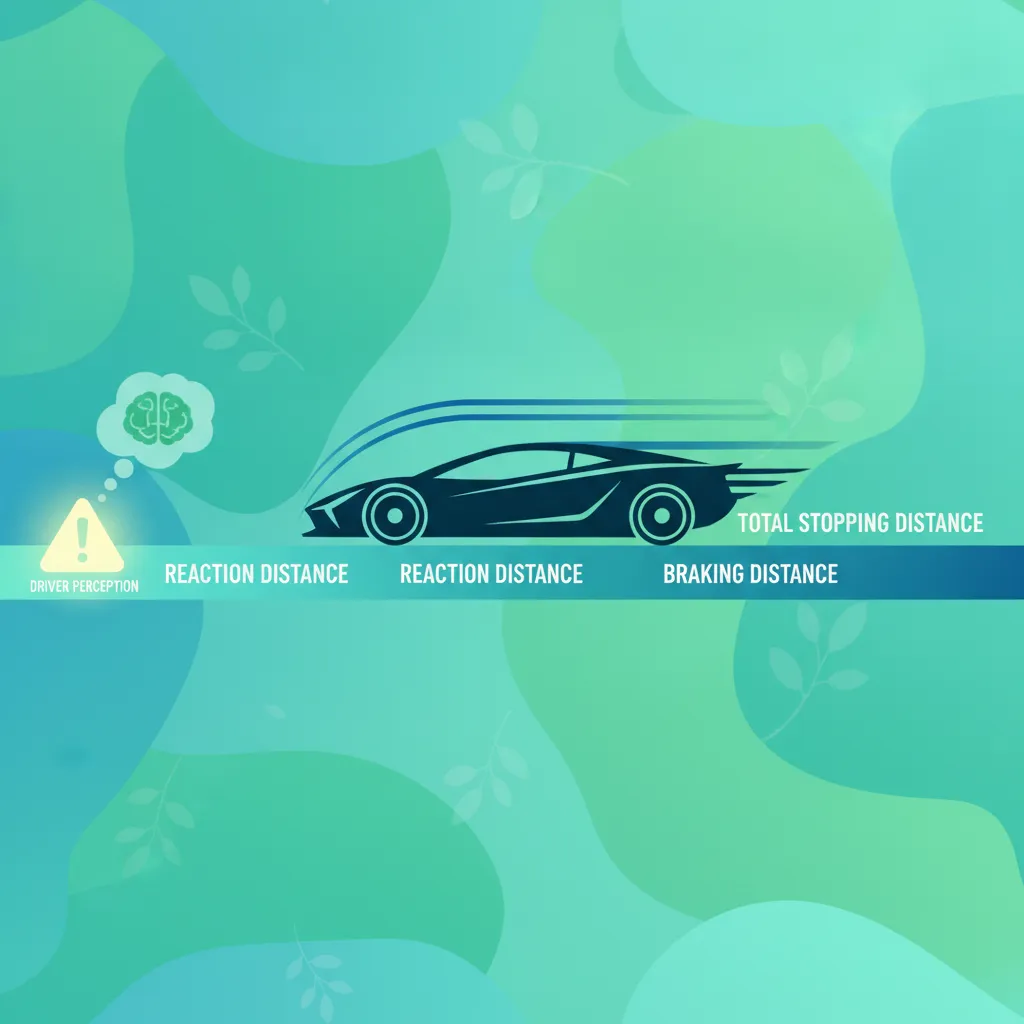
Every time you ride, you are constantly making decisions about speed and distance. Whether approaching a junction, following another vehicle, or reacting to an unexpected hazard, your ability to stop safely is paramount. Total stopping distance is the sum of two distinct components: the distance covered while you react to a hazard (reaction distance) and the distance covered while your motorcycle decelerates to a stop after the brakes are applied (braking distance). A thorough understanding of these concepts enables you to select appropriate speeds, maintain safe following distances, and respond effectively in emergencies, thereby drastically reducing the risk of collisions.
To grasp the full picture of stopping, it is essential to understand its two main parts. Each component is influenced by different factors and behaves differently with changes in speed.
Reaction distance is the measurement of how far your motorcycle travels from the moment a hazard is perceived until you actually begin to apply the brakes. It is a direct reflection of human response latency and can be broken down into two subcategories: perception time and decision-making time. Perception time is the duration it takes for your brain to register and understand a hazardous event (e.g., seeing brake lights ahead). Decision-making time is the interval needed to decide on an appropriate action (e.g., to brake, swerve, or both).
The distance a vehicle travels during the rider’s perception and reaction time before initiating braking.
Several factors can influence a rider's reaction time, including attentiveness, fatigue, distractions (e.g., mobile phone use, elaborate dashboard displays), alcohol or drug impairment, and even emotional state. Under ideal conditions, an average human reaction time is often approximated at around one second. However, this can easily extend to two seconds or more under less than optimal circumstances.
Reaction distance increases linearly with speed. This means if you double your speed, you double your reaction distance. For practical purposes, a simple rule of thumb in Germany (often taught as the "reaction distance formula") approximates reaction distance by multiplying the first digit of your speed (in km/h) by 3.
For example:
This approximation assumes a reaction time of approximately one second. If your reaction time is longer due to fatigue or distraction, your actual reaction distance will be significantly greater. A rider traveling at 100 km/h covers approximately 28 metres during a single second of reaction time (100 km/h ≈ 27.78 m/s). This illustrates how quickly distances accumulate even before any braking action begins.
Braking distance is the distance your motorcycle travels from the moment you apply the brakes until it comes to a complete stop. Unlike reaction distance, braking distance is governed by the laws of physics and the physical capabilities of the motorcycle and road surface. It represents the deceleration capability of your machine.
The distance needed to bring the motorcycle to a complete stop after the brakes are applied.
Braking distance increases quadratically (exponentially) with speed. This means that if you double your speed, your braking distance will increase fourfold (2 squared). If you triple your speed, braking distance increases ninefold (3 squared). This quadratic relationship is critical to understand, as it underscores why high speeds are so dangerous: they disproportionately extend the distance required to stop.
The condition of the road surface is another major factor. On dry asphalt, braking distances are relatively short due to high friction. However, on wet roads, tire grip is significantly reduced, potentially doubling or even tripling the braking distance. Snow, ice, gravel, or loose debris can extend braking distances even further, making stopping extremely difficult.
For motorcyclists, several additional factors influence braking distance:
For example, a motorcycle braking from 100 km/h on dry asphalt might have a braking distance of around 40 metres. On a wet road, this could easily extend to 80 metres or more. This dramatic increase highlights the necessity of adjusting your speed for prevailing conditions.
Total stopping distance is the sum of your reaction distance and your braking distance. It is the overall distance your motorcycle will travel from the moment you identify a hazard until you come to a complete stop. This combined metric provides the most accurate safety benchmark for speed selection and following distance.
The sum of reaction distance and braking distance; the full distance required to stop safely.
Understanding total stopping distance has direct implications for your riding strategy:
For instance, at 100 km/h on dry roads, your total stopping distance might be approximately 68 metres (28 m reaction + 40 m braking, using the examples above). This distance can easily exceed the length of two large articulated lorries. Underestimating this distance is a common and dangerous mistake.
Speed perception refers to a rider's visual and cognitive estimation of their own speed and the speed of other objects. This perception is influenced by various cues such as visual flow, the apparent size of objects, and distance markers. While the speedometer provides an accurate reading, our brains can sometimes misinterpret how fast we are truly moving, especially on a motorcycle.
A rider’s visual and cognitive estimation of speed, influenced by objects, distance markers, and environmental cues.
Motorcyclists are particularly susceptible to misjudging speed because of the open environment and lack of a surrounding vehicle body. At higher speeds, the landscape appears to rush past more quickly, but this "visual flow" can be deceptive.
To counteract misleading speed perception, riders must actively process environmental cues:
German road traffic regulations (StVO – Straßenverkehrs-Ordnung) place a strong emphasis on maintaining safe speeds and distances. These are not merely suggestions but mandatory requirements designed to ensure road safety.
According to German law, drivers and riders must maintain a safe distance from the vehicle ahead, allowing sufficient space to react and brake safely. While no absolute minimum distance in metres is specified for all situations, the general principle is that the following distance must be sufficient to stop safely even if the vehicle ahead brakes suddenly.
A common guideline for motorcyclists, often taught in driving schools, is the "half speedometer rule": the distance in metres should be at least half the speed in km/h. For example, at 100 km/h, you should maintain a minimum of 50 metres. This is a bare minimum under ideal conditions and should be increased significantly in adverse weather or heavy traffic. The two-second rule, which suggests maintaining at least a two-second gap to the vehicle ahead under normal conditions, is another practical method to estimate a safe following distance.
Practice the two-second rule: Choose a fixed object ahead (e.g., a sign or bridge). When the vehicle in front passes that object, start counting "one thousand one, one thousand two." If you reach the object before finishing your count, you are following too closely. Increase your distance and try again.
Section 3 (1) of the StVO states that a driver or rider may only drive as fast as they can control their vehicle. They must adjust their speed to the road, traffic, visibility, and weather conditions, as well as their personal skills and the vehicle's characteristics. This explicitly means that if visibility is limited (e.g., fog, heavy rain) or the road surface is slippery (e.g., wet, icy, gravel), your speed must be reduced to ensure you can stop within the visible distance ahead. Failing to do so is a legal violation and significantly increases accident risk.
Legal Mandate: German traffic law (StVO) mandates that your speed must always allow you to stop within the clear, visible distance ahead. This is not optional, especially in adverse conditions.
Many accidents occur due to an underestimation of stopping distances or a misjudgment of speed. Awareness of these common errors can help riders avoid dangerous situations.
A deep understanding of stopping distances is fundamental for every motorcyclist aiming for safe riding in Germany.
By internalizing these principles, you gain the knowledge to make informed decisions about your speed and road position, ensuring you can always stop safely and avoid hazards on German roads.
This lesson breaks down total stopping distance into two distinct components: reaction distance, which depends on human perception and decision-making and increases linearly with speed, and braking distance, which follows the laws of physics and increases quadratically with speed. For motorcyclists, braking distance is further influenced by tire condition, brake system performance, rider technique, and load distribution. Speed perception is unreliable because tunnel vision, lack of reference points, and fatigue can distort a rider's sense of how fast they are travelling. German traffic law (StVO) mandates that riders adjust speed to conditions and maintain sufficient following distance to stop safely within the visible clear road ahead.
A short set of high-value points that capture the most important learning from this lesson.
Total stopping distance is the sum of reaction distance (human perception and decision time) and braking distance (deceleration physics).
Reaction distance increases linearly with speed; doubling your speed doubles your reaction distance.
Braking distance increases quadratically with speed; doubling your speed quadruples your braking distance.
Speed perception is unreliable; always rely on your speedometer rather than how fast you feel.
German law (StVO) requires you to adjust speed so you can stop within the visible clear distance ahead.
Explore all units and lessons included in this driving theory course.
The reaction distance formula taught in Germany: multiply the first digit of your speed (km/h) by 3 to get metres.
Under ideal conditions, reaction time averages one second; fatigue, distraction, or impairment can extend this to two seconds or more.
Road surface conditions dramatically affect braking distance—wet roads can double or triple it compared to dry asphalt.
The 'half speedometer rule' is a minimum guideline: at 100 km/h, maintain at least 50 metres following distance.
ABS helps optimise braking distance but does not reduce your reaction distance or overall stopping distance.
Tailgating reduces available reaction and braking space, making collisions inevitable if the vehicle ahead stops suddenly.
Assuming braking distance increases proportionally with speed, when it actually increases quadratically.
Overreliance on ABS leading to overconfidence in stopping ability without adjusting speed for conditions.
Failing to reduce speed when road surfaces are wet, icy, or covered in debris, despite clear visibility.
Misjudging speed based on how it feels rather than speedometer readings, especially on open roads lacking reference points.
Lesson content overview
A short set of high-value points that capture the most important learning from this lesson.
Total stopping distance is the sum of reaction distance (human perception and decision time) and braking distance (deceleration physics).
Reaction distance increases linearly with speed; doubling your speed doubles your reaction distance.
Braking distance increases quadratically with speed; doubling your speed quadruples your braking distance.
Speed perception is unreliable; always rely on your speedometer rather than how fast you feel.
German law (StVO) requires you to adjust speed so you can stop within the visible clear distance ahead.
Explore all units and lessons included in this driving theory course.
The reaction distance formula taught in Germany: multiply the first digit of your speed (km/h) by 3 to get metres.
Under ideal conditions, reaction time averages one second; fatigue, distraction, or impairment can extend this to two seconds or more.
Road surface conditions dramatically affect braking distance—wet roads can double or triple it compared to dry asphalt.
The 'half speedometer rule' is a minimum guideline: at 100 km/h, maintain at least 50 metres following distance.
ABS helps optimise braking distance but does not reduce your reaction distance or overall stopping distance.
Tailgating reduces available reaction and braking space, making collisions inevitable if the vehicle ahead stops suddenly.
Assuming braking distance increases proportionally with speed, when it actually increases quadratically.
Overreliance on ABS leading to overconfidence in stopping ability without adjusting speed for conditions.
Failing to reduce speed when road surfaces are wet, icy, or covered in debris, despite clear visibility.
Misjudging speed based on how it feels rather than speedometer readings, especially on open roads lacking reference points.
Explore search topics learners often look for when studying Calculating Stopping Distances and Understanding Speed Perception. These topics reflect common questions about road rules, driving situations, safety guidance, and lesson level theory preparation for learners in Germany.
Browse additional driving theory lessons that cover connected traffic rules, road signs, and common driving situations related to this topic. Improve your understanding of how different rules interact across everyday traffic scenarios.
Understand how speed, road conditions, and rider attentiveness influence total stopping distance. This lesson explains the interplay between reaction distance and braking distance for motorcycle riders in Germany.

This lesson explains the physics behind stopping a vehicle, breaking down the total stopping distance ('Anhalteweg') into its two key components: reaction distance and braking distance. It provides formulas for estimating these distances at various speeds and discusses the critical factors that can increase them, such as driver fatigue, poor weather, and worn tires. Understanding this relationship is vital for appreciating the need for safe speeds and distances.

This lesson covers the crucial skills of managing speed and maintaining a safe buffer from other vehicles. It teaches methods for calculating an appropriate following distance, such as the time-gap method, which adapts to different speeds and conditions. Learners will understand how to adjust their speed based on traffic flow, road surface, and weather to ensure they always have enough time and space to stop safely.

This lesson focuses on the importance of maintaining a safe following distance ('Sicherheitsabstand') to the vehicle ahead. It teaches practical methods for judging this distance, including the universally applicable two-second rule and the German 'halber Tacho' (half the speedometer reading in meters) rule. The lesson stresses the need to increase this distance in poor weather or when visibility is reduced.

This lesson explores the critical role of visibility in safe driving, covering topics such as sight distance, managing blind spots, and the correct use of mirrors. It provides guidance on how to adjust your driving in conditions of reduced visibility, such as at night, in fog, or during heavy rain, including the proper use of headlights. The importance of the over-the-shoulder check ('Schulterblick') is also a key focus.
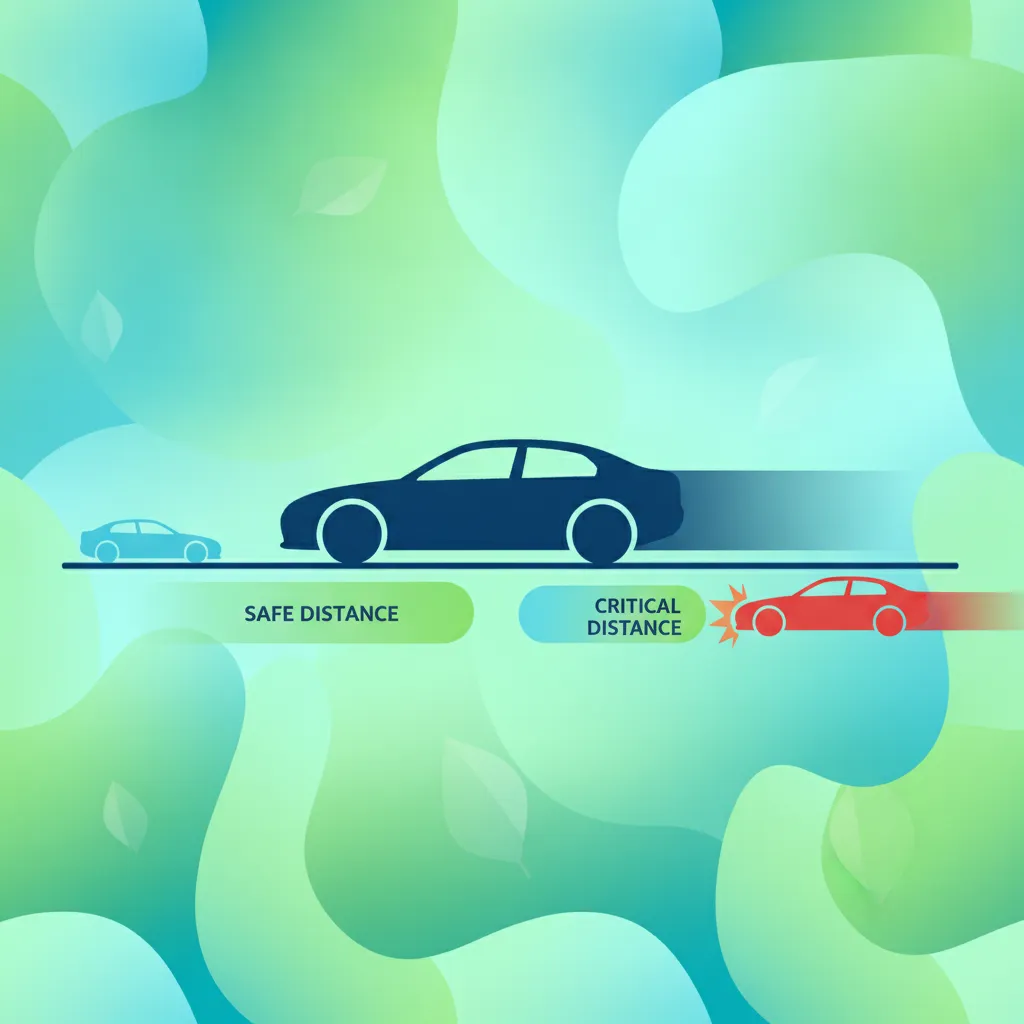
This lesson breaks down the concept of total stopping distance into reaction distance and braking distance. It teaches various braking techniques, including how to perform an emergency stop safely and the function of an Anti-lock Braking System (ABS). The relationship between speed, road condition, and braking effectiveness is a central theme.
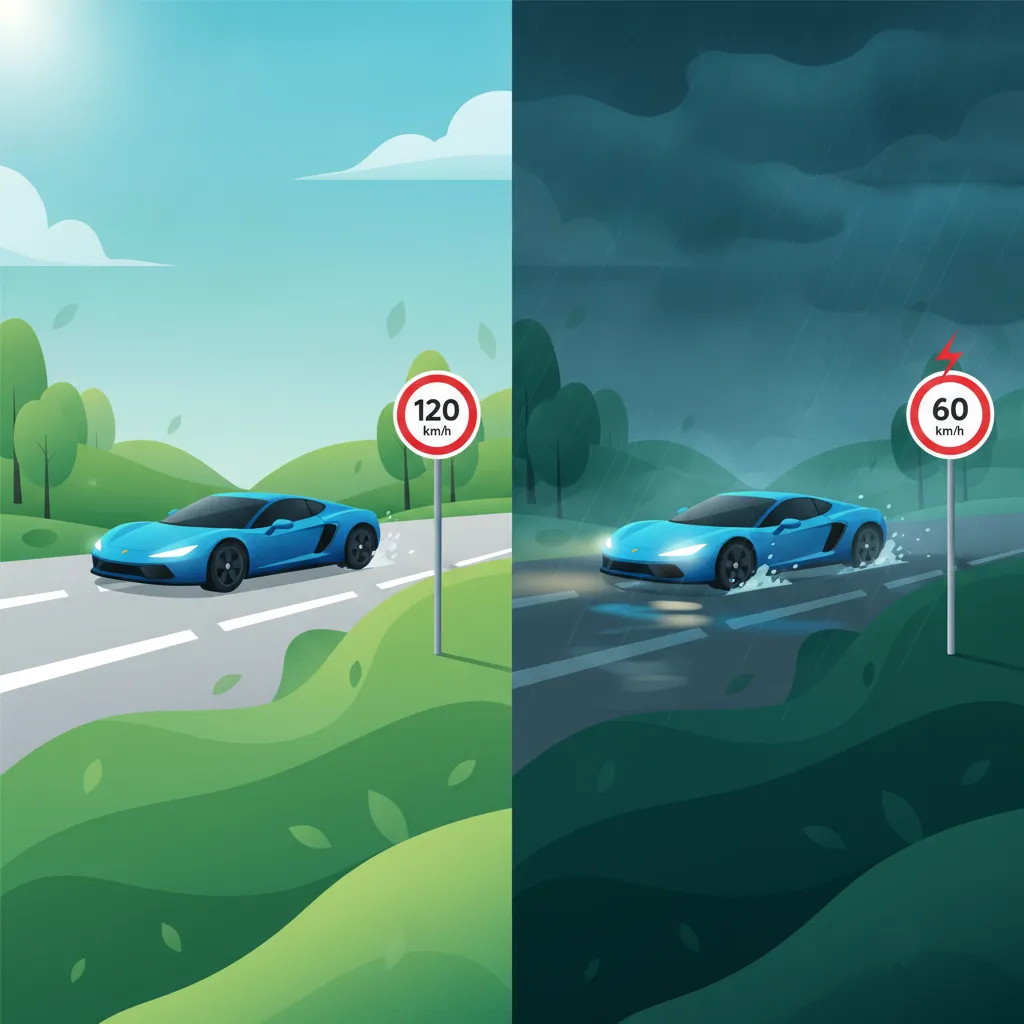
This lesson details the various speed limits applicable in Germany, from urban zones to rural roads. It emphasizes the critical skill of adapting speed to prevailing conditions such as rain, fog, or poor road surfaces. The content explains how external factors significantly impact vehicle handling and stopping distances.
This lesson introduces the concept of defensive driving ('vorausschauendes Fahren'), a proactive approach focused on anticipating and mitigating potential risks. It teaches techniques for scanning the road ahead, identifying potential hazards early, and managing the space around your vehicle to create a safety buffer. The goal is to develop a mindset that prioritizes safety and collision avoidance above all else.

This lesson clarifies the legal distinction between 'stopping' ('Halten') and 'parking' ('Parken') in Germany and explains the specific rules for each. You will learn to identify areas where stopping and parking are prohibited through signs and road markings. The lesson also covers the correct use of parking aids like the blue parking disc ('Parkscheibe') and paid parking systems.

This lesson explores how different weather conditions impact driving safety and vehicle performance. It discusses the risks of hydroplaning in heavy rain, reduced visibility in fog, and loss of traction on snow and ice. Drivers will learn how to adapt their speed, increase following distances, and make smooth control inputs to maintain vehicle stability and prevent skids in these challenging conditions.

This lesson focuses on the particular care required when driving near pedestrians, with a special emphasis on children and the elderly, whose behavior can be unpredictable. It covers the rules for yielding at zebra crossings and the importance of reducing speed near schools, playgrounds, and residential areas. The goal is to instill a habit of constant vigilance and readiness to stop.
Learn the principles of maintaining a safe following distance, including the two-second rule, and how speed choice directly impacts your ability to stop safely. Essential for German motorcycle theory.

This lesson focuses on the critical safety practice of maintaining an adequate following distance from the vehicle ahead. It explains how to use the 'two-second rule' as a simple and effective method for judging a safe gap in ideal conditions. The content also covers why this distance must be increased significantly in adverse weather or poor visibility to allow for longer reaction and braking times.
This lesson focuses on maintaining a safe buffer around the vehicle in traffic. It explains the 'two-second rule' as a simple method for ensuring adequate following distance and discusses how to adjust this for adverse conditions. A key focus is on developing hazard anticipation skills through continuous scanning and risk assessment.
This lesson covers the crucial skills of managing speed and maintaining a safe buffer from other vehicles. It teaches methods for calculating an appropriate following distance, such as the time-gap method, which adapts to different speeds and conditions. Learners will understand how to adjust their speed based on traffic flow, road surface, and weather to ensure they always have enough time and space to stop safely.
This lesson focuses on the importance of maintaining a safe following distance ('Sicherheitsabstand') to the vehicle ahead. It teaches practical methods for judging this distance, including the universally applicable two-second rule and the German 'halber Tacho' (half the speedometer reading in meters) rule. The lesson stresses the need to increase this distance in poor weather or when visibility is reduced.

This lesson highlights the specific risks associated with motorcyclists, who are less visible and more vulnerable than car drivers. It teaches you to actively look for motorcycles, especially at intersections and during lane changes, as their smaller profile can be easily missed. You will learn about their potential for rapid acceleration and instability, emphasizing the need for extra following distance.

This lesson details the correct procedures for entering a motorway, using the acceleration lane to match traffic speed, and merging safely. It reinforces the strict lane discipline required, including keeping to the right lane except when overtaking. The content also provides guidance on maintaining increased following distances and performing safe lane changes at high speeds.

This lesson provides a systematic approach to safely negotiating blind corners where visibility is limited. It teaches riders to control their entry speed, adopt a defensive lane position, and use visual scanning techniques to assess the road ahead. The content emphasizes adjusting lean angle and being prepared for unexpected hazards that may be hidden around the bend.
This lesson details the various speed limits applicable in Germany, from urban zones to rural roads. It emphasizes the critical skill of adapting speed to prevailing conditions such as rain, fog, or poor road surfaces. The content explains how external factors significantly impact vehicle handling and stopping distances.

This lesson focuses on the importance of strategic road positioning for enhancing safety and visibility. Learners explore different lane positions and understand when to use them to see, be seen, and create a safety buffer. The content emphasizes maintaining a long visual focus down the road to anticipate hazards and avoid target fixation, particularly when cornering.

This lesson details the safe approach and navigation of various intersection types, including those controlled by traffic lights, stop signs, and give-way signs. Emphasis is placed on comprehensive observation of traffic flow, establishing eye contact with other road users, and ensuring clear visibility before proceeding. The lesson also covers correct lane positioning for turning and the importance of anticipating pedestrian movements.
Find clear answers to common questions learners have about Calculating Stopping Distances and Understanding Speed Perception. Learn how the lesson is structured, which driving theory objectives it supports, and how it fits into the overall learning path of units and curriculum progression in Germany. These explanations help you understand key concepts, lesson flow, and exam focused study goals.
Reaction distance is the distance covered from the moment you perceive a hazard to the moment you engage the brakes. Braking distance is the distance the motorcycle travels from when the brakes are applied until it comes to a full stop. Combined, these form the total stopping distance.
In the theory test, remember that stopping distance does not increase linearly with speed; it increases with the square of the speed. Doubling your speed roughly quadruples your braking distance, which is a key concept for safe riding.
While the physical laws remain the same, different motorcycle models with varying weight distributions or ABS capabilities react differently. However, for the theory exam, you are expected to know the standard calculation methods applicable to all categories.
The two-second rule provides a simple way to maintain a safe following distance. It ensures that if the vehicle in front stops suddenly, you have sufficient reaction and braking time to avoid a collision, accounting for variable road conditions.
Begin your targeted revision now. Use our practice search to quickly find specific German driving theory questions. Filter by StVO rules, road signs, or hazard perception to create your focused study plan. Master challenging areas and prepare confidently for your theoretical driving test.