
This lesson explores the essential physics of motorcycle braking, focusing on the critical balance between your front and rear controls. Understanding these fundamentals is vital for both your German theory exam and for maintaining control during everyday riding in varied traffic conditions.
Lesson content overview
Welcome to this essential lesson in your German Motorcycle Licence Theory Course (Classes A, A1, A2). Understanding how to effectively use your motorcycle's braking system is fundamental to safe riding, directly impacting your stopping distance and overall control. This chapter will delve into the critical differences between front and rear brake usage, focusing on the physics of weight transfer during deceleration and the techniques required to achieve maximum, stable stopping power.
Proper braking is not merely about pulling a lever or pressing a pedal; it is a coordinated art that enhances your safety and confidence on the road. By mastering these principles, you will be better equipped to handle everyday riding situations and react effectively in emergencies.
One of the most crucial concepts in motorcycle braking is weight transfer. This phenomenon is a natural consequence of physics and dramatically influences how your brakes should be applied. When a motorcycle decelerates, its mass, including the rider's weight, shifts forward towards the front wheel. This shift is a key factor in determining how much braking force each wheel can effectively handle.
During braking, the motorcycle's kinetic energy is converted into heat by the brakes, causing the vehicle to slow down. Inertia dictates that the motorcycle and rider's mass want to continue moving forward. As the wheels slow, this forward momentum manifests as a forward weight transfer, effectively pushing the center of gravity closer to the front axle. This dynamic shift increases the load on the front tire, compressing the front suspension, and simultaneously reduces the load on the rear tire, causing the rear suspension to extend slightly.
This continuous redistribution of weight is not just an academic concept; it has profound practical implications for braking. The amount of weight pressing down on a tire directly correlates with its available grip, or traction, with the road surface.
The increased load on the front tire due to forward weight transfer significantly enhances its grip. This means the front tire can generate substantially more braking force before losing traction and locking up. Conversely, the reduced load on the rear tire diminishes its available grip, making it far more susceptible to locking if excessive braking force is applied.
Recognizing this imbalance in available traction is the cornerstone of effective motorcycle braking. It explains why the front brake system is designed to provide the majority of stopping power, and why its proper application is paramount for swift and controlled deceleration. Without understanding and accounting for weight transfer, riders risk inefficient braking, instability, and potential accidents.
Given the principles of weight transfer, it becomes clear that the front brake is the primary component for stopping a motorcycle quickly and safely. Its design and mechanical advantage are optimized to leverage the increased traction available at the front wheel during deceleration.
The front brake, typically operated by the right-hand lever, is responsible for approximately 70-90% of a motorcycle's total stopping power under ideal conditions. This is a direct result of the forward weight transfer phenomenon discussed earlier. As the motorcycle slows, the front tire gains significantly more grip, allowing it to withstand much greater braking forces without skidding. Relying predominantly on the front brake allows you to exploit this increased traction, leading to shorter and more controlled stopping distances.
For most braking situations, especially emergency stops, the front brake should be your main focus, applied progressively and firmly.
Ignoring the front brake or using it too timidly will drastically extend your stopping distance, putting you and others at greater risk. Conversely, understanding its dominance empowers you to stop effectively when it matters most.
Applying the front brake effectively requires a smooth, progressive motion, not a sudden grab. Begin by gently squeezing the front brake lever to take up any slack and allow the motorcycle's weight to begin shifting forward. As the weight transfers, the front tire's grip increases, enabling you to progressively increase pressure on the lever.
Initial Squeeze: Gently apply the front brake lever to initiate weight transfer to the front wheel.
Progressive Pressure: As weight shifts forward and the front forks compress, steadily increase pressure on the lever.
Firm Application (if needed): For maximum braking, squeeze the lever firmly but smoothly, approaching the limit of traction without locking the wheel.
Release Smoothly: As you come to a stop or reduce speed, smoothly reduce brake pressure, rather than snapping off the lever.
This smooth, progressive braking allows the suspension to compress and the tire to develop maximum grip without overwhelming it, preventing a sudden loss of traction that could lead to a front wheel lock-up. A sudden, abrupt grab of the front brake can compress the forks too quickly, potentially causing the front wheel to slide, especially at higher speeds or on slippery surfaces.
While the front brake provides the majority of stopping power, the rear brake is not redundant. It plays a crucial, albeit secondary, role in braking, particularly in maintaining stability and providing fine-tuned speed control.
The rear brake, operated by the right foot pedal, contributes about 10-30% of the total braking force. Its primary functions include:
However, due to the rearward weight transfer reduction during braking, the rear wheel has less available traction. This makes it more susceptible to locking up than the front wheel if excessive pressure is applied.
The key to safe rear brake usage is gentle, controlled application. At higher speeds, the rear brake should be applied lightly and progressively, simultaneously with the front brake. Avoid heavy or abrupt application of the rear brake, as this can easily lead to a rear wheel lock-up, especially on slippery surfaces or under hard braking. A locked rear wheel can cause the motorcycle to skid sideways, leading to a loss of control.
Occurs when braking force is so intense that the wheel stops rotating, causing the tire to slide across the road surface and resulting in a loss of traction and control.
At low speeds, when the effect of forward weight transfer is minimal, the rear brake can be used with more emphasis. For example, during slow-speed U-turns or navigating congested areas, a gentle rear brake application combined with clutch control can provide precise speed management and maintain balance. Always be mindful of the road surface and the amount of grip available.
The most effective and safest way to brake a motorcycle is through coordinated braking, where both the front and rear brakes are applied simultaneously and progressively, with a clear bias towards the front brake. This technique maximizes stopping power while maintaining stability.
Coordinated braking involves developing muscle memory to engage both braking systems in a harmonious manner. As you begin to squeeze the front brake lever, simultaneously start to press the rear brake pedal. The front brake will bear the majority of the stopping force, while the rear brake adds additional deceleration and helps stabilize the chassis.
The goal is to apply both brakes progressively, increasing pressure as the motorcycle slows and weight transfers. Think of it as a smooth, continuous increase in braking effort rather than two separate actions. This smooth application prevents sudden weight shifts or loss of traction. Riders in the German Motorcycle Licence Theory Course are expected to demonstrate proficiency in this technique.
Utilizing both brakes correctly is not just a recommendation; it is a fundamental requirement for achieving the shortest possible stopping distances while maintaining control. A motorcycle stops fastest when its tires are generating the maximum amount of braking force just before they lock up. This "threshold braking" is best achieved through the balanced and progressive application of both brakes.
Mandatory Practice: For safe motorcycle operation in Germany, it is mandatory to apply both brakes together, with a strong bias towards the front brake, in most braking situations, especially emergency stops. This maximizes stopping efficiency and stability.
Riders who rely solely on the rear brake will find their stopping distances significantly longer and their motorcycle prone to skidding. Similarly, riders who only use the front brake, while more effective than rear-only braking, will not achieve the absolute shortest stopping distance possible. The synergy of both brakes working together is key to safe and efficient deceleration.
Brake pressure modulation is the refined technique of smoothly increasing or decreasing the braking force. It is arguably the most critical skill in braking, as it directly controls the amount of grip the tires have and prevents dangerous wheel lock-ups.
Effective modulation means that you are constantly feeling for the limits of traction and adjusting your brake pressure accordingly. Instead of applying a fixed amount of pressure, you "squeeze" and "release" the brakes, constantly feeding in more pressure as the motorcycle slows and traction allows, or backing off if you feel a wheel beginning to slide.
The skillful, gradual adjustment of braking force (increasing or decreasing pressure) to prevent wheel lock-up and maximize available tire traction, adapting to dynamic conditions.
This smooth, dynamic approach allows the motorcycle's suspension and tires to work optimally, absorbing forces and maintaining contact with the road. It ensures that you are always utilizing the maximum available grip without exceeding it. Developing this sensitivity comes with practice and experience.
Abrupt braking – suddenly grabbing the lever or stomping on the pedal – is a common mistake that almost always leads to instability and potential loss of control. A sudden, unmodulated application of the front brake can cause the front wheel to lock, often resulting in a severe crash. Likewise, an abrupt rear brake application can easily lock the rear wheel, leading to a skid that can cause the rear of the bike to come around, especially at speed.
To avoid skidding:
Smooth brake pressure modulation is a cornerstone of defensive riding and is essential for safely navigating diverse road conditions and unexpected situations.
The principles of front brake dominance and coordinated braking remain constant, but the degree of application and the rider's sensitivity to traction limits must adapt to varying riding conditions.
Wet roads, gravel, sand, painted lines, and other low-grip surfaces drastically reduce available tire traction. In these conditions, the risk of wheel lock-up increases significantly, demanding even greater care and modulation.
Terrain significantly influences how weight transfer affects braking:
Always anticipate terrain changes and adjust your braking strategy accordingly.
Carrying a passenger or heavy luggage changes the motorcycle's center of gravity and overall weight, impacting braking dynamics.
Always practice braking with a passenger or load in a safe environment to understand how your motorcycle's dynamics change.
Rider errors during braking are a significant cause of motorcycle accidents. Awareness of common mistakes can help you develop safer braking habits.
Many novice riders, and sometimes even experienced ones, tend to overuse the rear brake. This often stems from a misconception that the rear brake is "safer" or less likely to cause a loss of control than the front brake. However, as discussed, this is fundamentally incorrect.
To avoid this, consistently practice coordinated braking with a clear front brake bias.
On the other end of the spectrum is the insufficient use of the front brake, often due to fear of locking the front wheel.
Overcome this by practicing progressive front brake application in a controlled environment, gradually increasing pressure to understand its capabilities.
Abrupt or "panic" braking without proper modulation is highly dangerous.
The key to avoiding these risks is consistent practice of smooth, progressive, and coordinated braking, developing the reflex to modulate pressure even in emergency situations. This skill is critical for all riders aiming for a German motorcycle licence.
Mastering your motorcycle's braking system is non-negotiable for safe riding. Here's a summary of the core safety principles:
By integrating these fundamental braking techniques into your riding, you will enhance your control, reduce stopping distances, and significantly improve your overall safety on German roads.
Understanding weight transfer is fundamental: as a motorcycle decelerates, weight shifts forward to the front wheel, dramatically increasing front tire traction and making the front brake the dominant stopping force. Effective braking requires coordinated application of both brakes simultaneously, with a clear front bias, using smooth progressive pressure that adapts to conditions. Brake pressure modulation—continuously adjusting force to stay just below the traction limit—is the critical skill that prevents lock-ups and skids. These principles apply universally but demand particular care on wet roads, hills, and when carrying passengers, where traction and dynamics change significantly.
A short set of high-value points that capture the most important learning from this lesson.
Forward weight transfer during deceleration shifts load to the front wheel, dramatically increasing front tire traction and making the front brake responsible for 70-90% of stopping power
Coordinated braking using both front and rear brakes simultaneously maximizes stopping efficiency while maintaining motorcycle stability
Progressive brake application—gradually increasing pressure as weight transfers forward—prevents wheel lock-up and maximizes available tire grip
Brake pressure modulation is the essential skill of dynamically adjusting braking force to stay within traction limits, especially on low-grip surfaces
Riding conditions such as wet roads, hills, or carrying passengers require adjusted braking technique with greater caution and smoother inputs
Explore all units and lessons included in this driving theory course.
The front brake is your primary stopping force; the rear brake provides stability and fine-tuned control, contributing only 10-30% of total braking power
Abrupt or panic braking easily causes wheel lock-up, leading to loss of traction and control—always squeeze, never grab
On slippery surfaces, the threshold for lock-up is much lower, demanding gentler inputs and increased following distance
Downhill braking amplifies front brake effectiveness due to additional forward weight shift, while uphill reduces front brake dominance slightly
Carrying a passenger or heavy load increases momentum and alters weight distribution, requiring smoother inputs and longer stopping distances
Over-relying on the rear brake because it feels safer, which dramatically extends stopping distances and increases risk of rear wheel lock-up and skidding
Using the front brake too timidly due to fear of locking the wheel, failing to utilize the majority of available stopping power
Applying brakes suddenly or abruptly without modulation, which can compress suspension too quickly and cause wheel lock-up at any speed
Failing to adapt braking technique for wet or low-grip conditions, where traction is significantly reduced and lock-up risk is much higher
Applying heavy rear brake pressure during cornering, which can lock the rear wheel and cause the motorcycle to slide sideways out of control
Lesson content overview
A short set of high-value points that capture the most important learning from this lesson.
Forward weight transfer during deceleration shifts load to the front wheel, dramatically increasing front tire traction and making the front brake responsible for 70-90% of stopping power
Coordinated braking using both front and rear brakes simultaneously maximizes stopping efficiency while maintaining motorcycle stability
Progressive brake application—gradually increasing pressure as weight transfers forward—prevents wheel lock-up and maximizes available tire grip
Brake pressure modulation is the essential skill of dynamically adjusting braking force to stay within traction limits, especially on low-grip surfaces
Riding conditions such as wet roads, hills, or carrying passengers require adjusted braking technique with greater caution and smoother inputs
Explore all units and lessons included in this driving theory course.
The front brake is your primary stopping force; the rear brake provides stability and fine-tuned control, contributing only 10-30% of total braking power
Abrupt or panic braking easily causes wheel lock-up, leading to loss of traction and control—always squeeze, never grab
On slippery surfaces, the threshold for lock-up is much lower, demanding gentler inputs and increased following distance
Downhill braking amplifies front brake effectiveness due to additional forward weight shift, while uphill reduces front brake dominance slightly
Carrying a passenger or heavy load increases momentum and alters weight distribution, requiring smoother inputs and longer stopping distances
Over-relying on the rear brake because it feels safer, which dramatically extends stopping distances and increases risk of rear wheel lock-up and skidding
Using the front brake too timidly due to fear of locking the wheel, failing to utilize the majority of available stopping power
Applying brakes suddenly or abruptly without modulation, which can compress suspension too quickly and cause wheel lock-up at any speed
Failing to adapt braking technique for wet or low-grip conditions, where traction is significantly reduced and lock-up risk is much higher
Applying heavy rear brake pressure during cornering, which can lock the rear wheel and cause the motorcycle to slide sideways out of control
Explore search topics learners often look for when studying Braking System Fundamentals: Front vs. Rear Brake Usage. These topics reflect common questions about road rules, driving situations, safety guidance, and lesson level theory preparation for learners in Germany.
Browse additional driving theory lessons that cover connected traffic rules, road signs, and common driving situations related to this topic. Improve your understanding of how different rules interact across everyday traffic scenarios.
Explore advanced techniques for using front and rear motorcycle brakes effectively. This lesson covers modulating pressure, understanding ABS, and maintaining traction during critical deceleration for safer riding on German roads.

This lesson provides instruction on how to react and perform an emergency stop in a critical situation. It covers the technique of applying maximum braking force progressively and firmly without locking the wheels. For motorcycles equipped with an Anti-lock Braking System (ABS), the lesson explains how the system works and how the rider should respond when it activates to maintain steering control.
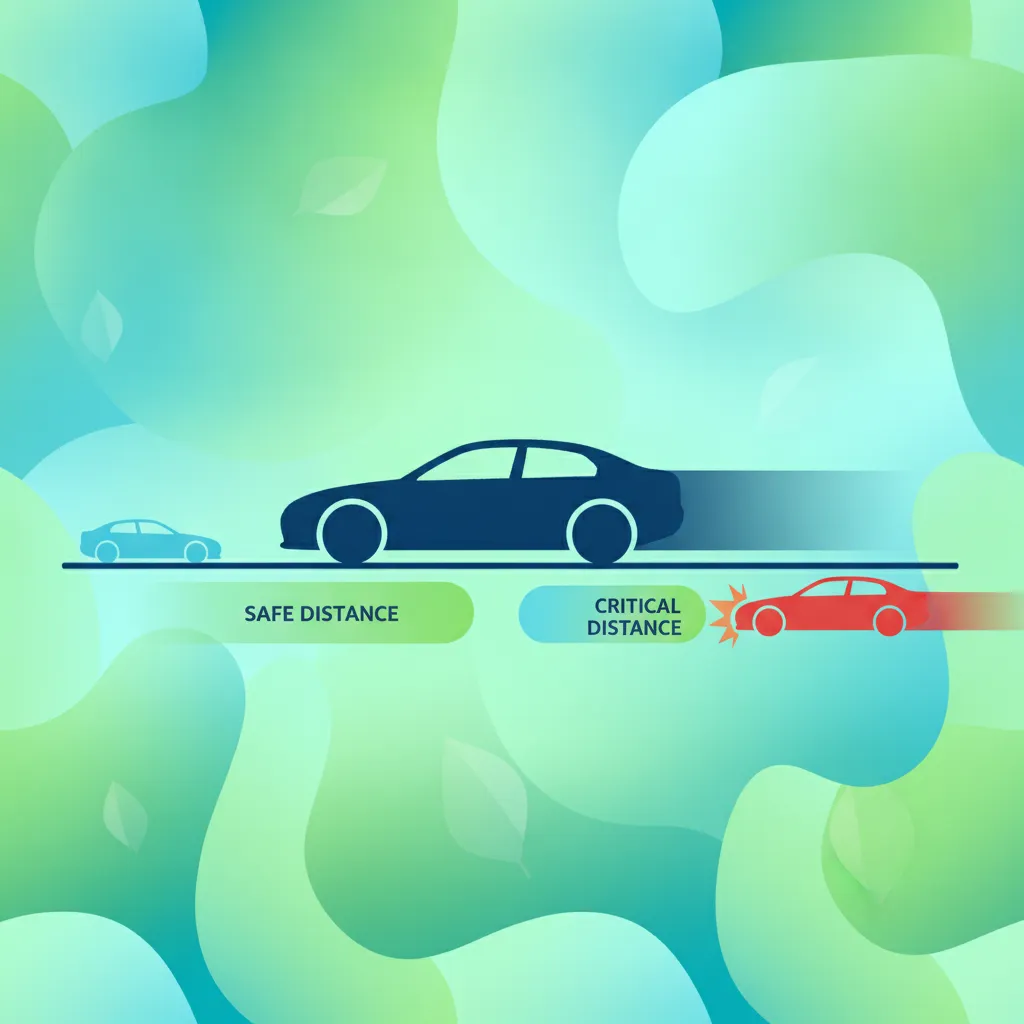
This lesson breaks down the concept of total stopping distance into reaction distance and braking distance. It teaches various braking techniques, including how to perform an emergency stop safely and the function of an Anti-lock Braking System (ABS). The relationship between speed, road condition, and braking effectiveness is a central theme.

This lesson explains the function of a vehicle's braking system and the technology designed to enhance its effectiveness. It describes how the Anti-lock Braking System (ABS) prevents wheels from locking up during hard braking, allowing the driver to maintain steering control. The role of the Electronic Stability Program (ESP) in preventing skids is also covered.

This lesson introduces the essential components of a motorcycle's braking system, including disc brakes, drum brakes, and the function of an Anti-lock Braking System (ABS). It teaches learners how to inspect brake pads and rotors for wear and understand the feel of the brake levers. The concept of balanced braking force distribution between the front and rear wheels is explained for maintaining stability.

This lesson examines how various road surfaces and conditions affect tyre grip and traction. It teaches riders to recognize and adapt to hazards like wet patches, loose gravel, or oil spills. The content covers techniques for maintaining control through smooth throttle and brake inputs, preventing traction loss while accelerating, braking, and cornering on compromised surfaces.
Understand the physics behind motorcycle braking, focusing on how weight transfer impacts front and rear brake effectiveness. Learn why the front brake is crucial for stopping power in German traffic law context.
This lesson introduces the essential components of a motorcycle's braking system, including disc brakes, drum brakes, and the function of an Anti-lock Braking System (ABS). It teaches learners how to inspect brake pads and rotors for wear and understand the feel of the brake levers. The concept of balanced braking force distribution between the front and rear wheels is explained for maintaining stability.

This lesson explores the principles of carrying luggage safely without compromising the motorcycle's handling. It emphasizes the importance of securing the load properly and distributing the weight evenly and low to maintain a stable center of gravity. The content explains how improperly loaded luggage can negatively impact steering, braking, and overall stability, particularly at speed.

This lesson introduces the fundamental principles of motorcycle balance, explaining the role of the gyroscopic effect in creating stability at speed. It demystifies the concept of countersteering, teaching learners how a push on the handlebar initiates a lean and turns the motorcycle. The lesson also covers how rider body positioning and weight transfer influence balance during both low-speed and high-speed maneuvers.

This lesson explains the two components of total stopping distance: reaction distance and braking distance. It teaches learners how factors like speed, road conditions, and rider attentiveness influence how far the motorcycle travels before coming to a complete stop. By understanding these principles, riders can make better decisions about safe speeds and following distances to ensure they can stop in time.

This lesson examines the risks associated with load shifting during braking and cornering maneuvers. It explains how inertia and weight transfer can cause cargo to move, potentially leading to instability or loss of control. The content emphasizes the importance of proper load securing to mitigate these risks and maintain vehicle stability.
This lesson breaks down the concept of total stopping distance into reaction distance and braking distance. It teaches various braking techniques, including how to perform an emergency stop safely and the function of an Anti-lock Braking System (ABS). The relationship between speed, road condition, and braking effectiveness is a central theme.

This lesson provides a method for calculating the braking distance of loaded vehicles, considering factors such as speed, load, and road conditions. It explains the formula for total stopping distance, including reaction time and braking distance components. The content highlights the importance of maintaining adequate safety margins for emergency braking.

This lesson delves into the principles of vehicle dynamics that govern two-wheeled vehicles. It explains the importance of balance, the concept of counter-steering for initiating turns, and how body position influences handling. Understanding these physical forces allows for smoother, safer, and more confident control of the vehicle.
This lesson provides instruction on how to react and perform an emergency stop in a critical situation. It covers the technique of applying maximum braking force progressively and firmly without locking the wheels. For motorcycles equipped with an Anti-lock Braking System (ABS), the lesson explains how the system works and how the rider should respond when it activates to maintain steering control.
This lesson explains the physics behind stopping a vehicle, breaking down the total stopping distance ('Anhalteweg') into its two key components: reaction distance and braking distance. It provides formulas for estimating these distances at various speeds and discusses the critical factors that can increase them, such as driver fatigue, poor weather, and worn tires. Understanding this relationship is vital for appreciating the need for safe speeds and distances.
Find clear answers to common questions learners have about Braking System Fundamentals: Front vs. Rear Brake Usage. Learn how the lesson is structured, which driving theory objectives it supports, and how it fits into the overall learning path of units and curriculum progression in Germany. These explanations help you understand key concepts, lesson flow, and exam focused study goals.
During deceleration, weight transfers to the front wheel, increasing the tire's grip on the road surface. This allows the front brake to handle the majority of the stopping force safely, provided it is applied progressively to avoid locking the wheel.
Yes, for optimal stability and stopping power, you should apply both brakes in a coordinated manner. The front brake provides the primary stopping force, while the rear brake adds stability and helps control the motorcycle's attitude.
Locking the front wheel almost always leads to a loss of steering control and a likely fall. Modern motorcycles equipped with ABS are designed to prevent this; however, you must still apply the brakes firmly and keep your gaze focused on your exit path.
No, the two-second rule is a universal guideline for safe following distance. Because motorcycles are more vulnerable, maintaining or even exceeding this distance is critical to ensure you have enough time to react and apply your brakes smoothly without panic.
Begin your targeted revision now. Use our practice search to quickly find specific German driving theory questions. Filter by StVO rules, road signs, or hazard perception to create your focused study plan. Master challenging areas and prepare confidently for your theoretical driving test.