Driving in Iceland presents unique challenges and customs unfamiliar to many tourists. This article delves into surprising aspects like the prevalence of unlit rural roads, the strict rules surrounding off-road driving, and how to safely navigate encounters with sheep. Gaining this cultural and practical driving knowledge is essential for a safe journey and will enhance your preparedness for real-world Icelandic driving scenarios.
Article content overview
Driving in Iceland offers a landscape of unparalleled beauty, but it also presents a unique set of driving conventions and environmental challenges that can surprise even experienced drivers. For those preparing for their Icelandic driving license theory test, understanding these nuances is as crucial as mastering the official traffic laws. This article delves into the critical differences between driving in Iceland and other countries, helping you to avoid common tourist mistakes, costly fines, and ensure a safe journey. We will explore essential knowledge beyond the basic rules, preparing you for real-world Icelandic driving scenarios.
One of the most immediate culture shocks for visitors is the profound lack of street lighting once you leave major urban centers like Reykjavík. While well-lit roads are the norm in many countries, large stretches of rural Iceland, including parts of the main Ring Road, are entirely unlit. This necessitates a heightened level of driver attentiveness, especially during the darker months or twilight hours.
Drivers must understand that the absence of streetlights means your headlights are your primary source of illumination, and they must be used consistently. Icelandic law mandates that vehicle headlights be switched on at all times, day and night, throughout the year. Auto-settings may not always be sufficient, so vigilance is key to ensure your lights are always active, providing visibility to yourself and making you visible to others.
The scenic beauty of Iceland is also a potential hazard. Drivers must remain focused on the road and be aware of their surroundings without being overly distracted by the stunning landscapes. Pulling over in a safe location, away from the flow of traffic, is essential if you wish to admire the scenery or take photographs, rather than stopping unexpectedly on the road itself.
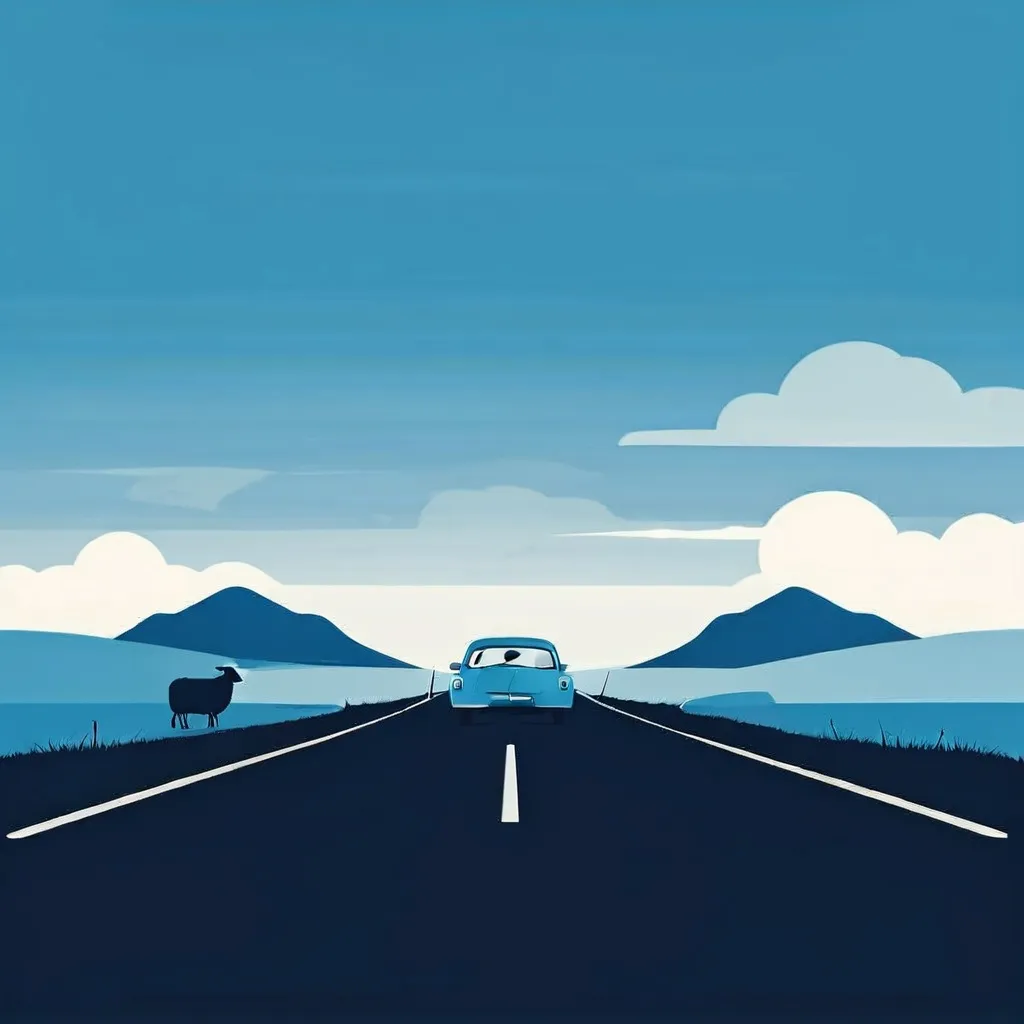
In rural Iceland, you will inevitably encounter livestock, most commonly sheep, on or near the roads. Unlike simply encountering other vehicles, livestock on the road demands a specific approach, often referred to as the "Sheep Protocol." These animals have a de facto right-of-way, and encountering them requires immediate reduction in speed and cautious maneuvering to avoid collision.
Hitting livestock is a serious matter in Iceland, carrying significant legal and financial repercussions. It is crucial to report any such incident immediately to the police and the local farmer if identifiable. The fragile ecosystem means that any damage, including that caused to livestock or fences, is taken very seriously. Always assume that sheep may appear unexpectedly from blind crests or road shoulders.
When you see sheep by the roadside, it's wise to slow down considerably and be prepared for them to wander into the road. If they are on the road, proceed with extreme caution, waiting for them to move or carefully navigating around them. Do not honk aggressively or try to herd them, as this can cause them to panic and scatter unpredictably. The priority is to ensure the safety of both the animals and your vehicle.
Iceland's infrastructure includes many single-lane bridges, particularly on rural routes. These bridges are designed to allow one vehicle to cross at a time, and the general rule is that the vehicle closer to the bridge has the right-of-way. However, this rule can be challenging to enforce in practice, especially with drivers unfamiliar with these structures.
When approaching a single-lane bridge, especially if you are unsure about the other driver's intentions or speed, it is always advisable to stop and assess the situation. Make eye contact with the approaching driver if possible, and be prepared to yield even if you technically have the right-of-way. This courtesy and caution can prevent accidents and misunderstandings.
The transition from paved roads to gravel roads, which is common in Iceland, can also be a point of concern. Drivers who do not reduce their speed sufficiently before entering a gravel section often lose control. It is imperative to adapt your speed to the road surface. Gravel roads inherently offer less traction, requiring smoother steering and braking inputs.
Perhaps the most stringent and significant driving law for tourists and locals alike is the absolute prohibition of off-road driving. In many countries, off-road exploration might be seen as adventurous, but in Iceland, it is a severe offense due to the extreme fragility of the natural environment. The delicate moss and vegetation can take decades, if not centuries, to recover from tire tracks.
Driving any vehicle off of established roads, including unpaved tracks and paths, is strictly forbidden in Iceland. This prohibition extends even to seemingly barren areas like sand or wasteland, as leaving a trace on unspoilt land is considered damage.
Driving on marked F-roads (mountain roads) and gravel roads designated for public use is permitted and is not considered off-road driving. However, veering off these marked routes, even by a small margin, constitutes illegal off-road activity and can result in substantial fines. Familiarizing yourself with the definitions of marked routes versus natural terrain is vital.
Violators of off-road driving laws face severe penalties, including significant fines and potential impoundment of the vehicle. Always stay on designated roads and paths to protect Iceland's unique and vulnerable natural heritage.
Beyond these specific environmental and infrastructural challenges, several fundamental driving laws and conventions are critical for safe and legal driving in Iceland. Adherence to these rules is not only for your safety but also for the safety of others and to avoid legal trouble.
Icelandic law mandates that all occupants of a vehicle, regardless of seating position, must wear a seatbelt. For children, specific regulations apply based on age and size. Children under 135 cm must use an appropriate car seat, booster seat, or other restraint system that fits their age, height, and weight.
The use of mobile phones while driving in Iceland is strictly regulated. All usage of smart devices, including mobile phones, is forbidden while operating a vehicle unless hands-free equipment is employed. This means no holding the phone to talk, text, or operate navigation systems.
Iceland maintains a very low Blood Alcohol Content (BAC) limit. The BAC limit is 0.2‰, which is significantly lower than in many other countries. This means that even a small amount of alcohol can put you over the legal limit, and driving under the influence of alcohol or other intoxicants carries severe penalties.
Speed limits in Iceland are generally set at:
These limits are maximums, and drivers are expected to adjust their speed according to road conditions, weather, and visibility. Speeding, especially on unpaved or poorly lit rural roads, significantly increases the risk of accidents. Always be aware of variable speed limit signs, which can indicate changes due to specific hazards.
Understanding these practical aspects of driving in Iceland is not just about being a safe tourist; it's also about preparing thoroughly for your driving theory test administered by the Icelandic Transport Authority (Samgöngustofa). Exam questions often go beyond simple rule recall and delve into applying these rules in real-world Icelandic contexts, including the scenarios discussed here.
The theory exam will often present scenarios that test your understanding of these unique Icelandic driving conditions. For example, you might be asked about the correct procedure when encountering sheep, how to behave on a single-lane bridge, or the consequences of driving off-road.
By internalizing these practical considerations and cultural driving norms, you will not only be better prepared for your theory exam but also for a safe and enjoyable driving experience in Iceland. The Icelandic Transport Authority expects all drivers to be aware of and respect these conditions.
Icelandic driving requires adapting to unique conditions not found elsewhere, including unlit rural roads where headlights must always be active, livestock with de facto right-of-way requiring the 'Sheep Protocol,' and many single-lane bridges where courtesy and caution matter more than technical right-of-way rules. The strict off-road driving prohibition protects Iceland's fragile environment, with violations carrying substantial fines and potential vehicle impoundment. Essential laws include mandatory seatbelt use for all occupants, hands-free mobile phone requirements, and a very low BAC limit of 0.2‰ with zero tolerance for intoxication. Understanding these practical conventions, alongside standard traffic rules, prepares learners for both real-world Icelandic driving and theory exam scenarios that test rule application in authentic contexts.
A short set of high-value points that capture the most important ideas from this article.
Iceland requires headlights on at all times, day and night, everywhere in the country, including on unlit rural roads where they are your primary source of illumination.
Livestock on Icelandic roads must be yielded to using the 'Sheep Protocol'—slow down immediately, proceed with extreme caution, and never attempt to herd animals.
Off-road driving is strictly prohibited in Iceland, including on seemingly barren land; this law exists to protect the fragile ecosystem from damage that takes decades to heal.
Single-lane bridges require the vehicle closer to the bridge to yield; when in doubt, stop, assess, and make eye contact with oncoming traffic before crossing.
Iceland has a very strict BAC limit of 0.2‰ and a zero-tolerance approach to intoxicated driving, significantly lower than most other countries.
Speed limits: 50 km/h urban, 80 km/h rural gravel roads, 90 km/h rural paved roads—these are maximums requiring adjustment for conditions.
Mobile phones cannot be used while driving unless hands-free equipment is employed.
Gravel roads offer less traction; reduce speed before transitioning from pavement and use smoother steering and braking inputs.
Stop in a safe location off the road before admiring scenery; never brake suddenly or stop on the road itself.
All livestock collisions must be reported immediately to police and the local farmer.
Relying on auto-headlight settings without verifying they are active, risking driving with lights off unintentionally.
Assuming 'wasteland' or barren areas are acceptable for off-road driving; the prohibition applies to any area outside established roads.
Attempting to honk or herd sheep off the road, which causes animals to panic and scatter unpredictably.
Entering a single-lane bridge without reducing speed, assuming right-of-way overrides safety judgment.
Underestimating how little alcohol is needed to exceed Iceland's 0.2‰ BAC limit.
Article content overview
A short set of high-value points that capture the most important ideas from this article.
Iceland requires headlights on at all times, day and night, everywhere in the country, including on unlit rural roads where they are your primary source of illumination.
Livestock on Icelandic roads must be yielded to using the 'Sheep Protocol'—slow down immediately, proceed with extreme caution, and never attempt to herd animals.
Off-road driving is strictly prohibited in Iceland, including on seemingly barren land; this law exists to protect the fragile ecosystem from damage that takes decades to heal.
Single-lane bridges require the vehicle closer to the bridge to yield; when in doubt, stop, assess, and make eye contact with oncoming traffic before crossing.
Iceland has a very strict BAC limit of 0.2‰ and a zero-tolerance approach to intoxicated driving, significantly lower than most other countries.
Speed limits: 50 km/h urban, 80 km/h rural gravel roads, 90 km/h rural paved roads—these are maximums requiring adjustment for conditions.
Mobile phones cannot be used while driving unless hands-free equipment is employed.
Gravel roads offer less traction; reduce speed before transitioning from pavement and use smoother steering and braking inputs.
Stop in a safe location off the road before admiring scenery; never brake suddenly or stop on the road itself.
All livestock collisions must be reported immediately to police and the local farmer.
Relying on auto-headlight settings without verifying they are active, risking driving with lights off unintentionally.
Assuming 'wasteland' or barren areas are acceptable for off-road driving; the prohibition applies to any area outside established roads.
Attempting to honk or herd sheep off the road, which causes animals to panic and scatter unpredictably.
Entering a single-lane bridge without reducing speed, assuming right-of-way overrides safety judgment.
Underestimating how little alcohol is needed to exceed Iceland's 0.2‰ BAC limit.
Explore related topics, search based questions, and concepts that learners often look up when studying Icelandic Driving Culture Shock. These themes reflect real search intent and help you understand how this topic connects to wider driving theory knowledge in Iceland.
Find clear and practical answers to common questions learners often have about Icelandic Driving Culture Shock. This section helps explain difficult points, remove confusion, and reinforce the key driving theory concepts that matter for learners in Iceland.
No, off-road driving is strictly forbidden in Iceland. It causes severe damage to the sensitive flora, and violators face substantial fines. Driving on designated F-roads or gravel roads is permissible, but leaving these marked routes is illegal.
In Iceland, sheep have the right of way on rural roads. If you encounter sheep, you must slow down and give them ample space to move. Hitting a sheep is a serious offense that requires reporting to the police and the farmer, and can result in significant penalties.
Rural Iceland has very limited street lighting. Drivers must be prepared for driving in near-total darkness, especially outside of major towns. It is mandatory to have headlights on at all times, day and night, to improve visibility.
Many rural roads in Iceland feature single-lane bridges. The general rule is that the vehicle closer to the bridge has the right-of-way, but it's wise to slow down, make eye contact with oncoming drivers, and yield if necessary to ensure safety.
Yes, like many countries, Iceland requires hands-free use of mobile phones while driving. Any usage that requires holding the device or takes your attention away from the road is strictly forbidden.
Refine your driving theory knowledge by exploring more focused articles. Use our comprehensive search to find additional detailed explanations on any Icelandic road rule, traffic situation, or driving procedure to ensure complete readiness for your exam.