Learn the critical Icelandic rules for overtaking, including specific prohibitions on blind hills, bridges, and intersections, as mandated by Samgöngustofa. This guide also covers the essential 1.5-meter passing distance required for cyclists, a key topic for your theory exam and safe driving in Iceland.
Article content overview
Navigating Iceland's roads presents unique challenges, from stunning but distracting landscapes to unpredictable weather. Understanding the precise rules for overtaking, known as "framúrakstur" in Icelandic, is crucial for safe driving and passing your Icelandic driving theory exam. This article delves into the specific situations where overtaking is strictly prohibited, the importance of road markings, and the critical safety measures required when encountering cyclists. Mastering these regulations, as set forth by the Icelandic Transport Authority (Samgöngustofa), will not only help you avoid dangerous situations but also ensure you demonstrate a thorough understanding of Icelandic traffic law.
Icelandic traffic law, as enforced by Samgöngustofa, outlines several critical scenarios where overtaking another vehicle is prohibited to ensure the safety of all road users. These prohibitions are often linked to reduced visibility, specific road geometries, or the presence of other road users. Ignoring these rules can lead to serious accidents, particularly given the often narrow nature of Icelandic roads and the potential for strong crosswinds.
One of the most dangerous situations for overtaking occurs near blind hills, also known as blind crests. When approaching the crest of a hill, your ability to see oncoming traffic is severely limited, making any attempt to overtake extremely risky. Similarly, single-lane bridges present a significant hazard for overtaking. These bridges are designed for one vehicle at a time, and attempting to pass another vehicle on such a structure can lead to head-on collisions. The rule of thumb for single-lane bridges is that the vehicle closer to the bridge has the right of way, but it's always wise to slow down and assess the situation before proceeding.
Intersections also represent areas where overtaking is generally forbidden. This includes the intersection itself and the immediate vicinity leading up to it. The reasoning behind this rule is straightforward: vehicles may be turning into or out of the intersection, and visibility can be compromised by other vehicles, buildings, or signage. Furthermore, even if road markings might otherwise permit it, overtaking should be avoided if it impairs the visibility or maneuverability of other road users at an intersection or a pedestrian crossing.
The Icelandic Transport Authority also emphasizes that overtaking is prohibited when road markings clearly indicate this. A solid white line (miðlína) between lanes typically signifies that overtaking is forbidden. This applies to situations where such a line separates traffic moving in opposite directions. Conversely, a broken or dashed white line usually permits overtaking, but only when it is safe to do so, with sufficient visibility and space.
Remember, the Icelandic theory exam will often present scenarios where the "obvious" path might seem clear, but a specific rule or sign prohibits overtaking. Always prioritize safety and adhere strictly to the law.
Road markings are a vital component of traffic control in Iceland, providing essential guidance for drivers, especially concerning overtaking. The Icelandic Transport Authority (Samgöngustofa) relies on these markings to convey critical information about lane usage and permitted maneuvers. Understanding their meaning is fundamental to safe driving and passing the theory exam.
The primary marking to be aware of is the centre line separating opposing traffic. A continuous, solid white line indicates that overtaking is strictly prohibited. This is often seen on stretches of road where visibility is limited, such as near curves, hills, or at points where oncoming traffic poses a significant risk. Attempting to cross a solid white line to overtake is a serious traffic violation and extremely dangerous.
In contrast, a broken or dashed white line typically signifies that overtaking is permitted, provided it is safe to do so. This means you must ensure you have adequate visibility of oncoming traffic, sufficient space to complete the manoeuvre without forcing other vehicles to brake or swerve, and that you are not approaching an intersection, pedestrian crossing, or any other restricted zone. Always consider the "three-second rule" for following distance to ensure you have ample time to react if the vehicle ahead brakes suddenly.
There are specific variations of overtaking prohibitions indicated by signs. For instance, a sign might prohibit overtaking for larger vehicles like trucks, while allowing it for cars. It is imperative to observe all relevant signs in conjunction with road markings. When in doubt, it is always safer to refrain from overtaking.
Ensuring the safety of vulnerable road users, such as cyclists, is a paramount concern in Icelandic traffic law. The Icelandic Transport Authority has specific regulations to protect cyclists, and understanding these is vital for both your safety and your theory exam success. The law mandates a significant lateral distance when passing a bicycle to protect the rider from the vehicle's slipstream and potential hazards on the road.
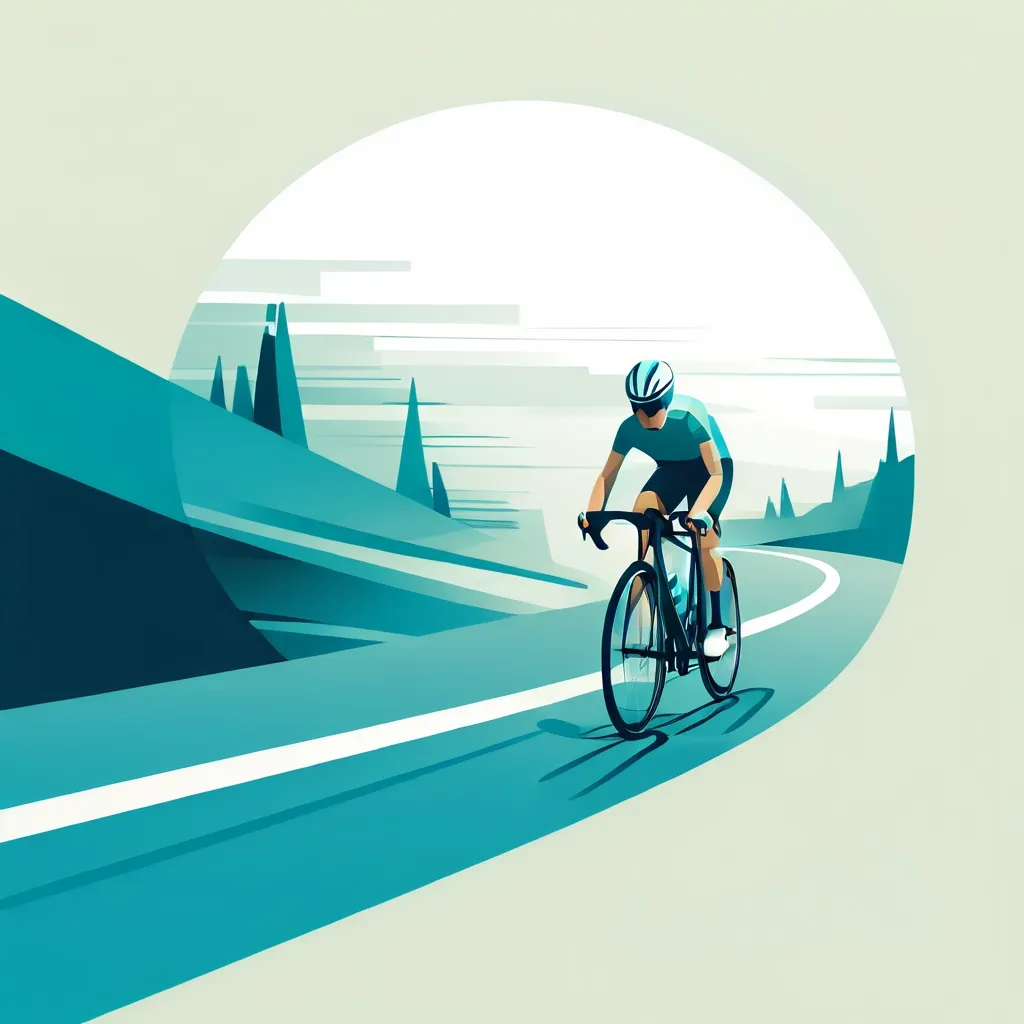
Specifically, when overtaking a cyclist, you are legally required to maintain a minimum lateral distance of 1.5 meters (approximately 5 feet). This distance is not arbitrary; it accounts for the wind turbulence created by a passing vehicle, which can easily destabilize a cyclist. It also provides a buffer against stray debris or minor road imperfections that could cause a cyclist to swerve. This requirement is a crucial element tested in the theory exam and is non-negotiable for safe driving.
On narrow roads, where maintaining this 1.5-meter distance might seem challenging, drivers must exercise extreme caution. It may be necessary to slow down significantly or even wait for a safer opportunity to pass, perhaps when the road widens or when there is no oncoming traffic. Remember that a cyclist is entitled to the full width of their lane for safety, especially if they are riding defensively or encountering poor road conditions.
The updated traffic laws in Iceland place a strong emphasis on this safety margin for cyclists. Drivers are expected to anticipate the needs of cyclists and adjust their driving accordingly. This includes being aware of cyclists' presence, even if they are not clearly visible due to road curvature or other obstructions.
Iceland's diverse road network includes many gravel roads, particularly outside of the main Ring Road. Driving on gravel presents a different set of challenges for overtaking compared to paved surfaces. The Icelandic Transport Authority advises extreme caution when considering an overtake on gravel. The primary concern is the reduced grip and the increased risk of losing control due to skidding.
When switching from a paved road to a gravel road, it is essential to reduce speed significantly. The surface material on gravel roads can be loose, leading to a loss of traction for your tires. This is particularly true during overtaking manoeuvres where sudden acceleration or steering inputs are required. Furthermore, gravel roads can often be narrow and winding, with blind hills and curves that further increase the risk of an overtake gone wrong.
On gravel roads, the risk of 'grjótkast' (stone throwing) is also a concern. Faster speeds can propel loose stones from your tires or the road surface, potentially damaging other vehicles, including their windshields.
The speed limits on gravel roads are generally lower than on paved roads: 80 km/h on gravel versus 90 km/h on paved roads, unless otherwise indicated by signage. However, these are maximum limits, and drivers must always adjust their speed to the prevailing conditions. Overtaking on blind hills or curves on gravel roads is especially dangerous due to severely limited visibility. It is often advisable to wait for a safer, wider section of road with clear visibility ahead.
Another critical aspect to consider is the risk of drowsiness or fatigue, especially for visitors to Iceland who may be experiencing jet lag. Being well-rested before driving is paramount. The Icelandic Transport Authority strongly advises against driving when fatigued, as it impairs judgment and reaction times, making overtaking even more hazardous.
Various road signs in Iceland are specifically designed to regulate overtaking, informing drivers of prohibitions and restrictions. Familiarizing yourself with these signs is a fundamental part of preparing for the Icelandic driving theory test. The Icelandic Transport Authority uses a standardized system of signs to ensure clarity and safety on the roads.
One of the most direct signs is the "No Overtaking" sign, which prohibits overtaking for all vehicles, with a possible exception for two-wheeled vehicles depending on the specific sign variant. These signs are typically placed at locations where overtaking would be particularly dangerous, such as on narrow roads, before sharp bends, or near junctions.
The cessation of an overtaking ban is also indicated by specific signs, signaling that the previous restriction no longer applies and drivers may resume overtaking if conditions permit. Additionally, signs indicating speed restrictions are indirectly related to overtaking. For example, a sign indicating a special maximum speed limit may require drivers to slow down, which could influence the decision to overtake.
It is also important to recognize signs that indicate potential hazards that might indirectly affect overtaking decisions. For instance, signs warning of livestock on the road or icy conditions necessitate slower speeds and increased vigilance, making overtaking a less advisable manoeuvre. The "Single Lane Bridge" sign is a clear indicator that overtaking is forbidden on the bridge itself.
Successfully navigating Iceland's roads requires a deep understanding of its traffic laws, and the rules surrounding overtaking are a significant part of this knowledge base. The Icelandic Transport Authority (Samgöngustofa) emphasizes not only the "what" but also the "why" behind these regulations, ensuring drivers comprehend the risks involved. When preparing for your theory exam, focus on integrating these rules into your overall understanding of safe driving practices.
Remember that the exam will test your ability to apply these rules in various scenarios. You might encounter questions about blind hills, single-lane bridges, intersections, and the crucial 1.5-meter passing distance for cyclists. Pay close attention to road markings, especially the distinction between solid and broken white lines, and understand when each permits or forbids overtaking.
In Iceland, off-road driving is strictly forbidden. This applies to all vehicles and is crucial for preserving the delicate Icelandic environment. Always stay on designated roads and tracks.
The Icelandic driving theory test often includes hazard perception elements, where you must identify potential dangers. Overtaking in the wrong place or under the wrong conditions is a major hazard that you must be able to recognize and avoid. Practice using the resources available to you, such as mock tests and study materials, to solidify your knowledge.
To further enhance your understanding and prepare for the specific nuances of Icelandic driving conditions, consider exploring related topics. Understanding Icelandic road signs in general, priority rules, and the impact of weather on driving conditions are all interconnected elements that contribute to becoming a safe and competent driver in Iceland.
Icelandic traffic law prohibits overtaking in specific high-risk situations including blind hills, single-lane bridges, and near intersections, with violations posing serious accident risks. Road markings communicate these restrictions: solid white lines forbid overtaking while broken lines permit it only under safe conditions. Cyclist safety is paramount, requiring a mandatory 1.5-meter passing distance that accounts for wind turbulence and provides a safety buffer. Gravel roads demand reduced speeds and heightened caution, particularly on curves and hills where overtaking should be avoided entirely. The Icelandic Transport Authority (Samgöngustofa) uses standardized road signs including D3 (no overtaking) and D4 (goods vehicles prohibited) to reinforce these rules, and these distinctions frequently appear on the theory exam.
A short set of high-value points that capture the most important ideas from this article.
Overtaking is strictly prohibited on blind hills, single-lane bridges, and near intersections due to severely limited visibility.
A solid white line (miðlína) prohibits overtaking; only a broken or dashed line permits it, and only when it is safe to do so.
A minimum 1.5-meter lateral distance is legally required when passing cyclists to protect them from slipstream and road debris.
On single-lane bridges, the vehicle closer to the bridge has the right of way; never attempt to overtake on the bridge itself.
Gravel roads require significantly lower speeds and extreme caution, with overtaking especially dangerous on blind hills or curves.
Blind hills and single-lane bridges are absolute no-overtaking zones regardless of visibility.
The 1.5-meter cyclist passing distance is a non-negotiable legal requirement under Icelandic traffic law.
Speed limits on gravel roads are 80 km/h versus 90 km/h on paved roads, and these are maximum limits requiring further reduction in poor conditions.
Road sign D3 prohibits overtaking for all vehicles except two-wheeled vehicles; sign D4 restricts goods vehicles over 3,500 kg.
Even with a broken line, overtaking must be avoided near intersections, pedestrian crossings, and when visibility is impaired.
Assuming overtaking is permitted simply because the road appears clear, without checking road markings or signs.
Attempting to pass cyclists with less than the required 1.5-meter lateral distance, particularly on narrow roads.
Crossing a solid white line to overtake, which is both illegal and extremely dangerous on curves, hills, or near junctions.
Forgetting that intersections and their immediate vicinity are always prohibited zones for overtaking, regardless of markings.
Failing to adjust speed on gravel roads before attempting or completing an overtake, risking loss of control.
Article content overview
A short set of high-value points that capture the most important ideas from this article.
Overtaking is strictly prohibited on blind hills, single-lane bridges, and near intersections due to severely limited visibility.
A solid white line (miðlína) prohibits overtaking; only a broken or dashed line permits it, and only when it is safe to do so.
A minimum 1.5-meter lateral distance is legally required when passing cyclists to protect them from slipstream and road debris.
On single-lane bridges, the vehicle closer to the bridge has the right of way; never attempt to overtake on the bridge itself.
Gravel roads require significantly lower speeds and extreme caution, with overtaking especially dangerous on blind hills or curves.
Blind hills and single-lane bridges are absolute no-overtaking zones regardless of visibility.
The 1.5-meter cyclist passing distance is a non-negotiable legal requirement under Icelandic traffic law.
Speed limits on gravel roads are 80 km/h versus 90 km/h on paved roads, and these are maximum limits requiring further reduction in poor conditions.
Road sign D3 prohibits overtaking for all vehicles except two-wheeled vehicles; sign D4 restricts goods vehicles over 3,500 kg.
Even with a broken line, overtaking must be avoided near intersections, pedestrian crossings, and when visibility is impaired.
Assuming overtaking is permitted simply because the road appears clear, without checking road markings or signs.
Attempting to pass cyclists with less than the required 1.5-meter lateral distance, particularly on narrow roads.
Crossing a solid white line to overtake, which is both illegal and extremely dangerous on curves, hills, or near junctions.
Forgetting that intersections and their immediate vicinity are always prohibited zones for overtaking, regardless of markings.
Failing to adjust speed on gravel roads before attempting or completing an overtake, risking loss of control.
Explore related topics, search based questions, and concepts that learners often look up when studying Iceland Overtaking & Cyclist Safety. These themes reflect real search intent and help you understand how this topic connects to wider driving theory knowledge in Iceland.
Find clear and practical answers to common questions learners often have about Iceland Overtaking & Cyclist Safety. This section helps explain difficult points, remove confusion, and reinforce the key driving theory concepts that matter for learners in Iceland.
Overtaking is forbidden on blind hills, on bridges, at or near intersections, and when a solid white line separates lanes of traffic moving in opposite directions.
Icelandic law requires drivers to maintain a minimum lateral distance of 1.5 meters when passing cyclists to ensure their safety from wind turbulence and to prevent accidents.
Yes, a solid white line indicates that overtaking is prohibited. A broken white line generally permits overtaking, provided it is safe to do so.
Overtaking is generally discouraged on narrow rural roads, especially gravel roads, due to reduced grip, potential for skidding, and the risk of flying stones (grjótkast), even if not legally prohibited.
Refine your driving theory knowledge by exploring more focused articles. Use our comprehensive search to find additional detailed explanations on any Icelandic road rule, traffic situation, or driving procedure to ensure complete readiness for your exam.