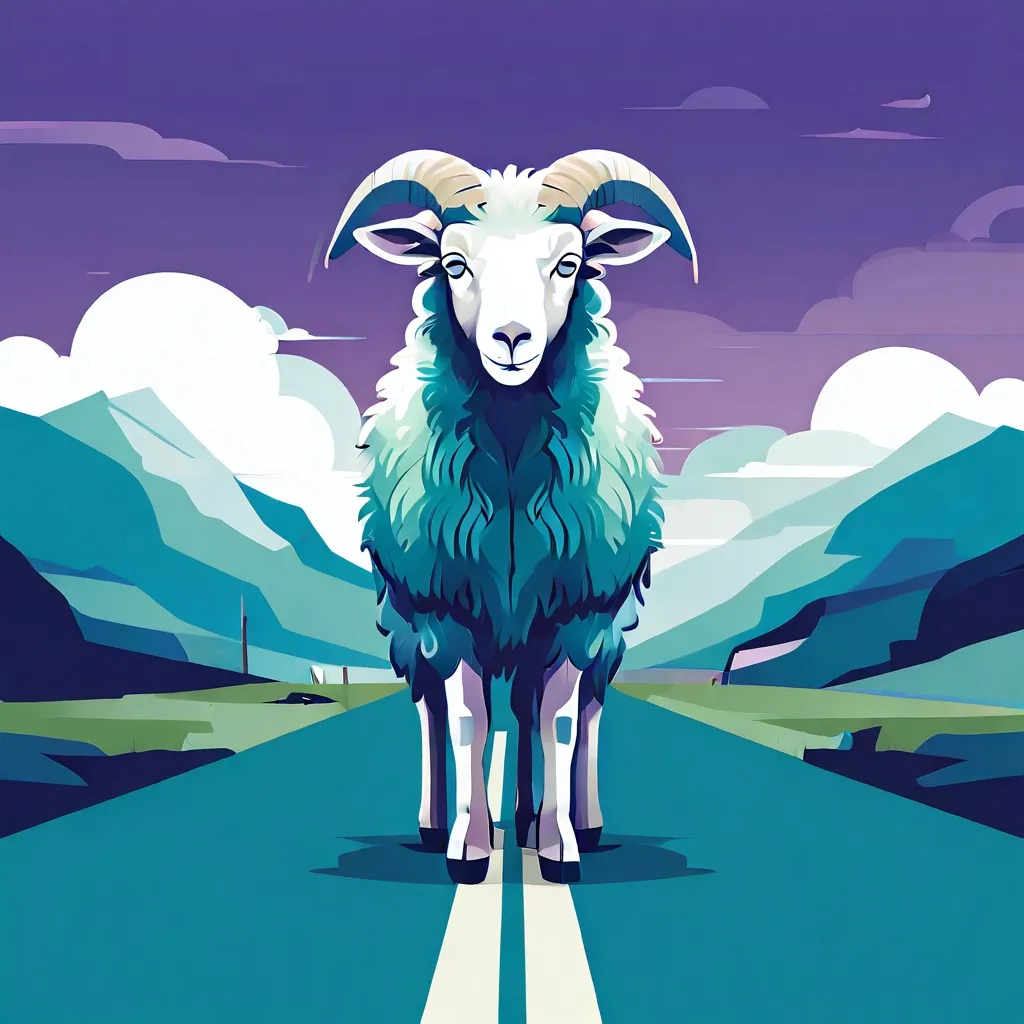
Driving in Iceland often involves encountering livestock on or near the roads. This article clarifies the essential legal obligations you must follow if you are involved in an accident with farm animals like sheep, horses, or cows. Understanding these procedures is critical for responsible driving and is a key topic for your Icelandic driving theory knowledge.
Article content overview
Driving in Iceland, particularly outside of urban centers, often involves navigating roads where livestock may be present. Sheep, horses, and even cows can be found on or near the roadside, presenting a unique challenge to drivers. While encountering these animals is a part of the Icelandic driving experience, it is crucial to understand your legal obligations should an accident occur. This article will guide you through the essential steps and legal requirements for reporting livestock accidents in Iceland, a critical topic for understanding Icelandic traffic law and ensuring road safety.
Iceland's vast, open landscapes are home to a significant population of farm animals, especially sheep, which roam freely during the warmer months. This means that encountering livestock on or adjacent to roads is not an uncommon occurrence. Drivers must remain vigilant, as animals can appear suddenly, and their behaviour can be unpredictable. This is especially true when young animals are present, as they may move erratically to stay close to their mothers. Many roads in Iceland are not fenced, and drivers are expected to anticipate the possibility of animals appearing.
The Icelandic Transport Authority, Samgöngustofa, emphasizes that drivers should exercise extreme caution in areas known for livestock. Even at recommended speeds, it can be difficult to avoid an animal that darts into the road. This underscores the importance of attentive driving and understanding what to do if a collision is unavoidable. Awareness of potential hazards, including livestock, is a fundamental aspect of preparing for your Icelandic driving theory test.
In Iceland, if you are involved in an accident with livestock, such as sheep, horses, or cows, you have a legal duty to report it. This is not merely a suggestion but a requirement under Icelandic traffic law. The primary reasons for this reporting requirement are to ensure the welfare of the animal, to inform the animal's owner, and to facilitate any necessary insurance claims for damage to either the vehicle or the animal. Failing to report an accident involving livestock can have legal consequences.
The process for reporting can vary slightly depending on the specific circumstances, but the core principle remains the same: prompt and honest reporting is essential. This aligns with the broader ethos of responsibility and accountability that is valued within Icelandic society, including its farming communities.
The emergency number in Iceland is 112. If you are involved in a serious accident with livestock, or if you are unsure of the animal's condition, or if you cannot locate the owner, contacting 112 is often the first and most appropriate step. The emergency services can then assist in contacting the appropriate authorities or help in identifying the owner of the animal. This is particularly helpful as Iceland utilizes ear tags on its livestock, which can be used to identify the farmer or owner of the animal.
The police, through their connection to 112, can help trace the owner of the livestock by examining ear tag identification. This ensures that the farmer is notified about the incident involving their animal, allowing them to assess the situation and take necessary steps for its care.
If the accident is minor, the animal appears unharmed and has moved away from the road, and you are in a location where you can reasonably identify the nearest farm or property, you may be able to contact the owner directly. However, this can sometimes be challenging in rural Iceland where farms may be widely dispersed. The ear tag system is designed to make this easier if you can safely observe the animal's tag and the authorities can assist in tracing it.
It is important to approach this situation with respect and honesty. The farming community relies heavily on their livestock, and direct communication can often resolve matters efficiently and amicably. If you are able to ascertain the owner's identity, a direct report can be just as effective as reporting to the authorities, provided it is done promptly.
When an accident involving livestock occurs, your immediate actions are crucial for both legal compliance and the well-being of the animal. Safety should always be your paramount concern.
After stopping your vehicle at a safe location, away from traffic, your first priority is to ensure your own safety and that of any passengers. Check for injuries. If the accident has caused significant damage to your vehicle, or if the animal is still in a dangerous position on the road, you may need to alert other drivers to the hazard.
If it is safe to do so, try to ascertain the condition of the animal. Even if the animal appears to have run off, it could be injured and require veterinary attention. The instinct of an animal might be to flee pain, not necessarily to indicate that it is unharmed.
As much as possible, document the accident scene. This can be invaluable for insurance purposes and in fulfilling your reporting obligations. Take photographs of the vehicle damage, the location of the accident, and if possible, the animal involved. Note down the exact location, time, and any details you recall about the incident. This detailed record can be extremely helpful in explaining the circumstances to the authorities or the animal's owner.
Understanding who is liable in a livestock accident and how insurance works is an important part of responsible driving in Iceland. While it might seem unfair to be held responsible for an animal that unexpectedly entered the road, Icelandic law can place liability on the driver if negligence is proven.
One of the most significant factors in determining liability is whether the driver was adhering to the speed limits and driving appropriately for the conditions. Iceland has recommended maximum speed signs, often displayed on blue square backgrounds, which indicate speeds lower than the general limit due to specific road conditions. These signs are particularly relevant in areas where livestock are common.
If an accident occurs and it is determined that the driver was exceeding the speed limit or driving in a reckless manner, they are more likely to be held liable for the damage caused, including the value of the animal. The Icelandic Transport Authority stresses that adapting your speed to conditions, especially when livestock is a known hazard, is a critical aspect of safe driving.
Farmers have a vested interest in the safety of their livestock and will often pursue claims for the loss or injury of their animals. Promptly reporting the accident helps initiate the insurance process for both parties. If the animal is killed or severely injured, the farmer may be entitled to compensation for its market value.
For vehicle damage, your own comprehensive insurance may cover the costs, depending on your policy. The reporting of the incident to the authorities or the owner helps to establish the circumstances for your insurance provider. Honesty and cooperation are highly valued, and they can significantly smooth the process for all involved.
The Icelandic driving theory exam often tests candidates' understanding of specific driving conditions unique to Iceland, including the presence of livestock. Examiners want to ensure you are aware of potential hazards and know how to react safely and legally.
One common question type involves scenarios where drivers see sheep near the road. The incorrect responses often suggest aggressive actions like honking loudly or speeding by. The correct approach, consistently emphasized by Samgöngustofa, is to slow down, maintain a close watch on the animals, and be prepared for them to move unexpectedly, especially if a lamb is separated from its mother.
Another area often tested relates to your actions after an accident. Misunderstandings about the legal obligation to report, or incorrect assumptions about who to contact, are common mistakes. Remember that reporting is not optional; it is a legal requirement designed to protect animal welfare and to facilitate resolution of damages.
To help you prepare for the Icelandic driving theory test and to ensure you understand the concepts in this article, here are some key terms:
Encountering livestock on Icelandic roads is an integral part of the driving experience. While these encounters can present unique challenges, understanding your legal duties and responsibilities is paramount. By remaining vigilant, adapting your speed to prevailing conditions, and knowing precisely what steps to take in the event of an accident, you can contribute to both your own safety and the welfare of the animals. Always remember your legal obligation to report any incident involving livestock to the authorities or the owner, a crucial detail for passing your Icelandic driving theory test and for driving responsibly in Iceland.
In Iceland, drivers have a legal duty to report any accident involving livestock such as sheep, horses, or cows, whether to the authorities by calling 112 or directly to the animal's owner. The Icelandic ear tag system helps authorities identify owners, and drivers should document accidents thoroughly for insurance purposes. Speed limits and recommended speeds are critical in determining liability, as drivers who are negligent or exceed posted limits are more likely to be held responsible for damages. The theory exam frequently tests understanding of these obligations, including proper responses when encountering animals near roads and the mandatory reporting requirement.
A short set of high-value points that capture the most important ideas from this article.
Reporting any livestock accident to authorities or the animal's owner is a legal requirement under Icelandic traffic law, not optional.
Call 112 if the animal is injured, the owner cannot be located, or you are unsure of the correct procedure.
Icelandic livestock wear ear tags that authorities use to identify owners, so note any visible tags.
Speed and driving conduct are key factors in determining liability if an accident occurs.
Even if an animal appears to have fled unharmed, it may be injured and still requires reporting.
The emergency number 112 connects you to services that can trace livestock owners via ear tag identification.
Recommended speed signs (blue square) indicate conditions requiring lower speeds, often due to livestock hazards.
Document the incident with photos, location, time, and damage details for insurance and reporting purposes.
Liability can be placed on the driver if negligence or exceeding speed limits is proven.
Honesty and prompt reporting are expected and facilitate smoother resolution for all parties.
Assuming that reporting is only needed if the animal appears seriously injured or killed.
Believing an animal that runs away after a collision is necessarily unharmed and requires no further action.
Thinking drivers are never liable for accidents with animals that suddenly appear on the road.
Failing to adapt speed in areas known for livestock and then facing liability claims as a result.
Not documenting the accident scene, making it difficult to file insurance claims or fulfill reporting obligations.
Article content overview
A short set of high-value points that capture the most important ideas from this article.
Reporting any livestock accident to authorities or the animal's owner is a legal requirement under Icelandic traffic law, not optional.
Call 112 if the animal is injured, the owner cannot be located, or you are unsure of the correct procedure.
Icelandic livestock wear ear tags that authorities use to identify owners, so note any visible tags.
Speed and driving conduct are key factors in determining liability if an accident occurs.
Even if an animal appears to have fled unharmed, it may be injured and still requires reporting.
The emergency number 112 connects you to services that can trace livestock owners via ear tag identification.
Recommended speed signs (blue square) indicate conditions requiring lower speeds, often due to livestock hazards.
Document the incident with photos, location, time, and damage details for insurance and reporting purposes.
Liability can be placed on the driver if negligence or exceeding speed limits is proven.
Honesty and prompt reporting are expected and facilitate smoother resolution for all parties.
Assuming that reporting is only needed if the animal appears seriously injured or killed.
Believing an animal that runs away after a collision is necessarily unharmed and requires no further action.
Thinking drivers are never liable for accidents with animals that suddenly appear on the road.
Failing to adapt speed in areas known for livestock and then facing liability claims as a result.
Not documenting the accident scene, making it difficult to file insurance claims or fulfill reporting obligations.
Explore related topics, search based questions, and concepts that learners often look up when studying Report Livestock Accidents Iceland. These themes reflect real search intent and help you understand how this topic connects to wider driving theory knowledge in Iceland.
Find clear and practical answers to common questions learners often have about Report Livestock Accidents Iceland. This section helps explain difficult points, remove confusion, and reinforce the key driving theory concepts that matter for learners in Iceland.
You must immediately report the accident to the police by calling 112 or contact the animal's owner if known. This is a legal requirement in Iceland, regardless of the animal's condition.
Reporting is crucial for the animal's welfare, as it may have internal injuries requiring veterinary care. It's also necessary for insurance claims related to vehicle damage and potential loss of the animal.
Drivers can be held liable for the value of the animal if speeding or driving recklessly contributed to the accident. Reporting the incident promptly helps with the insurance process for vehicle damage.
Yes, if you report the accident to the police (112) and provide your location, they can often identify the farmer, especially if the animal has ear tags.
While Samgöngustofa emphasizes safe driving and animal welfare, the legal obligation to report such accidents falls under general Icelandic law, with enforcement and reporting procedures involving the police (112).
Refine your driving theory knowledge by exploring more focused articles. Use our comprehensive search to find additional detailed explanations on any Icelandic road rule, traffic situation, or driving procedure to ensure complete readiness for your exam.