Speed limits are fundamental traffic regulations designed to balance efficient traffic flow with essential road safety. In Iceland, these limits vary significantly by road type, from urban areas to expansive rural and gravel roads. Understanding these maximum legal speeds is only the first step; new drivers must also master the critical skill of adapting their speed to current conditions, traffic density, and environmental factors.
Theory topic content overview
Read the full theory topic guide for Icelandic Speed Limits with structured, easy-to-scan content built for learners in Iceland. This detailed section explains the exact rule, meaning, traffic context, comparison points, and exam logic behind this Icelandic driving theory topic so you can study faster, understand the concept more clearly, and avoid common interpretation mistakes on the theory test.
Speed limits are fundamental traffic regulations that dictate the maximum legal speed a vehicle is permitted to travel on a particular stretch of road. They are indicated by circular signs with a red border and a number (e.g., 50) in kilometres per hour (km/h). While these signs provide the legal ceiling, it's crucial for drivers in Iceland to understand that a speed limit is not a recommendation for a safe speed in all conditions.
This distinction is central to safe driving in Iceland:
Speed limits are not arbitrary; they are carefully set to enhance road safety in Iceland, protect all road users, and manage traffic flow. Their importance is amplified by Iceland's diverse and often challenging driving environments, from busy urban centres to remote, weather-exposed gravel roads.
In Iceland, speed limits vary depending on the type of road and location. Familiarity with these Icelandic speed limits is essential for all drivers.
The general common speed limits you will encounter are:
Always look for posted speed limit signs, as these override general rules and can change frequently. You may also encounter variable speed limit signs, especially in areas prone to adverse weather, which adjust the maximum speed based on real-time conditions.
Knowing the legal maximum Icelandic speed limits is only the first step. A skilled driver constantly assesses and adapts their speed to conditions. Factors demanding a reduction in speed include:
Consider these typical Icelandic driving situations:
Learners and even experienced drivers in Iceland often make critical errors related to speed:
Driving faster than the legal speed limit in Iceland is an offence. Law enforcement, including police and Samgöngustofa, actively monitors speeds through patrols and fixed speed cameras placed in accident-prone areas across the country.
The consequences of speeding can include:
The fundamental principle for all drivers in Iceland is to always adapt your speed. While the posted Icelandic speed limits provide the legal maximums for urban, gravel, and paved roads, your actual driving speed must be continuously evaluated and adjusted based on:
Mastering speed adaptation is not just about passing your Icelandic driving theory exam; it is a critical skill for safe and responsible driving throughout Iceland's unique and beautiful, yet often demanding, road network.
Iceland's speed limits establish maximum legal speeds for different road types: 30-50 km/h in urban areas, 80 km/h on gravel roads, and 90 km/h on paved routes like the Ring Road. However, these limits are not recommendations - safe driving requires continuously adapting speed based on road surface, weather, visibility, and traffic conditions. Adverse conditions often demand speeds far below the posted maximum, and exceeding limits carries real consequences including fines, penalty points, and licence suspension enforced by Samgöngustofa. The fundamental skill is judging your safe speed based on what you can see ahead and how quickly you can stop.
A short set of high-value points that capture the most important ideas from this theory explanation.
Speed limits are maximum legal speeds, not safe recommendations in all conditions
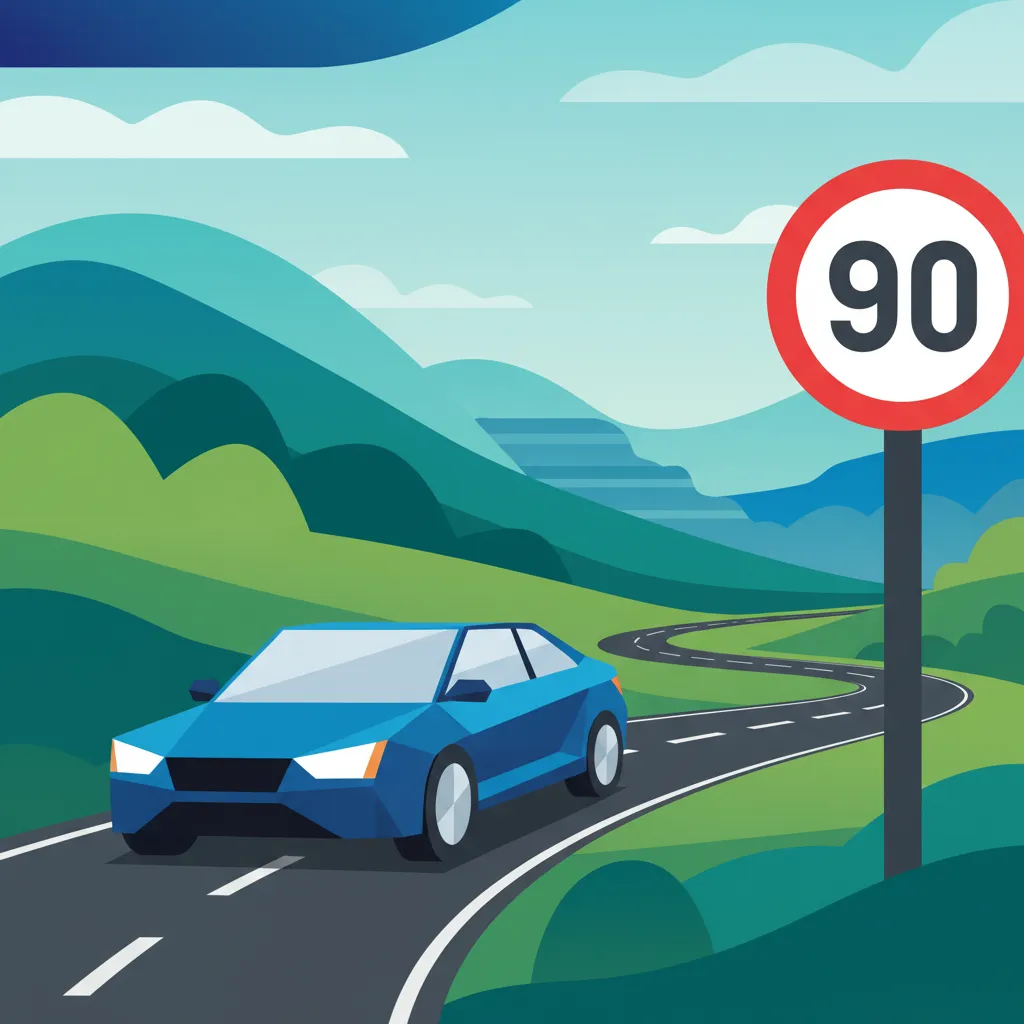
Icelandic speed limits: 30-50 km/h in urban areas, 80 km/h on gravel roads, 90 km/h on paved roads outside urban zones
Always adapt your speed to road conditions, weather, visibility, and traffic density
Adverse weather (ice, snow, fog, strong winds) requires significant speed reduction below posted limits
Gravel roads demand much lower speeds than the 80 km/h maximum due to surface conditions and wildlife hazards
In built-up areas without signs, the default urban speed is 50 km/h
Gravel roads are limited to 80 km/h maximum, but conditions often require speeds of 30-40 km/h
Black ice is particularly deceptive - reduces grip without visible warning
Stopping distance increases dramatically in wet or icy conditions
Speed adaptation is a continuous assessment, not a one-time decision
Assuming the posted maximum speed is always safe and appropriate for conditions
Driving too fast on gravel roads, leading to loss of control or punctures
Failing to reduce speed significantly in poor weather conditions such as rain, snow, or ice
Underestimating stopping distances at higher speeds or in adverse conditions
Over-relying on ABS and traction control systems to compensate for excessive speed
Start with a short, direct summary of Icelandic Speed Limits before reading the full explanation below.
Speed limits in Iceland define the maximum legal speed a vehicle may travel, not necessarily the safe or recommended speed. Common limits are 30-50 km/h in urban areas, 80 km/h on gravel roads, and 90 km/h on paved roads outside urban areas. Drivers are legally required to always adjust their speed based on current road conditions, visibility, and traffic, even if this means driving below the posted maximum limit.
Review the most important terms, rule signals, and traffic concepts linked to Icelandic Speed Limits.
Explore related theory topic pages connected to Icelandic Speed Limits and continue with the next useful rule explanation.
See the common search queries learners use when trying to understand Icelandic Speed Limits in Iceland.

Ready to master Icelandic driving theory? Explore our comprehensive sections. Review road rules, traffic signs, and critical concepts. Build essential knowledge for confident and safe driving in Iceland. Start studying today.
Explore Icelandic Driving TheoryTheory topic content overview
A short set of high-value points that capture the most important ideas from this theory explanation.
Speed limits are maximum legal speeds, not safe recommendations in all conditions
Icelandic speed limits: 30-50 km/h in urban areas, 80 km/h on gravel roads, 90 km/h on paved roads outside urban zones
Always adapt your speed to road conditions, weather, visibility, and traffic density
Adverse weather (ice, snow, fog, strong winds) requires significant speed reduction below posted limits
Gravel roads demand much lower speeds than the 80 km/h maximum due to surface conditions and wildlife hazards
In built-up areas without signs, the default urban speed is 50 km/h
Gravel roads are limited to 80 km/h maximum, but conditions often require speeds of 30-40 km/h
Black ice is particularly deceptive - reduces grip without visible warning
Stopping distance increases dramatically in wet or icy conditions
Speed adaptation is a continuous assessment, not a one-time decision
Assuming the posted maximum speed is always safe and appropriate for conditions
Driving too fast on gravel roads, leading to loss of control or punctures
Failing to reduce speed significantly in poor weather conditions such as rain, snow, or ice
Underestimating stopping distances at higher speeds or in adverse conditions
Over-relying on ABS and traction control systems to compensate for excessive speed
Start with a short, direct summary of Icelandic Speed Limits before reading the full explanation below.
Speed limits in Iceland define the maximum legal speed a vehicle may travel, not necessarily the safe or recommended speed. Common limits are 30-50 km/h in urban areas, 80 km/h on gravel roads, and 90 km/h on paved roads outside urban areas. Drivers are legally required to always adjust their speed based on current road conditions, visibility, and traffic, even if this means driving below the posted maximum limit.
Review the most important terms, rule signals, and traffic concepts linked to Icelandic Speed Limits.
Explore related theory topic pages connected to Icelandic Speed Limits and continue with the next useful rule explanation.
See the common search queries learners use when trying to understand Icelandic Speed Limits in Iceland.
Ready to master Icelandic driving theory? Explore our comprehensive sections. Review road rules, traffic signs, and critical concepts. Build essential knowledge for confident and safe driving in Iceland. Start studying today.
Explore Icelandic Driving TheoryUse this exam-focused revision tip to understand how Icelandic Speed Limits is likely to appear in theory questions for learners in Iceland. This section helps you identify the most testable part of the rule, avoid common traps, and remember the concept more effectively during Icelandic driving theory exam preparation.
Remember that speed limits are *maximums*, not recommendations. In the Icelandic driving theory exam, pay close attention to questions that test your understanding of adapting speed to various conditions (e.g., gravel roads, ice, fog), not just knowing the default numbers. A common mistake is assuming the maximum limit is always safe.
Read direct answers to the most common learner questions about Icelandic Speed Limits in Iceland. This FAQ focuses on rule confusion, practical meaning, comparison with similar concepts, and the exact uncertainties that appear most often in Icelandic driving theory revision and exam preparation.
The general speed limits in Iceland are 30-50 km/h in urban areas, 80 km/h on gravel roads, and 90 km/h on paved roads outside urban areas, unless otherwise indicated by signs.
No, the posted speed limit is the *maximum* legal speed. You must always adjust your speed to be appropriate for the actual road conditions, traffic, weather, and visibility, even if this means driving slower than the limit.
Gravel roads have lower speed limits (typically 80 km/h) because they offer less grip and stability than paved roads, increasing braking distances and the risk of losing control, especially at higher speeds.
Consequences for speeding in Iceland can include significant fines, penalty points on your driving record, and in serious cases, driving bans. Fines increase with the severity of the speeding.
Adverse weather conditions like rain, snow, ice, or strong winds significantly reduce grip and visibility in Iceland. You must reduce your speed well below the posted limit to maintain control and ensure safe stopping distances.
Speed cameras in Iceland are strategically placed in areas known for frequent speeding and higher accident rates, often on main roads or near urban entry points.
The Icelandic Transport Authority (Samgöngustofa) emphasizes that drivers are responsible for choosing a speed that is safe for the specific conditions, regardless of the maximum limit. This includes accounting for road surface, traffic, and visibility.
Utilize our advanced practice set search to pinpoint the exact Icelandic driving theory topics you need to review. Filter by subject, difficulty, or question type to create a highly effective study plan and ensure you are fully prepared for your official driving licence test in Iceland.