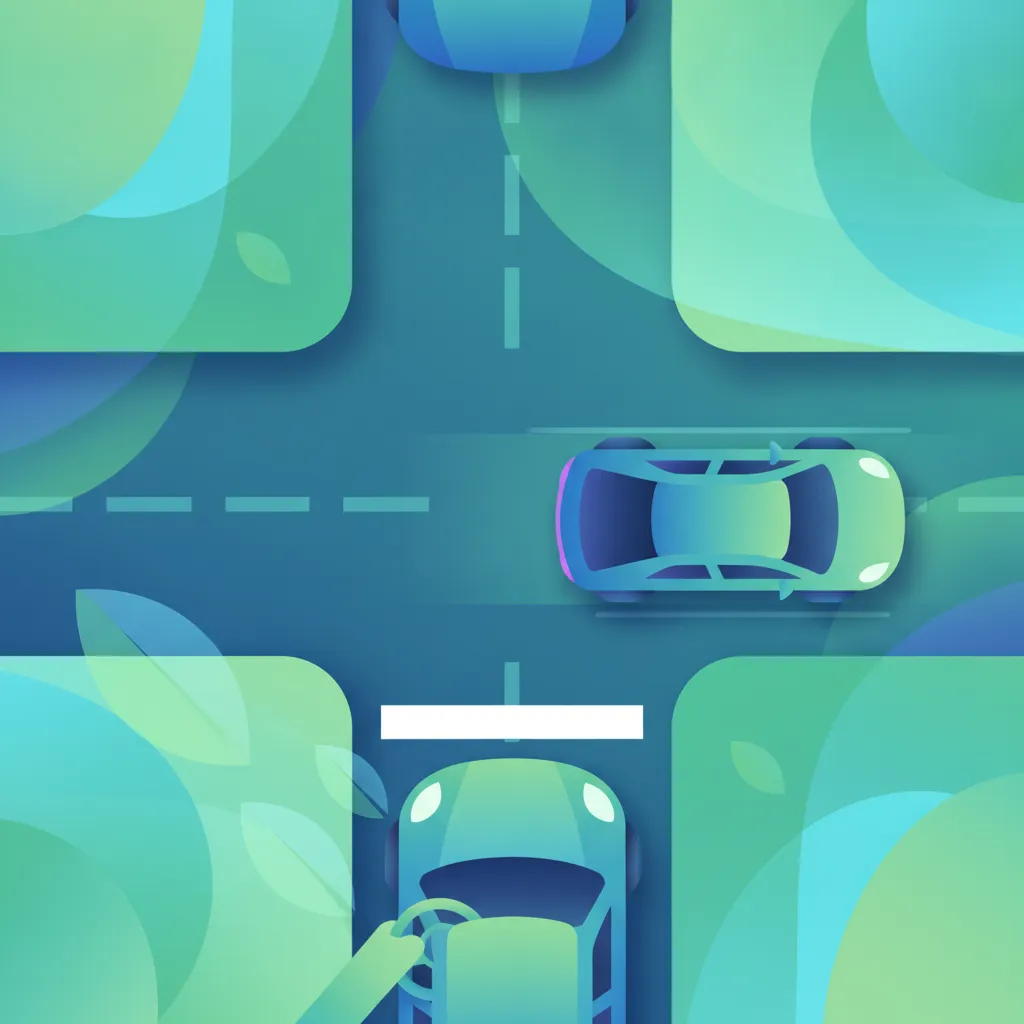
This lesson provides a deep dive into the fundamental right-of-way rules governing Irish roads, essential for both your Category B theory exam and daily driving. By understanding how to interpret junction priorities and yield signals, you will build the situational awareness needed to prevent collisions and navigate traffic with precision.
Lesson content overview
Navigating intersections safely is one of the most critical skills you must master to pass the Irish Category B driver theory test and become a safe, confident driver. Intersections—often referred to as junctions in Ireland—are key conflict points where the paths of multiple road users cross.
Right-of-way is not a legal right to proceed regardless of the situation; rather, it is a set of rules that dictates which road user must yield to another to prevent conflict and ensure a smooth, predictable flow of traffic. Failing to understand these rules is not only a major cause of collisions but also a serious traffic offence under Irish road traffic legislation.
This lesson breaks down the fundamental principles of priority, how to identify major and minor roads, the mechanics of turning right safely, and how to approach every junction with a defensive mindset.
The Irish road network relies on a clear hierarchy of roads to manage traffic flow. The road with the higher volume of traffic or strategic importance is designated as the major road (or priority road), while the intersecting road is designated as the minor road. Vehicles traveling on a major road have precedence over those emerging from or turning onto it from a minor road.
Understanding this hierarchy allows drivers on the major road to maintain progress safely, while requiring drivers on the minor road to wait for a safe, clear gap in traffic before joining or crossing the flow.
When you are driving on a minor road and approaching a major road, you will be alerted to the upcoming junction by physical cues, road signs, and road markings.
In Ireland, the road markings at the mouth of a minor road are highly standardized:
A common mistake among learner drivers is assuming that traveling on a priority road means you do not need to look out for emerging traffic. While you have legal precedence, you must always remain alert.
Emerging drivers may misjudge your speed, have their view blocked, or fail to yield due to distraction. A defensive driver always scans the mouths of minor junctions to ensure emerging vehicles are slowing down and prepared to stop.
In Ireland, we drive on the left side of the road. Consequently, making a right turn requires you to cross the path of oncoming traffic traveling in the opposite direction. This makes right-hand turns one of the most hazardous manoeuvres you will perform.
When turning right at any intersection—whether it is an uncontrolled T-junction, a crossroads, or a signal-controlled junction—you must yield to oncoming traffic that is proceeding straight ahead or turning left.
The oncoming vehicle has the direct path of travel, and your turn cuts across their lane. You may only complete your right turn when there is a gap in oncoming traffic that allows you to clear the junction without forcing oncoming drivers to brake, swerve, or adjust their speed.
Signal and Position: Mirror check, signal your intention to turn right in good time, and position your vehicle just to the left of the centre line of the road (or in the dedicated right-turn lane if one is provided).
Assess Oncoming Traffic: Scan the oncoming lane. Assess the speed, distance, and type of oncoming vehicles. Remember that motorcycles and bicycles can be harder to spot and may approach faster than they appear.
Keep Your Wheels Straight: While waiting for a gap, keep your front wheels pointed straight ahead. If your wheels are turned to the right and you are struck from behind by another vehicle, you will be pushed directly into the oncoming traffic lane.
Commit Only When Safe: Once a safe gap appears, perform a final sweep of your mirrors and blind spots (especially checking for overtaking vehicles or pedestrians crossing the side road), and execute the turn smoothly.
At intersections controlled by traffic lights, you may encounter a green "filter arrow" for right turns.
Approaching an intersection requires a high level of sensory processing and rapid physical adjustments. You cannot afford to arrive at a junction carrying too much speed, as this deprives you of the time needed to observe and react to hazards.
The practice of proactively adjusting your vehicle's speed, position, and gear prior to an intersection to ensure you have complete control and sufficient time to observe, decide, and act safely under any road conditions.
Your approach speed must be dictated by your visibility. At "blind" junctions—where buildings, high hedges, or parked cars block your view of the intersecting road—you must reduce your speed to a slow crawl (often in first gear) so that you can stop instantly if a hazard emerges.
This is particularly critical in rural Irish settings, where narrow roads and high ditches frequently limit your line of sight.
The physical limits of your vehicle and the environment directly affect your ability to yield safely at intersections:
Understanding the precise legal differences between Stop and Yield signs is a common focus of the Irish driver theory test. Confusing the two can lead to immediate failure on a practical driving test and dangerous scenarios on the road.
A Stop sign is not a suggestion. Even if you can see clearly in both directions and there is absolutely no traffic on the major road, you must bring your tyres to a complete rotation stop behind the solid white stop line.
A rolling stop (slowing down without stopping completely) is a serious traffic violation. Once stopped, you must use this pause to perform a thorough scan of the road before deciding to move off.
A Yield sign (often accompanied by double broken white lines on the road) requires you to give way to traffic on the major road, but it does not mandate a complete stop if the road is entirely clear.
If you approach a Yield sign with excellent visibility and can clearly see that there is no oncoming or cross-traffic, you may slip into the major road smoothly without stopping. However, if your view is restricted in any way, you must treat the Yield sign with the same caution as a Stop sign and slow down to a crawl or stop to ensure safety.
Intersections are high-risk zones for vulnerable road users, including pedestrians, cyclists, and motorcyclists. Because these road users have smaller profiles than passenger cars, they are easily overlooked during a driver’s rapid scanning of a junction.
As a general rule under the Irish Rules of the Road, if you are turning from a major road into a minor road, and a pedestrian has already stepped off the footpath and begun crossing that minor road, they have the right-of-way. You must wait and allow them to cross safely before completing your turn.
At designated zebra crossings near intersections, pedestrians have absolute priority. You must stop to allow them to cross if they are waiting at the kerbside or have stepped onto the crossing.
When preparing to turn left or right at a junction, always check your blind spots for cyclists who may be riding up the inside of your vehicle or motorcyclists filtering through stationary traffic.
Never overtake a cyclist immediately before turning left across their path; this is known as a "left hook" and is highly dangerous. Instead, drop back, slot in behind the cyclist, and make your turn once they have cleared the junction.
Even experienced drivers can fall into bad habits that lead to collisions or penalty points. Recognizing these common errors is key to maintaining a perfect safety record.
Many drivers fail to stop completely at Stop signs, particularly at familiar junctions. A rolling stop reduces your observation time to a fraction of a second, making you highly likely to miss low-profile road users like cyclists.
Failing to recognize where a minor road ends and a major road begins can lead to "cutting the corner" or pulling out directly in front of priority traffic. Always look for the broken or solid white lines across your lane.
Sometimes drivers on a major road stop to let a minor-road driver pull out, believing they are being polite. In reality, this "false politeness" is highly dangerous. It disrupts the predictable flow of traffic, confuses other road users, and can cause rear-end collisions from vehicles behind you who do not expect you to stop on a priority road.
In Ireland, yellow box junctions (marked with criss-cross yellow lines) are painted at busy intersections to keep them clear. You must not enter a yellow box unless your exit lane is clear, meaning you can cross the box completely without stopping.
The only exception is if you want to turn right and are prevented from doing so by oncoming traffic or other vehicles waiting to turn right, provided you do not block other traffic.
To solidify your understanding of these principles, let us examine how these rules apply in everyday driving scenarios.
You are driving on a narrow minor road in heavy rain, approaching a T-junction with a major road. High hedges block your view of the road to both the left and right.
You are driving on a priority urban road and wish to turn right into a housing estate. There is a continuous stream of oncoming traffic, but one oncoming driver flashes their headlights at you.
To prepare effectively for your driver theory test, memorize these fundamental priority laws:
Explore all units and lessons included in this driving theory course.
Lesson content overview
Explore all units and lessons included in this driving theory course.
Explore search topics learners often look for when studying Understanding Right-of-Way at Intersections. These topics reflect common questions about road rules, driving situations, safety guidance, and lesson level theory preparation for learners in Ireland.
Browse additional driving theory lessons that cover connected traffic rules, road signs, and common driving situations related to this topic. Improve your understanding of how different rules interact across everyday traffic scenarios.
Learn the official regulations for priority and lane discipline when approaching and exiting multi-lane roundabouts. This lesson explains how to identify traffic flow, use signals correctly, and safely navigate complex junction designs as required by the Rules of the Road in Ireland.
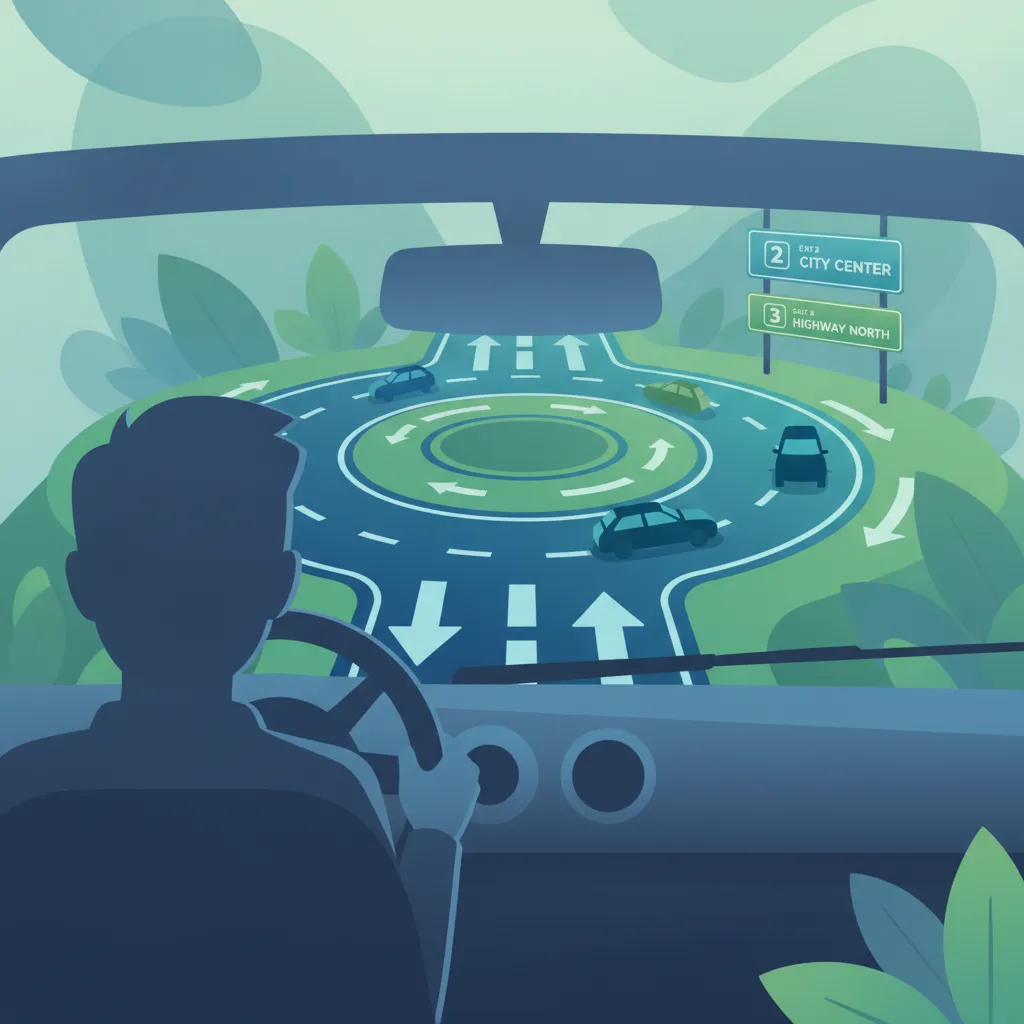
Navigating multi-lane roundabouts requires precise lane selection, continuous scanning, and timely signaling. This lesson teaches you the 'clock rule' for determining which lane to enter, how to yield to traffic already on the roundabout from your right, and when to activate your left indicator to exit. Mastering these procedures minimizes lane-drift accidents and ensures a seamless flow of traffic on busy roundabouts.
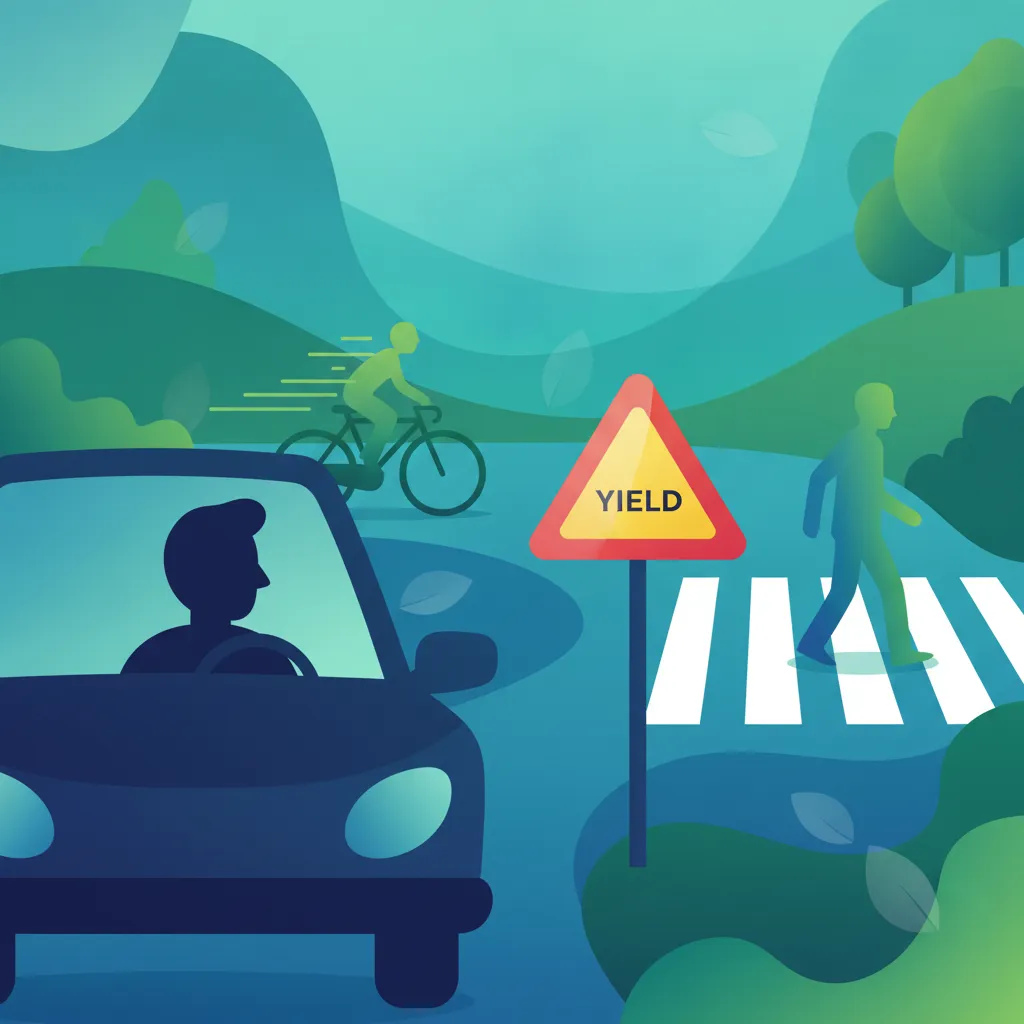
This lesson covers the absolute rules of priority that regulate junctions, roundabouts, and pedestrian crossings in Ireland. It teaches riders when they must yield, who has right-of-way, and how to read Stop and Yield signs correctly. Understanding these priority hierarchies prevents collisions and maintains orderly, predictable movement at busy junctions.

Uncontrolled junctions represent a high-risk scenario because they lack physical signs, lines, or lights to dictate priority. This lesson covers the crucial 'priority to the right' principle, where you must yield to any traffic approaching from your right-hand side. You will learn the importance of reducing your speed, preparing to stop, and verifying the intentions of other drivers at these equal-status crossings.
This lesson provides a comprehensive guide to navigating single and multi-lane roundabouts safely in accordance with the Irish Rules of the Road. It covers correct lane selection on approach, signaling rules for exiting, and maintaining a steady path through traffic. Riders will learn to anticipate lane-changing mistakes made by other drivers and manage the unique banking angles of roundabouts.
This lesson teaches the fundamental principles of priority and right-of-way at controlled and uncontrolled intersections across Ireland. It explains the legal obligations at yield signs, stop lines, and when meeting oncoming traffic turning across your lane. Motorcyclists will learn to carefully verify other drivers' intentions rather than assuming they will yield the correct right-of-way.

Irish driving theory demands that drivers keep to the left-hand side of the road unless overtaking or turning right. This lesson explains how to maintain consistent lane discipline on multi-lane roads, how to perform safe lane changes, and the dangers of drifting. You will learn the safety sequence of checking mirrors, checking blind spots, signalling, and smoothly executing a lane change without disrupting trailing traffic.
Motorways are designed for safe, high-speed travel, but require strict adherence to lane discipline and specific regulations. This lesson explains that the left lane is for normal driving, while middle and right lanes are strictly for overtaking slower traffic. You will learn how to identify motorway exits, use the hard shoulder during absolute emergencies, and understand the legal restrictions placed on learner permit holders.
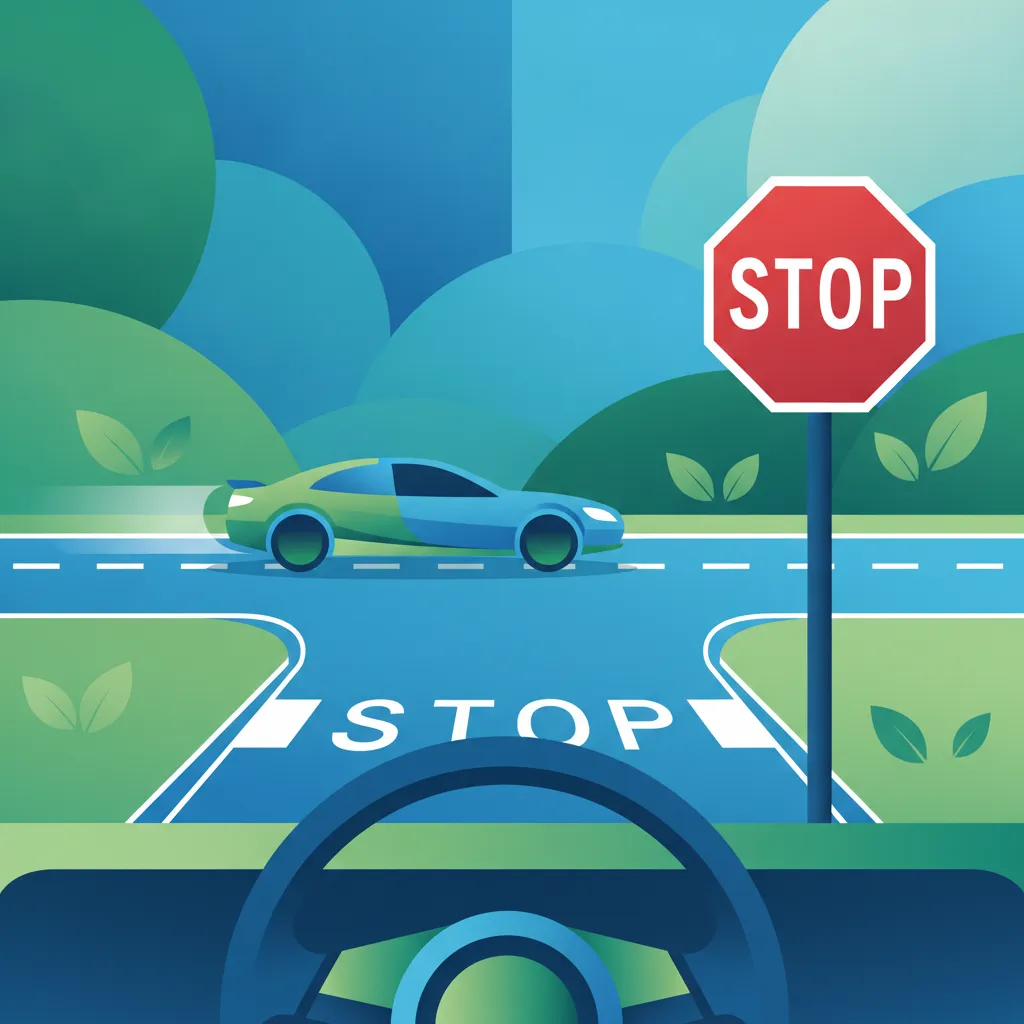
Stop and yield signs require drivers to surrender right-of-way to crossing traffic, but they command different physical actions. This lesson explains that a stop sign mandates a complete, absolute halt behind the line, whereas a yield sign requires you to slow down and stop only if other traffic is approaching. You will learn how to manage restricted visibility at junctions and how to creep forward safely when clear.
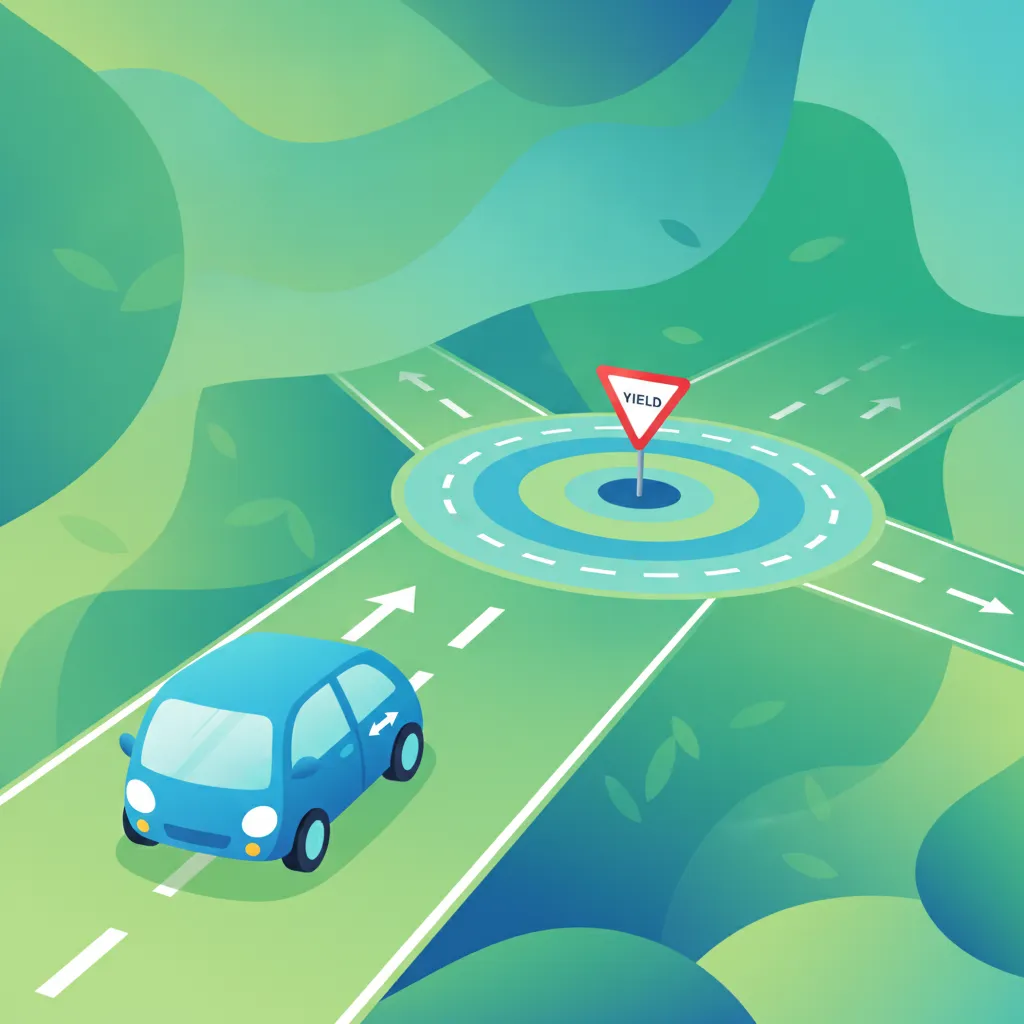
This lesson covers correct procedures for navigating roundabouts, which present significant risks for Category AM riders. It details lane selection rules, timely indicator signals for exiting, and the importance of checking blind spots before shifting lanes. Riders will learn to safely share the roundabout with large vehicles and vulnerable road users.

Overtaking requires rapid judgment, clear visibility, and precise execution to avoid catastrophic head-on collisions. This lesson guides you through checking oncoming traffic, verifying legal passing zones via road markings, and checking mirrors and blind spots before accelerating. You will learn how to signal your intentions, maintain a safe gap, and return to your driving lane smoothly without cutting up the passed vehicle.
Understand how to apply defensive driving principles to minimize risks at urban and rural junctions. This lesson covers hazard anticipation, adjusting speed for limited visibility, and safely managing interactions with vulnerable road users when approaching uncontrolled intersections on Irish roads.
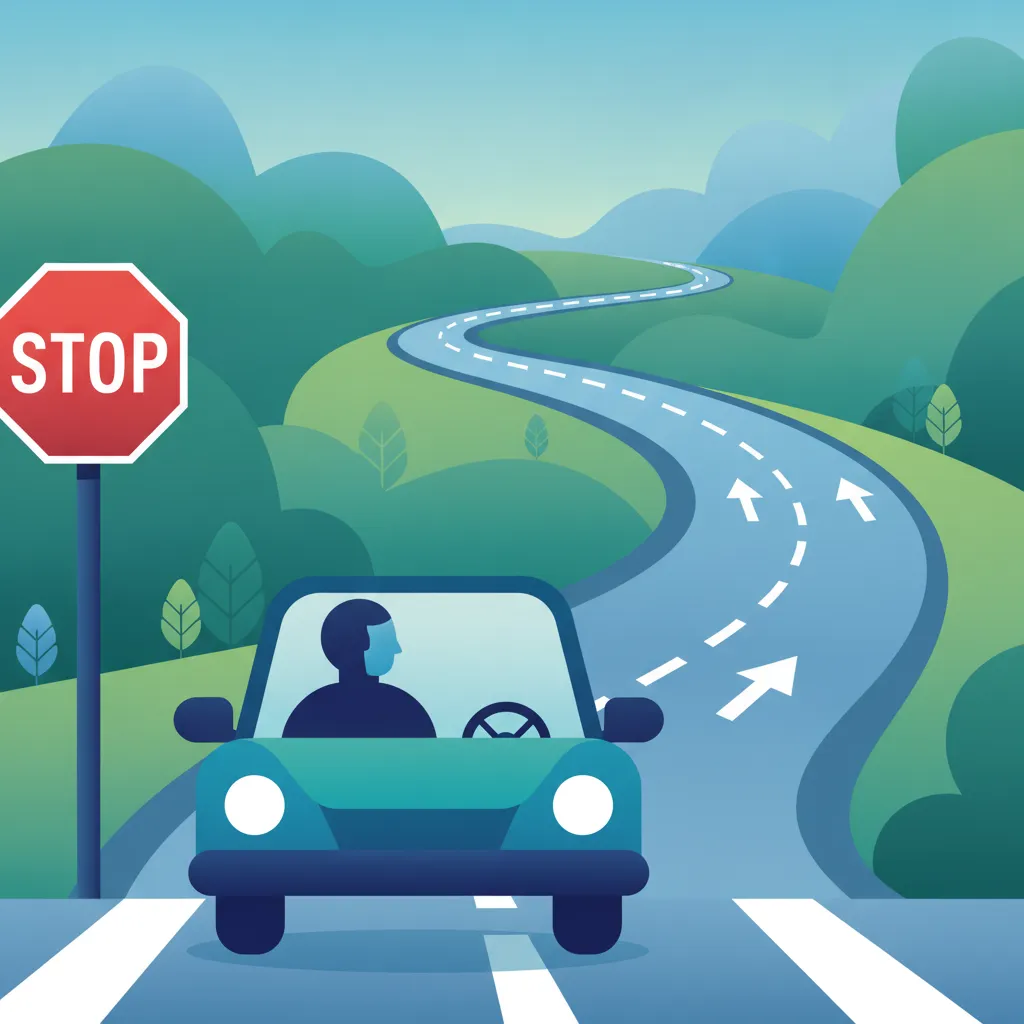
This lesson details the sequential steps required to approach and exit junctions safely under the Irish driving rules. It teaches riders how to select the correct lane, utilize mirrors, apply early signals, and reduce speed appropriately. Effective observation strategies are highlighted to help riders identify crossing pedestrians or approaching side traffic.
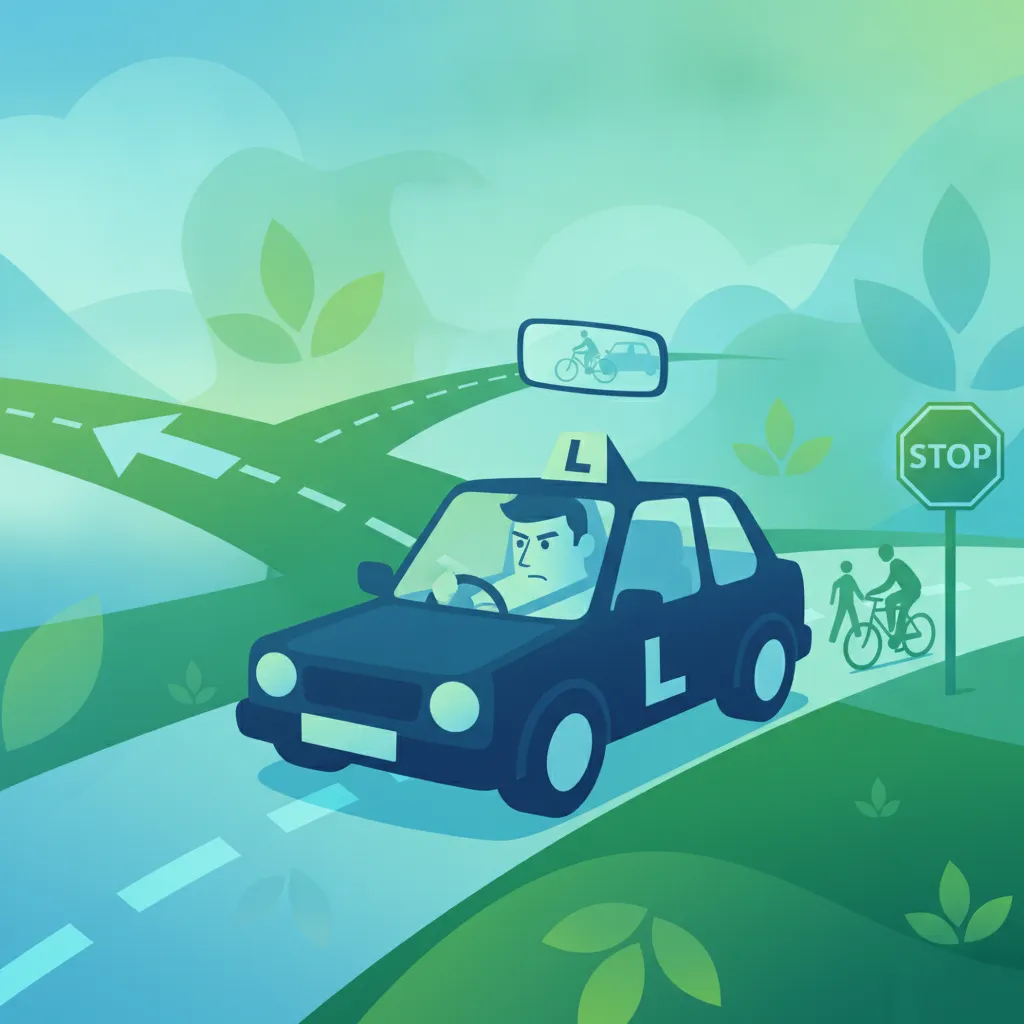
This lesson focuses on the safe approach and execution of turns at T-junctions, staggered intersections, and blind crossroads. It explains the critical mirror-signal-manoeuvre routine and how to select the best position for maximum visibility to cross-traffic. Motorcyclists will learn to identify potential hazards like vehicles pulling out suddenly or turning across their direct path.
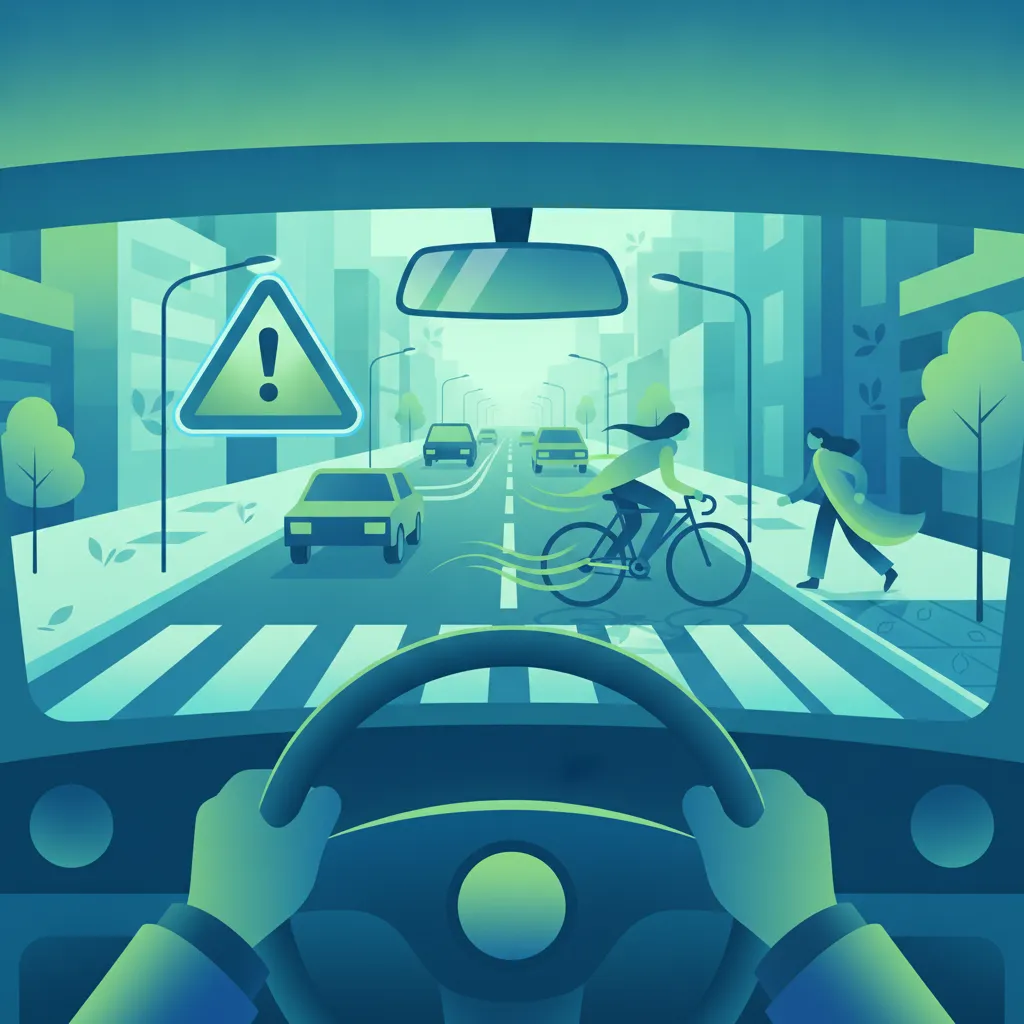
Proactive hazard perception involves constantly scanning the road ahead to identify potential dangers before they turn into actual emergencies. This lesson covers active scanning techniques, helping you look far ahead, check mirrors regularly, and identify subtle risk clues such as exhaust smoke from parked cars or children playing near kerbs. Anticipating these developments gives you the time to adjust speed and position safely.
Uncontrolled junctions represent a high-risk scenario because they lack physical signs, lines, or lights to dictate priority. This lesson covers the crucial 'priority to the right' principle, where you must yield to any traffic approaching from your right-hand side. You will learn the importance of reducing your speed, preparing to stop, and verifying the intentions of other drivers at these equal-status crossings.
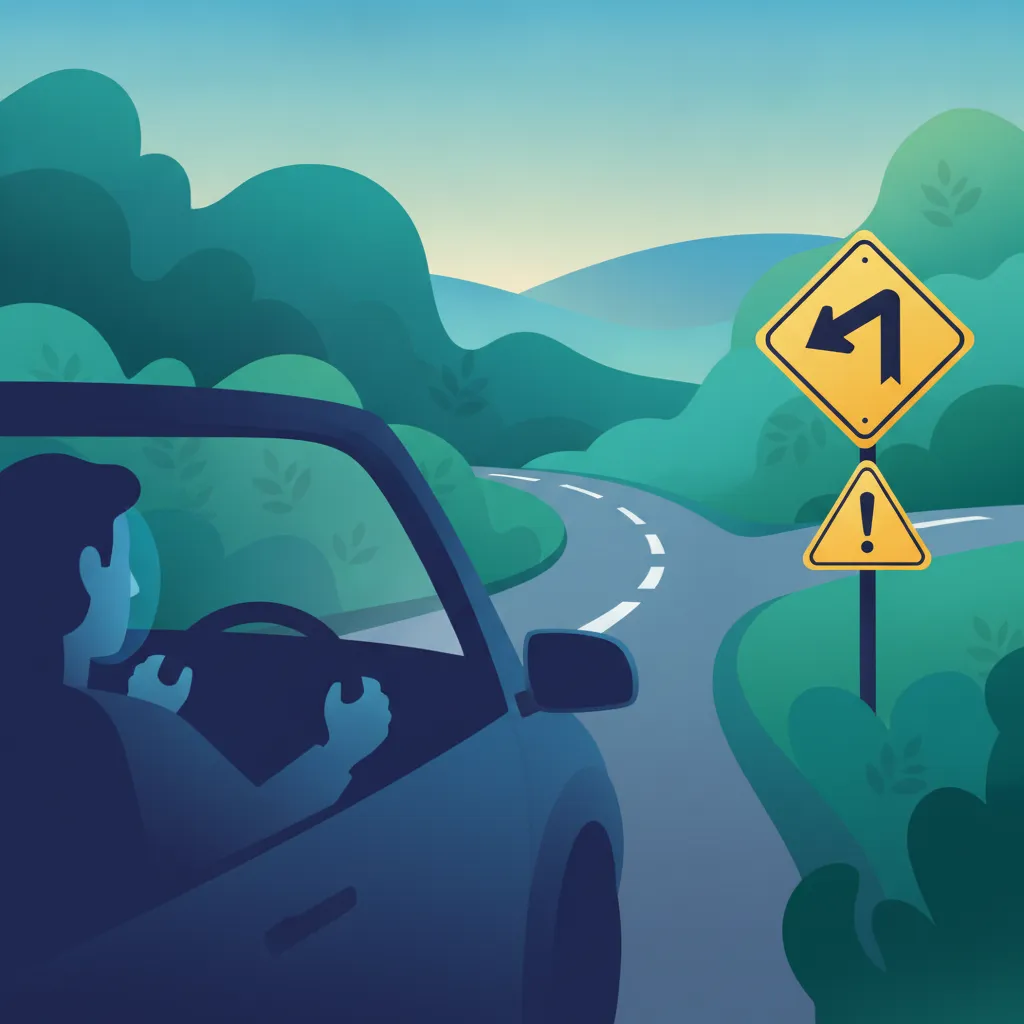
Warning signs in Ireland are typically diamond-shaped with yellow backgrounds and black symbols, indicating potential dangers on the road ahead. This lesson details signs for upcoming sharp bends, narrow roads, steep hills, pedestrian activity, and animal hazards. Learning to spot these warning indicators early allows you to reduce speed safely and adjust your vehicle positioning before encountering the hazard itself.
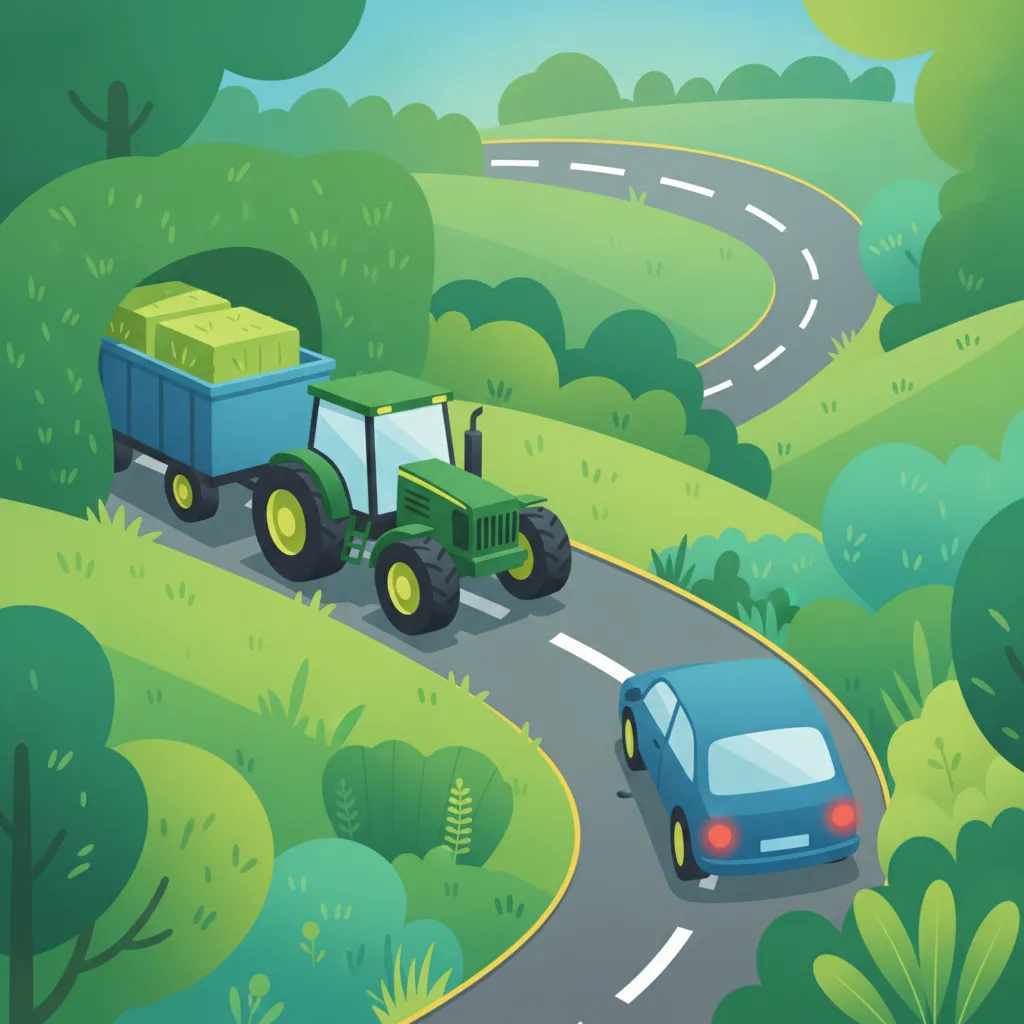
Irish rural roads are often narrow, winding, and bordered by high hedges, presenting unique hazards compared to urban streets. This lesson focuses on scanning for hidden hazards such as slow-moving farm machinery, mud on the road surface, and loose livestock. You will learn how to adjust your speed before entering blind bends, sound your horn at blind crests, and safely share the road with local agricultural traffic.
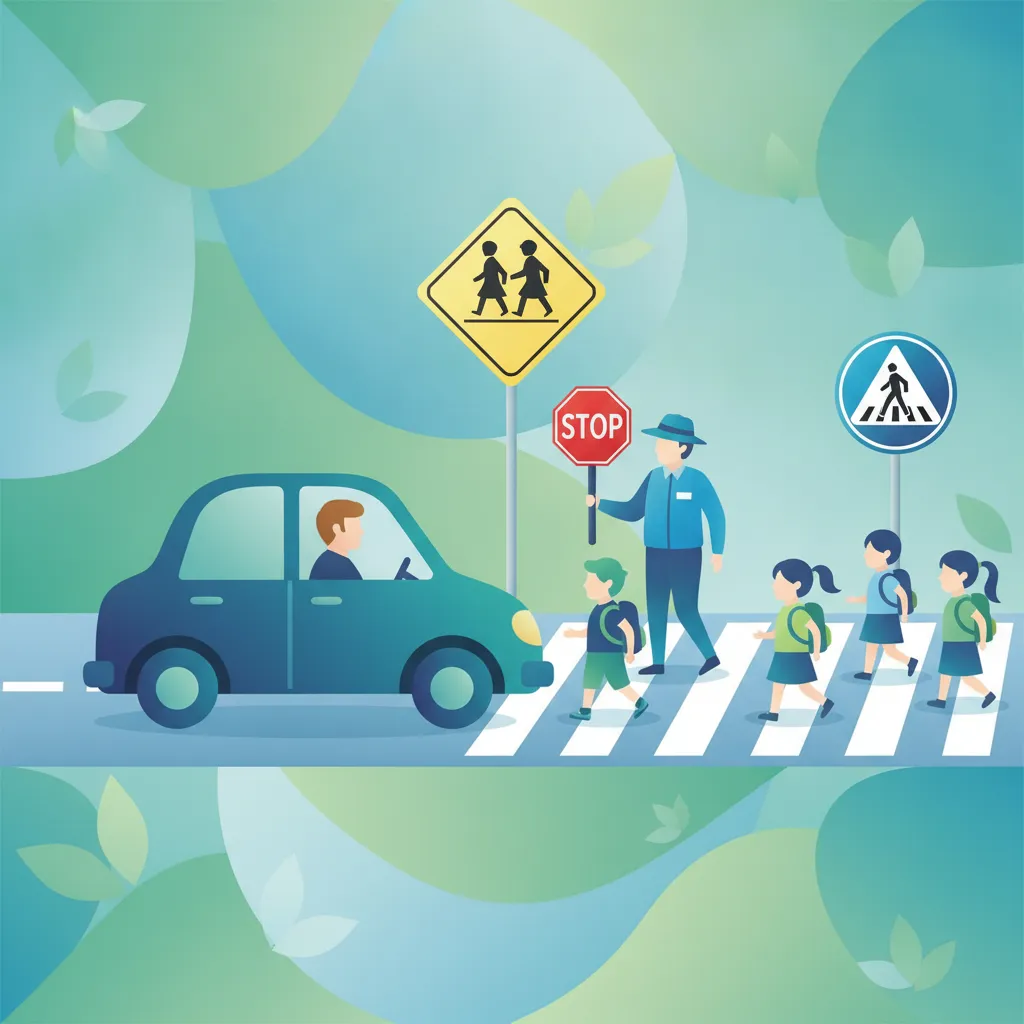
School zones and pedestrian crossings require high driver alertness and strict compliance with local speed limits in Ireland. This lesson details the legal rules of zebra and pelican crossings, explaining driver requirements when amber warning beacons are flashing. Drivers will study safety procedures for dropping off or picking up children, preventing common blind-spot accidents near schools.
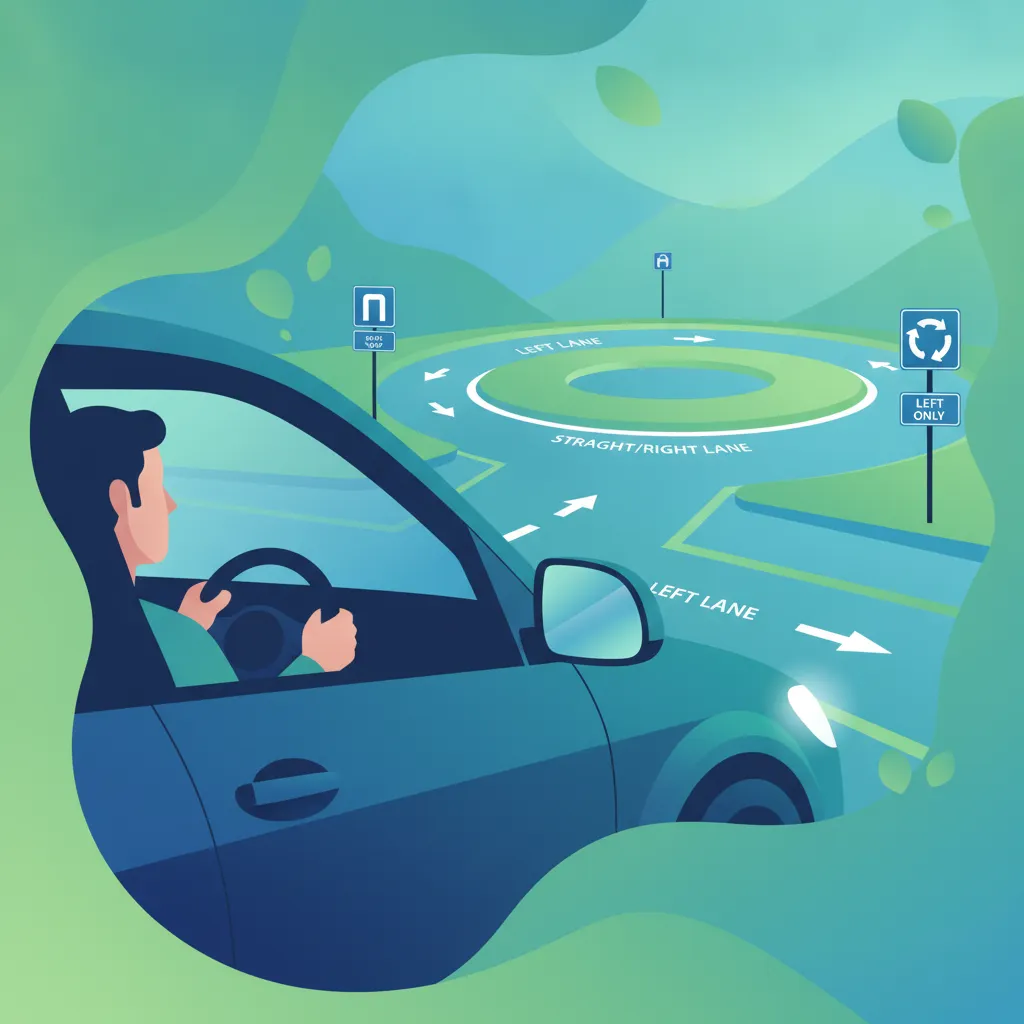
Executing safe turns requires early preparation, correct road positioning, and clear communication with other road users. This lesson focuses on the mandatory Mirror-Signal-Manoeuvre (MSM) routine used across Ireland for turning at cross junctions and navigating roundabouts. You will learn how to choose the correct lane early, adjust your speed, and complete your turn smoothly without cutting corners or blocking trailing vehicles.
Stop and yield signs require drivers to surrender right-of-way to crossing traffic, but they command different physical actions. This lesson explains that a stop sign mandates a complete, absolute halt behind the line, whereas a yield sign requires you to slow down and stop only if other traffic is approaching. You will learn how to manage restricted visibility at junctions and how to creep forward safely when clear.
Bus stops often intersect with designated bicycle lanes and busy walking pathways, creating high-risk conflict areas for drivers. This lesson trains drivers to check blind spots for oncoming cyclists before pulling into or exiting public stop bays. It emphasizes yielding right-of-way to passengers crossing the road, preventing collision risks in active urban transport hubs.
Find clear answers to common questions learners have about Understanding Right-of-Way at Intersections. Learn how the lesson is structured, which driving theory objectives it supports, and how it fits into the overall learning path of units and curriculum progression in Ireland. These explanations help you understand key concepts, lesson flow, and exam focused study goals.
To yield means giving right-of-way to other road users. You must slow down or stop if necessary to ensure that you do not force another driver or pedestrian to change their speed or path.
You must yield to all oncoming traffic that is continuing straight or turning left, and any traffic already at or entering the junction that has the right-of-way, including cyclists and pedestrians.
Yes, traffic emerging from a minor road must yield to traffic on the major road. You should look for signs or markings like a Yield or Stop sign, but even without these, the principle of major-to-minor road priority remains.
Right-of-way scenarios are a core component of the theory test because failing to understand them is a leading cause of traffic accidents. The exam tests your ability to apply these rules to various visual and descriptive scenarios.
Use the practice question search tool to pinpoint specific topics, road signs, or rules you need to master for your official Driver Theory Test. Refine your study strategy and ensure comprehensive preparation for all aspects of the Irish driving exam. Start your focused revision now and build confidence for your learner permit test.