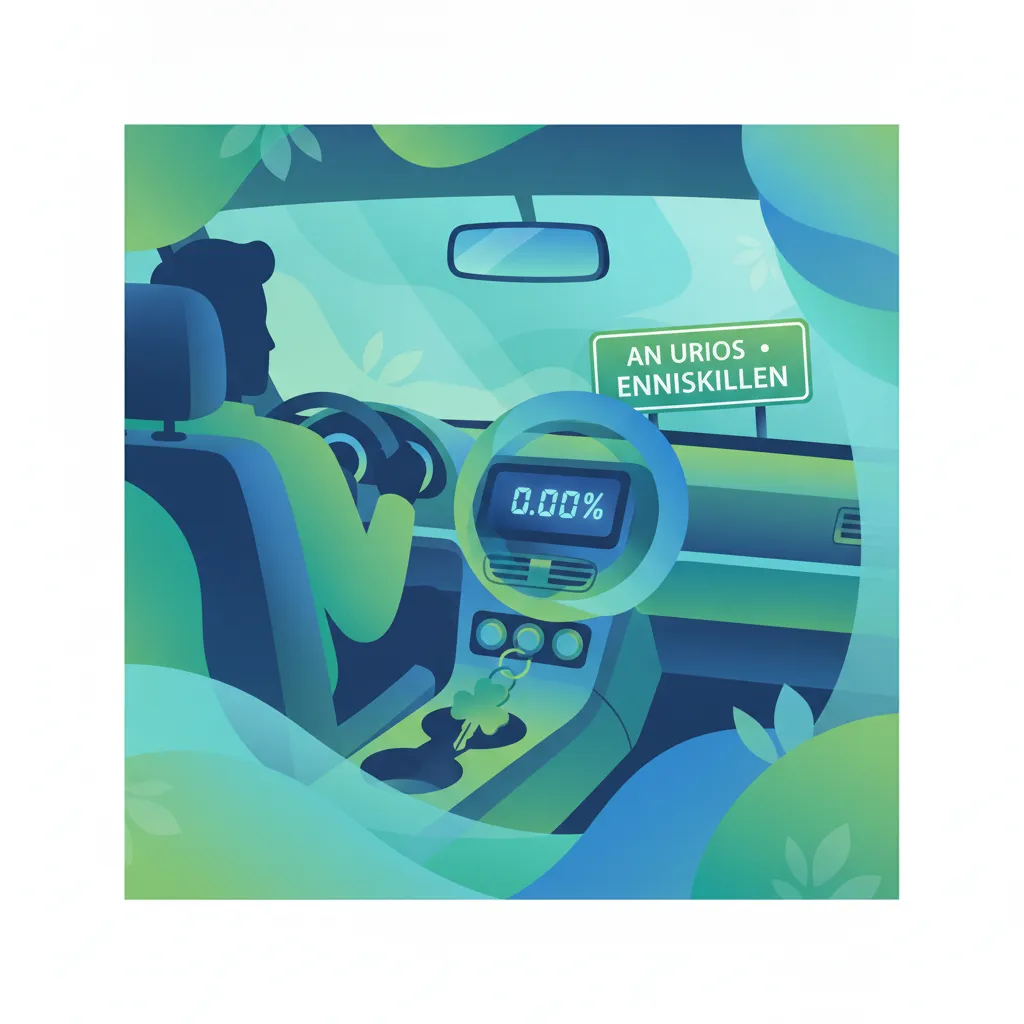
This lesson provides a comprehensive overview of Ireland’s drink-driving laws as they apply to Category B licence holders. It is a vital component of your responsible driving education, focusing on how impairment affects your ability to drive safely and the severe legal consequences of failing to comply with road safety standards.
Lesson content overview
Operating a motor vehicle demands complete concentration, rapid motor coordination, precise depth perception, and split-second decision-making. Alcohol directly impairs every one of these cognitive and physiological faculties.
In Ireland, road traffic laws enforce strict Blood Alcohol Concentration (BAC) limits to mitigate the severe risks associated with drink-driving. Understanding these legal boundaries, the rigorous testing procedures conducted by An Garda Síochána (the Irish police force), and the science of how alcohol behaves in the human body is essential for any road user.
Many drivers mistakenly believe they are safe to drive because they do not "feel" drunk. However, alcohol begins to degrade driving performance long before any outward physical signs of drunkenness appear.
[Alcohol Consumption]
       │
       ▼
[Rapid Absorption in Stomach & Small Intestine]
       │
       ▼
[Bloodstream Carries Alcohol to the Brain]
       │
       ▼
[Depression of Central Nervous System]
       │
       ▼
[Impaired Cognitive & Motor Functions]
When you consume alcohol, it is absorbed directly into your bloodstream through the stomach and small intestine. It travels rapidly to the brain, acting as a central nervous system depressant. The cognitive and physical effects of this depression directly target your driving capabilities:
Ireland utilizes a dual-tier limit system for Blood Alcohol Concentration. The legal limits are determined by your driver category, with a near-zero tolerance threshold applied to less experienced and professional drivers to protect public safety.
The concentration of alcohol present in a driver's bloodstream, measured in milligrams (mg) of alcohol per 100 millilitres (ml) of blood. Equivalent legal thresholds are also established for breath and urine samples.
The Road Traffic Act categorises drivers into two distinct groups, each subject to different legal limits.
This category includes Learner Permit holders (L-plates), Novice drivers (N-plates) in their first two years of holding a full licence, and professional drivers (such as taxi, bus, and heavy goods vehicle operators).
For these drivers, a near-zero tolerance policy is enforced:
Zero Tolerance Means Zero: For a specified driver, even a minor portion of a single standard drink (such as a half-pint of beer or a small glass of wine) can instantly push your system past the 20 mg/100 ml limit. The safest, most responsible rule is simple: never drink any alcohol before driving.
This category applies to experienced drivers holding a full, unrestricted Category B driving licence (and who are not driving a commercial or professional vehicle at the time).
| Driver Category | Blood Limit | Breath Limit | Urine Limit |
|---|---|---|---|
| Specified Drivers (Learner, Novice, Professional) | 20 mg / 100 ml | 9 mcg / 100 ml | 27 mg / 100 ml |
| Fully Licensed Drivers (Unrestricted Category B) | 50 mg / 100 ml | 22 mcg / 100 ml | 67 mg / 100 ml |
Members of An Garda Síochána have extensive statutory powers to deter, detect, and prosecute drink-driving. Roadside enforcement is conducted using highly regulated, scientifically validated procedures.
Gardaí set up designated Mandatory Alcohol Testing (MAT) checkpoints across Irish roads. At these checkpoints, a Garda is legally authorised to request a breath sample from any driver, even if there is no prior suspicion of alcohol consumption or erratic driving.
If you are stopped at a MAT checkpoint or if a Garda suspects you have consumed alcohol, the following statutory process is initiated:
Instruction to Stop: You must pull over safely when directed by a Garda. Failure to stop is a serious offence.
The Preliminary Breath Test: The Garda will present a digital, handheld breathalyser apparatus. You will be instructed to blow a continuous, deep breath into a sterile, one-use plastic mouthpiece until the device signals that it has captured a sufficient sample.
Immediate Analysis: The device analyses the breath sample on-site in seconds.
Pass Result: If your sample is below your legal limit (e.g., below 9 mcg for a learner or 22 mcg for a fully licensed driver), you will be permitted to proceed, provided all other vehicle and licence requirements are met.
Fail Result or Suspicion: If the device registers a fail, or if you refuse to provide a sample, you will be arrested on suspicion of driving under the influence and transported to the nearest Garda station.
The roadside breathalyser is a preliminary screening device. If arrested, you must provide a secondary, legally binding evidential sample at the Garda station.
Some drivers mistakenly believe they can avoid conviction by refusing to blow into the roadside breathalyser or by refusing to provide a blood/urine sample at the station.
Under Irish law, refusing to cooperate with a preliminary or evidential test is a major criminal offence.
If you refuse to provide a specimen without a valid, certified medical reason, you are subject to the exact same prosecution, high-level fines, and lengthy automatic driving disqualifications that apply to drivers caught with the highest concentration of alcohol in their system.
Ireland uses a tiered penalty structure. The severity of the sanction depends on the driver’s licence category and the measured concentration of alcohol in their system.
Due to the zero-tolerance framework, any specified driver found with a BAC between 20 mg and 80 mg per 100 ml of blood faces an automatic 3-month disqualification from driving, alongside a fixed-charge fine.
Exceeding 80 mg/100 ml of blood leads to immediate prosecution in the District Court, resulting in much longer disqualification periods (typically 1 to 3 years or more for repeat offences) and potential imprisonment.
For experienced, fully licensed drivers, penalties scale as follows:
[BAC Level (Blood) - Experienced Driver]
   │
   ├─► 50mg to 80mg  ───► 3-Month Disqualification + Fine
   ├─► 81mg to 100mg ───► 6-Month Disqualification + Fine
   └─► Above 100mg   ───► Direct Court Trial (Up to 6-Year Ban + Prison)
A dangerous and persistent myth among drivers is that certain recovery methods can accelerate the rate at which alcohol is processed and eliminated from the body.
The only factor that reduces the concentration of alcohol in your bloodstream is time.
[Alcohol Molecule] ──► [Processed by Liver Enzymes] ──► [Eliminated as Water & CO2]
                                                            ▲
                                                            │
                                              (Time is the only controller)
The human liver metabolises alcohol at a highly consistent, unchangeable rate. On average, the body processes approximately one standard drink per hour.
In Ireland, a standard drink contains approximately 10 grams of pure alcohol. Examples include a single pub measure of spirits (35.5 ml), a half-pint of beer, or a small glass of wine (100 ml). A full pint of beer or cider typically constitutes two standard drinks.
Many drink-driving arrests occur the morning after a social event. If you consume multiple drinks late into the evening, your liver will continue processing that alcohol throughout the night while you sleep.
When you wake up, even if you feel rested and have showered, you may still have a BAC that exceeds the legal limit—particularly if you are a learner or novice driver subject to the 20 mg zero-tolerance limit.
If you have consumed several alcoholic drinks during an evening, you should avoid driving for the entirety of the following morning, or even the entire day, to ensure the necessary mandatory elapse time has fully occurred.
Alcohol impairment becomes exponentially more dangerous under specific environmental, mechanical, and logistical circumstances:
Driving in heavy rain, thick fog, or on icy roads requires maximum concentration and instant reactions. The visual impairments and slowed reaction times caused by alcohol are amplified during poor conditions, turning minor mistakes into catastrophic collisions.
Impairment at high speeds (such as on motorways) dramatically increases stopping distances. Furthermore, operating heavy vehicles, towing caravans, or pulling trailers with alcohol in your system reduces your ability to counteract trailer sway or execute emergency braking maneuvers safely.
Under Irish law, a Learner Permit holder must be accompanied at all times by a fully licensed driver who has held their Category B licence for at least two continuous years.
It is a serious legal violation if the accompanying driver is under the influence of alcohol. The supervising driver must be fully alert, unimpaired, and legally capable of taking control of the vehicle or instructing the learner driver in an emergency.
As a responsible road user preparing for your Category B driver theory test, you must commit the following key facts and legal principles to memory:
Explore all units and lessons included in this driving theory course.
Lesson content overview
Explore all units and lessons included in this driving theory course.
Explore search topics learners often look for when studying Legal Alcohol Limits and Zero-Tolerance Policies. These topics reflect common questions about road rules, driving situations, safety guidance, and lesson level theory preparation for learners in Ireland.
Browse additional driving theory lessons that cover connected traffic rules, road signs, and common driving situations related to this topic. Improve your understanding of how different rules interact across everyday traffic scenarios.
Learn about the Irish penalty points system and the broader legal responsibilities of a driver. This guide explains how enforcement, licence endorsements, and court-mandated penalties apply to different traffic offences and road violations, helping you understand the long-term impact on your driving licence and legal standing as a road user.
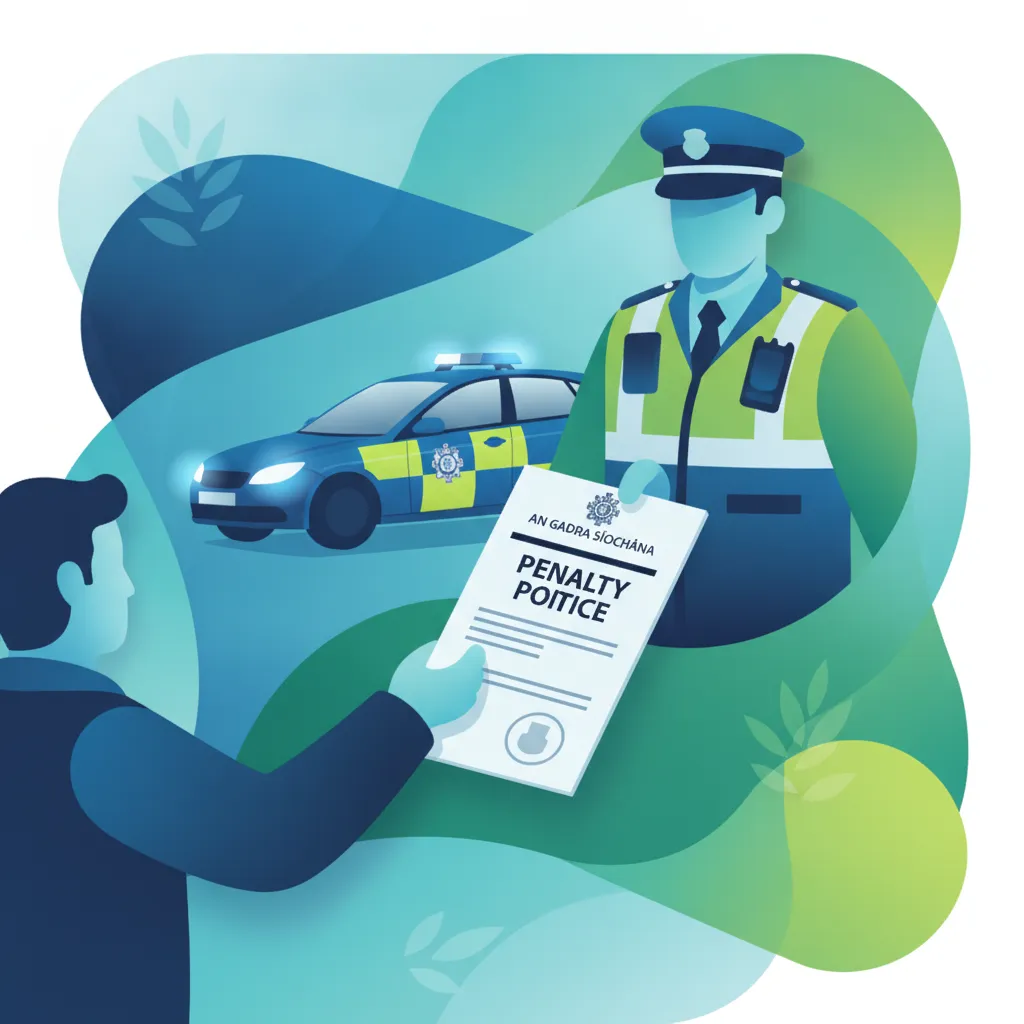
Violating Irish traffic laws triggers a structured enforcement process, starting with fixed charge notices and ending in severe court-ordered bans. This lesson details the roles of the Garda Síochána and the National Car Testing Service in enforcing safety regulations on roads. You will learn how fines are paid, how penalty points are formally added to your NDLS record, and the legal consequences of driving while disqualified.
Violating passenger transport laws can lead to severe operator penalties, heavy fines, and the immediate suspension of driving privileges. This lesson examines common operational infractions, including tachograph violations, overloading offences, and driving with defective tires. Drivers will understand their personal legal liabilities under Irish legislation, supporting long-term safety compliance.
This lesson details the legal consequences of failing to adhere to the Irish Rules of the Road as a Category AM rider. It explains the structure of financial fines, penalty points, and situations that trigger immediate license suspension or disqualification. Understanding these severe penalties emphasizes the importance of consistent compliance and safe road use.
This lesson details the legal consequences of non-compliance with Irish road traffic laws, focusing on fixed charge notices, fines, and court prosecutions. It explains how persistent traffic violations can lead to mandatory licence disqualification, vehicle seizure, and soaring insurance premiums. Motorcyclists will learn about the serious long-term impact that a criminal driving record has on employment.
The Irish penalty points system is designed to deter unsafe driving practices by recording points against a driver's record for specific traffic violations. This lesson explains how points are accumulated, the lower threshold applied to learner and novice drivers, and the consequences of reaching the suspension limit. You will also learn about the role of the Garda Síochána in enforcing these road traffic laws and the financial impact points have on your insurance.

Drivers bear the legal responsibility of ensuring that all passengers under seventeen years of age are properly secured in the vehicle. This lesson covers Ireland's strict seatbelt laws and the requirement to use an EU-approved child restraint system appropriate for the child's height and weight. You will learn how to locate ISOFIX anchorage points, fit child seats correctly, and deactivate passenger airbags when using rear-facing seats.

Learner drivers in Ireland must adhere to strict operational rules, including the compulsory display of red L-plates and driving under qualified supervision. This lesson outlines your specific duties as a learner, the legal definitions of an accompanying experienced driver, and the elevated safety margins you must maintain on the road. Failing to comply with these learner regulations carries serious legal penalties and delays your progression to a full driving licence.
Regulatory signs give clear instructions and legal prohibitions that drivers must obey to prevent accidents and maintain traffic order. This lesson breaks down circular signs with red borders denoting prohibitions, blue circular signs showing mandatory directions, and key safety priorities like stop and yield signs. Failing to obey these specific indicators is a serious traffic offence that can lead to penalty points and immediate fines.
This lesson explains the foundational legal obligations of motorcyclists under Irish road traffic legislation and the official Rules of the Road. It covers mandatory compliance with speed limits, correct signalling protocols, and strict adherence to lane discipline and right-of-way laws. Riders will gain a comprehensive understanding of the legal consequences and safety risks associated with traffic violations.
This lesson reinforces the moral, ethical, and legal expectations of commercial drivers on the Irish public road network. It highlights the most frequent compliance violations, including weight infractions, speed, and incorrect logging, which result in heavy operator fines. By embracing a positive safety culture, professional drivers preserve their career standing, safeguard their licences, and protect all citizens.
Improve your ability to spot potential road dangers before they occur. This lesson covers key defensive driving strategies, such as scanning for hazards, managing following distances, and adjusting your speed for environmental conditions, ensuring you can maintain safety and control in various traffic scenarios encountered on Irish roads.
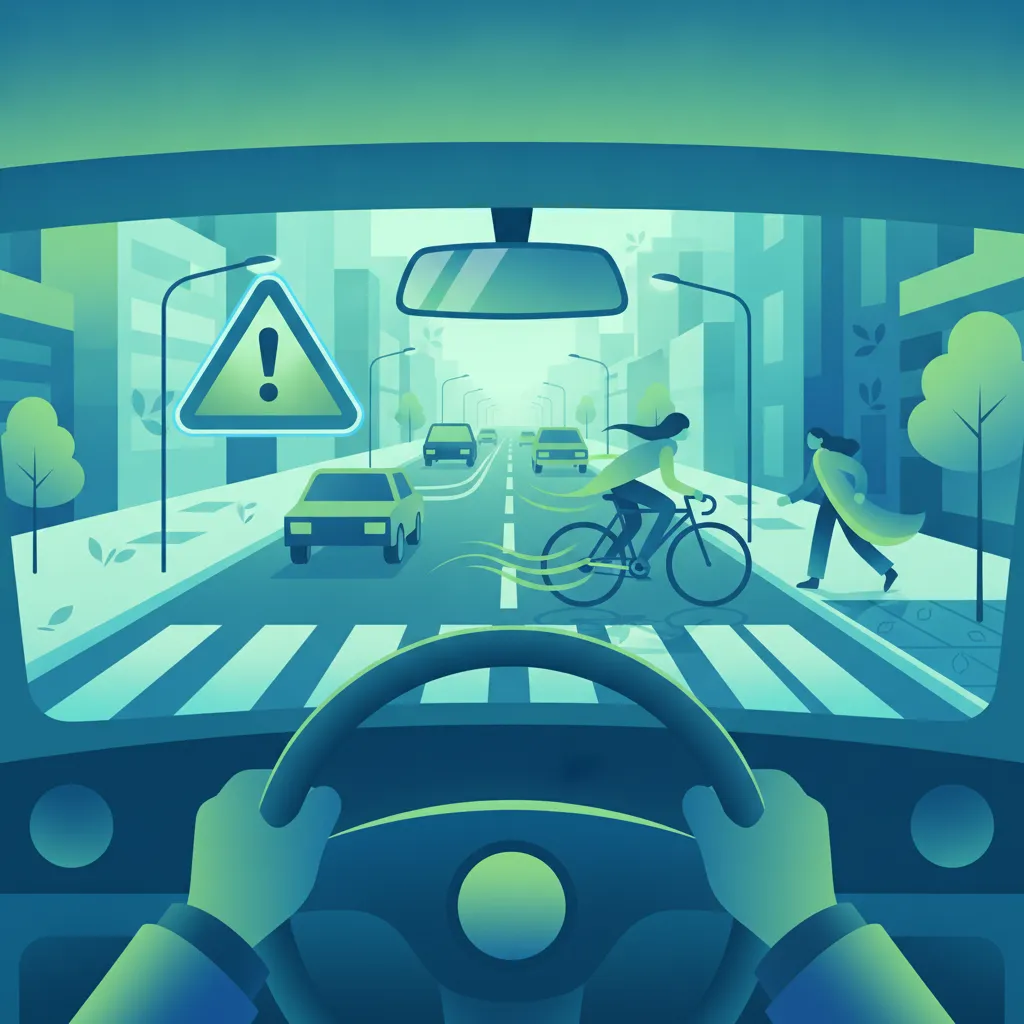
Proactive hazard perception involves constantly scanning the road ahead to identify potential dangers before they turn into actual emergencies. This lesson covers active scanning techniques, helping you look far ahead, check mirrors regularly, and identify subtle risk clues such as exhaust smoke from parked cars or children playing near kerbs. Anticipating these developments gives you the time to adjust speed and position safely.
This lesson highlights the importance of smooth throttle adjustments for maintaining traction and stability on a moped. It teaches riders how to anticipate potential road hazards early, reducing the need for sudden emergency braking. Developing strong observation habits allows riders to adjust their speed smoothly and respond safely to traffic changes.
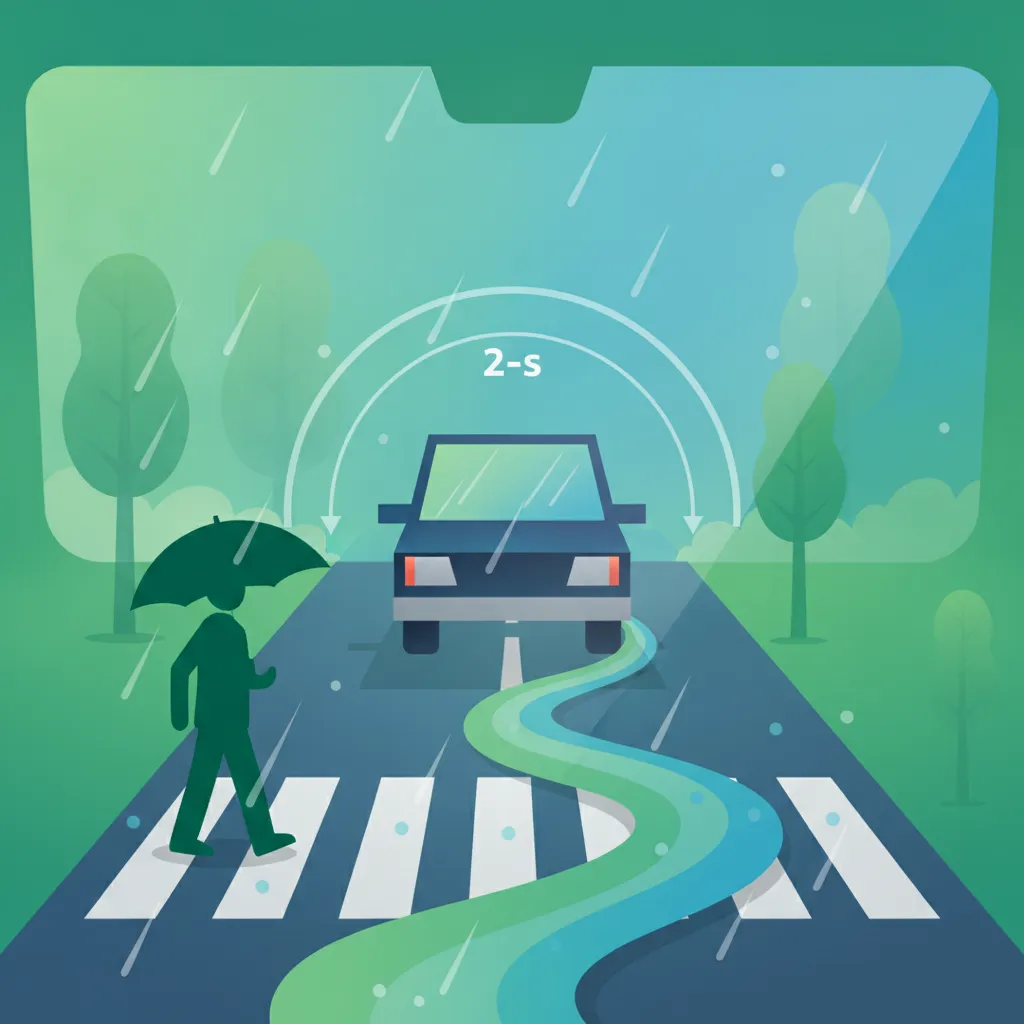
Maintaining an extensive buffer zone ahead of a large passenger vehicle is critical to ensuring enough space for emergency maneuvers. This lesson teaches the time-gap method, detailing how following distances must double on wet roads or increase with full passenger loads. It builds hazard anticipation skills, teaching drivers to read distant traffic cues and react early to hazards.
Defensive driving prepares you to react safely when facing unexpected mechanical failures or immediate road hazards. This lesson explains how to execute an emergency stop using Anti-lock Braking Systems (ABS) and how to recover from front and rear-wheel skids on slippery roads. You will learn the importance of remaining calm, avoiding panic-steering, and applying controlled evasive actions to prevent collisions.

This lesson teaches how to cultivate a proactive defensive riding mindset, focusing on situational awareness and constant hazard scanning. It describes the system of motorcycle control, encouraging riders to anticipate potential mistakes from other drivers, pedestrians, and cyclists. Motorcyclists will learn to position themselves defensively, leaving clear escape routes in all driving environments.
Heavy vehicles require continuous visual scanning to identify small or slow-moving road users who may enter the path of travel. This lesson explores the typical behaviors of young children, elderly pedestrians, and visually impaired road users. Drivers will build strong hazard perception skills to anticipate sudden movements, ensuring they can brake safely and avoid serious accidents.
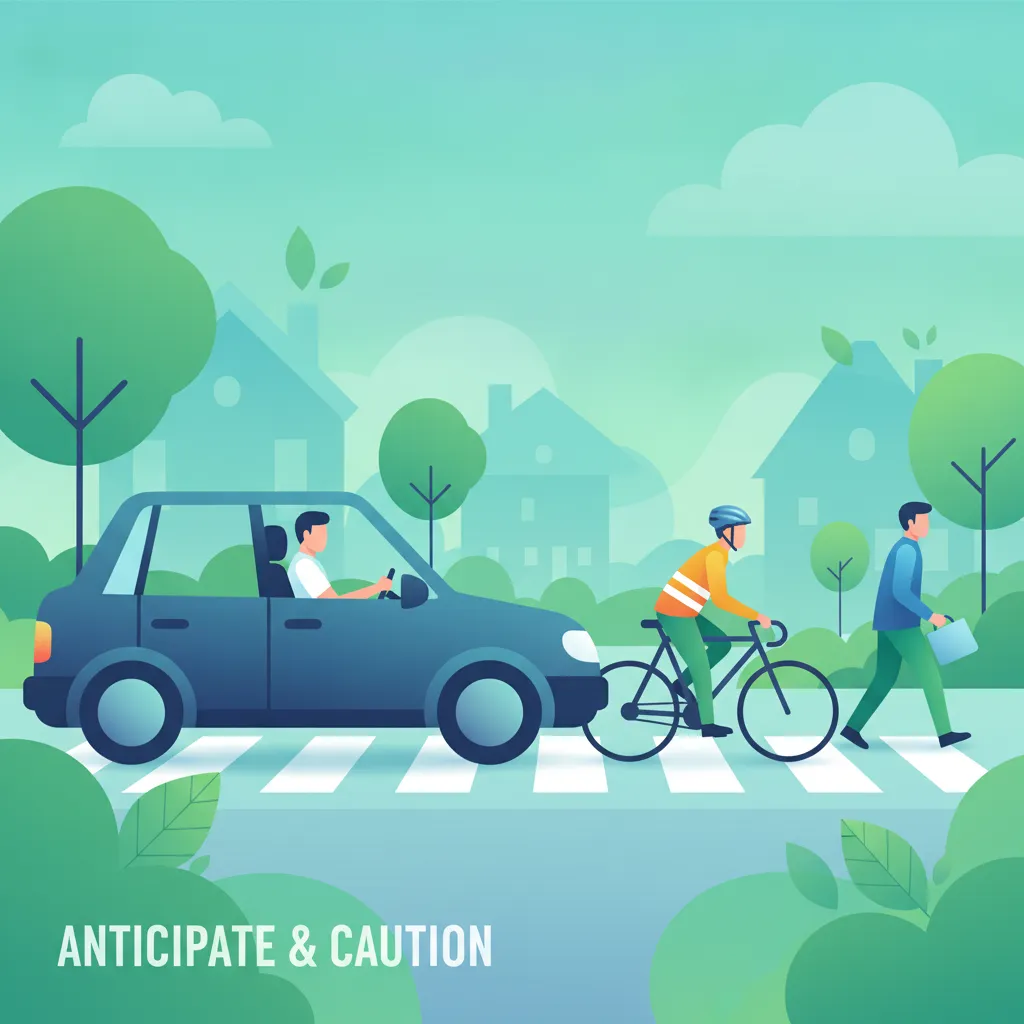
Safeguarding vulnerable road users requires more than simple obedience to traffic signs; it demands a defensive driving mindset. This lesson summarizes safe practices, including scanning far ahead in urban areas, keeping massive safety margins in wet weather, and executing thorough blind spot checks before reversing. By anticipating the unpredictable movements of others, you can prevent accidents and support a safe road culture.
This lesson teaches riders how to actively identify and eliminate blind spots through proper mirror adjustment and physical shoulder checks. It explains the concept of a safety cushion, which represents the defensive space maintained around the moped at all times. Managing these zones ensures adequate reaction time and mitigates the impact of sudden braking.
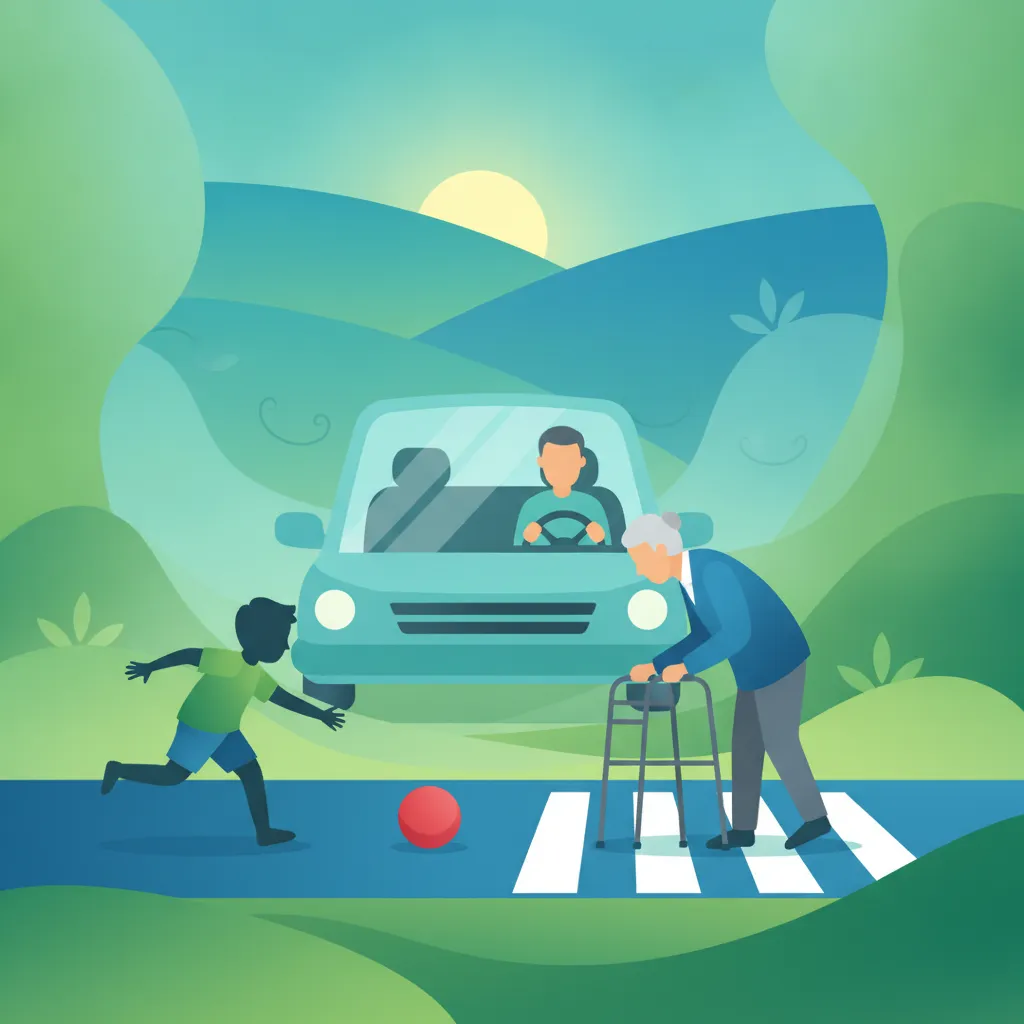
Children often struggle to judge heavy vehicle speeds accurately, while elderly pedestrians may possess limited mobility or hearing impairments. This lesson addresses these unique risks, explaining how to adjust driving patterns in residential neighborhoods and near shopping districts. Drivers will learn to maintain a high safety margin, ensuring they can yield quickly to vulnerable road users.
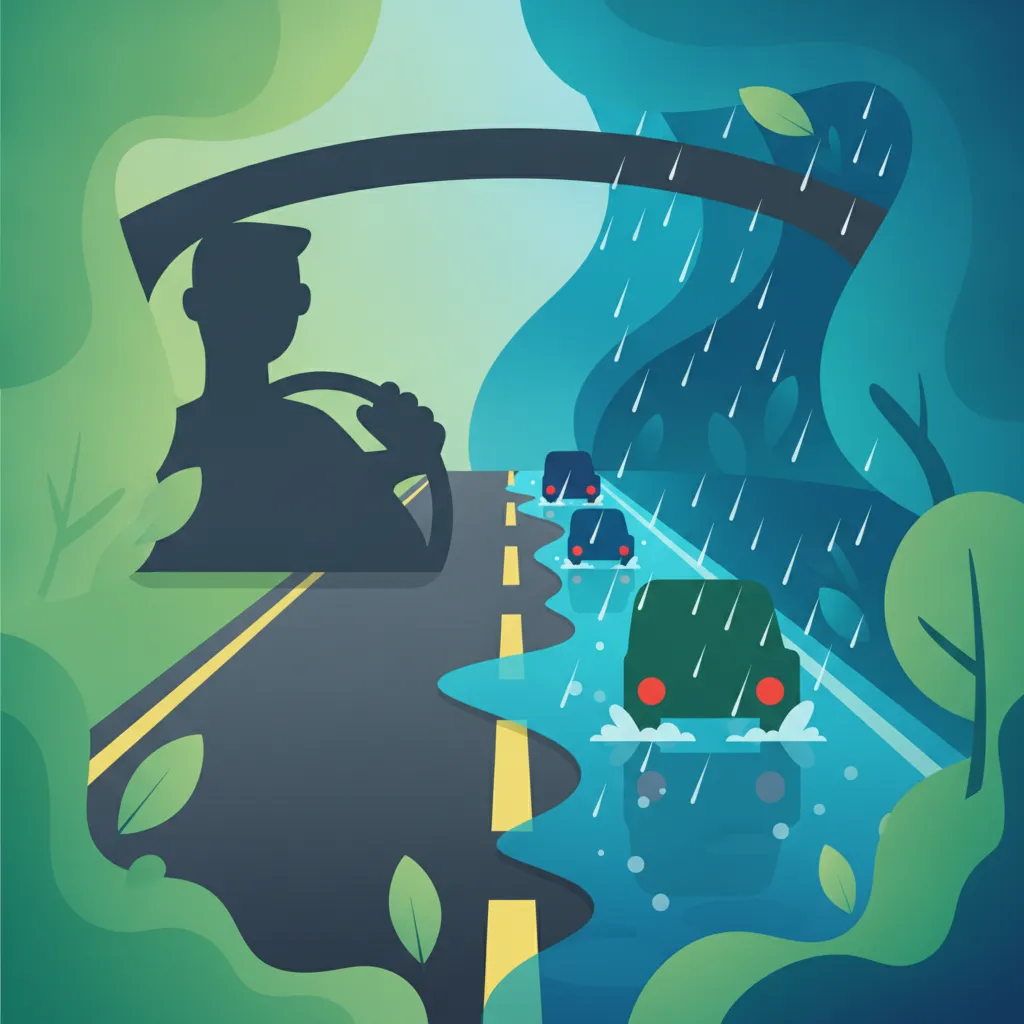
Adhering to legal speed limits is not always sufficient; you must continuously adapt your speed to match real-world hazards. This lesson teaches you how to reduce speed when encountering rain, fog, heavy traffic, or narrow winding rural roads with restricted visibility. You will learn the importance of matching your speed to your range of clear vision, ensuring you can stop safely within the distance you can see ahead.
Find clear answers to common questions learners have about Legal Alcohol Limits and Zero-Tolerance Policies. Learn how the lesson is structured, which driving theory objectives it supports, and how it fits into the overall learning path of units and curriculum progression in Ireland. These explanations help you understand key concepts, lesson flow, and exam focused study goals.
Learner drivers are subject to a strict lower limit of 20 milligrams of alcohol per 100 millilitres of blood. This is effectively a zero-tolerance policy meant to ensure maximum safety for those still developing driving skills.
No, you cannot refuse. Refusing to provide a breath sample at a mandatory Garda checkpoint is a serious offence that carries severe penalties, including potential disqualification from driving and heavy fines.
No. The only factor that eliminates alcohol from your system is time. Myths about using coffee, food, or cold showers to sober up are dangerous and will not prevent you from failing a test or being impaired.
Yes, standard full licence holders have a higher threshold of 50 milligrams of alcohol per 100 millilitres of blood, but learner and novice drivers must adhere to the stricter 20-milligram limit.
Use the practice question search tool to pinpoint specific topics, road signs, or rules you need to master for your official Driver Theory Test. Refine your study strategy and ensure comprehensive preparation for all aspects of the Irish driving exam. Start your focused revision now and build confidence for your learner permit test.