This lesson guides you through the complex rules governing goods vehicle access, weight limits, and physical restrictions on Irish roads. You will learn how to interpret road signs correctly to ensure your vehicle remains within legal dimensions, avoiding costly fines and dangerous incidents in urban centres.
Lesson content overview
Managing a heavy goods vehicle (HGV) requires far more than basic steering and gear coordination. As a professional driver preparing for the Irish Category C Theory Test, you must understand the strict legal, structural, and environmental boundaries that dictate where your vehicle can and cannot travel.
This lesson covers the legal frameworks, structural limitations, and local authority by-laws that govern maximum vehicle weights on specific bridges, tunnels, and urban routes in Ireland. Understanding these rules is a core professional responsibility that protects public infrastructure, preserves historic town centres, and ensures the safety of all road users.
Vehicle weight limits are not arbitrary guidelines; they are legally binding restrictions designed to safeguard public assets and human lives. In Ireland, the legal power to impose and enforce these limits is shared between national bodies and local government systems.
Under the Road Traffic Acts, local authorities (such as City and County Councils) have the power to draft and enforce by-laws that restrict the movement of heavy vehicles within their jurisdictions. These by-laws are tailored to local challenges, such as:
As a professional driver, you must remember that national weight limits (such as the standard 44-tonne limit for specific multi-axle configurations) do not grant a blanket right-of-way. Local signage and by-laws always supersede national maximum allowances.
Legal Obligation: Operating a vehicle that exceeds a local by-law weight restriction is a serious road traffic offence. It can result in heavy on-the-spot fines, penalty points, and potential prosecution for both the driver and the transport operator.
Every public structure is engineered to withstand a specific maximum load. This capacity is calculated based on factors like the building materials used (stone masonry, cast iron, reinforced concrete), the age of the structure, and its architectural design.
Bridges are particularly vulnerable to structural fatigue and catastrophic failure.
Tunnels carry unique risks due to confined spaces. Weight limits in tunnels are often paired with hazardous goods restrictions (such as those applied to the Dublin Port Tunnel). Exceeding weight limits in tunnels increases the risk of mechanical failure (such as brake fade or engine fires), which can have catastrophic consequences in an enclosed environment.
To balance commercial delivery needs with urban living standards, major Irish cities have implemented HGV management strategies. These strategies restrict larger trucks from entering city cores during high-traffic hours.
One of the most prominent exclusion zones in Ireland is the Dublin City Council HGV Cordon Scheme. This scheme limits the movement of vehicles with 5 axles or more within a designated inner-city cordon area.
The Cordon Area: The restricted zone covers the area inside the Grand Canal and Royal Canal.
Restricted Hours: The ban is active seven days a week, from 07:00 to 19:00 daily.
Permit System: Operators of 5-axle (or more) vehicles who must make deliveries within the cordon must apply for a transit or delivery permit online.
Exemptions: Outside the 07:00 to 19:00 window, restricted vehicles can enter without a permit, provided they comply with local street-specific weight signs.
Other major Irish cities, including Cork, Galway, Limerick, and Waterford, enforce similar weight and size restrictions in their historic cores. These are often designated as pedestrian-priority zones or time-restricted delivery zones where vehicles over 7.5 tonnes gross vehicle weight (GVW) are prohibited during daytime hours.
Ireland utilizes advanced, automated systems alongside physical inspections to detect overloaded vehicles and enforce route restrictions.
Weigh-in-Motion (WIM) systems are advanced sensor arrays embedded directly into the road surface, often on major corridors such as the M1, M7, and M8 motorways.
An advanced technology embedded in the pavement that estimates the static axle weights and gross weight of a vehicle as it drives over the sensors without requiring the vehicle to stop.
In addition to WIM systems, the RSA and An Garda Síochána operate mobile enforcement units equipped with portable weighing plates, as well as dedicated static weighbridges at strategic ports and arterial junctions. If suspected of overloading, you must follow the officer's instruction to proceed to the nearest official weighbridge.
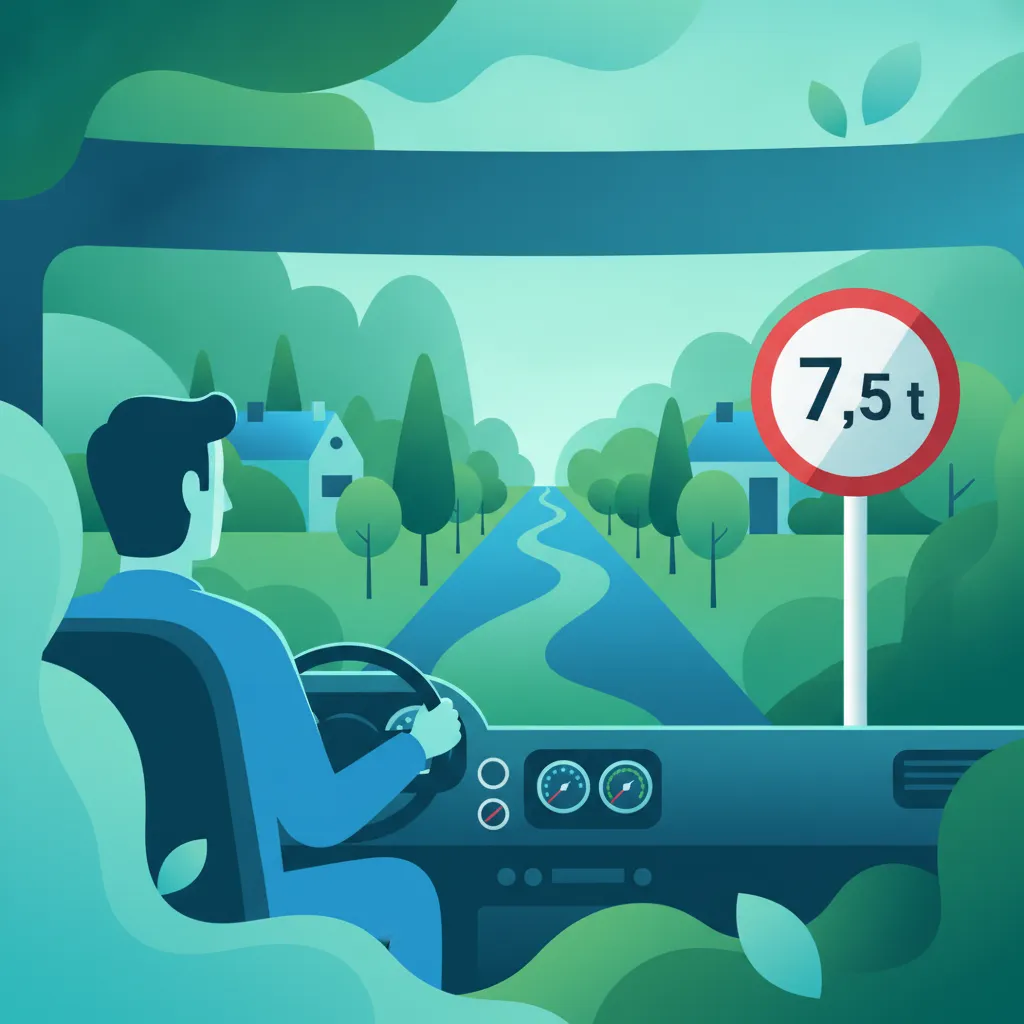
To navigate safely, Category C drivers must immediately recognize and act upon weight limit signs. In Ireland, these regulatory signs are circular with a red border, containing black text or numbers indicating the restriction.
This sign applies to the actual weight of the vehicle at that moment, including its cargo, fuel, driver, and passengers. If your vehicle is registered for 18 tonnes but is currently running empty at 9 tonnes, you cannot enter a road marked with a 7.5t maximum gross weight limit.
This sign is critical for protecting physical road structures and underground services (like water mains and gas lines) that can be crushed by excessive concentrated weight.
A common mistake made by new HGV drivers is assuming that if the vehicle's Gross Vehicle Weight (GVW) is under the legal limit, the vehicle is fully compliant. This is not always true.
Your vehicle can be well under its maximum gross weight limit while still being illegal and highly dangerous due to an overloaded single axle. This occurs when cargo is improperly distributed.
Load Distribution Rule: Always distribute your payload evenly across the load bed. Placing heavy cargo too far forward can overload the steering axle, while placing it too far back can overload the drive axle and reduce steering traction.
Consider a 2-axle rigid HGV with a maximum legal GVW of 18 tonnes:
Even experienced drivers can fall into traps that lead to weight restriction violations. Understanding these common scenarios will help you avoid costly mistakes.
Standard consumer GPS units (designed for cars) do not account for HGV dimensions, axle configurations, or weight limits. If you follow a consumer GPS, it may direct you onto a restricted regional road, under a low bridge, or across a weak structural bridge. Always use a dedicated HGV navigation system, and cross-reference your route with official local authority maps and physical road signs.
Drivers often overlook warning signs posted at the start of exit lanes or slip roads. If you exit a motorway without noticing a weight limit warning sign, you may find yourself trapped on an off-ramp with no safe place to turn around, forcing an illegal or dangerous maneuver.
Wet, icy, or windy conditions degrade vehicle control. If your vehicle is loaded close to its maximum legal limit, the increased stopping distance and risk of jackknifing or skidding are amplified. In poor weather, weight-restricted routes require even greater caution and proactive bypass planning.
Adhering to weight limits and route restrictions is directly linked to road safety and environmental care:
Explore all units and lessons included in this driving theory course.
Lesson content overview
Explore all units and lessons included in this driving theory course.
Explore search topics learners often look for when studying Route Restrictions and Weight Limits. These topics reflect common questions about road rules, driving situations, safety guidance, and lesson level theory preparation for learners in Ireland.
Browse additional driving theory lessons that cover connected traffic rules, road signs, and common driving situations related to this topic. Improve your understanding of how different rules interact across everyday traffic scenarios.
Learn how to effectively plan safe routes for heavy goods vehicles while considering height clearances, bridge weight capacities, and narrow street constraints. This guide focuses on professional navigation practices that help drivers avoid restricted urban zones and identify suitable alternative routes for large commercial transport vehicles.
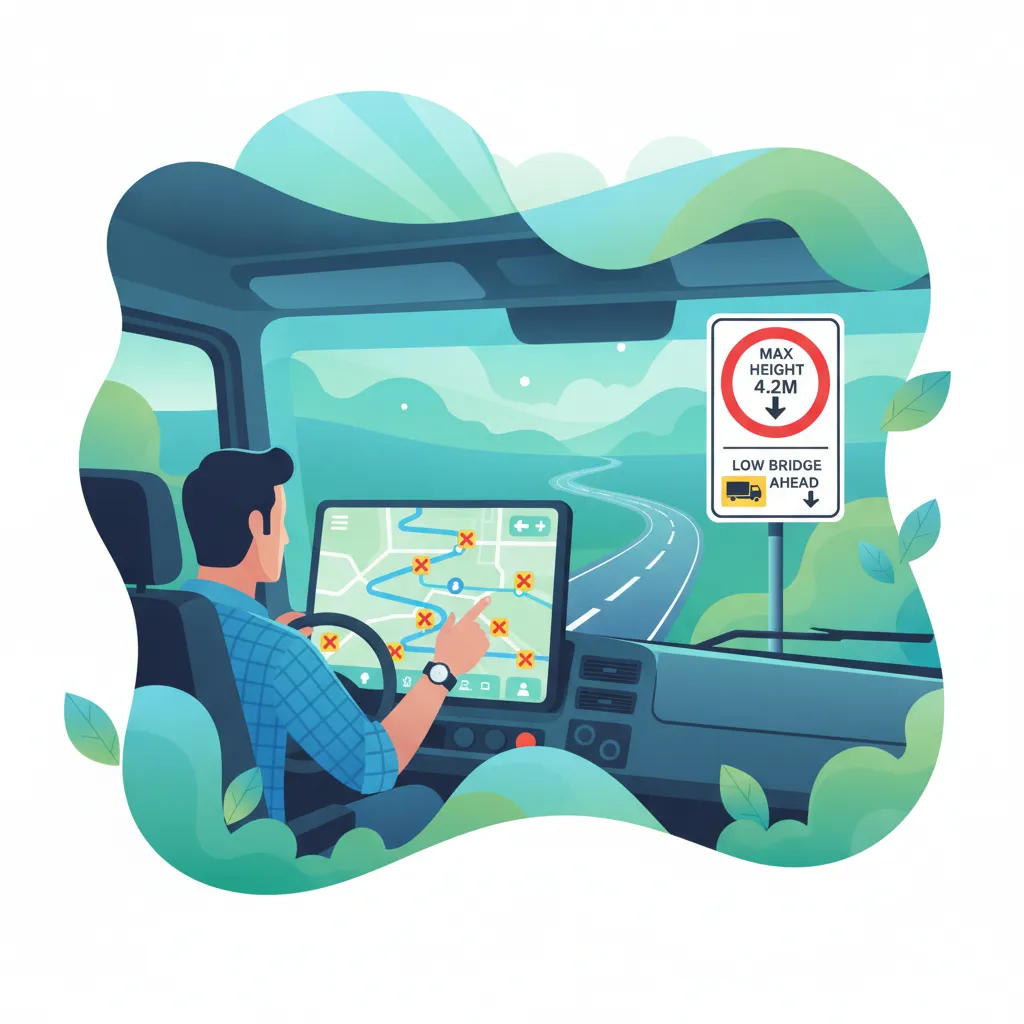
This lesson teaches professional drivers how to systematically map out travel routes that are compatible with heavy vehicle dimensions. It covers the limitations of consumer-grade GPS systems and emphasizes the use of specialized truck navigation systems that account for low bridges and load restrictions. Drivers will also learn to plan for congestion, access timing regulations, and proper entrance paths into commercial zones.

This lesson focuses on the physical mechanics of long-wheelbase and articulated vehicles when executing turns in restricted spaces. It explains concepts like swept path, rear overhang, and turning circles, which must be accounted for to prevent side-swiping collisions. Drivers will discover strategic route-planning techniques to avoid congested urban layouts and unsuitable rural corridors.
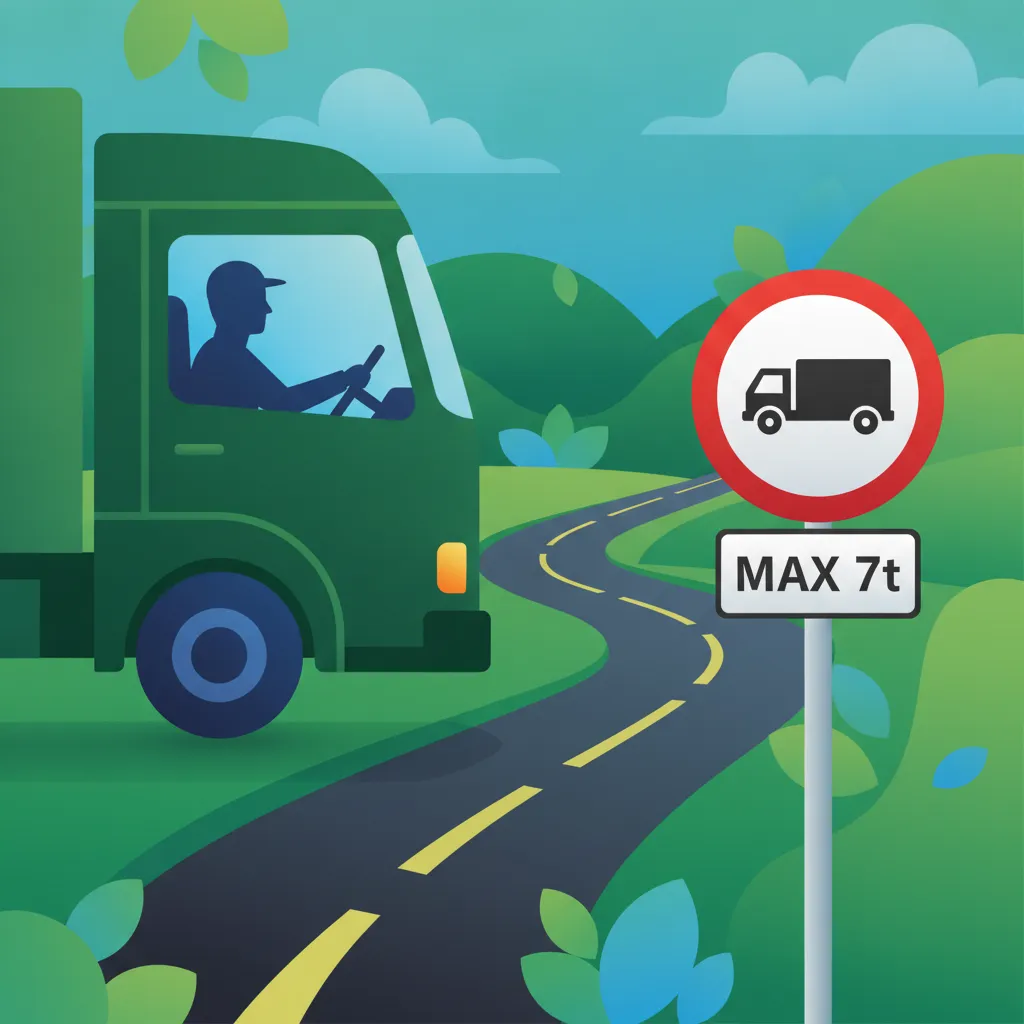
This lesson details the exact visual indicators, symbols, and text used on Irish traffic signs to communicate regulatory restrictions for heavy vehicles. It covers signs denoting height clearances, narrow bridges, and width-limited streets that require immediate driver diversion. By recognizing these specialized warnings early, professional drivers prevent costly structural collisions and traffic offences.

This lesson investigates the relationship between heavy goods vehicle dimensions and the physical constraints of Irish road networks. It highlights how vehicle length and weight contribute to pavement wear and stress on aging bridges and tunnels. Drivers will analyze specific high-risk zones, such as narrow lanes and gauntlet points, where extreme spatial awareness is mandatory.

Developing strong route-planning skills is vital for ensuring passenger services remain highly punctual, fuel-efficient, and structurally safe. This lesson teaches drivers to interpret complex timetables, identify standard rest areas, and assess route risks, such as narrow rural lanes. Drivers will also learn how to establish alternative detour plans when confronted with traffic gridlocks or road closures.

This lesson explains the extensive blind spots of heavy goods vehicles, buses, and other large trucks on Irish roads. It teaches Category AM riders how to maintain safe following distances and position themselves where truck drivers can see them. Proper space cushion management is emphasized to protect riders from the wind turbulence of passing trucks.

This lesson provides a comprehensive guide to reversing large vehicles and backing trailer setups safely into loading docks and industrial bays. It analyzes the mechanical physics of trailer articulation, steering inputs, and how to utilize modern backup cameras, mirrors, and assistants. Drivers will examine critical safety protocols, including visual checks and slow-speed controls, to avoid collisions with fixed objects.

This lesson addresses the mechanical dynamics of turning long-wheelbase and articulated commercial vehicles at intersections, junctions, and roundabouts. It covers the necessity of deep cornering lines, early mirror checks, and correct signaling to warn vulnerable road users of wide turn maneuvers. Drivers will learn how to minimize rear cut-in and ensure the entire vehicle clears urban obstacles safely.

Irish rural routes are often narrow, lacking central markings, and bordered by tall hedges that restrict forward visibility on sharp bends. This lesson teaches drivers how to negotiate blind curves, anticipate slow-moving agricultural machinery, and respond to wandering farm animals. Drivers will learn to regulate vehicle speed proactively, maintaining a safe stopping margin in rural areas.

This lesson explains the location, depth, and angle of the severe blind spots surrounding a standard heavy goods vehicle. It provides step-by-step guidance on setting up primary side mirrors, wide-angle lenses, and close-proximity front-view mirrors to eliminate blind areas. Drivers will learn systematic visual checking routines to ensure complete situational awareness before initiating any maneuver, lane shift, or turn.
Explore the critical safety measures required when navigating heavy vehicles through busy urban environments. This lesson covers hazard awareness regarding pedestrians and cyclists, managing blind spots in high-traffic areas, and understanding the specific operational risks involved in city-centre deliveries while adhering to local road safety regulations.
This lesson addresses the unique environmental and logistical challenges faced during delivery stops in commercial town and city centers. It covers the legal frameworks governing municipal loading zones, double-parking hazards, and temporary pedestrian-only street restrictions. Drivers will acquire practical skills for managing traffic build-up, utilizing visual spotters, and securing the vehicle while unloading cargo.
Safeguarding vulnerable road users requires more than simple obedience to traffic signs; it demands a defensive driving mindset. This lesson summarizes safe practices, including scanning far ahead in urban areas, keeping massive safety margins in wet weather, and executing thorough blind spot checks before reversing. By anticipating the unpredictable movements of others, you can prevent accidents and support a safe road culture.

This lesson focuses on managing the interactions between commercial goods vehicles and non-motorized or lightweight commuters. It outlines defensive driving techniques to utilize when overtaking cyclists, navigating pedestrian crossings, or negotiating shared junctions in Irish cities. Drivers will examine common cyclist behaviors at roundabouts and understand how to maintain massive safety margins to protect lives.
Children, the elderly, and disabled individuals often require extra time and understanding when navigating road networks. This lesson outlines special safety hazards, such as children unexpectedly running into school zones, or senior citizens needing longer times to cross wide junctions. You will learn how to recognise visually impaired pedestrians by their white canes or guide dogs, and the absolute requirement to drive slowly and patiently.
This lesson explains the extensive blind spots of heavy goods vehicles, buses, and other large trucks on Irish roads. It teaches Category AM riders how to maintain safe following distances and position themselves where truck drivers can see them. Proper space cushion management is emphasized to protect riders from the wind turbulence of passing trucks.
Heavy vehicles require continuous visual scanning to identify small or slow-moving road users who may enter the path of travel. This lesson explores the typical behaviors of young children, elderly pedestrians, and visually impaired road users. Drivers will build strong hazard perception skills to anticipate sudden movements, ensuring they can brake safely and avoid serious accidents.

Children often struggle to judge heavy vehicle speeds accurately, while elderly pedestrians may possess limited mobility or hearing impairments. This lesson addresses these unique risks, explaining how to adjust driving patterns in residential neighborhoods and near shopping districts. Drivers will learn to maintain a high safety margin, ensuring they can yield quickly to vulnerable road users.
This lesson explains the location, depth, and angle of the severe blind spots surrounding a standard heavy goods vehicle. It provides step-by-step guidance on setting up primary side mirrors, wide-angle lenses, and close-proximity front-view mirrors to eliminate blind areas. Drivers will learn systematic visual checking routines to ensure complete situational awareness before initiating any maneuver, lane shift, or turn.
This lesson addresses the mechanical dynamics of turning long-wheelbase and articulated commercial vehicles at intersections, junctions, and roundabouts. It covers the necessity of deep cornering lines, early mirror checks, and correct signaling to warn vulnerable road users of wide turn maneuvers. Drivers will learn how to minimize rear cut-in and ensure the entire vehicle clears urban obstacles safely.

Motorcycles and bicycles are often hidden from view in the large blind spots of passenger buses and coaches during turns. This lesson covers safe lateral clearances when overtaking cyclists, recognizing advanced stop lines, and sharing narrow lanes. Drivers will understand how to signal clearly, giving riders enough room to navigate safely near busy public transit corridors.
Find clear answers to common questions learners have about Route Restrictions and Weight Limits. Learn how the lesson is structured, which driving theory objectives it supports, and how it fits into the overall learning path of units and curriculum progression in Ireland. These explanations help you understand key concepts, lesson flow, and exam focused study goals.
No, weight restrictions are specific to the vehicle's Maximum Authorized Mass (MAM). You must know your vehicle's specific weight class to determine if a restricted route is prohibited for you.
Local authorities often implement specific exclusion zones in city centres to protect infrastructure and residential areas. Ignoring these can result in heavy fines and penalty points on your licence.
Always look for height restriction signs well in advance. If you see a height warning sign, you must plan an alternative route immediately, as failing to adhere to these can cause severe damage and safety hazards.
Yes, it is crucial to distinguish between them. Axle weight limits protect the road surface and bridge structures, while gross weight limits manage the total load capacity of the vehicle allowed in specific zones.
Use the practice question search tool to pinpoint specific topics, road signs, or rules you need to master for your official Driver Theory Test. Refine your study strategy and ensure comprehensive preparation for all aspects of the Irish driving exam. Start your focused revision now and build confidence for your learner permit test.