This lesson provides essential training on maintaining correct lane discipline for articulated heavy goods vehicles on Irish motorways and urban roads. You will learn to manage trailer off-tracking and cabin positioning, ensuring you comply with road safety standards for Category C drivers. This knowledge is vital for both your practical theory exam and safe, professional driving.

Lesson content overview
Maintaining correct lane discipline is one of the most critical aspects of operating an articulated goods vehicle (AGV) safely on Irish roads. Due to their immense size, weight, and unique turning characteristics, articulated vehicles present a higher risk to other road users if they wander from their designated lanes.
This lesson covers the essential practices for maintaining proper lane positioning, understanding trailer dynamics such as off-tracking, executing safe lane changes, and navigating complex road features like multi-lane roundabouts. This information is vital for passing the Irish Goods Vehicle Driver Theory Test (Category C/CE) and forms a core pillar of professional Driver CPC (Certificate of Professional Competence) standards.
Operating an articulated vehicle—consisting of a tractor unit (cab) and a semi-trailer connected via a fifth-wheel coupling—requires a high level of spatial awareness. Unlike rigid trucks, the trailer of an articulated vehicle does not follow the exact path of the front steering wheels. This physical characteristic, combined with the sheer dimensions allowed under Irish law, dictates how you must position your vehicle on the road.
A heavy goods vehicle combination comprising a prime mover (tractor unit) and a semi-trailer, connected by a kingpin to a fifth-wheel coupling. Under Irish regulations, the standard maximum length of an articulated combination is 16.5 metres.
Under the Road Traffic (Construction and Use of Vehicles) Regulations in Ireland, the maximum authorized width for standard heavy goods vehicles is 2.55 metres (or 2.6 metres for temperature-controlled/refrigerated vehicles).
While a standard motorway lane in Ireland is typically 3.75 metres wide, lanes on regional (R) and local (L) roads, as well as lanes through active roadworks, can be significantly narrower—often 3.0 metres or less.
Consider the margins:
This leaves virtually no margin for error. Wind buffeting, road surface irregularities, and driver distraction can easily cause a vehicle to encroach on an adjacent lane or drop a wheel onto an unpaved shoulder.
To master lane discipline, you must understand the geometric principles governing how an articulated vehicle turns. The most prominent of these is trailer off-tracking.
During any turn or curve, the rear wheels of a trailer follow a tighter path than the steering wheels of the tractor unit. This phenomenon is known as off-tracking or low-speed off-tracking.
While the inner wheels cut the corner, the outer rear corner of the semi-trailer swings in the opposite direction of the turn. This is called rear-end swing or tail swing.
For example, when making a sharp left turn, the rear-right corner of the trailer will swing out to the right, potentially encroaching into the adjacent lane and striking overtaking vehicles.
Important Theory Test Fact: The amount of trailer off-tracking and rear-end swing depends directly on the wheelbase of the trailer (the distance from the kingpin to the center of the trailer's rear axle group). A longer wheelbase results in more severe off-tracking.
Maintaining correct lane discipline means keeping your entire vehicle—both cab and trailer—within the boundaries of a single marked lane, except when executing a planned, signaled maneuver.
On straight sections of dual carriageways, motorways, and wide national roads, you should position your vehicle in the centre of your lane. Avoid "hugging" the left-hand kerb or road edge, as this leaves you vulnerable to striking low-hanging tree branches, drains, or pedestrians on narrow footpaths.
Conversely, do not position the vehicle too close to the right-hand lane boundary, as the aerodynamic bow wave of your vehicle can destabilise overtaking cars, and wind gusts can cause your trailer to sway across the line.
When negotiating a left-hand bend, off-tracking will cause your trailer to cut inward toward the left side of the road. To compensate safely without crossing into the oncoming lane:
On a right-hand bend, off-tracking will pull your trailer inward toward the center line, creating a severe hazard for oncoming vehicles. To compensate safely:
Changing lanes in an articulated vehicle requires meticulous planning. Due to the vehicle's length (up to 16.5 metres) and weight (up to 44 tonnes), sudden lane changes can lead to jackknifing, roll-overs, or side-swipe collisions.
In Ireland, professional heavy vehicle drivers are trained to provide early, clear warnings to other road users. When driving a Category C or CE vehicle on high-speed roads (such as dual carriageways or motorways), you must activate your turn signal at least 150 metres before you intend to initiate a lane change.
This extended signaling distance is critical because:
Mirror Assessment (Observation): Check your main mirrors, wide-angle mirrors, and close-proximity mirrors to assess the speed and distance of traffic behind and beside you.
Blind Spot Verification: Look for vehicles that may be positioned alongside your cab or trailer. Remember, the blind spots on an articulated vehicle are vast.
Signal Early: Activate your direction indicator at least 150 metres before starting the maneuver.
Re-Evaluate: Continue to monitor your mirrors. Do not assume that signaling gives you the right of way. Verify that a safe gap has opened up.
Smooth Manoeuvre: Steer gently and progressively into the adjacent lane. Do not make sudden steering inputs, which can cause trailer instability or cargo shift.
Cancel Signal: Once the entire vehicle (including the rear of the trailer) is fully positioned in the new lane, cancel your indicator.
Roundabouts are one of the most challenging environments for articulated vehicles in Ireland. Poor lane discipline on roundabouts is a leading cause of side-swipe collisions between heavy goods vehicles and passenger cars.
Correct lane discipline starts long before you reach the yield line. You must select the correct entry lane based on your intended exit. Look for road markings, arrow signals, and gantry signs that indicate lane destinations.
Because of trailer off-tracking, a 16.5-metre articulated vehicle cannot physically stay within a single narrow lane on a tight, multi-lane roundabout. The trailer will inevitably straddle adjacent lanes.
To manage this safely, you must apply the following professional driving strategies:
Legal Aspect: While lane straddling is generally discouraged for passenger cars, Irish traffic guidelines recognize that long vehicles must be given extra space. The onus is on the professional driver to ensure the maneuver is executed safely, without forcing other vehicles to take evasive action.
When exiting a roundabout, you must negotiate a left-hand turn out of the circular roadway.
In Ireland, lane discipline is not merely a matter of safety; it is strictly regulated under the Road Traffic Acts. Non-compliance can lead to prosecution, penalty points, and severe fines.
Under the Road Traffic (Traffic and Parking) Regulations, heavy goods vehicles with a design gross vehicle weight (DGVW) exceeding 3,500 kg (which includes all Category C and CE vehicles) are restricted in their lane usage on motorways:
On certain steep gradients or congested national routes, specific signs are erected to prohibit overtaking by goods vehicles. You must remain in the left-hand lane and match the speed of the traffic ahead, even if a slow-moving vehicle is in front of you.
Professional drivers must adapt their lane discipline strategies to changing environmental conditions. A technique that works on a dry summer day can be dangerous in adverse weather.
Ireland’s frequent rain greatly impacts vehicle dynamics:
High winds are common on Irish motorways and coastal routes.
When driving in urban areas (such as Dublin, Cork, or Galway), you must share the road space with cyclists, motorcyclists, and pedestrians.
Understanding where drivers frequently fail can help you avoid making the same mistakes during your driving test and career.
| Term | Definition | Practical Context |
|---|---|---|
| Off-tracking | The path deviation between the front wheels of the tractor unit and the rear wheels of the trailer during a turn. | Must be compensated for on all curves and roundabouts. |
| Rear-End Swing | The outward lateral movement of the trailer's rear outer corner in the opposite direction of a sharp turn. | Highly dangerous to adjacent lane traffic and pedestrians. |
| DGVW | Design Gross Vehicle Weight. The maximum legally permitted weight of the vehicle, including load. | Determines whether motorway lane restrictions apply. |
| Kingpin | A steel pin on the underside of a semi-trailer used to couple it to the tractor unit. | Acts as the pivot point around which off-tracking occurs. |
| Lane Straddling | The practice of occupying parts of two lanes simultaneously. | Used selectively by HGVs on roundabouts to manage vehicle length safely. |
| Splitter Island | A raised or painted traffic island at the entrance/exit of a roundabout. | Target of trailer off-tracking if the cab does not swing wide enough. |
Mastering lane discipline in an articulated vehicle is a balance of physics, road law, and defensive driving. By understanding the dimensions of your vehicle, predicting trailer off-tracking, and using advanced observation and signaling techniques, you can ensure safe journeys across Ireland's road network.
Explore all units and lessons included in this driving theory course.
Lesson content overview
Explore all units and lessons included in this driving theory course.
Explore search topics learners often look for when studying Correct Lane Discipline for Articulated Vehicles. These topics reflect common questions about road rules, driving situations, safety guidance, and lesson level theory preparation for learners in Ireland.
Browse additional driving theory lessons that cover connected traffic rules, road signs, and common driving situations related to this topic. Improve your understanding of how different rules interact across everyday traffic scenarios.
Learn the professional techniques for selecting entry lanes and managing trailer tracking on complex roundabouts. This guide explains how to protect your vehicle's path and interact safely with other road users at circular junctions while adhering to official Irish road safety guidelines for heavy goods vehicles.

Navigating multi-lane roundabouts requires precise lane selection, continuous scanning, and timely signaling. This lesson teaches you the 'clock rule' for determining which lane to enter, how to yield to traffic already on the roundabout from your right, and when to activate your left indicator to exit. Mastering these procedures minimizes lane-drift accidents and ensures a seamless flow of traffic on busy roundabouts.

This lesson addresses the mechanical dynamics of turning long-wheelbase and articulated commercial vehicles at intersections, junctions, and roundabouts. It covers the necessity of deep cornering lines, early mirror checks, and correct signaling to warn vulnerable road users of wide turn maneuvers. Drivers will learn how to minimize rear cut-in and ensure the entire vehicle clears urban obstacles safely.
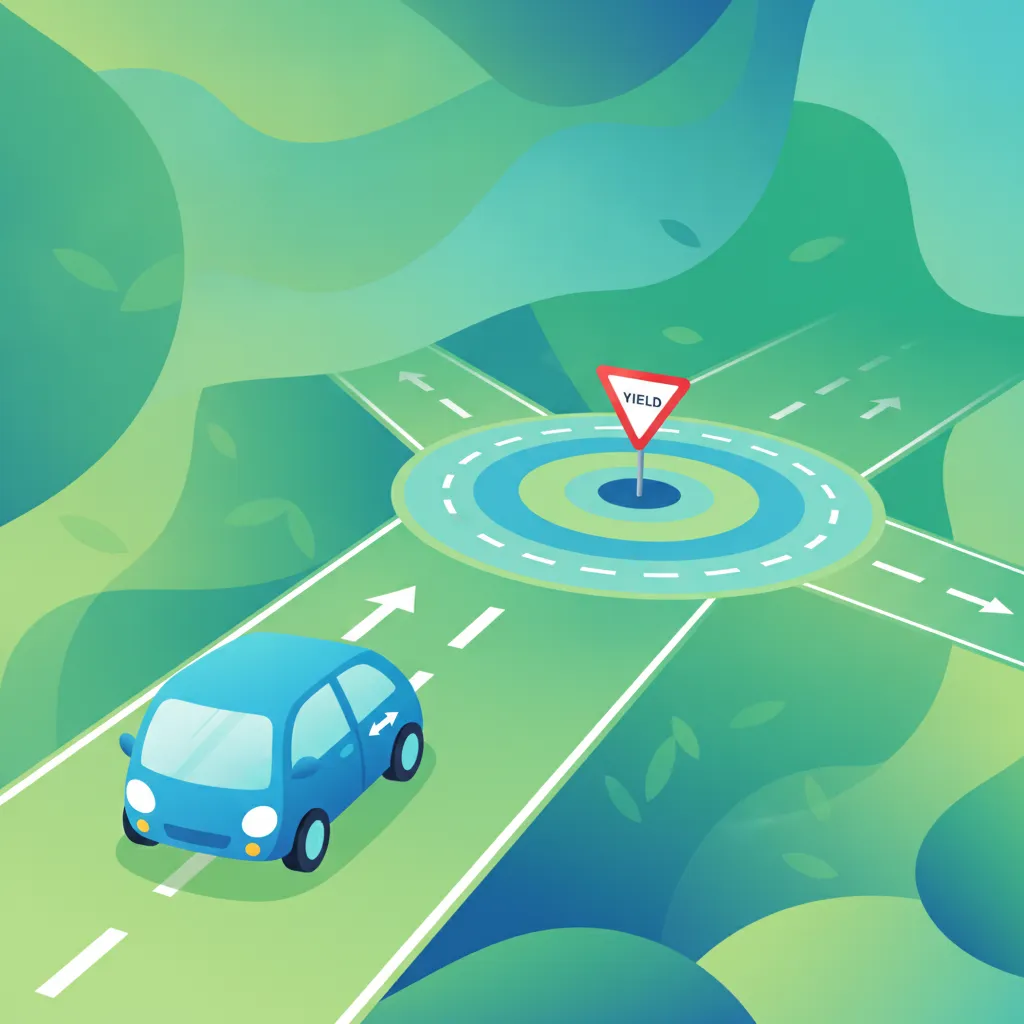
This lesson covers correct procedures for navigating roundabouts, which present significant risks for Category AM riders. It details lane selection rules, timely indicator signals for exiting, and the importance of checking blind spots before shifting lanes. Riders will learn to safely share the roundabout with large vehicles and vulnerable road users.

This lesson provides a comprehensive guide to navigating single and multi-lane roundabouts safely in accordance with the Irish Rules of the Road. It covers correct lane selection on approach, signaling rules for exiting, and maintaining a steady path through traffic. Riders will learn to anticipate lane-changing mistakes made by other drivers and manage the unique banking angles of roundabouts.
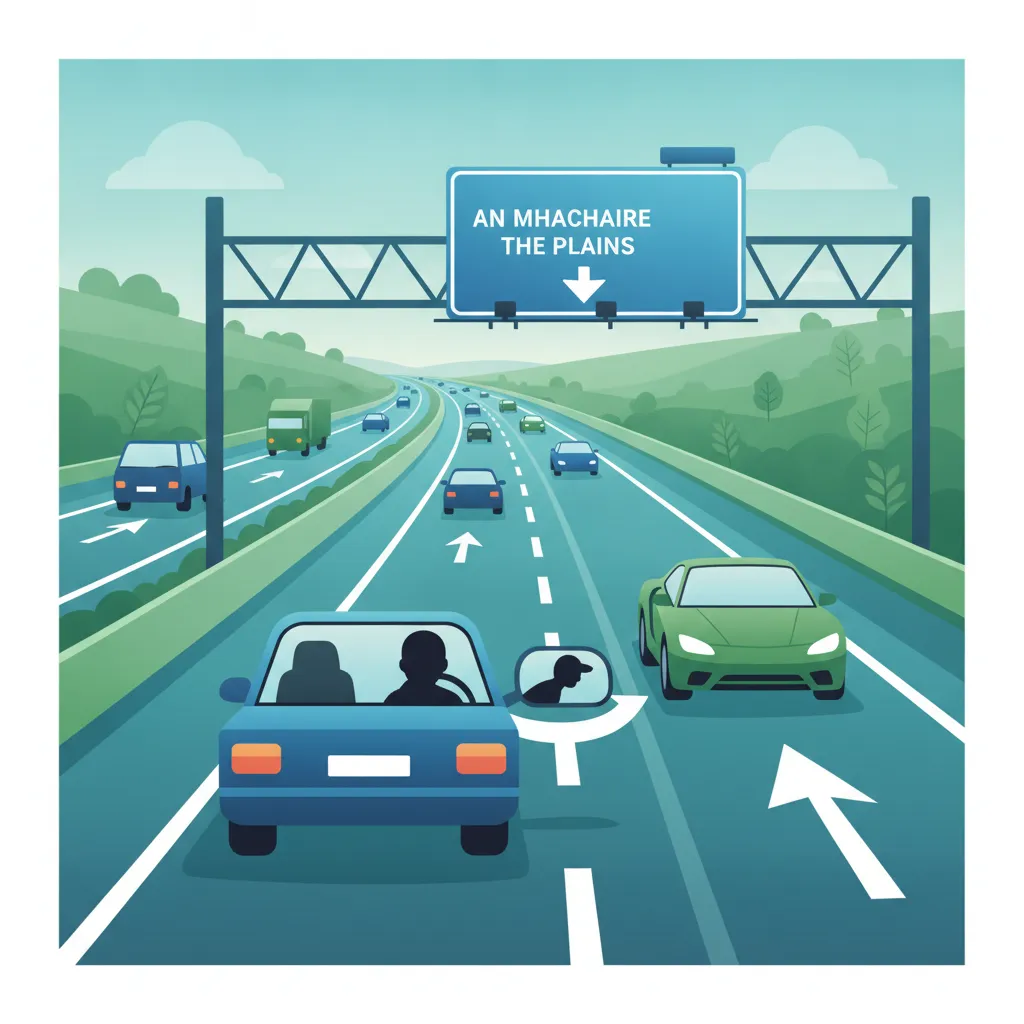
Merging a long, heavy passenger vehicle onto high-speed motorways requires matching the traffic speed within the limited length of slip lanes. This lesson covers signal timing, safe lane-merging gaps, and maintaining control during overtaking maneuvers on national routes. Drivers will learn to prioritize passenger comfort and vehicle stability, preventing sudden weight shifts during lane entries.

This lesson focuses on the safe approach and execution of turns at T-junctions, staggered intersections, and blind crossroads. It explains the critical mirror-signal-manoeuvre routine and how to select the best position for maximum visibility to cross-traffic. Motorcyclists will learn to identify potential hazards like vehicles pulling out suddenly or turning across their direct path.
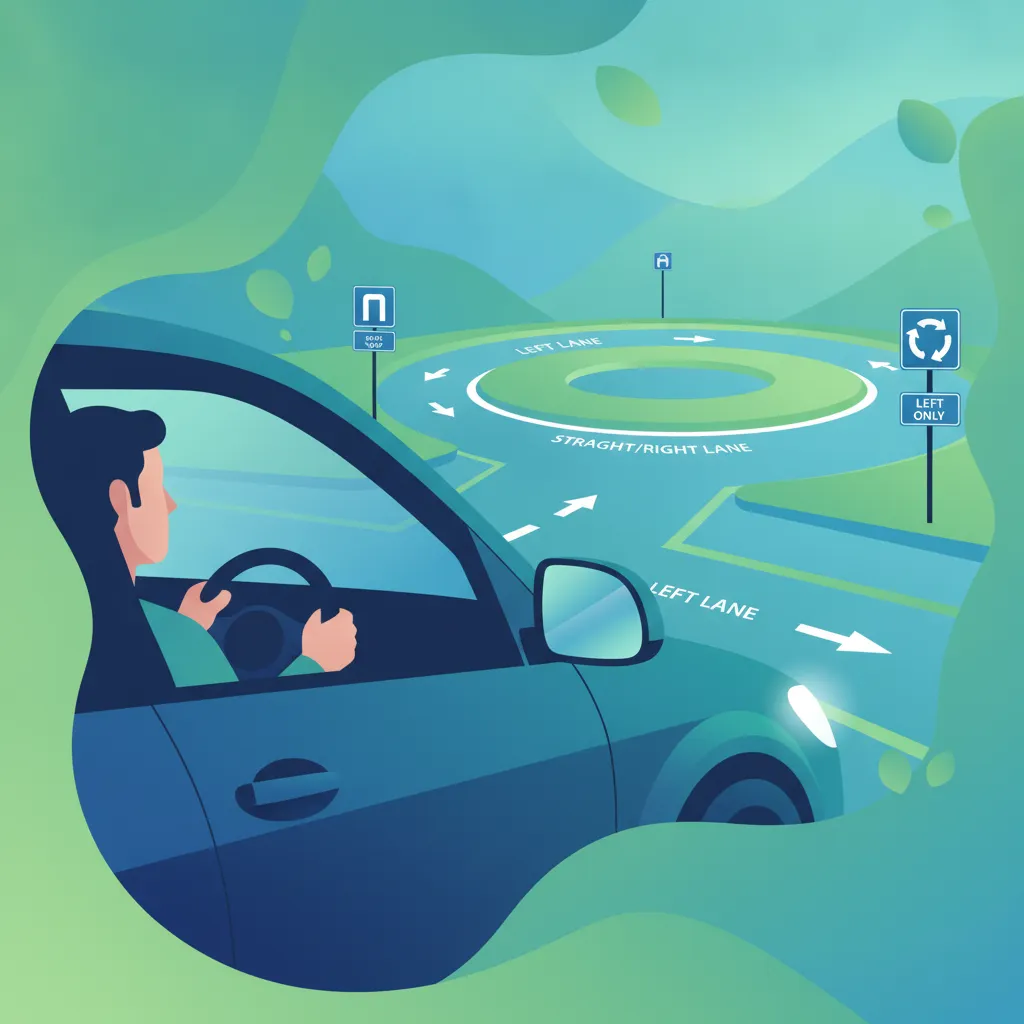
Executing safe turns requires early preparation, correct road positioning, and clear communication with other road users. This lesson focuses on the mandatory Mirror-Signal-Manoeuvre (MSM) routine used across Ireland for turning at cross junctions and navigating roundabouts. You will learn how to choose the correct lane early, adjust your speed, and complete your turn smoothly without cutting corners or blocking trailing vehicles.

This lesson details the sequential steps required to approach and exit junctions safely under the Irish driving rules. It teaches riders how to select the correct lane, utilize mirrors, apply early signals, and reduce speed appropriately. Effective observation strategies are highlighted to help riders identify crossing pedestrians or approaching side traffic.

Large passenger vehicles must maintain consistent lane positioning to prevent side-swipe incidents and sustain smooth urban traffic patterns. This lesson covers standard lane selection rules, safe overtaking procedures, and how to use designated public transit corridors correctly. Drivers will learn the importance of checking mirrors continuously and planning lane changes well in advance.

Driving a coach through narrow urban streets or historic Irish town centers demands precise spatial judgment and low speed control. This lesson covers turning radii, rear tail-swing physics, and managing overhangs when navigating around tight, permanent obstacles. Drivers will learn to assess clearance gaps accurately, reducing damage risks to the vehicle exterior and public infrastructure.
Understand the specific risks associated with operating large articulated vehicles in congested urban environments. This lesson covers managing blind spots, anticipating the movements of cyclists and pedestrians, and maintaining safe positioning during low-speed deliveries in city centers under Irish traffic regulations.

This lesson addresses the unique environmental and logistical challenges faced during delivery stops in commercial town and city centers. It covers the legal frameworks governing municipal loading zones, double-parking hazards, and temporary pedestrian-only street restrictions. Drivers will acquire practical skills for managing traffic build-up, utilizing visual spotters, and securing the vehicle while unloading cargo.

Safeguarding vulnerable road users requires more than simple obedience to traffic signs; it demands a defensive driving mindset. This lesson summarizes safe practices, including scanning far ahead in urban areas, keeping massive safety margins in wet weather, and executing thorough blind spot checks before reversing. By anticipating the unpredictable movements of others, you can prevent accidents and support a safe road culture.

Children often struggle to judge heavy vehicle speeds accurately, while elderly pedestrians may possess limited mobility or hearing impairments. This lesson addresses these unique risks, explaining how to adjust driving patterns in residential neighborhoods and near shopping districts. Drivers will learn to maintain a high safety margin, ensuring they can yield quickly to vulnerable road users.

Children, the elderly, and disabled individuals often require extra time and understanding when navigating road networks. This lesson outlines special safety hazards, such as children unexpectedly running into school zones, or senior citizens needing longer times to cross wide junctions. You will learn how to recognise visually impaired pedestrians by their white canes or guide dogs, and the absolute requirement to drive slowly and patiently.

This lesson focuses on managing the interactions between commercial goods vehicles and non-motorized or lightweight commuters. It outlines defensive driving techniques to utilize when overtaking cyclists, navigating pedestrian crossings, or negotiating shared junctions in Irish cities. Drivers will examine common cyclist behaviors at roundabouts and understand how to maintain massive safety margins to protect lives.

Motorcycles and bicycles are often hidden from view in the large blind spots of passenger buses and coaches during turns. This lesson covers safe lateral clearances when overtaking cyclists, recognizing advanced stop lines, and sharing narrow lanes. Drivers will understand how to signal clearly, giving riders enough room to navigate safely near busy public transit corridors.

Bus stops often intersect with designated bicycle lanes and busy walking pathways, creating high-risk conflict areas for drivers. This lesson trains drivers to check blind spots for oncoming cyclists before pulling into or exiting public stop bays. It emphasizes yielding right-of-way to passengers crossing the road, preventing collision risks in active urban transport hubs.

Heavy vehicles require continuous visual scanning to identify small or slow-moving road users who may enter the path of travel. This lesson explores the typical behaviors of young children, elderly pedestrians, and visually impaired road users. Drivers will build strong hazard perception skills to anticipate sudden movements, ensuring they can brake safely and avoid serious accidents.
Find clear answers to common questions learners have about Correct Lane Discipline for Articulated Vehicles. Learn how the lesson is structured, which driving theory objectives it supports, and how it fits into the overall learning path of units and curriculum progression in Ireland. These explanations help you understand key concepts, lesson flow, and exam focused study goals.
Articulated vehicles have a much larger footprint and a pivot point that causes the trailer to follow a different path than the cab. Precise lane discipline is essential to prevent trailer off-tracking from encroaching into adjacent lanes or striking roadside infrastructure.
Always signal early to inform other road users of your intention, check all blind spots using your extended mirrors, and ensure you have sufficient space before initiating a smooth, gradual steering input to move the entire vehicle unit across the lane safely.
Yes, the theory exam may include questions on the physical dynamics of heavy vehicles, including how the rear of the trailer behaves during turns and the importance of maintaining proper lane positioning to avoid hazards.
You must plan your approach by identifying the correct lane early based on your exit. Keep your vehicle positioned to allow for the sweep of your trailer, ensuring you do not 'swing' into other lanes or cut off smaller vehicles, while remaining aware of your blind spots throughout the maneuver.
Use the practice question search tool to pinpoint specific topics, road signs, or rules you need to master for your official Driver Theory Test. Refine your study strategy and ensure comprehensive preparation for all aspects of the Irish driving exam. Start your focused revision now and build confidence for your learner permit test.