
This lesson explores the critical physiological factors and professional habits required to manage driver fatigue, distractions, and stress behind the wheel of a passenger vehicle. As a vital component of the Category D driver curriculum, understanding these concepts is essential for ensuring passenger safety and complying with professional transport standards.

Lesson content overview
Operating commercial passenger vehicles, such as buses and coaches, carries immense responsibility. Under the Irish Driver Theory Test Category D framework, professional drivers must demonstrate a deep understanding of human factors that affect driving performance. Fatigue, distraction, and psychological stress are among the most significant contributors to serious accidents on national transport networks.
This lesson explores the physiological mechanisms of fatigue, the legal and operational frameworks designed to prevent driver exhaustion, the types of distractions that compromise safety, and stress-management techniques essential for a professional passenger transport career.
Driver fatigue is a physiological state of reduced mental and physical performance resulting from insufficient sleep, prolonged physical or mental exertion, or disrupted circadian rhythms. For coach and bus drivers, who often operate heavy vehicles over long distances or during irregular hours, managing fatigue is not just a matter of personal comfort—it is a critical safety and legal obligation.
A physiological state of reduced alertness, slowed cognitive processing, and diminished physical coordination caused by a lack of restorative sleep, prolonged work, or high mental workload.
Fatigue does not occur instantly; it develops progressively. Professional drivers must be highly self-aware and capable of recognizing the early physiological indicators of drowsiness before cognitive impairment occurs.
When a driver continues to operate a vehicle despite experiencing severe fatigue, the brain will eventually force sleep. This results in a phenomenon known as a microsleep.
An involuntary, temporary episode of sleep or drowsiness that lasts anywhere from a fraction of a second up to thirty seconds, during which the person fails to respond to sensory input.
At a standard motorway speed of 80 km/h, a vehicle travels approximately 22 meters per second. A brief four-second microsleep means the passenger vehicle travels nearly 90 meters completely uncontrolled. This is more than enough time to drift across lanes, collide with oncoming traffic, or run off the road.
The Caffeine Fallacy: Many drivers mistakenly believe that drinking coffee, opening the window, or playing loud music can eliminate fatigue. While stimulants like caffeine can provide a brief, temporary spike in alertness, they do not restore cognitive function or replace sleep. The only effective treatment for fatigue is high-quality, restorative sleep.
It is vital to distinguish between the two primary types of fatigue, as their causes and treatments differ:
To combat the severe risks associated with commercial driver fatigue, Irish and European Union laws mandate strict Hours of Service (HOS) and tachograph regulations. These laws are legally binding for all professional Category D and D1 drivers operating vehicles designed to carry more than nine passengers (including the driver).
The fundamental rules governing driving times, breaks, and rest periods are designed to ensure that professional drivers are always fully alert while operating passenger vehicles.
Adequate daily and weekly rest is the foundation of fatigue prevention.
Distraction is defined as any activity that diverts a driver's attention away from the primary task of driving. Because passenger vehicles have large physical dimensions, slow braking profiles, and carry passengers who may be moving or talking, managing distractions is particularly challenging for Category D drivers.
Distractions are generally classified into three primary categories, though many tasks (such as using a mobile phone) involve all three simultaneously.
Visual distraction occurs when a driver looks at anything other than the road ahead, the vehicle's mirrors, and the immediate driving environment.
Manual distraction involves removing one or both hands from the steering wheel to perform a non-driving task. This directly compromises physical control of the vehicle, particularly during emergency maneuvers.
Cognitive distraction occurs when the driver's mental focus is diverted away from scanning the environment, predicting hazards, and processing road information.
Under Irish road traffic legislation, using a handheld mobile phone while driving is strictly prohibited. This law applies to all motor vehicles, but violations in a commercial passenger vehicle carry severe professional consequences.
The law prohibits holding a mobile phone in your hand or supporting it with another part of your body (such as resting it on your shoulder) while driving. This prohibition applies even when the vehicle is stationary in traffic, stopped at traffic lights, or idling. The only exception is when making an emergency call to 999 or 112, and it is unsafe or impossible to stop.
Using a hands-free kit is legal, but it still introduces significant cognitive distraction. Professional drivers should limit hands-free calls to urgent, brief operational messages and avoid them entirely in challenging driving environments, such as urban areas, roundabouts, or adverse weather.
Stress is a psychological and physical response to perceived demands, pressures, or threats. In professional driving, chronic or acute stress impairs decision-making, decreases patience, induces "tunnel vision" (the loss of peripheral scanning), and can lead to aggressive driving behaviors.
To maintain a high standard of professional conduct and passenger safety, drivers must actively employ stress-management techniques.
De-escalate Timetable Pressure: Accept that traffic delays are beyond your control. Safe driving and passenger comfort must always take precedence over the timetable. Inform your operator or dispatcher of delays only when parked safely.
Utilize Controlled Breathing: If you feel frustration rising due to traffic or passenger interactions, use slow, deep abdominal breathing to lower your heart rate and prevent physical tension.
Maintain Physical Ergonomics: Ensure your driver's seat, steering wheel, and mirrors are adjusted correctly to minimize physical strain, which directly compounds mental fatigue and stress.
Take Regular Active Breaks: During scheduled layovers or mandatory rest breaks, exit the driver's cab, stretch, and walk around to improve blood circulation and clear your mind.
The risk profile for fatigue, distraction, and stress changes depending on the driving environment, time of day, and vehicle status.
The human body is biologically programmed to sleep during the hours of darkness. Operating a passenger coach overnight (e.g., long-distance express services) requires heightened alertness.
Driving in heavy rain, snow, high winds, or dense fog increases physical tension and mental stress. Controlling a fully loaded, 18-tonne passenger coach in strong winds or on slippery surfaces demands maximum concentration. Under these conditions, the driver must eliminate all secondary distractions (such as passenger announcements or radio use) to focus entirely on vehicle control and stopping distances.
Hazard warning lights are a vital tool for communicating safety information, but they must be used strictly in accordance with the Irish Rules of the Road. Misusing hazard lights can confuse other road users and create dangerous situations.
To ensure professional drivers maintain peak alertness throughout their shift, the following structured practices should be integrated into daily operations.
Evaluate Sleep Quality: Ensure you have achieved at least 7 to 8 hours of continuous, high-quality sleep before starting work.
Assess Physical Fitness: Do not drive if you are feeling unwell, suffering from severe stress, or taking medications that warn against operating machinery.
Verify Work and Rest Records: Confirm your tachograph records are up-to-date and that you have fully completed your mandatory daily or weekly rest period.
Plan the Journey and Breaks: Review your route for potential delays, construction, or high-risk zones, and pre-plan where you will take your mandatory 45-minute breaks at safe parking facilities.
Explore all units and lessons included in this driving theory course.
Lesson content overview
Explore all units and lessons included in this driving theory course.
Explore search topics learners often look for when studying Managing Fatigue, Distraction and Stress. These topics reflect common questions about road rules, driving situations, safety guidance, and lesson level theory preparation for learners in Ireland.
Browse additional driving theory lessons that cover connected traffic rules, road signs, and common driving situations related to this topic. Improve your understanding of how different rules interact across everyday traffic scenarios.
Learn the legal requirements for driving time, mandatory breaks, and rest periods for professional passenger vehicle drivers. This guide provides a clear overview of EU and Irish tachograph rules designed to ensure operator compliance and maintain driver alertness on long-distance and scheduled passenger routes.

This lesson examines the physiology of sleep deprivation and the absolute safety risks associated with commercial driver fatigue. It outlines the specific European Union and Irish tachograph regulations governing daily driving limits, mandatory break times, and weekly rest periods. Drivers will learn to properly record work and rest logs, spot warning signs of cognitive tiredness, and apply healthy sleep hygiene.

Operating long-distance intercity services requires meticulous journey planning to satisfy passenger comfort and comply with driver rest regulations. This lesson covers schedule coordination, planning convenient rest stop locations, and managing driver alertness over extended periods. Drivers will learn to perform intermediate safety checks on passenger comfort systems during journey breaks.

Speed management requires adjusting vehicle velocity to suit current weather, passenger load, and the specific limits of Irish roads. This lesson details speed restrictions for buses and minibuses on motorways, national routes, and built-up areas throughout Ireland. It highlights the driver obligation to prioritize passenger safety over schedule delays by maintaining appropriate speeds.

The regulatory framework in Ireland imposes strict standards of operation, dimension limits, and speed boundaries on heavy passenger fleets. This lesson reviews vehicle registration tax context, commercial operator licensing laws, and mandatory annual vehicle roadworthiness testing. By understanding these statutory regulations, drivers avoid severe legal infractions and maintain their professional driving credentials.

Violating passenger transport laws can lead to severe operator penalties, heavy fines, and the immediate suspension of driving privileges. This lesson examines common operational infractions, including tachograph violations, overloading offences, and driving with defective tires. Drivers will understand their personal legal liabilities under Irish legislation, supporting long-term safety compliance.

Motorway transport requires consistent forward planning, strict speed restriction compliance, and clear mirror checks before exiting lanes. This lesson details the rules of joining and leaving motorways, navigating toll plazas safely, and managing breakdowns on the hard shoulder. Drivers will learn to balance high-speed travel with passenger stability, ensuring a comfortable, secure ride.
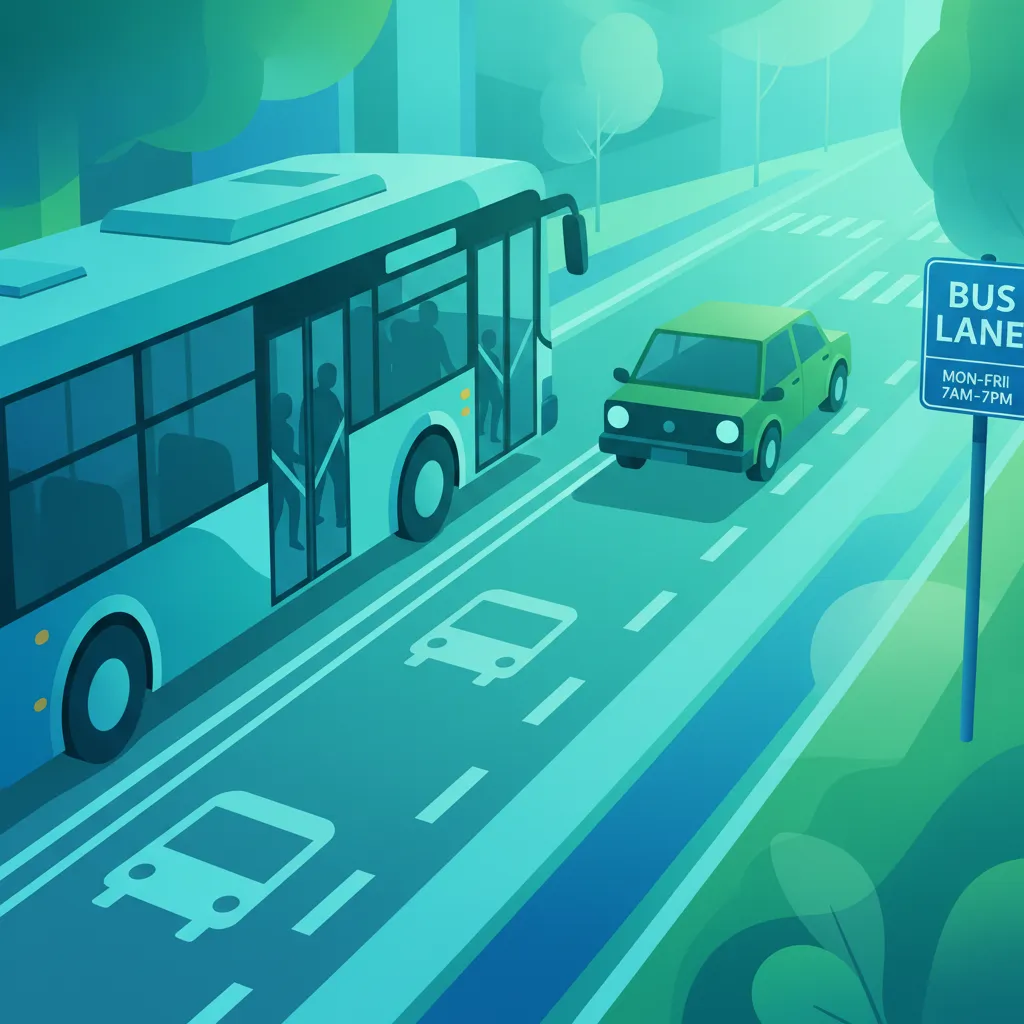
This lesson details the legal operations allowed within Irish bus lanes, including active hours, non-permitted traffic types, and exceptions. Drivers will learn safe approach trajectories for public transport stops, maintaining legal clearance, and navigating curbside hazards safely. The material highlights compliance with local bylaws to guarantee steady, uninterrupted traffic flow and passenger convenience.

Driving large vehicles through dense city traffic requires outstanding lane discipline, spatial awareness, and consistent patience. This lesson teaches drivers how to utilize public bus corridors, manage tight yellow box intersections, and handle narrow city streets. It focuses on predicting traffic pattern shifts to maintain service timetables while minimizing fuel waste and driver stress.

Developing strong route-planning skills is vital for ensuring passenger services remain highly punctual, fuel-efficient, and structurally safe. This lesson teaches drivers to interpret complex timetables, identify standard rest areas, and assess route risks, such as narrow rural lanes. Drivers will also learn how to establish alternative detour plans when confronted with traffic gridlocks or road closures.

Standing passengers face heightened safety risks due to sudden changes in bus velocity, turning forces, or abrupt stops. This lesson covers maximum standing capacity regulations, correct passenger distribution, and the importance of active handrail utilization. Drivers will learn how to adjust their braking and acceleration patterns to prevent slips, trips, and falls among standing occupants.
Explore strategies for identifying and anticipating risks in high-density urban environments, including interactions with vulnerable road users at bus stops. This lesson covers how to maintain focus on the driving task despite potential environmental distractions and the demands of complex, high-traffic city routes.

Maintaining an extensive buffer zone ahead of a large passenger vehicle is critical to ensuring enough space for emergency maneuvers. This lesson teaches the time-gap method, detailing how following distances must double on wet roads or increase with full passenger loads. It builds hazard anticipation skills, teaching drivers to read distant traffic cues and react early to hazards.

Children often struggle to judge heavy vehicle speeds accurately, while elderly pedestrians may possess limited mobility or hearing impairments. This lesson addresses these unique risks, explaining how to adjust driving patterns in residential neighborhoods and near shopping districts. Drivers will learn to maintain a high safety margin, ensuring they can yield quickly to vulnerable road users.

Heavy vehicles require continuous visual scanning to identify small or slow-moving road users who may enter the path of travel. This lesson explores the typical behaviors of young children, elderly pedestrians, and visually impaired road users. Drivers will build strong hazard perception skills to anticipate sudden movements, ensuring they can brake safely and avoid serious accidents.

This lesson explains the extensive blind spots of heavy goods vehicles, buses, and other large trucks on Irish roads. It teaches Category AM riders how to maintain safe following distances and position themselves where truck drivers can see them. Proper space cushion management is emphasized to protect riders from the wind turbulence of passing trucks.

Motorcycles and bicycles are often hidden from view in the large blind spots of passenger buses and coaches during turns. This lesson covers safe lateral clearances when overtaking cyclists, recognizing advanced stop lines, and sharing narrow lanes. Drivers will understand how to signal clearly, giving riders enough room to navigate safely near busy public transit corridors.

This lesson addresses the unique environmental and logistical challenges faced during delivery stops in commercial town and city centers. It covers the legal frameworks governing municipal loading zones, double-parking hazards, and temporary pedestrian-only street restrictions. Drivers will acquire practical skills for managing traffic build-up, utilizing visual spotters, and securing the vehicle while unloading cargo.

Bus stops often intersect with designated bicycle lanes and busy walking pathways, creating high-risk conflict areas for drivers. This lesson trains drivers to check blind spots for oncoming cyclists before pulling into or exiting public stop bays. It emphasizes yielding right-of-way to passengers crossing the road, preventing collision risks in active urban transport hubs.

This lesson focuses on managing the interactions between commercial goods vehicles and non-motorized or lightweight commuters. It outlines defensive driving techniques to utilize when overtaking cyclists, navigating pedestrian crossings, or negotiating shared junctions in Irish cities. Drivers will examine common cyclist behaviors at roundabouts and understand how to maintain massive safety margins to protect lives.

Driving a coach through narrow urban streets or historic Irish town centers demands precise spatial judgment and low speed control. This lesson covers turning radii, rear tail-swing physics, and managing overhangs when navigating around tight, permanent obstacles. Drivers will learn to assess clearance gaps accurately, reducing damage risks to the vehicle exterior and public infrastructure.
Driving large vehicles through dense city traffic requires outstanding lane discipline, spatial awareness, and consistent patience. This lesson teaches drivers how to utilize public bus corridors, manage tight yellow box intersections, and handle narrow city streets. It focuses on predicting traffic pattern shifts to maintain service timetables while minimizing fuel waste and driver stress.
Find clear answers to common questions learners have about Managing Fatigue, Distraction and Stress. Learn how the lesson is structured, which driving theory objectives it supports, and how it fits into the overall learning path of units and curriculum progression in Ireland. These explanations help you understand key concepts, lesson flow, and exam focused study goals.
Early signs include frequent blinking, heavy eyelids, difficulty focusing on road signs, wandering thoughts, or missing exits. If you notice these, you must take a scheduled rest break immediately to restore your alertness.
The theory test emphasizes that any form of distraction, including mobile phone use or adjusting complex infotainment systems while the vehicle is moving, is a critical safety failure. You must be able to demonstrate that focus remains solely on road hazards.
Yes, professional passenger vehicle drivers have stricter legal requirements regarding mandatory rest breaks and daily driving limits due to the increased responsibility for passenger safety. These regulations are specifically enforced by the RSA.
Maintain a calm professional demeanor, use clear communication for boarding and alighting, and follow established company protocols. By being prepared for common route challenges, you reduce the unpredictability that leads to driver stress.
Use the practice question search tool to pinpoint specific topics, road signs, or rules you need to master for your official Driver Theory Test. Refine your study strategy and ensure comprehensive preparation for all aspects of the Irish driving exam. Start your focused revision now and build confidence for your learner permit test.