Welcome to the 'Warning Signs and Hazard Indicators' lesson, part of the Swedish Road Signs & Signals unit for your Category A motorcycle license. This lesson will equip you with the knowledge to interpret crucial warning signs, helping you anticipate dangers and ride more safely. Understanding these signs is fundamental for passing your theory test and for confident motorcycle navigation in Sweden.
Lesson content overview
Navigating the roads safely as a motorcyclist in Sweden requires a comprehensive understanding of all traffic signs, especially warning signs (Varningsskyltar). These crucial visual cues are designed to alert you to potential dangers ahead, giving you vital time to react and adjust your riding. This lesson, part of your Swedish Motorcycle Theory Course: A Licence Exam Preparation, focuses on mastering the interpretation and response to these critical safety indicators.
For motorcyclists, where stability and reaction time are paramount, correctly identifying and interpreting warning signs enables proactive adjustments to speed, lane positioning, and overall readiness. This proactive approach significantly reduces accident risk, particularly when encountering adverse weather, unfamiliar roads, or unexpected hazards.
Swedish warning signs are a cornerstone of preventative road safety, mandated by traffic law, primarily the Trafikförordningen (RVF 1998). They serve as a vital communication system, conveying imminent or foreseeable hazards that demand a change in rider behaviour. Their underlying logic is rooted in safety-driven design, physics, human factors, and legal intent, all aimed at protecting road users.
The effectiveness of warning signs relies on universally understood principles. These ensure that regardless of where you are in Sweden, or the specific hazard, the message is conveyed rapidly and clearly.
| Principle | Purpose / Rationale | Implications for Motorcyclists |
| Standardisation | Uniform shapes, colors, and symbols for all warning signs, making them instantly recognisable. | Allows for immediate recognition of potential dangers regardless of location or unfamiliarity with a specific sign, reducing cognitive load.
This lesson covers the essential knowledge for the Swedish Category A motorcycle theory test. You will study traffic regulations and safety principles as stipulated by Transportstyrelsen. The curriculum covers everything from interpreting road signs and priority rules to mastering hazard perception and emergency manoeuvres, ensuring you are fully prepared for the exam and safe riding.
In Sweden, warning signs are consistently triangular with a red border and white background, typically featuring a black symbol or pictogram. This standardisation allows for rapid recognition. Each sign type alerts motorcyclists to specific categories of hazards, demanding different responses.
These signs indicate changes in the physical layout of the road, such as curves, gradient changes, or narrowing sections. For motorcyclists, anticipating these is critical for maintaining the correct lean angle, speed, and line.
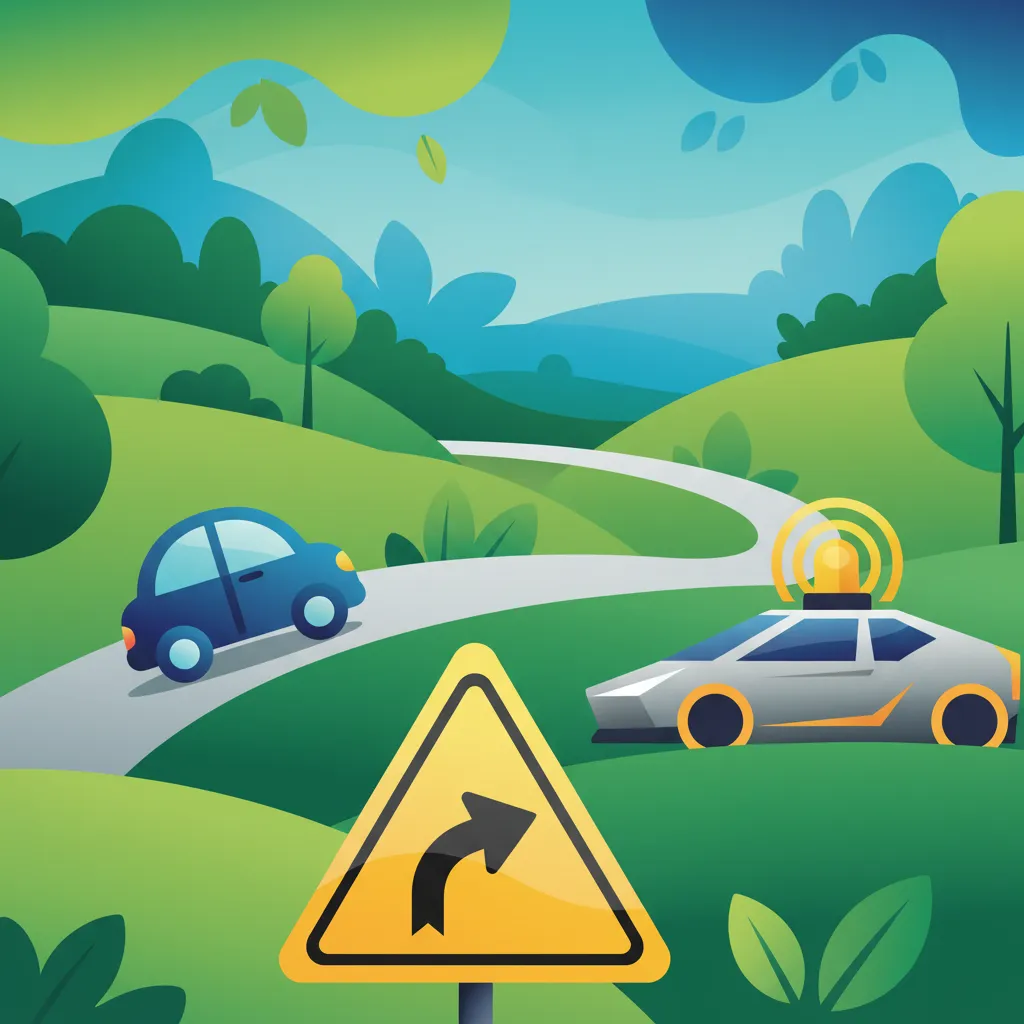
These signs, depicting a curved arrow pointing left or right, alert you to an upcoming sharp bend. If two alternating arrows are shown, it signifies a double curve or a series of bends. Motorcyclists must reduce speed significantly before entering the curve to allow for a smooth, controlled lean and to ensure the required centripetal force stays within the tyre's grip limits. Overtaking is generally prohibited in curves where visibility is restricted.
A side-view pictogram of a hill with an arrow indicates a steep incline or decline. For motorcyclists, a steep downhill requires careful gear selection (downshifting) to use engine braking, preventing excessive reliance on friction brakes that can overheat or fade. Uphill climbs may require increased throttle to maintain speed.
These signs show converging lines, indicating that the road ahead will become narrower. This could mean a reduction in the number of lanes or simply a physical constriction. Riders should be prepared for potential lane shifts, reduced space for manoeuvring, and increased proximity to other vehicles or roadside obstacles.
These signs alert you to changes in the road surface that can affect tyre grip, demanding cautious throttle and braking inputs. For motorcyclists, maintaining traction is paramount for stability.
This sign, often showing two blue triangles with a black wavy line, signifies a potentially slippery road surface. This could be due to rain, oil, leaves, or a polished road aggregate. Motorcyclists must anticipate reduced tyre adhesion, moderate throttle, avoid sudden braking, and increase following distance. Even in dry conditions, some surfaces can remain slick.
Depicting black lines resembling stones, this sign indicates loose gravel. Gravel significantly reduces tyre grip, making cornering, braking, and accelerating hazardous. Riders should slow down, maintain a relaxed grip on the handlebars, and avoid sudden movements, allowing the motorcycle to float slightly over the loose surface.
These signs warn of areas where animals are likely to cross the road, demanding increased vigilance and a readiness to react. Collisions with animals, especially large ones, can be catastrophic for motorcyclists.
These signs feature silhouettes of specific animals like deer or moose. When you see them, especially in rural or forested areas, reduce your speed and actively scan the roadside and ditches. Animals can dart out unexpectedly, and their size can make impacts extremely dangerous.
Moose are large, heavy animals. A collision with a moose, even at moderate speeds, can be fatal for a motorcyclist. Always treat "Moose Crossing" signs with extreme caution.
These signs alert you to the presence of farm animals or other wildlife. Slow down, be prepared to stop, and be aware that animals can be unpredictable and may move quickly into your path.
Temporary hazard signs, often distinguished by their orange background (instead of white), indicate short-term disturbances on the road. These signs require heightened awareness and strict adherence to temporary regulations.
This sign, typically featuring a worker figure, warns of upcoming roadworks. Expect lane closures, shifts, uneven surfaces, and the presence of construction vehicles or personnel. Speed limits are often reduced drastically in these zones.
Temporary signs with an orange background always indicate a hazard related to roadworks or temporary conditions. They supersede any permanent signs that might contradict them.
This sign, often an orange triangle with a wavy line, indicates an uneven or damaged road surface. For motorcyclists, this means anticipating bumps, potholes, or rough patches that can cause instability. Maintain a firm grip on the handlebars, keep your body relaxed, and reduce speed.
These signs are strategically placed in areas where children are likely to be present, such as near schools or playgrounds. They demand a significant reduction in speed and increased vigilance.
Featuring pictograms of children, these signs require you to drastically reduce your speed and be exceptionally alert. Children, as vulnerable road users, can be unpredictable and may run into the road without warning. During school hours, speed limits in school zones are often mandatory at 30 km/h.
Warning signs are frequently reinforced by road markings and other physical features that provide additional cues for motorcyclists.
These are painted arrows on the road surface, particularly before or within curves, guiding you to the optimal lane position or trajectory. Following these markings can help you maintain a safe line through bends.
These textured surfaces, installed on the road, create a tactile and audible vibration when driven over. Rumble strips are often placed before sharp curves or intersections to provide an additional warning, especially useful in low visibility or if a rider is momentarily distracted. For motorcyclists, feeling this vibration should be an immediate cue to reduce speed and prepare for the upcoming hazard.
In Sweden, obeying warning signs is not merely a recommendation; it is a legal requirement. The Trafikförordningen (Swedish Traffic Ordinance) mandates that all drivers, including motorcyclists, must comply with the information conveyed by these signs.
This section of the Swedish Traffic Ordinance states that road users must follow the instructions given by traffic signs, road markings, and light signals.
Failure to adjust your driving behaviour in response to a warning sign can be considered negligent under Swedish law. This can lead to traffic offences, fines, points on your license, and increased liability in the event of an accident.
Many motorcycle accidents involving warning signs stem from common misunderstandings or a lack of appropriate response.
The interpretation and response to warning signs must adapt to prevailing conditions. A sign's message doesn't change, but the severity of the hazard it indicates, and thus your necessary response, certainly does.
| Context | Variation in Principle / Rule | Reasoning |
|---|---|---|
| Heavy Rain | Signs indicating slippery road become high-priority; speed reduction must be larger (e.g., 30%). | Water drastically reduces tyre-road friction; motorcycles are uniquely vulnerable due to their reliance on lean angle for cornering. |
| Snow/Ice | Icy road signs trigger mandatory use of both brakes lightly and possibly the rear-wheel ABS; may require additional following distance (≥3 seconds). | Ice causes extremely low adhesion; control is primarily achieved through smooth, minimal inputs and maximising available stopping distance. |
| Low Light / Night | Use of high-beam allowed when no oncoming traffic; warning sign visibility must be supplemented with adequate headlamp illumination. | Pictograms are white on red; sufficient illumination is essential for detection before the hazard becomes immediate. |
| Urban Road | Sharp curve signs often accompanied by painted chevrons; lane-changing may be prohibited if visibility is limited. | City streets have high traffic density and often tighter curves; lane changes increase collision risk, especially for motorcycles. |
| Motorway | Steep hill warnings are rare; but construction signs may indicate lane closures; overtaking prohibited until lane reopens. | High speeds on motorways amplify the impact of lane closures; safety relies on clear guidance and strict adherence to temporary markings. |
| Vehicle Load – Heavy Cargo | Rider must increase safety margin for all hazard signs (e.g., slower speed for curves) due to increased momentum. | Additional mass raises kinetic energy ((E_k = \frac12 m v^2)) and significantly lengthens braking distance and affects handling dynamics. |
| Interaction with Vulnerable Users | Children playing or school zone signs demand the lowest practical speed (≤30 km/h) regardless of posted limit. | Children have limited hazard perception and are extremely vulnerable; lower speed drastically reduces injury severity and increases reaction time. |
| Temporary Sign Visibility | If signs are obscured (e.g., by foliage), rider must anticipate hazard based on road features (e.g., unexpected lane shift). | Signage may occasionally be compromised; proactive scanning and inferring hazards from other road features (like cones or barriers) compensates. |
| Rumble Strips | Presence of rumble strips overrides visual distraction; speed must be reduced despite otherwise clear visibility. | Tactile cues provide an additional safety layer, reinforcing the need for caution, especially when visual attention might be split. |
| Motorcycle Specific Systems | When ABS is active, rider may apply full brake pressure on warning signs without fear of wheel lock, but must still reduce speed preemptively. | Technology like ABS and traction control assist in challenging situations but do not replace the fundamental need for anticipatory, proactive riding behaviour. They extend the safety margin but don't eliminate the hazard. |
Let's examine how to apply this knowledge in real-world driving situations.
Setting: Two-lane rural road, 80 km/h limit, "Sharp Curve Right" sign 200 m ahead, light drizzle, a tractor ahead. Relevant Rule: Reduce speed before entering curve; overtaking prohibited if visibility limited (Trafikförordning 8-3). Slippery conditions require further speed reduction. Correct Behaviour: The motorcyclist sees the sign and the drizzle. They immediately reduce speed to a safe 50 km/h, covering the brakes, and prepare for a gentle lean. They stay behind the tractor, understanding that overtaking in the curve is too risky with reduced grip and limited visibility. Why Correct: This proactive speed reduction ensures that the required centripetal force for the curve remains well within the tyre's reduced grip limit. Avoiding overtaking eliminates the risk of a head-on collision in a blind spot under adverse conditions.
Setting: City centre, 50 km/h limit, orange "Road Works Ahead" sign, temporary lane shift, pedestrians nearby. Relevant Rule: Mandatory speed limit of 30 km/h within work zones; lane changes only where marked. Correct Behaviour: The motorcyclist immediately slows to 30 km/h upon seeing the orange sign. They carefully follow the temporary lane markings, maintaining their position in the narrowed lane, and actively scan for workers and pedestrians. Why Correct: Lowering speed significantly reduces kinetic energy, providing more reaction time and reducing the severity of any potential impact. Adhering to temporary lane markings prevents unexpected collisions with equipment or personnel.
Setting: Bridge over a river, "Icy Road" sign, temperature –2 °C, low-beam headlights. Relevant Rule: Treat as Icy Road – reduce speed drastically, gentle braking, maintain a larger following distance. Correct Behaviour: The motorcyclist sees the sign and notes the cold temperature. They reduce speed to 30 km/h, use both brakes very lightly and progressively to test for grip, and avoid any abrupt throttle or steering inputs. They significantly increase their following distance. Why Correct: A low speed dramatically reduces the required friction for control. Smooth, gentle inputs are essential on ice, where sudden movements can easily cause a loss of traction.
Setting: Forest road, "Moose Crossing" sign, darkness, high-beam off due to oncoming traffic. Relevant Rule: Anticipate large animals; be ready to stop within the illuminated sight distance. Correct Behaviour: The motorcyclist reduces speed to 40 km/h. With high beams off, they rely on low beams and scan the edges of the road intensely for any movement or reflection of eyes. They cover the brakes, ready to react. Why Correct: Reduced speed provides more braking distance and reaction time. Proactive scanning helps detect animals early, even in limited light, mitigating the impact forces if a collision occurs.
Setting: Urban street, "School Zone" sign, 30 km/h limit, many children on the sidewalk. Relevant Rule: Mandatory 30 km/h during school hours; increased vigilance for vulnerable road users (Trafikförordning 9-4). Correct Behaviour: The motorcyclist immediately adheres to the 30 km/h speed limit. They continuously scan the sidewalks, parked cars, and potential crossing points, anticipating that children might dart out without looking. Why Correct: Strict adherence to the speed limit dramatically reduces the kinetic energy of the motorcycle, making it easier to stop and greatly reducing the severity of injury in case of a collision with a child. Constant vigilance is critical due to children's unpredictable behaviour.
To ensure safety and pass your Swedish Category A motorcycle theory test, remember these key takeaways regarding warning signs:
By diligently applying these principles, you will enhance your road safety, become a more skilled motorcyclist, and be well-prepared for your Swedish Category A licence exam.
Swedish warning signs form a standardised visual communication system that alerts motorcyclists to upcoming hazards requiring behavioural changes. These triangular red-bordered signs categorise dangers into geometric hazards (curves, gradients, narrowing), surface conditions (slippery roads, loose gravel), wildlife crossings (deer, moose, livestock), temporary work zones (orange-background signs), and school zones. Motorcyclists must respond proactively by reducing speed, adjusting lane position, and increasing following distance before encountering each hazard. Legal compliance with sign-indicated speed limits and overtaking restrictions is mandatory under Trafikförordningen, with violations resulting in fines and increased liability. The severity of required response varies based on weather conditions, visibility, vehicle load, and the presence of vulnerable road users.
A short set of high-value points that capture the most important learning from this lesson.
Swedish warning signs use a consistent triangular design with red borders and white backgrounds for instant recognition
Each sign category requires a specific proactive response: reduce speed before curves, moderate throttle on slippery surfaces, increase vigilance for wildlife
Legal compliance with warning signs is mandatory under Swedish traffic law (Trafikförordningen), not merely advisory
Environmental conditions like rain, ice, darkness, and vehicle load directly affect how severely you must adjust your riding
Road markings such as chevrons and rumble strips supplement warning signs by providing additional tactile and visual guidance through hazards
Explore all units and lessons included in this driving theory course.
Temporary orange-background signs indicating roadworks supersede any conflicting permanent signs and carry mandatory speed limits
Sharp curve signs prohibit overtaking when visibility is restricted due to the risk of head-on collision in blind spots
School zone signs during active hours (typically 07:00-15:00) mandate 30 km/h regardless of other posted limits
Slippery road signs require at minimum a 20% speed reduction even in light rain, with further reduction needed as grip decreases
Moose and deer crossing signs demand significant speed reduction and active scanning of roadside ditches in rural or forested areas
Ignoring 'Slippery Road' signs during light drizzle, assuming conditions remain manageable when tyre grip is already reduced
Attempting to overtake vehicles within a sharp curve where visibility is limited, violating overtaking prohibition rules
Entering school zones during active hours at the normal urban speed limit instead of the mandatory 30 km/h
Riding through 'Uneven Surface' zones without slowing down, risking loss of traction or tyre damage from unexpected bumps
Failing to respond to rumble strips as the critical tactile warning they are, relying solely on visual cues
Lesson content overview
A short set of high-value points that capture the most important learning from this lesson.
Swedish warning signs use a consistent triangular design with red borders and white backgrounds for instant recognition
Each sign category requires a specific proactive response: reduce speed before curves, moderate throttle on slippery surfaces, increase vigilance for wildlife
Legal compliance with warning signs is mandatory under Swedish traffic law (Trafikförordningen), not merely advisory
Environmental conditions like rain, ice, darkness, and vehicle load directly affect how severely you must adjust your riding
Road markings such as chevrons and rumble strips supplement warning signs by providing additional tactile and visual guidance through hazards
Explore all units and lessons included in this driving theory course.
Temporary orange-background signs indicating roadworks supersede any conflicting permanent signs and carry mandatory speed limits
Sharp curve signs prohibit overtaking when visibility is restricted due to the risk of head-on collision in blind spots
School zone signs during active hours (typically 07:00-15:00) mandate 30 km/h regardless of other posted limits
Slippery road signs require at minimum a 20% speed reduction even in light rain, with further reduction needed as grip decreases
Moose and deer crossing signs demand significant speed reduction and active scanning of roadside ditches in rural or forested areas
Ignoring 'Slippery Road' signs during light drizzle, assuming conditions remain manageable when tyre grip is already reduced
Attempting to overtake vehicles within a sharp curve where visibility is limited, violating overtaking prohibition rules
Entering school zones during active hours at the normal urban speed limit instead of the mandatory 30 km/h
Riding through 'Uneven Surface' zones without slowing down, risking loss of traction or tyre damage from unexpected bumps
Failing to respond to rumble strips as the critical tactile warning they are, relying solely on visual cues
Explore search topics learners often look for when studying Warning Signs and Hazard Indicators. These topics reflect common questions about road rules, driving situations, safety guidance, and lesson level theory preparation for learners in Sweden.
Browse additional driving theory lessons that cover connected traffic rules, road signs, and common driving situations related to this topic. Improve your understanding of how different rules interact across everyday traffic scenarios.
Learn the specific meanings of Swedish warning signs, including those for sharp bends, slippery surfaces, animal crossings, and roadworks. Understand how these indicators help motorcyclists anticipate and manage risks on the road for safer driving.
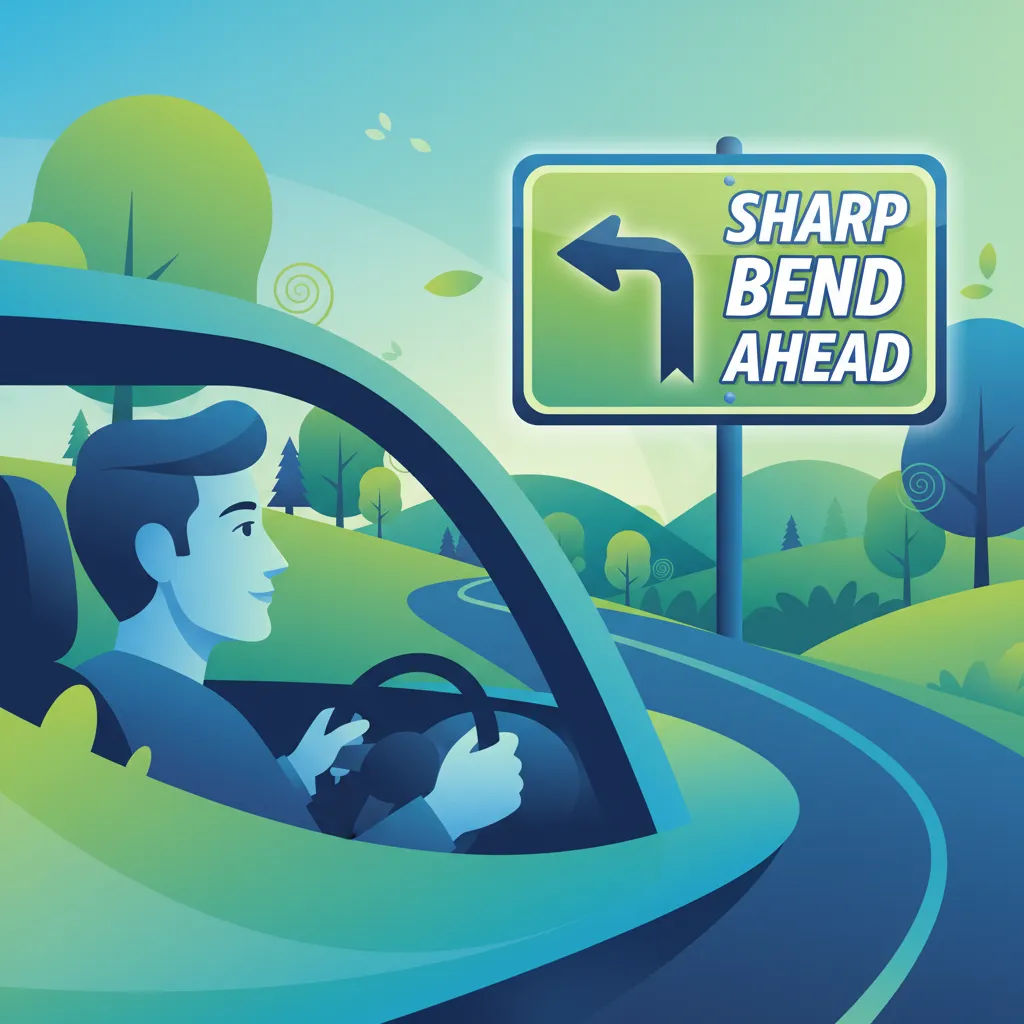
This lesson teaches riders to interpret warning signs (Varningsskyltar), which alert them to potential dangers on the road ahead. It covers a wide range of signs, including those for sharp curves, slippery surfaces, wildlife crossings, and upcoming roadworks. Understanding these triangular signs allows riders to anticipate hazards, adjust their speed and position proactively, and enhance their overall safety.

This lesson focuses on the variety of road markings used on Swedish roads and their meaning for motorcyclists. You will learn the difference between solid and broken lines regarding overtaking, how to position yourself correctly at intersections based on markings, and how to interpret symbols painted on the road surface. Adhering to these markings is essential for maintaining correct lane discipline and ensuring predictability for other road users.
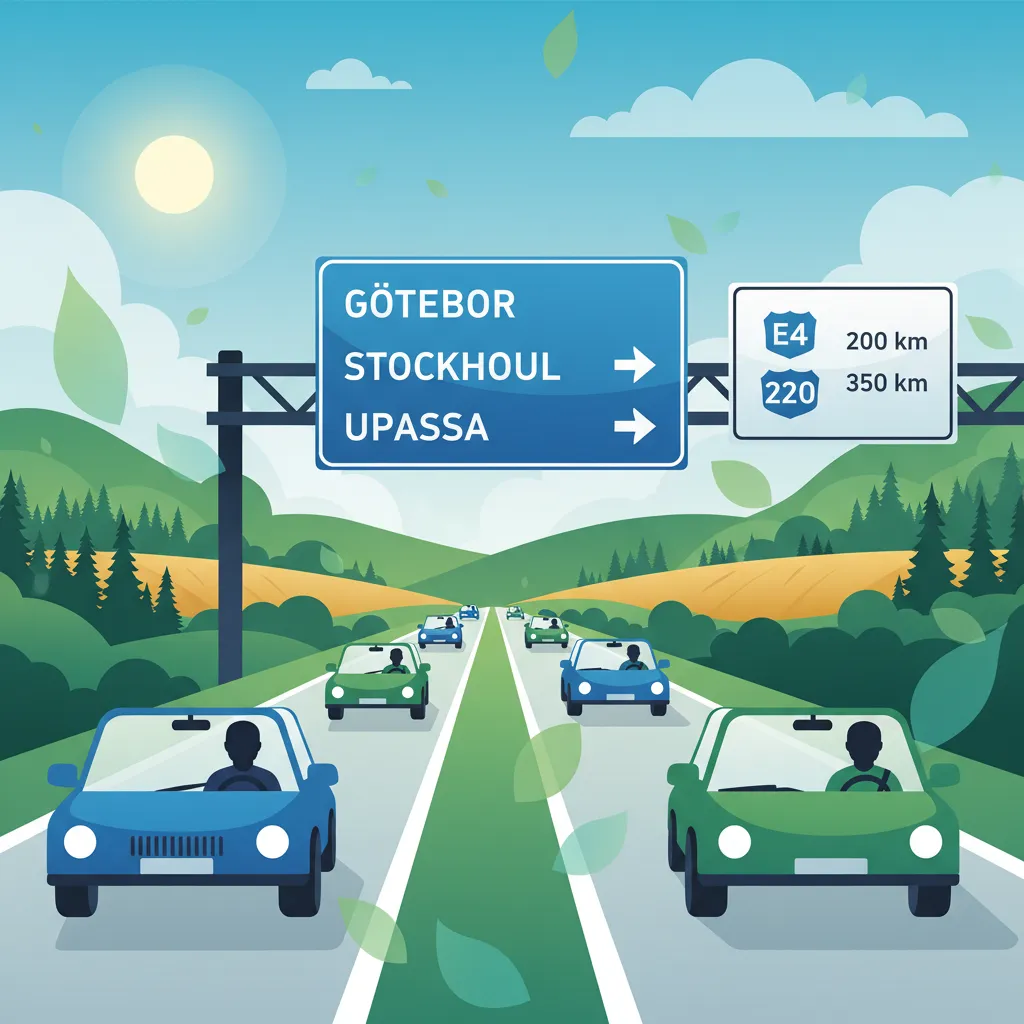
This lesson explains how to read and use Swedish informational and directional signs for effective route planning and navigation. You will learn to follow signs for specific destinations, identify road numbers, and recognize indicators for services such as fuel stations and rest areas. For motorcyclists on long journeys, this knowledge is crucial for making timely decisions about lane changes, exits, and stops without causing disruption to traffic flow.
This lesson prepares riders for encountering roadworks, which can introduce temporary and often confusing changes to the road layout. It explains how to interpret the specific orange-colored signs used in these zones, including new speed limits, lane diversions, and warnings about surface hazards. The key takeaway is to reduce speed and increase vigilance when navigating through construction areas.

This lesson prepares you for the specific challenges of riding on rural roads in Sweden. You will learn how to read the road ahead for changes in surface quality, approach blind corners safely, and adjust your speed for narrow lanes with no shoulder. The content also covers how to anticipate and safely interact with slow-moving agricultural vehicles and the potential for wild animals on the road, ensuring you are prepared for the unpredictable nature of country riding.
This lesson details the full range of Swedish regulatory signs, which dictate mandatory actions and prohibitions for all road users. You will learn to identify signs that establish speed limits, restrict access, prohibit overtaking, and define parking rules. Understanding these signs is critical for legal compliance and safe interaction with other traffic, as they form the basis of enforceable road law under the Trafikförordning regulations.
This lesson focuses on Swedish warning signs (varningsmärken), designed to alert drivers to potential dangers ahead. You will study the meaning of triangular signs indicating hazards such as sharp bends, pedestrian crossings, risk of animals on the road, or temporary road work. The objective is to develop proactive driving habits by understanding how to anticipate risks and adapt speed and positioning appropriately when a warning sign is present.
This lesson provides practical techniques for dealing with unavoidable road surface hazards. You will learn how to approach and cross obstacles like potholes, manhole covers, and patches of debris with minimal disruption to the motorcycle's stability. The content covers adjusting your speed, choosing the best line, and using your body to absorb impacts, helping you navigate the imperfections of real-world roads safely.
This lesson provides detailed guidance on navigating complex traffic points such as signalized intersections, multi-lane roundabouts, and pedestrian crossings. You will learn the correct procedures for entering and exiting roundabouts, the specific rules for yielding to pedestrians and cyclists at designated crossings, and how to interpret complex traffic light signals. These skills are vital for safe urban and suburban riding, where interaction with vulnerable road users is frequent.
This lesson explains the function of informational signs (Informationsskyltar), which provide guidance for navigation and access to services. It covers signs indicating distances to destinations, route numbers, and locations of fuel stations or parking areas. For moped riders, this includes identifying signs for designated moped or cycle lanes, helping them to plan and follow routes efficiently and legally.
Explore the different categories of Swedish road signs, covering regulatory, warning, and informational signs. This lesson provides a structured understanding of road signage essential for all riders preparing for their motorcycle theory exam.

This lesson covers the extensive category of informational and directional signs that aid navigation throughout Sweden. You will learn to interpret signs for motorways, national roads, and local destinations, as well as symbols indicating services like gas stations, parking, and rest areas. Proper understanding of these signs allows for efficient route planning, reduces driver uncertainty, and contributes to smoother, safer traffic flow on all types of roads.
This lesson details the full range of Swedish regulatory signs, which dictate mandatory actions and prohibitions for all road users. You will learn to identify signs that establish speed limits, restrict access, prohibit overtaking, and define parking rules. Understanding these signs is critical for legal compliance and safe interaction with other traffic, as they form the basis of enforceable road law under the Trafikförordning regulations.
This lesson details the full range of Swedish regulatory signs, which establish legally enforceable rules for all road users. You will learn to interpret prohibitory signs (förbudsmärken) such as speed limits and no-entry signs, as well as mandatory signs (påbudsmärken) that dictate direction or lane usage. Understanding these signs is crucial as they directly regulate traffic flow, ensure safety at critical points, and carry legal consequences if ignored.
This lesson explains how to read and use Swedish informational and directional signs for effective route planning and navigation. You will learn to follow signs for specific destinations, identify road numbers, and recognize indicators for services such as fuel stations and rest areas. For motorcyclists on long journeys, this knowledge is crucial for making timely decisions about lane changes, exits, and stops without causing disruption to traffic flow.

This lesson covers the essential topic of communication in traffic using the vehicle's built-in signaling devices. You will learn the rules for using your turn indicators (körriktningsvisare) in good time before turning or changing lanes. The content also explains the proper use of hazard lights (varningsblinkers) in emergency situations and the very limited, specific circumstances in which using the horn (ljudsignal) is permitted to avert immediate danger.
This lesson focuses on Swedish warning signs (varningsmärken), designed to alert drivers to potential dangers ahead. You will study the meaning of triangular signs indicating hazards such as sharp bends, pedestrian crossings, risk of animals on the road, or temporary road work. The objective is to develop proactive driving habits by understanding how to anticipate risks and adapt speed and positioning appropriately when a warning sign is present.
This lesson provides a detailed explanation of the Swedish traffic signal system. You will learn the precise legal meaning of solid red, yellow, and green lights, as well as green arrows which permit turning when oncoming traffic is stopped. It also covers procedures for flashing yellow signals and what to do when traffic lights are out of order, emphasizing that standard priority rules like the right-hand rule then apply.
This lesson teaches riders to interpret warning signs (Varningsskyltar), which alert them to potential dangers on the road ahead. It covers a wide range of signs, including those for sharp curves, slippery surfaces, wildlife crossings, and upcoming roadworks. Understanding these triangular signs allows riders to anticipate hazards, adjust their speed and position proactively, and enhance their overall safety.
This lesson explains the function of informational signs (Informationsskyltar), which provide guidance for navigation and access to services. It covers signs indicating distances to destinations, route numbers, and locations of fuel stations or parking areas. For moped riders, this includes identifying signs for designated moped or cycle lanes, helping them to plan and follow routes efficiently and legally.

This lesson explains the function and legal significance of various road markings (vägmarkeringar) in Sweden. You will learn the difference between broken lines that permit overtaking and solid lines that forbid it, as well as the meaning of stop lines, pedestrian crossings, and lane direction arrows. These markings work in conjunction with signs to organize traffic flow, separate lanes, and provide critical information directly on the road surface.
Find clear answers to common questions learners have about Warning Signs and Hazard Indicators. Learn how the lesson is structured, which driving theory objectives it supports, and how it fits into the overall learning path of units and curriculum progression in Sweden. These explanations help you understand key concepts, lesson flow, and exam focused study goals.
Swedish warning signs are typically triangular with a red border and a white or yellow background. The symbol inside the triangle indicates the specific hazard. For motorcycles, understanding these core characteristics is key to quick identification.
While the meaning of the signs is the same, motorcyclists often need to react more dynamically. For example, a 'slippery surface' sign might require a greater reduction in speed and a more cautious lane position for a motorcycle due to its reduced contact patch with the road.
Yes, signs indicating sharp bends (especially with reduced visibility), slippery surfaces, animal crossings, roadworks, and uneven road surfaces are particularly critical for motorcyclists. These often require immediate adjustments to speed and control.
Focus on understanding the common hazards represented by the symbols. Practice recognizing the signs and associating them with the correct protective actions, such as reducing speed, increasing following distance, or preparing for a lane change. Many questions will present a scenario with a sign and ask for the appropriate rider action.
General warning signs alert to permanent or recurring hazards (like sharp bends or crossroads). Temporary hazard signs, often rectangular or diamond-shaped with orange elements, warn of short-term dangers like roadworks, temporary diversions, or temporary slippery conditions.
Refine your study plan by exploring practice sets on specific Swedish traffic rules, road signs, or driving situations. Use the search to quickly access relevant questions and focus your preparation for the official driving licence theory exam.