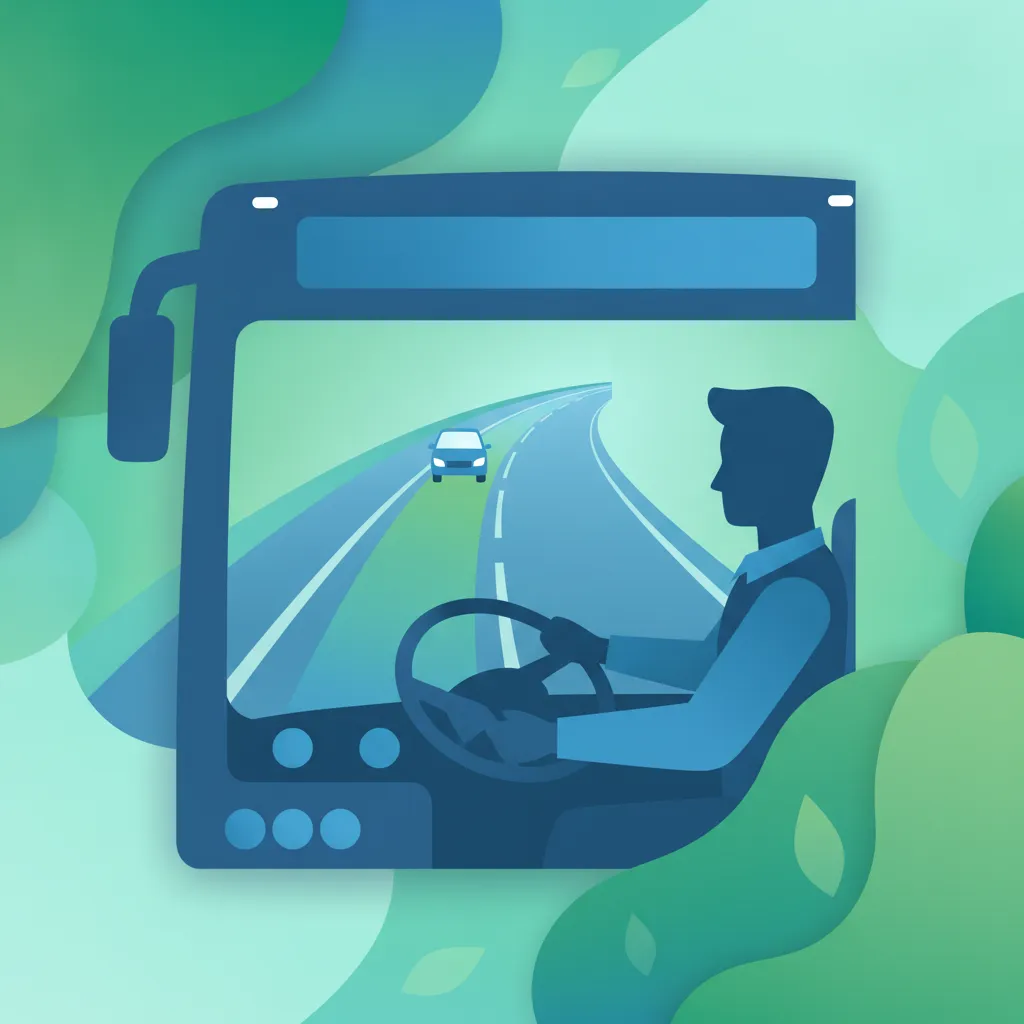
This unit focuses on the critical relationship between vehicle size and safe operation. You will learn to manage momentum, perform smooth braking, and calculate appropriate following distances to ensure passenger comfort and safety. Mastering these concepts is essential for both your theory exam and the practical requirements of driving large passenger vehicles in Turkey.
Browse all lessons that make up Vehicle Size, Smooth Control, Speed, Braking and Following Distance. Each lesson focuses on specific topics, learning objectives, and core concepts, helping you build essential knowledge and follow a clear, structured progression toward your study goals in Turkey.
The lesson examines how the physical dimensions of passenger vehicles influence their handling, maneuverability, and blind spot areas. Learners will understand the effects of length, width, height, and wheelbase on turning radius, lane changes, and overall vehicle stability. Grasping these concepts is essential for safe operation in varied traffic environments and tight spaces.
Learners will explore methods for achieving smooth acceleration and deceleration, focusing on gradual throttle application and progressive brake pressure to maintain passenger comfort and vehicle stability. The lesson highlights the importance of anticipating road conditions and traffic flow to avoid abrupt speed changes, thereby enhancing safety and reducing fuel consumption.
This lesson focuses on managing vehicle speed according to different road environments—urban, rural, and highways—while complying with legal speed limits and traffic flow. Learners will understand how to adjust speed for varying road conditions, traffic density, and safety considerations, ensuring a balance between efficiency and risk mitigation.
Learners will learn how to calculate and maintain safe following distances, accounting for the longer braking distances and reaction times inherent to larger passenger vehicles. The lesson emphasizes the importance of a sufficient time gap to allow for safe stopping and to prevent rear-end collisions, particularly in varying traffic conditions.
This lesson presents effective braking strategies designed to safeguard passengers and prevent wheel lock-up or skidding. Learners will become familiar with progressive braking, the use of ABS, and techniques for maintaining vehicle stability during sudden stops. Proper braking ensures passenger comfort and reduces accident risk, especially in adverse road conditions.
Explore high-intent keywords and long-tail search topics learners use when researching Vehicle Size, Smooth Control, Speed, Braking and Following Distance. These terms reflect how people search for reliable study materials, structured explanations, and unit-level theory preparation support in Turkey.
Find clear answers to the most common questions learners ask about Vehicle Size, Smooth Control, Speed, Braking and Following Distance. Understand how the unit is organized, what learning goals it supports, and how it contributes to your study progression with structured explanations and practical guidance tailored for learners in Turkey.
Larger vehicles like buses have significantly greater mass, which results in longer stopping distances. Maintaining a larger gap ensures you have enough time and space to brake safely without causing injury to passengers or loss of vehicle control.
Larger vehicles have wider turning radii and higher centers of gravity. You must reduce speed significantly before turns and approach intersections cautiously to ensure the vehicle remains stable and within its lane.
Yes, the theory exam includes questions regarding road safety and physical laws affecting vehicle motion. You must understand how speed, road surface conditions, and vehicle weight influence your total stopping distance.
Smooth braking involves anticipating traffic flow and applying steady, gradual pressure to the brake pedal. This prevents 'jerking,' which is crucial for the comfort of standing or seated passengers.
All included lessons
Lessons in Vehicle Size, Smooth Control, Speed, Braking and Following Distance
See who benefits most from studying Vehicle Size, Smooth Control, Speed, Braking and Following Distance. This overview explains how the unit supports different learning needs, what level of knowledge is helpful before starting, and how it fits into the overall study path in Turkey.
This unit is designed for candidates pursuing their Turkish Class D licence. It is perfect for those needing to understand the specific dynamics of large passenger vehicles, as well as learners aiming to improve their anticipatory driving skills for the official e-sınav.

Ready to systematically prepare for your ehliyet sınavı? Explore our comprehensive curriculum to find the perfect study path. Dive into expertly organized modules covering all official topics. Build a solid understanding of Turkish road rules, signs, and safety protocols for exam success and confident driving.
Explore Driving Theory CurriculumExplore all units and lessons included in this driving theory course.
Ready to systematically prepare for your ehliyet sınavı? Explore our comprehensive curriculum to find the perfect study path. Dive into expertly organized modules covering all official topics. Build a solid understanding of Turkish road rules, signs, and safety protocols for exam success and confident driving.
Explore Driving Theory Curriculum