
This lesson provides essential guidance on managing your vehicle speed across diverse Turkish road environments, from bustling city streets to highways. As part of your Class D passenger vehicle training, you will learn how to balance legal requirements with passenger safety and vehicle handling. Mastery of these speed protocols is critical for both passing your theory exam and ensuring a professional, safe experience for your passengers.
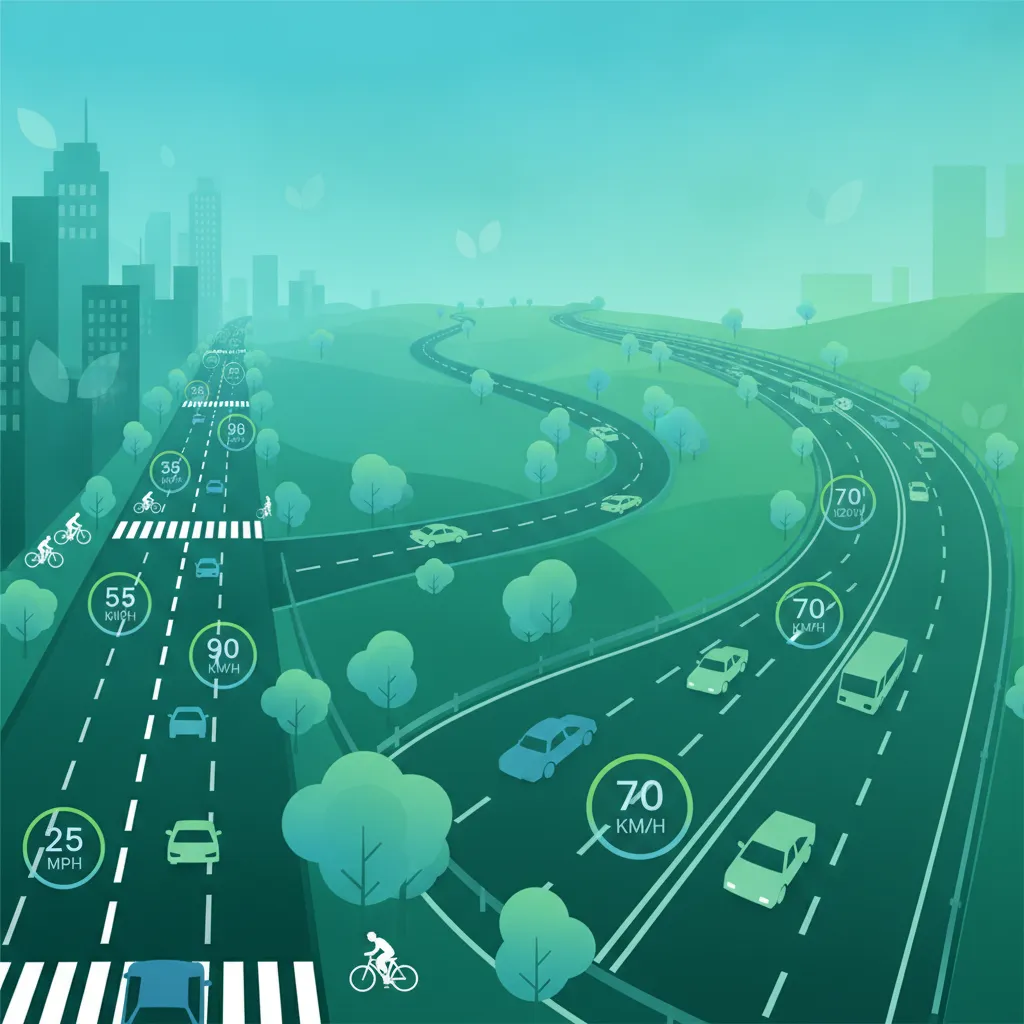
Lesson content overview
Speed management is one of the most critical responsibilities for a professional driver holding a Turkish Class D passenger vehicle licence. Operating a heavy, high-occupancy vehicle such as a bus (otobüs) demands a deep understanding of vehicle physics, strict compliance with national traffic laws (Karayolları Trafik Kanunu), and constant adaptation to changing environments.
Managing speed is not simply about staying under the legal limit; it is about choosing a speed that guarantees passenger comfort, protects vulnerable road users, and ensures the vehicle can stop safely under any circumstances. This lesson covers speed management principles across urban, rural, and highway settings in Turkey, addressing the safety, physics, and legal frameworks every Class D candidate must master.
Safe speed management relies on several key principles. These concepts help drivers balance the competing demands of route schedules, fuel efficiency, passenger safety, and legal compliance.
| Principle | Definition | Purpose / Rationale | Driving Implications |
|---|---|---|---|
| Legal Speed Limits | The maximum speed allowed by law for a specific road type and vehicle class. | To prevent catastrophic accidents and standardize traffic flow. | Class D vehicles have lower statutory speed limits than passenger cars on intercity roads. |
| Safe Speed | The speed at which a driver can maintain complete control and stop safely within the clear distance ahead. | To accommodate hazards, poor visibility, and adverse weather. | Safe speed is often significantly lower than the posted legal limit. |
| Speed-Environment Matching | Dynamically adjusting speed to suit the current road category (urban, rural, or highway). | To align the vehicle's momentum with environmental hazards. | Requires continuous evaluation of surrounding infrastructure and pedestrian density. |
| Anticipatory Speed Adjustment | Proactively reducing speed before a hazard is fully reached. | Minimizes the need for sudden, emergency braking, protecting passengers from injury. | Requires looking 15–20 seconds ahead to scan for intersections, curves, and school zones. |
| Speed Consistency | Maintaining a steady, smooth pace and avoiding erratic acceleration or deceleration. | Maximizes passenger comfort, reduces mechanical wear, and optimizes fuel consumption. | Relies on smooth throttle control and proper gear selection. |
Under Turkish Highway Traffic Regulations (Karayolları Trafik Yönetmeliği), speed limits are defined by both the category of the road and the class of the vehicle. Drivers of Class D passenger vehicles (buses) must adhere to specific, lower speed limits compared to standard passenger cars due to their larger mass and longer braking distances.
The table below outlines the standard statutory speed limits in Turkey for Class D passenger vehicles (Buses/Otobüs) compared to standard passenger cars (Otomobil):
| Road Category | Class D Bus Speed Limit (km/h) | Standard Passenger Car Limit (km/h) | Key Driving Considerations |
|---|---|---|---|
| Urban Roads (Yerleşim Yeri İçi) | 50 | 50 | High pedestrian density, active public transport lanes, frequent stops. |
| Intercity Two-Way Roads (Çift Yönlü Karayolları) | 80 | 90 | Narrower lanes, oncoming traffic close by, potential agricultural vehicles. |
| Intercity Divided Roads (Bölünmüş Yollar) | 90 | 110 | Intersections with traffic lights, turning traffic, varying surface quality. |
| Motorways / Highways (Otoyollar) | 100 | 130 - 140 | High-speed overtaking, crosswinds, long-distance fatigue, heavy freight traffic. |
Understanding the relationship between speed, vehicle mass, and stopping distance is a core requirement for Class D drivers. Because a bus carries dozens of passengers and has a high gross vehicle weight, its kinetic energy is immense.
The kinetic energy () of a moving vehicle is calculated as: where is the vehicle mass and is its velocity (speed). Because velocity is squared, doubling your speed quadruples the kinetic energy that must be dissipated by the brakes.
To bring a passenger vehicle to a complete stop, the driver must account for two distinct phases:
At higher speeds, both components increase dramatically:
Urban environments (yerleşim yeri içi) present the most complex and dynamic challenges for Class D drivers. High pedestrian density, stop-and-go traffic, delivery vehicles, and public transit operations require constant vigilance.
Rural and intercity roads (şehirlerarası yollar) in Turkey are characterized by unique risks, including sharp curves, grade changes, slow agricultural vehicles, and unpredictable surface conditions.
Highways and motorways (otoyollar) allow for faster travel, but the high speeds of surrounding traffic compress reaction times and amplify the consequences of any error.
A professional driver must never treat the statutory speed limit as a target. The legal limit is designed for ideal conditions. When conditions deteriorate, the safe operating speed must drop accordingly.
Assess Visibility: If fog, heavy rain, or snow reduces your line of sight, immediately lower your speed so your total stopping distance remains well within your range of clear vision.
Evaluate Road Grip (Traction): On wet, icy, or snow-covered surfaces, tyre adhesion is drastically reduced. Lower your speed by at least 30% on wet roads, and by 50% or more on snowy or icy roads.
Account for Vehicle Load: A fully loaded passenger bus takes longer to stop and handles differently on curves than an empty one. Reduce your speed on curves and descents when carrying a heavy passenger load.
Increase Space Cushions: Double your following distance behind other vehicles to compensate for the extended braking distances associated with reduced speed and poor traction.
The Danger of Hydroplaning (Aquaplaning): At speeds above 80 km/h, a film of water can build up between your bus tyres and the road surface, causing the vehicle to lose steering and braking control. If you encounter standing water on a highway, reduce your speed beforehand to prevent hydroplaning.
Operating a large commercial vehicle requires avoiding common speed management errors that lead to fines, licence points, or catastrophic collisions.
Why does Turkish traffic law enforce stricter speed limits for Class D vehicles?
Speed management for Turkish Class D bus drivers requires balancing strict legal limits with situational judgment, as statutory limits apply only under ideal conditions. The physics of braking demonstrate that kinetic energy increases with the square of velocity, meaning a bus at 100 km/h needs nearly three times the stopping distance it requires at 50 km/h. Drivers must dynamically adjust speed based on environmental factors including pedestrian density, weather conditions, road surface quality, and vehicle load. Specific limits of 50/80/90/100 km/h govern urban, rural two-way, divided, and motorway settings respectively, while zones near schools and hospitals mandate 30 km/h. Beyond memorising limits, successful exam candidates understand how anticipatory driving, consistent speed, and auxiliary braking systems (retarders) protect passengers and prevent collisions.
A short set of high-value points that capture the most important learning from this lesson.
Class D buses have lower statutory speed limits than passenger cars on every road type in Turkey due to their mass and longer braking distances
Total stopping distance equals reaction distance plus braking distance, and braking distance increases quadratically with speed due to kinetic energy physics
Safe speed is context-dependent and often significantly lower than the posted legal limit, especially in adverse weather or heavy traffic
Anticipatory driving—scanning 15–20 seconds ahead—allows proactive speed reduction before hazards require emergency braking
Heavy buses are vulnerable to crosswinds on motorways and viaducts; immediate speed reduction restores lateral control
Explore all units and lessons included in this driving theory course.
Class D bus speed limits: 50 km/h urban, 80 km/h intercity two-way, 90 km/h divided roads, 100 km/h motorways
School zones, hospitals, and residential areas commonly mandate 30 km/h reduced limits regardless of standard road limits
A bus at 100 km/h requires approximately 90–100 metres total stopping distance versus roughly 29 metres at 50 km/h
Wet roads require at least 30% speed reduction; icy or snowy conditions demand 50% or greater reduction from normal operating speed
Speed consistency—avoiding erratic acceleration or braking—optimises passenger comfort, fuel efficiency, and mechanical wear
Treating the statutory speed limit as a target rather than a maximum ceiling for ideal conditions only
Entering curves at full speed and attempting to brake mid-corner, which risks rollover due to high bus centre of gravity
Failing to reduce speed before downhill descents, overloading the service brakes and causing brake fade
Driving below the flow of traffic on motorways without hazard lights, creating dangerous differential speeds
Using cruise control in wet, winding, or heavy traffic conditions, which prevents the rapid speed adjustments required for safety
Lesson content overview
A short set of high-value points that capture the most important learning from this lesson.
Class D buses have lower statutory speed limits than passenger cars on every road type in Turkey due to their mass and longer braking distances
Total stopping distance equals reaction distance plus braking distance, and braking distance increases quadratically with speed due to kinetic energy physics
Safe speed is context-dependent and often significantly lower than the posted legal limit, especially in adverse weather or heavy traffic
Anticipatory driving—scanning 15–20 seconds ahead—allows proactive speed reduction before hazards require emergency braking
Heavy buses are vulnerable to crosswinds on motorways and viaducts; immediate speed reduction restores lateral control
Explore all units and lessons included in this driving theory course.
Class D bus speed limits: 50 km/h urban, 80 km/h intercity two-way, 90 km/h divided roads, 100 km/h motorways
School zones, hospitals, and residential areas commonly mandate 30 km/h reduced limits regardless of standard road limits
A bus at 100 km/h requires approximately 90–100 metres total stopping distance versus roughly 29 metres at 50 km/h
Wet roads require at least 30% speed reduction; icy or snowy conditions demand 50% or greater reduction from normal operating speed
Speed consistency—avoiding erratic acceleration or braking—optimises passenger comfort, fuel efficiency, and mechanical wear
Treating the statutory speed limit as a target rather than a maximum ceiling for ideal conditions only
Entering curves at full speed and attempting to brake mid-corner, which risks rollover due to high bus centre of gravity
Failing to reduce speed before downhill descents, overloading the service brakes and causing brake fade
Driving below the flow of traffic on motorways without hazard lights, creating dangerous differential speeds
Using cruise control in wet, winding, or heavy traffic conditions, which prevents the rapid speed adjustments required for safety
Explore search topics learners often look for when studying Speed Management in Urban, Rural, and Highway Settings. These topics reflect common questions about road rules, driving situations, safety guidance, and lesson level theory preparation for learners in Turkey.
Browse additional driving theory lessons that cover connected traffic rules, road signs, and common driving situations related to this topic. Improve your understanding of how different rules interact across everyday traffic scenarios.
Learn how to effectively manage vehicle speed and safety when operating large passenger vehicles in dense urban environments. This guide explains interaction with pedestrians at school zones, managing bus stops, and responding to complex intersection traffic patterns in line with official Turkish road regulations and urban transport safety standards.
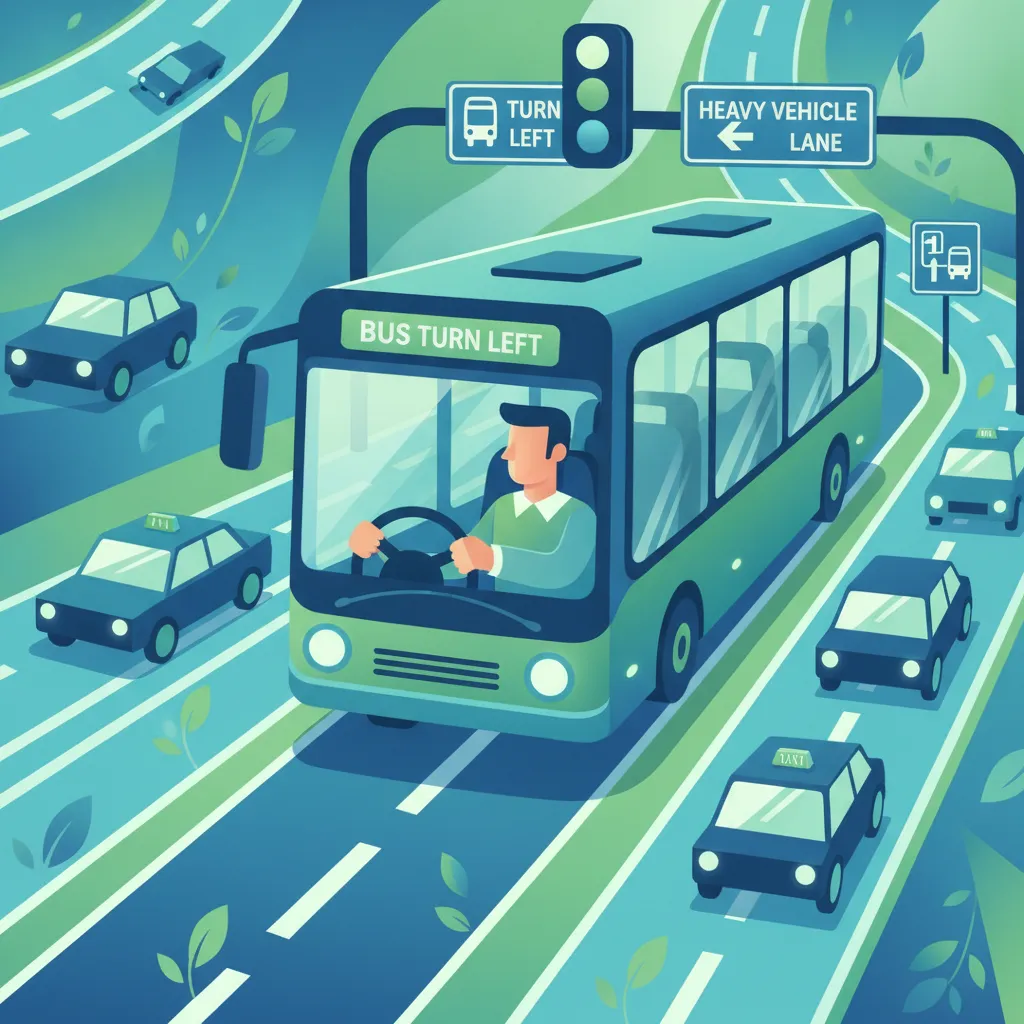
Learners will explore strategies for navigating congested urban traffic environments while operating large passenger vehicles. The lesson covers lane selection, adherence to traffic signals, and the use of bus lanes where applicable. Understanding how to maintain smooth traffic flow while ensuring passenger safety is crucial for efficient urban transportation.
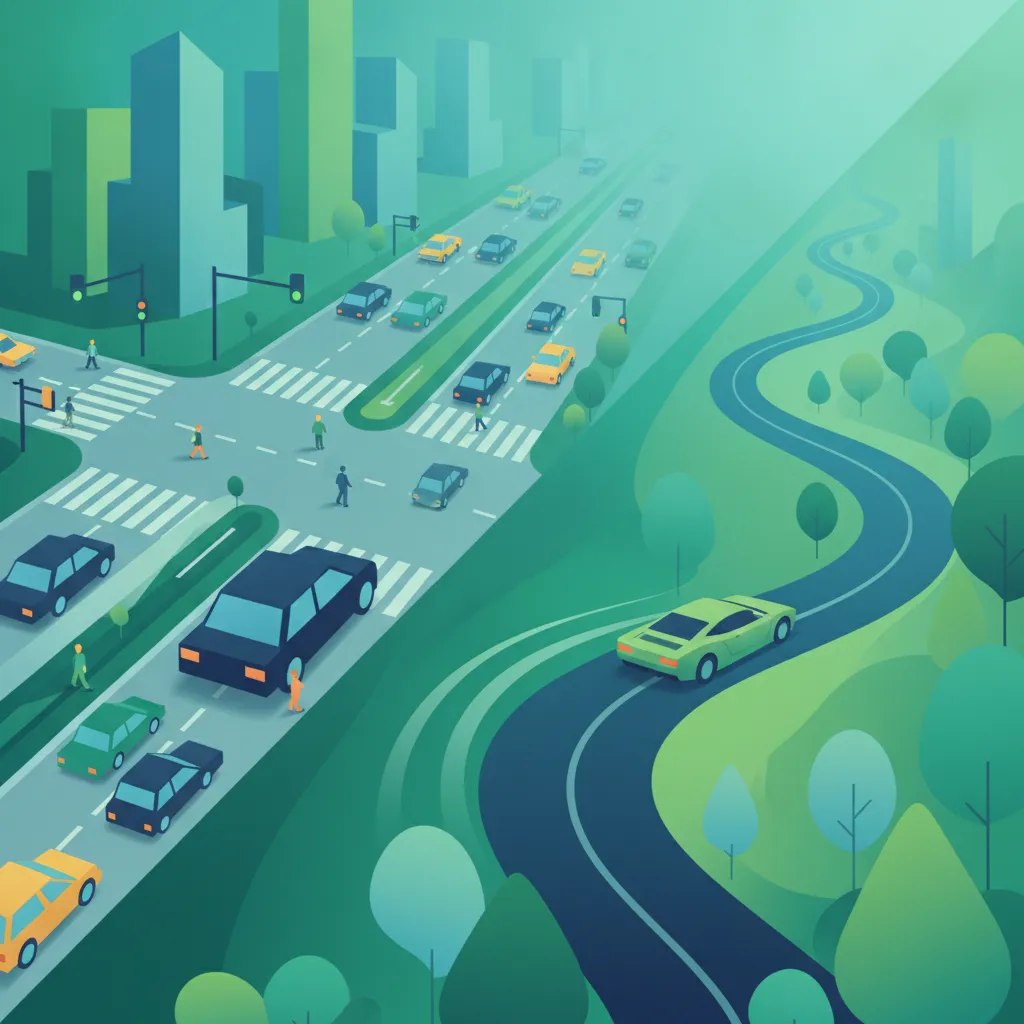
This lesson delves into specific manoeuvring strategies required when navigating both tight urban environments and open rural roads with large passenger vehicles. Learners will explore techniques for handling narrow streets, tight turns, and intersections, while maintaining safety and efficiency. The content emphasizes planning and execution of manoeuvres based on road conditions and vehicle dimensions.
Explore the physical forces that impact heavy passenger vehicles at high speeds on motorways. This lesson covers the relationship between kinetic energy and braking distance, strategies for managing crosswinds, and maintaining vehicle stability while navigating long-distance routes in accordance with Turkish traffic law requirements for Class D licences.

This lesson examines the effects of load dynamics on vehicle stability during acceleration and deceleration. Learners will learn how cargo can shift and affect handling, particularly during sudden speed changes or emergency braking situations. The lesson emphasizes proper load securing, gradual acceleration, and controlled braking to maintain stability and prevent serious accidents.
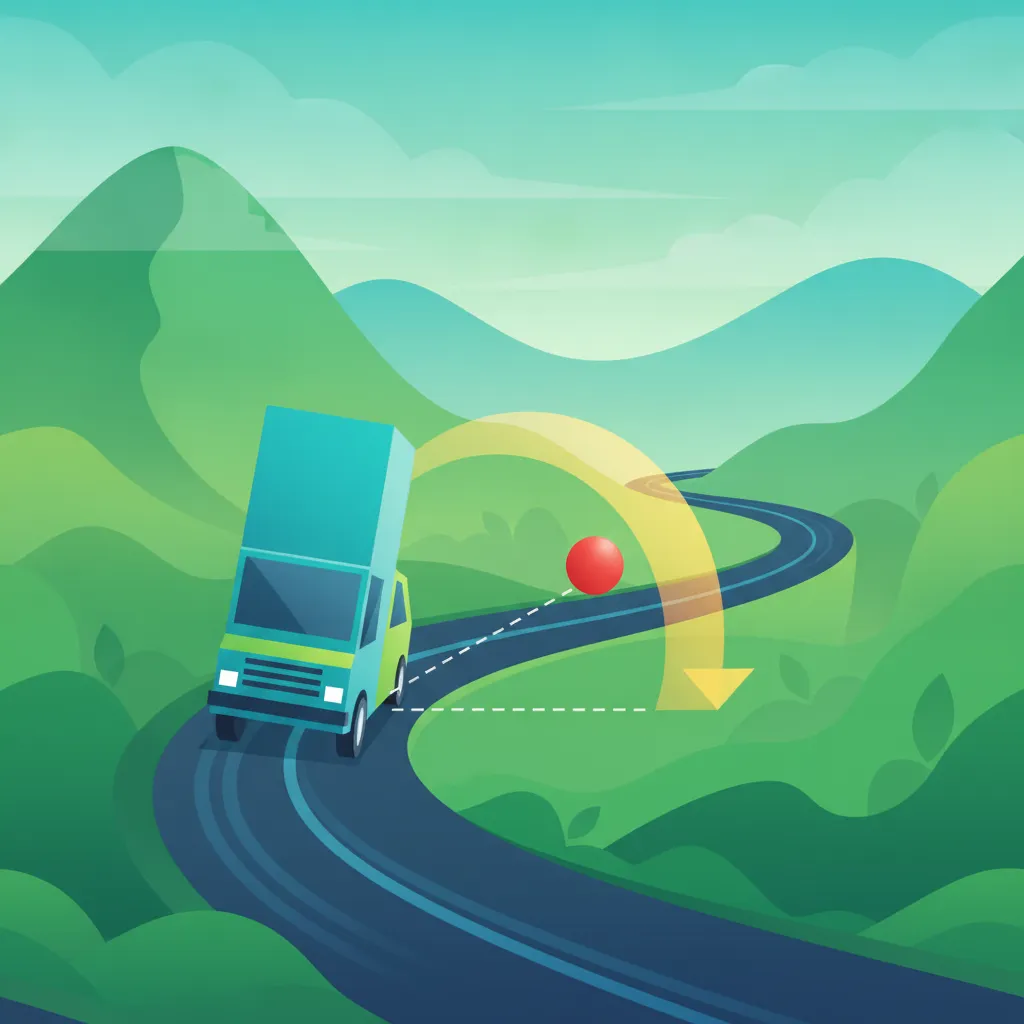
This lesson delves into the concept of centre of gravity and its critical impact on the stability of goods vehicles. Learners will explore how load height and distribution affect side and dynamic stability, particularly during braking, cornering, and evasive maneuvers. The lesson explains the increased rollover risk associated with a high centre of gravity and provides strategies for managing weight.

This lesson focuses on the critical importance of lane discipline and proper lane usage for large goods vehicles. Learners will understand the challenges posed by wider vehicle dimensions, the necessity of maintaining adequate lane occupancy, and the need for precise lane keeping. Emphasis is placed on selecting appropriate lanes, adhering to traffic flow, and ensuring general highway safety.
This lesson examines the specific road space requirements necessary for large goods vehicles to operate safely and efficiently. Topics include the need for adequate lane width, lateral clearance, and turning lanes to accommodate wider and longer vehicles. Learners will explore the proper use of shoulders, overtaking procedures, and the impact of large vehicles on overall road capacity in traffic.
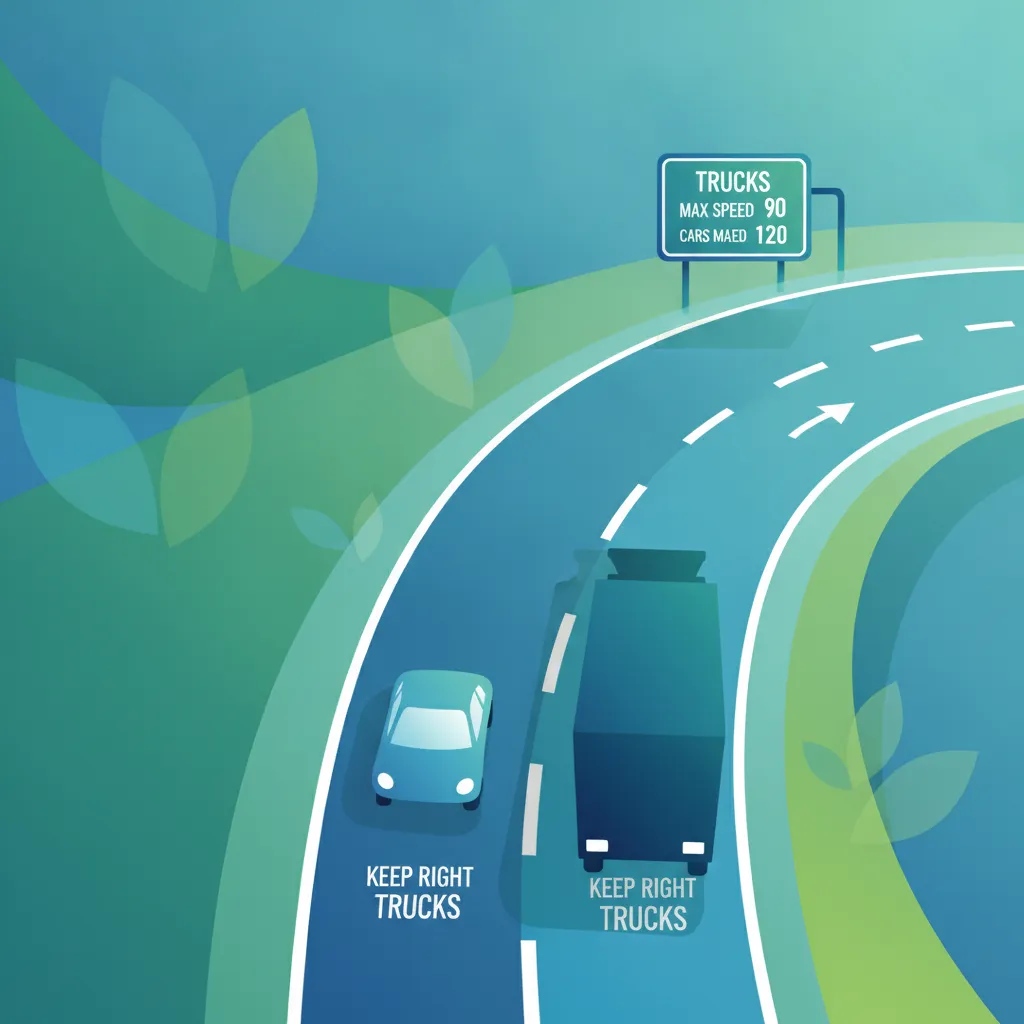
This lesson addresses the specific considerations for goods vehicle operation on highways and expressways, covering speed limits, lane discipline, safe merging, and overtaking. Learners will learn how to adapt to traffic flow, manage heavy vehicle dynamics at higher speeds, and ensure safe operation. The lesson emphasizes the importance of vigilance and proper lane usage to prevent accidents.

This lesson delves into the principles of weight distribution and load limits for goods vehicles, emphasizing the impact on vehicle stability and safety. It examines the concept of Gross Vehicle Weight (GVW) and the legal limits imposed on individual axles to prevent overloading. Learners will explore how improper weight distribution affects the centre of gravity, braking performance, and handling characteristics.

This lesson focuses on the unique requirements and best practices for operating passenger vehicles on highways and expressways. Topics include maintaining appropriate speed, adhering to lane discipline, executing safe overtaking maneuvers, and managing merges and exits. Emphasis is placed on ensuring a smooth ride for passengers while integrating safely with faster-moving traffic.
Learners will learn how to calculate and maintain safe following distances, accounting for the longer braking distances and reaction times inherent to larger passenger vehicles. The lesson emphasizes the importance of a sufficient time gap to allow for safe stopping and to prevent rear-end collisions, particularly in varying traffic conditions.

This lesson focuses on protecting vulnerable road users, such as pedestrians, cyclists, and motorcyclists, in mixed traffic environments. Learners will examine specific strategies for increased vigilance, anticipatory driving, and properly yielding to these users. The lesson also covers high-risk zones, such as school areas and public transport stops, emphasizing the need for heightened safety.

The lesson examines how the physical dimensions of passenger vehicles influence their handling, maneuverability, and blind spot areas. Learners will understand the effects of length, width, height, and wheelbase on turning radius, lane changes, and overall vehicle stability. Grasping these concepts is essential for safe operation in varied traffic environments and tight spaces.
Find clear answers to common questions learners have about Speed Management in Urban, Rural, and Highway Settings. Learn how the lesson is structured, which driving theory objectives it supports, and how it fits into the overall learning path of units and curriculum progression in Turkey. These explanations help you understand key concepts, lesson flow, and exam focused study goals.
Yes, passenger transport vehicles often have specific speed restrictions defined by Turkish highway regulations that differ from light passenger vehicles. You must always check the specific speed limits for your vehicle category on highways and intercity roads.
The theory exam expects you to understand that a fully loaded passenger vehicle has longer stopping distances and different momentum characteristics. You should always opt for lower, safer speeds in scenarios involving heavy traffic or reduced visibility.
Many learners fail by forgetting to adjust for road signs that lower the speed limit due to specific conditions like road work or school zones. Always prioritize official signage over the general speed limit for the road type.
Professional standards require you to significantly reduce speed well below the legal maximum when visibility is poor or the road surface is slippery. The theory exam tests your ability to prioritize safety over maintaining the maximum allowed limit.
Use our comprehensive practice search to find exactly the Turkish driving theory questions you need to master. Whether reviewing specific road signs, traffic rules, or first aid scenarios, select your perfect practice set and boost your confidence for the official ehliyet sınavı.