
This lesson focuses on the critical braking techniques required for operating large passenger vehicles safely. By mastering these methods, you will ensure passenger comfort and stability while meeting the specific safety requirements for your Turkish Class D driver's licence.

Lesson content overview
Operating a heavy passenger vehicle, such as a city bus or a long-distance coach, carries immense responsibility. Under the Turkish Class D Passenger Vehicle Driving Licence Theory (D Sınıfı Sürücü Belgesi Teorisi), drivers must master not only basic traffic rules but also the advanced physics of vehicle control.
Unlike passenger cars, buses carry highly dynamic cargo: passengers who may be standing, walking, or sitting without seatbelts. A sudden or poorly executed braking maneuver can cause severe onboard injuries, lead to a catastrophic loss of vehicle control, or trigger multi-vehicle collisions.
This comprehensive lesson details the precise braking strategies, mechanical systems, and physical principles required to safely decelerate heavy passenger vehicles, prevent dangerous skids, and protect your passengers under all road conditions.
To control a large vehicle, you must first understand the physical forces at play during deceleration. A standard passenger bus can weigh anywhere from 10 to over 20 tonnes when fully loaded. This high mass drastically alters how the vehicle reacts to the brake pedal.
The kinetic energy () of a moving vehicle is calculated using the formula:
Where is the vehicle mass and is the velocity. Because velocity is squared, doubling your speed quadruples the kinetic energy that the braking system must convert into heat.
For a heavy Class D vehicle, this relationship means that stopping distances are significantly longer than those of passenger cars. A bus traveling at 80 km/h does not just require twice the stopping distance of one traveling at 40 km/h—it requires up to four times the distance under identical conditions.
When you apply the brakes, the vehicle’s center of gravity shifts forward. This is known as dynamic weight transfer or "nose-diving."
This weight transfer has two major consequences:
Progressive braking (kademeli frenleme) is the core technique for smooth, controlled deceleration in passenger transport. It is the exact opposite of sudden, reactive braking.
A braking technique where the driver applies light brake pressure initially, gradually increases pressure to achieve the desired deceleration, and then gently eases off the pedal just before the vehicle comes to a complete rest.
| Term | Definition | Notes |
|---|---|---|
| Progressive Braking | Gradual increase in brake pressure for a smooth stop. | Essential for passenger comfort and structural preservation. |
To execute progressive braking flawlessly, follow this three-step process:
Stage 1: Feel (Initiation) Apply light, gentle pressure to the brake pedal. This alerts the braking system, activates the rear brake lights to warn drivers behind you, and allows the brake pads/shoes to make initial contact with the drums or discs. It also serves as a physical warning to your passengers that the vehicle is slowing down.
Stage 2: Squeeze (Deceleration) Gradually increase pedal pressure to match the required rate of deceleration. This is where the bulk of the braking occurs. By ramping up the force smoothly, you minimize sudden weight transfer and keep the passenger cabin stable.
Stage 3: Ease (The Release) As the vehicle slows to a crawl (just before coming to a complete stop), slightly release or "feather" the brake pedal. This releases the energy stored in the compressed front suspension, preventing the characteristic backward "jerk" or jolt that causes standing passengers to lose their balance.
Progressive braking is not only a safety measure; it is a mark of professional driving standards under Turkish transport regulations.
Modern Class D vehicles in Turkey are equipped with an Anti-lock Braking System (ABS) as mandated by European and Turkish type-approval regulations. Understanding how ABS operates on air-braked heavy vehicles is critical for emergency survival.
An electronic safety system that monitors wheel speed and automatically modulates brake pressure during hard braking to prevent the wheels from locking up, thereby preserving steering control.
During emergency braking, if the vehicle's electronic control unit (ECU) detects that one or more wheels are about to lock up (stop rotating while the vehicle is still moving), it rapidly opens and closes air valves. This modulates the braking pressure to that specific wheel dozens of times per second.
This rapid modulation keeps the tire rotating at the threshold of maximum friction, which provides two main benefits:
The Braking Distance Misconception: Many drivers mistakenly believe that ABS always shortens stopping distances. On dry or wet asphalt, it often does. However, on loose surfaces like gravel, deep snow, or mud, ABS can actually increase stopping distances. Its primary purpose is always steering control, not necessarily a shorter stop.
In an emergency situation where ABS must be deployed, the driver's technique differs entirely from non-ABS vehicles:
A skid occurs when the tires lose traction with the road surface, causing the vehicle to slide out of the driver's control. In a heavy bus, recovering from a skid is highly difficult due to the vehicle's immense momentum. Therefore, prevention is your primary defense.
A condition where one or more tires lose traction, sliding across the road surface rather than rolling. This results in a loss of steering control, lateral stability, or both.
Driving theory distinguishes between two primary types of skids. Understanding the difference determines how you must react.
                  ┌──────────────────────────────┐
                  │        TYPES OF SKIDS        │
                  └──────────────┬───────────────┘
                                 │
         ┌───────────────────────┴───────────────────────┐
         ▼                                               ▼
┌─────────────────────────────────┐             ┌─────────────────────────────────┐
│     UNDERSTEER (Front-Wheel)    │             │      OVERSTEER (Rear-Wheel)     │
├─────────────────────────────────┤             ├─────────────────────────────────┤
│ • Front tires lose traction.     │             │ • Rear tires lose traction.     │
│ • Vehicle plows straight ahead. │             │ • Rear of vehicle swings out.   │
│ • Action: Ease off gas & brake. │             │ • Action: Counter-steer into    │
│   Straighten wheel slightly to  │             │   the direction of the skid.    │
│   regain steering grip.         │             │   Do NOT slam the brakes.       │
└─────────────────────────────────┘             └─────────────────────────────────┘
In an understeer skid, the front tires lose grip first. When you turn the steering wheel, the vehicle continues traveling in a straight line, "plowing" forward.
In an oversteer skid, the rear tires lose traction. The rear of the bus begins to swing outward, attempting to overtake the front of the vehicle. This is highly dangerous and can quickly lead to a roll-over.
In Turkey, mountainous terrains—such as the passes through the Taurus Mountains (Toroslar) or the steep routes of the Black Sea region—pose extreme challenges to heavy vehicle braking systems. Constant friction braking on long descents leads to brake fade, where the brakes overheat and lose all stopping power.
To prevent this, Class D vehicles are equipped with auxiliary, non-wearing braking systems.
Retarders are mounted directly within the vehicle's drivetrain (usually on the transmission or driveshaft).
An exhaust brake is a valve installed in the engine's exhaust system.
Auxiliary Brake Warning on Slippery Roads: Never use retarders or exhaust brakes on wet, icy, or snowy roads. Because auxiliary brakes apply retarding force only to the drive axle, they can cause the drive wheels to lock up and slide, instantly initiating a severe rear-wheel skid.
Safe braking is highly situational. A professional driver must continuously assess and adapt to environmental and vehicular changes.
The coefficient of friction between the tires and the road drops dramatically in adverse weather.
| Road Surface | Braking Distance Factor | Adjustment Required |
|---|---|---|
| Dry Asphalt | Baseline (1x) | Standard safe following distance (at least 2 seconds or the 2-second rule). |
| Wet / Rainy Road | Increases by 2x | Double your following distance. Use smooth, progressive braking early. |
| Icy / Snowy Road | Increases by up to 10x | Reduce speed by half or more. Avoid any abrupt pedal inputs. |
A fully loaded bus requires a greater total braking force to stop than an empty bus. However, an empty bus has less downward force pushing the tires onto the road, making it much easier to lock the wheels and slide on slippery surfaces.
Under the Turkish Highway Traffic Law No. 2918 (2918 Sayılı Karayolları Trafik Kanunu) and the associated Highway Traffic Regulation (Karayolları Trafik Yönetmeliği), passenger transport drivers are held to strict legal standards regarding vehicle control and passenger safety.
Abrupt, unnecessary, or aggressive braking (ani ve gereksiz frenleme) in active traffic is considered a traffic violation. If sudden braking causes passenger injury, the driver can face civil and criminal liability under the Turkish Penal Code (Türk Ceza Kanunu) for negligence.
Before starting any journey, a Class D driver is legally required to perform a pre-trip inspection of the pneumatic (air) braking system:
Let's look at how these principles are applied in real-world driving scenarios.
You are driving a city transit bus at 50 km/h in rainy conditions. Up ahead, a traffic light turns amber. A standing passenger is holding onto the handrail near the middle exit door.
You are driving a fully loaded intercity coach down a long 8% gradient on the highway near Bolu Mountain (Bolu Dağı).
To further master heavy vehicle dynamics, continue studying the relation between following distances, speed management, and handling adverse weather conditions on Turkish highways.
This lesson covers the essential braking techniques required for operating heavy Turkish Class D passenger vehicles safely. It explains the physics of braking, including how kinetic energy scales with speed squared and how dynamic weight transfer causes nose-diving and rear-wheel unloading. The three-stage progressive braking technique is central to passenger safety and brake longevity. ABS operation is detailed with emphasis on its primary purpose being steering control rather than shorter stopping distances. The lesson distinguishes between understeer and oversteer skids with specific recovery procedures, warns against using auxiliary braking systems on slippery surfaces, and outlines Turkish legal requirements under Traffic Law No. 2918 regarding prohibited braking practices and mandatory pre-trip inspections.
A short set of high-value points that capture the most important learning from this lesson.
Progressive braking follows three stages: light initiation, gradual squeeze, and gentle release to prevent passenger jolts
Kinetic energy increases with the square of speed, so doubling speed quadruples stopping distance
ABS preserves steering control during hard braking by preventing wheel lock-up, not by shortening stopping distance
Understeer (front-wheel skid) requires easing off brakes and straightening the wheel; oversteer (rear-wheel skid) requires counter-steering into the slide
Retarders and exhaust brakes handle 80-90% of descent braking to prevent service brake overheating and fade
Explore all units and lessons included in this driving theory course.
Never use retarders or exhaust brakes on wet, icy, or snowy surfaces as they can lock the drive wheels and cause severe skids
Progressive braking protects standing passengers from injury and extends brake component lifespan
Air brake systems must reach 6-8 bars operating pressure during pre-trip inspection before journey commencement
Wet roads double braking distance; icy roads can increase it up to 10 times compared to dry conditions
Heavily loaded vehicles need longer following distances, while empty vehicles have higher wheel lock-up risk on slippery surfaces
Assuming ABS always reduces stopping distance—in reality, it may increase stopping distance on loose gravel, deep snow, or mud
Manually pumping the brakes during ABS activation, which overrides the system and increases stopping distance
Using retarders on slippery roads, where they apply force only to the drive axle and can instantly cause rear-wheel lock-up
Slamming brakes during oversteer, which worsens rear-wheel skid and increases rollover risk
Riding service brakes continuously on long descents, leading to brake fade where brakes overheat and lose all stopping power
Lesson content overview
A short set of high-value points that capture the most important learning from this lesson.
Progressive braking follows three stages: light initiation, gradual squeeze, and gentle release to prevent passenger jolts
Kinetic energy increases with the square of speed, so doubling speed quadruples stopping distance
ABS preserves steering control during hard braking by preventing wheel lock-up, not by shortening stopping distance
Understeer (front-wheel skid) requires easing off brakes and straightening the wheel; oversteer (rear-wheel skid) requires counter-steering into the slide
Retarders and exhaust brakes handle 80-90% of descent braking to prevent service brake overheating and fade
Explore all units and lessons included in this driving theory course.
Never use retarders or exhaust brakes on wet, icy, or snowy surfaces as they can lock the drive wheels and cause severe skids
Progressive braking protects standing passengers from injury and extends brake component lifespan
Air brake systems must reach 6-8 bars operating pressure during pre-trip inspection before journey commencement
Wet roads double braking distance; icy roads can increase it up to 10 times compared to dry conditions
Heavily loaded vehicles need longer following distances, while empty vehicles have higher wheel lock-up risk on slippery surfaces
Assuming ABS always reduces stopping distance—in reality, it may increase stopping distance on loose gravel, deep snow, or mud
Manually pumping the brakes during ABS activation, which overrides the system and increases stopping distance
Using retarders on slippery roads, where they apply force only to the drive axle and can instantly cause rear-wheel lock-up
Slamming brakes during oversteer, which worsens rear-wheel skid and increases rollover risk
Riding service brakes continuously on long descents, leading to brake fade where brakes overheat and lose all stopping power
Explore search topics learners often look for when studying Braking Strategies to Protect Passengers and Prevent Skids. These topics reflect common questions about road rules, driving situations, safety guidance, and lesson level theory preparation for learners in Turkey.
Browse additional driving theory lessons that cover connected traffic rules, road signs, and common driving situations related to this topic. Improve your understanding of how different rules interact across everyday traffic scenarios.
Learn the theory behind calculating and maintaining safe following distances for buses and coaches in varying road conditions. Understand how vehicle weight and speed dynamics impact reaction time and stopping requirements on Turkish highways according to current transport regulations.
This lesson focuses on the importance of maintaining safe following distances for goods vehicles, taking into account longer braking distances and increased load. Learners will learn how to calculate appropriate gaps based on speed, road conditions, and vehicle dynamics. The lesson emphasizes safe following practices to prevent rear-end collisions and improve overall traffic safety in Turkey.
Learners will learn how to calculate and maintain safe following distances, accounting for the longer braking distances and reaction times inherent to larger passenger vehicles. The lesson emphasizes the importance of a sufficient time gap to allow for safe stopping and to prevent rear-end collisions, particularly in varying traffic conditions.

This lesson focuses on the unique requirements and best practices for operating passenger vehicles on highways and expressways. Topics include maintaining appropriate speed, adhering to lane discipline, executing safe overtaking maneuvers, and managing merges and exits. Emphasis is placed on ensuring a smooth ride for passengers while integrating safely with faster-moving traffic.
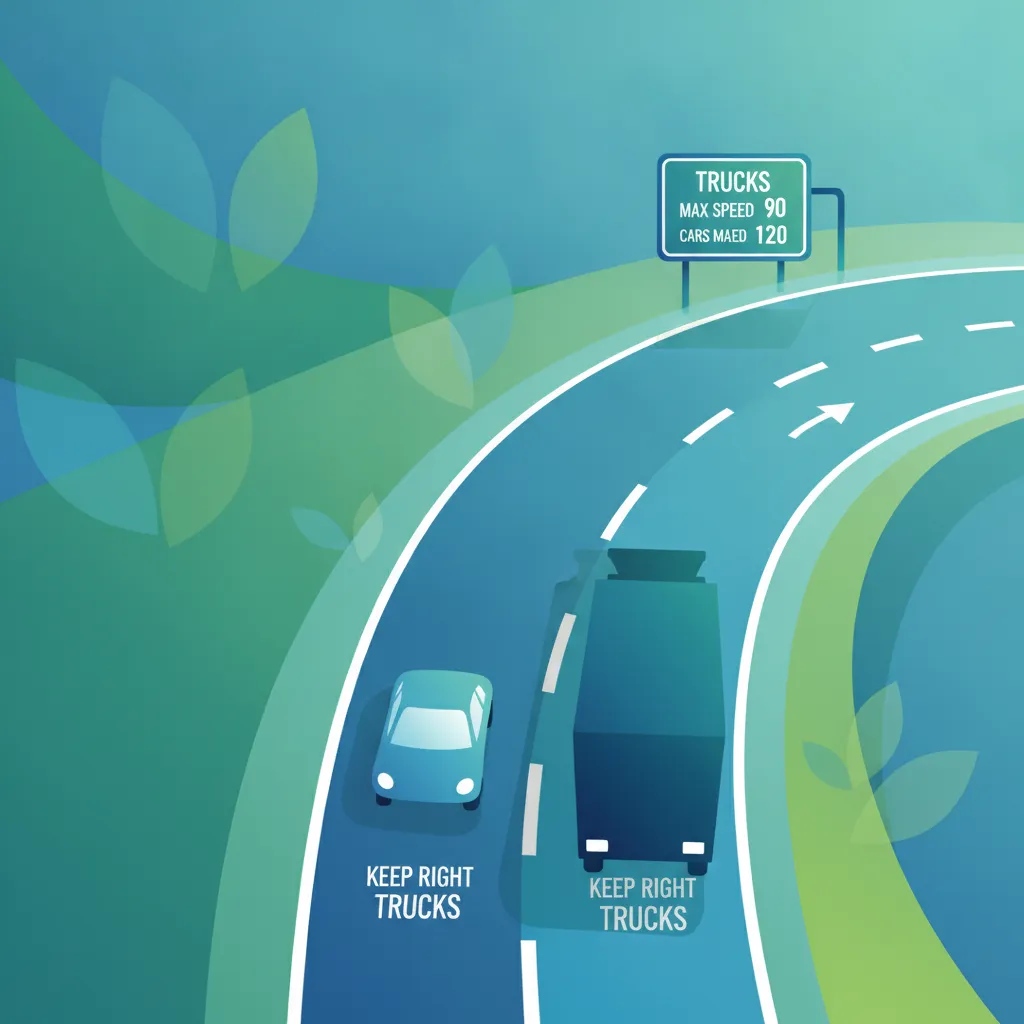
This lesson addresses the specific considerations for goods vehicle operation on highways and expressways, covering speed limits, lane discipline, safe merging, and overtaking. Learners will learn how to adapt to traffic flow, manage heavy vehicle dynamics at higher speeds, and ensure safe operation. The lesson emphasizes the importance of vigilance and proper lane usage to prevent accidents.

This lesson focuses on protecting vulnerable road users, such as pedestrians, cyclists, and motorcyclists, in mixed traffic environments. Learners will examine specific strategies for increased vigilance, anticipatory driving, and properly yielding to these users. The lesson also covers high-risk zones, such as school areas and public transport stops, emphasizing the need for heightened safety.
This lesson examines the specific road space requirements necessary for large goods vehicles to operate safely and efficiently. Topics include the need for adequate lane width, lateral clearance, and turning lanes to accommodate wider and longer vehicles. Learners will explore the proper use of shoulders, overtaking procedures, and the impact of large vehicles on overall road capacity in traffic.
This lesson focuses on the various access restrictions imposed on heavy goods vehicles within Turkish road networks. Learners will understand the reasons for restrictions such as low bridge clearances, tunnel usage, construction zones, and urban delivery area limitations. The lesson also covers how to recognize and comply with legal notices and signage indicating restricted commercial zones.
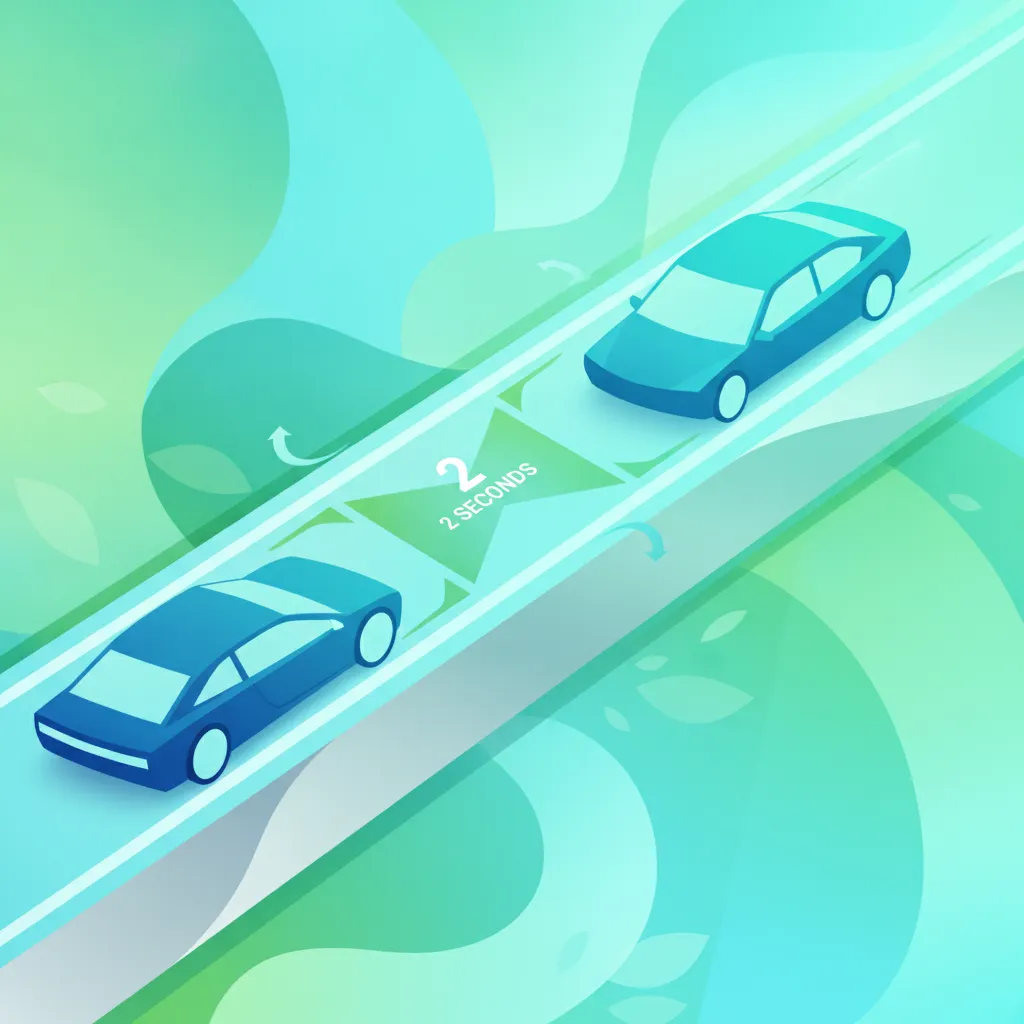
This lesson focuses on the principles governing safe following distances between vehicles. Topics include understanding time and distance gaps, reaction times, and braking distances. Learners will explore guidelines for maintaining proper following distances based on speed and road conditions. Real-world examples demonstrate the importance of safe following practices in preventing rear-end collisions.

This lesson provides a detailed overview of the classification system for goods vehicles in Turkey, focusing on the specific dimensional limits for each category. Learners will become familiar with the maximum allowable length, width, and height for these vehicles, as defined by Turkish law. Understanding these limits is crucial for ensuring compliance with road regulations and avoiding serious violations.
Explore essential driving theory for handling heavy passenger vehicles in rain, snow, and low-visibility conditions. Learn how reduced road surface friction changes braking requirements and how to adapt your speed and steering for maximum passenger safety on Turkish roads.

This lesson details defensive driving techniques for adverse weather conditions such as rain, snow, black ice, dense fog, and strong winds. It explains the physics of aquaplaning and how to regain vehicle control when losing traction on slippery surfaces. Drivers will learn how to adjust speed and increase safety gaps to prevent weather crashes.
This lesson focuses on the challenges of driving goods vehicles in adverse weather conditions, such as rain, fog, snow, and strong wind. Learners will explore safe speed management, increased following distances, proper use of headlights and windshield wipers, and techniques to maintain traction. The lesson emphasizes the importance of adapting driving behavior to the specific weather conditions.
Learners will explore the specific challenges presented by adverse weather conditions, such as rain, fog, and nighttime driving. The lesson emphasizes the importance of adjusting speed, increasing following distances, and using appropriate lighting to maintain safety. Strategies for handling reduced road surface grip and visibility issues are discussed, ensuring drivers can adapt to changing weather while protecting passengers and other road users.
In this lesson, learners will explore the challenges presented by various weather conditions, such as rain, wind, fog, and temperature extremes, and how they affect motorcycle handling and safety. Topics covered include adjusting riding techniques for reduced traction, maintaining visibility in low-light or foggy conditions, and managing physical wind effects. The lesson emphasizes adjusting speed and braking.

Learners will explore techniques for adjusting driving styles based on different road surface conditions, such as gravel, potholes, and wet pavement. The lesson emphasizes the importance of adapting speed, braking, and steering inputs to maintain vehicle control and passenger comfort. Strategies for detecting and responding to road hazards are discussed to ensure safety across diverse driving environments.

Riding in adverse weather presents significant challenges for open-vehicle operators, including reduced tire grip, obscured vision, and physical fatigue from wind or cold. This lesson covers safety techniques for navigating rainy conditions, avoiding the danger of hydroplaning, and managing strong crosswinds that can destabilize a lightweight moped. You will learn to adjust your speed, increase your following distance, and use high-visibility gear to ensure a safe journey under bad weather.

This lesson introduces the proper utilization of mirrors, rearview cameras, and additional sensor systems to enhance situational awareness for goods vehicle drivers. Learners will understand the importance of correctly adjusting mirrors for optimal coverage, interpreting camera feeds, and relying on sensor alerts. The lesson emphasizes integrating modern safety technology into daily driving practices.
This lesson explores the unique challenges encountered when driving goods vehicles on rural roads, including narrow widths, sharp curves, animal crossings, and varying road surface conditions. Learners will understand the importance of adjusting speed, maintaining vigilance, and respecting road markings. Emphasis is placed on safe navigation practices to mitigate risks associated with rural areas.
This lesson focuses on effectively managing road closures and detours that affect goods vehicle routes. Learners will explore strategies for obtaining real-time information, updating navigation systems, and planning alternate routes to maintain efficiency and compliance. Emphasis is placed on safety considerations, communication with dispatch centers, and adhering to traffic management.

This lesson addresses the techniques required for safely navigating grades and slopes with heavy goods vehicles. Learners will explore the use of engine braking, proper gear selection, and auxiliary retarders to manage speed on steep downhill sections. The lesson also covers strategies for starting on uphill grades without rollback, considering vehicle weight and load distribution.
Find clear answers to common questions learners have about Braking Strategies to Protect Passengers and Prevent Skids. Learn how the lesson is structured, which driving theory objectives it supports, and how it fits into the overall learning path of units and curriculum progression in Turkey. These explanations help you understand key concepts, lesson flow, and exam focused study goals.
Progressive braking involves a smooth application of the brake pedal, which prevents sudden weight transfer. This is crucial for large vehicles to maintain stability and ensure that passengers remain comfortable and safe during speed reductions.
The Anti-lock Braking System (ABS) prevents the wheels from locking up during hard braking. This allows the driver to maintain steering control, which is vital for avoiding obstacles while bringing the vehicle to a safe stop.
Avoid slamming on the brakes. Instead, release the accelerator, steer gently in the direction of the skid, and use light, rhythmic braking if the vehicle lacks modern safety systems, while always remaining calm to regain control.
Yes, you are likely to encounter questions regarding stopping distances, which are influenced by speed, vehicle weight, and road conditions. Understanding the relationship between these factors is a core part of the Class D curriculum.
Use our comprehensive practice search to find exactly the Turkish driving theory questions you need to master. Whether reviewing specific road signs, traffic rules, or first aid scenarios, select your perfect practice set and boost your confidence for the official ehliyet sınavı.