
This lesson is critical for all Class D passenger vehicle drivers, focusing on the mental and physical demands of professional driving. You will learn how to identify the signs of fatigue, the dangers of driver distraction, and effective strategies for maintaining your well-being on long journeys to ensure passenger safety.

Lesson content overview
Operating a large passenger vehicle under a Class D licence (Sınıf D Sürücü Belgesi) involves much more than mechanical mastery of a bus or coach. It carries a profound ethical and legal responsibility for the lives of dozens of passengers, as well as the safety of all other road users. Driving a commercial passenger vehicle is a demanding occupation where physical stamina, sharp mental focus, and emotional resilience are tested daily.
This lesson explores the three primary internal hazards that threaten a driver's performance: fatigue (yorgunluk), distraction (dikkat dağınıklığı), and stress (stres). By understanding the physiological and psychological mechanisms behind these conditions, learning to recognize their early warning signs, and adhering to Turkish traffic laws and professional regulations, you can maintain the highest standards of safety, comfort, and professionalism on every journey.
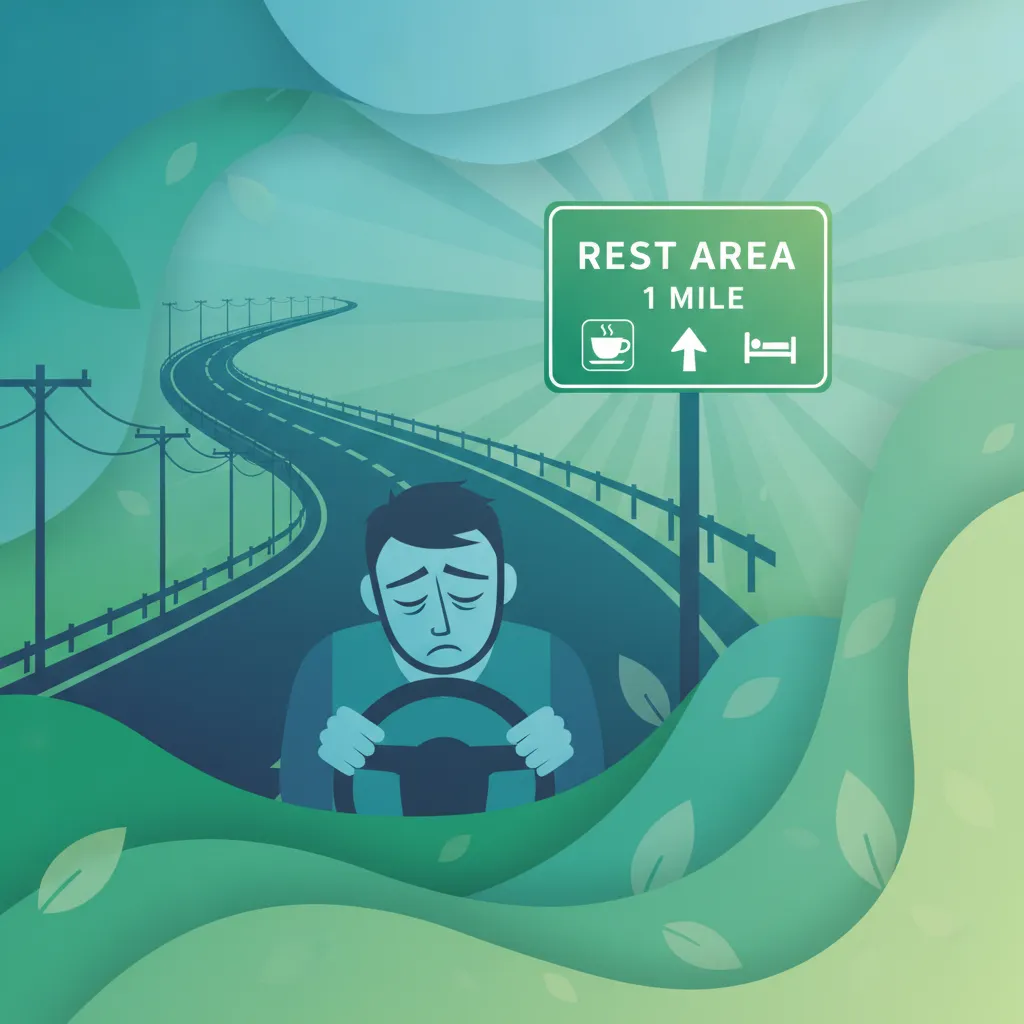
Driver fatigue is a state of physical and mental exhaustion that severely impairs cognitive processing, situational awareness, and motor coordination. In passenger transport, where journeys can span several hundred kilometres across monotonous highways or require navigating dense urban areas for hours, fatigue is one of the leading contributors to catastrophic collisions.
Many drivers mistakenly treat fatigue as a minor inconvenience that can be overcome with sheer willpower, loud music, or caffeine. In reality, fatigue causes physiological changes in the brain that are comparable to alcohol impairment, compromising a driver's ability to safely operate a vehicle.
When you are fatigued, your brain’s ability to process sensory information slows down significantly. In a Class D passenger vehicle, which has a much longer braking distance and larger blind spots than a standard passenger car, even a split-second delay in braking can be the difference between a safe stop and a fatal rear-end collision.
A critical skill for any professional passenger vehicle driver is self-monitoring. You must learn to recognize the early warning signs of physical and mental exhaustion before they escalate into dangerous impairment.
The Illusion of Safety: Never wait until you feel yourself nodding off to take action. The transition from feeling "tired" to falling asleep can happen in an instant, without any conscious awareness.
One of the most dangerous consequences of extreme fatigue is microsleep (mikrouyku). This is an involuntary, temporary episode of sleep or loss of attention that can last anywhere from a fraction of a second to 30 seconds. During a microsleep episode, your brain completely stops processing environmental and sensory input.
An involuntary, brief episode of sleep or unconsciousness that occurs during wakeful activities, lasting from a fraction of a second up to 30 seconds, during which the driver is completely non-responsive to road hazards.
If a bus is travelling at 90 km/h on an intercity highway, it covers 25 metres every second. A brief four-second microsleep means the vehicle travels 100 metres completely uncontrolled, presenting an extreme risk of a catastrophic roll-over or head-on collision.
To prevent fatigue-related accidents, the Turkish Highway Traffic Regulation (Karayolları Trafik Yönetmeliği), in alignment with international agreements (such as the AETR), strictly regulates the driving hours and mandatory rest periods for commercial drivers. These rules are enforced using an electronic or digital tachograph (takograf) installed in all Class D passenger vehicles.
Professional drivers of passenger transport vehicles must strictly adhere to the following hourly limits:
Tachograph Compliance: Compliance with these hours is legally mandated and strictly monitored by traffic police (trafik polisi) and gendarmerie (jandarma) during roadside inspections using digital tachograph data. Violations result in severe administrative fines for both the driver and the transport operator.
Ensuring adequate recovery sleep is a prerequisite for safe driving. The law requires:
Driver distraction occurs when an object, person, or event draws a driver’s attention away from the primary task of driving. Because Class D passenger vehicles are large, heavy, and carry multiple passengers, any distraction can quickly escalate into a hazard. Distractions are categorized into three main types, although many activities involve a combination of all three.
Understanding how distractions occur helps professional drivers implement strategies to prevent them:
| Distraction Activity | Visual Risk | Manual Risk | Cognitive Risk | Primary Hazard |
|---|---|---|---|---|
| Using a handheld phone | High | High | High | Extreme delay in hazard perception and steering control. |
| Adjusting GPS while moving | High | High | Medium | Lane deviation and failure to notice traffic signals. |
| Intense passenger dialogue | Low | Low | High | Missing exit signs, delayed reactions, and poor speed control. |
| Eating or drinking | Medium | High | Low | Sudden loss of physical control of the steering wheel. |
Under Article 73 of the Turkish Highway Traffic Law (Karayolları Trafik Kanunu), using a handheld mobile phone or similar communication device while driving is strictly prohibited.
To maintain focus and passenger comfort, a professional driver must proactively control the cabin environment:
Pre-Departure Preparation: Set your route in the GPS, adjust your mirrors, seat position, and steering wheel, and ensure your climate control is set to a comfortable temperature before turning on the ignition.
Secure Loose Objects: Ensure that personal items, water bottles, and paperwork in the driver's area are secured so they do not slide or fall under the pedals during braking or cornering.
Passenger Boundary Rules: Keep the area around the driver's seat clear. Do not allow passengers to stand near the front door or engage in distracting conversations while the vehicle is in motion. Use polite, professional communication to establish these safety boundaries.
Schedule Technology Tasks: Only check messages, review route schedules, or communicate with dispatch during your scheduled rest breaks or when parked safely at a bus terminal.
Operating a passenger vehicle involves navigating a variety of stressors daily. These can include tight schedules, heavy urban traffic (such as in Istanbul, Ankara, or Izmir), adverse weather conditions, difficult passengers, and unpredictable behavior from other motorists. Unmanaged stress leads to physical tension, cognitive overload, and can manifest as aggressive driving or road rage (yol öfkesi).
When you experience high stress, your body enters a "fight or flight" physiological state. This response impairs your driving in several ways:
Safety Over Schedule: No schedule is more important than human life. If delays occur due to traffic or weather, accept the delay as a professional necessity rather than trying to make up time by driving aggressively.
Managing stress requires a combination of cognitive strategies and physical adjustments:
The impact of fatigue, distraction, and stress is not constant; it increases significantly based on the environmental context, weather, road type, and vehicle condition. Professional Class D drivers must adjust their strategies to match these variables.
+------------------------------------------------------------------------+
|                      ENVIRONMENTAL RISK MATRIX                         |
+------------------------------------------------------------------------+
| Monotonous Highways (Highways / Otoyol)                                 |
| --> Primary Risk: Monotony Fatigue & Microsleeps                       |
| --> Countermeasure: Increase rest frequency, switch cabin airflow      |
+------------------------------------------------------------------------+
| Dense Urban Traffic (City Centres)                                     |
| --> Primary Risk: Cognitive Overload & High Stress                     |
| --> Countermeasure: Reduce cabin distractions, practice deep breathing |
+------------------------------------------------------------------------+
| Night Operations (22:00 - 06:00)                                       |
| --> Primary Risk: Circadian Sleep Pressure                             |
| --> Countermeasure: Take breaks every 2 hours, monitor lane keeping   |
+------------------------------------------------------------------------+
The human body is biologically programmed to sleep during hours of darkness (typically between 22:00 and 06:00). When operating intercity coaches overnight:
Rain, fog, snow, or icy roads demand a high level of continuous concentration:
In Turkey, operating a passenger transport vehicle professionally requires more than just holding a Class D driver’s licence. You must also hold the appropriate Professional Competence Certificate (SRC Belgesi) and pass a regular psychotechnical evaluation (psikoteknik değerlendirme).
These regulations ensure that professional drivers have the necessary skills and physical/mental fitness to manage the challenges of passenger transport, including fatigue, distraction, and stress.
Severe Legal Consequences: If a driver is involved in an accident while driving under the influence of extreme fatigue or while violating legal tachograph hours, they and their employer can face criminal charges for "causing injury or death by negligence" (taksirle yaralama veya ölüme sebebiyet verme) under the Turkish Penal Code (Türk Ceza Kanunu).
Understanding how these principles apply in real-world scenarios helps prevent common driving violations and unsafe practices:
To ensure safety and maintain professional standards, remember these key principles:
Explore all units and lessons included in this driving theory course.
Lesson content overview
Explore all units and lessons included in this driving theory course.
Explore search topics learners often look for when studying Managing Driver Fatigue, Distraction, and Stress. These topics reflect common questions about road rules, driving situations, safety guidance, and lesson level theory preparation for learners in Turkey.
Browse additional driving theory lessons that cover connected traffic rules, road signs, and common driving situations related to this topic. Improve your understanding of how different rules interact across everyday traffic scenarios.
Understand the official Turkish traffic regulations regarding mandatory rest breaks, daily driving limits, and the legal use of digital tachographs. This guide clarifies the AETR-aligned rules that all professional Class D passenger vehicle drivers must follow to maintain compliance and road safety.

This lesson emphasizes the critical importance of maintaining accurate and up-to-date documentation for professional goods vehicle operation. It covers essential documents such as driver's licences, vehicle registration, logbooks, cargo permits, and inspection certificates. Learners will understand the legal requirements for record keeping and the role of tachographs in monitoring driver activity.
This lesson focuses on recognizing the signs of driver fatigue and implementing effective strategies to manage it while operating a goods vehicle. Learners will understand the health risks associated with prolonged driving periods, the importance of regular rest breaks, and techniques to maintain alertness. Emphasis is placed on fatigue mitigation measures to ensure safe driving and prevent accidents.
Learn effective techniques for managing a safe cabin environment, including handling passenger interactions, mitigating cognitive distractions, and maintaining operational focus. This lesson provides professional strategies for minimizing risks and ensuring comfort during long-distance or high-traffic passenger transport services in Turkey.

This lesson equips drivers with techniques to manage passenger behavior and foster effective in-vehicle communication. Topics include handling disruptive passengers, making clear announcements, and using non-verbal signals to maintain order. By promoting respectful conduct and clear communication, drivers can ensure a smoother, safer journey for everyone on board.

Learners will explore best practices for ensuring passenger safety during the boarding and alighting process, focusing on proper vehicle positioning, door operation, and passenger assistance. The lesson covers the use of handrails, steps, and ramps, as well as strategies for managing standing passengers and luggage. Emphasis is placed on clear communication and maintaining situational awareness to prevent accidents.

Learners will understand the importance of ergonomic adjustments for both driver and passenger welfare, covering seat positioning, steering wheel adjustments, mirror settings, and control accessibility. The lesson emphasizes how proper ergonomics can reduce driver fatigue, improve reaction times, and enhance overall safety. Drivers will learn to customize their vehicle setup to suit their own needs and those of their passengers.

This lesson focuses on creating a comfortable and accessible environment for all passengers, addressing climate control, lighting, and ergonomic seating arrangements. It also discusses provisions for wheelchair users, the use of boarding ramps, and the importance of priority seating for those with special needs. Drivers will learn how to assist passengers effectively while maintaining comfort standards throughout the journey.
Find clear answers to common questions learners have about Managing Driver Fatigue, Distraction, and Stress. Learn how the lesson is structured, which driving theory objectives it supports, and how it fits into the overall learning path of units and curriculum progression in Turkey. These explanations help you understand key concepts, lesson flow, and exam focused study goals.
Class D drivers carry passengers, meaning their fatigue levels directly impact the safety of many others. The official theory exam focuses on this because professional drivers have strict legal requirements regarding rest periods and operational safety.
Early signs include frequent yawning, heavy eyelids, drifting within your lane, and trouble remembering the last few kilometers of the road. If you experience these, it is legally and safely required to take a break.
The exam often tests your ability to prioritize tasks. Understanding that any diversion—such as checking a phone, speaking with passengers, or adjusting systems—reduces your hazard awareness is key to passing the professional safety modules.
Yes, while the exact timings can vary by commercial legislation, you must understand the general principle that continuous driving time is limited to ensure driver alertness and passenger safety.
Use our comprehensive practice search to find exactly the Turkish driving theory questions you need to master. Whether reviewing specific road signs, traffic rules, or first aid scenarios, select your perfect practice set and boost your confidence for the official ehliyet sınavı.