
This lesson focuses on the vital role of ergonomics for Class D passenger vehicle drivers, ensuring both you and your passengers remain safe and comfortable. By mastering correct seating, mirror, and control positioning, you will minimize driver fatigue and improve your reaction times on the road. These skills are essential for both the official Turkish driving theory exam and professional conduct in passenger transport.

Lesson content overview
Operating a passenger transport vehicle under a Turkish Class D Passenger Vehicle Driving Licence requires more than just knowing how to steer, brake, and navigate. Because Class D vehicles—such as large buses and coaches—are heavy, have significant dimensions, and carry dozens of passengers, the driver’s physical comfort and control accessibility are fundamental to public safety.
A professional driver must maintain peak alertness, rapid reaction times, and precise motor control over long shifts. This lesson details how proper ergonomic adjustments of the seat, steering wheel, pedals, mirrors, and climate controls directly reduce fatigue, prevent musculoskeletal strain, and ensure passenger welfare under Turkey’s highway laws (Karayolları Trafik Kanunu).
Ergonomics is the science of designing and arranging environments so that people and things interact safely and efficiently. In professional passenger transport, ergonomics forms the bridge between driver physical health and active road safety.
When a driver sits in an unoptimized position, the body undergoes continuous isometric muscle strain. Over hours of driving, this strain causes localized fatigue, muscle stiffness, and reduced blood circulation. The cognitive consequences are immediate:
For Class D commercial vehicles, which are often equipped with air-suspended seats, setting up the seat is the foundation of vehicle control. The driver must adjust the seat height, distance, backrest angle, and lumbar support before turning the key.
A specialized commercial vehicle seat that uses pressurized air bellows to absorb low-frequency road vibrations, protecting the driver's spine from repetitive shocks.
The seat height must be set to ensure an unobstructed view of the road, the instrument cluster, and all mirrors, while keeping the driver’s head a safe distance from the cabin ceiling.
The seat's horizontal position determines how effectively the driver can apply physical pressure to the control pedals.
Sit with your lower back and buttocks pressed firmly against the rear backrest.
Depress the brake pedal (or clutch pedal, if manual) completely to the floorboards.
Verify that your knee remains slightly bent (approximately 110 to 120 degrees). Your leg must never be fully straight or locked.
Ensure your heel can rest naturally on the cab floor while your forefoot modulates the accelerator and brake.
If the seat is too far back, the driver must stretch to fully depress the pedals. In an emergency braking situation, a driver with a locked leg cannot exert maximum braking pressure and risks severe joint damage if a collision occurs. If the seat is too far forward, the knees may strike the steering column, and the steep ankle angle will cause rapid shin and calf fatigue.
The backrest should support the natural "S-curve" of the human spine.
In Class D vehicles, the steering wheel is larger and often angled differently than in passenger cars. Correct adjustment prevents shoulder fatigue and maximizes leverage when maneuvering a heavy vehicle.
Most modern buses feature adjustable steering columns with pneumatic or manual locks.
Under Turkish Traffic Regulations (Karayolları Trafik Yönetmeliği), drivers must ensure that all mirrors are properly positioned before moving. Due to the length (up to 15 metres or more for articulated buses) and height of Class D vehicles, proper mirror setup is the only way to minimize massive blind spots.
A passenger coach or transit bus is equipped with a complex array of mirrors:
To properly adjust your mirrors, you must first complete your seat and steering wheel adjustments. Perform all mirror calibrations while sitting in your normal driving posture:
The Right-Side Blind Spot Hazard: In Turkey, many urban accidents involve motorcyclists or cyclists trying to squeeze past a bus on the right. Never start a right-hand turn without checking both your primary and wide-angle right-side mirrors.
An ergonomic cabin layout minimizes the driver's "cognitive load" and limits eyes-off-the-road time. Controls are categorized based on how frequently they are used during transit.
| Control Category | Examples | Ergonomic Rule | Safety Rationale |
|---|---|---|---|
| Primary Controls | Steering wheel, service brake, accelerator, clutch, turn signals, windshield wipers, horn. | Must be accessible with zero torso movement; hands must remain on or within centimetres of the wheel. | Split-second reaction is required to maintain vehicle control in emergencies. |
| Secondary Controls | Headlights, hazard warning lights, auxiliary retarder (exhaust/electromagnetic brake), defrosters. | Must be easily reachable within arm's length without leaning forward or shifting hips. | Allows rapid adjustment to changing visibility or terrain without distracting from the road. |
| Convenience Controls | HVAC cabin settings, interior passenger lights, route displays, radio/PA system. | Should only be operated during straight, low-risk stretches or when stationary. | Minimizes cognitive distraction and long eye-glances away from traffic. |
Modern Class D vehicles place vital secondary controls—such as the engine brake, retarder, wipers, and headlight high-beams—on steering column stalks. The driver must familiarize themselves with the tactile feel of these stalks. You should be able to activate the windshield wipers or apply the retarder solely by feel, keeping your eyes locked on the road ahead.
The cabin's physical climate and sound levels are major environmental factors that affect driver fatigue and passenger comfort.
An overheated driver's cabin induces physical lethargy, slows reaction times, and can cause micro-sleep episodes. Conversely, an excessively cold cabin causes muscle tension and shivering, which degrades fine motor control.
Excessive cabin noise is a stressor that raises blood pressure and accelerates fatigue.
The Karayolları Trafik Yönetmeliği enforces strict guidelines regarding the driver’s operational readiness and vehicle safety inspections.
Under Turkish law, the driver is legally responsible for the safe operation of the vehicle. If an accident occurs and it is determined that the driver was operating with restricted visibility due to unadjusted mirrors or a seat position that prevented full pedal depression, the driver can be held civilly and criminally liable for negligence.
[Improper Seat/Mirror Adjustments]
       │
       ▼
[Poor Visual Angles & Muscle Strain]
       │
       ▼
[Delayed Driver Reaction Times (Physical & Cognitive)]
       │
       ▼
[Increased Braking Distance / Missed Hazards]
       │
       ▼
[Collision or Emergency Braking Accident]
Ergonomic adjustments for Class D passenger vehicles directly impact driver fatigue, reaction time, and passenger safety under Turkish traffic law. Correct seat positioning requires specific angles: backrest at 100-110 degrees, knee at 110-120 degrees when pedals are fully depressed, and elbows at 90-120 degrees when gripping the wheel at 9 and 3 o'clock. Mirror setup is legally mandatory and critical given the up to 15-metre length of articulated buses, with the right-side convex mirror being especially vital for detecting motorcyclists and cyclists during right-hand turns. The cabin climate should remain between 20-22°C, and drivers must always complete all ergonomic adjustments before setting the vehicle in motion, including when taking over from a co-driver at rest stops.
A short set of high-value points that capture the most important learning from this lesson.
The driver's seat backrest should be set at 100-110 degrees to support the natural spinal S-curve while reducing disc pressure during long shifts.
When fully depressing the brake pedal, maintain a knee angle of 110-120 degrees; a locked leg cannot exert maximum braking force and risks joint damage.
Hands must stay at the 9 and 3 o'clock positions on the steering wheel to maximize leverage and access column-mounted retarder and wiper stalks.
Proper mirror setup is mandatory under Karayolları Trafik Yönetmeliği; the driver's side mirror should show approximately 10% of the bus's flank as a reference point.
Keep the driver cabin between 20°C and 22°C to prevent both drowsiness from overheating and muscle tension from excessive cold.
Explore all units and lessons included in this driving theory course.
Convex wide-angle mirrors distort distance, making vehicles appear further away than they actually are—always account for this when changing lanes.
Seat height must allow clear visibility of the instrument cluster and all mirrors without neck strain; sitting too low creates dangerous blind spots directly in front of the bus bumper.
Adjust seat, steering wheel, and mirrors BEFORE moving the vehicle; adjusting while driving is a traffic violation and a serious safety hazard.
Primary controls (brake, accelerator, steering) must remain accessible with zero torso movement to ensure split-second emergency reaction capability.
When taking over a vehicle from a co-driver at a rest stop, you must recalibrate all ergonomic settings to your own physical dimensions before continuing.
Lowering the seat too far to feel more stable reduces forward peripheral vision and creates a larger blind spot directly in front of the bus bumper.
Setting convex mirrors too far outward or inward forces the driver to lean forward or crane the neck, introducing physical instability.
Leaning the backrest too far back strains neck muscles trying to keep the head level, while hunching forward compresses the thoracic cavity and reduces oxygen flow to the brain.
Driving with hands inside the wheel spokes or resting on the center hub dramatically slows obstacle avoidance response and risks severe arm fractures during wheel spin events.
Leaving loose items on the dashboard or floor area can roll under the brake pedal and physically block emergency braking application.
Lesson content overview
A short set of high-value points that capture the most important learning from this lesson.
The driver's seat backrest should be set at 100-110 degrees to support the natural spinal S-curve while reducing disc pressure during long shifts.
When fully depressing the brake pedal, maintain a knee angle of 110-120 degrees; a locked leg cannot exert maximum braking force and risks joint damage.
Hands must stay at the 9 and 3 o'clock positions on the steering wheel to maximize leverage and access column-mounted retarder and wiper stalks.
Proper mirror setup is mandatory under Karayolları Trafik Yönetmeliği; the driver's side mirror should show approximately 10% of the bus's flank as a reference point.
Keep the driver cabin between 20°C and 22°C to prevent both drowsiness from overheating and muscle tension from excessive cold.
Explore all units and lessons included in this driving theory course.
Convex wide-angle mirrors distort distance, making vehicles appear further away than they actually are—always account for this when changing lanes.
Seat height must allow clear visibility of the instrument cluster and all mirrors without neck strain; sitting too low creates dangerous blind spots directly in front of the bus bumper.
Adjust seat, steering wheel, and mirrors BEFORE moving the vehicle; adjusting while driving is a traffic violation and a serious safety hazard.
Primary controls (brake, accelerator, steering) must remain accessible with zero torso movement to ensure split-second emergency reaction capability.
When taking over a vehicle from a co-driver at a rest stop, you must recalibrate all ergonomic settings to your own physical dimensions before continuing.
Lowering the seat too far to feel more stable reduces forward peripheral vision and creates a larger blind spot directly in front of the bus bumper.
Setting convex mirrors too far outward or inward forces the driver to lean forward or crane the neck, introducing physical instability.
Leaning the backrest too far back strains neck muscles trying to keep the head level, while hunching forward compresses the thoracic cavity and reduces oxygen flow to the brain.
Driving with hands inside the wheel spokes or resting on the center hub dramatically slows obstacle avoidance response and risks severe arm fractures during wheel spin events.
Leaving loose items on the dashboard or floor area can roll under the brake pedal and physically block emergency braking application.
Explore search topics learners often look for when studying Ergonomic Adjustments and Controls for Driver and Passenger Welfare. These topics reflect common questions about road rules, driving situations, safety guidance, and lesson level theory preparation for learners in Turkey.
Browse additional driving theory lessons that cover connected traffic rules, road signs, and common driving situations related to this topic. Improve your understanding of how different rules interact across everyday traffic scenarios.
Learn how professional drivers navigate complex urban environments using effective lane discipline, terminal approach strategies, and safe passenger interaction methods. This lesson details the specific traffic conventions and legal requirements for operating large buses and coaches within congested city centers and designated transport zones as per Turkish traffic law.
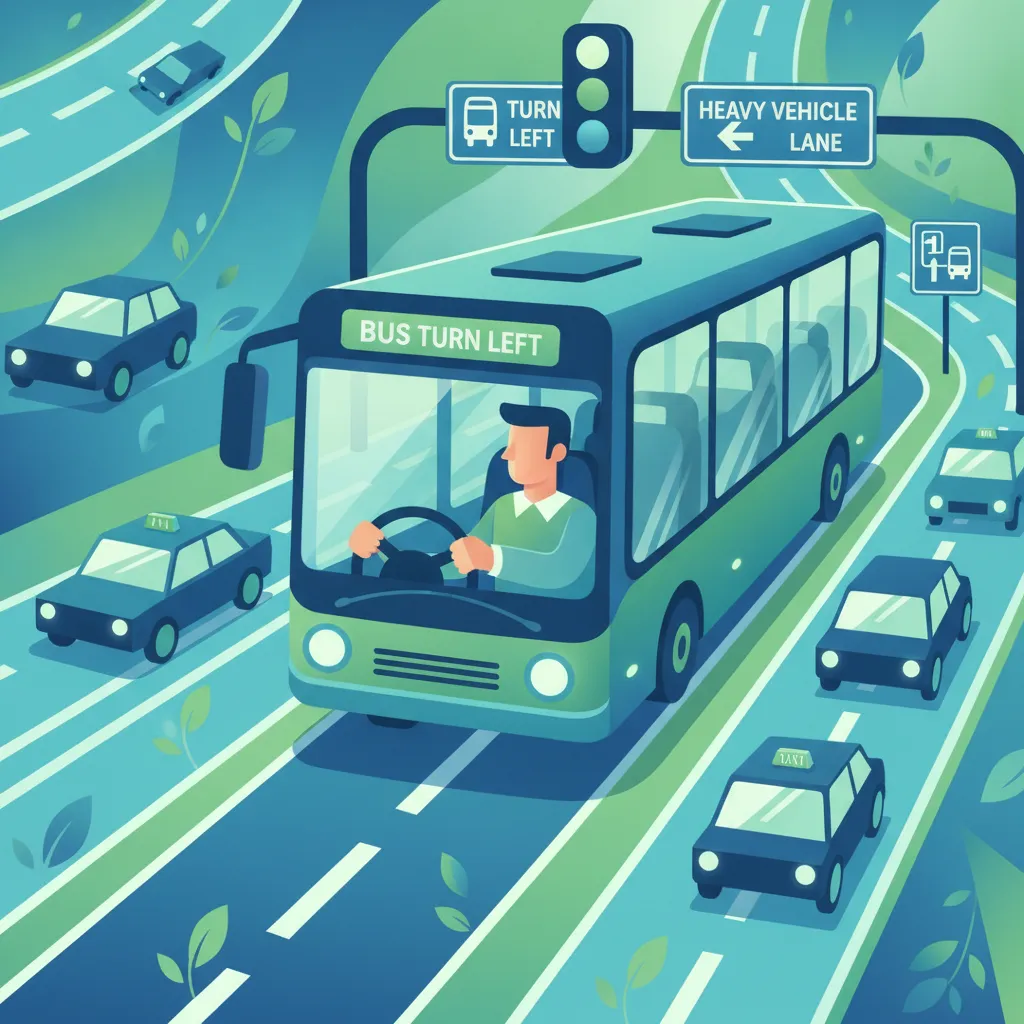
Learners will explore strategies for navigating congested urban traffic environments while operating large passenger vehicles. The lesson covers lane selection, adherence to traffic signals, and the use of bus lanes where applicable. Understanding how to maintain smooth traffic flow while ensuring passenger safety is crucial for efficient urban transportation.

This lesson delves into specific manoeuvring strategies required when navigating both tight urban environments and open rural roads with large passenger vehicles. Learners will explore techniques for handling narrow streets, tight turns, and intersections, while maintaining safety and efficiency. The content emphasizes planning and execution of manoeuvres based on road conditions and vehicle dimensions.

Learners will examine the complexities of operating in environments where various road users, including pedestrians, cyclists, and motorcyclists, coexist. The lesson emphasizes the need for heightened situational awareness, defensive driving techniques, and proactive hazard anticipation. Strategies for navigating mixed traffic safely, especially in congested urban areas, are highlighted.

This lesson focuses on managing vehicle speed according to different road environments—urban, rural, and highways—while complying with legal speed limits and traffic flow. Learners will understand how to adjust speed for varying road conditions, traffic density, and safety considerations, ensuring a balance between efficiency and risk mitigation.

This lesson focuses on the proper approach to bus stops and terminals within city traffic, emphasizing safe positioning, adherence to traffic signals, and maintaining smooth traffic flow. Learners will understand the importance of signaling intentions, checking blind spots, and ensuring the safety of boarding and alighting passengers. Effective stop management reduces the risk of accidents and traffic disruption.

This lesson focuses on the various access restrictions imposed on heavy goods vehicles within Turkish road networks. Learners will understand the reasons for restrictions such as low bridge clearances, tunnel usage, construction zones, and urban delivery area limitations. The lesson also covers how to recognize and comply with legal notices and signage indicating restricted commercial zones.
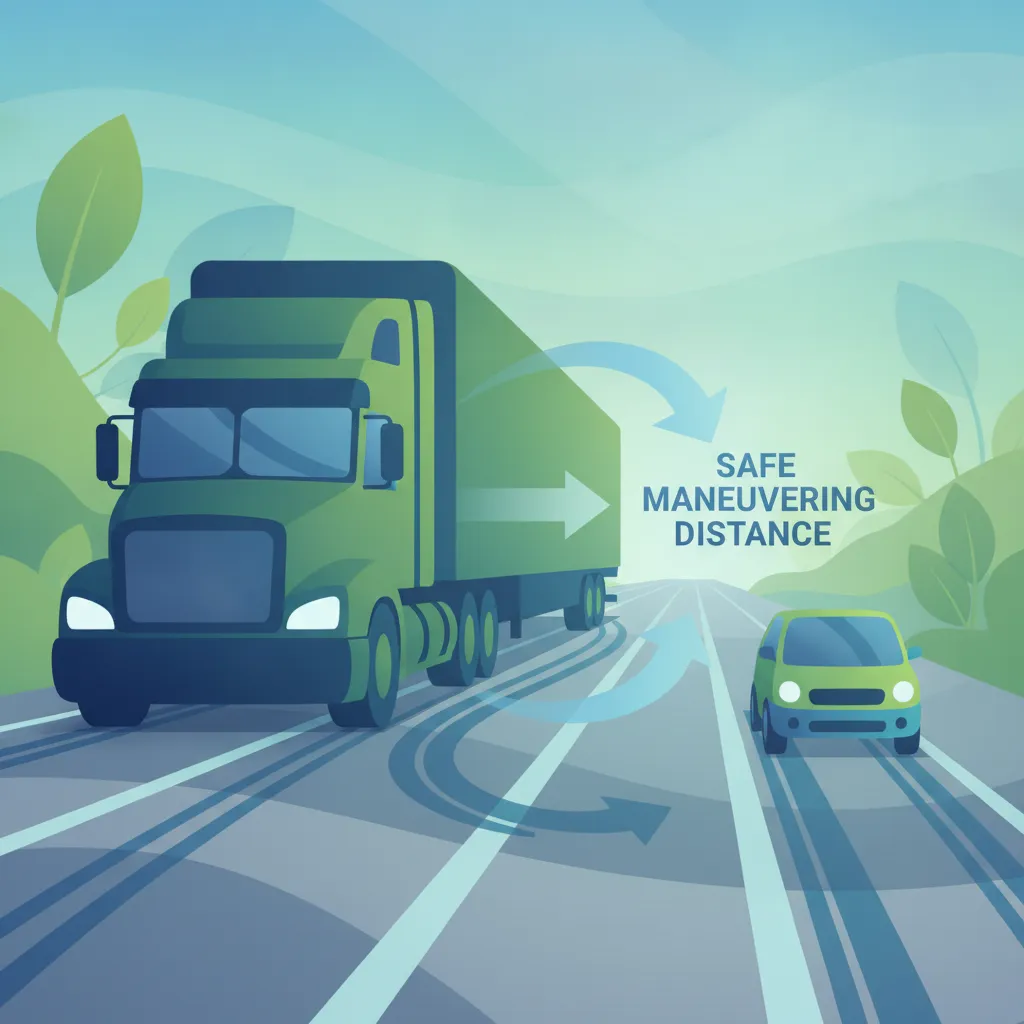
This lesson focuses on how the size and dimensions of goods vehicles influence their interaction with road infrastructure and overall traffic flow. It discusses the increased road space occupancy, especially in urban settings, and the implications for lane usage, bridge clearances, and tunnel dimensions. Learners will gain insight into the infrastructure challenges posed by large vehicles, including wear on road surfaces.

Learners will explore the fundamentals of maintaining correct lane discipline, focusing on appropriate lane positioning, understanding lane markings, and executing lane changes safely. Emphasis is placed on the unique considerations for large passenger vehicles within the lane, such as width and maneuverability. The lesson also addresses the impact of proper lane discipline on overall traffic flow and safety.
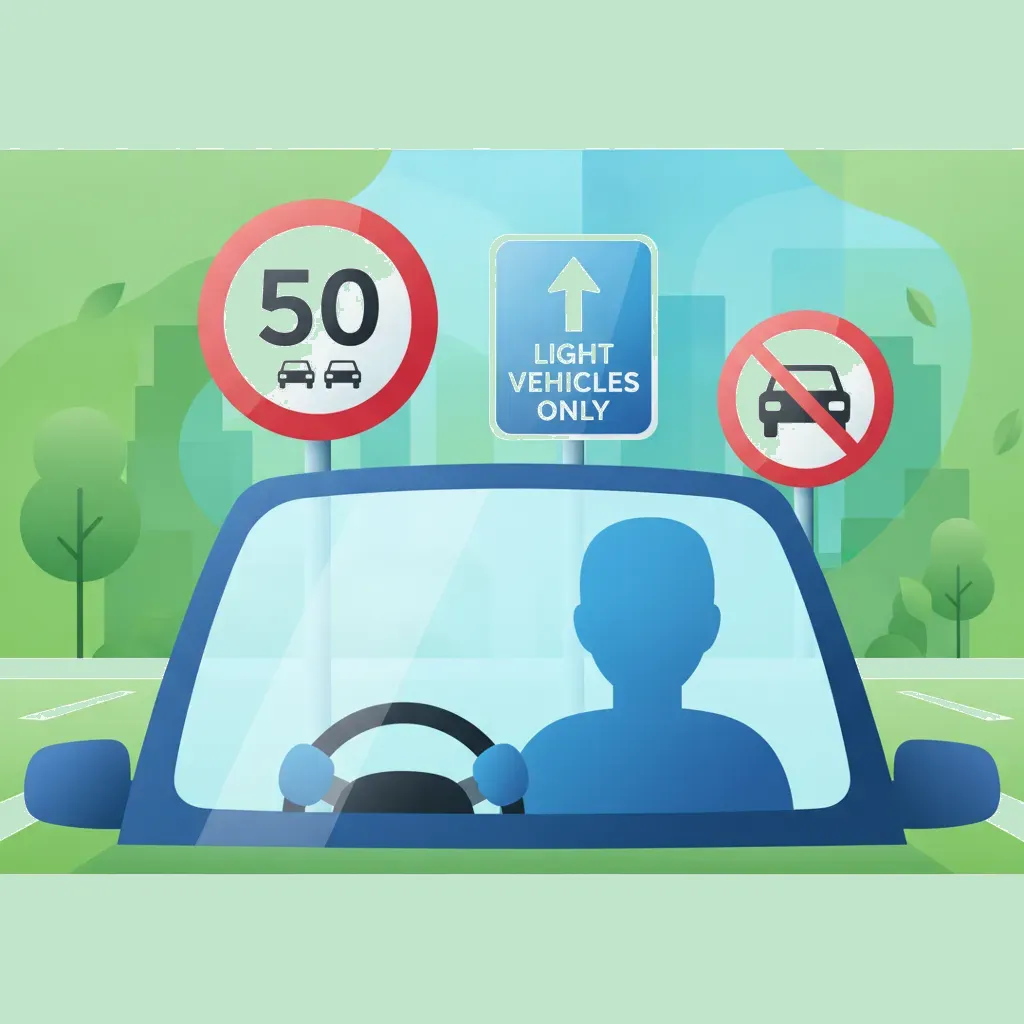
This lesson focuses on the identification and interpretation of traffic signs and road markings that are particularly relevant to passenger vehicle drivers, such as bus lane indications, priority road signs, and specific speed limits. Learners will explore how these signs affect route planning, compliance, and the overall flow of traffic. Mastery of sign interpretation ensures safe and lawful operation in various traffic conditions.

This lesson focuses on the critical importance of lane discipline and proper lane usage for large goods vehicles. Learners will understand the challenges posed by wider vehicle dimensions, the necessity of maintaining adequate lane occupancy, and the need for precise lane keeping. Emphasis is placed on selecting appropriate lanes, adhering to traffic flow, and ensuring general highway safety.
Understand the physiological and legal impacts of driver fatigue, distraction, and stress on passenger safety. This guide covers proactive strategies for maintaining professional alertness, responding to vehicle emergencies, and upholding safety standards during long-distance or high-intensity passenger service routes according to official Turkish driver education curriculum.
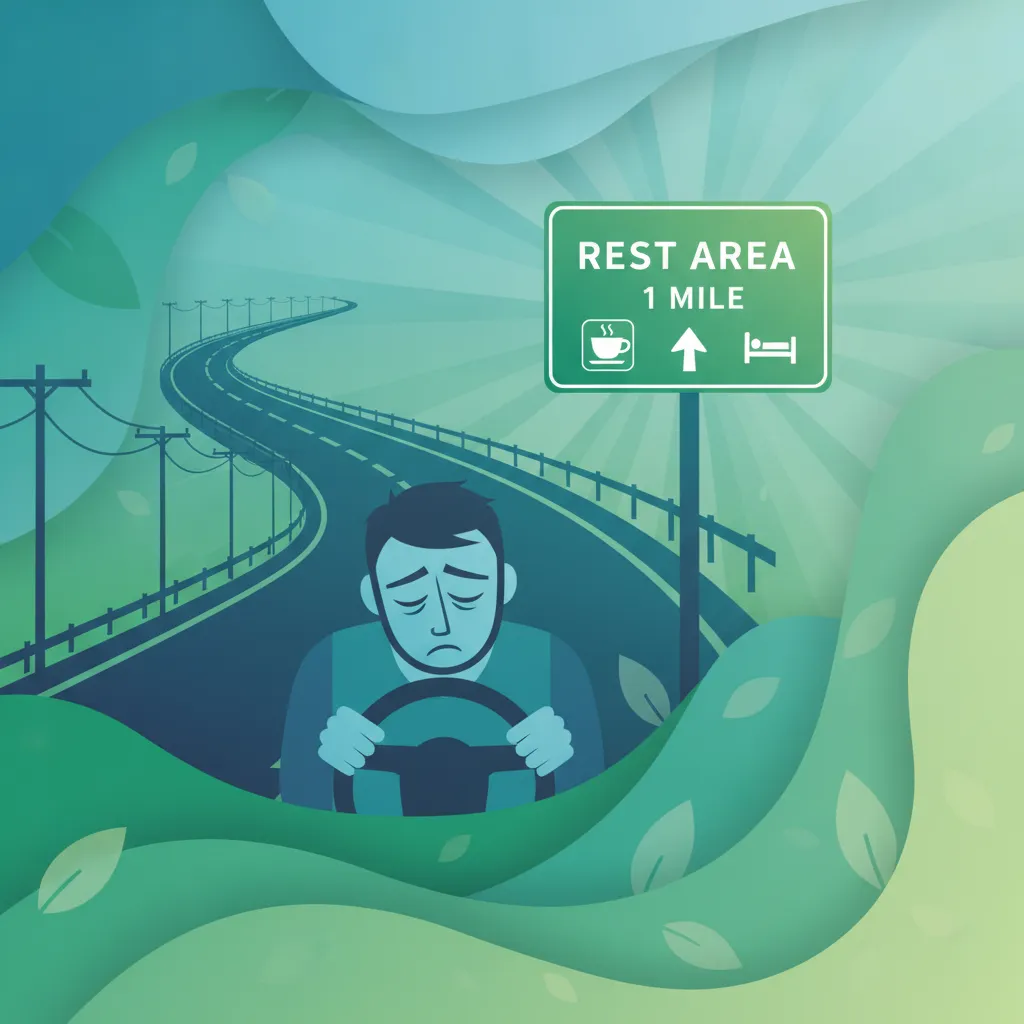
This lesson focuses on recognizing the signs of driver fatigue and implementing effective strategies to manage it while operating a goods vehicle. Learners will understand the health risks associated with prolonged driving periods, the importance of regular rest breaks, and techniques to maintain alertness. Emphasis is placed on fatigue mitigation measures to ensure safe driving and prevent accidents.

Learners will explore the risks associated with driver fatigue, distraction, and stress, particularly during long trips with passengers. The lesson provides strategies for recognizing fatigue, scheduling appropriate rest breaks, and employing techniques to maintain focus and reduce stress. Emphasis is placed on the impact of these factors on safety and passenger comfort.

This lesson focuses on the health and fitness criteria required for passenger vehicle drivers, outlining the medical examinations and certifications needed to maintain a valid licence. Additionally, it emphasizes the importance of continuing education and professional development to keep drivers updated on new regulations, technologies, and best practices. By prioritizing driver health and lifelong learning, the overall safety and quality of passenger transport are enhanced.

Learners will examine the broader concept of fostering a safety-oriented and professional culture within passenger transport services. The lesson discusses the impact of driver attitudes on passenger trust, the importance of ongoing safety training, and the role of ethical conduct in enhancing service quality. Strategies for promoting a proactive safety mindset among drivers and staff are presented.

This lesson focuses on the extreme dangers of driver fatigue, micro-sleep episodes, and the signs of physical exhaustion. It details how sleep deprivation compromises driving safety in a manner comparable to moderate alcohol intoxication. Drivers will learn proactive fatigue management strategies, including scheduling regular rest stops.
Learners will examine strategies for planning and executing long-distance and intercity routes with passenger vehicles. The lesson covers effective route planning, managing driver fatigue, scheduling rest stops, and addressing passenger comfort and informational needs during extended journeys. Understanding these aspects ensures safe, efficient, and passenger-friendly long-distance service.

This lesson focuses on creating a comfortable and accessible environment for all passengers, addressing climate control, lighting, and ergonomic seating arrangements. It also discusses provisions for wheelchair users, the use of boarding ramps, and the importance of priority seating for those with special needs. Drivers will learn how to assist passengers effectively while maintaining comfort standards throughout the journey.

This lesson equips drivers with techniques to manage passenger behavior and foster effective in-vehicle communication. Topics include handling disruptive passengers, making clear announcements, and using non-verbal signals to maintain order. By promoting respectful conduct and clear communication, drivers can ensure a smoother, safer journey for everyone on board.

This lesson emphasizes the value of continuous professional development and fostering a safety culture within the goods vehicle transportation sector. Learners will understand the importance of ongoing training, staying updated with industry standards, and pursuing proactive self-improvement. Emphasis is placed on cultivating a mindset that prioritizes safety and best practices in Turkey.

Learners will explore best practices for ensuring passenger safety during the boarding and alighting process, focusing on proper vehicle positioning, door operation, and passenger assistance. The lesson covers the use of handrails, steps, and ramps, as well as strategies for managing standing passengers and luggage. Emphasis is placed on clear communication and maintaining situational awareness to prevent accidents.
Find clear answers to common questions learners have about Ergonomic Adjustments and Controls for Driver and Passenger Welfare. Learn how the lesson is structured, which driving theory objectives it supports, and how it fits into the overall learning path of units and curriculum progression in Turkey. These explanations help you understand key concepts, lesson flow, and exam focused study goals.
As a passenger vehicle driver, you spend long hours behind the wheel. Proper ergonomics reduce muscle fatigue, improve alertness, and ensure you can reach all critical controls instantly in an emergency, which is a key focus of the Class D theory exam.
Correct mirror alignment reduces blind spots, allowing you to monitor both the road and the passenger boarding area effectively. This minimizes the risk of incidents during stops and maneuvers, which are common topics in the Turkish driving theory exam.
Yes, for Class D licence holders, the exam evaluates your knowledge of how vehicle setup and handling influence the well-being of passengers, as maintaining a stable and comfortable environment is part of professional driver standards in Turkey.
Many drivers set their seats too far back, which limits their ability to fully depress pedals or control the steering wheel accurately. This can lead to slow reaction times, an issue frequently highlighted in theory test questions.
Use our comprehensive practice search to find exactly the Turkish driving theory questions you need to master. Whether reviewing specific road signs, traffic rules, or first aid scenarios, select your perfect practice set and boost your confidence for the official ehliyet sınavı.