
This lesson provides a comprehensive guide to understanding priority at junctions and roundabouts as a motorcycle rider in Great Britain. You will learn to correctly interpret road markings, regulatory signs, and signalling procedures to navigate complex intersections safely and pass your motorcycle theory test.

Lesson content overview
Understanding and correctly applying priority rules at junctions and roundabouts is a fundamental skill for every motorcycle rider in Great Britain. This lesson, designed for the Great Britain Motorcycle Theory Course, provides an exhaustive conceptual framework for navigating these critical road features safely and legally. Proper interpretation of right-of-way is not just about avoiding collisions; it ensures smooth traffic flow and compliance with legal obligations under the Highway Code, the Highway Act 1980, and the Road Traffic Regulation Act 1984.
Motorcycles, being less visible and possessing different handling characteristics than larger vehicles, demand a heightened awareness of priority. Correct positioning and clear communication become paramount to mitigate risks and ensure that other road users accurately perceive your intentions.
Junctions are common conflict points on the road, where multiple streams of traffic converge, cross, or diverge. The allocation of priority is crucial to manage these interactions. For motorcycle riders, a precise understanding of these rules is vital for safe passage.
The most straightforward junctions are those where priority is clearly indicated by road signs and markings. These visual cues dictate precisely when you must yield or stop.
A "Give Way" sign, an inverted red-bordered triangle, universally signals that you must allow traffic on the intersecting road to pass before you proceed. This is often accompanied by a broken white give-way line painted across your lane. When you encounter this, you must reduce your speed and be prepared to stop. Only proceed when it is safe to do so and you are certain that you will not cause another road user to change their speed or direction.
Failure to observe a give-way sign can lead to serious side-impact collisions, which are particularly hazardous for motorcyclists. Always stop short of the line if your view is obscured, then creep forward slowly to gain a better view, stopping again if necessary.
Even more stringent than a give-way sign is the "Stop" sign, a red octagonal sign, always accompanied by a solid white stop line on the road. This sign means you must come to a complete halt before the stop line, even if there appears to be no traffic.
After stopping, you must check for traffic in all directions, particularly from your right, before proceeding when it is absolutely safe. A full stop means all wheels have stopped rotating. Simply slowing down and rolling through a stop sign is a violation and highly dangerous, carrying severe legal penalties and a high risk of collision.
Some major roads are designated as "priority roads," meaning that traffic travelling on them has the right of way over traffic joining or crossing from side roads. These are indicated by a yellow diamond sign.
If you are on a priority road, you generally have the right to proceed without stopping or slowing down for traffic on minor roads, unless otherwise indicated by traffic lights or other signs. However, you must always be vigilant for other road users who may fail to give way, especially motorcyclists who can be less easily seen. Do not assume others will always see you or obey the rules.
Not all junctions have explicit signs or road markings indicating priority. These "uncontrolled" or "unmarked" junctions are common in residential areas and on quieter roads. At such junctions, the fundamental rule in Great Britain is to give way to traffic approaching from your right.
When approaching an unmarked junction, slow down significantly and look carefully to your right. Be prepared to stop if another vehicle is approaching from that direction. Even if you arrive first, if a vehicle is approaching from your right, they have priority.
This rule simplifies decision-making and reduces conflict. However, exercise extreme caution at unmarked junctions, as visibility can be poor due to parked cars, buildings, or vegetation. Always proceed slowly, observing all directions, and be ready to stop.
Roundabouts are designed to keep traffic flowing, but they can be complex for motorcyclists due to multiple lanes, circulating traffic, and the need for precise signalling. Correct roundabout procedure is crucial for your safety.
The most critical rule for roundabouts in Great Britain is to give way to traffic approaching from your right as you enter. This applies to all types of roundabouts, from mini-roundabouts to large multi-lane designs.
Never enter a roundabout if doing so would cause a vehicle already circulating within the roundabout to swerve or brake sharply. Their priority is absolute.
As you approach a roundabout, reduce your speed, scan the roundabout for traffic from your right, and be prepared to stop at the give-way line. Merge into the circulating flow only when there is a safe gap and you will not impede traffic.
Multi-lane roundabouts demand excellent lane discipline from motorcyclists. Choosing the correct lane early, signalling effectively, and maintaining your lane are vital for safety and smooth flow.
Your choice of lane before entering a multi-lane roundabout depends on your intended exit. Lane arrows and road markings will usually guide you.
For an exit to the left (between 12 o'clock and 6 o'clock): Use the left-hand lane on approach. Signal left on approach and maintain the signal until you have left the roundabout.
For an exit straight ahead (at approximately 12 o'clock): Usually use the left-hand lane or a lane marked "straight ahead." Do not signal on approach, but signal left as you pass the exit before yours.
For an exit to the right (after 12 o'clock) or to go full circle: Use the right-hand lane on approach. Signal right on approach and maintain the signal until you pass the exit before yours, then switch to a left signal to indicate your exit.
Always follow the signs and markings. If you find yourself in the wrong lane, never attempt to change lanes suddenly. It is safer to go around the roundabout again or take an incorrect exit and find a safe place to turn around.
Clear and timely signalling is critical for motorcyclists at roundabouts, enhancing your visibility and predictability to other road users.
Once on the roundabout, maintain your chosen lane. Avoid switching lanes unless it is absolutely necessary, you have ample space, and you have signalled clearly and checked your mirrors and blind spots. Be aware of larger vehicles, like lorries, which may need more space and might cross lane markings to navigate the roundabout. On their part, larger vehicles are encouraged to make their intentions clear and check for smaller vehicles.
As you approach your exit, continue to check your mirrors and blind spots for other vehicles, especially those also exiting or those who might attempt to overtake. Be particularly vigilant for pedestrians and cyclists at roundabout exits, as they may have priority when crossing.
Mini-roundabouts are smaller versions, often found in residential areas, and still require you to give way to traffic from your right. Although they have a smaller central island that can sometimes be driven over by larger vehicles, motorcyclists should treat the central island as impassable. Position yourself to give yourself the best view and to make yourself visible. Signal in the same way as at a larger roundabout.
Despite their smaller size, the rules for mini-roundabouts are the same as for larger ones. Never cut across the central white circle; go around it if possible.
Beyond understanding the rules, mastering specific riding techniques is vital for a motorcyclist's safety at junctions and roundabouts. These techniques are often more critical for two-wheelers due to their smaller profile and potential for being overlooked.
Your indicators are your voice on the road. For motorcyclists, using them effectively is paramount because other drivers often underestimate your speed or misjudge your intentions.
A visible gesture (hand signal) or electric indicator used to inform other road users of an intended change of direction, speed, or lane.
Always signal well in advance of a junction or roundabout, giving other road users ample time (at least 2-3 seconds) to react and understand your manoeuvre. Ensure your signals are turned off once the manoeuvre is complete to avoid misleading others.
Motorcycles are small, making them inherently less visible than cars. This means you must actively work to be seen.
An area around a vehicle that cannot be seen by the driver using mirrors, making other road users in that area invisible.
Your lane positioning affects both how well you see the road and how well other drivers see you.
Riding in a position within your lane that maximises your visibility to other road users while also providing the rider adequate sight of the road ahead and around them.
Safe riding involves not only knowing the rules but also adapting your behaviour to different environmental and traffic conditions. Motorcyclists must be particularly diligent in anticipating hazards and avoiding common violations of priority rules.
Conditions on the road are rarely constant. Your approach to junctions and roundabouts must vary accordingly:
Always scan ahead for warning signs that indicate upcoming junctions, roundabouts, or changes in road conditions. These signs give you time to adjust your speed and plan your approach.
Your motorcycle's characteristics can also influence how you approach junctions:
Failing to correctly interpret and apply priority rules is a leading cause of motorcycle accidents. Here are some common violations and their potential negative outcomes:
All these violations carry potential legal penalties, including fixed-penalty notices, points on your licence, or even prosecution, in addition to the obvious safety risks.
Mastering priority rules is fundamental to becoming a safe and confident motorcycle rider. By diligently applying these principles, you contribute not only to your own safety but also to the smooth and predictable flow of traffic for everyone.
By consistently applying these principles, you will enhance your safety, reduce the risk of collisions, and demonstrate responsible riding behaviour as part of the Great Britain Motorcycle Theory Course. This knowledge builds directly on your understanding of road signs, markings, and signals, and is crucial for advanced topics like lane positioning, hazard perception, and defensive riding.
Explore all units and lessons included in this driving theory course.
Lesson content overview
Explore all units and lessons included in this driving theory course.
Explore search topics learners often look for when studying Priority at Junctions and Roundabouts for Two‑wheelers. These topics reflect common questions about road rules, driving situations, safety guidance, and lesson level theory preparation for learners in Great Britain.
Browse additional driving theory lessons that cover connected traffic rules, road signs, and common driving situations related to this topic. Improve your understanding of how different rules interact across everyday traffic scenarios.
Explore advanced scenarios for priority at complex junctions and multi-lane roundabouts. Understand nuanced rules for motorcyclists and learn common mistakes to avoid for safer navigation in Great Britain's traffic.
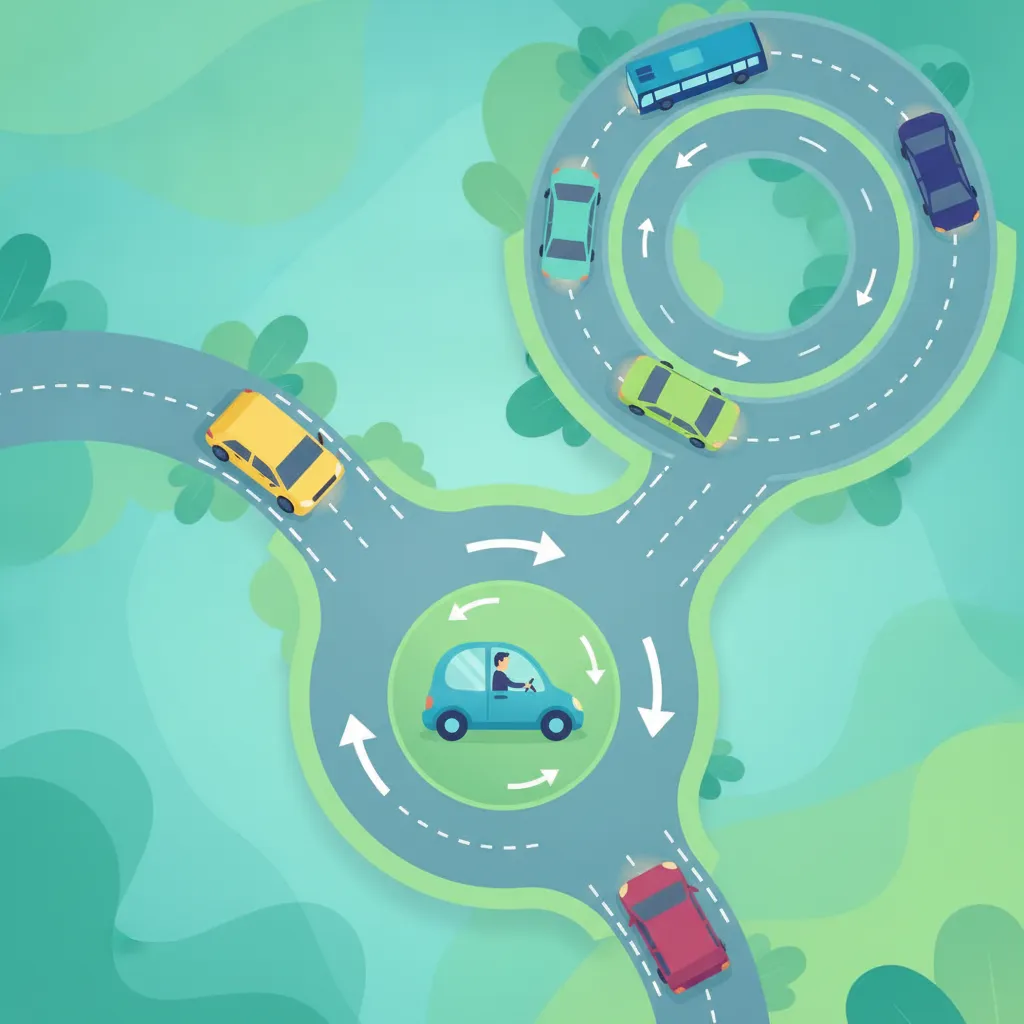
This lesson provides specific techniques for safely navigating the two main types of roundabouts in Great Britain. For multi-lane roundabouts, it covers how to choose the correct lane on approach, maintain your lane while circulating, and signal your exit correctly. It also explains the unique rules for mini-roundabouts, emphasizing the importance of giving way to traffic from the right and navigating them with caution due to their small size.

This lesson addresses the unique challenges of mini-roundabouts and large, multi-lane or spiral roundabouts. You will learn the subtle differences in rules and approach for mini-roundabouts and the importance of strict lane discipline on larger ones. The lesson stresses the need for advanced planning and awareness when navigating these complex junctions.
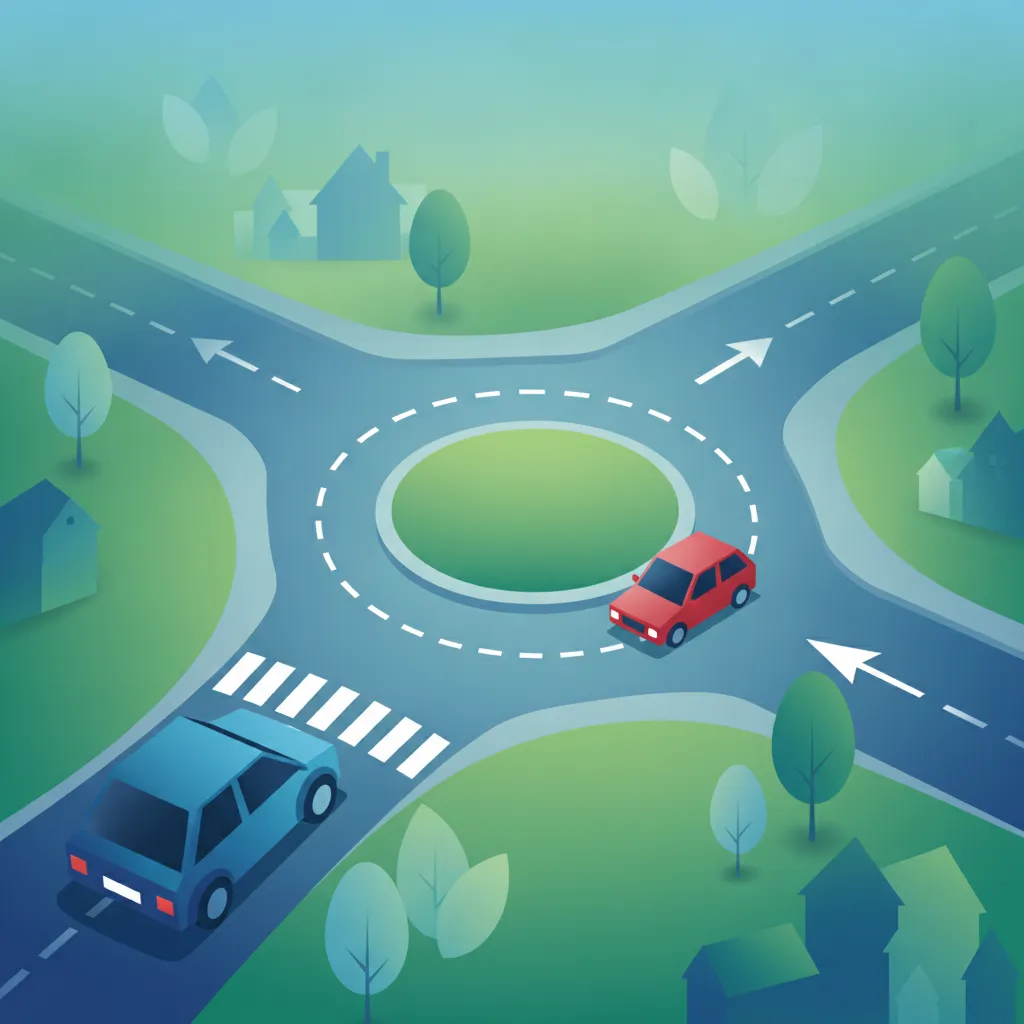
This lesson explains how to handle mini-roundabouts, which are common in urban and residential areas. The primary rule is to approach with caution and give priority to any traffic approaching from your right. You will also learn about correct signalling and the importance of being aware of cyclists and motorcyclists who may be harder to see.
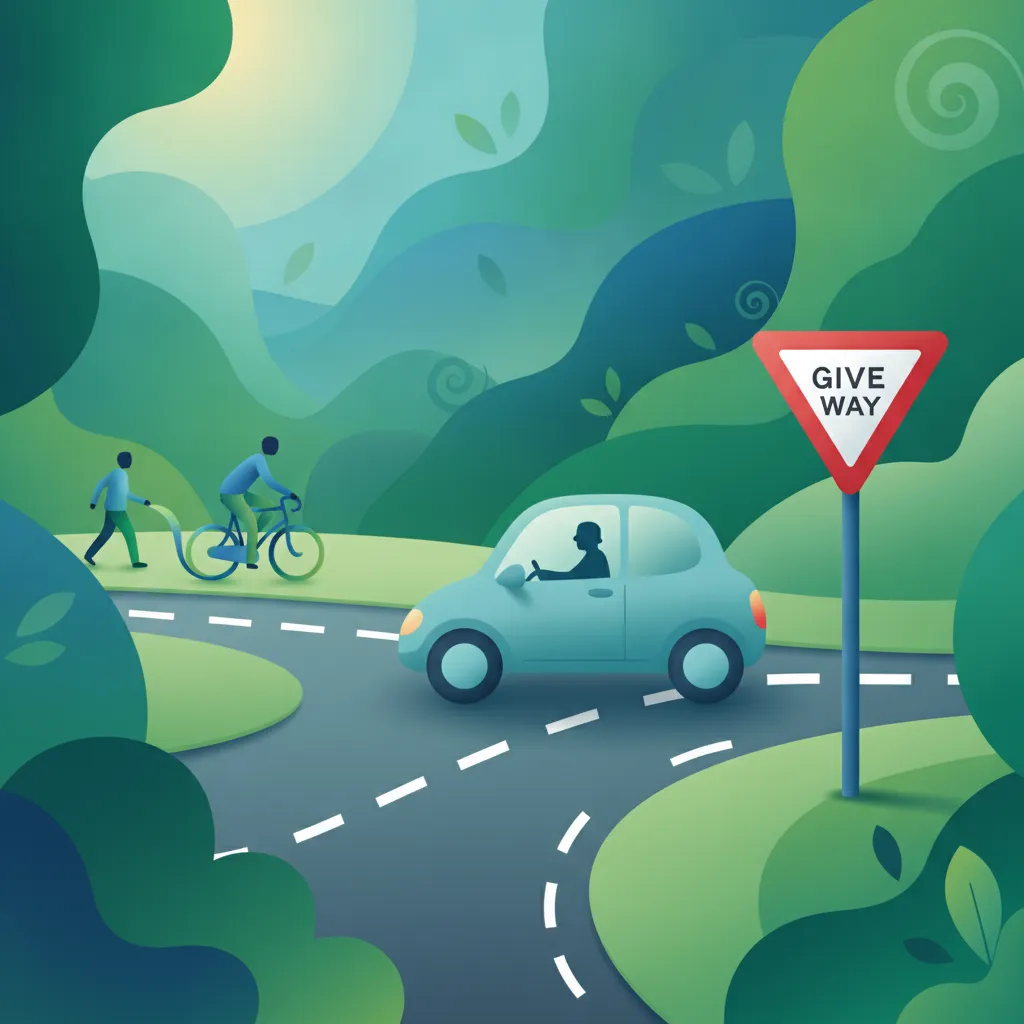
This lesson explains the critical rules of priority that govern traffic flow at junctions, roundabouts, and crossings throughout Great Britain. You will learn how to determine who has right-of-way at both marked and unmarked intersections, and the specific rules for giving way to traffic on roundabouts. The lesson also reinforces the hierarchy of road users from the Highway Code, ensuring you understand when to yield to pedestrians and other vulnerable users.

This lesson provides a step-by-step guide to dealing with roundabouts. It covers how to choose the correct lane on approach based on your destination, when and how to signal your intentions, and how to safely enter and exit the roundabout. Emphasis is placed on maintaining good observation and anticipating the actions of other drivers.

This lesson tackles the complexities of large roundabouts, which often have multiple lanes and exits. It stresses the importance of reading signs on the approach to select the correct lane for your destination. You will learn about maintaining lane discipline while on the roundabout and signalling correctly as you pass exits and prepare to leave.
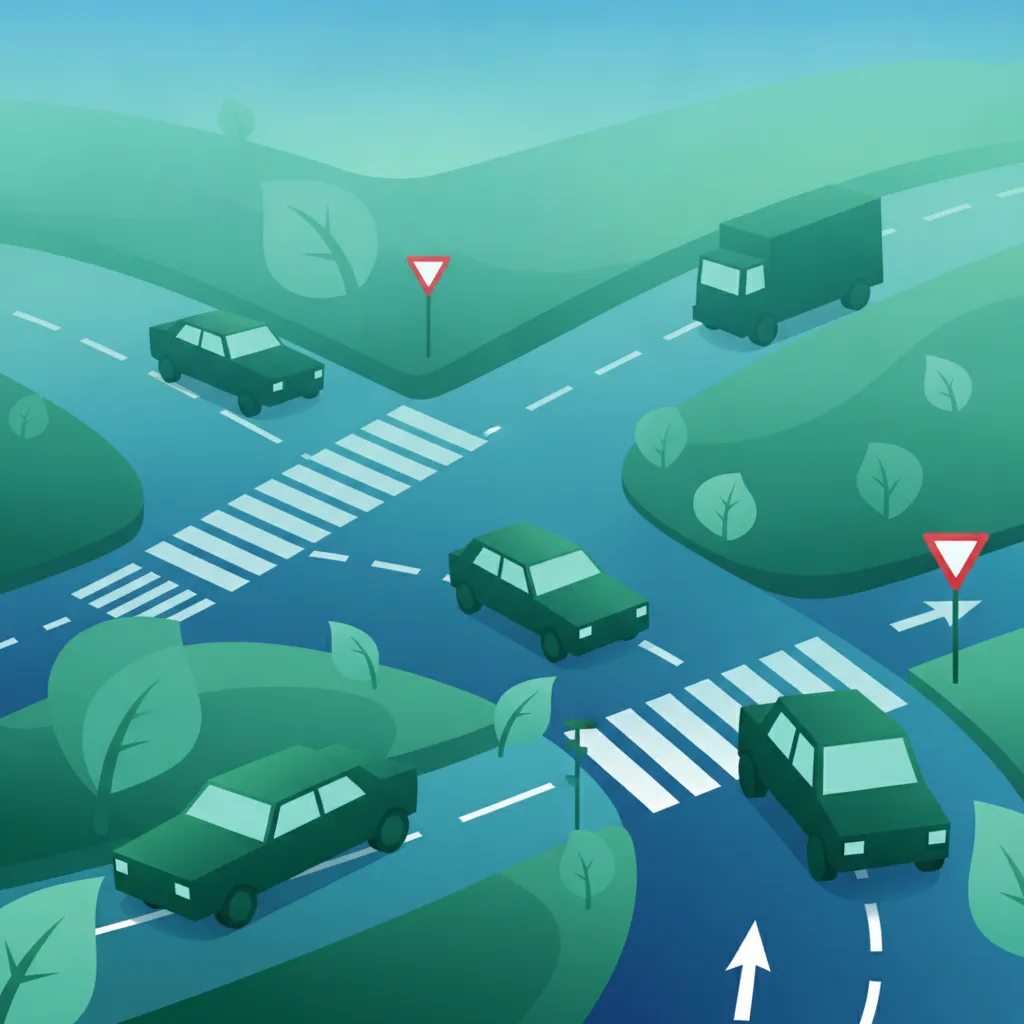
This lesson teaches the systematic approach to safely navigating junctions, emphasizing the importance of adjusting your speed and position well in advance. You will learn the 'Mirror-Signal-Manoeuvre' routine, how to perform effective all-round observation checks, and when to give way to other traffic. The content focuses on making safe judgments about gaps in traffic, a crucial skill for vulnerable AM riders when turning or emerging from a junction.
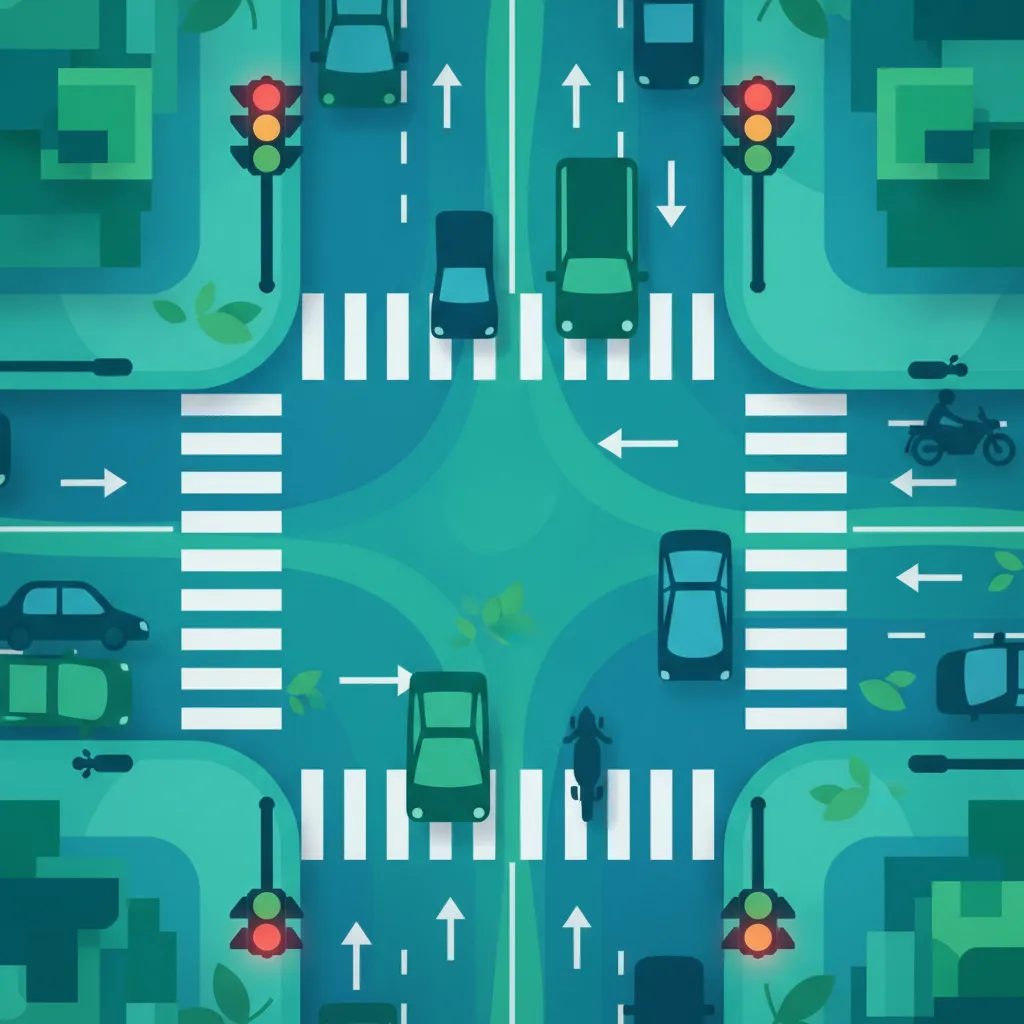
This lesson details how to safely navigate junctions controlled by traffic signals. It explains the meaning of filter arrows, which allow you to proceed in a specific direction even if the main light is red. You will also learn about respecting advanced stop lines for cyclists and how to approach a junction when the traffic lights are not working.

This lesson covers the operation of traffic light signals and the rules for approaching them safely. It also provides a detailed explanation of different pedestrian crossings, such as zebra, pelican, and toucan crossings, clarifying the specific rules and priority for each. You will learn to anticipate the actions of pedestrians and other vulnerable road users at these locations.

This lesson covers the explicit priority instructions given by signs and markings at junctions. It explains that at a 'Give Way' line, you must yield to traffic on the major road but can proceed if it is safe. At a 'Stop' sign, you must come to a complete halt before the line, assess the traffic, and only proceed when safe.
Identify and understand common errors riders make with priority rules at junctions and roundabouts in Great Britain. Learn from typical mistakes to improve your hazard perception and adherence to the Highway Code.
This lesson explains the critical rules of priority that govern traffic flow at junctions, roundabouts, and crossings throughout Great Britain. You will learn how to determine who has right-of-way at both marked and unmarked intersections, and the specific rules for giving way to traffic on roundabouts. The lesson also reinforces the hierarchy of road users from the Highway Code, ensuring you understand when to yield to pedestrians and other vulnerable users.
This lesson explains how to handle mini-roundabouts, which are common in urban and residential areas. The primary rule is to approach with caution and give priority to any traffic approaching from your right. You will also learn about correct signalling and the importance of being aware of cyclists and motorcyclists who may be harder to see.
This lesson covers the operation of traffic light signals and the rules for approaching them safely. It also provides a detailed explanation of different pedestrian crossings, such as zebra, pelican, and toucan crossings, clarifying the specific rules and priority for each. You will learn to anticipate the actions of pedestrians and other vulnerable road users at these locations.

This lesson breaks down the process of navigating basic junctions. It emphasizes the importance of the Mirror-Signal-Manoeuvre (MSM) and Position-Speed-Look (PSL) routines. You will learn how to position your motorcycle correctly for turning, perform effective observation checks for traffic, and judge safe gaps before emerging.
This lesson addresses the unique challenges of mini-roundabouts and large, multi-lane or spiral roundabouts. You will learn the subtle differences in rules and approach for mini-roundabouts and the importance of strict lane discipline on larger ones. The lesson stresses the need for advanced planning and awareness when navigating these complex junctions.
This lesson teaches the systematic approach to safely navigating junctions, emphasizing the importance of adjusting your speed and position well in advance. You will learn the 'Mirror-Signal-Manoeuvre' routine, how to perform effective all-round observation checks, and when to give way to other traffic. The content focuses on making safe judgments about gaps in traffic, a crucial skill for vulnerable AM riders when turning or emerging from a junction.
This lesson provides specific techniques for safely navigating the two main types of roundabouts in Great Britain. For multi-lane roundabouts, it covers how to choose the correct lane on approach, maintain your lane while circulating, and signal your exit correctly. It also explains the unique rules for mini-roundabouts, emphasizing the importance of giving way to traffic from the right and navigating them with caution due to their small size.
This lesson provides a step-by-step guide to dealing with roundabouts. It covers how to choose the correct lane on approach based on your destination, when and how to signal your intentions, and how to safely enter and exit the roundabout. Emphasis is placed on maintaining good observation and anticipating the actions of other drivers.

This lesson focuses on the specific obligations a motorcyclist has according to the Highway Code. It emphasizes the legal duty of care towards other road users, pedestrians, and the environment. You will learn how to apply key rules on speed, lane positioning, and signalling from a rider's perspective to ensure safety and legal compliance.
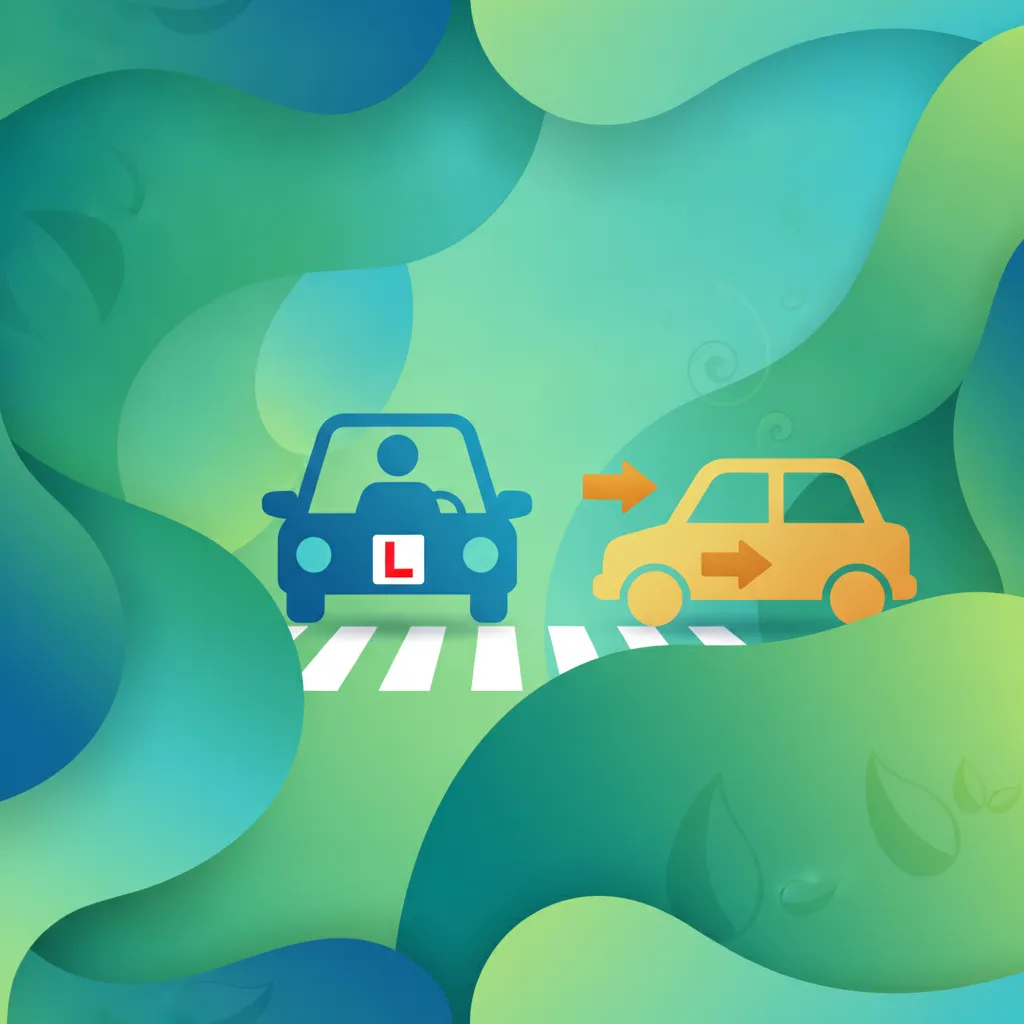
This lesson details the priority rules for turning manoeuvres. When turning left, you generally have priority over traffic waiting to emerge from the side road. However, when turning right, you must give way to all oncoming traffic, positioning your vehicle safely in the centre of the road while you wait for a safe gap.
Find clear answers to common questions learners have about Priority at Junctions and Roundabouts for Two‑wheelers. Learn how the lesson is structured, which driving theory objectives it supports, and how it fits into the overall learning path of units and curriculum progression in Great Britain. These explanations help you understand key concepts, lesson flow, and exam focused study goals.
Yes, the standard rule in Great Britain is to give priority to traffic approaching from your right at a roundabout unless road signs or signals indicate otherwise. As a motorcyclist, always check your blind spots and prepare to stop if necessary.
If there are no signs or road markings, there is no official 'priority' road, but you must still show caution. You should treat the junction with extreme care, scanning for other traffic and being prepared to slow down or stop to ensure the intersection is clear.
No, the legal priority rules defined in the Highway Code are the same for all motor vehicles. However, motorcyclists are more vulnerable, so your priority is to ensure you are seen and have a clear escape route in case another driver fails to yield.
The test often uses diagrams showing a bird's-eye view of a junction or roundabout, asking you to identify which vehicle has priority or the correct lane choice. You need to identify signs, markings, and the direction of incoming traffic.
Dive into our comprehensive question bank to find exactly what you need for your Great Britain theory test. Use our advanced filters to pinpoint specific subjects or test your knowledge on challenging areas, ensuring you're fully prepared for success.