
This lesson explores the physics of motorcycle grip, focusing on how your tyres interact with different road surfaces and conditions. It is a critical part of Unit 6, ensuring you understand the mechanics behind braking and cornering before tackling more complex riding scenarios. Mastering these concepts will help you make safer decisions on the road and correctly answer theory test questions.

Lesson content overview
Your safety on a motorcycle hinges on a surprisingly small area: the contact patch where your tyres meet the road. Understanding how this critical connection, known as grip or traction, works is fundamental for safe and confident riding within the Great Britain Motorcycle Theory Course (A, A1, A2). This lesson delves into the physics of friction, the factors affecting your tyre's ability to grip, and how to recognise and adapt to various road conditions to prevent dangerous losses of traction.
Motorcycle grip is the force that allows your tyres to transfer engine power to the road for acceleration, resist motion for braking, and generate lateral forces for cornering. Without sufficient grip, any of these actions can lead to a loss of control, resulting in a skid or crash. For motorcyclists, with only two wheels and a relatively small contact area, understanding and managing grip is paramount.
Grip, often used interchangeably with traction, is the adhesive force between your motorcycle tyres and the road surface. It's what keeps you upright, allows you to steer effectively, accelerate powerfully, and brake safely. For motorcyclists, the consequences of losing grip are often more severe than for drivers of four-wheeled vehicles, as a slide almost inevitably leads to a fall. Your ability to maintain control, especially in challenging conditions, directly depends on the available grip.
The force of friction is generated when two surfaces rub against each other. In the context of motorcycles, this is the interaction between the rubber compound of your tyre and the road surface. The magnitude of this frictional force (F) is determined by two primary factors: the normal load (N) pushing the tyre onto the road, and the coefficient of friction (μ), which represents the "stickiness" or "roughness" between the two surfaces. The relationship is expressed as F = μ × N.
The coefficient of friction (μ) is a dimensionless value that changes significantly depending on the materials in contact and their conditions. For example:
A higher coefficient of friction means more grip is available for braking, acceleration, and cornering. As a rider, your primary goal is to ensure the forces you demand from your tyres (through throttle, brakes, and steering) remain well within the limits of the available friction.
When we talk about grip, we are primarily concerned with static friction. Static friction is the maximum force that can be generated between two surfaces before they begin to slide relative to each other. This is the force that allows your tyres to "roll" and generate purposeful motion without slipping. As soon as the force demanded by your riding inputs exceeds the static friction limit, the tyre begins to slide, and the friction transitions to kinetic (or sliding) friction.
Kinetic friction is the force that resists motion once slipping has already begun. Crucially, kinetic friction is always lower than static friction. This means that once a tyre starts to slide, it becomes harder to regain control because less grip is available to resist the slide. This principle is vital for understanding why it's so important to avoid locking a wheel during braking or causing a wheel spin during acceleration. Staying within the static friction limits is key to maintaining control.
The contact patch is the small, oval-shaped area of your tyre that is actually in physical contact with the road at any given moment. For a motorcycle, this patch is typically about the size of a credit card, or even smaller when leaned over in a corner. Despite its diminutive size, this contact patch is where all the forces that control your motorcycle are generated. Its size, shape, and the integrity of the rubber within it are influenced by several factors, including tyre pressure, load, and construction.
The shape and size of the contact patch are not constant; they change based on the forces acting on the tyre. For instance, under braking, the front tyre's contact patch might become longer and narrower due to load transfer, while under acceleration, the rear tyre's patch might flatten slightly. While a larger contact patch can, up to a point, allow for more rubber to generate friction, it's not simply a case of "bigger is always better." An excessively large contact patch, often caused by under-inflation, can lead to premature tyre wear, overheating, and reduced steering precision.
Tyre pressure is one of the most critical and easily controlled factors influencing your contact patch and overall grip. It is the internal air pressure within the tyre, usually measured in pounds per square inch (psi) or bar. The correct tyre pressure, as specified by your motorcycle manufacturer, ensures the tyre maintains its optimal shape and stiffness. This, in turn, allows the tread pattern to function effectively, particularly in evacuating water.
Always check your tyre pressures when the tyres are "cold" – meaning they have not been ridden for at least a few hours or for any significant distance. Riding, even for a short while, heats the air inside the tyre, causing the pressure to increase. Ignoring pressure changes after a long ride or checking them when hot can lead to inaccurate adjustments.
Just like professional racing tyres, road tyres have an optimal operating temperature range where their rubber compound provides maximum grip. For most road tyres, this range is typically between 30–40 °C.
The condition of your tyres plays a vital role in grip. Over time, tyres experience wear due to abrasion from the road surface, heat cycles, and exposure to UV light and ozone.
The road surface is a constantly changing variable that directly impacts the coefficient of friction (μ) available. A skilled rider learns to identify different road surfaces and their conditions, visually assessing potential hazards and adjusting their riding style accordingly.
Most everyday riding occurs on dry asphalt, which typically offers a high coefficient of friction (0.7-0.8). This allows for confident braking, acceleration, and cornering. However, even on dry asphalt, risks can emerge. Hot weather can cause asphalt to become slightly softer or even "bleed" tar, creating unexpectedly slippery patches. Additionally, debris such as sand, gravel, or even leaves can accumulate on dry surfaces, especially at road edges or in corners, significantly reducing local grip.
Water is a common and significant reducer of grip. A thin film of water on the road acts as a lubricant, dramatically lowering the coefficient of friction (to approximately 0.5 on wet asphalt). In these conditions, all riding inputs—acceleration, braking, and steering—must be smoother and more gentle.
A critical risk on wet roads is hydroplaning (also known as aquaplaning). This occurs when a layer of water builds up between the tyre and the road surface, causing the tyre to lose contact with the road. The tyre literally rides on top of the water. Hydroplaning is more likely at higher speeds, with worn tyres (which cannot displace water effectively), and on roads with standing water or deep puddles. When hydroplaning, you lose all steering and braking control. If you feel your motorcycle hydroplaning, ease off the throttle, keep the handlebars straight, and avoid abrupt braking until you feel the tyres regain contact with the road.
Oil, fuel, antifreeze, or other automotive fluids spilled on the road are incredibly dangerous, reducing the coefficient of friction to extremely low levels (as low as 0.2). These contaminants often appear as a rainbow sheen on a wet road, or a dark, wet-looking patch on a dry road. They are common in urban areas, particularly around junctions, petrol stations, or bus stops where vehicles frequently stop and start.
Gravel, sand, dirt, or even loose leaves can provide a very inconsistent and low coefficient of friction. These surfaces make it difficult for your tyres to find solid grip, especially when accelerating, braking, or cornering. On loose surfaces:
Ice and snow represent the lowest possible grip conditions, with μ dropping to 0.1 or even less. Riding on these surfaces should be avoided entirely if possible. If unavoidable, proceed at a crawling pace with extreme caution, using the smoothest possible inputs and avoiding any sudden movements.
Black ice is particularly treacherous. It is a thin, transparent layer of ice that forms on the road surface, often appearing as merely a wet patch, making it almost invisible to the rider. It commonly forms on shaded sections of road, bridges (which lose heat quickly), and elevated roads when temperatures drop close to freezing. Treat any dark, wet-looking patches on cold mornings as potential black ice.
Certain road features can also present localised low-grip hazards:
Understanding static factors like tyre condition and surface type is crucial, but grip is also dynamically affected by how you ride. Every input you make—acceleration, braking, or turning—redistributes the weight (or load) on your tyres, influencing the amount of grip available at each contact patch.
When cornering, your motorcycle leans into the turn to counteract centrifugal force. This lean angle, combined with the lateral (sideways) forces generated by your tyres, keeps you on your chosen line. During a turn, some weight shifts to the outer edge of the tyres and towards the side of the lean. This lateral load transfer affects the grip available for steering and maintaining the lean angle.
An important concept here is cornering grip. This is the maximum lateral frictional force a tyre can generate before it begins to slide. Exceeding this limit, either by demanding too much speed for a given lean angle or by introducing too much braking/acceleration mid-corner, will result in a loss of grip and a slide (a "low-side" if the bike slides away from you, or a "high-side" if the tyre suddenly regains grip and throws you off).
Every tyre, under given conditions, has a finite amount of grip it can provide. This can be conceptualised as a "traction circle" or "grip limitation zone." This zone represents the combined maximum longitudinal (braking/acceleration) and lateral (cornering) forces a tyre can generate before it starts to slip.
As a rider in Great Britain, you have legal and ethical responsibilities to ensure your motorcycle is safe and that you adapt your riding to prevailing road conditions. These regulations are designed to prevent accidents caused by a lack of grip.
The Road Vehicles (Construction and Use) Regulations 1986 (UK) explicitly state requirements for tyre condition. For motorcycles:
Failing to meet this minimum tread depth is illegal and can result in severe penalties, including fines and penalty points on your licence. More importantly, it dramatically compromises your safety, particularly in wet conditions. Regular inspection of your tyres for adequate tread, correct pressure, and any damage (cuts, bulges, embedded objects) is mandatory for roadworthiness.
Highway Code Rule 89 states: "Drive at a speed appropriate to road and traffic conditions." This rule directly applies to recognising and adjusting for low-grip road surfaces. The DVSA (Driver and Vehicle Standards Agency) continually advises riders to adapt their speed, throttle, and braking to match the road surface condition and available tyre grip. This means:
Under the Road Traffic Act 1988, failing to adjust your riding to low-grip conditions, which then leads to a loss of control or an accident, may constitute "careless or inconsiderate driving." This is a serious offence that can result in penalty points, a substantial fine, and even disqualification from driving.
Example of Careless Riding: A rider maintaining the posted speed limit on a visibly wet and oily patch of road, leading to a skid and crash, could face a careless riding charge because their actions did not account for the drastically reduced coefficient of friction.
Understanding grip theory is one thing; applying it in dynamic riding situations is another. Here are some scenarios illustrating how grip knowledge translates into safe riding decisions.
Setting: A city centre street, light rain has just started, the temperature is 12 °C, and there's moderate traffic. The road surface is typical urban asphalt.
Correct Behaviour: The rider immediately reduces their speed to approximately 40 % below the posted limit, increases their following distance, and adopts a smoother riding style. They apply both front and rear brakes gently and progressively, avoiding abrupt throttle or steering inputs, especially near drain covers or painted road markings.
Incorrect Behaviour: The rider maintains the speed limit, ignoring the rain. When traffic ahead brakes sharply, they grab the front brake abruptly. This exceeds the reduced wet grip of the front tyre, leading to a front wheel lock-up and a high risk of a low-side crash.
Explanation: Wet asphalt significantly reduces the coefficient of friction (μ ≈ 0.5), effectively doubling the potential stopping distance. Reducing speed and using progressive braking ensures that the demanded frictional forces remain within the available static friction limits, allowing for stable control.
Setting: A two-lane rural road on a clear, early morning. Ahead, a visible iridescent sheen on a 10-metre stretch of road indicates an oil or fuel spill.
Correct Behaviour: The rider spots the sheen well in advance. They immediately close the throttle and gently slow down before reaching the spill. If possible, they safely shift to a lane or section of the road that is clear of the oil. If crossing it is unavoidable, they maintain a constant, very low speed, keep the motorcycle upright, and avoid any braking, acceleration, or sudden steering inputs while on the slick.
Incorrect Behaviour: The rider notices the oil slick late and attempts to brake sharply or accelerate quickly to get through it. The extremely low coefficient of friction (μ ≈ 0.2) on the oily surface causes the rear wheel to spin violently or the front wheel to lock, leading to an immediate loss of control and a high likelihood of a crash.
Explanation: Oil drastically reduces grip. Any significant torque from acceleration or braking, or even a sudden lean, can easily exceed the minimal available traction, causing wheel slip. Early identification and a deliberate, gentle approach are crucial.
Setting: A motorway, ambient temperature 35 °C. The rider has been cruising at 110 km/h for 30 minutes. They now encounter a section of road requiring a moderate lean for a long, sweeping bend.
Correct Behaviour: The rider, aware of the high ambient temperature and prolonged high-speed running, understands that their tyres are likely operating above their optimal temperature range. They reduce speed slightly before the bend and enter it with a more moderate lean angle, using smooth, controlled throttle inputs. They allow the tyres to cool slightly before attempting any aggressive manoeuvres.
Incorrect Behaviour: The rider continues at high speed into the bend, taking an aggressive lean angle and applying sharp throttle to exit quickly. The overheated tyre compound, having become too soft, loses its optimal structural integrity and grip, causing the rear tyre to slide out.
Explanation: While cold tyres lack grip, excessively hot tyres can also lose optimal performance as the rubber compound's properties change. Prolonged high-speed riding on hot days can push tyres beyond their ideal temperature range, reducing their coefficient of friction.
Setting: A rural lane, recently affected by heavy rain, leaving loose gravel embedded in sections of the surface.
Correct Behaviour: The rider anticipates the low-grip nature of the surface. They significantly lower their speed, maintain a relaxed posture, and keep the motorcycle as upright as possible. They use extremely gentle throttle inputs and apply brakes very cautiously, primarily the rear brake with a light touch for stability, avoiding any sudden direction changes.
Incorrect Behaviour: The rider attempts to accelerate abruptly or brakes sharply on the gravel. The loose surface offers very little static friction, causing the rear wheel to spin wildly under acceleration or the front wheel to lock and slide under braking, leading to a loss of control.
Explanation: Loose gravel provides low and unpredictable grip. Abrupt inputs easily exceed the available static friction, causing the wheels to slide. Maintaining a slow, steady, and upright posture minimises the forces demanding grip from the tyres.
Setting: A motorway bridge with a newly polished concrete surface, currently wet from a recent drizzle.
Correct Behaviour: Recognising the specific danger of wet, polished concrete (which can have an extremely low μ), the rider drastically reduces speed well before entering the bridge section. They avoid any sudden steering adjustments or braking. They traverse the bridge with minimal throttle and a steady, upright posture, anticipating significantly reduced grip.
Incorrect Behaviour: The rider proceeds at normal motorway speed. As they apply the brakes lightly for an upcoming turn, the rear tyre hydroplanes or slips on the wet polished concrete due to insufficient grip. The rider loses control and slides.
Explanation: Polished concrete can have a decent coefficient of friction when dry, but when wet, it becomes exceptionally slippery. The smooth, dense surface struggles to disperse water effectively, increasing the risk of hydroplaning and drastically reducing available grip. Anticipating this and reducing speed dramatically is the only safe approach.
The foundation of safe motorcycle riding, particularly in challenging conditions, lies in a thorough understanding and constant awareness of tyre grip. Every decision you make—your speed, your braking intensity, your acceleration, and your lean angle—must be made in the context of the available traction.
By internalising these principles and applying them diligently, you significantly enhance your ability to maintain control, reduce stopping distances, mitigate cornering risks, and ultimately become a safer, more skilled rider in Great Britain.
Explore all units and lessons included in this driving theory course.
Lesson content overview
Explore all units and lessons included in this driving theory course.
Explore search topics learners often look for when studying Grip, Friction, and Road Surface Interaction. These topics reflect common questions about road rules, driving situations, safety guidance, and lesson level theory preparation for learners in Great Britain.
Browse additional driving theory lessons that cover connected traffic rules, road signs, and common driving situations related to this topic. Improve your understanding of how different rules interact across everyday traffic scenarios.
Learn to identify and react to slippery road surfaces like oil, water, gravel, and ice. Understand how these hazards affect motorcycle tyre grip and safety according to Great Britain driving theory rules.
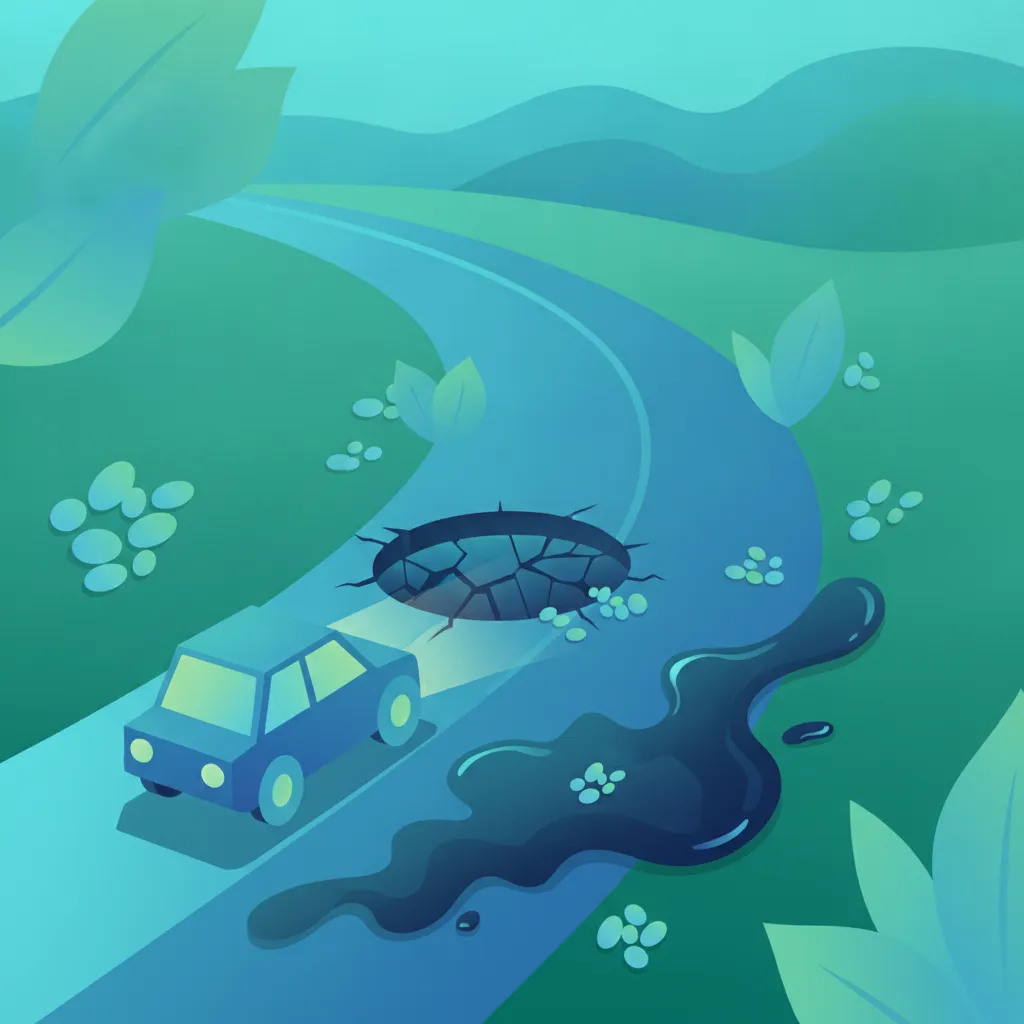
A motorcyclist is particularly vulnerable to imperfections in the road surface. This lesson teaches you how to actively scan the road ahead to spot hazards like potholes, patches of gravel, or slippery diesel spills. You will learn safe techniques for either avoiding these hazards or crossing them with minimal risk if avoidance is not possible.
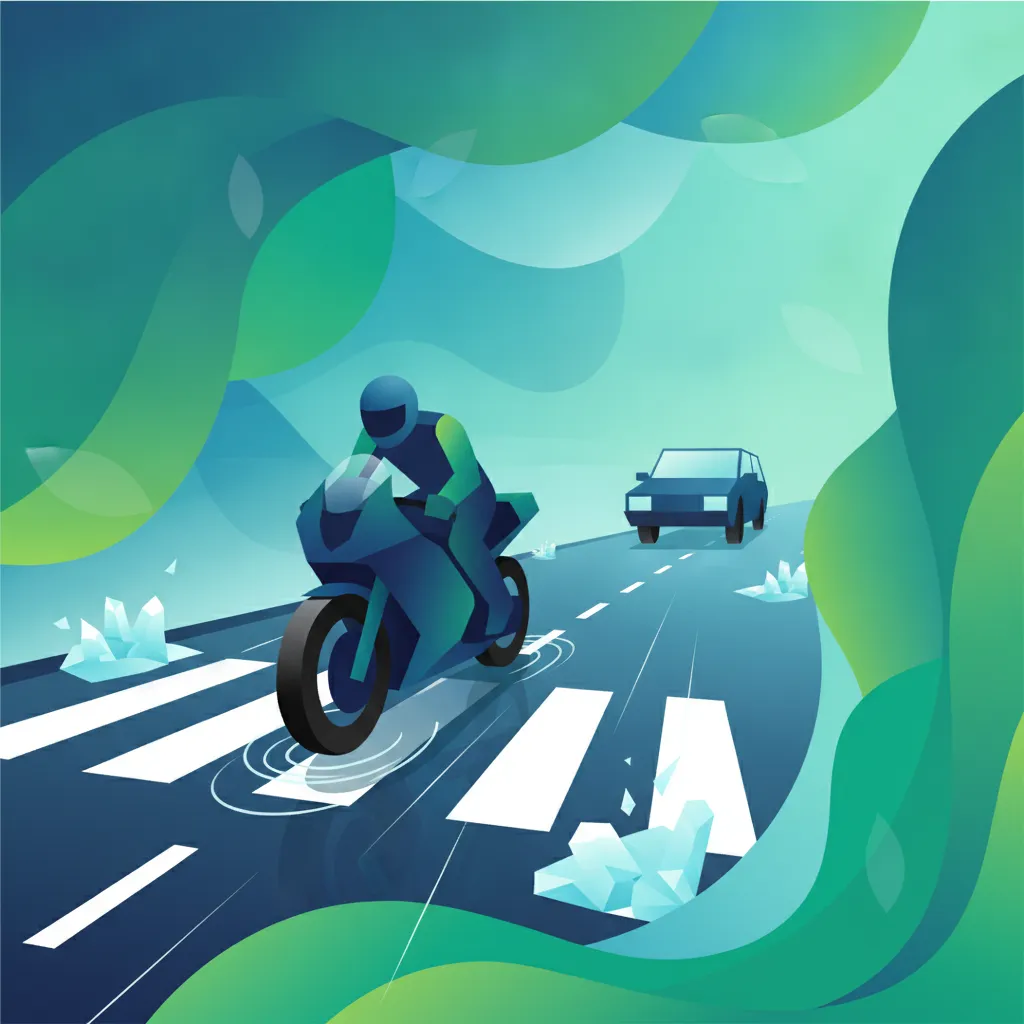
This lesson provides essential advice for riding safely in adverse weather conditions that reduce tyre grip. You will learn how rain, ice, and wet leaves dramatically increase braking distances and affect handling. Key strategies covered include reducing speed, increasing following distances, making smooth control inputs, and anticipating slippery areas to maintain control and avoid skidding on compromised road surfaces.
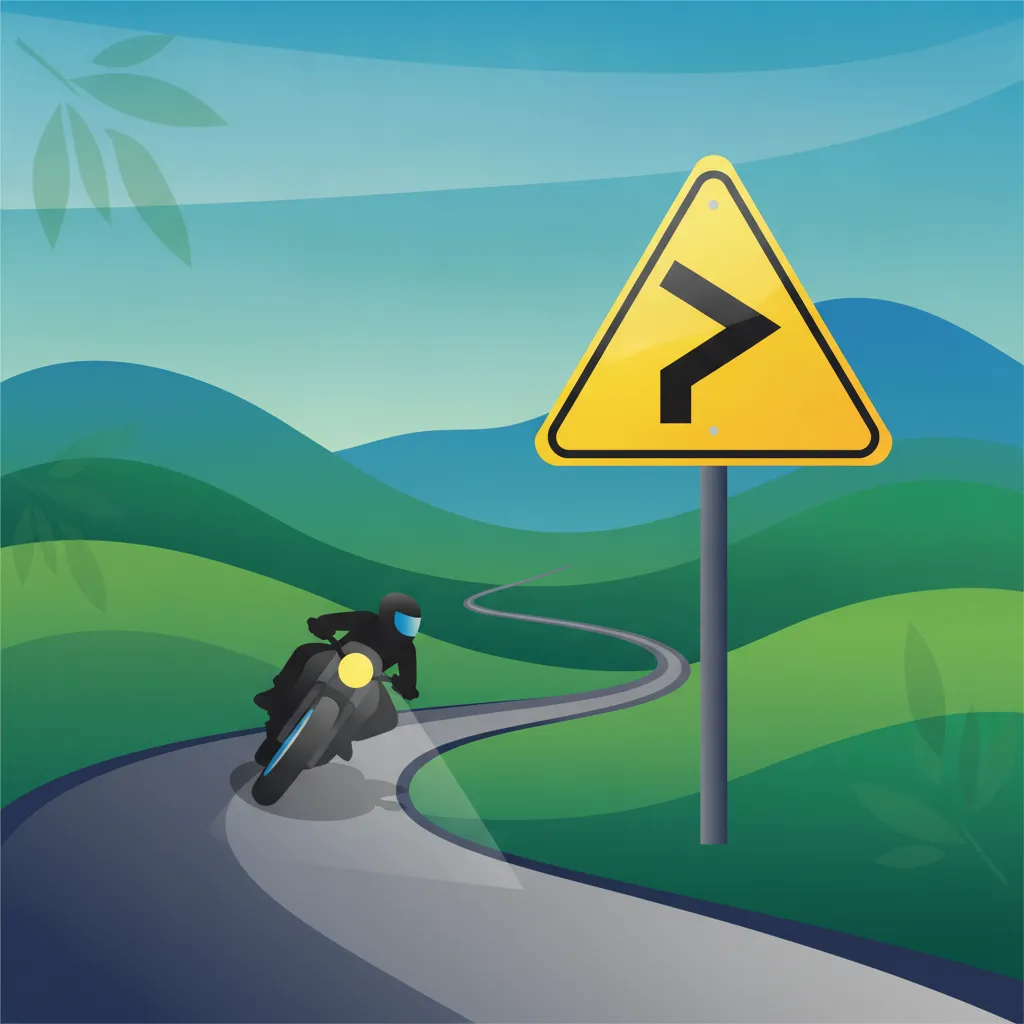
This lesson explains the function of warning signs, which are mostly triangular and alert road users to potential dangers ahead. You will learn to identify signs for bends, junctions, slippery surfaces, and other hazards particularly relevant to motorcyclists. Acting on these warnings allows a rider to adjust speed and position proactively, enhancing safety.

This lesson explores the crucial concept of tyre grip and how it is affected by various road surfaces and conditions. You will learn to identify potential hazards that reduce traction, such as wet leaves, manhole covers, oil spills, and loose gravel. The content provides strategies for adjusting your riding style, including speed and lean angle, to safely navigate these surfaces and prevent a loss of control.
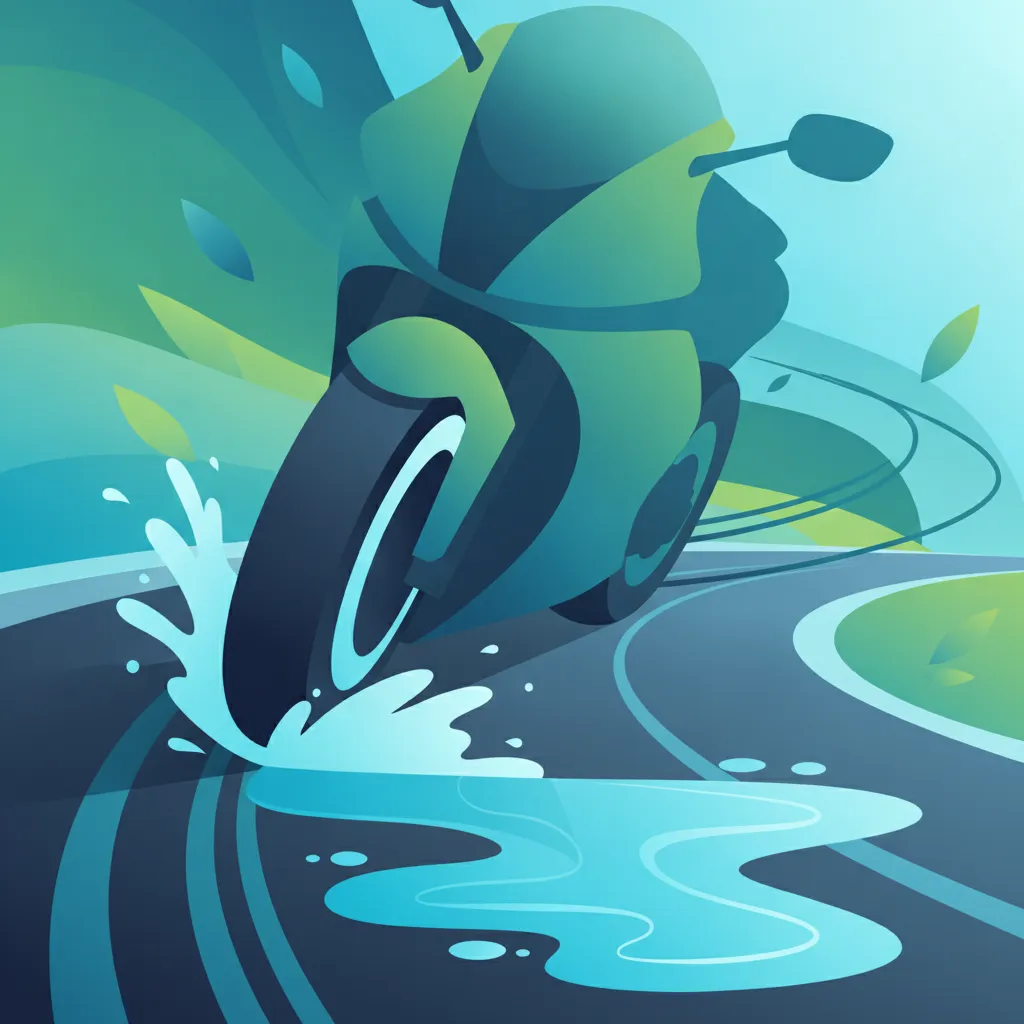
Riding in the rain requires significant adjustments to your technique. This lesson covers how to ride smoothly to maintain traction, the importance of increasing your following distance, and how to deal with reduced visibility from spray and fogged visors. You will also learn what aquaplaning is and how to avoid or manage it.
This lesson decodes the language of road markings painted on the road surface. You will learn the rules associated with solid and broken white lines, double white lines that restrict overtaking, and yellow lines controlling parking. Proper understanding of these markings is crucial for maintaining correct lane discipline and riding legally.

This lesson contrasts the challenges of different road types. It covers how to handle the hidden bends, poor surfaces, and unexpected hazards of rural roads. It then details the specific procedures for using dual carriageways and motorways, including using slip roads, adhering to strict lane discipline, and safely overtaking at high speeds.
This lesson focuses on the dynamic and often unpredictable nature of urban traffic. It covers how to safely negotiate various pedestrian crossings, anticipate the movement of cyclists and pedestrians, and be aware of hazards like bus stops and car doors opening. You will also learn about the considerations for safe and legal filtering in slow-moving traffic.
This lesson highlights why motorcyclists are considered vulnerable road users. It covers the increased risk of serious injury in a collision due to lack of physical protection compared to car occupants. You will learn about common visibility challenges and how to adopt proactive, defensive strategies to mitigate risks and anticipate potential hazards on the road.
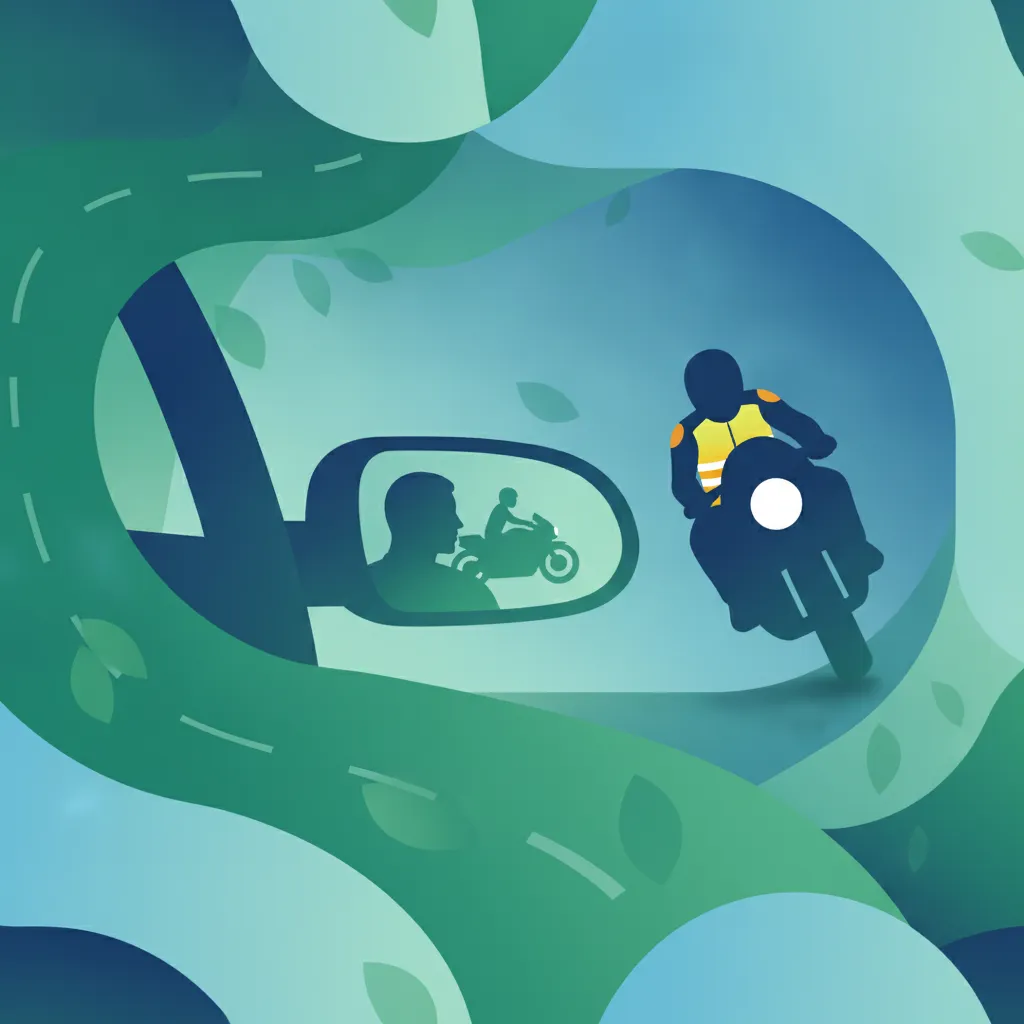
This lesson focuses on the unique risks faced by motorcyclists and scooter riders when sharing the road with HGVs. It explains how their small size and rapid acceleration can make them difficult to see, especially when they are filtering through traffic. Drivers will learn the importance of making extra mirror checks—'look twice'—before any maneuver and giving motorcyclists extra space, as they can be more affected by wind buffeting and road surface imperfections.
Understand how tyre pressure influences the contact patch and affects motorcycle grip. Learn essential theory for maintaining optimal tyre condition and safety on Great Britain roads.
This lesson explores the crucial concept of tyre grip and how it is affected by various road surfaces and conditions. You will learn to identify potential hazards that reduce traction, such as wet leaves, manhole covers, oil spills, and loose gravel. The content provides strategies for adjusting your riding style, including speed and lean angle, to safely navigate these surfaces and prevent a loss of control.

While prevention is best, it is important to know how to react if your motorcycle begins to skid. This lesson describes the different causes and feelings of front and rear wheel slides. It provides guidance on the correct recovery actions, which often involve smooth, gentle control inputs and looking in your intended direction of travel.
This lesson provides essential advice for riding safely in adverse weather conditions that reduce tyre grip. You will learn how rain, ice, and wet leaves dramatically increase braking distances and affect handling. Key strategies covered include reducing speed, increasing following distances, making smooth control inputs, and anticipating slippery areas to maintain control and avoid skidding on compromised road surfaces.
Riding in the rain requires significant adjustments to your technique. This lesson covers how to ride smoothly to maintain traction, the importance of increasing your following distance, and how to deal with reduced visibility from spray and fogged visors. You will also learn what aquaplaning is and how to avoid or manage it.
This lesson highlights the critical safety role of your vehicle's tyres. You will learn how to check for correct inflation pressure, which affects handling and fuel efficiency. It also explains the legal requirement for a minimum of 1.6mm of tread depth across the central three-quarters of the tyre and the importance of checking for any damage.
A motorcyclist is particularly vulnerable to imperfections in the road surface. This lesson teaches you how to actively scan the road ahead to spot hazards like potholes, patches of gravel, or slippery diesel spills. You will learn safe techniques for either avoiding these hazards or crossing them with minimal risk if avoidance is not possible.

This lesson demystifies the process of turning a motorcycle at speed. It explains the essential principle of counter-steering (pushing the handlebar in the direction you want to turn) and its relationship with lean angle. You will also learn about selecting a safe line through a corner, managing your speed, and using your vision effectively to look where you want to go.
This lesson highlights why motorcyclists are considered vulnerable road users. It covers the increased risk of serious injury in a collision due to lack of physical protection compared to car occupants. You will learn about common visibility challenges and how to adopt proactive, defensive strategies to mitigate risks and anticipate potential hazards on the road.

This lesson identifies behaviours that significantly increase a rider's risk of being involved in a collision. It explains the dangers of excessive speed, following too closely, and aggressive riding. You will learn how a rider's attitude and choices directly contribute to their safety and the legal penalties associated with these offences.

This lesson clarifies the roles of the front and rear brakes on a motorcycle. You will learn that the front brake is responsible for around 70-80% of your braking power due to weight transfer during deceleration. The lesson teaches how to apply both brakes progressively and smoothly for controlled, stable stops in various situations.
Find clear answers to common questions learners have about Grip, Friction, and Road Surface Interaction. Learn how the lesson is structured, which driving theory objectives it supports, and how it fits into the overall learning path of units and curriculum progression in Great Britain. These explanations help you understand key concepts, lesson flow, and exam focused study goals.
Correct tyre pressure ensures the contact patch is the right size for grip and stability. Over-inflated tyres reduce the contact area, while under-inflated tyres can overheat and make handling unpredictable, significantly reducing your safety.
Painted road markings, like white lines or pedestrian crossings, are significantly smoother than asphalt. When wet, they provide much less friction, which can easily cause your wheels to slip if you brake or corner on them.
Excessive speed, sudden braking, or harsh acceleration while cornering can overcome the available grip. Additionally, poor road surfaces like gravel or oil patches can cause a sudden loss of traction even at moderate speeds.
You should be extra cautious on loose gravel, leaves, manhole covers, and patches of spilled diesel, especially at junctions. These surfaces offer very low friction and can lead to loss of control.
Dive into our comprehensive question bank to find exactly what you need for your Great Britain theory test. Use our advanced filters to pinpoint specific subjects or test your knowledge on challenging areas, ensuring you're fully prepared for success.