
This lesson explores the critical safety rules for riding in fog and low visibility conditions on British roads. By understanding the correct use of headlights and fog lights, you will prepare yourself for both the practical demands of motorcycling and common theory test questions regarding vehicle lighting.

Lesson content overview
Riding a motorcycle in fog or other low-visibility conditions presents unique challenges that significantly increase the risk of accidents. When visibility is reduced, your ability to see hazards ahead and other road users' ability to see you are both severely compromised. This lesson covers the essential strategies and legal requirements for safely navigating your motorcycle in such challenging environments, focusing on appropriate lighting use, speed adaptation, and maintaining safe following distances.
Low visibility conditions are any atmospheric phenomena that significantly reduce the distance you can see and be seen on the road. While fog is the most common and challenging, heavy rain, falling snow, smoke, and even dense dust can create similar hazards. Understanding how these conditions affect your vision and the behaviour of light is crucial for safe motorcycle riding.
Fog is essentially a cloud at ground level, consisting of countless tiny water droplets suspended in the air. These droplets scatter light, rather than allowing it to pass through cleanly. This phenomenon is known as backscatter, where the light from your headlamps reflects off the fog droplets directly back towards you. This creates a "white wall" effect, making it harder to see ahead and paradoxically reducing your forward visibility, especially when using high-intensity lights.
Visibility is typically measured in metres, indicating the maximum distance at which an object can be clearly identified. The Highway Code categorises low visibility conditions based on this measurement:
The practical meaning of these measurements is direct: you must adjust your speed and riding behaviour to ensure you can stop safely within the distance you can see. If you can only see 30 metres ahead, your speed must allow you to stop within 30 metres.
A common misconception among drivers is that using high beams (full beam) in fog will help them see farther. However, due to the backscatter effect, high beams actually worsen visibility. The intense, long-range light reflects off the dense water droplets more powerfully, creating a severe glare that blinds you, the rider, and can dazzle oncoming traffic. This is why the Highway Code strictly prohibits their use in fog.
Always avoid using high beams in fog, heavy rain, or snow. They create glare and severely reduce your own visibility while dazzling other road users.
Using your motorcycle's lighting systems correctly is paramount in low visibility to ensure you can see and, more importantly, be seen by other road users. The Great Britain Motorcycle Theory Course emphasises adherence to Highway Code rules regarding lighting.
The dipped beam, also known as the low beam, is your primary headlamp setting for fog and low-visibility conditions. It projects a low-intensity, short-range light pattern downwards and slightly forwards, designed to illuminate the road surface without causing excessive backscatter or dazzling oncoming traffic.
The standard headlamp setting that projects a low-intensity, short-range light pattern, designed to illuminate the road without dazzling other road users.
Front fog lights are specialised lamps mounted low on the motorcycle, designed to emit a wide, low-angle beam that cuts through fog more effectively than standard headlamps. They illuminate the road surface immediately in front and to the sides of your motorcycle, helping you identify lane markings and the edge of the road.
Specific front-mounted lights on a motorcycle that emit a low, wide-angle beam designed to cut through fog without reflecting back to the rider, improving lane placement visibility.
While motorcycles are typically fitted with front fog lights, they usually do not have rear fog lights. However, as a motorcyclist, it's essential to understand when other vehicles use rear fog lights as a warning signal.
A high-intensity red light mounted at the rear of a vehicle, used only when visibility is severely reduced (typically less than 30 metres) to warn following vehicles.
Beyond proper lighting, your personal riding habits — specifically speed and following distance — are critical in preventing collisions in low-visibility conditions.
Speed adaptation means adjusting your motorcycle's speed to match the prevailing conditions, ensuring you can stop safely within the distance you can see. This is particularly vital in fog, where your sight distance is drastically shortened.
Adjusting forward speed to match the current visibility and road conditions, ensuring that stopping distance remains within sight distance.
Following distance refers to the safe gap you maintain between your motorcycle and the vehicle directly ahead. In clear conditions, the two-second rule is generally recommended. However, in fog and other adverse conditions, this must be significantly increased.
The space (time or distance) measured behind a leading vehicle which allows a rider to stop safely if the vehicle ahead abruptly brakes.
A safety guideline recommending maintaining a time gap of at least four seconds between your motorcycle and the vehicle ahead in fog or low-visibility conditions.
Adhering to the Highway Code is not just about safety; it's a legal obligation. Violations can lead to fines, penalty points, or even prosecution. The following rules are particularly pertinent to riding in fog and low visibility:
| Highway Code Rule | Statement | Applicability | Legal Status | Rationale |
|---|---|---|---|---|
| Rule 82 | Headlamps must be switched on when using fog lights. | Any time fog lights are used. | Mandatory | Ensures the vehicle remains fully visible and illuminated, both front and rear. |
| Rule 84 | Headlamps must be used at night and in visibility-reducing conditions (e.g., fog, heavy rain, falling snow, smoke, dust). | Any time visibility is significantly reduced, or between sunset and sunrise. | Mandatory | Increases visibility of your motorcycle to others and helps you see hazards. |
| Rule 88 | Do not use high beams (full beam) in fog, heavy rain, falling snow, or dust. | All low-visibility conditions caused by atmospheric particles. | Mandatory | Prevents backscatter and glare, which significantly reduces your vision and dazzles others. |
| Rule 90 | High beams must be used only when there is no oncoming traffic and it is safe to do so. | Unlit roads at night, without oncoming vehicles or vehicles directly ahead. | Mandatory | Avoids dazzling other road users; fog conditions override this permission. |
| Rule 91 | Flashing lights (including fog lights) must not be used except in an emergency. | All normal driving situations. | Mandatory | Prevents confusion with emergency signals or official warnings. |
| Rule 93 | Use front fog lights only when visibility is less than 100 metres and your vehicle is moving. Switch them off once visibility improves beyond 100 metres. | Visibility below 100 metres and vehicle in motion. | Mandatory | Improves close-range illumination and visibility to others without causing glare in clearer conditions. |
| Rule 94 | Rear fog lights must be used only when visibility is less than 30 metres. Extinguish them immediately when visibility improves beyond this threshold. (Applies to other vehicles; be aware of their use). | Visibility below 30 metres and vehicle in motion. | Mandatory | Provides a critical warning to following drivers in extremely poor visibility without being dazzling later. |
| Rule 101 | Adjust your speed to suit the conditions; you must travel at a speed which is safe for the conditions. This includes adverse weather conditions like fog. | All driving situations, particularly in adverse weather or challenging conditions. | Mandatory | Ensures you can stop safely within your sight distance, preventing collisions. |
| Rule 103 | Keep a safe distance from the vehicle ahead, especially in adverse conditions like fog, heavy rain, or icy roads. | All driving situations, but especially critical in low visibility. | Mandatory | Allows sufficient reaction time and stopping distance to prevent rear-end collisions. |
Even experienced riders can make mistakes in challenging fog conditions. Being aware of these common pitfalls can significantly enhance your safety.
The rules and recommendations for riding in fog are rooted in fundamental principles of physics, human perception, and accident prevention.
Navigating your motorcycle safely through fog and low-visibility conditions requires a proactive and adaptable approach.
By consistently applying these principles and adhering to the Highway Code, you will significantly reduce the risks associated with riding in fog and low visibility, ensuring a safer journey for yourself and others on the road.
Riding in fog requires adjusted lighting, reduced speed, and increased following distance. Dipped beams are mandatory in reduced visibility, while front fog lights supplement them only when visibility falls below 100 metres. High beams must never be used as they create backscatter. Speed must always permit stopping within your sight distance, often requiring travel well below posted limits. Following distance should extend to at least four seconds in fog, compensating for longer braking distances and delayed hazard perception.
A short set of high-value points that capture the most important learning from this lesson.
Always use dipped beams in fog; high beams create backscatter that worsens visibility for you and dazzles others.
Activate front fog lights only when visibility drops below 100 metres and switch them off as soon as conditions improve.
Your speed in fog must allow you to stop safely within the distance you can see ahead, which often means travelling well below the posted limit.
Maintain a minimum four-second following distance in fog to compensate for longer stopping distances and delayed reactions.
Motorcycles typically lack rear fog lights, but you must recognise when other vehicles are using them to indicate extremely poor visibility (under 30 metres).
Explore all units and lessons included in this driving theory course.
Front fog lights: use below 100m visibility, switch off above 100m, always with dipped beams.
Rear fog lights (other vehicles): mandatory only when visibility is below 30 metres.
Never use high beams in fog, heavy rain, snow, or dust due to backscatter.
Speed must never exceed what allows you to stop within your sight distance.
Fog lights are supplementary to dipped beams, not a replacement for them.
Using high beams in fog, thinking brighter lights will improve visibility, when in fact they create dangerous glare.
Forgetting to switch off front fog lights once visibility improves beyond 100 metres, dazzling other road users.
Driving at the speed limit in fog without adjusting to the actual sight distance available.
Applying the two-second following rule instead of extending to at least four seconds in low visibility.
Relying solely on fog lights without keeping dipped beams on, which reduces overall visibility to other road users.
Lesson content overview
A short set of high-value points that capture the most important learning from this lesson.
Always use dipped beams in fog; high beams create backscatter that worsens visibility for you and dazzles others.
Activate front fog lights only when visibility drops below 100 metres and switch them off as soon as conditions improve.
Your speed in fog must allow you to stop safely within the distance you can see ahead, which often means travelling well below the posted limit.
Maintain a minimum four-second following distance in fog to compensate for longer stopping distances and delayed reactions.
Motorcycles typically lack rear fog lights, but you must recognise when other vehicles are using them to indicate extremely poor visibility (under 30 metres).
Explore all units and lessons included in this driving theory course.
Front fog lights: use below 100m visibility, switch off above 100m, always with dipped beams.
Rear fog lights (other vehicles): mandatory only when visibility is below 30 metres.
Never use high beams in fog, heavy rain, snow, or dust due to backscatter.
Speed must never exceed what allows you to stop within your sight distance.
Fog lights are supplementary to dipped beams, not a replacement for them.
Using high beams in fog, thinking brighter lights will improve visibility, when in fact they create dangerous glare.
Forgetting to switch off front fog lights once visibility improves beyond 100 metres, dazzling other road users.
Driving at the speed limit in fog without adjusting to the actual sight distance available.
Applying the two-second following rule instead of extending to at least four seconds in low visibility.
Relying solely on fog lights without keeping dipped beams on, which reduces overall visibility to other road users.
Explore search topics learners often look for when studying Fog, Low Visibility and Headlight Use. These topics reflect common questions about road rules, driving situations, safety guidance, and lesson level theory preparation for learners in Great Britain.
Browse additional driving theory lessons that cover connected traffic rules, road signs, and common driving situations related to this topic. Improve your understanding of how different rules interact across everyday traffic scenarios.
Learn essential techniques for riding safely in fog and other low-visibility conditions in Great Britain. This lesson covers how to adapt your speed, maintain safe following distances, and improve hazard perception when visibility is severely reduced.

This lesson provides essential advice for driving when weather conditions are poor. It explains how rain can cause aquaplaning and why you must double your following distance. You will also learn techniques for driving in icy conditions, including gentle use of controls to avoid skidding, and the correct use of lights in fog.
This lesson focuses on the challenges of riding when you can't see or be seen clearly. It covers the correct use of lights in fog, rain, and at night to maximize both your vision and your visibility to others. You will learn why reducing speed is critical, how to use reflective clothing effectively, and strategies for dealing with the glare from other vehicles' headlights to ensure you can navigate safely in all lighting conditions.
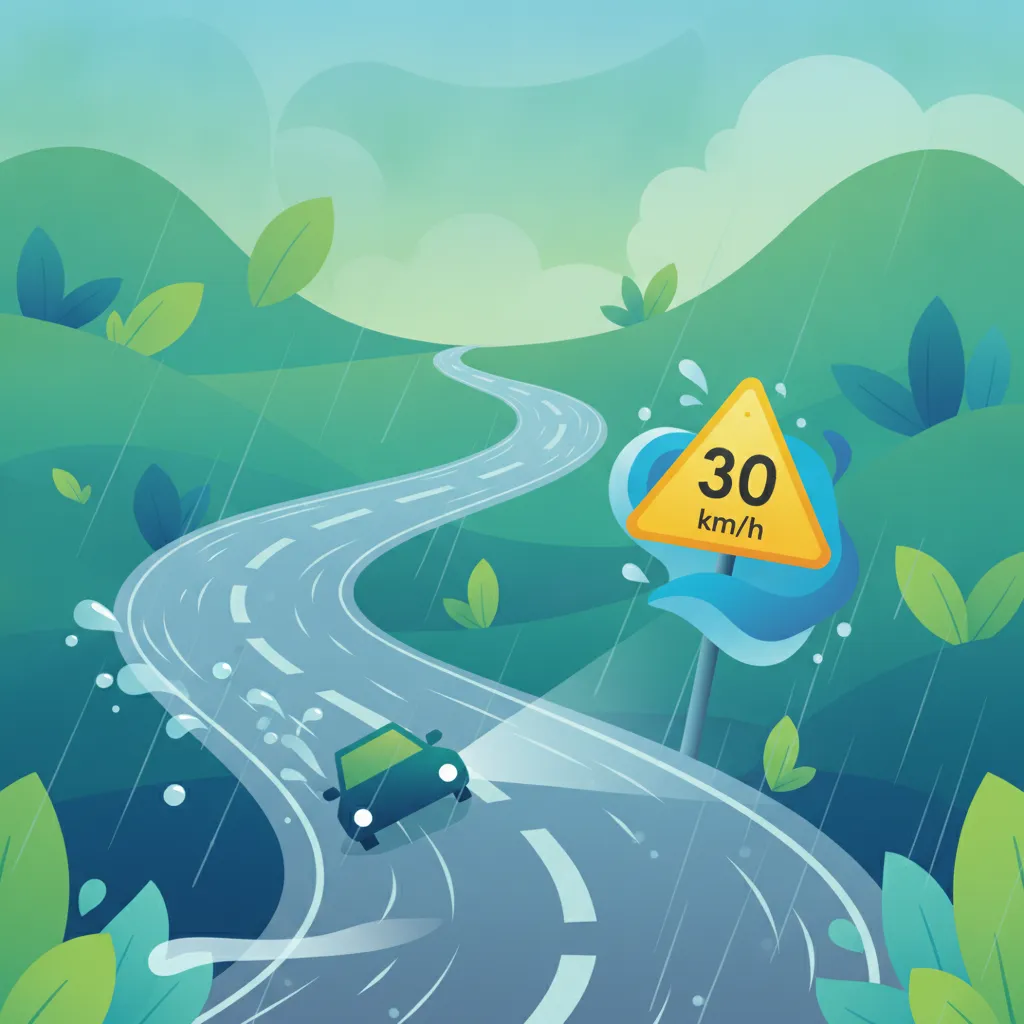
This lesson explains that safe driving often requires travelling at a speed lower than the legal limit. It covers how to adjust your speed for adverse conditions such as rain, which can double your stopping distance, or fog, which severely reduces visibility. The goal is to always be able to stop safely in the distance you can see to be clear.
A key aspect of motorcycle safety is being seen by others. This lesson teaches techniques to increase your conspicuity on the road. Topics include the strategic use of high-visibility and reflective clothing, correct use of headlights and daytime running lights, and adopting lane positions that place you in the direct line of sight of other drivers.
Riding at night requires different skills, as visibility is limited to the reach of your headlights. This lesson teaches you how and when to use main beam and dipped beam lights effectively. It also discusses the increased risk from fatigue and nocturnal animals, and emphasizes the importance of a clean visor and reflective gear for safety.
This lesson addresses the increased risks associated with driving after dark. It explains when to switch between dipped and main beam headlights to maximise your own vision without dazzling other drivers. Techniques for reducing glare and spotting hazards like cyclists or pedestrians with poor visibility are also covered.
This lesson teaches a practical method for maintaining a safe distance from the vehicle in front. The 'two-second rule' provides a minimum time gap in dry conditions, which should be doubled to four seconds in the wet. Adhering to this rule gives you sufficient time to react and brake safely if the vehicle ahead stops suddenly.
This lesson provides essential advice for riding safely in adverse weather conditions that reduce tyre grip. You will learn how rain, ice, and wet leaves dramatically increase braking distances and affect handling. Key strategies covered include reducing speed, increasing following distances, making smooth control inputs, and anticipating slippery areas to maintain control and avoid skidding on compromised road surfaces.
This lesson provides essential techniques for safe riding during nighttime and in poor visibility conditions like dawn or dusk. It covers the correct use of your headlamp's main and dipped beams, strategies for reducing glare from oncoming traffic, and the critical role of reflective clothing. You will also learn how to identify common nighttime hazards and manage fatigue, ensuring you can navigate British roads safely after dark while complying with all relevant road rules.

This lesson provides a detailed map of the significant blind spots located to the front, sides, and rear of a typical heavy goods vehicle. It explains the purpose of the different classes of mirrors and how to adjust them correctly for maximum visibility. Learners will be taught effective scanning techniques—'mirror-signal-manoeuvre'—to actively check these zones before changing position, ensuring they are aware of any hidden hazards or other road users.
Understand the legal requirements and best practices for using your motorcycle's dipped beams and fog lights in fog, heavy rain, and snow according to the GB Highway Code. Learn when to use them and when to switch them off to stay safe and visible.
This lesson provides essential advice for driving when weather conditions are poor. It explains how rain can cause aquaplaning and why you must double your following distance. You will also learn techniques for driving in icy conditions, including gentle use of controls to avoid skidding, and the correct use of lights in fog.
This lesson explains the functions and legal requirements for all exterior vehicle lights. You will learn when it is appropriate to use dipped and main beam headlights, the specific conditions for using fog lights, and the correct application of hazard warning lights. Proper use of lighting is vital for seeing and being seen by other road users.
This lesson focuses on the challenges of riding when you can't see or be seen clearly. It covers the correct use of lights in fog, rain, and at night to maximize both your vision and your visibility to others. You will learn why reducing speed is critical, how to use reflective clothing effectively, and strategies for dealing with the glare from other vehicles' headlights to ensure you can navigate safely in all lighting conditions.
This lesson addresses the increased risks associated with driving after dark. It explains when to switch between dipped and main beam headlights to maximise your own vision without dazzling other drivers. Techniques for reducing glare and spotting hazards like cyclists or pedestrians with poor visibility are also covered.
This lesson details how different adverse weather conditions uniquely affect the handling and stability of a heavy goods vehicle. It covers the increased stopping distances in rain, reduced visibility in fog, severe traction loss on ice, and the dangerous effect of strong crosswinds on high-sided vehicles. You will learn specific techniques for adjusting speed, increasing following distances, and using vehicle controls smoothly to maintain safety in challenging weather.
This lesson provides essential techniques for safe riding during nighttime and in poor visibility conditions like dawn or dusk. It covers the correct use of your headlamp's main and dipped beams, strategies for reducing glare from oncoming traffic, and the critical role of reflective clothing. You will also learn how to identify common nighttime hazards and manage fatigue, ensuring you can navigate British roads safely after dark while complying with all relevant road rules.
Riding at night requires different skills, as visibility is limited to the reach of your headlights. This lesson teaches you how and when to use main beam and dipped beam lights effectively. It also discusses the increased risk from fatigue and nocturnal animals, and emphasizes the importance of a clean visor and reflective gear for safety.
This lesson explains that safe driving often requires travelling at a speed lower than the legal limit. It covers how to adjust your speed for adverse conditions such as rain, which can double your stopping distance, or fog, which severely reduces visibility. The goal is to always be able to stop safely in the distance you can see to be clear.
This lesson explains how different weather conditions impact the handling and stability of a large passenger vehicle. It covers the risks of aquaplaning in heavy rain, the effect of high winds on vehicle stability, and the severe reduction in visibility caused by fog. Learners will understand how ice and snow dramatically increase stopping distances and require extremely gentle control inputs to prevent skidding. Strategies for adapting speed and increasing following distances are emphasized.
This lesson teaches a practical method for maintaining a safe distance from the vehicle in front. The 'two-second rule' provides a minimum time gap in dry conditions, which should be doubled to four seconds in the wet. Adhering to this rule gives you sufficient time to react and brake safely if the vehicle ahead stops suddenly.
Find clear answers to common questions learners have about Fog, Low Visibility and Headlight Use. Learn how the lesson is structured, which driving theory objectives it supports, and how it fits into the overall learning path of units and curriculum progression in Great Britain. These explanations help you understand key concepts, lesson flow, and exam focused study goals.
You must only use fog lights when visibility is seriously reduced, generally to less than 100 metres. You must switch them off immediately when visibility improves to avoid dazzling other drivers.
Yes, even in daytime, you should use dipped headlights when visibility is significantly reduced. This helps other road users see your motorcycle more clearly.
No. Using high beam headlights in fog is dangerous because the light reflects off the fog droplets, which creates a 'white wall' effect that further reduces your ability to see the road.
Foggy conditions often result in wet or damp road surfaces, which significantly increases your braking distance. You must increase your following distance to allow more time to stop safely.
Dive into our comprehensive question bank to find exactly what you need for your Great Britain theory test. Use our advanced filters to pinpoint specific subjects or test your knowledge on challenging areas, ensuring you're fully prepared for success.