This lesson explores the legal and ethical responsibilities you hold as a road user in Great Britain. By understanding the hierarchy of road users and practicing defensive driving, you will be better prepared to navigate busy roads and handle exam questions involving vulnerable road users.
Lesson content overview
Understanding your obligations as a driver is not merely about passing your Great Britain Category B driving theory test; it is the cornerstone of safe, responsible, and legal conduct on the road. This lesson delves into the fundamental duties all drivers must uphold towards every other road user, with a critical focus on the safety of those who are most vulnerable. By mastering these principles, you will develop the mindset necessary to anticipate hazards, drive defensively, and contribute to a safer road environment for everyone.
At the heart of all driver responsibilities is the fundamental concept of "duty of care." This isn't just an ethical guideline; it is a legal obligation for every driver in Great Britain to act with reasonable care and skill to avoid causing harm to others. This includes preventing injury, death, or damage to property on the road.
Your duty of care extends to all road users, from pedestrians and cyclists to other motorists and even parked vehicles. It requires more than simply obeying traffic laws; it means actively considering the potential consequences of your actions and taking reasonable steps to prevent foreseeable risks. Failing to uphold this duty can lead to severe legal penalties, including fines, penalty points, license disqualification, and even imprisonment, alongside the devastating human cost of collisions.
This positive duty compels you to act to prevent danger, for example, by reducing speed when visibility is poor. It also includes a negative duty, meaning you must not create danger, such as by performing dangerous overtaking manoeuvres. Adhering to your duty of care ensures minimal risk for all parties and underpins the entire framework of road safety.
The Great Britain Highway Code explicitly outlines a "road user hierarchy" that prioritises the safety of those who are most likely to be injured in a collision. This hierarchy recognises that some road users are more vulnerable than others due to their lack of physical protection. As a driver of a Category B vehicle, you are typically in a more protected position, which places a greater responsibility on you to look out for those below you in the hierarchy.
The hierarchy, from most vulnerable to most protected, typically includes:
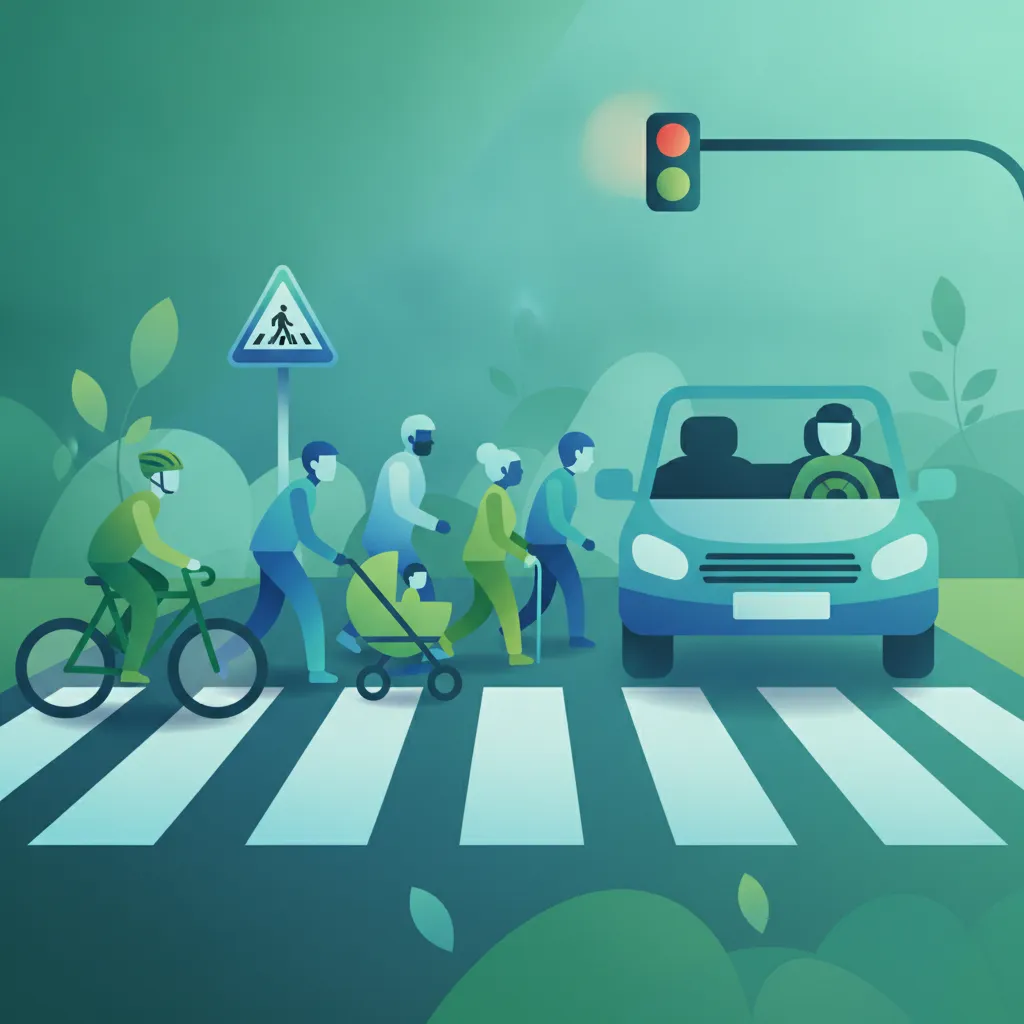
The practical meaning of this hierarchy is that you, as a car driver, must adopt a heightened level of caution and responsibility when vulnerable users are present. This is particularly crucial at crossings, junctions, and any shared paths. For example, a driver must reduce speed and be prepared to give way when a pedestrian steps onto a zebra crossing, regardless of whether there is an immediate risk of collision, because the pedestrian is the most vulnerable road user in that situation.
Common misunderstandings include believing that motorcycles are as protected as cars, or that cyclists are confined only to designated cycle lanes. The hierarchy applies across all road types and scenarios.
Defensive driving is a proactive approach that equips you to avoid dangerous situations rather than react to them. It involves anticipating potential hazards and adapting your driving to minimise risks, thereby reducing the likelihood of collisions and improving your reaction time on Great Britain's diverse road network.
Key elements of defensive driving include:
Defensive driving is not about driving overly cautiously or slowly; it's about driving intelligently and safely. It requires continuous focus and a conscious effort to identify and prepare for potential dangers before they materialise.
Beyond legal obligations, courteous behaviour and good road etiquette are vital for fostering a positive and safe driving environment in Great Britain. Respectful interaction with other road users helps to reduce stress, prevent aggression, and facilitate smoother traffic flow for everyone.
Elements of courtesy and road etiquette include:
These practices reduce conflict and create a more cooperative atmosphere on the road, ultimately enhancing safety.
The Highway Code places specific legal requirements on drivers to prioritise vulnerable road users (VRUs) in various contexts. This reinforces the road user hierarchy and ensures the safety of those most at risk.
Pedestrians are the most vulnerable. Drivers must give way to pedestrians who are crossing or waiting to cross at a zebra crossing. At signal-controlled crossings (Pelican, Puffin, Toucan), you must stop when the red light shows. Even if the light is green, if pedestrians are still on the crossing, you must wait for them to clear it.
Cyclists also receive special protection. When overtaking a cyclist, you must give them at least 1.5 metres (about 5 feet) of clearance in lower speed limits (up to 30 mph) and even more at higher speeds. You should treat cyclists as you would any other vehicle, allowing them plenty of room, especially when they are turning or moving away from parked cars. On narrow roads, you may need to wait behind a cyclist until it is safe to overtake. Never overtake a cyclist if it means driving too close or cutting them off.
Motorcyclists, while faster than cyclists, are also highly vulnerable due to their lack of protection. The same minimum clearance of 1.5 metres applies when overtaking motorcyclists. Be especially vigilant for motorcyclists, as their smaller size can make them harder to see, and they may be in your blind spots. Always check your mirrors and blind spots carefully before changing lanes or turning.
Hazard anticipation is the skill of predicting potential dangers on the road based on environmental cues and the behaviour of other road users. It's a core component of defensive driving and allows you to take preemptive action, significantly reducing the risk of accidents.
Hazards can be categorised into:
To improve your hazard anticipation, always look well ahead – not just at the car in front. Scan the road, pavements, and verges, checking your mirrors regularly. Pay attention to subtle cues, such as brake lights far ahead, parked cars with people inside, or a ball rolling into the road. Reducing your speed when you spot potential hazards gives you more time to react.
A significant part of your driver obligation is ensuring your vehicle is always in a safe and roadworthy condition. Malfunctioning vehicle components can directly endanger other road users and yourself. Regular checks and prompt repairs are not optional; they are a legal and ethical requirement for driving on Great Britain's roads.
Key areas of vehicle condition impacting road safety include:
Driving a vehicle with known defects that could affect its safety or the safety of others is a serious offense and a breach of your duty of care.
The Highway Code provides both statutory rules (backed by law) and advisory guidance. As a Category B driver in Great Britain, you are expected to know and apply these rules.
Highway Code Rule 2 – Road users must follow Road Traffic Act 1988: This fundamental rule states that all road users, including drivers, must comply with the provisions of the Road Traffic Act 1988. This reinforces your general duty of care and legal responsibilities.
Highway Code Rule 20 – Give way to pedestrians at zebra crossings: You must give way to any pedestrian who is on a zebra crossing or waiting to cross at one.
Highway Code Rules 164 & 165 – Overtaking cyclists and motorcyclists: You must leave at least 1.5 metres (about 5 feet) of space when overtaking cyclists and motorcyclists at speeds of up to 30 mph, and more at higher speeds.
Highway Code Rules 170–176 – Pedestrian crossings (Pelican, Puffin, Toucan, School Crossings): You must obey the signals and rules specific to each type of crossing, always giving way to pedestrians as appropriate.
Highway Code Rule 178 – Give way to cyclists using a cycle lane: You must not drive or park in a cycle lane marked with a solid white line during its hours of operation, and should give way to cyclists using them.
Highway Code Rule 195 – Stopping at red traffic lights: You must stop behind the white line when a traffic light is red.
Highway Code Rule 225 – Using brakes: You should use your brakes in a controlled, progressive manner.
Highway Code Rule 288 – Use of hazard warning lights: You must use hazard warning lights when your vehicle is stationary on a motorway or unrestricted dual carriageway and is causing an obstruction, or when it has broken down.
Understanding common violations helps you avoid them and maintain safe driving habits.
| Violation | Why Wrong | Correct Behaviour | Potential Consequence |
|---|---|---|---|
| Failing to stop at a zebra crossing | Ignores pedestrian priority and duty of care. | Stop at the stop line until pedestrians have completely cleared the crossing; only proceed when safe. | Increased risk of hitting pedestrians; potential fine, penalty points, or license disqualification. |
| Overtaking a cyclist too closely | Invades cyclist’s space, creating a dangerous situation and possible collision. | Maintain at least 1.5 metres clearance (more at higher speeds) when overtaking, waiting until safe to pass. | Cyclist may be forced into traffic or fall; collision risk, legal liability for dangerous overtaking. |
| Inadequate following distance in wet conditions | Reduces reaction time and increases braking distance, leading to skidding. | Double your normal following distance (e.g., four seconds) and reduce speed in wet conditions. | Rear-end collision, injury, vehicle damage, insurance claims. |
| Failing to anticipate a child near the roadside | Children’s unpredictable behaviour poses a high risk to their safety. | Reduce speed near schools or residential areas, actively scan for children near driveways, parked cars, or fences. | Potential severe injury to a child; breach of duty of care, legal proceedings. |
| Using high beams directly at oncoming VRUs | Causes dazzling, impairing their vision and increasing collision risk. | Switch to dipped beams when oncoming vehicles, cyclists, or pedestrians are within line of sight. | Endangering other road users; may be recorded as reckless driving. |
| Parking partially in a cycle lane | Blocks a dedicated, safe space for cyclists, forcing them into traffic. | Park only in designated parking slots; avoid cycle lanes unless clearly signposted for shared use or emergency. | Increased conflict, potential accidents for cyclists, and fines for illegal parking. |
| Misusing hazard lights while moving slowly | Misleads other drivers about a stationary hazard, causing confusion. | Activate hazard lights only when your vehicle is stationary and causing an obstruction or has broken down. | Collisions caused by misunderstanding; penalties for misuse of hazard lights. |
| Stopping too close to a pedestrian crossing (blocking it) | Prevents safe crossing for pedestrians, forcing them into dangerous situations. | Stop no closer than the stop line, keeping the entire crossing area clear for pedestrians. | Pedestrian injury, legal repercussions, increased risk of accidents. |
Responsible driving means constantly adapting your behaviour to changing conditions. This is a critical aspect of your duty of care and defensive driving.
Your actions as a driver have direct consequences, both positive and negative, on road safety.
| Principle/Rule Followed | Outcome | Principle/Rule Violated | Outcome |
|---|---|---|---|
| Maintaining safe following distance | Adequate braking distance; reduced risk of rear-end collisions. | Tailgating | Increased collision risk; reduced reaction time; potential chain accidents. |
| Giving way at zebra crossings | Pedestrians cross safely; driver avoids legal liability. | Running a zebra crossing | Pedestrian injury, possible fatality; fines, penalty points, prosecution. |
| Providing 1.5m clearance when overtaking VRUs | Vulnerable road user feels safe; smooth traffic flow. | Overtaking too close | VRU could be thrown off bike/balance, causing a crash; driver liable. |
| Using dipped beams at night near VRUs | No glare impairing vision for others; safe navigation. | High beams dazzling VRUs | Compromised vision for others, increased crash risk, potentially reckless driving. |
| Regular vehicle maintenance (lights, brakes) | Consistent vehicle performance; road safety maintained. | Driving with faulty brakes | Longer stopping distances, higher crash probability; may be deemed negligent. |
| Early signalling before lane changes | Other road users anticipate movement; traffic flows safely. | Late or missing signals | Surprise manoeuvres, leading to abrupt braking or collision. |
| Adjusting speed for weather | Prevent skidding, maintain control; safe stopping distance. | Speeding in rain | Hydroplaning, loss of control, higher chance of collision. |
| Avoiding stopping on pedestrian crossings | Keeps crossing clear and safe for pedestrians. | Blocking a crossing | Pedestrians forced into traffic, leading to dangerous manoeuvres or accidents. |
Let's look at some real-world situations that illustrate driver obligations.
Correct Behaviour: The driver immediately reduces speed, prepares to stop, and halts completely before the white stop line, allowing the pedestrian to fully clear the crossing. Only once the crossing is clear and it's safe to proceed does the driver re-accelerate. Explanation: This adheres to Highway Code Rule 20, prioritising the vulnerable pedestrian and fulfilling the duty of care.
Correct Behaviour: The driver checks mirrors and blind spots. Recognising the narrowness of the road and the wet conditions, the driver slows down and waits behind the cyclist. They only proceed to overtake when there is a clear, long stretch of road ahead, with no oncoming traffic, ensuring at least 1.5 metres of clearance before moving back into the lane smoothly. Explanation: This demonstrates adherence to Rule 164 (overtaking cyclists) and defensive driving principles (adjusting for weather and road type), ensuring the cyclist's safety.
Correct Behaviour: The driver reduces their speed significantly, often to 20 mph or less, regardless of the posted limit, and increases their scanning of the environment. They look for children near parked cars, driveways, and footpaths, anticipating sudden movements, and are prepared to stop instantly. Explanation: This highlights the importance of anticipation of hazards and the priority of vulnerable users (children) in a high-risk environment.
Explore all units and lessons included in this driving theory course.
Lesson content overview
Explore all units and lessons included in this driving theory course.
Explore search topics learners often look for when studying Driver Obligations and Road Users. These topics reflect common questions about road rules, driving situations, safety guidance, and lesson level theory preparation for learners in Great Britain.
Browse additional driving theory lessons that cover connected traffic rules, road signs, and common driving situations related to this topic. Improve your understanding of how different rules interact across everyday traffic scenarios.
Examine real-world driving situations that require proactive hazard anticipation and defensive driving techniques. Learn how to identify potential dangers on Great Britain roads and adapt your vehicle speed and positioning to maintain safety for yourself and other road users in varied traffic conditions.
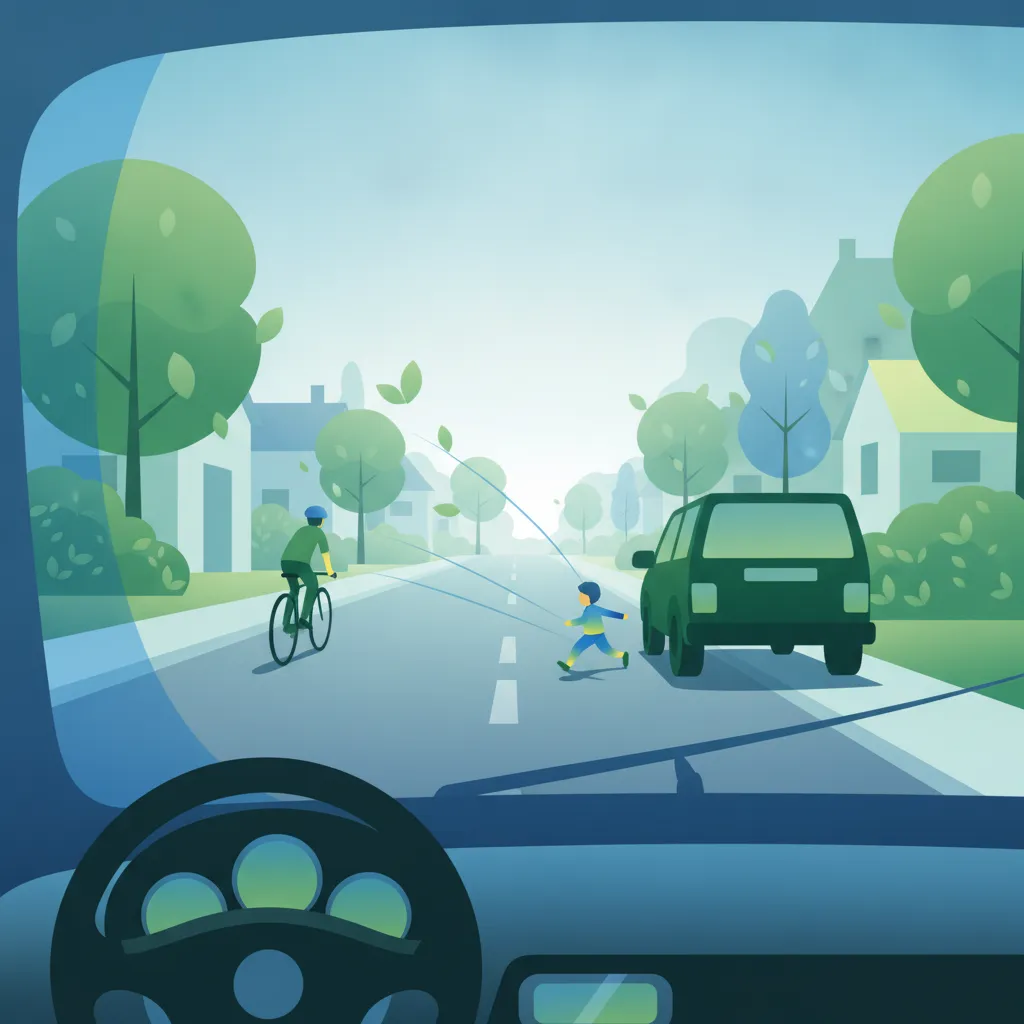
This lesson introduces the skill of hazard perception, a critical component of the official theory test and safe driving. It teaches you to actively scan your environment for potential dangers, such as a pedestrian about to cross or a car waiting to emerge from a junction. By identifying these situations early, you can take action to avoid them turning into actual dangers.
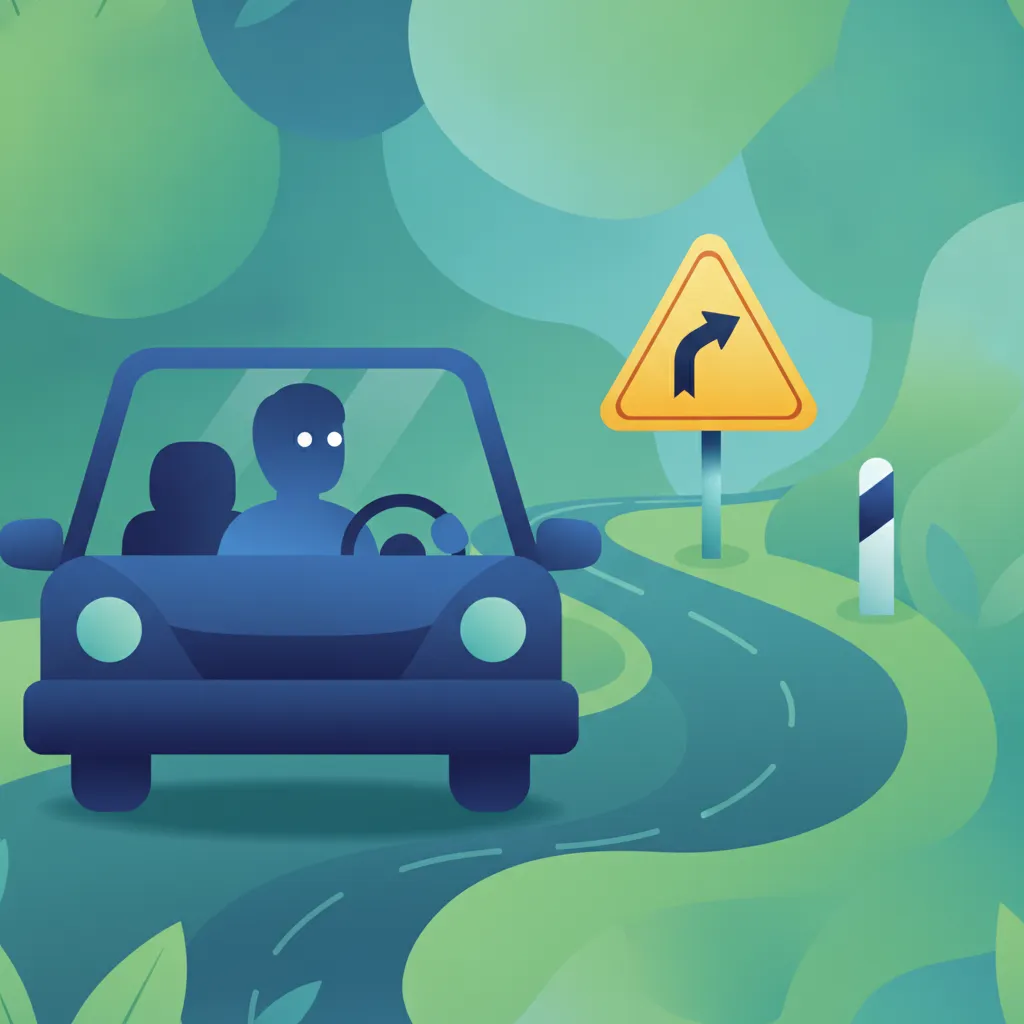
This lesson teaches you to interpret warning signs, which are typically triangular and designed to alert you to potential hazards ahead. You will learn the meanings of common signs indicating sharp curves, slippery surfaces, roadworks, or areas with frequent pedestrian or animal crossings. Understanding these signs is crucial for anticipating dangers and adjusting your speed and position defensively, which is especially important for vulnerable riders of AM vehicles.
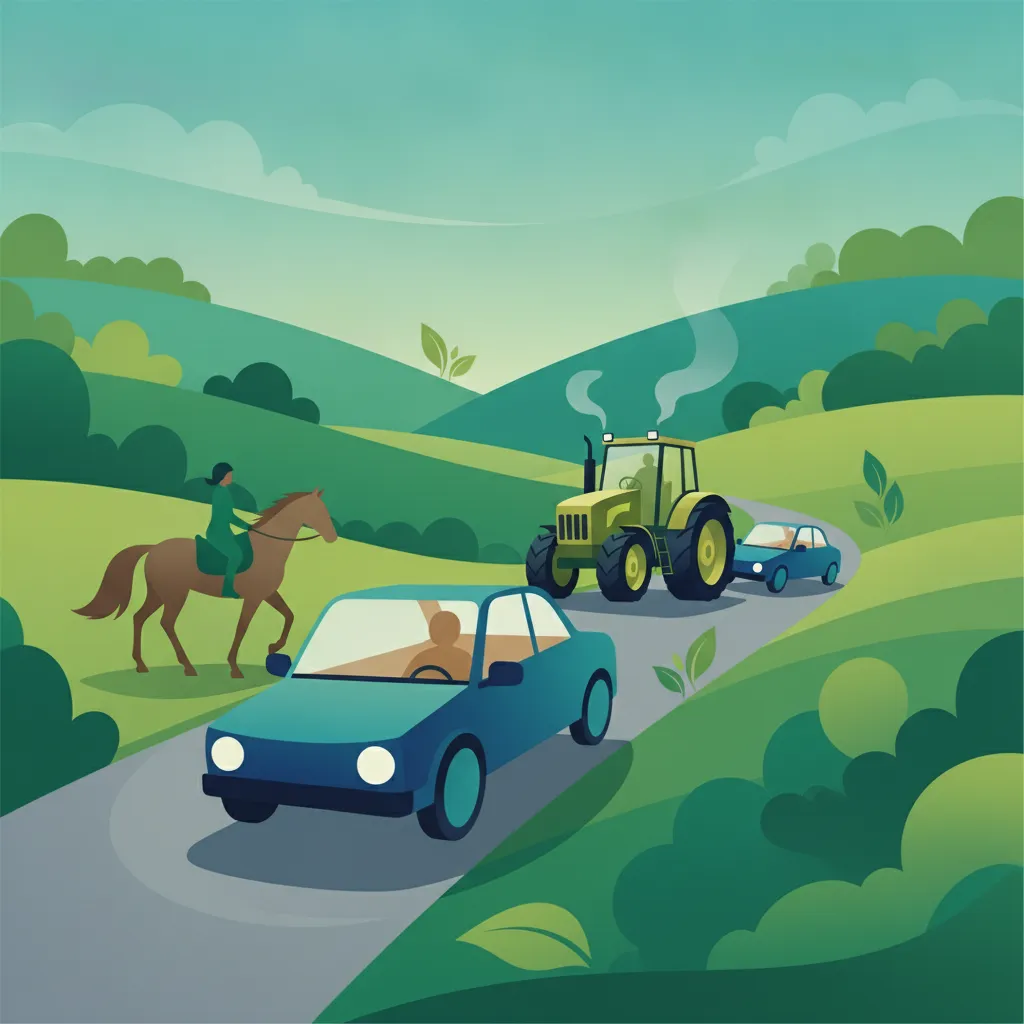
This lesson prepares you for the specific challenges of driving in the countryside. It explains the correct procedure for overtaking horse riders: slow down and pass wide, ensuring you do not spook the animal. You will also learn how to anticipate and safely manage encounters with slow-moving tractors and other farm machinery.
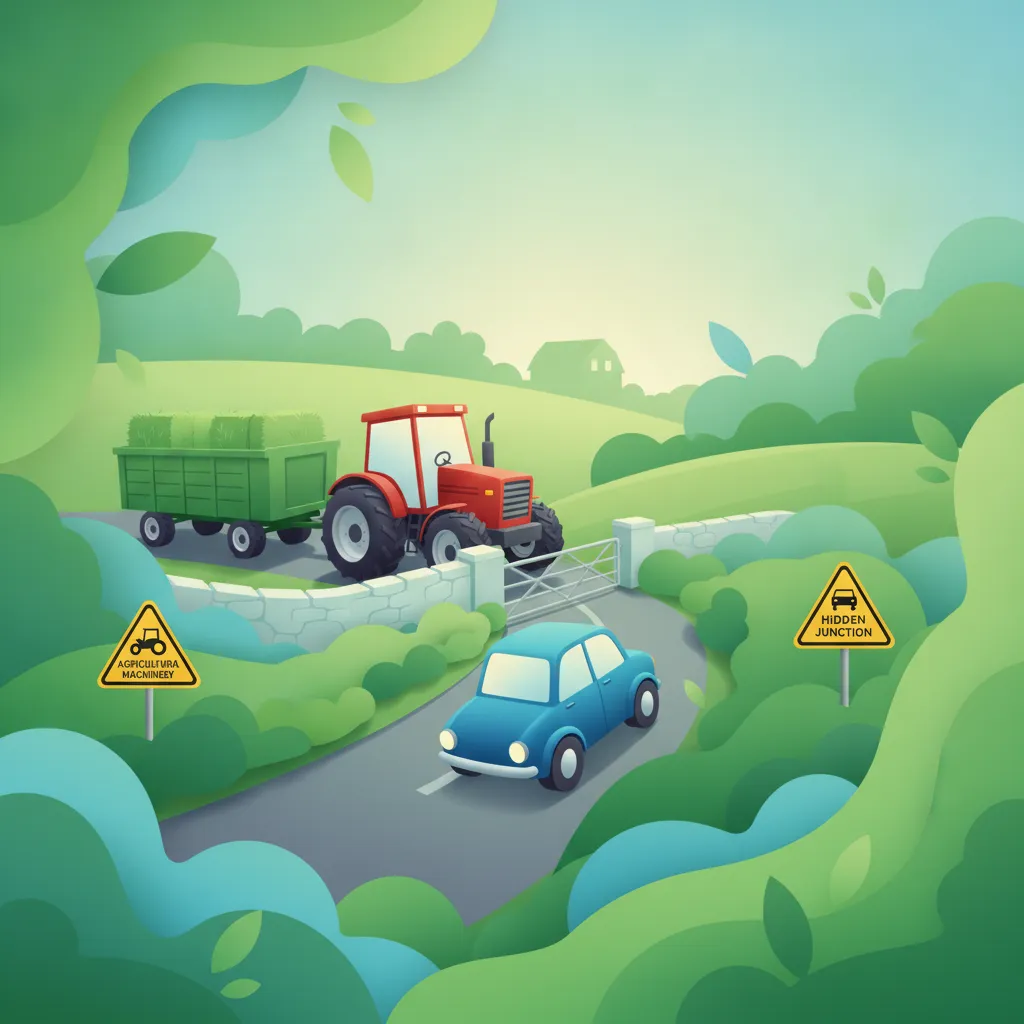
This lesson prepares you for the challenges of countryside driving. It emphasizes that the national speed limit on these roads is often too fast for the conditions. You will learn how to approach sharp bends, use passing places on single-track roads, and anticipate hazards like slow-moving tractors, horse riders, or mud on the road surface.

Defensive riding is the practice of actively anticipating potential hazards rather than just reacting to them. This lesson teaches you how to scan for clues, predict the actions of other road users, and position yourself to avoid trouble. By developing strong anticipation skills, you can significantly reduce your risk of being taken by surprise on the road.

This lesson provides essential advice for driving when weather conditions are poor. It explains how rain can cause aquaplaning and why you must double your following distance. You will also learn techniques for driving in icy conditions, including gentle use of controls to avoid skidding, and the correct use of lights in fog.
This lesson focuses on developing advanced hazard perception skills and using them to manage your speed proactively. You will learn to constantly scan the road for potential dangers, anticipate the actions of other road users, and adjust your speed to give yourself more time to react. This defensive approach to speed management is fundamental to staying safe and avoiding emergency situations while riding in complex traffic environments.

This lesson addresses the unique challenges of driving a large vehicle on rural roads. It provides techniques for positioning the vehicle through sharp bends and on narrow lanes, and for safely navigating unmarked or uncontrolled junctions. Learners will be taught to anticipate hidden hazards common in the countryside, such as slow-moving farm vehicles, animals on the road, and concealed entrances. The correct use of passing places and strategies for meeting oncoming traffic are also covered.
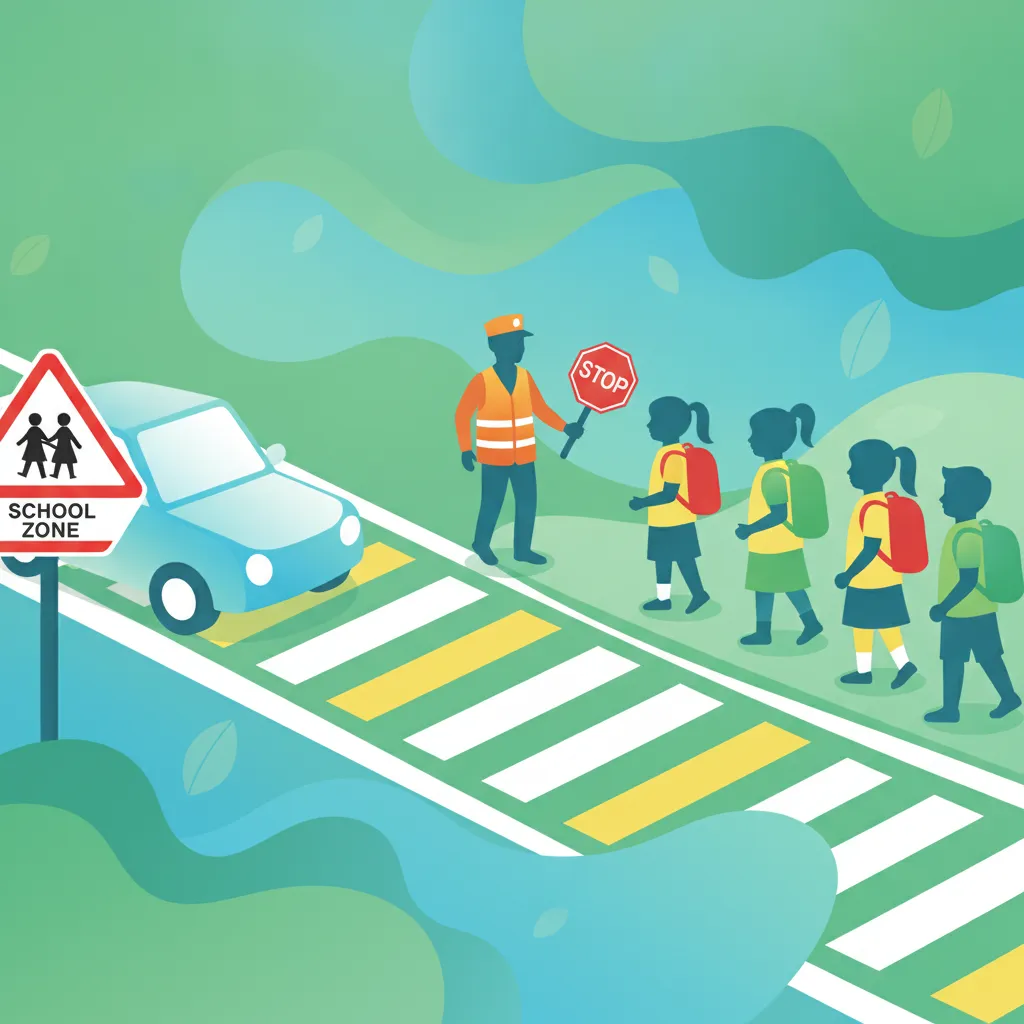
This lesson highlights the need for heightened awareness and reduced speed around schools, parks, and residential areas. Children can be unpredictable, so you must be prepared for them to step into the road without warning. The lesson covers specific signs for school zones and the legal requirement to stop for a school crossing patrol.
This lesson addresses the increased risks associated with driving after dark. It explains when to switch between dipped and main beam headlights to maximise your own vision without dazzling other drivers. Techniques for reducing glare and spotting hazards like cyclists or pedestrians with poor visibility are also covered.
Understand the legal and safety requirements for interacting with pedestrians, cyclists, and motorcyclists according to the Great Britain road user hierarchy. Learn specific Highway Code regulations for overtaking clearance, pedestrian crossings, and duty of care when sharing the road with more vulnerable groups.
This lesson explains the critical rules of priority that govern traffic flow at junctions, roundabouts, and crossings throughout Great Britain. You will learn how to determine who has right-of-way at both marked and unmarked intersections, and the specific rules for giving way to traffic on roundabouts. The lesson also reinforces the hierarchy of road users from the Highway Code, ensuring you understand when to yield to pedestrians and other vulnerable users.
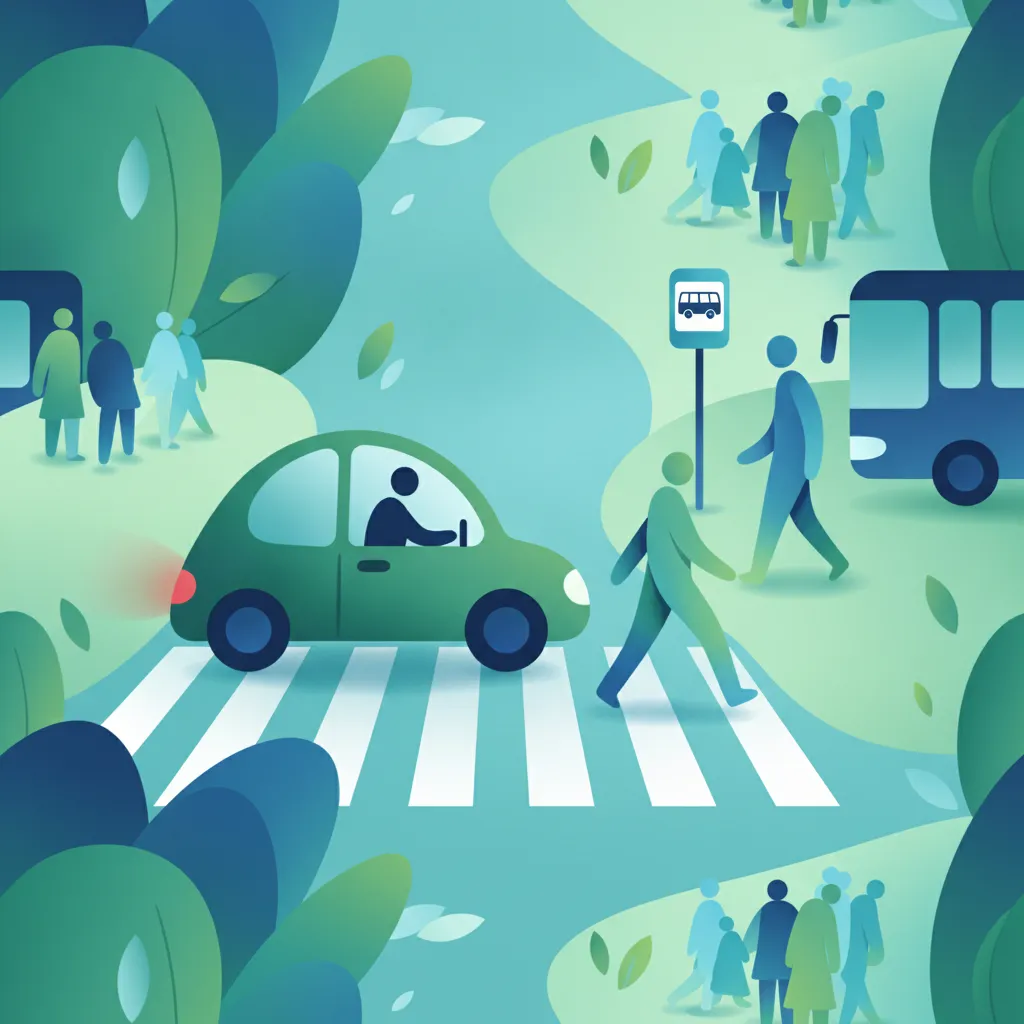
This lesson provides detailed guidance on protecting pedestrians in high-risk areas like bus stops and formal crossings. It covers the specific rules and driver obligations at zebra, pelican, toucan, and puffin crossings, as well as when approaching a school crossing patrol. The content emphasizes the importance of vigilance, anticipating pedestrian movements, especially those who may be distracted or emerge from behind the bus, and always being prepared to stop to prevent accidents.
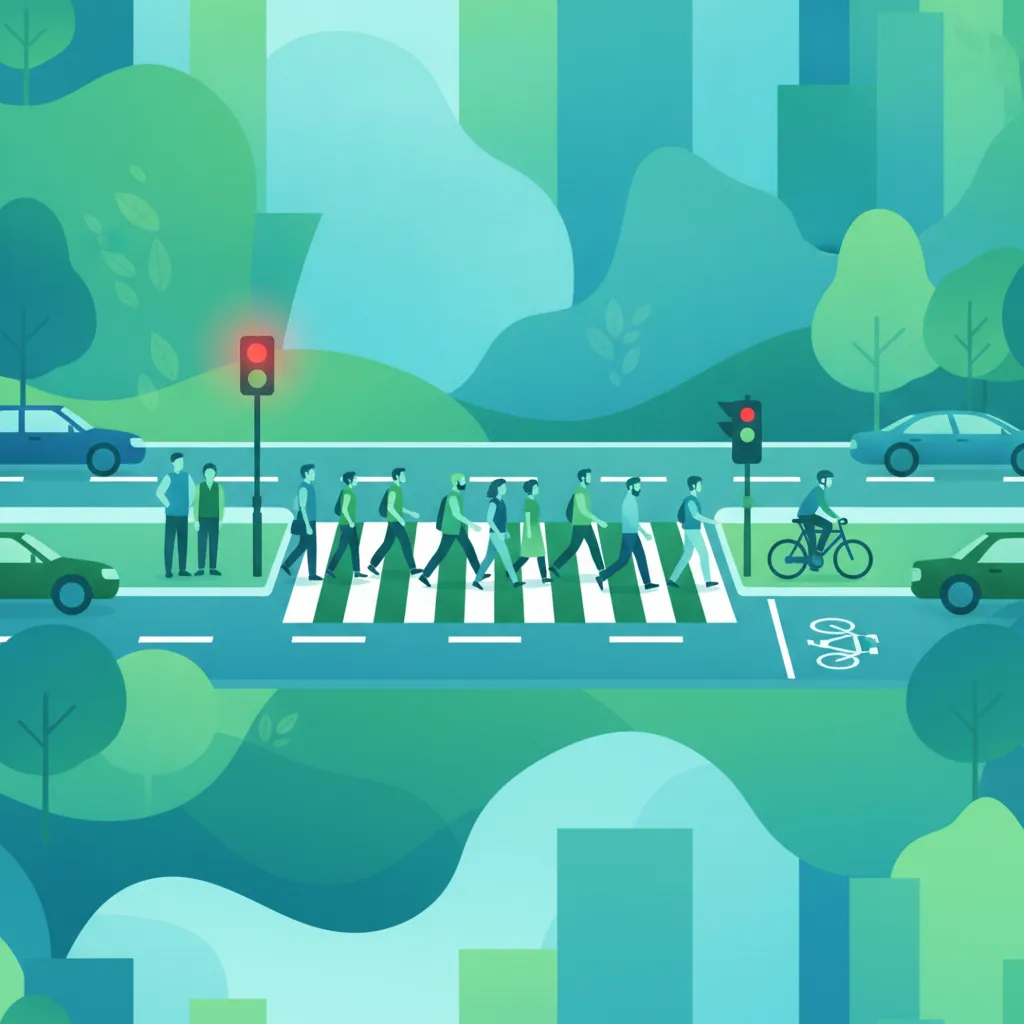
This lesson provides a detailed guide to the various types of pedestrian crossings found on British roads. You will learn the specific rules for each, including the absolute priority of pedestrians at zebra crossings and how to respond to the light signals at pelican, puffin, and toucan crossings. Understanding these rules is essential for protecting vulnerable road users and ensuring you are compliant with the Highway Code.
This lesson focuses on the markings and rules at designated pedestrian crossing points. It details the legal requirement to give way to pedestrians on a zebra crossing and explains the light sequences at signal-controlled crossings. You will also learn the meaning of the white zig-zag lines on the approach to all crossings.
This lesson covers the operation of traffic light signals and the rules for approaching them safely. It also provides a detailed explanation of different pedestrian crossings, such as zebra, pelican, and toucan crossings, clarifying the specific rules and priority for each. You will learn to anticipate the actions of pedestrians and other vulnerable road users at these locations.
This lesson teaches drivers how to identify various types of vulnerable road users and anticipate their potential actions to prevent conflicts. It covers the specific risks associated with pedestrians, cyclists, motorcyclists, children, and elderly or disabled individuals. Emphasis is placed on heightened awareness and defensive driving techniques required to share the road safely. Understanding their perspectives and typical behaviours is key to protecting them and maintaining safety for everyone.
This lesson provides a detailed guide to various pedestrian crossings and their specific rules. You will learn to identify each type by its markings and signals, from the black and white stripes of a zebra crossing to the sensor-controlled lights of a puffin crossing. The focus is on knowing when and how to stop to ensure pedestrian safety.
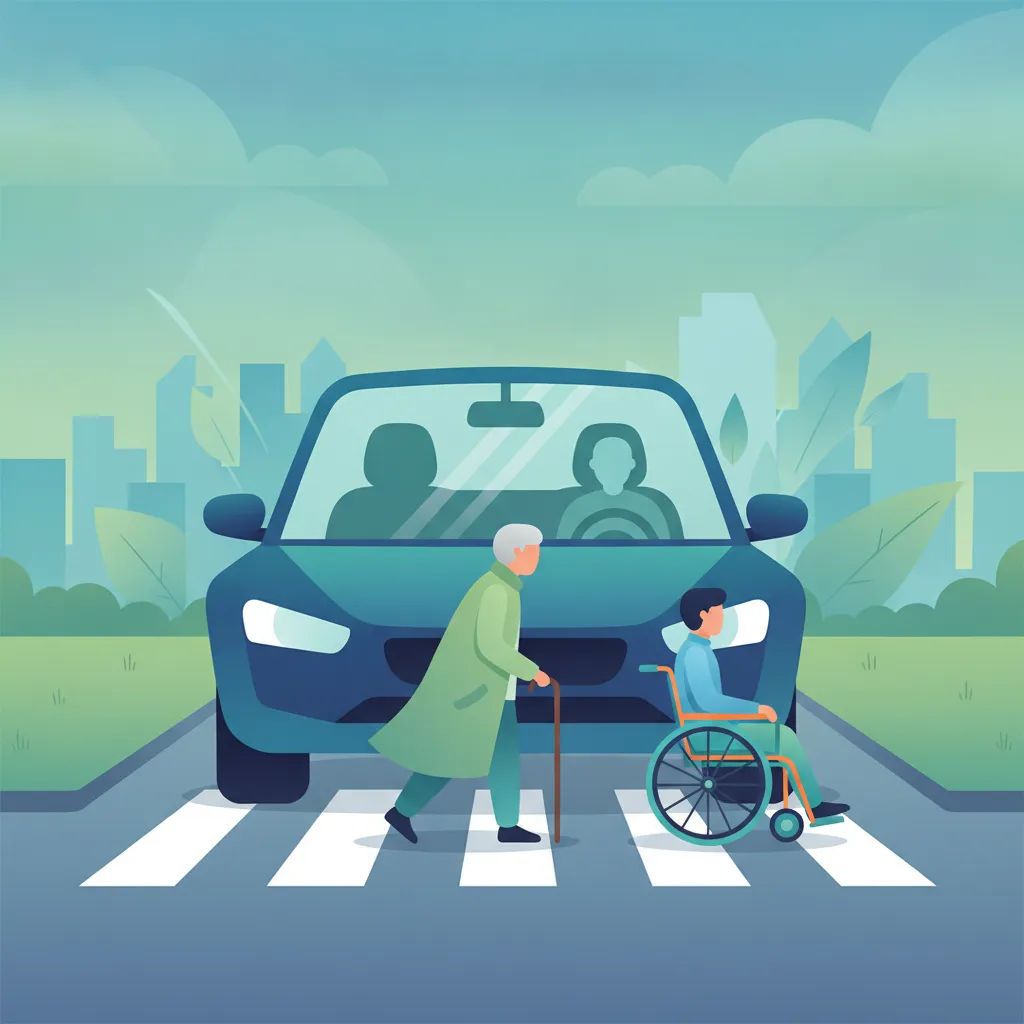
This lesson focuses on developing a proactive and patient approach towards elderly and disabled road users. It explains how to recognize and provide additional time and space for individuals with slower movement, mobility scooters, or sensory impairments. The content emphasizes the importance of driver attitude, patience at crossings, and anticipating the needs of these vulnerable individuals. Understanding these factors is crucial for preventing accidents and demonstrating a high level of professional care and responsibility.

This lesson clarifies who has priority at junctions, whether they are marked with signs and lines or are unmarked. It covers the fundamental rule for roundabouts in the UK: give priority to traffic approaching from your right. You will learn the correct procedures for approaching, signalling, and choosing the appropriate lane on roundabouts and at other junctions.
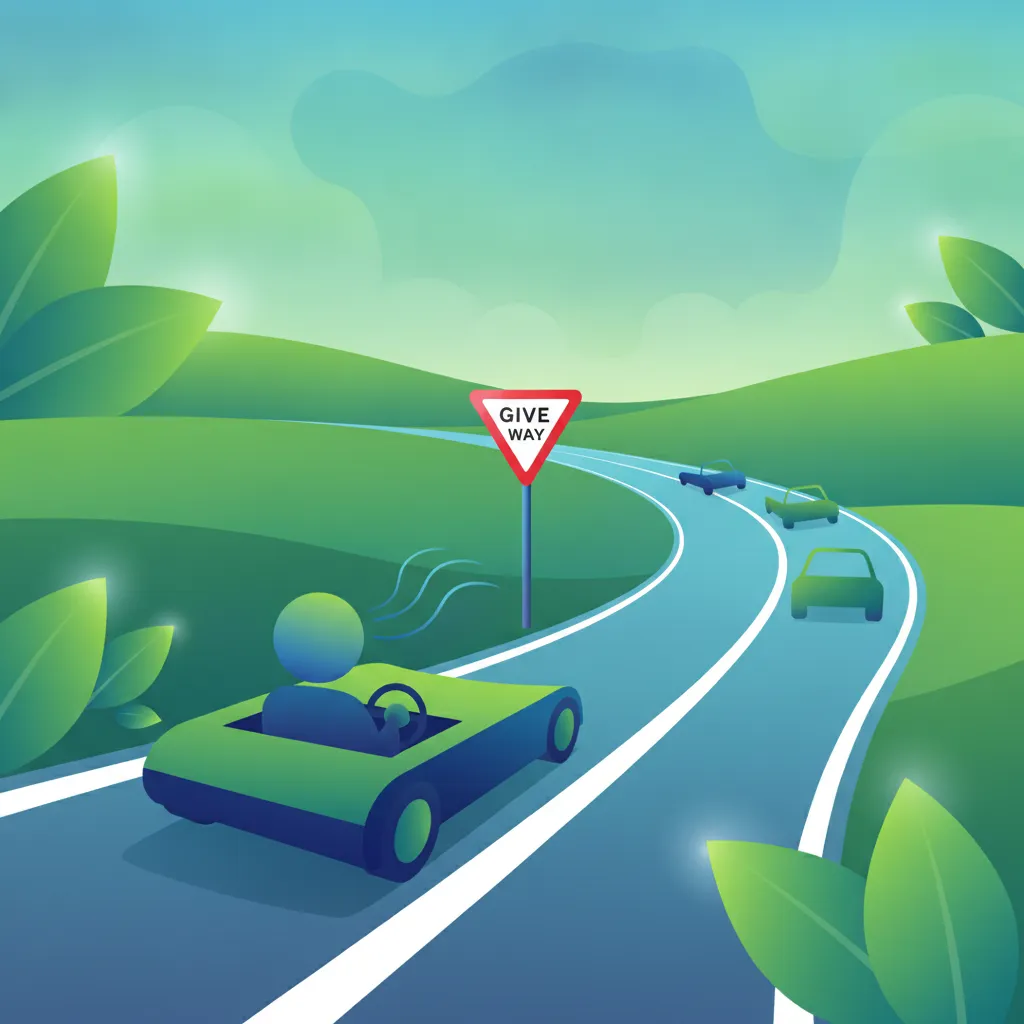
This lesson covers the explicit priority instructions given by signs and markings at junctions. It explains that at a 'Give Way' line, you must yield to traffic on the major road but can proceed if it is safe. At a 'Stop' sign, you must come to a complete halt before the line, assess the traffic, and only proceed when safe.
Find clear answers to common questions learners have about Driver Obligations and Road Users. Learn how the lesson is structured, which driving theory objectives it supports, and how it fits into the overall learning path of units and curriculum progression in Great Britain. These explanations help you understand key concepts, lesson flow, and exam focused study goals.
The hierarchy ranks road users based on their potential to cause harm to others. Those in charge of vehicles that can cause the most harm, such as HGVs, have the greatest responsibility to reduce the danger posed to others, especially vulnerable users like cyclists and pedestrians.
No, all road users must follow the Highway Code. However, the hierarchy principle means you as a driver must be extra vigilant and patient with those who are more at risk, as they are not protected by a vehicle body.
You will often see multiple-choice questions or hazard perception clips that test your ability to anticipate a vulnerable user's move. You must demonstrate that you can adjust your speed and position accordingly.
While defensive driving is a technique rather than a specific law, it is central to your 'duty of care.' Failing to anticipate hazards and driving aggressively can lead to dangerous situations and, if an incident occurs, you may be held liable for not taking reasonable care.
Dive into our comprehensive question bank to find exactly what you need for your Great Britain theory test. Use our advanced filters to pinpoint specific subjects or test your knowledge on challenging areas, ensuring you're fully prepared for success.