
This lesson explores the essential rules for sharing the road safely with cyclists in Great Britain. You will learn the correct overtaking distances and how to interpret cyclist-specific infrastructure to ensure safety for all road users.

Lesson content overview
As a learner driver for a Great Britain Category B licence, understanding how to interact safely with cyclists is paramount. Cyclists are among the most vulnerable road users, and collisions involving them can lead to severe injuries or fatalities. This lesson provides essential knowledge and practical techniques to ensure you can share the road safely, fulfilling your legal obligations and promoting a harmonious driving environment.
Cyclists are considered vulnerable road users (VRUs) because they lack the physical protection that motor vehicle drivers have. Their smaller profile can make them less visible, and their movements can sometimes be unpredictable, especially in complex traffic situations. It's crucial for drivers to constantly be aware of cyclists, anticipate their actions, and give them ample space and consideration. Prioritising cyclist safety not only reduces the risk of accidents but also contributes to a more efficient and respectful road network for everyone.
One of the most critical rules for driver safety around cyclists is maintaining sufficient clearance when overtaking. This principle is designed to protect cyclists from the physical forces of passing vehicles and to provide them with enough room to manoeuvre safely.
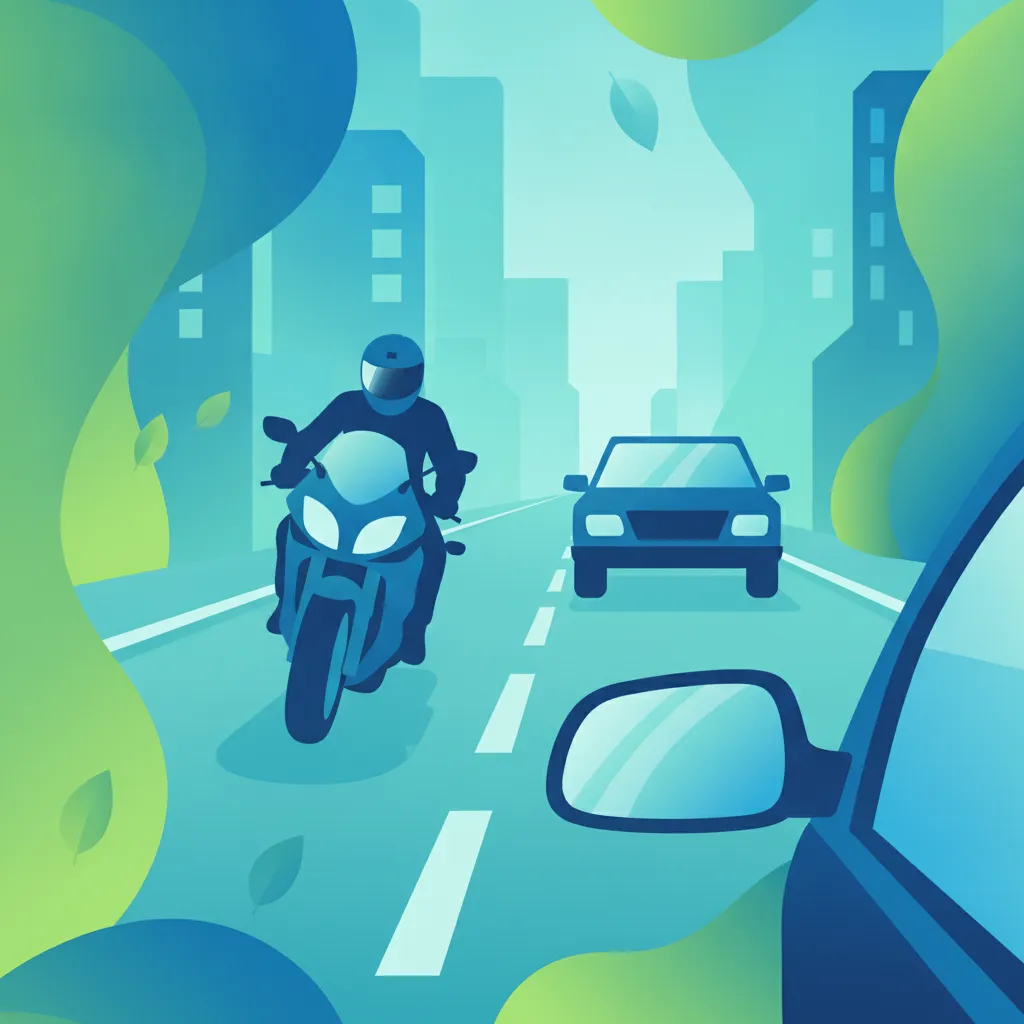
When you overtake a cyclist, the Highway Code (Rule 163) stipulates that you must leave at least 1.5 metres of lateral clearance. This measurement is taken from the nearest point of your vehicle, including any mirrors or open doors, to the nearest point of the cyclist. This minimum distance applies to all overtaking manoeuvres, regardless of the road type or speed.
Failing to provide this space not only puts the cyclist at risk but can also lead to legal consequences for dangerous driving. It's not just about avoiding a direct collision; insufficient clearance can cause a cyclist to lose balance, swerve unexpectedly, or be buffeted by wind from a passing vehicle.
The 1.5-metre rule is not arbitrary; it's based on safety research and the dynamics of cycling. This distance accounts for:
To achieve this clearance, you may need to adjust your speed, consider moving into an adjacent lane (if safe and legal), or wait for a suitable opportunity to overtake. Patience is key when sharing the road with cyclists.
While 1.5 metres is the minimum, there are specific situations where you should provide even more space. Highway Code Rule 172 advises drivers to give extra clearance in adverse conditions. These include:
Always assess the conditions and err on the side of caution, providing more space than the minimum when necessary.
Road infrastructure often includes dedicated spaces for cyclists, known as cycle lanes. Understanding their different types and the rules governing their use is crucial for all road users.
Segregated cycle lanes offer the highest level of protection for cyclists by completely separating them from motor traffic. These lanes are typically designed for cyclists only, and motor vehicles are generally prohibited from entering or using them. They enhance safety and encourage cycling by creating a clear, dedicated path.
Shared use cycle lanes, also known as advisory cycle lanes, are painted directly onto the road. They are often delineated by a solid white line or a dashed white line, sometimes with a distinctive coloured surface or bicycle symbols. While they provide a designated space for cyclists, they are not always exclusively for them. Motorists may temporarily enter these lanes when it is safe and necessary, such as to pass a stationary obstruction or when preparing to turn, provided no cyclists are present.
Highway Code Rule 170 clearly states: "You must not use the part of the road marked for cyclists unless you are turning into a side road that is marked for cyclists." This means that you generally cannot drive or park in a cycle lane.
There are very limited circumstances when a motor vehicle might briefly enter a shared use cycle lane:
It is never permissible to use a cycle lane to simply bypass traffic or to continuously drive in it when it appears empty. Such actions endanger cyclists and are illegal.
Parking or stopping in a cycle lane is generally prohibited and can lead to fines and inconvenience for cyclists. Highway Code Rule 171 states, "Do not park in a cycle lane." Even stopping for a short period, such as to drop off a passenger, can obstruct cyclists and force them into the path of moving traffic. Always find a safe and legal place to park or stop that does not impede cycle routes.
Cyclists can be surprisingly difficult to spot, especially in busy traffic, at junctions, or in adverse conditions. Developing constant vigilance is essential to prevent collisions.
One of the most common causes of collisions with cyclists is a driver failing to check their blind spots before changing lanes or turning. A blind spot is an area around your vehicle that isn't visible in your mirrors. Cyclists, with their smaller size, often fit perfectly into these areas.
Before you change lanes, turn left or right, or move off from a parked position, you must:
This routine, sometimes called the "mirror-signal-manoeuvre" (MSM) routine, must always include thorough checks for cyclists. Assume there could be a cyclist there, even if you don't immediately see one.
Junctions and roundabouts are particularly high-risk areas for cyclists. Drivers must be extra cautious:
Always give cyclists priority when required, and be prepared to stop if their path conflicts with yours.
One specific type of collision that drivers can easily prevent is a "dooring" incident, where a cyclist collides with an opened car door. The Dutch Reach is a simple yet highly effective technique to prevent this.
The Dutch Reach is a recommended best practice in the Highway Code (Rule 225). It encourages you to use the hand furthest from the door you are opening. For a driver in Great Britain, this means using your right hand to open the driver's side door (which is on your right).
Here’s how to apply the Dutch Reach:
After parking safely, ensure your handbrake is applied and the engine is off.
Before opening your door, reach across your body with your right hand (for the driver's door) to grasp the door handle.
This action naturally forces your upper body to rotate, encouraging you to look over your left shoulder and into your left-side mirror.
Scan for any approaching cyclists, pedestrians, or vehicles.
Only when you are certain the path is clear, slowly open the door just enough to exit, keeping an eye on your surroundings.
This method creates a crucial moment for you to check for traffic, particularly cyclists who may be riding in a cycle lane or close to the curb.
The Dutch Reach isn't just for drivers; it's equally important for passengers. Passengers exiting from the left side of the vehicle should use their right hand to open the door, and those on the right side should use their left hand. This ensures that all occupants are checking for traffic before opening a door into the path of a cyclist. Always remind your passengers of this vital safety practice.
Shared space responsibility is a core principle of safe driving, especially concerning vulnerable road users. It implies that all road users have a duty to cooperate, communicate, and respect each other's presence to ensure safety.
As the driver of a motor vehicle, you have a greater duty of care towards more vulnerable road users like cyclists. This means you are expected to take extra precautions to prevent harm. Your responsibilities include:
While drivers have a significant duty of care, cyclists also have responsibilities to ride predictably and safely. The Highway Code advises cyclists to:
Understanding these aspects of cyclist behaviour can help you anticipate their actions and react appropriately. For example, a cyclist riding further out from the curb might be doing so to avoid hazards or to make themselves more visible, not to be an obstruction.
Effective communication, whether through clear signals, eye contact, or appropriate vehicle positioning, reduces uncertainty and prevents conflicts. A respectful attitude among all road users, acknowledging each other's right to use the road safely, builds a foundation for collision prevention. Avoid aggressive driving or impatient gestures, which can escalate tension and increase risk.
The Highway Code provides specific rules that directly address driver interaction with cyclists. Adhering to these is not only a matter of safety but also a legal obligation for Great Britain Category B learner drivers.
Rule 163: Do not overtake a cyclist unless you can give them at least 1.5 metres of clearance. This mandatory rule is critical for preventing sideswipes and allowing cyclists space to manoeuvre.
This rule is a cornerstone of safe overtaking. Failure to observe it can result in prosecution for dangerous driving. Remember to check for oncoming traffic and ensure there is ample room before committing to an overtake.
Rule 170: Do not use the part of the road marked for cyclists unless you are turning into a side road that is marked for cyclists. This prohibits general driving or using cycle lanes as a shortcut.
This rule clarifies when motor vehicles can and cannot use cycle lanes, reinforcing their primary purpose for cyclists. Improper use can confuse and endanger cyclists.
Rule 169: Check mirrors before changing lanes or moving off. While not exclusive to cyclists, this rule is vital for detecting them in blind spots or when pulling away from the curb.
A thorough check of mirrors and blind spots is essential before any lateral movement to avoid encroaching on a cyclist's path.
Rule 172: When overtaking cyclists, give extra clearance in adverse conditions (e.g., wet, night). This mandatory rule ensures you account for increased risk factors.
This rule builds on Rule 163, requiring drivers to adapt their behaviour to environmental factors that reduce visibility or affect road grip and cyclist stability.
Rule 225: Use the Dutch Reach when opening car doors. While recommended best practice and not mandatory by law, it is a crucial technique for preventing dooring incidents.
Incorporating the Dutch Reach into your routine helps prevent a common type of collision and demonstrates responsible driving.
Understanding common situations where conflicts between drivers and cyclists arise can help you better anticipate and avoid them.
On narrow urban streets or single carriageways, drivers often misjudge the space available and overtake cyclists too closely. This can be exacerbated by oncoming traffic, tempting drivers to squeeze past.
Drivers sometimes use cycle lanes when they are clear of cyclists to gain an advantage or to turn.
Parking on busy city streets, drivers or passengers may open doors without checking for passing cyclists.
Cyclists can be harder to spot and less stable in rain, fog, or at night, even with lights.
At junctions, drivers frequently miss cyclists who are alongside them or in their blind spots, leading to collisions when turning or changing lanes.
Effective and safe interaction with cyclists is a non-negotiable aspect of responsible driving for all Great Britain Category B learner drivers. By diligently applying the 1.5-metre overtaking rule, respecting cycle lane regulations, maintaining constant vigilance, and consistently using the Dutch Reach, you contribute significantly to the safety of all road users. Understanding the vulnerabilities of cyclists and proactively taking steps to mitigate risks will not only help you pass your driving theory test but, more importantly, make you a safer, more considerate driver on the roads.
Explore all units and lessons included in this driving theory course.
Lesson content overview
Explore all units and lessons included in this driving theory course.
Explore search topics learners often look for when studying Cyclist Behaviour, Cycle Lanes, and On‑Road Sharing. These topics reflect common questions about road rules, driving situations, safety guidance, and lesson level theory preparation for learners in Great Britain.
Browse additional driving theory lessons that cover connected traffic rules, road signs, and common driving situations related to this topic. Improve your understanding of how different rules interact across everyday traffic scenarios.
Explore complex scenarios and advanced rules for safe interaction with cyclists beyond the basics. Understand edge cases and specific road types relevant to the Great Britain driving theory test.

This lesson focuses on safe interaction with cyclists, a key aspect of urban driving for PCV operators. It details the rules for cycle lanes and advanced stop lines, and the correct procedure for overtaking cyclists, emphasizing the need to provide ample space. The content stresses the importance of frequent mirror checks to manage blind spots where cyclists can be hidden, especially when turning at junctions, to ensure their safety and comply with the Highway Code's road user hierarchy.
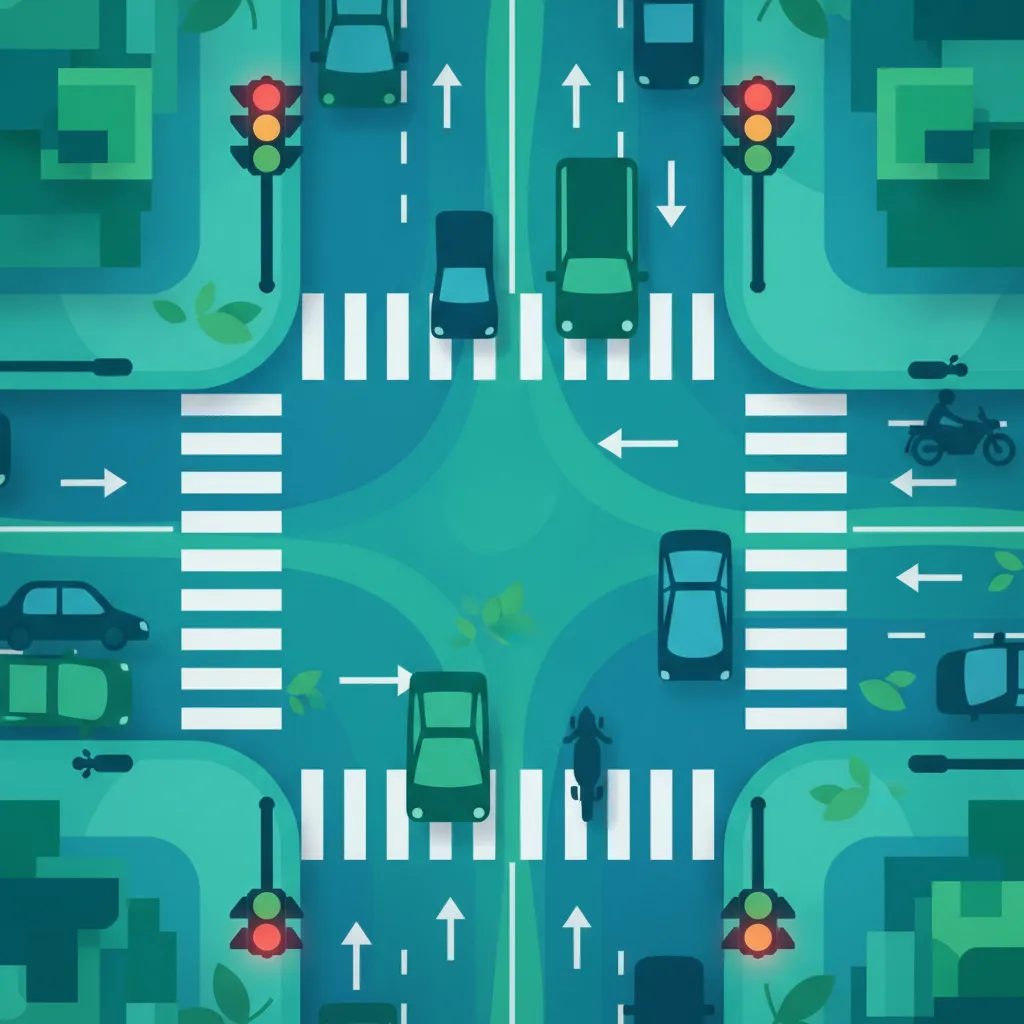
This lesson details how to safely navigate junctions controlled by traffic signals. It explains the meaning of filter arrows, which allow you to proceed in a specific direction even if the main light is red. You will also learn about respecting advanced stop lines for cyclists and how to approach a junction when the traffic lights are not working.
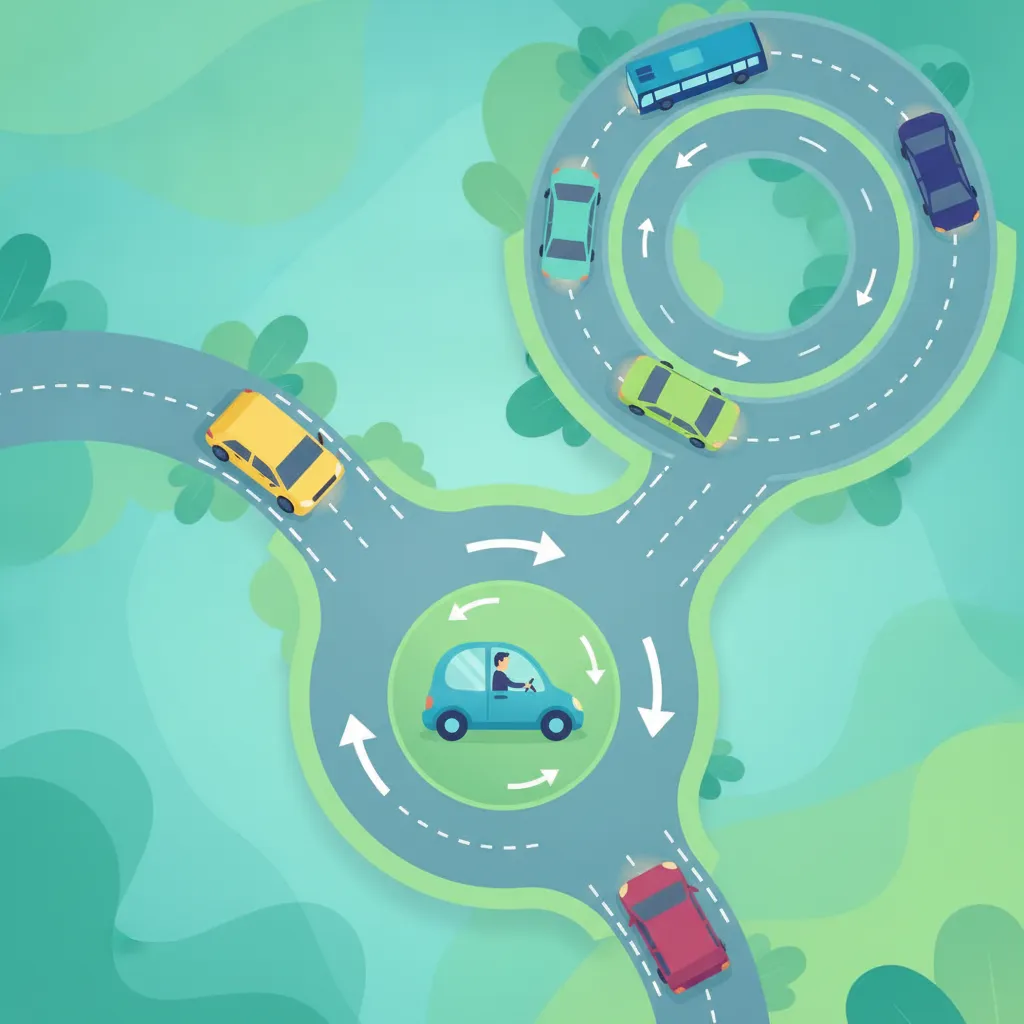
This lesson provides specific techniques for safely navigating the two main types of roundabouts in Great Britain. For multi-lane roundabouts, it covers how to choose the correct lane on approach, maintain your lane while circulating, and signal your exit correctly. It also explains the unique rules for mini-roundabouts, emphasizing the importance of giving way to traffic from the right and navigating them with caution due to their small size.
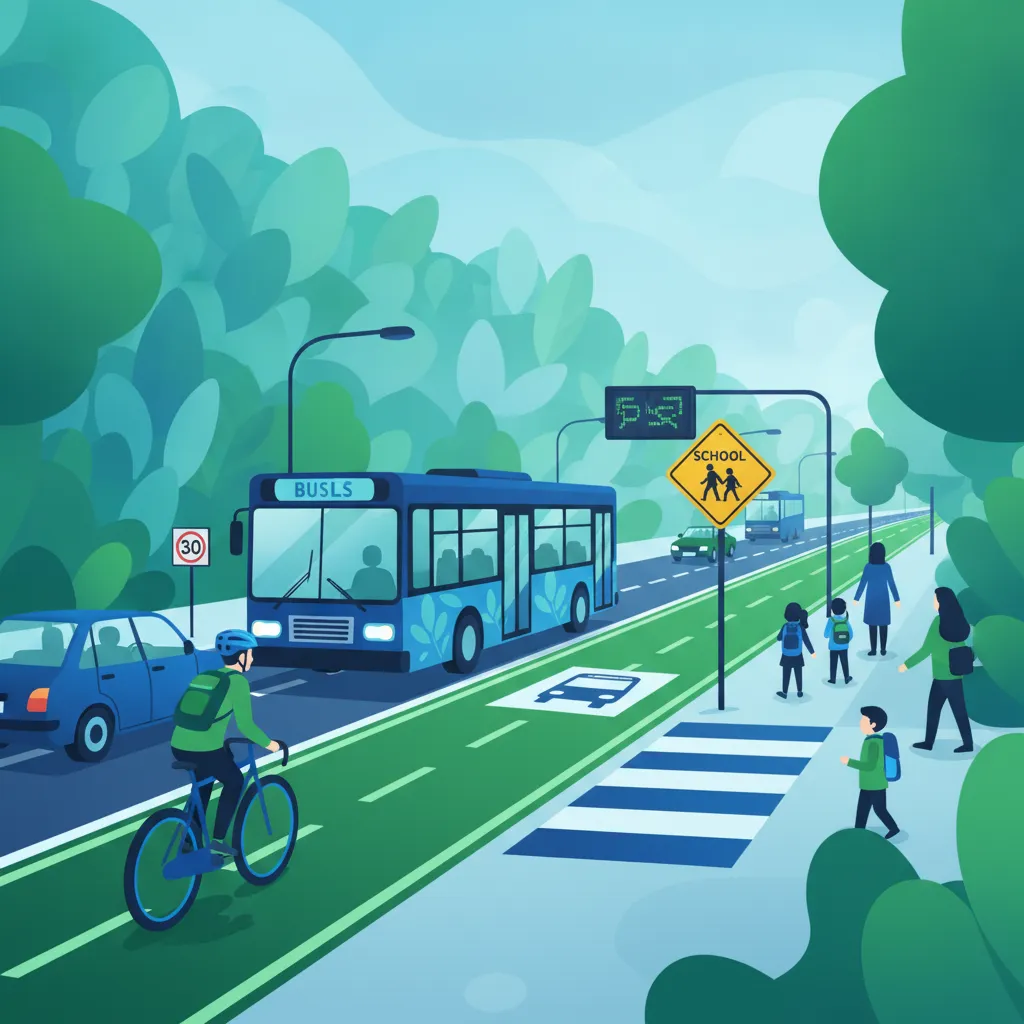
This lesson explains the regulations for special road zones common in urban areas. You will learn about speed restrictions near schools, how to read signs indicating if and when motorcycles can use bus lanes, and how to safely interact with cyclist infrastructure such as advanced stop lines. Compliance with these specific rules is crucial for legal and safe urban riding.
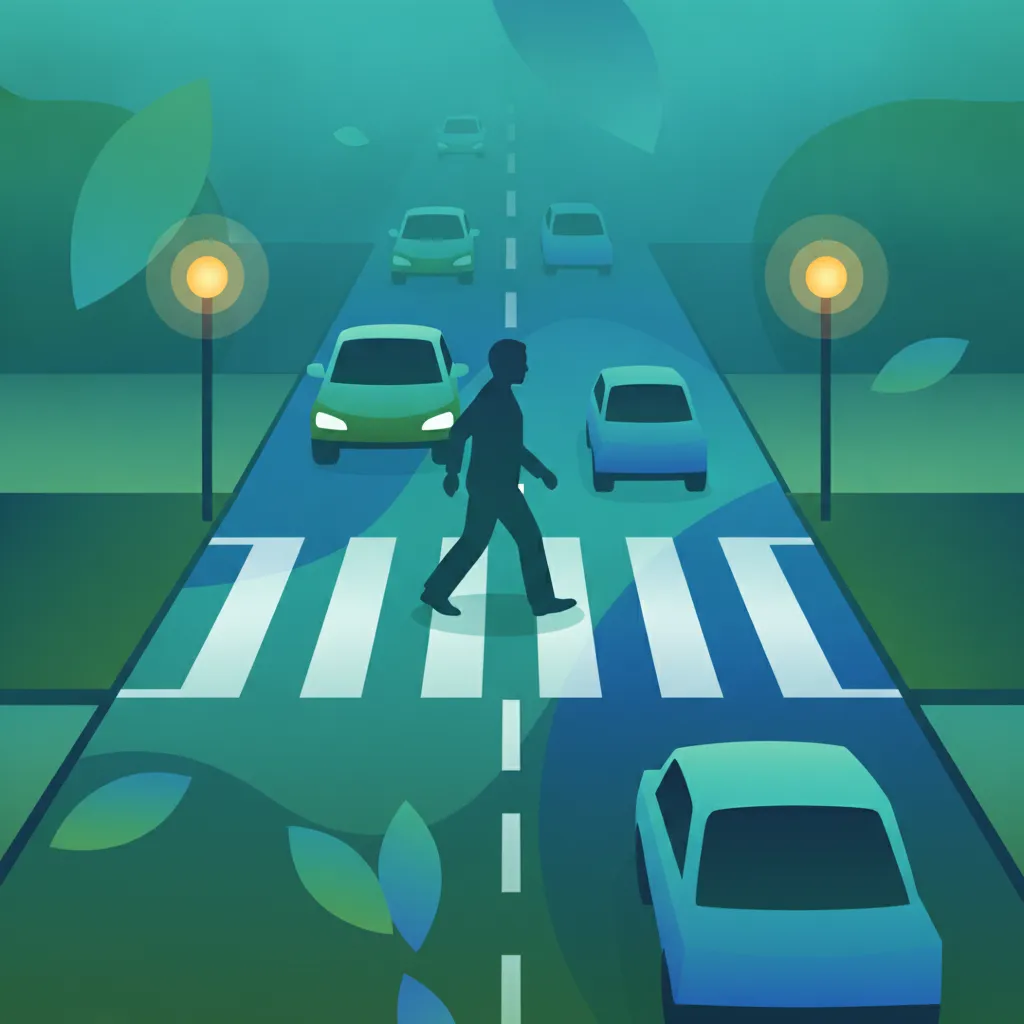
This lesson provides a detailed guide to various pedestrian crossings and their specific rules. You will learn to identify each type by its markings and signals, from the black and white stripes of a zebra crossing to the sensor-controlled lights of a puffin crossing. The focus is on knowing when and how to stop to ensure pedestrian safety.
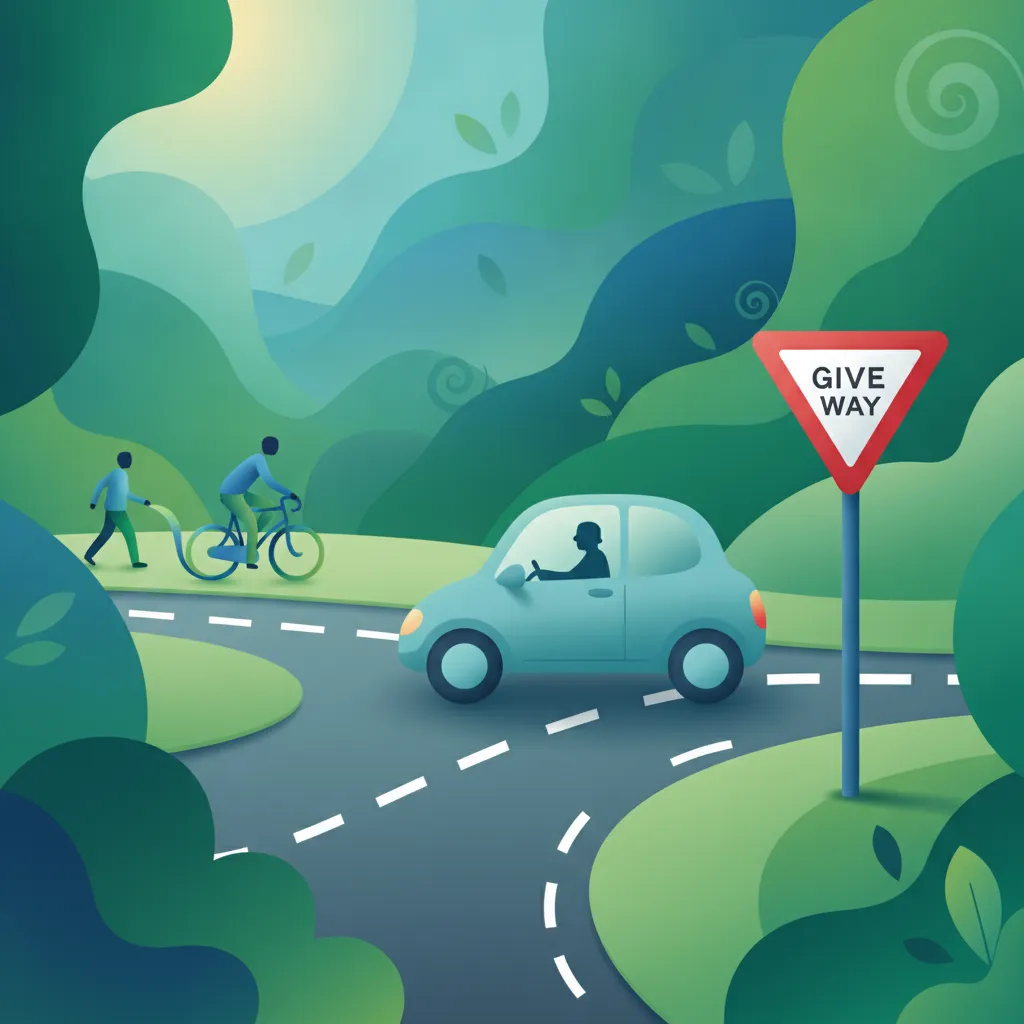
This lesson explains the critical rules of priority that govern traffic flow at junctions, roundabouts, and crossings throughout Great Britain. You will learn how to determine who has right-of-way at both marked and unmarked intersections, and the specific rules for giving way to traffic on roundabouts. The lesson also reinforces the hierarchy of road users from the Highway Code, ensuring you understand when to yield to pedestrians and other vulnerable users.

This lesson contrasts the challenges of different road types. It covers how to handle the hidden bends, poor surfaces, and unexpected hazards of rural roads. It then details the specific procedures for using dual carriageways and motorways, including using slip roads, adhering to strict lane discipline, and safely overtaking at high speeds.

This lesson addresses the unique challenges of driving a large vehicle on rural roads. It provides techniques for positioning the vehicle through sharp bends and on narrow lanes, and for safely navigating unmarked or uncontrolled junctions. Learners will be taught to anticipate hidden hazards common in the countryside, such as slow-moving farm vehicles, animals on the road, and concealed entrances. The correct use of passing places and strategies for meeting oncoming traffic are also covered.
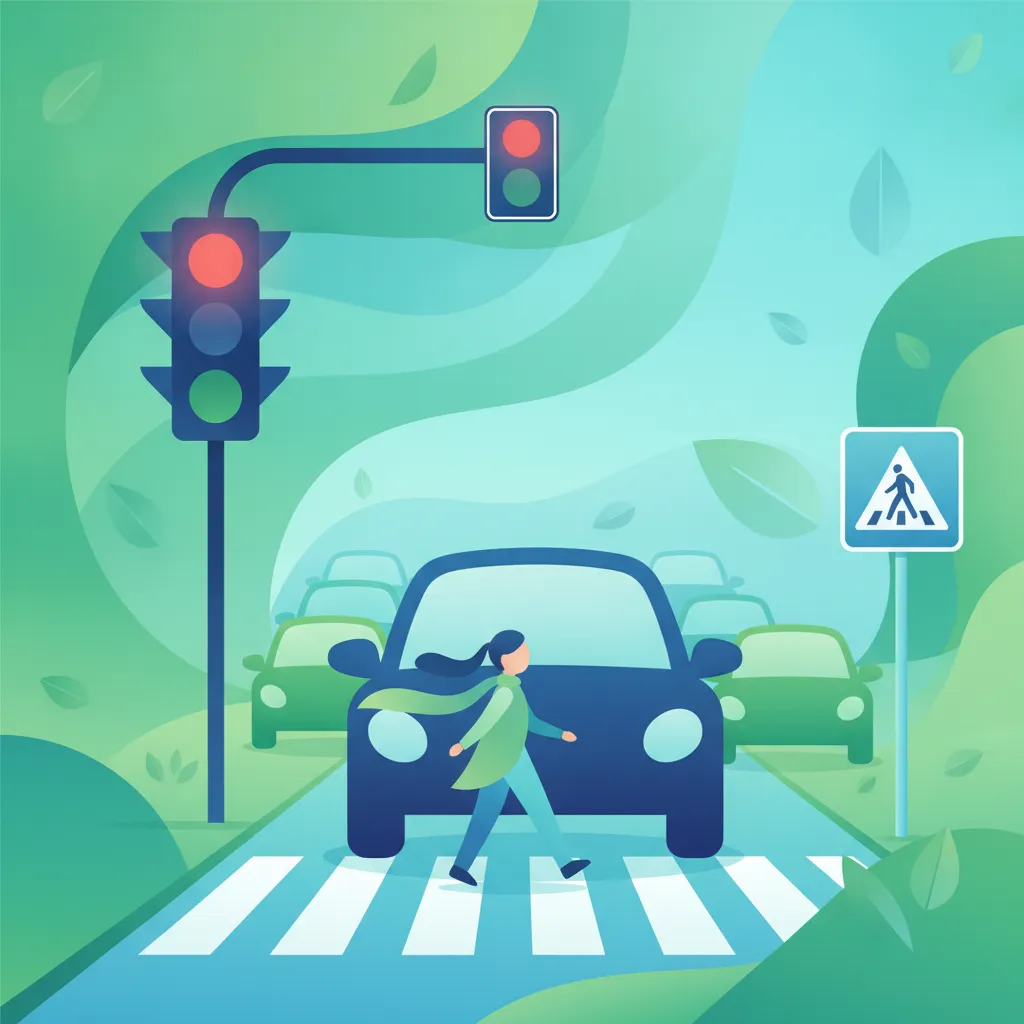
This lesson covers the operation of traffic light signals and the rules for approaching them safely. It also provides a detailed explanation of different pedestrian crossings, such as zebra, pelican, and toucan crossings, clarifying the specific rules and priority for each. You will learn to anticipate the actions of pedestrians and other vulnerable road users at these locations.
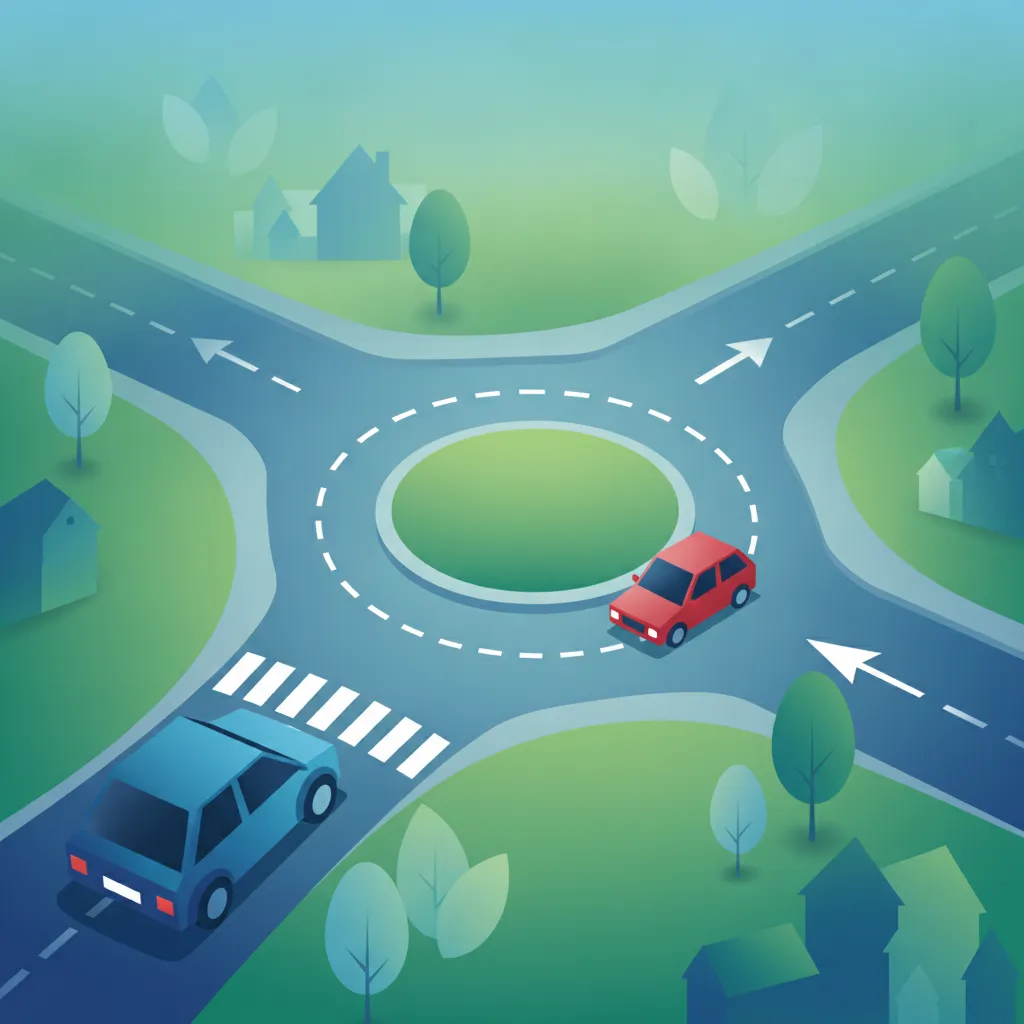
This lesson explains how to handle mini-roundabouts, which are common in urban and residential areas. The primary rule is to approach with caution and give priority to any traffic approaching from your right. You will also learn about correct signalling and the importance of being aware of cyclists and motorcyclists who may be harder to see.
Learn to identify and anticipate the behaviour of vulnerable road users, focusing on cyclists but also including pedestrians and motorcyclists, to improve hazard perception and prevent collisions on Great Britain roads.
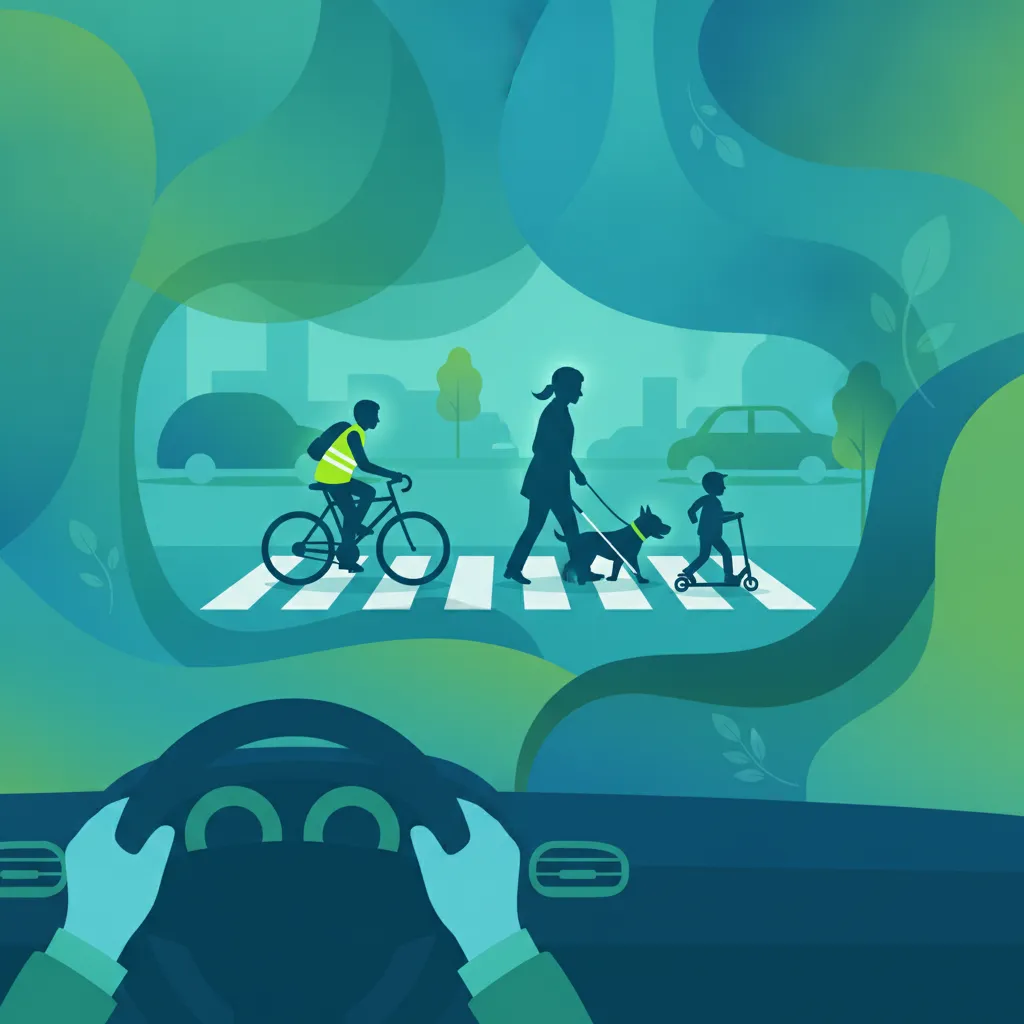
This lesson teaches drivers how to identify various types of vulnerable road users and anticipate their potential actions to prevent conflicts. It covers the specific risks associated with pedestrians, cyclists, motorcyclists, children, and elderly or disabled individuals. Emphasis is placed on heightened awareness and defensive driving techniques required to share the road safely. Understanding their perspectives and typical behaviours is key to protecting them and maintaining safety for everyone.
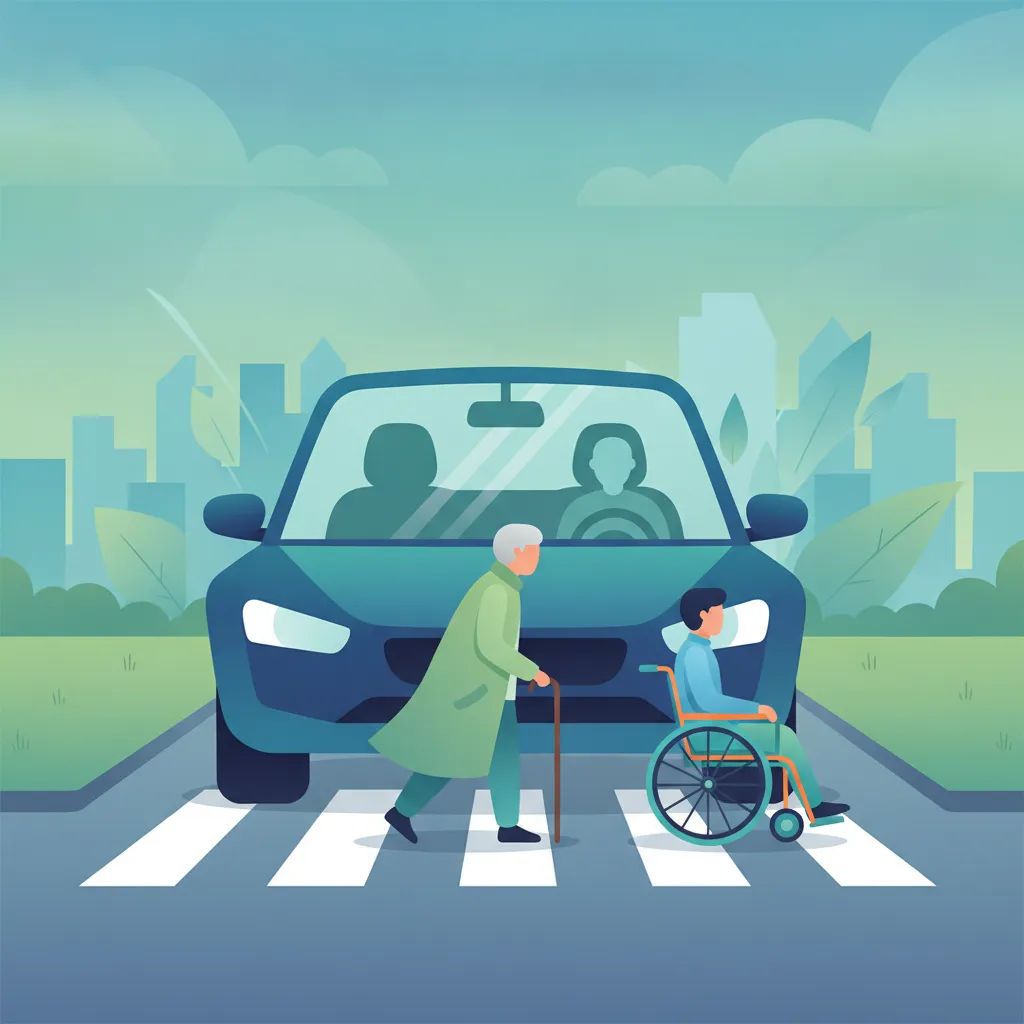
This lesson focuses on developing a proactive and patient approach towards elderly and disabled road users. It explains how to recognize and provide additional time and space for individuals with slower movement, mobility scooters, or sensory impairments. The content emphasizes the importance of driver attitude, patience at crossings, and anticipating the needs of these vulnerable individuals. Understanding these factors is crucial for preventing accidents and demonstrating a high level of professional care and responsibility.
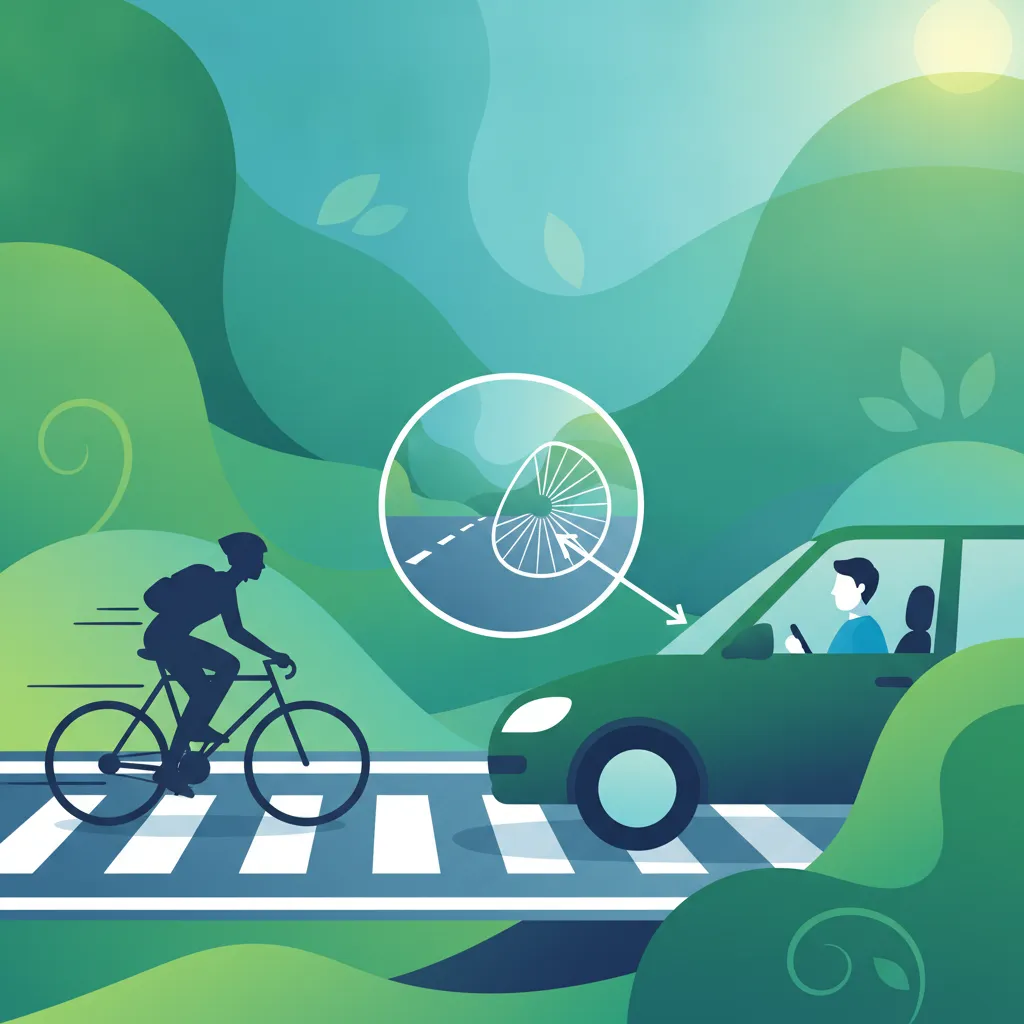
This lesson is dedicated to the safe interaction between large vehicles and the most vulnerable road users: pedestrians and cyclists. It highlights high-risk scenarios, such as left turns at junctions, where cyclists can be hidden in nearside blind spots. The content stresses the importance of anticipation, using signals clearly, and providing generous space at crossings, in cycle lanes, and within pedestrianized zones to prevent tragic accidents.
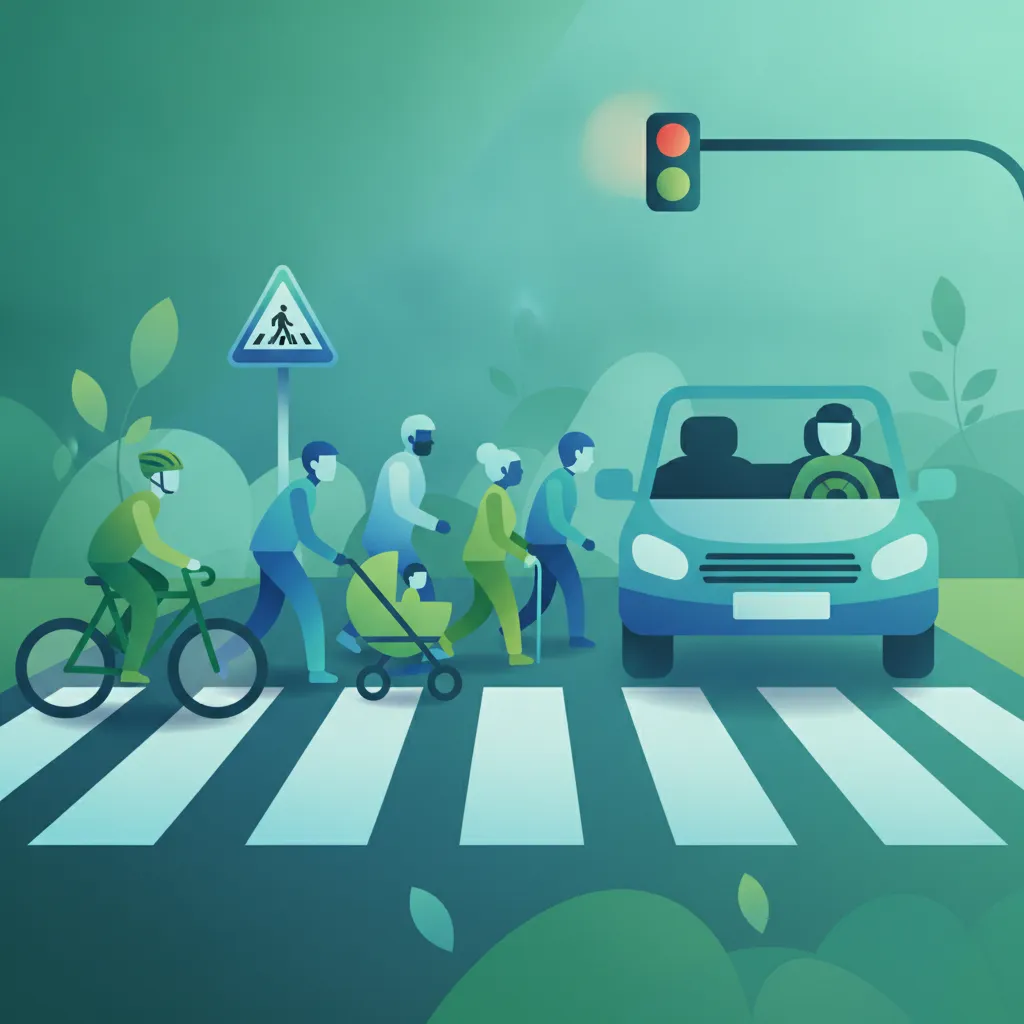
This lesson focuses on a driver's legal and ethical duty of care to all road users. It explains the concept of a road user hierarchy, which prioritizes the safety of vulnerable groups such as pedestrians, cyclists, and motorcyclists. You will learn the principles of defensive driving, anticipating potential hazards, and maintaining a courteous attitude on the road to ensure safety for everyone.

This lesson highlights why motorcyclists are considered vulnerable road users. It covers the increased risk of serious injury in a collision due to lack of physical protection compared to car occupants. You will learn about common visibility challenges and how to adopt proactive, defensive strategies to mitigate risks and anticipate potential hazards on the road.

This lesson explains how to adapt your driving around different vehicles. You will learn to look out for motorcyclists, who are often hard to see, especially at junctions. It also covers the challenges of sharing the road with large vehicles, such as their extended blind spots, wider turning circles, and the wind turbulence they can create.
This lesson focuses on safe interaction with cyclists, a key aspect of urban driving for PCV operators. It details the rules for cycle lanes and advanced stop lines, and the correct procedure for overtaking cyclists, emphasizing the need to provide ample space. The content stresses the importance of frequent mirror checks to manage blind spots where cyclists can be hidden, especially when turning at junctions, to ensure their safety and comply with the Highway Code's road user hierarchy.

This lesson prepares you for the specific challenges of driving in the countryside. It explains the correct procedure for overtaking horse riders: slow down and pass wide, ensuring you do not spook the animal. You will also learn how to anticipate and safely manage encounters with slow-moving tractors and other farm machinery.
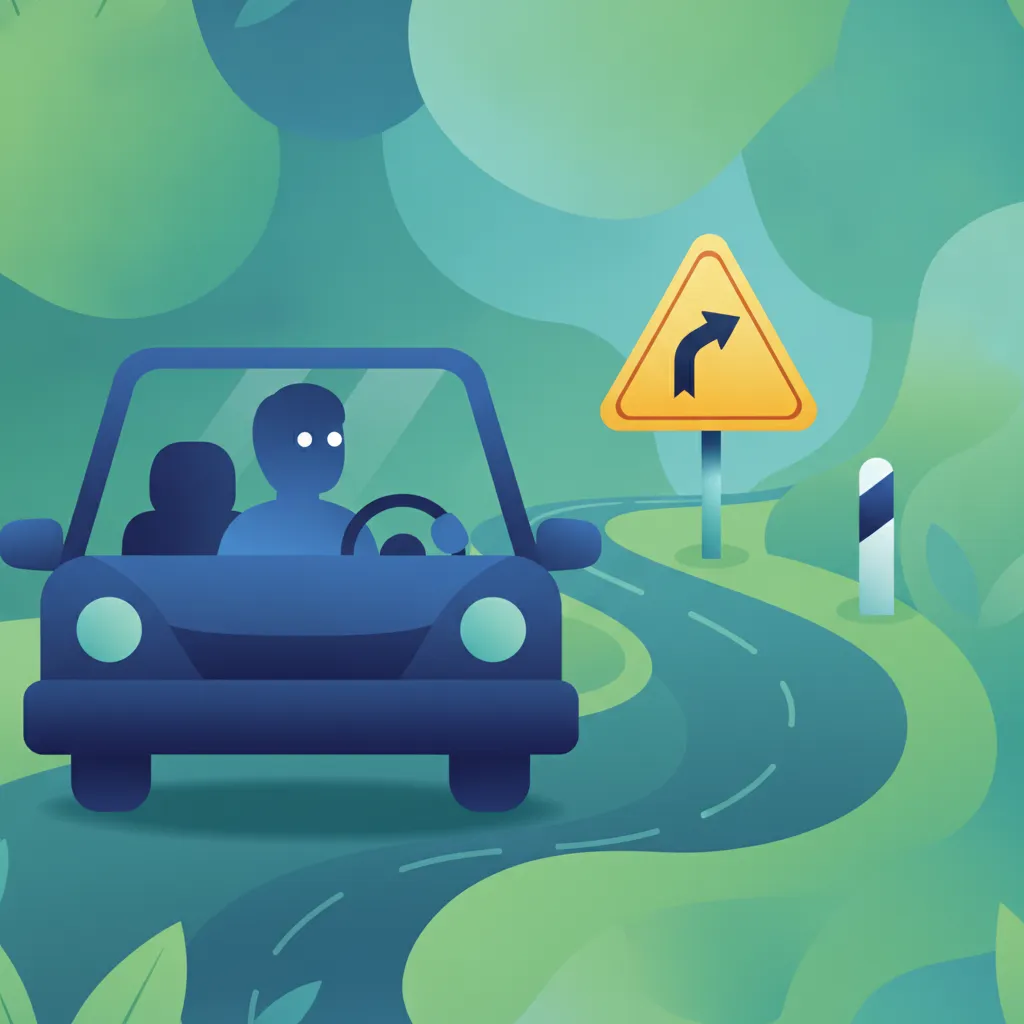
This lesson teaches you to interpret warning signs, which are typically triangular and designed to alert you to potential hazards ahead. You will learn the meanings of common signs indicating sharp curves, slippery surfaces, roadworks, or areas with frequent pedestrian or animal crossings. Understanding these signs is crucial for anticipating dangers and adjusting your speed and position defensively, which is especially important for vulnerable riders of AM vehicles.
This lesson teaches strategic road positioning techniques to maximize your visibility and safety in traffic. You will learn how to choose the correct lane position to avoid the blind spots of larger vehicles and how to communicate your intentions through predictable riding. Key skills covered include effective use of shoulder checks, making eye contact with drivers, and maintaining a safe following distance, all of which are crucial for defensive riding on British roads.
Find clear answers to common questions learners have about Cyclist Behaviour, Cycle Lanes, and On‑Road Sharing. Learn how the lesson is structured, which driving theory objectives it supports, and how it fits into the overall learning path of units and curriculum progression in Great Britain. These explanations help you understand key concepts, lesson flow, and exam focused study goals.
You should provide at least 1.5 metres of space when overtaking cyclists at speeds up to 30 mph. If you are travelling at higher speeds, you should leave even more room to ensure the cyclist remains safe from the air turbulence created by your vehicle.
You must not drive or park in a mandatory cycle lane (marked by a solid white line) during its period of operation. You may only cross into it if necessary to avoid an obstruction or to turn, provided it is safe to do so.
The Dutch Reach is a method of opening your car door with the hand furthest from the door, which forces you to turn your body and look over your shoulder. This ensures you check for cyclists approaching from behind, preventing 'dooring' accidents.
Cyclists are vulnerable road users who often travel at different speeds to cars. Always check your blind spots, especially before turning left, as cyclists may be filtering up your inside and could be hidden from your mirrors.
Dive into our comprehensive question bank to find exactly what you need for your Great Britain theory test. Use our advanced filters to pinpoint specific subjects or test your knowledge on challenging areas, ensuring you're fully prepared for success.