
This lesson guides you through critical safety procedures for on-road emergencies and accidents, ensuring you are fully prepared for the final section of your Category B theory test. By understanding how to manage breakdowns and provide initial aid, you will gain the confidence to handle high-pressure situations safely. This knowledge is essential for both your exam and your future as a responsible driver in Great Britain.
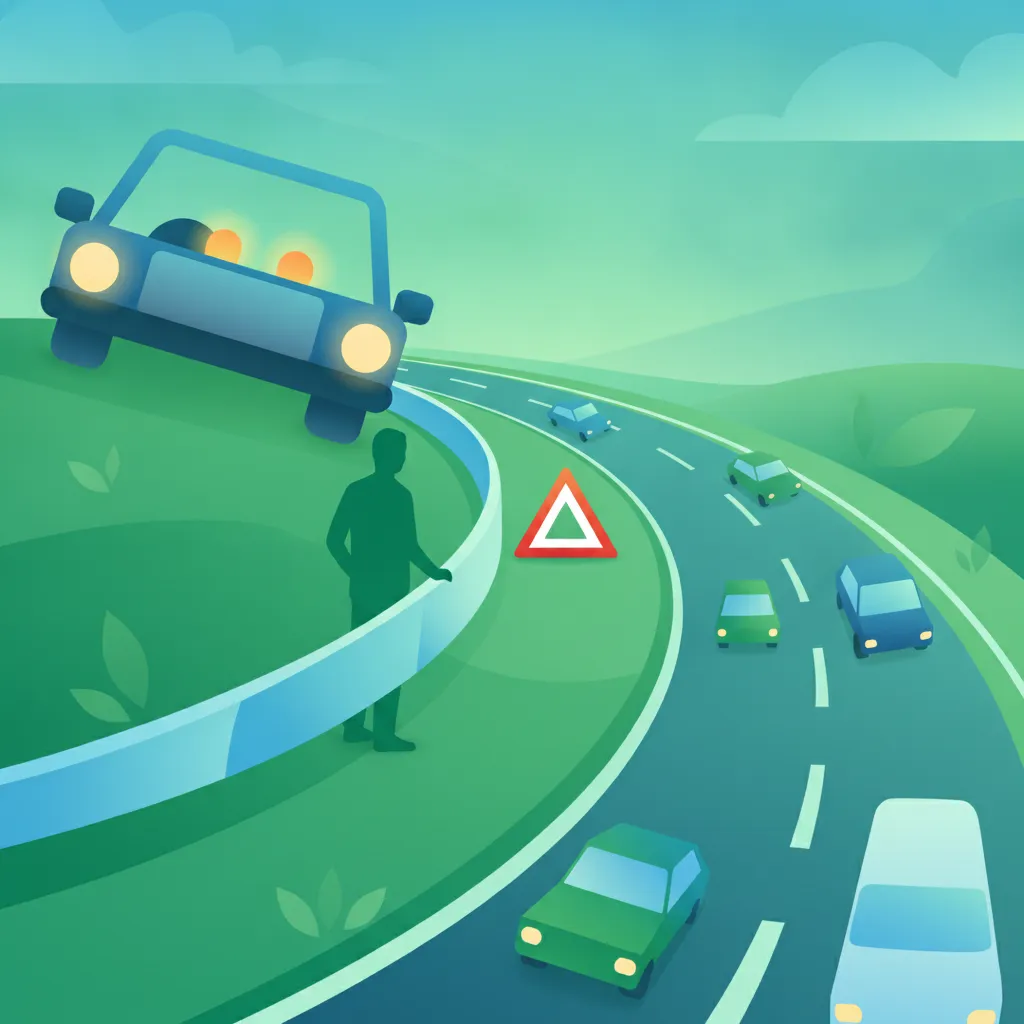
Lesson content overview
Driving on Great Britain's roads requires not only skill and adherence to traffic laws but also preparedness for unexpected events. This comprehensive lesson covers essential knowledge for handling on-road emergencies, including vehicle breakdowns, managing accident scenes, providing basic first aid, and understanding your legal and moral responsibilities. Mastering these procedures is crucial for your safety, the safety of other road users, and for successfully passing your Category B driving theory test.
Road emergencies are unforeseen incidents that can range from a simple vehicle breakdown to a serious multi-vehicle collision. As a driver, your immediate and responsible actions in such situations can significantly reduce risks, prevent secondary incidents, and potentially save lives. Being prepared means knowing what to do, how to communicate effectively, and understanding your legal and moral obligations.
Effective management of emergencies is a core aspect of responsible driving. It showcases a driver's ability to remain calm, assess risks, and take appropriate action under pressure.
Every driver has a duty of care, which is a legal and moral obligation to act with reasonable care to avoid causing harm to others. This duty extends beyond preventing accidents to how you respond when an emergency occurs. It means taking all reasonable steps to secure the scene, protect yourself and others, and facilitate the arrival of professional assistance. Failing to uphold this duty of care can lead to serious legal consequences and, more importantly, can exacerbate a dangerous situation.
The primary goal in any emergency is to minimise further risk and impact. This involves making yourself and your vehicle as visible as possible, moving to a place of safety if it can be done without increasing risk, and calling for appropriate help without delay. Your actions should always prioritise safety – your own, your passengers', and that of other road users.
A vehicle breakdown occurs when your vehicle unexpectedly fails and cannot continue safely under its own power. This can be due to mechanical failure (engine issues, transmission problems), electrical failure (battery flat, lights out), or a flat tyre. Knowing how to react to a breakdown is vital to prevent it from becoming a more serious incident.
When your vehicle breaks down, your first priority is safety.
Stay Calm and Assess the Situation: Quickly evaluate whether you can safely move your vehicle.
Engage Hazard Warning Lights: Switch on your hazard warning lights (also known as hazard flashers) immediately to alert other drivers to your stationary vehicle.
Steer to Safety: If possible, try to steer your vehicle to a safe location. This might be the hard shoulder of a motorway, a designated lay-by, or as far to the left of the road as possible.
Apply Parking Brake and Select Gear: Once stopped, firmly apply the parking brake. If your vehicle is manual, select a low gear (first or reverse); if automatic, put it in 'Park' (P). This prevents unintended movement.
Exit the Vehicle Safely: If it's safe to do so, and you are on a motorway or a fast road, exit the vehicle from the left-hand side (passenger side) and wait behind the safety barrier, away from the carriageway. Keep children and animals with you.
Deploy Warning Devices: Place a warning triangle (if you have one) and put on high-visibility clothing, especially at night or in poor visibility.
Call for Assistance: Contact your breakdown service or emergency services if your vehicle poses a significant hazard or if you are in a dangerous location.
Where you position your broken-down vehicle is crucial for safety and preventing obstruction.
Hazard warning devices are critical for alerting other road users to your presence and preventing secondary collisions.
These lights, usually operated by a button with a red triangle symbol, flash all your indicator lights simultaneously. They should be activated immediately when your vehicle becomes a temporary obstruction or is broken down. They provide an initial, immediate warning to approaching traffic.
A warning triangle is a reflective, triangular device that must be placed on the road behind your broken-down vehicle to provide an advanced warning.
Do not use a warning triangle on motorways unless specifically directed by police or traffic officers, as it is extremely dangerous to place or retrieve it on fast-moving roads. However, for other road types, its use is mandatory.
General Roads: Place the warning triangle at least 30 metres (approximately 100 feet) behind your vehicle, in the same lane as your vehicle. Ensure it is clearly visible to approaching traffic.
Motorways and Dual Carriageways (Hazardous): On motorways, it is often too dangerous to place a warning triangle. If you are on the hard shoulder, stay in your vehicle or behind the barrier and call for assistance.
Near a Junction: If your vehicle is broken down near a junction, place the triangle at the junction entry point, providing warning to vehicles turning into the road.
Darkness or Poor Visibility: In conditions of darkness, fog, or heavy rain, the triangle's reflective properties are crucial. Consider increasing the distance if visibility is severely limited.
If you have to leave your vehicle on the roadside, particularly at night or in low light conditions, wearing high-visibility clothing (such as a reflective vest or jacket) makes you much more visible to passing traffic. This significantly reduces the risk of being struck by another vehicle.
Being involved in a collision is a stressful event, but your actions immediately after the incident are critical for safety, legal compliance, and potentially saving lives.
Stop Immediately: You are legally obliged to stop at the scene of any collision you are involved in, regardless of how minor it seems. Do not drive away.
Switch on Hazard Lights: Turn on your hazard warning lights to alert other drivers to the presence of an obstruction or danger.
Assess for Danger: Before approaching any vehicles or individuals, quickly assess the scene for immediate dangers like fire, leaking fuel, or live electrical wires. Do not put yourself at risk.
Turn Off Engines: If safe to do so, turn off the engines of any vehicles involved to minimise the risk of fire.
Ensure Safety: If the vehicles can be moved safely without causing further injury or obstruction, move them to the side of the road. If not, leave them in place and ensure warning devices are deployed.
Once the scene is secure, your next priority is to check for injuries. You have a duty to render assistance if a person is injured or in immediate danger, provided it does not place you at risk. The DRABC protocol is a vital structured approach for providing immediate life-saving first aid.
A mnemonic for the sequence of actions in emergency first aid: Danger, Response, Airway, Breathing, Circulation.
D - Danger: Check for any danger to yourself, the casualty, or bystanders. Do not approach if it's unsafe. Remove any immediate dangers if you can do so safely (e.g., turn off engines, secure loose objects).
R - Response: Check if the casualty is conscious and responsive. Gently tap their shoulder and ask "Are you alright?".
A - Airway: If the casualty is unresponsive, ensure their airway is open.
B - Breathing: Once the airway is open, check for breathing.
C - Circulation: Check for signs of severe bleeding.
Only move an injured person if their life is in immediate danger (e.g., from fire or imminent collision). Moving them unnecessarily can worsen injuries, especially spinal ones.
In Great Britain, specific legal obligations are imposed on drivers involved in a road traffic collision.
Under Highway Code Rule 238 and Section 170 of the Road Traffic Act 1988, if you are involved in a collision, you must stop within a reasonable distance. You must then exchange details with anyone else involved. This includes your:
If police are present, you must also provide them with these details. If you are unable to exchange details at the scene (e.g., the other party is unconscious or has left), you must report the accident to the police as soon as practicably possible, and in any case, within 24 hours.
Beyond exchanging details, there are specific circumstances where you must report the accident to the police. Under Section 170(2) of the Road Traffic Act 1988, you must report a collision to the police if:
Failure to stop, exchange details, or report an accident when required is a serious road traffic offence and can lead to fines, penalty points, or even disqualification.
When an incident requires professional help, dial 999 (or 112, which works across Europe). Remain calm and provide clear, precise information.
Exact Location: Give the precise location of the incident. Use road names, junction numbers, motorway markers (e.g., M1, junction 25, northbound), landmarks, or GPS coordinates if available.
Nature of the Incident: State clearly whether it's a collision, breakdown, fire, or medical emergency.
Number of Vehicles and Casualties: Specify how many vehicles are involved and an estimate of the number of injured people.
Condition of Casualties: Briefly describe the condition of any injured persons (e.g., conscious/unconscious, bleeding, trapped).
Hazardous Conditions: Mention any additional dangers such as fuel spillage, fire, or unstable vehicles.
Your Contact Details: Provide your name and the phone number you are calling from.
Do not hang up until the operator tells you to do so, as they may need more information or to provide you with instructions.
Emergency situations are rarely textbook. You must adapt your response to various conditions and factors.
Vulnerable Road Users (VRUs), such as pedestrians, cyclists, and motorcyclists, are at a higher risk of serious injury in a collision and may be less visible, especially during emergencies.
If a breakdown or collision results in a hazardous material spill (e.g., fuel, oil, chemicals), it creates additional dangers:
Driver fatigue significantly impairs your ability to respond effectively to an emergency. As discussed in Lesson 10.3, fatigue reduces reaction times, blurs judgment, and can lead to poor decision-making.
The Highway Code provides specific rules and guidance for emergency situations, which are legally enforceable or represent best practice.
This rule specifies the mandatory use of a warning triangle when your vehicle is stopped in a dangerous situation.
When you have stopped a vehicle due to a breakdown, you must:
As detailed earlier, this rule mandates that you stop at the scene of a collision and exchange details (name, address, vehicle registration, insurance) with other involved parties. If you cannot exchange details, you must report the incident to the police within 24 hours.
This rule states that if a person is injured or in immediate danger, you must give them assistance (e.g., call emergency services, provide basic first aid if trained) unless it would place you at risk. This reinforces the driver's duty of care.
This Act contains the statutory duty to report a collision to the police within 24 hours if it results in:
| Violation / Edge Case | Why It’s Wrong | Correct Behaviour | Consequence |
|---|---|---|---|
| Leaving the scene of a minor collision | Breaches Section 170 duty to stop & exchange details. | Stop, exchange details, and report if required (e.g., to police if damage is significant or details not exchanged). | Fine, penalty points, possible prosecution for 'hit and run'. |
| Placing warning triangle less than required distance | Insufficient warning time for following traffic. | Place triangle at least 45m behind (dual carriageway) or 30m (other roads). | Fine, penalty points, liability for secondary collisions. |
| Moving an unconscious casualty unnecessarily | Risk of causing spinal injury or worsening their condition. | Keep casualty still, call emergency services, provide basic first aid (DRABC) only. | Potential criminal negligence, worsening injuries. |
| Failing to activate hazard lights when obstructing | Reduces visibility, increases risk of secondary accidents. | Turn on hazard lights immediately. | Increased risk of further collisions; possible legal liability. |
| Attempting repairs on a motorway hard shoulder | Extremely dangerous due to high-speed traffic. | Move to safe location (e.g., services, roadside assistance), or wait behind barrier. | Risk of serious injury or death. |
| Attempting first aid while being fatigued | Impaired judgment, slower reaction, possible errors in care. | Ensure personal safety and adequate rest; if too fatigued, call emergency services. | Suboptimal care, increased risk of errors. |
| Stopping on a blind curve without warning devices | Other drivers cannot anticipate obstacle. | Move to safest possible spot, use warning triangle and high-visibility clothing. | Potential severe collisions; legal repercussions. |
| Ignoring requirement to report >£1,000 damage | Violation of Road Traffic Act 1988. | Report to police within 24 hours or as soon as practicable. | Fine, penalty points, prosecution. |
| Failing to wear high-visibility clothing at night | Reduced personal visibility to passing traffic and VRUs. | Wear reflective vest or high-visibility jacket during night or low-light incidents. | Increased risk of being struck; possible legal consequences. |
| Using a mobile phone for non-emergency calls at scene | Distraction from safety and first aid; illegal unless calling emergency services. | Use phone only to call 999/112 or breakdown services. | Fine, penalty points, increased risk of errors at scene. |
Being prepared for emergencies is a critical part of being a responsible driver in Great Britain. This lesson has equipped you with the fundamental knowledge and procedures necessary to handle vehicle breakdowns, manage accident scenes, provide basic first aid, and comply with your legal obligations.
Remember the core principles:
By understanding and practising these procedures, you not only prepare for your driving theory test but also become a more capable, confident, and responsible driver on any road.
This lesson covers essential emergency procedures for GB drivers, including how to handle vehicle breakdowns safely by using hazard lights, positioning correctly, and deploying warning triangles at specified distances. For accident management, it details the legal requirements to stop and exchange details, the DRABC first aid protocol for assessing casualties, and the specific circumstances requiring police reporting under the Road Traffic Act 1988. Key priorities are maintaining personal safety, maximising visibility to other road users, and communicating effectively with emergency services. These procedures are directly relevant to both the Category B theory test and real-world driving responsibility.
A short set of high-value points that capture the most important learning from this lesson.
Safety and visibility are the immediate priorities after any breakdown or accident on the road
The DRABC protocol (Danger, Response, Airway, Breathing, Circulation) provides the structured sequence for assessing and assisting casualties
Warning triangles must be placed at least 45 metres on dual carriageways and 30 metres on other roads, but never on motorways
Drivers have a legal duty to stop, exchange details, and report accidents to police within 24 hours if details cannot be exchanged at the scene
Do not move injured casualties unless they face immediate danger, as this can worsen spinal or other injuries
Explore all units and lessons included in this driving theory course.
Hazard warning lights must be activated immediately when stationary or broken down
On motorways, exit the vehicle from the left side and wait behind the safety barrier rather than on the hard shoulder
The £1,000 damage threshold determines when police reporting is required under the Road Traffic Act 1988
When calling 999 or 112, provide exact location, number of casualties, and any hazardous conditions
Driver fatigue impairs emergency response by reducing alertness and increasing poor decision-making
Leaving the scene of a collision without exchanging details, even if the collision seems minor, constitutes a traffic offence
Placing warning triangles too close to the vehicle, reducing the warning time for approaching traffic
Moving an unconscious casualty unnecessarily, which risks causing or worsening spinal injuries
Attempting repairs or standing on the hard shoulder of a motorway where high-speed traffic poses extreme danger
Failing to call emergency services or exchange details because injuries appear minor, violating legal obligations
Lesson content overview
A short set of high-value points that capture the most important learning from this lesson.
Safety and visibility are the immediate priorities after any breakdown or accident on the road
The DRABC protocol (Danger, Response, Airway, Breathing, Circulation) provides the structured sequence for assessing and assisting casualties
Warning triangles must be placed at least 45 metres on dual carriageways and 30 metres on other roads, but never on motorways
Drivers have a legal duty to stop, exchange details, and report accidents to police within 24 hours if details cannot be exchanged at the scene
Do not move injured casualties unless they face immediate danger, as this can worsen spinal or other injuries
Explore all units and lessons included in this driving theory course.
Hazard warning lights must be activated immediately when stationary or broken down
On motorways, exit the vehicle from the left side and wait behind the safety barrier rather than on the hard shoulder
The £1,000 damage threshold determines when police reporting is required under the Road Traffic Act 1988
When calling 999 or 112, provide exact location, number of casualties, and any hazardous conditions
Driver fatigue impairs emergency response by reducing alertness and increasing poor decision-making
Leaving the scene of a collision without exchanging details, even if the collision seems minor, constitutes a traffic offence
Placing warning triangles too close to the vehicle, reducing the warning time for approaching traffic
Moving an unconscious casualty unnecessarily, which risks causing or worsening spinal injuries
Attempting repairs or standing on the hard shoulder of a motorway where high-speed traffic poses extreme danger
Failing to call emergency services or exchange details because injuries appear minor, violating legal obligations
Explore search topics learners often look for when studying Emergency Procedures, First Aid, Breakdowns and Responsible Driving. These topics reflect common questions about road rules, driving situations, safety guidance, and lesson level theory preparation for learners in Great Britain.
Browse additional driving theory lessons that cover connected traffic rules, road signs, and common driving situations related to this topic. Improve your understanding of how different rules interact across everyday traffic scenarios.
Understand your legal obligations in Great Britain after a road collision, including stopping, exchanging details, and reporting requirements to the police. Covers driver duty of care and accident management.
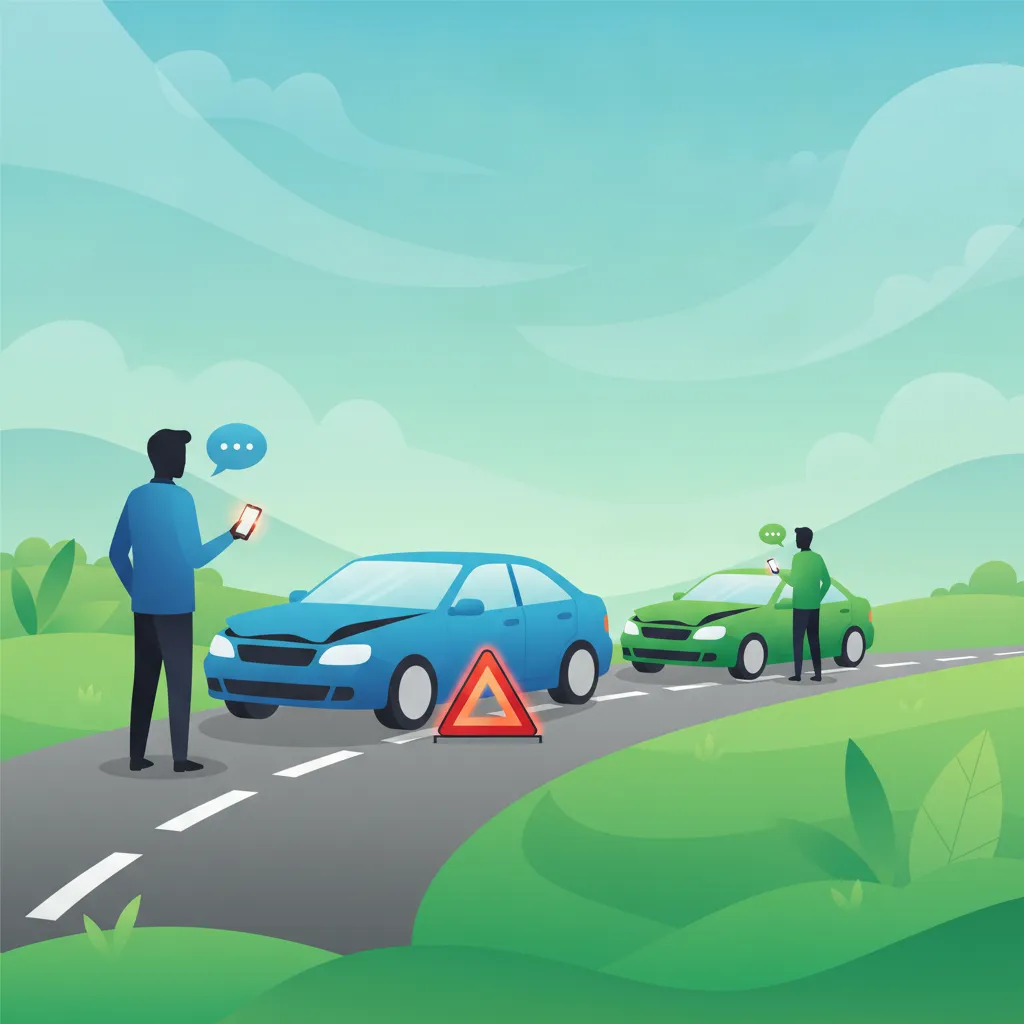
Knowing what to do at an accident scene can save lives. This lesson outlines the critical steps: ensuring your own safety, making the scene safe for others, assessing casualties, and calling the emergency services. It also covers your legal obligations to stop, report the collision, and exchange details with other parties involved.
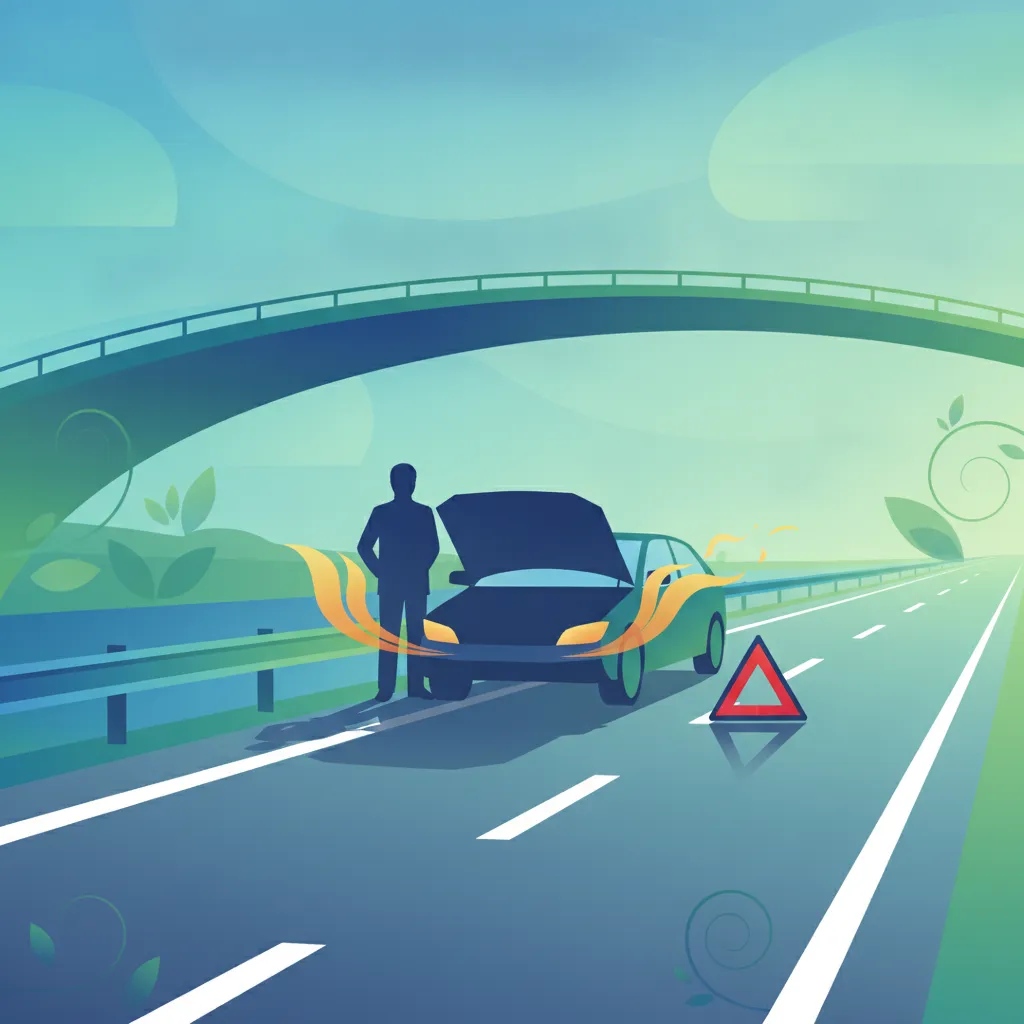
This lesson provides a clear, step-by-step guide for managing an emergency situation like a breakdown or a road traffic collision. You will learn the correct procedures for making the scene safe, when and how to contact the emergency services (999 or 112), and what information to provide. It also covers your legal obligations regarding reporting accidents and exchanging details, ensuring you are prepared to act correctly and calmly under pressure.
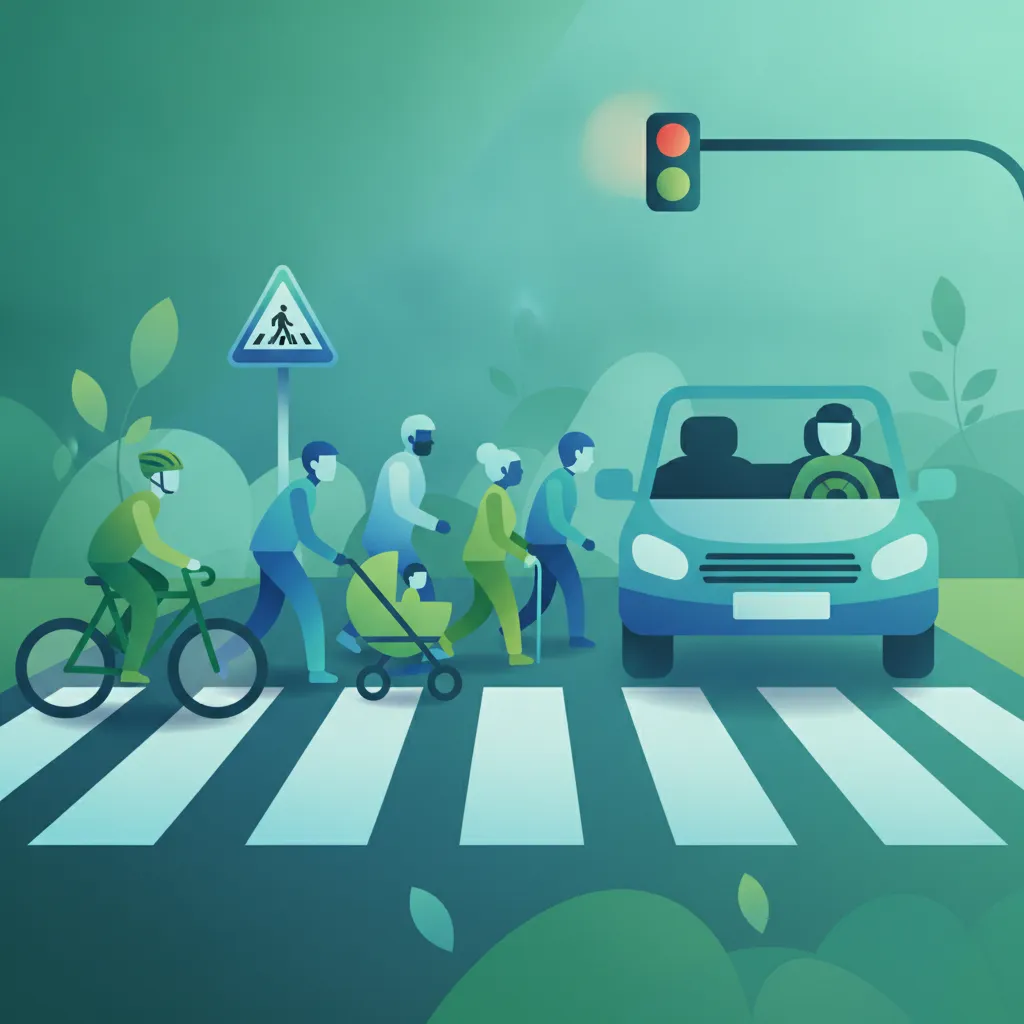
This lesson focuses on a driver's legal and ethical duty of care to all road users. It explains the concept of a road user hierarchy, which prioritizes the safety of vulnerable groups such as pedestrians, cyclists, and motorcyclists. You will learn the principles of defensive driving, anticipating potential hazards, and maintaining a courteous attitude on the road to ensure safety for everyone.
The period after an accident can be stressful and confusing. This lesson provides guidance on the practical steps, such as reporting the incident to your insurer and gathering necessary information for any legal proceedings. It also touches upon the importance of looking after your own physical and mental wellbeing and how to regain confidence in your riding.
Explore the critical topics of driver liability, insurance, and legal penalties in Great Britain. This lesson distinguishes between civil and criminal liability in the context of road incidents. It details the compulsory third-party insurance every driver must have and explains the penalty points system for traffic offences, including fines and potential disqualification.

This lesson details your legal responsibility for passenger safety. It covers the mandatory use of seatbelts for all occupants and explains the specific laws regarding child car seats, which are based on a child's height or weight. Correctly fitted head restraints and understanding how airbags work are also key components of passenger protection.
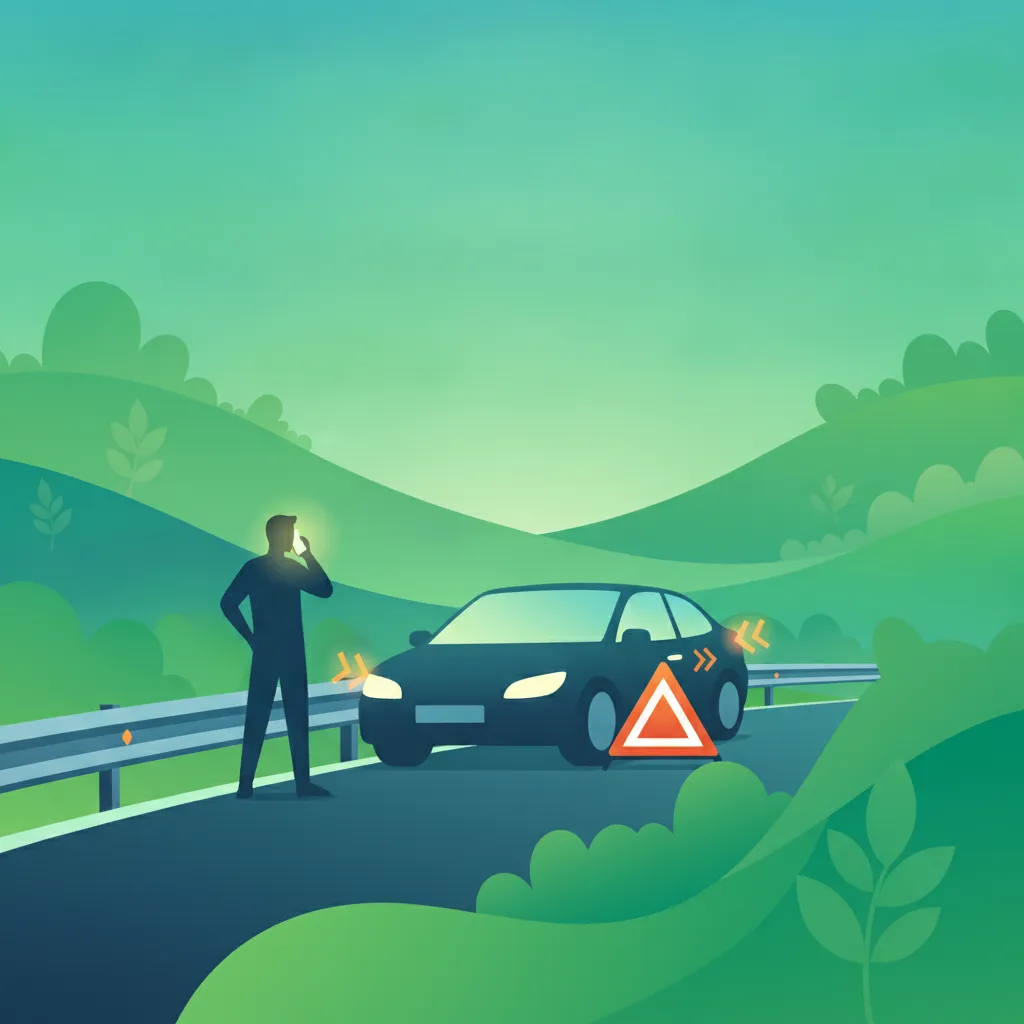
This lesson equips drivers with the knowledge to manage on-road emergencies effectively and safely. It provides clear, step-by-step procedures for vehicle breakdowns, including where to stop and how to use warning devices. It also covers initial actions at the scene of an accident, fire safety protocols including the use of an extinguisher, and the correct way to report incidents to emergency services and the transport office.
This lesson details the crucial documentation required for legal driving in the UK. It explains the purpose of the V5C registration document, the MOT test certificate, and proof of insurance and road tax (Vehicle Excise Duty). You will learn where to keep these documents and when you might be required to present them to authorities.
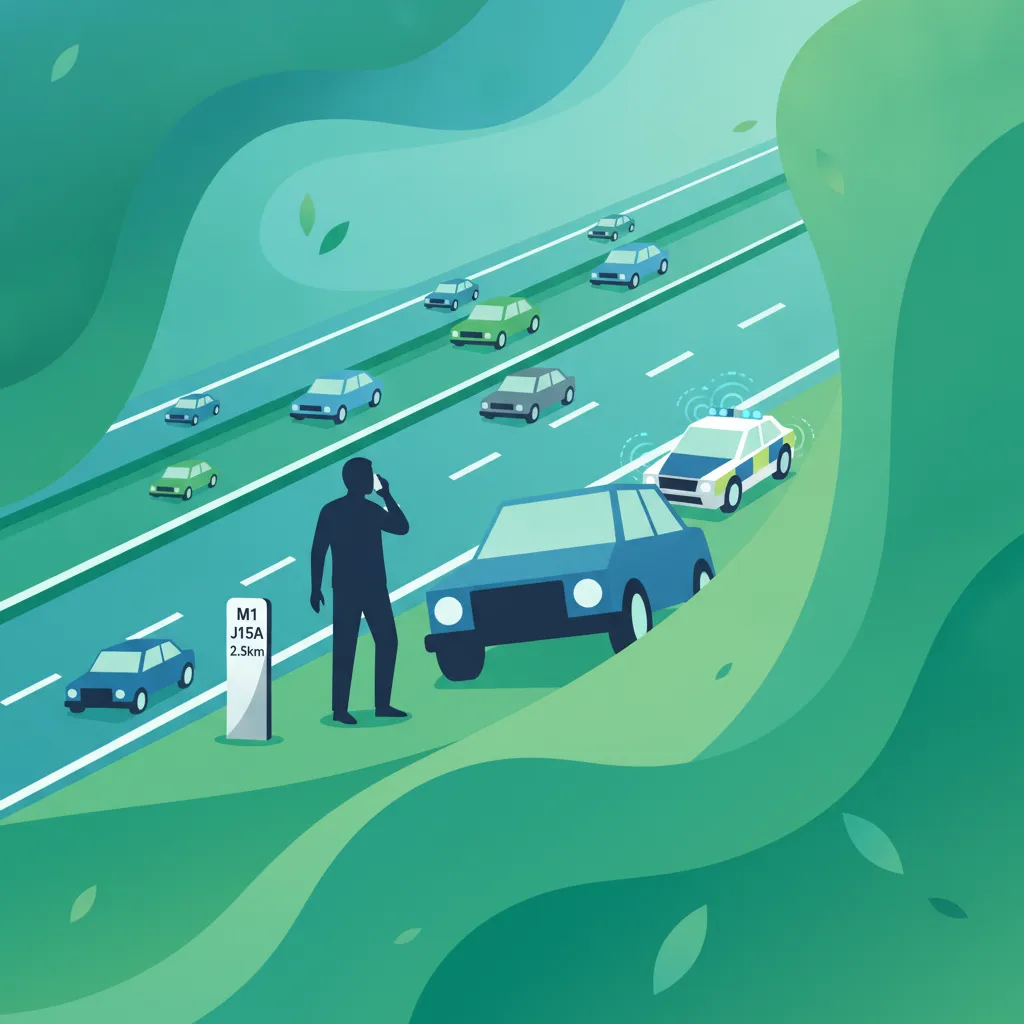
This lesson details the immediate actions a driver must take in the event of an accident or on-board emergency. It covers how to protect the scene, use hazard warning lights, and contact the emergency services via 999 or 112, providing clear and concise information. The content also includes the location and use of the first aid kit and fire extinguisher. It emphasizes the driver's role in calmly assisting passengers and cooperating with emergency responders upon their arrival.
This lesson outlines the serious legal and professional consequences of committing traffic offences. It covers common issues such as speeding, using a mobile phone, and the strict limits on alcohol, explaining the system of fixed penalty notices and penalty points. The content makes clear how accumulating points can lead to fines, licence suspension or revocation, and the loss of a professional driving career. The importance of understanding and following company policy on incident reporting is also stressed.
Learn essential safety procedures for vehicle breakdowns on UK roads. Covers safe positioning, use of hazard lights and warning triangles, and actions to take on motorways and other roads.

This lesson teaches you to interpret warning signs, which are typically triangular with a red border. These signs are crucial for anticipating potential dangers, from changes in road layout to the presence of pedestrians or animals. By understanding these warnings, you can adjust your driving to safely navigate upcoming hazards.
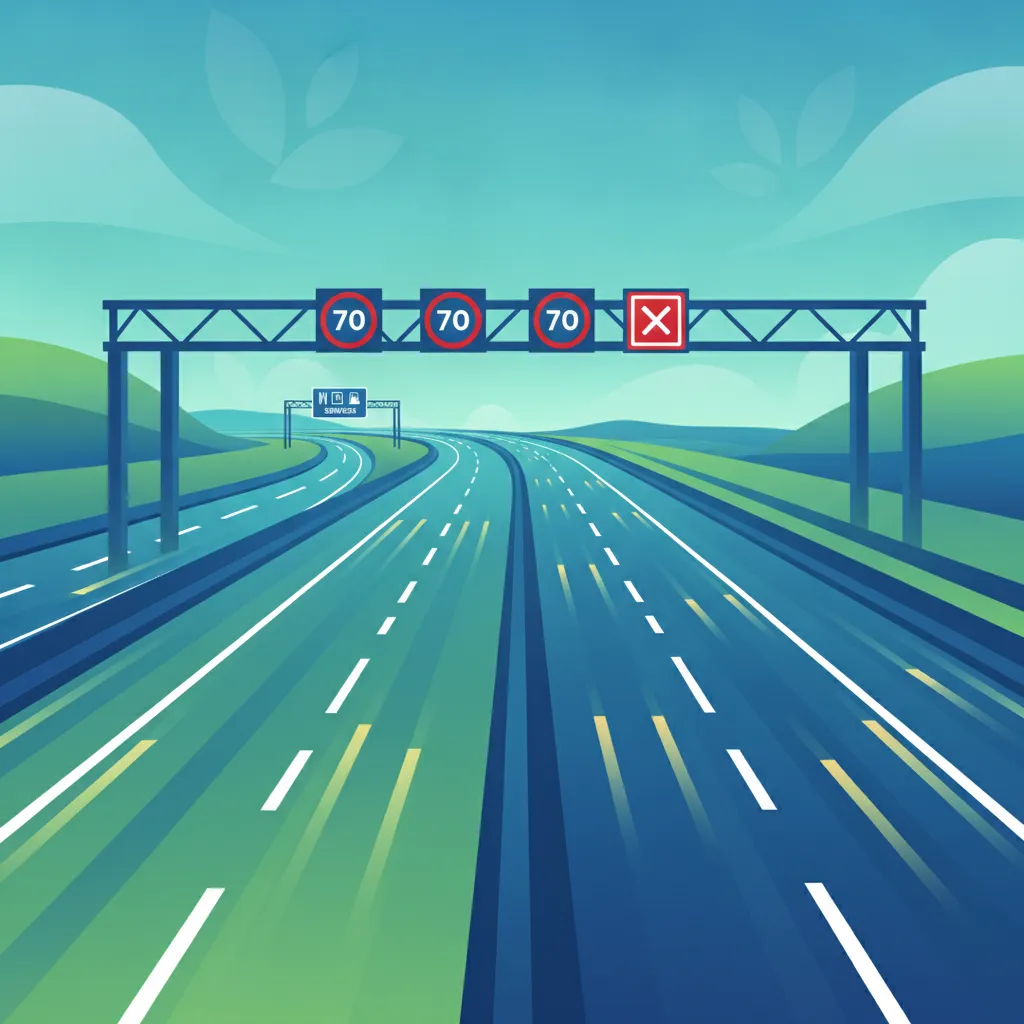
This lesson covers the unique aspects of motorway driving, from joining and leaving the carriageway to the strict lane discipline of keeping to the left unless overtaking. It explains the features of smart motorways, such as variable speed limits and the meaning of a Red X symbol above a lane. The safe procedure for handling a breakdown is also a key topic.
This lesson provides a clear, step-by-step guide for managing an emergency situation like a breakdown or a road traffic collision. You will learn the correct procedures for making the scene safe, when and how to contact the emergency services (999 or 112), and what information to provide. It also covers your legal obligations regarding reporting accidents and exchanging details, ensuring you are prepared to act correctly and calmly under pressure.
This lesson equips drivers with the knowledge to manage on-road emergencies effectively and safely. It provides clear, step-by-step procedures for vehicle breakdowns, including where to stop and how to use warning devices. It also covers initial actions at the scene of an accident, fire safety protocols including the use of an extinguisher, and the correct way to report incidents to emergency services and the transport office.
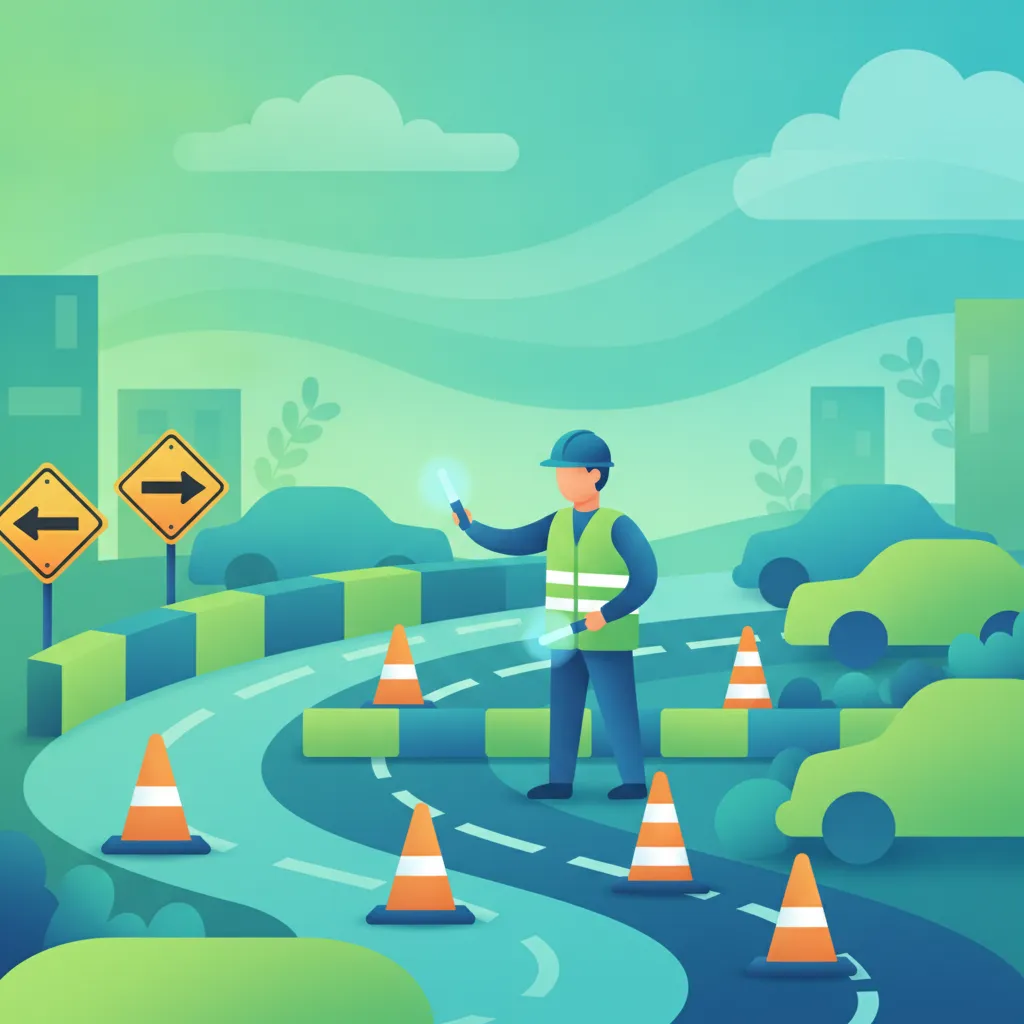
This lesson explains how to drive safely through areas where roadworks are taking place. It stresses the importance of obeying all temporary signs, especially mandatory speed limits, which are in place for your safety and the safety of road workers. You will learn about navigating narrow lanes, contraflow systems, and how to follow official diversion signs.
This lesson teaches you to interpret warning signs, which are typically triangular and designed to alert you to potential hazards ahead. You will learn the meanings of common signs indicating sharp curves, slippery surfaces, roadworks, or areas with frequent pedestrian or animal crossings. Understanding these signs is crucial for anticipating dangers and adjusting your speed and position defensively, which is especially important for vulnerable riders of AM vehicles.
This lesson teaches a practical method for maintaining a safe distance from the vehicle in front. The 'two-second rule' provides a minimum time gap in dry conditions, which should be doubled to four seconds in the wet. Adhering to this rule gives you sufficient time to react and brake safely if the vehicle ahead stops suddenly.

This lesson reinforces the vital safety rule of maintaining an adequate following distance from the vehicle ahead. It explains why the standard 'two-second rule' must be extended for heavy vehicles, especially in poor weather or when heavily laden, to account for longer stopping distances. You will learn practical methods for judging a safe gap in various traffic situations, creating a crucial safety buffer to react to unforeseen hazards.
This lesson focuses on the markings that control traffic at intersections. It explains the primary rule of a yellow box junction: do not enter unless your exit is clear. You will also learn the difference between the solid white 'Stop' line and the broken 'Give Way' line, which dictate your priority over other traffic.

This lesson explains the function of warning signs, which are mostly triangular and alert road users to potential dangers ahead. You will learn to identify signs for bends, junctions, slippery surfaces, and other hazards particularly relevant to motorcyclists. Acting on these warnings allows a rider to adjust speed and position proactively, enhancing safety.
Find clear answers to common questions learners have about Emergency Procedures, First Aid, Breakdowns and Responsible Driving. Learn how the lesson is structured, which driving theory objectives it supports, and how it fits into the overall learning path of units and curriculum progression in Great Britain. These explanations help you understand key concepts, lesson flow, and exam focused study goals.
You should try to move your vehicle onto the hard shoulder or into an emergency refuge area. Once stopped, turn on your hazard lights, exit the vehicle through the left-hand doors, and move to a safe position behind the barrier, then call for assistance using an emergency phone if available.
While you are not legally required to provide complex medical aid, you have a duty of care to ensure the area is safe, call 999 for professional help, and follow instructions from the emergency services. You should only attempt first aid if you are confident and it is safe to do so.
You should place a warning triangle at least 45 metres behind your broken-down vehicle to alert oncoming traffic. Never use a warning triangle on a motorway, as it is far too dangerous to walk back into the traffic flow.
If you cannot move your vehicle, stay inside with your seatbelt on and your hazard lights switched on. Call 999 or the emergency services immediately, as you are at high risk from other traffic.
Dive into our comprehensive question bank to find exactly what you need for your Great Britain theory test. Use our advanced filters to pinpoint specific subjects or test your knowledge on challenging areas, ensuring you're fully prepared for success.