
Driving Theory
British Driving Theory Courses

Lesson 3 of the Lane Use, Turning, Reversing, Manoeuvring and Trailer Awareness unit

GB Goods Vehicle Theory: Reversing Large Vehicles Safely

Reversing is one of the most high-risk maneuvers for a heavy goods vehicle driver, requiring extreme caution and precision. This lesson guides you through professional safety standards, including the essential 'get out and look' principle and the correct use of signals, to help you pass your Category C theory exam and operate safely on the road.
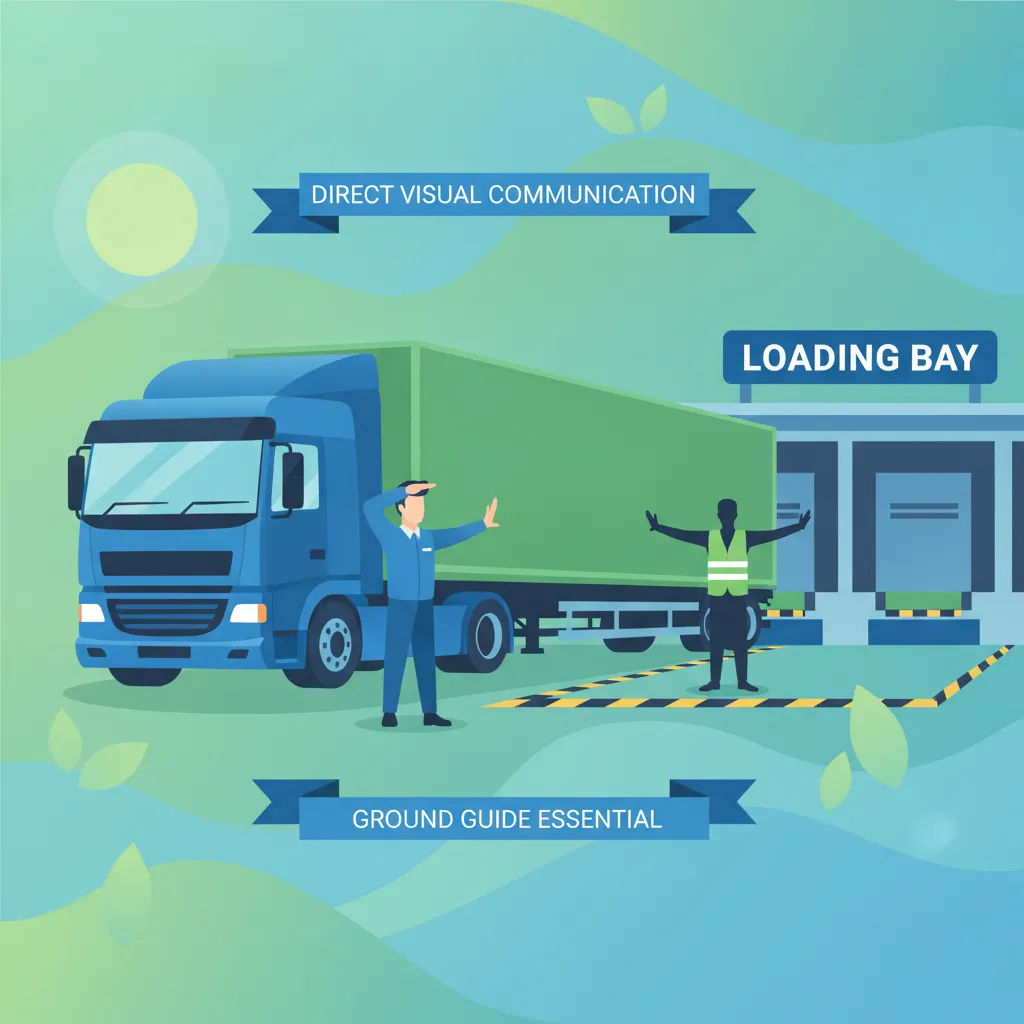
HGV drivingCategory C theorymaneuveringreversing safetybanksman
GB Goods Vehicle Theory: Reversing Large Vehicles Safely

Lesson content overview

GB Goods Vehicle Theory

Reversing Large Goods Vehicles Safely: A Guide for Category C Licence Holders

Reversing a large goods vehicle (LGV) or heavy goods vehicle (HGV) is widely acknowledged as one of the most challenging and highest-risk manoeuvres a professional driver undertakes. For those operating under a Category C licence in Great Britain, understanding and mastering safe reversing techniques is paramount. Limited rear visibility, the sheer size and weight of the vehicle, complex trailer dynamics, and the potential for serious accidents necessitate a systematic and highly disciplined approach.

This lesson provides a comprehensive guide to performing reversing manoeuvres safely, integrating best practice procedures, the Highway Code, and specific regulations. We will cover crucial principles such as conducting a physical 'get out and look' assessment, effectively utilising all mirrors and advanced camera systems, and the vital role of a trained banksman (signaller). Emphasising a slow, controlled speed and ensuring load security throughout the manoeuvre are also fundamental to preventing collisions, injuries, and costly damage.

Understanding the Risks of HGV Reversing Manoeuvres

Reversing is inherently risky for LGV drivers due to several factors that severely limit a driver's perception and control. Unlike forward driving, where a wide field of vision is available, backing up significantly constrains what a driver can see, particularly directly behind the vehicle and along its sides. This reduced visibility combined with the vehicle's large turning circle and the potential for unpredictable trailer behaviour makes collisions a significant concern.

Why Reversing is a High-Risk Manoeuvre for LGVs

The main reason reversing poses such a high risk is the inherent lack of direct rear visibility. Even with multiple mirrors and camera systems, a driver cannot directly see every area around a large vehicle, especially in complex environments like loading docks, urban streets, or construction sites. The kinetic energy of a moving LGV means that even at low speeds, an impact can cause significant damage or serious injury. Furthermore, the dynamic nature of a load can become a hazard, shifting during a sudden stop or turn and affecting the vehicle's stability.

Visibility Challenges and Blind Spots Around Large Vehicles

Large goods vehicles naturally create extensive blind spots. These are areas around the vehicle that the driver cannot see directly or even indirectly through mirrors.

Common blind spot zones include:

  • A-zone: The area immediately to the sides of the cab, often obscured by the vehicle's structure or the cab itself.
  • B-zone: The larger areas along the sides and rear of the vehicle, particularly significant for rigid lorries and even more so for articulated combinations where the trailer itself creates substantial blind spots.
  • Load-induced blind spots: High or wide loads can further restrict visibility through the rear window (if present) or internal mirrors, and can even block portions of the external mirror view.

These zones mean that a pedestrian, cyclist, or even a smaller vehicle can be entirely hidden from the driver's view, making pre-manoeuvre checks and external assistance absolutely critical.

Essential Principles for Safe Reversing with Heavy Goods Vehicles

To mitigate the inherent risks, a set of core principles must be rigorously applied every time an LGV is reversed. These principles form the backbone of safe reversing practice and are mandated by best-practice guidelines and legal requirements in Great Britain.

Get Out And Look (GOAL): The Cornerstone of Safe HGV Reversing

The "Get Out And Look" (GOAL) principle is arguably the most critical safety procedure when reversing a large vehicle. It requires the driver to physically exit the cab and visually inspect the area around the vehicle, particularly the intended reversing path and any potential obstacles or hazards.

Definition

Get Out And Look (GOAL)

The safety procedure where a driver physically leaves the vehicle to visually inspect the surrounding area, especially the intended reversing path and blind spots, before or during a manoeuvre.

Purpose: GOAL compensates for the inherent limitations of mirrors and cameras. It allows the driver to confirm the absence of static obstacles (poles, walls, other vehicles) and moving hazards (pedestrians, cyclists, forklift trucks). It also helps to validate signals from a banksman and ensure safe clearance in tight spaces like loading bays.

Procedure:

Performing a 'Get Out And Look' Check

  1. Park Safely: Bring the vehicle to a complete, safe stop before exiting.

  2. Assess Surroundings: Conduct a systematic visual sweep, moving around the vehicle. Pay close attention to the rear, sides, and any areas that were previously blind.

  3. Identify Hazards: Look for pedestrians, cyclists, other vehicles, fixed structures, uneven ground, or any other potential dangers.

  4. Confirm Path: Ensure the intended reversing path is clear and free from obstructions.

  5. Communicate (if applicable): If a banksman is present, establish eye contact and confirm signals before re-entering the cab.

  6. Re-enter and Recheck: Once back in the cab, briefly recheck mirrors and confirm the path is still clear before moving.

Failing to perform a GOAL check is a common cause of reversing accidents. It should be done before initiating the manoeuvre and, for longer or more complex reverses, periodically throughout the manoeuvre.

Effective Use of Mirrors and Advanced Rear-View Systems

Mirrors are the primary visual aid for a driver when reversing. LGVs are equipped with multiple large mirrors designed to provide the widest possible view around the vehicle. However, mirrors alone are never sufficient to guarantee full visibility.

Mirror Types and Usage:

  • Wing mirrors: Provide crucial views of the sides of the vehicle and the trajectory of the trailer (if articulated). They should be adjusted to show both the side of the vehicle and a wide view of the area beside it.
  • Centre mirror (if applicable): On rigid vehicles, a rear-view mirror may provide a direct view behind.
  • Trailer mirrors: Specific mirrors might be fitted to the trailer itself, offering a more direct view along the trailer's length.

Tip

Regular Mirror Checks: While reversing, constantly scan all mirrors at short intervals (e.g., every 5 seconds). This continuous scanning helps you track your vehicle's path, identify moving hazards, and maintain awareness of your surroundings.

Advanced Rear-View Systems: Many modern LGVs are fitted with reversing cameras and/or CCTV systems.

These systems provide a live video feed to a monitor in the cab, often with wide-angle views or even 360-degree composite views. They are invaluable for identifying hazards that might be in a mirror blind spot. However, drivers must never rely solely on cameras, as they can be obstructed by dirt, fog, or cargo, and may not convey depth accurately. They are an aid, not a replacement for mirrors, physical checks, or banksman assistance.

The Role of a Trained Banksman (Signaller) in HGV Reversing

A trained banksman is an invaluable asset when reversing a large vehicle, especially in complex or high-risk environments where the driver's view is obstructed.

Definition

Banksman

A trained and competent person who assists a driver in performing manoeuvres, especially reversing, by providing clear, pre-agreed visual or auditory signals.

Purpose: The banksman provides an additional pair of eyes, critically covering blind spots that the driver cannot see. They act as the "eyes on the ground," guiding the driver clear of obstacles and other road users. Their presence is mandatory in many professional settings where visibility is compromised, as stipulated by Highway Code Rule 145.

Banksman Requirements:

  • Training and Competence: The banksman must be properly trained in LGV reversing procedures and signal systems.
  • High Visibility: They must wear high-visibility clothing to be easily seen by the driver and others.
  • Safe Position: The banksman must position themselves where they can see both the driver and the full reversing path, but always in a safe location, well clear of the vehicle's potential path.

Banksman Communication Protocols and Agreed Signals

Clear and unambiguous communication between the driver and banksman is crucial. Standardised signals are essential to avoid misinterpretations.

Types of Signals:

  • Hand Signals: The most common method, involving specific, clear hand and arm movements to indicate 'stop', 'go straight back', 'turn left/right', etc.
  • Illuminated Sticks (Star Sticks): Used in low-light conditions or at night to make signals more visible.
  • Radio/VHF Communication: Useful in noisy environments or over long distances, requiring two-way radios.

Communication Protocols:

  • Agreement: Driver and banksman must agree on the signal system to be used before the manoeuvre begins.
  • Confirmation: The driver should always confirm receipt and understanding of a signal (e.g., with a thumbs-up, verbal repeat, or a short horn blast) before acting.
  • Abort Procedure: A clear "stop" signal should be understood as an immediate instruction to halt the vehicle. If a signal is unclear, the driver must stop the vehicle and clarify the instruction with the banksman.

Maintaining Controlled Reverse Speed for LGVs

Speed control is fundamental to safe reversing. A large goods vehicle should always be reversed at a deliberately slow and controlled speed.

Recommended Speeds:

  • Articulated units: The DVSA recommends a maximum reverse speed of approximately 4 km/h (2.5 mph).
  • Rigid LGVs: A slightly higher speed of up to 6 km/h may be acceptable, but slower is always safer.

Why Slow Speed is Critical:

  • Reaction Time: Slower speeds provide the driver with more time to react to unexpected hazards, correct steering errors, or respond to banksman signals.
  • Reduced Impact Force: In the event of an unavoidable collision, a lower speed significantly reduces the kinetic energy, thereby minimising damage and potential injury.
  • Load Stability: Sudden movements at higher speeds can cause cargo to shift, potentially leading to instability or even overturning.
  • Precision: Reversing often requires precise positioning, which is easier to achieve at very low speeds using clutch control (for manual gearboxes) or careful throttle modulation (for automatics).

Use the lowest available reverse gear and rely on clutch slippage (manual) or light brake pressure (automatic) to maintain a crawl. Engine braking can also assist in controlling speed on gradients.

Reversing Alarms and Warning Devices for HGVs

Reversing alarms and warning devices are crucial for alerting other road users, pedestrians, and workers to a large vehicle's backward movement.

Definition

Reversing Alarm

An audible warning device (beeper, horn) and/or flashing lights that activate when a vehicle engages reverse gear, designed to alert nearby individuals of its backward movement.

Requirement: Highway Code Rule 169 states that a vehicle that is reversing must sound a warning. Furthermore, the Road Vehicles (Construction and Use) Regulations 1986 (Regulation 18) mandate that certain large vehicles (typically over 7.5 tonnes) must be fitted with reversing alarms.

Types of Devices:

  • Audible Alarm (Beeper): Produces a distinctive 'beep-beep' sound. These must be loud enough to be heard in noisy environments, typically a minimum of 90 dB at 5 metres.
  • Flashing Beacons: Often orange or amber, these lights provide a visual warning, especially effective in noisy areas where an audible alarm might be masked, or in low visibility.
  • White Noise Alarms: Some vehicles use 'white noise' or 'shh' alarms, which are less intrusive but still highly effective at alerting those in the immediate vicinity.

Usage:

  • Ensure the alarm system is functional and audible before starting any reverse manoeuvre.
  • Modern vehicles often activate alarms automatically when reverse gear is selected. For older vehicles, manual activation may be necessary.
  • Never disable a reversing alarm, even if it is perceived as a nuisance. Its purpose is safety.

Ensuring Load Security During Reverse Manoeuvres

The stability of a vehicle, especially an LGV, can be significantly affected by its load, particularly during braking or sudden changes in direction. Reversing, while typically slow, can still induce forces that cause an unsecured load to shift.

Regulations: The Road Vehicles (Construction and Use) Regulations 1986 (Regulation 85) and the retained EU Regulation No 149/2006 (LoadSec 2016 guidance) stipulate that all loads must be secured to prevent movement that could endanger people or affect vehicle stability.

Key Considerations:

  • Pre-Manœuvre Check: Before initiating a reverse, always re-check load restraints (straps, chains, load bars, netting). Ensure they are tight and properly applied.
  • Centre of Gravity: Be aware of the vehicle's centre of gravity. A high or unstable load is more prone to shifting, especially if the vehicle stops suddenly or changes direction while reversing.
  • Overhang Limits: Ensure that any rear overhang of the load does not exceed legal limits. For rigid lorries, this is generally 2 metres beyond the rear-most part of the vehicle, and for articulated tractors, 1 metre. Excessive overhang can strike objects or obscure warning lights.
  • Anticipate Movement: Always assume the load might shift and drive accordingly, using smoother acceleration and braking.

An unsecured load can cause the vehicle to become unstable, potentially leading to a rollover or loss of control, even at low reversing speeds.

Key Concepts for Mastering LGV Reversing

Building upon the core principles, several key concepts delve deeper into the practicalities and challenges of reversing large vehicles.

Overcoming Rear Visibility Constraints and Blind Spot Zones

As discussed, LGVs have significant blind spots. Effective drivers actively work to overcome these limitations.

  • Compensatory Actions: Utilise a combination of GOAL checks, constant mirror scanning, and relying on a banksman. No single method provides complete visibility.
  • Understanding Vehicle Geometry: Be aware of how your specific vehicle's length, width, and load affect your blind spots. An articulated trailer, for example, will have different blind spots depending on its angle to the tractor unit.
  • Environmental Awareness: Recognise that tight corners, high walls, parked vehicles, or even dense foliage can create temporary blind spots.

Proper Mirror Adjustment for HGV Reversing

Correct mirror adjustment is crucial for optimising the limited rear view during reversing.

  • Static Adjustment: Before starting a journey, mirrors should be set for general driving conditions, typically showing a small portion of the vehicle's side and a broad view of the road behind and to the side.
  • Dynamic Check for Reversing: Immediately before a reverse manoeuvre, drivers should fine-tune their mirrors.
    • Wing Mirrors: Angle slightly further outwards to maximise the view of the vehicle's side and the immediate path of the rear wheels/trailer.
    • Trailer Mirrors (if applicable): Adjust to ensure you can see the sides and rear corners of the trailer, providing guidance for its alignment.
  • Continuous Monitoring: Even with perfect adjustment, mirrors need constant re-checking. What was clear a moment ago might now have a pedestrian or object in its path.

Managing Reversing Speed on Gradients and Slopes

Reversing on an incline (gradient) introduces additional challenges due to gravitational forces.

  • Uphill Reverse:
    • Challenge: Requires more engine power to overcome gravity and prevent rolling backward. There's a higher risk of stalling a manual vehicle.
    • Technique: Use a lower reverse gear (if manual), apply more throttle, and carefully modulate the clutch to prevent rolling back. The handbrake can be used to hold the vehicle before engaging the clutch.
    • Load Risk: An unsecured load can slide backward against restraints.
  • Downhill Reverse:
    • Challenge: The vehicle can accelerate quickly due to gravity, leading to loss of control. There's also a risk of rolling forward if the brakes are not applied correctly or released prematurely.
    • Technique: Use engine braking as much as possible, keep a foot lightly on the brake pedal, and be prepared to apply the handbrake instantly if control is lost or the vehicle begins to roll forward. Maintain an even slower speed.

Warning

When reversing on any gradient, always use the handbrake to secure the vehicle before initiating movement. Release it gradually as you engage the drive to prevent uncontrolled rolling.

Specific Considerations for Articulated Vehicles

Reversing an articulated lorry (tractor unit and trailer) is significantly more complex than reversing a rigid vehicle due to the pivot point between the tractor and trailer.

  • Trailer Dynamics: The trailer will initially move in the opposite direction to the tractor unit when steering in reverse. Mastering this 'jack-knifing' effect requires practice and a keen understanding of the vehicle's geometry.
  • Increased Length and Blind Spots: Articulated vehicles are much longer, exacerbating visibility problems and requiring more space for the manoeuvre. Blind spots are larger and constantly changing with the trailer's angle.
  • Coupling Security: Before any reverse manoeuvre, ensure the trailer is correctly coupled to the tractor unit and all safety mechanisms (e.g., air lines, electrical connections) are secure. A poor coupling can affect steering response and stability.

Using Reversing Cameras and CCTV Systems Safely

While highly beneficial, reversing cameras and CCTV systems must be used judiciously.

  • Augmentation, Not Replacement: These systems are supplementary aids. They should always be used in conjunction with mirrors, physical checks, and a banksman.
  • Limitations:
    • Distortion: Wide-angle lenses can distort distances and sizes, making objects appear further away than they are.
    • Obstruction: Lenses can become dirty, wet, or fogged, impairing visibility. Cargo can also block the camera's view.
    • Blind Spots: Even camera systems can have blind spots, especially if they are fixed-angle cameras. Multi-camera 360-degree systems offer better coverage but are still not foolproof.
  • Regular Checks: Ensure cameras are clean and functional before use.

Reversing in Congested and Urban Environments

Reversing in urban settings presents unique challenges due to the higher density of vulnerable road users (VRUs) and fixed obstacles.

  • Vulnerable Road Users: Pedestrians, cyclists, and motorcyclists are often present in urban areas and are easily overlooked due due to their size and speed. Highway Code Rule 147 gives priority to pedestrians.
  • Limited Space: Urban environments often feature narrow streets, parked vehicles, street furniture, and tight turning circles.
  • Increased Vigilance: In these areas, drivers must exercise extreme caution.
    • Banksman: The use of a banksman is almost always essential.
    • Slower Speed: Reduce reverse speed even further (e.g., to 2 km/h).
    • Audible Warnings: Ensure reversing alarms are loud and clear to alert those nearby.
    • Frequent Checks: Perform GOAL checks more frequently.

Adherence to legal requirements is not just about avoiding penalties; it's about upholding the highest safety standards for yourself and other road users.

Highway Code Rules for Reversing Large Vehicles

The Highway Code provides essential guidelines for all drivers, with several rules directly applicable to LGV reversing:

  • Rule 136: You must use mirrors before changing direction, speed, lane, or position. This is fundamental to reversing.
  • Rule 145: Use a signaller (banksman) if required, particularly when the driver's view is obstructed (e.g., in loading bays or tight yards). This becomes mandatory where visibility is poor.
  • Rule 146: Drive at a reasonable speed and have full control of the vehicle. This underpins the recommendation for slow reverse speeds.
  • Rule 147: Pedestrians have priority, especially in areas with pedestrian traffic. Drivers must always be prepared to stop for vulnerable road users.
  • Rule 169: A vehicle that is reversing must sound a warning. This is crucial for alerting nearby individuals.
  • Rule 149: Give way to traffic on your right when moving into the flow of traffic after reversing onto a road.

Road Vehicles (Construction and Use) Regulations and Load Security

Beyond the Highway Code, specific regulations govern the vehicle itself and its load:

  • Road Vehicles (Construction and Use) Regulations 1986 (Regulation 18): Mandates that vehicles over a certain weight (e.g., 7.5 tonnes) must be equipped with functioning reversing alarms.
  • Road Vehicles (Construction and Use) Regulations 1986 (Regulation 85): Stipulates that all loads must be secured to prevent movement that could cause danger or nuisance. This is critical for preventing load shift during any manoeuvre, including reversing.
  • LoadSec 2016 (EU Regulation 149/2006): Although an EU regulation, its principles for securing loads against movement under normal driving conditions are retained in GB law and are best practice for safe operation.

Banksman Training and Competency Requirements

The use of a banksman is not merely a suggestion; it carries specific legal implications when employed:

  • HGV Training Regulations (SI 2005/3052): This legislation, along with HSE guidance, underscores that any person designated as a banksman must be trained, competent, and use agreed, clear signals. Using an untrained individual as a banksman can lead to legal liability in the event of an incident.

Common Mistakes and How to Avoid Them During HGV Reversing

Understanding common errors is key to developing safe driving habits.

  1. Failing to Perform a Physical Get-Out-and-Look (GOAL)
    • Why it's wrong: Mirrors and cameras have blind spots; a GOAL check confirms a clear path.
    • Correct behaviour: Always exit the cab and perform a systematic 360-degree check of the reversing area.
  2. Reversing Without a Functioning Alarm
    • Why it's wrong: Deprives others of a vital audible warning, increasing accident risk.
    • Correct behaviour: Check the alarm function before starting. If faulty, rectify it before reversing, or if unavoidable, use a banksman to provide audible warnings to others.
  3. Exceeding Recommended Reverse Speed
    • Why it's wrong: Reduces reaction time, increases stopping distance, and can cause load shift or loss of control.
    • Correct behaviour: Maintain a crawl speed, typically no more than 4 km/h for articulated vehicles and 6 km/h for rigid ones; slow down further in challenging conditions.
  4. Using an Untrained or Unqualified Banksman
    • Why it's wrong: Inconsistent or misunderstood signals can lead to misjudgement and collisions.
    • Correct behaviour: Ensure any banksman is properly trained, uses standard signals, and that both parties confirm understanding of signals.
  5. Neglecting Load Restraint Checks Prior to Reverse
    • Why it's wrong: Unsecured cargo can shift, altering the vehicle's centre of gravity and causing instability.
    • Correct behaviour: Verify all load restraints (straps, bars) are correctly applied and secure before any movement.
  6. Reversing with Mirrors Misaligned
    • Why it's wrong: Provides an incomplete or incorrect view, leading to missed hazards.
    • Correct behaviour: Adjust mirrors specifically for reversing to provide the widest possible view of the sides and rear wheels/trailer.
  7. Relying Solely on a Reversing Camera
    • Why it's wrong: Cameras have limitations (distortion, obstruction, blind spots) and can lead to overconfidence.
    • Correct behaviour: Integrate camera use with mirror checks, physical inspections, and banksman assistance.
  8. Reversing Around a Corner Without a Banksman
    • Why it's wrong: Driver visibility around the trailing corner of a large vehicle is severely limited.
    • Correct behaviour: A banksman is almost always essential for guiding the vehicle around blind corners.
  9. Reversing on a Wet or Icy Slope Without Proper Brake Control
    • Why it's wrong: Vehicle can slide or roll forward uncontrollably.
    • Correct behaviour: Use the handbrake to hold the vehicle, release gradually as you engage drive, and use engine braking combined with light foot brake pressure.
  10. Proceeding with Reversing Manoeuvre While Audible Alarm Malfunctions
    • Why it's wrong: Eliminates a critical warning for others, significantly increasing accident risk.
    • Correct behaviour: Do not proceed until the alarm is repaired and fully functional. If operation is absolutely critical and safe to do so, use a highly competent banksman to compensate fully, providing verbal warnings and ensuring a clear zone.

Contextual Variations in HGV Reversing Scenarios

Reversing techniques must adapt to varying environmental conditions and vehicle configurations.

  • Nighttime / Low-Visibility:
    • Adaptation: Banksmen should use illuminated sticks for clear signals. Reversing cameras with night vision become more critical. Ensure vehicle lights (dipped headlights, rear fog lights if necessary) are fully functional.
    • Reasoning: Visual cues are diminished, making light-based signals essential.
  • Heavy Rain / Fog:
    • Adaptation: A banksman wearing high-visibility clothing is crucial. Audible alarms should be at maximum volume. Reduce reverse speed even further (e.g., ≤2 km/h) due to reduced traction and visibility.
    • Reasoning: Sight distances are severely impaired, increasing reaction time needed.
  • Fully Loaded Vehicle:
    • Adaptation: Heightened emphasis on load restraint checks. Avoid steep gradients if possible. Use precise clutch and brake control to prevent sudden movements. Consider a secondary banksman for complex manoeuvres.
    • Reasoning: Increased weight affects stability, braking distances, and the risk of load shift.
  • Steep Gradient (≥5% Incline):
    • Adaptation: Always use the handbrake to hold the vehicle before commencing reverse. Limit speed to ≤2 km/h. Ensure load restraint is fully secured against gravity.
    • Reasoning: Gravitational forces dramatically affect vehicle control and load stability.

Why Safe Reversing Matters: Cause-and-Effect and Safety Insights

Every action or omission during a reverse manoeuvre can have a direct and significant consequence.

  • Following "Get out and look" → Full situational awareness → No hidden obstacles → Safe reversal.
  • Skipping physical check → Blind spot hazard remains → Potential collision with unseen persons/objects.
  • Using a trained banksman → Extra visual confirmation, especially for blind spots → Ability to manoeuvre around corners and tight spaces → Reduction in incident rate.
  • Exceeding recommended reverse speed → Inadequate reaction time, increased likelihood of impact and load shift → Accident and possible vehicle damage or serious injury.
  • Neglecting load restraint → Load movement during reverse → Shift in centre of gravity → Instability and possible vehicle rollover.
  • Faulty alarm or no alarm → Nearby users unaware of reversing vehicle → Increased pedestrian/cyclist risk → Possible serious injury and legal penalties.
  • Improper mirror alignment → Reduced rear field of view → Missed hazards → Collision.

Safety Insights:

  • Redundancy is Key: The "layered" approach (mirrors + camera + physical check + banksman) provides redundancy, meaning if one safety measure fails or misses something, another can catch it. This mitigates the inherent visibility limitations.
  • Human Factors: Fatigue, complacency, or distraction significantly increase reversing risks. Strict adherence to procedures like GOAL and controlled speed helps to counteract these human elements.
  • Statistical Reality: DVSA reports consistently highlight that inadequate mirror use and the lack of a competent banksman are major contributing factors to HGV reversing incidents.

By understanding these cause-and-effect relationships and integrating all safety measures, Category C drivers can significantly reduce the risks associated with reversing large goods vehicles, protecting themselves, their cargo, and the public.

Learn more with these articles

Check out these practice sets


Search topics related to Reversing Large Vehicles Safely

Explore search topics learners often look for when studying Reversing Large Vehicles Safely. These topics reflect common questions about road rules, driving situations, safety guidance, and lesson level theory preparation for learners in Great Britain.

HGV reversing safety rules for theory testHow to use a banksman for HGV reversingGet out and look principle for heavy goods vehiclesCategory C theory test reversing questionsSafe reversing techniques for articulated vehiclesHGV reversing blind spots and mirror useDVSA theory test maneuvering advice for HGVs

Related driving theory lessons for Reversing Large Vehicles Safely

Browse additional driving theory lessons that cover connected traffic rules, road signs, and common driving situations related to this topic. Improve your understanding of how different rules interact across everyday traffic scenarios.

Reversing HGVs in Complex Urban Scenarios and Tight Spaces

Explore advanced strategies for reversing large goods vehicles in challenging urban environments. Learn how to navigate tight spaces, manage vulnerable road users, and overcome specific visibility issues encountered during complex manoeuvres.

HGV drivingmaneuveringurban environmentscomplex scenariosblind spotsVRUs
Safe Reversing Practices lesson image

Safe Reversing Practices

Reversing a large passenger vehicle is a high-risk manoeuvre, and this lesson provides essential safety protocols. It covers the importance of using a trained banksman or reversing assistant and understanding standard hand signals. The lesson also discusses the use of technical aids like reversing cameras and audible warnings. Learners will master the procedure for conducting a full 360-degree safety check before beginning and maintaining slow, controlled movement throughout the manoeuvre.

GB Passenger Vehicle TheoryLane Use, Turning, Blind Spots, Reversing and Manoeuvring
View lesson
Manoeuvring in Urban Environments lesson image

Manoeuvring in Urban Environments

This lesson addresses the unique challenges of operating a large goods vehicle in congested urban and city environments. It focuses on techniques for navigating narrow streets, making tight turns, and safely accessing delivery points while being highly aware of vulnerable road users like pedestrians and cyclists. The importance of exceptional observation, low-speed control, and clear communication with other road users is heavily emphasized to minimize risk in these complex settings.

GB Goods Vehicle TheoryLane Use, Turning, Reversing, Manoeuvring and Trailer Awareness
View lesson
Complex Manoeuvring in Confined Spaces lesson image

Complex Manoeuvring in Confined Spaces

This lesson builds on basic skills to address complex manoeuvres in challenging, confined environments such as bus stations, depots, and service areas. It covers techniques for positioning the vehicle for bay parking and navigating tight, complex routes. Key focus areas include developing precise spatial awareness, using reference points, maintaining extremely slow and controlled movements, and performing continuous observation to navigate safely without causing damage or injury.
GB Passenger Vehicle TheoryLane Use, Turning, Blind Spots, Reversing and Manoeuvring
View lesson
Safe Reversing and Manoeuvring in Confined Spaces lesson image

Safe Reversing and Manoeuvring in Confined Spaces

This lesson focuses on the key principles of safe low-speed manoeuvres, especially reversing. It stresses the need for continuous, all-around observation, looking for pedestrians, obstacles, and other vehicles. You will learn the importance of moving very slowly and being prepared to stop at any moment to maintain full control of the vehicle.

GB Category B TheoryManoeuvres, Parking, Reversing, Overtaking and Merging
View lesson
Road Space Occupancy and Maneuvering Clearance lesson image

Road Space Occupancy and Maneuvering Clearance

This lesson examines the physical space a goods vehicle occupies on the road and its impact on maneuvering at junctions, roundabouts, and in tight spaces. Learners will understand the concepts of tail swing and off-tracking, and how to calculate the necessary clearance for safe turns. The content emphasizes maintaining safe distances from other road users and infrastructure, which is a key component of professional spatial awareness and accident prevention.

GB Goods Vehicle TheoryVehicle Size, Weight, Dimensions and Road Space
View lesson
Turning Radii and Cornering Techniques lesson image

Turning Radii and Cornering Techniques

This lesson explains the dynamics of turning a long vehicle, focusing on the concepts of off-tracking, where the rear wheels follow a tighter path than the front wheels, and tail swing. You will learn the correct road positioning on approach to junctions and roundabouts to safely clear obstacles and avoid mounting kerbs or striking street furniture. Managing speed and using mirrors effectively throughout the turn are emphasized as crucial safety techniques.

GB Goods Vehicle TheoryLane Use, Turning, Reversing, Manoeuvring and Trailer Awareness
View lesson
Turning Techniques for Large Vehicles lesson image

Turning Techniques for Large Vehicles

This lesson provides detailed instruction on turning techniques tailored for long vehicles. It explains the concepts of off-tracking (where rear wheels follow a tighter path than front wheels) and rear swing, and how to compensate for them. Learners will understand how to position the vehicle correctly when approaching and navigating left and right turns at junctions, roundabouts, and tight corners, using mirrors and signals effectively to ensure clearance and safety.

GB Passenger Vehicle TheoryLane Use, Turning, Blind Spots, Reversing and Manoeuvring
View lesson
Identifying and Managing Blind Spots lesson image

Identifying and Managing Blind Spots

This lesson provides a detailed map of the significant blind spots located to the front, sides, and rear of a typical heavy goods vehicle. It explains the purpose of the different classes of mirrors and how to adjust them correctly for maximum visibility. Learners will be taught effective scanning techniques—'mirror-signal-manoeuvre'—to actively check these zones before changing position, ensuring they are aware of any hidden hazards or other road users.

GB Goods Vehicle TheoryBlind Spots, Vulnerable Road Users and Urban Delivery Risks
View lesson
Positioning Around Larger Vehicles and Parked Cars lesson image

Positioning Around Larger Vehicles and Parked Cars

This lesson focuses on the critical skill of positioning your AM vehicle safely in relation to larger vehicles and roadside hazards like parked cars. You will learn to identify and stay out of the extensive blind spots of lorries and buses, especially at junctions. The content also provides strategies for maintaining a safe 'space cushion' around your vehicle and navigating narrow gaps or filtering in traffic without compromising your safety.

GB AM Moped TheoryJunctions, Roundabouts, Crossings and Road Positioning
View lesson
Impact of Vehicle Size on Traffic Flow lesson image

Impact of Vehicle Size on Traffic Flow

This lesson analyzes the significant impact that large goods vehicles have on overall traffic flow, particularly in congested urban areas and on narrow roads. It discusses how their size can contribute to lane blockages, reduced overtaking opportunities, and bottlenecks at junctions. Learners will study strategies to minimize these effects, such as careful lane selection, maintaining steady speeds, and allowing adequate space, to promote safer and more efficient traffic movement for everyone.

GB Goods Vehicle TheoryVehicle Size, Weight, Dimensions and Road Space
View lesson

HGV Reversing: Legal Rules and Common Mistakes Explained

Understand the essential legal requirements and regulations for reversing large goods vehicles in Great Britain. Learn about banksman duties, Highway Code rules, and common errors to avoid to ensure safe and compliant reversing operations.

HGV drivingmaneuveringlegal requirementscommon errorsbanksmanHighway Code
Safe Reversing Practices lesson image

Safe Reversing Practices

Reversing a large passenger vehicle is a high-risk manoeuvre, and this lesson provides essential safety protocols. It covers the importance of using a trained banksman or reversing assistant and understanding standard hand signals. The lesson also discusses the use of technical aids like reversing cameras and audible warnings. Learners will master the procedure for conducting a full 360-degree safety check before beginning and maintaining slow, controlled movement throughout the manoeuvre.

GB Passenger Vehicle TheoryLane Use, Turning, Blind Spots, Reversing and Manoeuvring
View lesson
Safe Reversing and Manoeuvring in Confined Spaces lesson image

Safe Reversing and Manoeuvring in Confined Spaces

This lesson focuses on the key principles of safe low-speed manoeuvres, especially reversing. It stresses the need for continuous, all-around observation, looking for pedestrians, obstacles, and other vehicles. You will learn the importance of moving very slowly and being prepared to stop at any moment to maintain full control of the vehicle.
GB Category B TheoryManoeuvres, Parking, Reversing, Overtaking and Merging
View lesson
Road Signs Specific to Large Vehicles lesson image

Road Signs Specific to Large Vehicles

This lesson provides a detailed focus on the specific road signs that directly affect drivers of large goods vehicles. You will learn to accurately interpret mandatory signs for weight, height, and width restrictions, as well as signs indicating lane usage and prohibited routes. Understanding these signs is not optional; it is a legal requirement for avoiding fines, preventing accidents, and ensuring the safe passage of your vehicle through the road network.

GB Goods Vehicle TheorySigns, Restrictions, Route Planning and Access Limits
View lesson
Driving on Motorways with Goods Vehicles lesson image

Driving on Motorways with Goods Vehicles

This lesson focuses on the specific rules and best practices for driving HGVs on motorways in Great Britain. It covers mandatory speed limits for goods vehicles, lane discipline including restrictions on using the outside lane, and procedures for safely joining and leaving the motorway. The lesson also includes up-to-date information on driving on smart motorways, including understanding the signs and using emergency refuge areas correctly.
GB Goods Vehicle TheoryWeather, Motorways, Rural Roads, Roadworks and Emergency Situations
View lesson
Navigating Roadworks and Temporary Restrictions lesson image

Navigating Roadworks and Temporary Restrictions

This lesson provides guidance on how to safely and compliantly navigate through roadworks, which are a common feature of the road network. It covers the interpretation of temporary signs, strict adherence to reduced speed limits, and how to maneuver through narrow lanes and contraflow systems. The paramount importance of protecting road workers by driving with extra care and attention is a central theme of this lesson.

GB Goods Vehicle TheoryWeather, Motorways, Rural Roads, Roadworks and Emergency Situations
View lesson
Identifying and Managing Blind Spots lesson image

Identifying and Managing Blind Spots

This lesson provides a detailed map of the significant blind spots located to the front, sides, and rear of a typical heavy goods vehicle. It explains the purpose of the different classes of mirrors and how to adjust them correctly for maximum visibility. Learners will be taught effective scanning techniques—'mirror-signal-manoeuvre'—to actively check these zones before changing position, ensuring they are aware of any hidden hazards or other road users.
GB Goods Vehicle TheoryBlind Spots, Vulnerable Road Users and Urban Delivery Risks
View lesson
Special Signals (Police, Emergency, Railway) lesson image

Special Signals (Police, Emergency, Railway)

This lesson covers signals that require an immediate and specific response from drivers. You will learn the meaning of hand signals given by police officers and how to give way safely to emergency vehicles with flashing lights or sirens. It also explains the warning light system at railway level crossings, where you must stop when signalled to do so.
GB Category B TheoryGB Road Signs and Traffic Signals
View lesson
Weight, Width and Axle Restrictions lesson image

Weight, Width and Axle Restrictions

This lesson offers a deep dive into the specific regulations concerning weight, width, and axle load restrictions for goods vehicles. It covers how to read and comply with the associated road signs to avoid overloading weak bridges and entering restricted areas. Learners will understand the importance of correct load assessment and the serious penalties for non-compliance, which are enforced through DVSA roadside inspections and weighbridges.

GB Goods Vehicle TheorySigns, Restrictions, Route Planning and Access Limits
View lesson
Maintaining Safe Following Distances lesson image

Maintaining Safe Following Distances

This lesson reinforces the vital safety rule of maintaining an adequate following distance from the vehicle ahead. It explains why the standard 'two-second rule' must be extended for heavy vehicles, especially in poor weather or when heavily laden, to account for longer stopping distances. You will learn practical methods for judging a safe gap in various traffic situations, creating a crucial safety buffer to react to unforeseen hazards.

GB Goods Vehicle TheorySpeed, Braking, Following Distance, Gradients and Heavy Vehicle Control
View lesson
Overtaking Strategies and Restrictions lesson image

Overtaking Strategies and Restrictions

This lesson explains the decision-making process for safe overtaking. It covers how to ensure you have enough clear road ahead, how to judge the speed of both your vehicle and the one you are passing, and when overtaking is prohibited, such as on the approach to a junction or where there are solid white lines. Safety is the primary consideration in any overtaking manoeuvre.

GB Category B TheoryManoeuvres, Parking, Reversing, Overtaking and Merging
View lesson

Frequently asked questions about Reversing Large Vehicles Safely

Find clear answers to common questions learners have about Reversing Large Vehicles Safely. Learn how the lesson is structured, which driving theory objectives it supports, and how it fits into the overall learning path of units and curriculum progression in Great Britain. These explanations help you understand key concepts, lesson flow, and exam focused study goals.

Why is the get out and look principle so important for HGV drivers?

Large vehicles have significant blind spots that mirrors cannot cover. Getting out allows you to identify hidden hazards, low-hanging obstacles, or pedestrians that you would otherwise hit, making it a critical safety step before reversing.

What should I do if I am reversing an HGV and lose sight of the banksman?

You must stop immediately. Communication and line of sight are essential for a banksman to guide you safely; if you cannot see them or their signals, the maneuver is no longer safe to continue.

Can I rely solely on reversing cameras instead of a banksman?

No. While cameras are excellent aids, they have limited fields of view and can be obscured by weather or dirt. They should be used to complement, not replace, the guidance of a trained banksman.

How does vehicle length affect my reversing technique?

The longer the vehicle, the wider the turning arc and the greater the risk of the trailer 'sweeping' into surrounding areas. You must account for this extra space and maintain a much slower speed to correct your path as you reverse.

Start Your Targeted Practice Question Search Now

Dive into our comprehensive question bank to find exactly what you need for your Great Britain theory test. Use our advanced filters to pinpoint specific subjects or test your knowledge on challenging areas, ensuring you're fully prepared for success.

Search Practice Questions

Continue your British driving theory learning journey

British road signsBritish article topicsGB AM Moped Theory courseSearch British road signsMotorcycle Theory GB courseGB Category B Theory courseBritish driving theory homeBritish road sign categoriesBritish driving theory topicsGB Goods Vehicle Theory courseSearch British theory articlesBritish driving theory coursesBritish driving theory articlesBritish driving theory practiceBritish practice set categoriesGB Passenger Vehicle Theory courseBritish driving licence proceduresSearch British driving theory practiceBritish driving theory terminology A–ZBritish driving theory terms and glossaryGB Road Signs and Traffic Signals unit in GB Category B TheoryHelmet, Visibility and Protective Behaviour unit in GB AM Moped TheoryAM Licence Basics and Small Vehicle Responsibility unit in GB AM Moped TheoryMotorcycle Licence Basics and Rider Responsibility unit in Motorcycle Theory GBVehicle Size, Weight, Dimensions and Road Space unit in GB Goods Vehicle TheoryCategory B Licence Basics and Driver Responsibility unit in GB Category B TheoryProtective Equipment, Visibility and Rider Condition unit in Motorcycle Theory GBGoods Vehicle Licence Scope and Professional Responsibility unit in GB Goods Vehicle TheoryPassenger Safety, Comfort, Accessibility and Driver Conduct unit in GB Passenger Vehicle TheoryPassenger Vehicle Licence Scope and Professional Responsibility unit in GB Passenger Vehicle TheoryLane Discipline and Placement lesson in Lane Use, Turning, Reversing, Manoeuvring and Trailer AwarenessReversing Large Vehicles Safely lesson in Lane Use, Turning, Reversing, Manoeuvring and Trailer AwarenessManoeuvring in Urban Environments lesson in Lane Use, Turning, Reversing, Manoeuvring and Trailer AwarenessTurning Radii and Cornering Techniques lesson in Lane Use, Turning, Reversing, Manoeuvring and Trailer AwarenessTrailer Coupling and Decoupling Procedures lesson in Lane Use, Turning, Reversing, Manoeuvring and Trailer Awareness