
This lesson focuses on the high-precision skills required to manoeuvre large passenger vehicles within restricted areas like bus stations, depots, and loading bays. As part of your professional Category D training, you will learn how to manage vehicle dimensions and blind spots to navigate safely in tight environments.

Lesson content overview
Operating large passenger vehicles like buses, coaches, and minibuses demands exceptional skill, particularly when navigating confined environments. This lesson provides a deep dive into the advanced vehicle control techniques essential for safely manoeuvring these vehicles in challenging areas such as bus depots, station bays, service areas, and tight urban routes. Developing mastery in these situations is critical, not only for preventing costly vehicle damage and infrastructure harm but also for ensuring the safety and comfort of passengers and other road users.
This training builds upon foundational knowledge from earlier lessons, including understanding basic vehicle dimensions and turning circles (Lesson 4), mastering safe reversing practices (Lesson 7.4), and effective blind spot management alongside mirror checks and reference points (Lesson 7.3). Proficiency in speed control, braking, and smooth acceleration and deceleration (Lesson 4) also forms a crucial prerequisite for executing complex manoeuvres with precision.
Navigating a large passenger vehicle through tight spaces requires more than just basic driving skills; it demands a sophisticated blend of spatial awareness, disciplined control, and continuous vigilance. These core principles underpin all safe and efficient complex manoeuvring.
Spatial awareness refers to a driver's mental perception of their vehicle's entire dimensions—length, width, height, and overhangs—in relation to the surrounding environment and potential obstacles. In confined environments, this awareness becomes paramount. It allows drivers to accurately anticipate the required clearances for every movement, whether approaching a wall, pillar, or another parked vehicle.
This comprehensive understanding includes both static spatial awareness, which involves fixed structures like walls, pillars, and kerbs, and dynamic spatial awareness, which accounts for moving elements such as pedestrians, other vehicles, and even shifting loads within the bus. A strong sense of spatial awareness is fundamental for planning a manoeuvre and determining the safest path without obstruction or collision.
When assessing clearances, always account for mirrors and any accessories that extend beyond the main body of the vehicle. These are often the first points of contact in tight spots.
Reference points are designated visual markers on or near the vehicle that drivers use as benchmarks to gauge distance and alignment during manoeuvres. These can be fixed, such as a specific corner of the side mirror, a door frame, or a wheel arch, or they can be dynamic, like the rear wheel arch's relationship to a kerb or painted line.
A fixed visual marker on or attached to the vehicle used to gauge distance and alignment relative to obstacles or parking bay lines.
The effective use of reference points enables repeatable and accurate positioning, significantly reducing reliance on guesswork. By aligning a specific point on the vehicle with a feature in the environment, drivers can consistently achieve the correct clearances and stopping positions. This technique is particularly valuable in busy depots or station bays where precision is essential to avoid damage and maintain operational flow.
In confined operational areas such as bus depots, station bays, and service yards, speed must be limited to an extremely low "creep speed," typically 2 kilometres per hour (km/h) or less. This speed threshold ensures that the vehicle can be stopped immediately within the distance the driver can clearly see ahead.
An extremely low vehicle speed, typically 2 km/h or less, allowing the driver to stop the vehicle within the distance that they can observe ahead. It is crucial for precise control in confined spaces.
Maintaining creep speed allows ample reaction time for minor corrections and prevents the vehicle's momentum from overpowering driver inputs, which is crucial given the large mass and inertia of passenger vehicles. This requires precise clutch control in manual vehicles, careful throttle modulation, and the judicious use of engine braking, complemented by gentle foot braking for fine adjustments.
Continuous observation involves systematic and frequent visual checks from multiple angles throughout a manoeuvre. This includes scanning the forward view, regularly checking all mirrors (side and rear-view), and performing quick head-turning checks (shoulder checks) to cover blind spots.
This ongoing vigilance is crucial for detecting evolving hazards, such as moving pedestrians, other vehicles, or shifting obstacles, and allows for timely corrective action. It prevents "looked but didn't see" incidents by ensuring the driver remains aware of everything happening around the vehicle. The observation pattern must be integrated smoothly with steering and control inputs to maintain fluid movement.
Complex manoeuvres in tight spaces should be broken down into small, manageable sections rather than attempted as a single, sweeping movement. This technique, known as progressive positioning, involves advancing the vehicle incrementally, stopping, reassessing the situation, and making small adjustments before proceeding.
Breaking down a complex manoeuvre into small, manageable sections, advancing incrementally with repeated checks and adjustments to improve precision and reduce collision risk.
This step-by-step approach significantly improves precision and reduces the risk of overshooting a target or striking an obstacle. It allows for continuous feedback incorporation, enabling drivers to fine-tune their steering and speed to align the vehicle perfectly. Patience and disciplined movement sequencing are key to successful progressive positioning.
Advance the vehicle a short, controlled distance (e.g., 0.5 to 1 metre).
Stop the vehicle completely.
Perform a full observation scan, checking mirrors, blind spots, and confirming clearances.
Reassess the vehicle's alignment and position relative to obstacles or the target bay.
Make any necessary small steering or speed adjustments.
Repeat the process until the manoeuvre is safely and accurately completed.
The presence and distribution of passengers or cargo significantly affect a vehicle's handling characteristics, including its dimensions, centre of gravity, and braking performance. A fully loaded bus will have a different turning radius and a longer stopping distance compared to an unladen vehicle.
Heavy or uneven loads can shift the vehicle's centre of gravity, altering its stability and requiring adjustments to manoeuvring techniques. Drivers must account for these dynamic load effects, such as passenger movement while the vehicle is stationary or moving slowly. Adjusting reference points and increasing clearance from obstacles accordingly is vital to prevent misjudgements and potential collisions.
Psychomotor coordination refers to the integrated and synchronous use of the clutch, throttle, brake, and steering controls to achieve minute, precise positional changes. This fine control is essential for smoothly navigating tight spaces without abrupt movements, jerking, or loss of traction.
Drivers must master clutch modulation to maintain a steady bite point for creep speed, apply gentle throttle to sustain motion, use light brake pressure for subtle stopping corrections, and provide small, precise steering inputs. This high level of hand-foot coordination and anticipatory timing ensures that the vehicle moves smoothly and predictably, even during complex adjustments.
Adhering to specific rules and regulations is not just about best practice; it is a legal obligation for all professional passenger vehicle drivers in the UK. These regulations are designed to prevent accidents, protect infrastructure, and ensure public safety.
Drivers must maintain a minimum safe clearance from fixed objects, typically 1 metre, unless physical constraints make this impossible. This rule applies to all confined-space manoeuvres, including navigating depot lanes, bay parking, and service areas. The rationale behind this is to prevent vehicle damage, avoid obstruction, and ensure pedestrian safety.
A critical rule states that a passenger vehicle must never occupy or block a lane of traffic while positioning, unless explicitly permitted for loading or unloading at a designated bus stop. This applies to urban routes, depot internal lanes, and bus bays. Blocking traffic can lead to congestion, hinder emergency vehicle access, and increase the risk of collisions. Drivers must position their vehicle within designated areas, keeping running lanes clear.
Before executing any reversal or tight turn, drivers must check all mirrors and perform a physical "look-back" or shoulder check. This mandatory practice ensures the detection of pedestrians, cyclists, or other vehicles that may be approaching from blind spots. Failure to perform these checks significantly increases the risk of a collision.
While the Highway Code provides general guidance, specific operational best practices and employer policies often mandate a "creep speed" (≤2 km/h) in confined operational areas such as bus depots, station bays, and service yards. This speed allows the vehicle to be stopped within the distance the driver can clearly see, significantly reducing kinetic energy and improving reaction time and control.
When loading or unloading passengers, the driver must ensure the vehicle is completely stationary, with the brakes applied. It is also imperative to confirm that no pedestrian is in the path of the vehicle before opening doors or allowing passengers to board or alight. This rule prevents passenger injury and ensures the vehicle remains immobile during passenger exchange.
Even experienced drivers can face challenges in confined spaces. Understanding common violations and edge cases helps in developing proactive strategies to avoid them.
Successful confined manoeuvring also means adapting your approach based on environmental factors, vehicle state, and the presence of vulnerable road users.
The ability to perform complex manoeuvres safely and efficiently is not merely a technical skill; it forms the bedrock of a professional passenger vehicle driver's competence.
Developing proficiency in complex manoeuvring within confined spaces requires a holistic approach, integrating mental awareness with precise physical control.
By diligently applying these principles and constantly refining your skills, you will be well-equipped to manage the unique challenges of operating passenger vehicles in the most confined and demanding environments.
Explore all units and lessons included in this driving theory course.
Lesson content overview
Explore all units and lessons included in this driving theory course.
Explore search topics learners often look for when studying Complex Manoeuvring in Confined Spaces. These topics reflect common questions about road rules, driving situations, safety guidance, and lesson level theory preparation for learners in Great Britain.
Browse additional driving theory lessons that cover connected traffic rules, road signs, and common driving situations related to this topic. Improve your understanding of how different rules interact across everyday traffic scenarios.
Understand the essential theory for operating large passenger vehicles in tight environments like bus depots and terminals. Learn about spatial awareness, reference points, and controlled movements for safe manoeuvring.
This lesson covers the specific procedures for operating within busy bus terminals and service areas. It details the protocols for approaching and parking in allocated bays, managing the safe flow of passengers, and communicating with station staff. The content emphasizes the need for extreme caution and low-speed manoeuvring due to high pedestrian traffic. It also reviews pre-departure checks and communication protocols necessary for efficient and safe terminal operations.

This lesson provides detailed instruction on turning techniques tailored for long vehicles. It explains the concepts of off-tracking (where rear wheels follow a tighter path than front wheels) and rear swing, and how to compensate for them. Learners will understand how to position the vehicle correctly when approaching and navigating left and right turns at junctions, roundabouts, and tight corners, using mirrors and signals effectively to ensure clearance and safety.
This lesson focuses on the key principles of safe low-speed manoeuvres, especially reversing. It stresses the need for continuous, all-around observation, looking for pedestrians, obstacles, and other vehicles. You will learn the importance of moving very slowly and being prepared to stop at any moment to maintain full control of the vehicle.
This lesson addresses the unique challenges of operating a large goods vehicle in congested urban and city environments. It focuses on techniques for navigating narrow streets, making tight turns, and safely accessing delivery points while being highly aware of vulnerable road users like pedestrians and cyclists. The importance of exceptional observation, low-speed control, and clear communication with other road users is heavily emphasized to minimize risk in these complex settings.
This lesson focuses on the critical skill of managing the large blind spots inherent to buses and coaches. It details the purpose of different mirror classes (e.g., wide-angle and kerb-view) and how to use them effectively. Learners will develop a systematic scanning and mirror-checking routine to maintain constant awareness of their surroundings, particularly looking for cyclists and pedestrians who may be hidden from direct view, thereby minimizing the risk of a collision.

This lesson examines the physical space a goods vehicle occupies on the road and its impact on maneuvering at junctions, roundabouts, and in tight spaces. Learners will understand the concepts of tail swing and off-tracking, and how to calculate the necessary clearance for safe turns. The content emphasizes maintaining safe distances from other road users and infrastructure, which is a key component of professional spatial awareness and accident prevention.

This lesson explores how a passenger vehicle’s physical dimensions and weight influence its dynamic stability, handling, and manoeuvring capabilities. It covers the impact of length, width, wheelbase, and turning radius on cornering and route choice. The content also examines centre of gravity, load distribution, and the effects of inertia that influence braking and acceleration, which are essential concepts for safe operation in confined urban environments and at tight junctions.

This lesson focuses on the critical skill of positioning your AM vehicle safely in relation to larger vehicles and roadside hazards like parked cars. You will learn to identify and stay out of the extensive blind spots of lorries and buses, especially at junctions. The content also provides strategies for maintaining a safe 'space cushion' around your vehicle and navigating narrow gaps or filtering in traffic without compromising your safety.
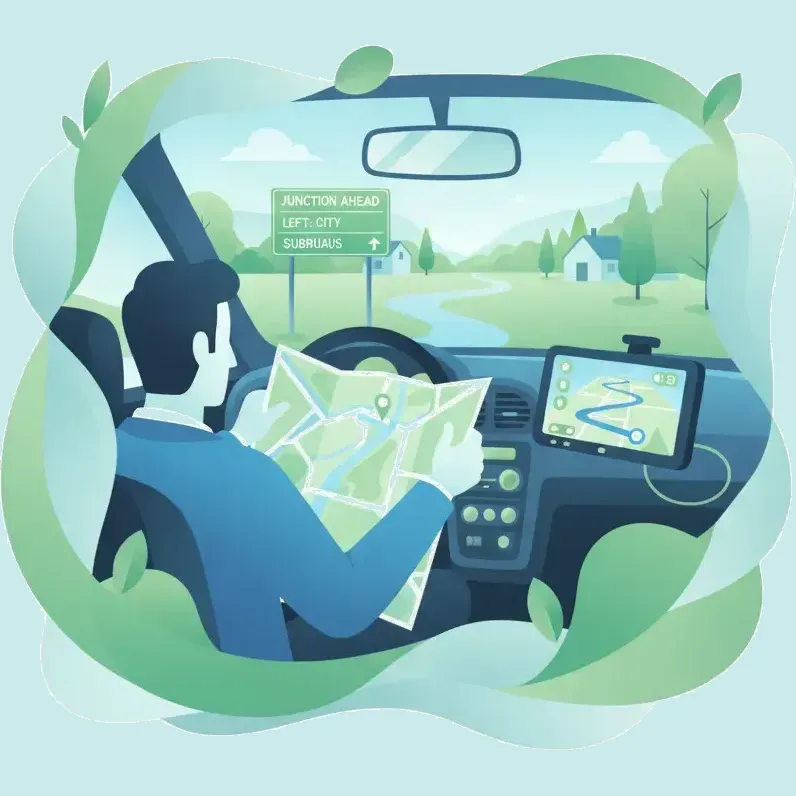
This lesson focuses on the fundamentals of route planning and wayfinding for passenger vehicle drivers. Learners will examine how to use timetables, journey maps, and GPS navigation to identify stops and maintain schedule adherence. The discussion includes best practices for handling route deviations, detours, and unexpected obstructions while keeping passengers informed. Emphasizing service reliability and accurate passenger information, this lesson equips drivers for efficient and safe route execution.

Reversing a large passenger vehicle is a high-risk manoeuvre, and this lesson provides essential safety protocols. It covers the importance of using a trained banksman or reversing assistant and understanding standard hand signals. The lesson also discusses the use of technical aids like reversing cameras and audible warnings. Learners will master the procedure for conducting a full 360-degree safety check before beginning and maintaining slow, controlled movement throughout the manoeuvre.
Explore common difficulties and violations drivers face when performing complex manoeuvres in confined spaces. Learn how to adapt techniques for various conditions including weather, load, and interaction with vulnerable road users.
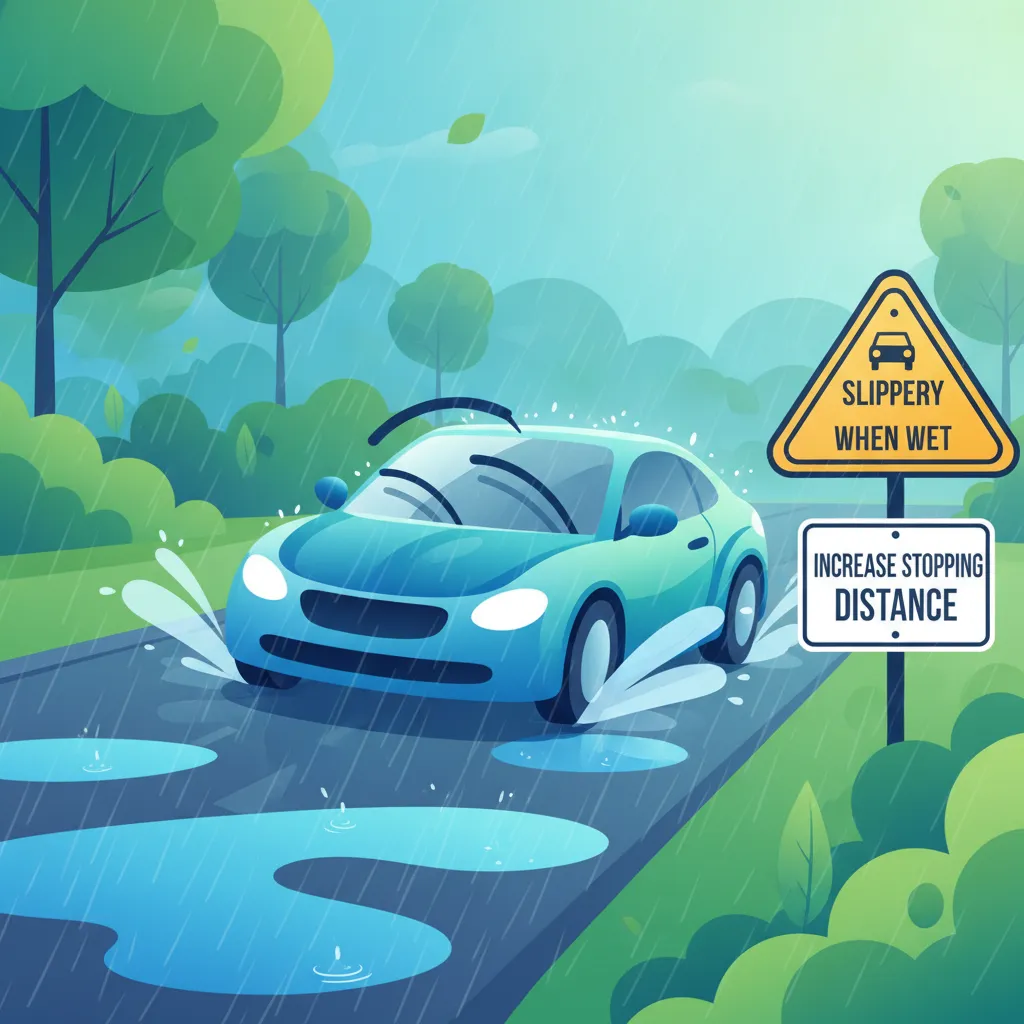
This lesson explains how different weather conditions impact the handling and stability of a large passenger vehicle. It covers the risks of aquaplaning in heavy rain, the effect of high winds on vehicle stability, and the severe reduction in visibility caused by fog. Learners will understand how ice and snow dramatically increase stopping distances and require extremely gentle control inputs to prevent skidding. Strategies for adapting speed and increasing following distances are emphasized.

This lesson equips drivers with strategies for maintaining control of a heavy vehicle during adverse weather conditions like heavy rain, ice, snow, and strong crosswinds. It covers the physics of traction loss, aquaplaning, and skidding, and explains how to use smooth inputs for steering, acceleration, and braking. The function of electronic stability control systems and other driver aids is also discussed as part of a proactive approach to safety in challenging environments.
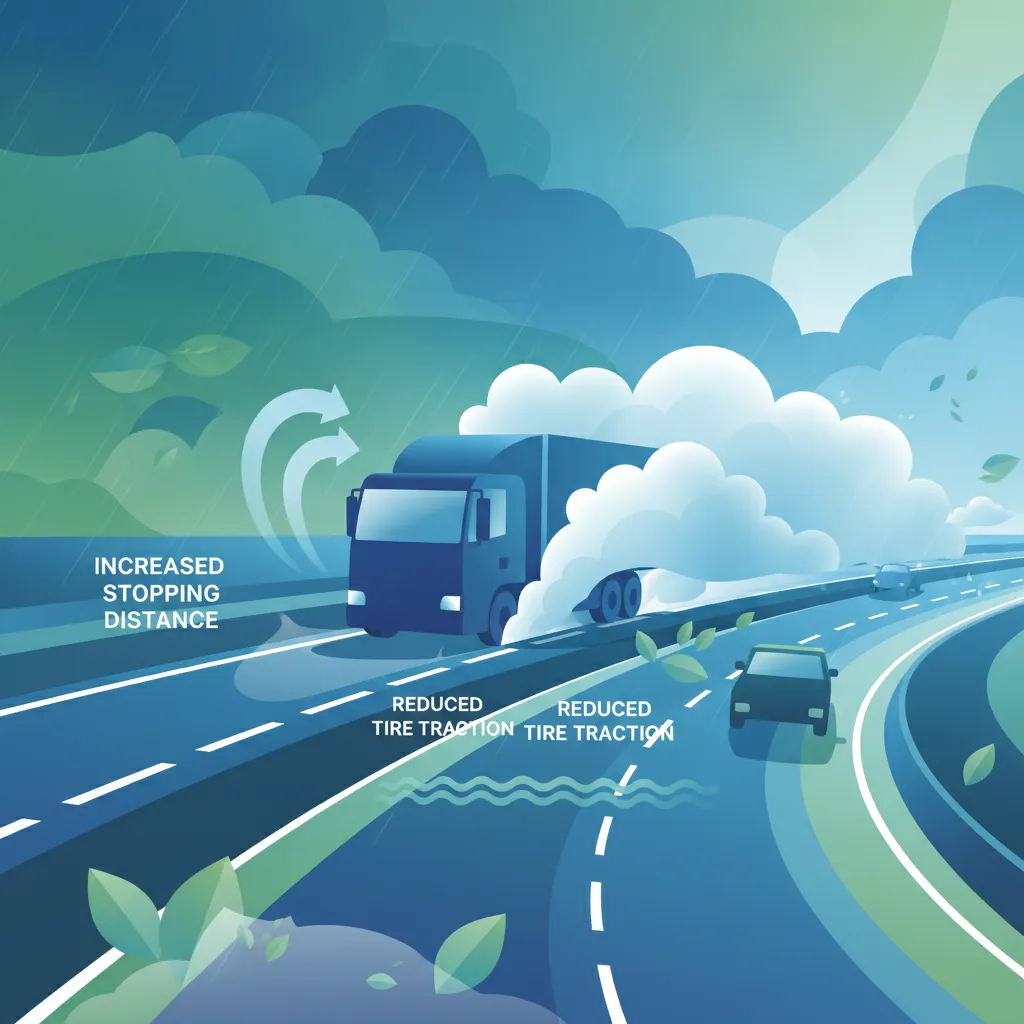
This lesson details how different adverse weather conditions uniquely affect the handling and stability of a heavy goods vehicle. It covers the increased stopping distances in rain, reduced visibility in fog, severe traction loss on ice, and the dangerous effect of strong crosswinds on high-sided vehicles. You will learn specific techniques for adjusting speed, increasing following distances, and using vehicle controls smoothly to maintain safety in challenging weather.
This lesson addresses the unique challenges of operating a large goods vehicle in congested urban and city environments. It focuses on techniques for navigating narrow streets, making tight turns, and safely accessing delivery points while being highly aware of vulnerable road users like pedestrians and cyclists. The importance of exceptional observation, low-speed control, and clear communication with other road users is heavily emphasized to minimize risk in these complex settings.

This lesson provides essential advice for driving when weather conditions are poor. It explains how rain can cause aquaplaning and why you must double your following distance. You will also learn techniques for driving in icy conditions, including gentle use of controls to avoid skidding, and the correct use of lights in fog.

This lesson addresses the unique challenges of driving a large vehicle on rural roads. It provides techniques for positioning the vehicle through sharp bends and on narrow lanes, and for safely navigating unmarked or uncontrolled junctions. Learners will be taught to anticipate hidden hazards common in the countryside, such as slow-moving farm vehicles, animals on the road, and concealed entrances. The correct use of passing places and strategies for meeting oncoming traffic are also covered.

This lesson explains how to adapt your driving around different vehicles. You will learn to look out for motorcyclists, who are often hard to see, especially at junctions. It also covers the challenges of sharing the road with large vehicles, such as their extended blind spots, wider turning circles, and the wind turbulence they can create.
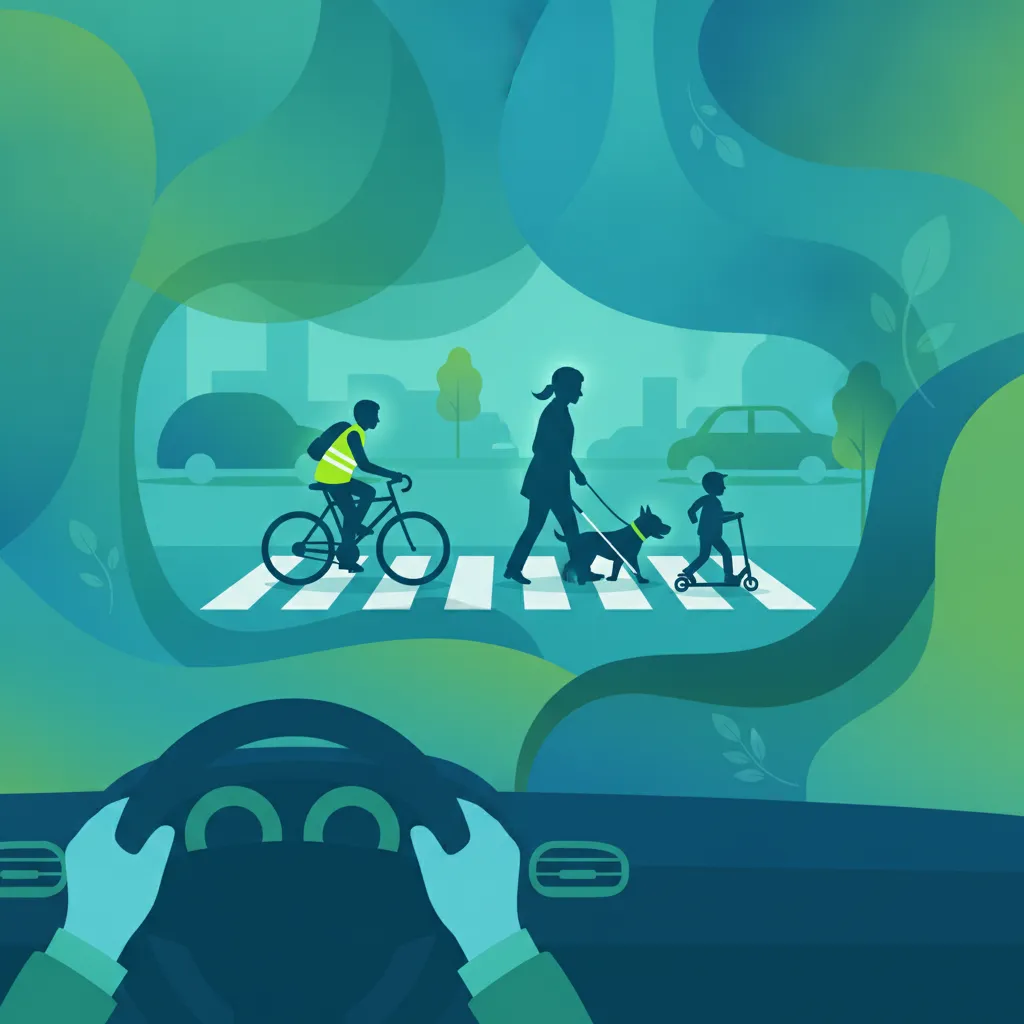
This lesson teaches drivers how to identify various types of vulnerable road users and anticipate their potential actions to prevent conflicts. It covers the specific risks associated with pedestrians, cyclists, motorcyclists, children, and elderly or disabled individuals. Emphasis is placed on heightened awareness and defensive driving techniques required to share the road safely. Understanding their perspectives and typical behaviours is key to protecting them and maintaining safety for everyone.
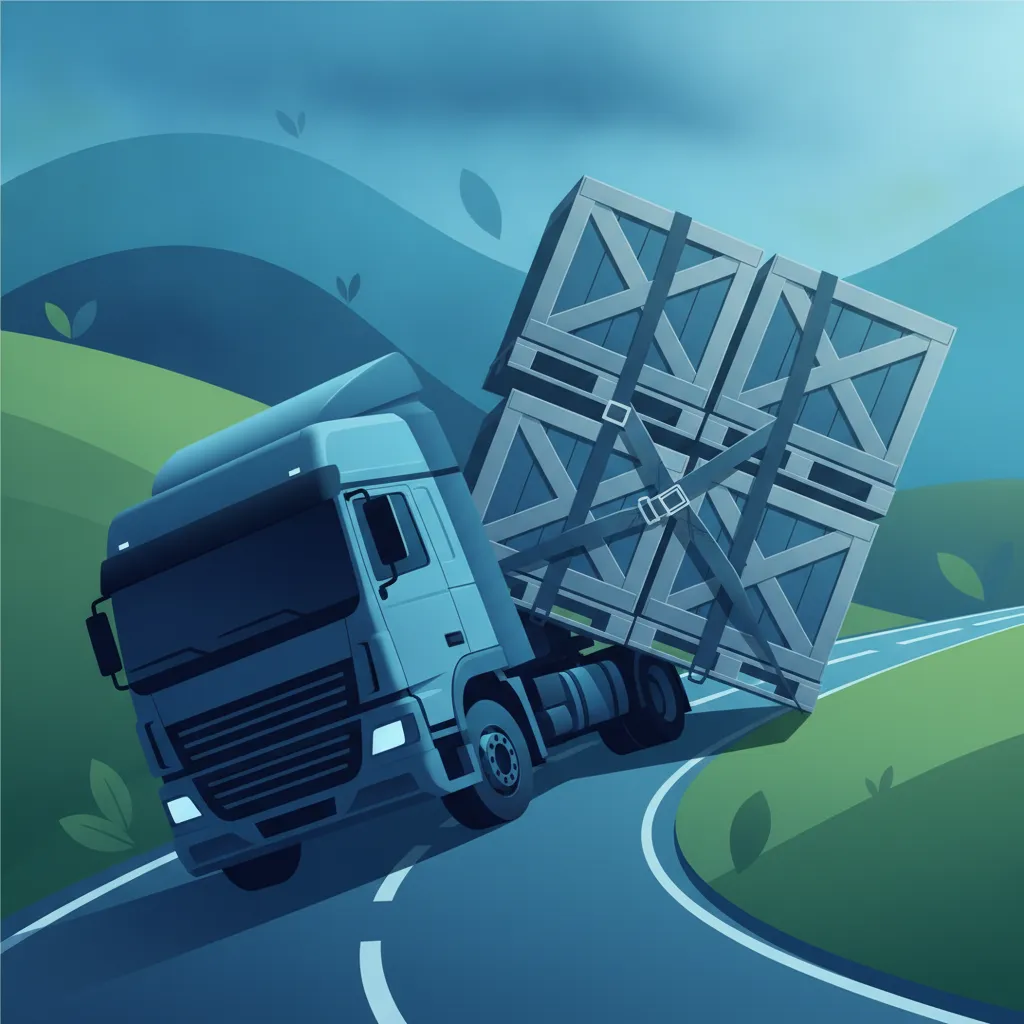
This lesson covers the principles of safe loading to prevent items from shifting or falling and causing a hazard. It explains that any load must be securely fastened and must not obstruct your view. You will also learn how overloading or distributing weight incorrectly can dangerously affect the vehicle's steering, braking, and overall stability.
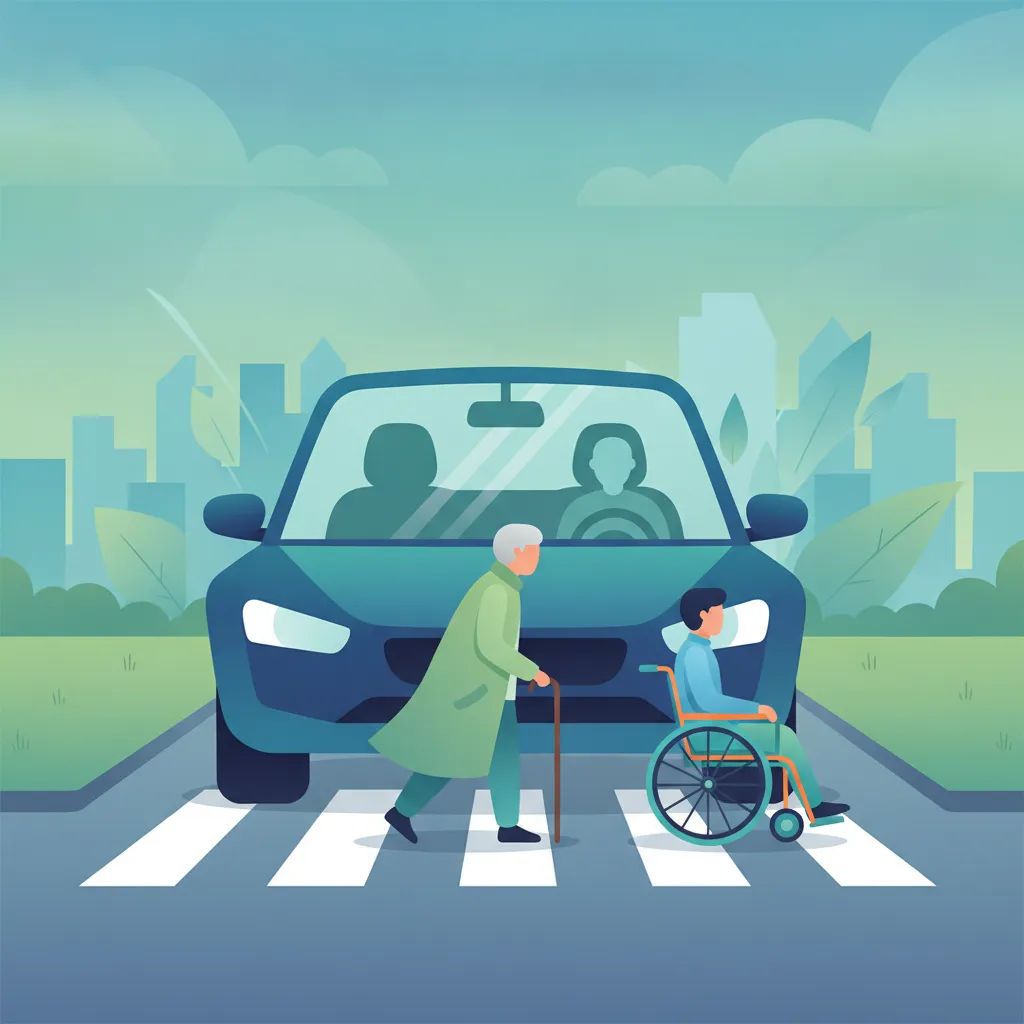
This lesson focuses on developing a proactive and patient approach towards elderly and disabled road users. It explains how to recognize and provide additional time and space for individuals with slower movement, mobility scooters, or sensory impairments. The content emphasizes the importance of driver attitude, patience at crossings, and anticipating the needs of these vulnerable individuals. Understanding these factors is crucial for preventing accidents and demonstrating a high level of professional care and responsibility.
Find clear answers to common questions learners have about Complex Manoeuvring in Confined Spaces. Learn how the lesson is structured, which driving theory objectives it supports, and how it fits into the overall learning path of units and curriculum progression in Great Britain. These explanations help you understand key concepts, lesson flow, and exam focused study goals.
The primary risk is the vehicle's 'tail swing' and 'front-end overhang' when turning, which can strike objects or pedestrians in confined spaces. You must constantly monitor all mirrors and your surroundings to account for these movements.
Operating at extremely low speeds allows you to maintain full control, make micro-adjustments to your steering, and react instantly to unexpected movements of pedestrians or other vehicles in a busy depot.
Yes, even with modern camera systems, your blind spots are extensive. You should always use your mirrors correctly, maintain a steady observation cycle, and use a banksman if one is available and instructed to do so.
Greater vehicle weight increases inertia, meaning it requires more force to start and stop movement. You must use smooth, progressive inputs to avoid jerking the vehicle, which is critical for passenger comfort and structural control.
Dive into our comprehensive question bank to find exactly what you need for your Great Britain theory test. Use our advanced filters to pinpoint specific subjects or test your knowledge on challenging areas, ensuring you're fully prepared for success.