
Understanding the Wechselkennzeichen system is essential for any vehicle owner in Austria seeking to manage multiple vehicles efficiently. This overview clarifies the legal obligations, including insurance and tax benefits, and the critical rules regarding public road usage, digital vignettes, and mandatory off-road storage for inactive vehicles.
Article content overview
Navigating the rules for vehicle registration in Austria can be complex, especially when managing multiple cars. The Wechselkennzeichen (interchangeable license plate) system is a highly efficient regulatory tool provided under the Austrian Kraftfahrgesetz (KFG). It allows vehicle owners to use a single set of license plates for up to three different vehicles, providing they meet specific legal requirements. Understanding how this system functions is essential for any driver or vehicle owner aiming to optimize costs while remaining compliant with federal traffic laws.
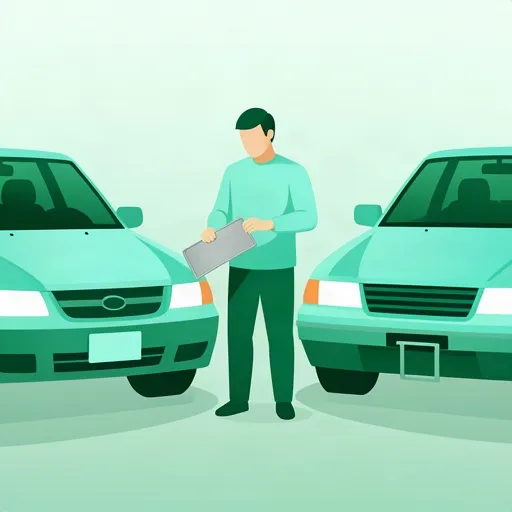
The fundamental principle of the interchangeable license plate is that you may own multiple vehicles, but you may only operate one of them on public roads at any given time. Because the license plate is the primary identifier for the vehicle, moving the plates from one vehicle to another is the act that "activates" the insurance and registration for that specific vehicle. Once the plates are removed, the vehicle that is no longer displaying them is considered officially unregistered for public road use.
The Wechselkennzeichen system does not mean you have a spare set of plates for each car. You only possess one set of physical plates. Before you set off, you must ensure the plates are securely attached to the vehicle you intend to drive. Driving without plates or with incorrect registration documents will lead to severe penalties.
To utilize an interchangeable license plate, all involved vehicles must belong to the same vehicle class. You cannot mix vehicle types; for example, you cannot use the same plate for a standard passenger car and a motorcycle, or an electric vehicle and a combustion-engine vehicle if their registration categories differ. Furthermore, all vehicles must be registered to the same owner at the same principal residence.
The primary motivation for using the Wechselkennzeichen is economic. In the Austrian system, vehicle-related taxes and insurance premiums are calculated based on the vehicle with the highest output or risk profile among the group. You effectively pay the premium and motor-related tax for only the most expensive vehicle, while the others are covered under the same registration umbrella at no additional recurring base cost for those specific categories.
In the context of interchangeable plates, the digital vignette is tied to the license plate number itself, not the individual vehicle chassis. This means your toll coverage automatically applies to whichever vehicle currently bears the interchangeable plates, provided the vehicle class matches the vignette requirements.
A critical rule that often catches new drivers off guard is the requirement for off-road storage. Because a vehicle without its license plates is not permitted to stand on public streets, you must have access to private property, such as a garage or a private driveway, to store the inactive vehicle(s). Leaving a vehicle without plates in a public parking space is a violation of the KFG and will result in administrative fines.
| Feature | Standard Registration | Wechselkennzeichen |
|---|---|---|
| Number of Plates | One set per vehicle | One set for up to 3 vehicles |
| Insurance Cost | Paid per vehicle | Paid for the highest-tier vehicle |
| Public Road Use | All vehicles can be driven simultaneously | Only one vehicle at a time |
| Storage Requirement | Public parking allowed | Inactive vehicles must be on private land |
In the context of the Austrian driving theory exam, questions often test your understanding of vehicle registration status. Remember that the Wechselkennzeichen is distinct from an Überstellungskennzeichen (transfer plate). While the interchangeable plate is a long-term solution for vehicle owners, the transfer plate is a temporary, short-term permit used primarily for moving unregistered vehicles from point A to point B, such as after a purchase. Mixing these concepts is a common mistake for learners.
The Austrian Wechselkennzeichen system allows a single license plate to be shared across up to three vehicles of the same class, registered to the same owner at the same address. The key rule is that only one vehicle may be operated on public roads at any time, and inactive vehicles must be stored on private property when plates are removed. Financial benefits come from paying insurance and taxes only for the highest-tier vehicle in the group. Learners should note the important distinction between the long-term Wechselkennzeichen and the temporary Überstellungskennzeichen used for short-distance vehicle transfers.
A short set of high-value points that capture the most important ideas from this article.
Only one vehicle bearing the Wechselkennzeichen can be driven on public roads at any given time
All vehicles sharing an interchangeable plate must belong to the same vehicle class and be registered to the same owner at the same address
Insurance premiums and motor-related taxes are calculated based on the highest-tier vehicle in the group
Inactive vehicles without their plates attached must be stored on private property, never on public streets
The digital vignette automatically transfers with the plate to whichever compatible vehicle is currently using it
Vehicles without plates are considered unregistered for public road use and cannot legally stand in public parking spaces
Vehicle class matching is strict: a passenger car and motorcycle cannot share the same interchangeable plate
Physical plates must be securely attached before driving; driving without plates or with incorrect registration documents results in severe penalties
The Wechselkennzeichen is a long-term registration solution, not to be confused with the temporary Überstellungskennzeichen used for moving unregistered vehicles
Confusing the Wechselkennzeichen with the Überstellungskennzeichen (transfer plate) which serves a completely different temporary purpose
Assuming multiple vehicles can be driven simultaneously under the same plate system, which violates the core rule of the scheme
Believing that different vehicle types (e.g., car and motorcycle) can share interchangeable plates despite differing registration categories
Leaving an inactive vehicle without plates in a public parking area, which constitutes a KFG violation and results in administrative fines
Assuming that the digital vignette is tied to the vehicle rather than the license plate number
Article content overview
A short set of high-value points that capture the most important ideas from this article.
Only one vehicle bearing the Wechselkennzeichen can be driven on public roads at any given time
All vehicles sharing an interchangeable plate must belong to the same vehicle class and be registered to the same owner at the same address
Insurance premiums and motor-related taxes are calculated based on the highest-tier vehicle in the group
Inactive vehicles without their plates attached must be stored on private property, never on public streets
The digital vignette automatically transfers with the plate to whichever compatible vehicle is currently using it
Vehicles without plates are considered unregistered for public road use and cannot legally stand in public parking spaces
Vehicle class matching is strict: a passenger car and motorcycle cannot share the same interchangeable plate
Physical plates must be securely attached before driving; driving without plates or with incorrect registration documents results in severe penalties
The Wechselkennzeichen is a long-term registration solution, not to be confused with the temporary Überstellungskennzeichen used for moving unregistered vehicles
Confusing the Wechselkennzeichen with the Überstellungskennzeichen (transfer plate) which serves a completely different temporary purpose
Assuming multiple vehicles can be driven simultaneously under the same plate system, which violates the core rule of the scheme
Believing that different vehicle types (e.g., car and motorcycle) can share interchangeable plates despite differing registration categories
Leaving an inactive vehicle without plates in a public parking area, which constitutes a KFG violation and results in administrative fines
Assuming that the digital vignette is tied to the vehicle rather than the license plate number
Explore related topics, search based questions, and concepts that learners often look up when studying Interchangeable License Plates Guide. These themes reflect real search intent and help you understand how this topic connects to wider driving theory knowledge in Austria.
Find clear and practical answers to common questions learners often have about Interchangeable License Plates Guide. This section helps explain difficult points, remove confusion, and reinforce the key driving theory concepts that matter for learners in Austria.
You can register up to three vehicles under one interchangeable license plate, provided they belong to the same vehicle class.
In Austria, the digital vignette is linked to the license plate itself, not the specific vehicle body, which allows it to cover all vehicles registered under that plate.
No. Only one vehicle equipped with the Wechselkennzeichen may be operated on public roads at any given time; the others must be stored off-road.
Yes. You typically pay the insurance premium and vehicle tax only for the vehicle in the group with the highest costs, resulting in significant savings.
Use the search bar above to delve deeper into any Austrian road rule, traffic sign, or specific driving procedure. Refine your understanding of complex theory concepts and fully prepare for your official driving licence examination. Start your targeted study now.