
When fitting bicycle carriers or trailers, Austrian law dictates that both your registration plate and rear signaling systems must remain fully visible to other road users. This guide covers the specific requirements for using a duplicate number plate and a lighting board to meet KFG standards, ensuring you stay prepared for both real-world driving and theory test scenarios.
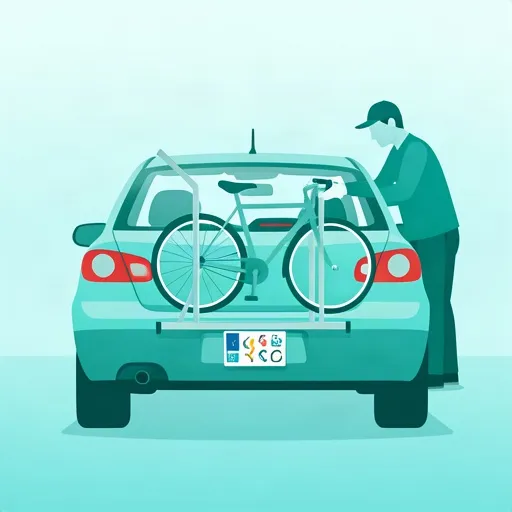
Article content overview
In Austria, the use of rear-mounted accessories such as bicycle carriers, ski racks, or trailers requires strict adherence to traffic regulations, specifically those outlined in the Kraftfahrgesetz (KFG). Many drivers underestimate the legal implications of attaching equipment that alters the rear profile of their vehicle. Whether you are heading to the Alps for a cycling trip or transporting cargo, ensuring that your vehicle remains compliant with road traffic legislation is essential to avoid administrative fines and ensure safety for all road users.
Under Austrian law, your vehicle's registration plate and rear signaling systems must be completely visible and legible at all times. When you mount a bicycle carrier or a heavy-duty luggage rack, these items frequently obscure the license plate or the vehicle’s integrated tail lights. According to § 102 of the Kraftfahrgesetz, the driver is responsible for ensuring that the license plate is not hidden by dirt, snow, or mounted equipment. If an attachment prevents a clear line of sight to these identifiers, you are legally required to take corrective measures.
Failure to comply with these visibility rules can lead to an Organmandat (a standardized penalty notice) or, in more severe cases, a Strafverfügung (a formal administrative fine). Police frequently conduct Verkehrskontrollen (traffic checks) during peak holiday seasons, specifically looking for vehicles with obscured plates or non-functional lighting boards.
If your bicycle carrier or luggage box blocks the rear license plate, you are not permitted to simply drive as is. The law requires you to attach a duplicate registration plate to the carrier in a clearly visible position. In Austria, this is typically a red, officially issued plate that mirrors the alphanumeric code of your primary vehicle. You may also utilize a specialized plate holder adapter that allows you to shift the original license plate onto the external carrier, provided the plate remains fully visible and properly illuminated.
Simply covering your registration plate with a bicycle or an accessory carrier without a duplicate plate or an approved mounting solution is a direct violation of the KFG and will likely result in an immediate fine.
It is not just the license plate that must remain visible; your vehicle's signaling system—including brake lights, turn signals, fog lights, and rear position lights—must function correctly and be clearly identifiable to other drivers. When an accessory obscures these lights, you are required to fit a Beleuchtungsträger (a lighting board). This board acts as a secondary signaling unit and must be electrically connected to the vehicle’s wiring system.
When selecting a lighting board, ensure it meets the necessary technical standards and is equipped with EU-type-approved lighting units. Most modern trailer tow ball adapters or rack mounts come with integrated wiring and light assemblies, which represent the safest and most compliant solution for Austrian roads.
The following table summarizes the primary requirements for rear-mounted vehicle attachments in Austria:
| Feature | Requirement | Legal Basis |
|---|---|---|
| Registration Plate | Must be fully visible and illuminated at all times. | KFG § 102 |
| Obscured Plate | Use of a duplicate red plate or adapter is mandatory. | KFG § 82/83 |
| Rear Lights | Obscured lights must be replaced by a functional lighting board. | KFG § 102 |
| Connections | Lighting boards must be wired to the vehicle's electrical system. | Technical standards |
In your Austrian driving theory exam, you may encounter questions regarding equipment responsibilities and vehicle maintenance. Examiners focus on the driver’s duty of care (Lenkerpflichten), which includes the obligation to check the vehicle's roadworthiness before starting a journey. You should be prepared to identify that visibility, lighting, and clear display of license plates are non-negotiable safety standards. Questions often present scenarios where a driver has loaded a vehicle incorrectly; understanding that the driver—not the accessory manufacturer—bears the legal liability is key to answering these questions correctly.
Austrian traffic law under the Kraftfahrgesetz (KFG) requires that rear-mounted accessories like bicycle carriers do not obscure your license plate or rear signaling systems. If visibility is blocked, you must install either a duplicate red registration plate or an approved mounting adapter, and fit a compliant lighting board that electrically connects to your vehicle. The driver bears full legal responsibility for these requirements under § 102, and violations result in standardized fines (Organmandat) or formal penalties (Strafverfügung). Theory exam questions frequently test understanding of driver liability and equipment obligations in these scenarios.
A short set of high-value points that capture the most important ideas from this article.
When a rear-mounted accessory blocks your license plate, Austrian law requires either a duplicate red registration plate or an approved plate adapter on the carrier.
Rear lights obscured by a bicycle carrier must be replaced by a properly wired lighting board (Beleuchtungsträger) that connects to your vehicle's electrical system.
As the driver (Lenker), you bear full legal responsibility for vehicle roadworthiness and visibility compliance, not the accessory manufacturer.
Police frequently conduct targeted traffic checks during holiday seasons for obscured plates and non-functional lighting on vehicles with rear carriers.
KFG § 102 requires that license plates and rear signaling systems remain fully visible and legible at all times during driving.
A duplicate plate is typically a red, officially issued plate that mirrors your vehicle's primary registration code.
Lighting boards must meet EU-type-approved technical standards and be electrically connected to the vehicle's wiring system.
Covering your registration plate without a compliant solution constitutes a direct KFG violation punishable by Organmandat or Strafverfügung.
Assuming the accessory manufacturer is responsible for plate visibility rather than the driver.
Mounting a bicycle carrier without installing a duplicate plate or lighting board when the originals are obscured.
Failing to properly wire the lighting board to the vehicle's electrical system, leaving brake lights or turn signals non-functional.
Forgetting that the plate must also be properly illuminated, not just visible.
Article content overview
A short set of high-value points that capture the most important ideas from this article.
When a rear-mounted accessory blocks your license plate, Austrian law requires either a duplicate red registration plate or an approved plate adapter on the carrier.
Rear lights obscured by a bicycle carrier must be replaced by a properly wired lighting board (Beleuchtungsträger) that connects to your vehicle's electrical system.
As the driver (Lenker), you bear full legal responsibility for vehicle roadworthiness and visibility compliance, not the accessory manufacturer.
Police frequently conduct targeted traffic checks during holiday seasons for obscured plates and non-functional lighting on vehicles with rear carriers.
KFG § 102 requires that license plates and rear signaling systems remain fully visible and legible at all times during driving.
A duplicate plate is typically a red, officially issued plate that mirrors your vehicle's primary registration code.
Lighting boards must meet EU-type-approved technical standards and be electrically connected to the vehicle's wiring system.
Covering your registration plate without a compliant solution constitutes a direct KFG violation punishable by Organmandat or Strafverfügung.
Assuming the accessory manufacturer is responsible for plate visibility rather than the driver.
Mounting a bicycle carrier without installing a duplicate plate or lighting board when the originals are obscured.
Failing to properly wire the lighting board to the vehicle's electrical system, leaving brake lights or turn signals non-functional.
Forgetting that the plate must also be properly illuminated, not just visible.
Explore related topics, search based questions, and concepts that learners often look up when studying Austria Bike Carrier and Plate Rules. These themes reflect real search intent and help you understand how this topic connects to wider driving theory knowledge in Austria.
Find clear and practical answers to common questions learners often have about Austria Bike Carrier and Plate Rules. This section helps explain difficult points, remove confusion, and reinforce the key driving theory concepts that matter for learners in Austria.
Yes, if the bicycle carrier or any load obscures the original rear number plate, you must attach a duplicate number plate in a clearly visible position on the carrier according to Austrian KFG standards.
A lighting board is mandatory if the bicycle carrier or attachment obscures any of the vehicle's rear lights, such as brake lights, indicators, or rear position lights.
Driving with an obscured plate can result in an Organmandat (an immediate fine) or a formal administrative penalty (Strafverfügung), which can lead to higher costs depending on the circumstances.
If you tow a foreign-registered trailer with an Austrian-registered vehicle, you must attach an Austrian number plate that covers the foreign plate, ensuring it matches the plate of the towing vehicle.
Use the search bar above to delve deeper into any Austrian road rule, traffic sign, or specific driving procedure. Refine your understanding of complex theory concepts and fully prepare for your official driving licence examination. Start your targeted study now.