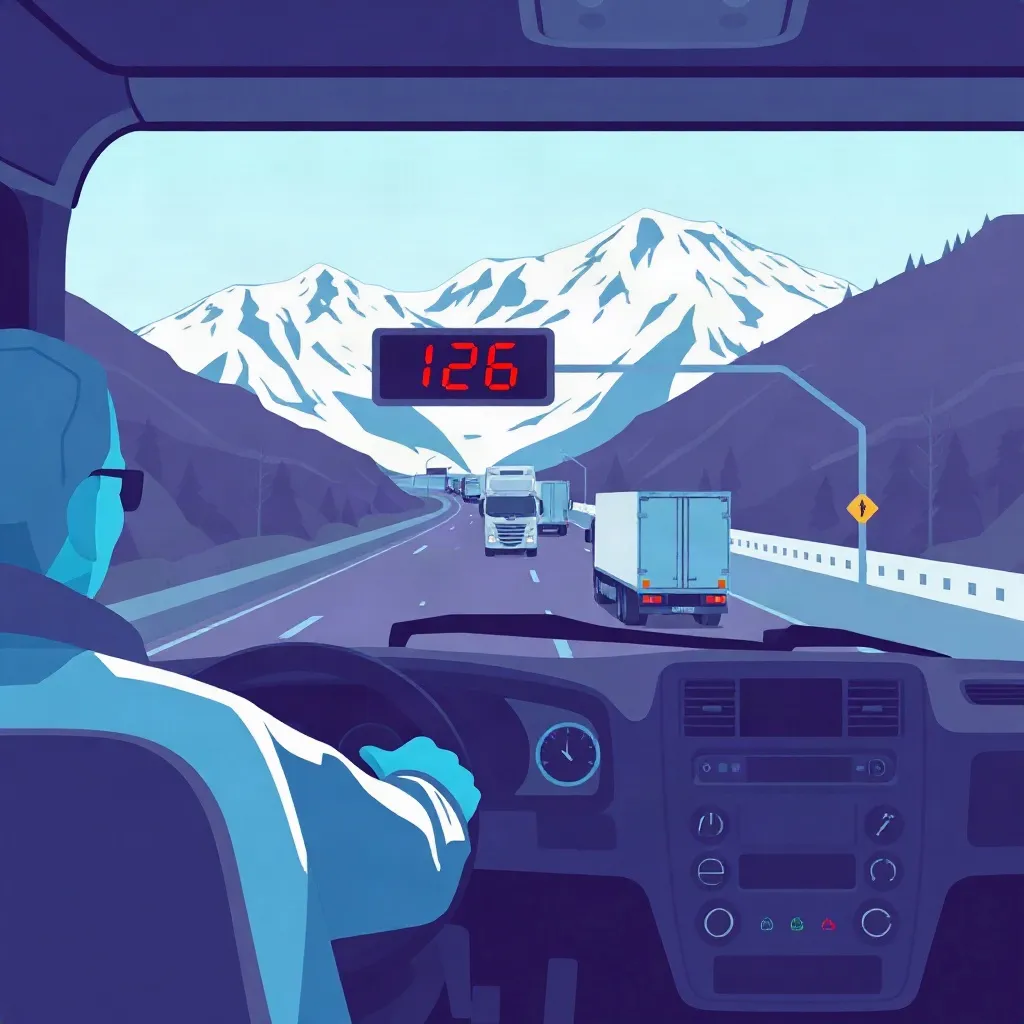
The Tyrol region enforces strict traffic management measures for heavy goods vehicles, including the night driving ban and the Dosierampel system at the German border. While these restrictions primarily target freight traffic, they significantly affect the flow of all vehicles on the A12 and surrounding corridors like the B171. This guide clarifies how these regulatory measures function to help you better navigate one of Europe’s busiest transit routes.
Article content overview
The A12 Inntalautobahn represents one of the most critical and heavily traveled transit corridors in Europe, serving as a vital link between Germany and Italy via the Brenner Pass. For both professional drivers and private motorists, understanding the specific regulatory environment of this route is essential. Tyrol has implemented a suite of advanced traffic management measures to mitigate the environmental and congestion-related impacts of heavy goods vehicle (HGV) traffic. While these rules are primarily designed for commercial freight, their implementation directly influences traffic flow, potential wait times, and safety for all road users on the A12 and surrounding corridors.
The region of Tyrol faces unique logistical challenges due to the high volume of trans-European transit. To balance the free movement of goods with the protection of the local environment and the safety of the motorway network, authorities have introduced specialized measures. These include the Transitrekord-Verordnung, a regulation designed to manage the number of heavy vehicles allowed on the Brenner route, and strict night driving bans. For the theory student, recognizing that these measures are part of a broader strategy to maintain traffic safety and infrastructure integrity is crucial for understanding how official traffic management operates on major Austrian highways.
A regulatory framework in Tyrol that utilizes quota-based systems to limit the number of heavy goods vehicles permitted to transit through the Alpine corridor, aiming to reduce pollution and congestion on the Brenner motorway.
Beyond the national Sonntagsfahrverbot (Sunday driving ban) that applies to all HGV traffic in Austria, the A12 Inntalautobahn features specific regional restrictions. The LKW-Nachtfahrverbot is a critical component of these rules, prohibiting the operation of heavy lorries during specific night-time hours to minimize noise pollution and safety risks. These bans are not merely suggestions; they are strictly enforced by the authorities. Drivers should note that these regulations apply to the motorway itself and can often lead to "parking" congestion at designated rest areas or border points as drivers wait for the ban to lift.
One of the most significant traffic management tools for anyone traveling the A12 is the Dosierampel, or block-clearing metering system. When traffic density reaches a critical threshold—typically during peak holiday periods or transit surges—electronic signals at the Kufstein border area restrict the number of lorries allowed to enter the A12 per hour.
This system prevents the motorway tunnel systems from becoming overcrowded, ensuring that if a breakdown occurs, emergency vehicles can still access the scene. However, this creates a ripple effect: HGVs are held on the approach, often backing up onto the German A93 motorway. Private car drivers should be aware that when a Dosierampel is active, the flow of traffic on the A12 may change significantly, and regional roads like the B171 often experience increased usage by motorists attempting to bypass transit delays.
While the Dosierampel and transit quotas target heavy goods vehicles, they indirectly impact the driving experience for passenger car operators. During active metering, the interaction between standing heavy traffic and moving passenger vehicles requires heightened vigilance. Drivers should maintain a safe distance and be prepared for sudden changes in lane availability, particularly near border crossings. Always check traffic reports before entering the A12 during peak travel seasons, as the regulatory environment in Tyrol can cause rapid shifts in travel time and route viability.
| Measure | Target Vehicle | Primary Goal |
|---|---|---|
| National Sunday Ban | All HGVs > 3.5t | Weekend traffic reduction |
| LKW-Nachtfahrverbot | HGVs (varies) | Noise & emission control |
| Dosierampel | HGVs (transit) | Tunnel safety & flow control |
| Transit Quotas | Transit HGVs | Environmental protection |
When driving in Tyrol, always prioritize road safety over navigation apps that might suggest taking local roads (like the B171) to bypass motorway congestion. Local traffic authorities frequently restrict these secondary routes for through-traffic during peak periods to protect residents and maintain flow.
The A12 Inntalautobahn in Tyrol operates under a layered system of HGV restrictions including the national Sonntagsfahrverbot, regional LKW-Nachtfahrverbot, and the Transitrekord-Verordnung quotas. The Dosierampel metering system at Kufstein actively controls heavy vehicle influx during peak periods to prevent tunnel overcrowding and ensure emergency access. These measures directly influence traffic flow, causing congestion and route shifts that affect all drivers. Private motorists should monitor traffic reports, maintain safe distances near border areas, and avoid depending on local road alternatives during active restrictions.
A short set of high-value points that capture the most important ideas from this article.
The A12 Inntalautobahn is a major Alpine transit corridor where Tyrol enforces specialized HGV restrictions beyond standard national rules
The Transitrekord-Verordnung uses quota-based limits to control the annual number of heavy vehicles on the Brenner route
The Dosierampel metering system at the Kufstein border restricts HGV entry when traffic density reaches critical levels to ensure tunnel safety
HGV restrictions include both national measures like Sonntagsfahrverbot and regional night driving bans (LKW-Nachtfahrverbot)
Understanding these restrictions helps all drivers anticipate congestion and plan safer journeys on Austrian motorways
Sonntagsfahrverbot is a national ban on HGVs (>3.5t) on Sundays and public holidays; LKW-Nachtfahrverbot is a regional night-time ban on the A12
The Dosierampel system is a traffic light at the border that meters HGVs onto the A12 in controlled numbers
When Dosierampel is active, HGVs queue on the German A93 before being allowed through
Transit quotas under Transitrekord-Verordnung aim to reduce pollution and congestion on the Brenner corridor
Regional roads like B171 may be restricted during peak periods to protect local residents
Confusing national Sunday driving bans with regional night driving bans—these are separate measures with different scopes
Assuming HGV restrictions only affect truck drivers; they create ripple effects for all traffic including passenger vehicles
Relying solely on navigation apps to bypass motorway congestion—local authorities restrict secondary routes during peak periods
Underestimating how quickly traffic conditions can change near the border when the Dosierampel activates
Article content overview
A short set of high-value points that capture the most important ideas from this article.
The A12 Inntalautobahn is a major Alpine transit corridor where Tyrol enforces specialized HGV restrictions beyond standard national rules
The Transitrekord-Verordnung uses quota-based limits to control the annual number of heavy vehicles on the Brenner route
The Dosierampel metering system at the Kufstein border restricts HGV entry when traffic density reaches critical levels to ensure tunnel safety
HGV restrictions include both national measures like Sonntagsfahrverbot and regional night driving bans (LKW-Nachtfahrverbot)
Understanding these restrictions helps all drivers anticipate congestion and plan safer journeys on Austrian motorways
Sonntagsfahrverbot is a national ban on HGVs (>3.5t) on Sundays and public holidays; LKW-Nachtfahrverbot is a regional night-time ban on the A12
The Dosierampel system is a traffic light at the border that meters HGVs onto the A12 in controlled numbers
When Dosierampel is active, HGVs queue on the German A93 before being allowed through
Transit quotas under Transitrekord-Verordnung aim to reduce pollution and congestion on the Brenner corridor
Regional roads like B171 may be restricted during peak periods to protect local residents
Confusing national Sunday driving bans with regional night driving bans—these are separate measures with different scopes
Assuming HGV restrictions only affect truck drivers; they create ripple effects for all traffic including passenger vehicles
Relying solely on navigation apps to bypass motorway congestion—local authorities restrict secondary routes during peak periods
Underestimating how quickly traffic conditions can change near the border when the Dosierampel activates
Explore related topics, search based questions, and concepts that learners often look up when studying A12 Tyrol HGV Restrictions. These themes reflect real search intent and help you understand how this topic connects to wider driving theory knowledge in Austria.
Find clear and practical answers to common questions learners often have about A12 Tyrol HGV Restrictions. This section helps explain difficult points, remove confusion, and reinforce the key driving theory concepts that matter for learners in Austria.
The Dosierampel is an electronic traffic metering system that regulates the number of HGVs entering the A12 motorway during peak periods. While it prevents congestion inside tunnels, it can lead to significant queues for all vehicles on approach routes.
No, the LKW-Nachtfahrverbot (night driving ban) and other specific HGV transit regulations in Tyrol are strictly for heavy goods vehicles. Passenger cars are not subject to these time-specific bans.
Tyrol has implemented these measures, such as the Transitrekord-Verordnung, to manage the intense volume of transit freight traffic through the narrow Inn valley and to reduce environmental and noise impacts on the local population.
Use the search bar above to delve deeper into any Austrian road rule, traffic sign, or specific driving procedure. Refine your understanding of complex theory concepts and fully prepare for your official driving licence examination. Start your targeted study now.