
To comply with §102 KFG, drivers in Austria must carry specific safety gear and documentation at all times. This guide explains the strict regulations surrounding the use of reflective vests, which must be worn before exiting a vehicle, and details the necessary legal documents including the registration certificate and driver's license. Mastering these requirements will ensure you are prepared for both the theory examination and real-world traffic scenarios.
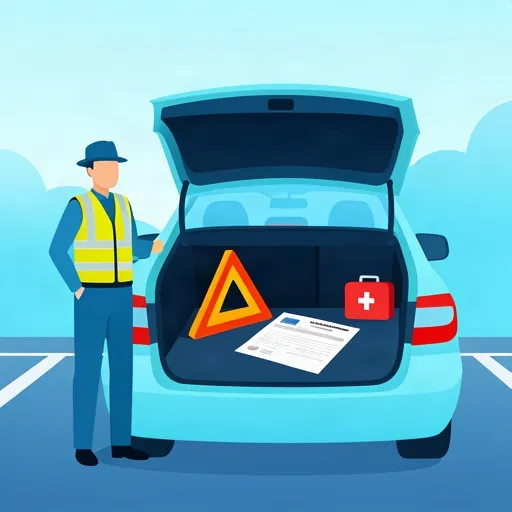
Article content overview
Driving in Austria requires more than just technical skill behind the wheel; it requires strict adherence to §102 of the Kraftfahrzeuggesetz (KFG). This law dictates exactly what equipment must be present in your vehicle and which documents must be available for inspection during a police check. Understanding these requirements is not only a matter of legal compliance but also a core component of the Austrian driving theory exam. Failure to carry the mandated safety items can result in fines and, more importantly, may compromise your safety in an emergency.
Every motor vehicle registered in Austria must be equipped with specific safety gear. These items are designed to assist you in breakdown situations or accidents and are non-negotiable under current legislation. While many drivers believe that these items are merely recommended, the law is explicit about their presence, and examiners frequently include questions about them to test your awareness of traffic safety protocols.
The legal requirement under §102 KFG mandates that every multi-track vehicle must carry a warning triangle, a first aid kit that meets the DIN 13164 standard, and a reflective safety vest for the driver.
Since 2014, Austria has maintained a stringent requirement regarding reflective safety vests. Unlike in some neighboring countries where the vest is only required on motorways, Austrian law mandates that the vest must be kept within the passenger cabin—not in the boot—and must be donned by the driver before they exit the vehicle, regardless of the road type. This ensures the driver is visible immediately upon stepping out, which is a critical safety measure on high-speed roads like the Autobahn or Schnellstraße.
Your first aid kit must adhere to the DIN 13164 standard to ensure the contents are sufficient for treating injuries at an accident scene. It is essential to check the expiration date periodically, as outdated medical supplies may be deemed non-compliant. Similarly, the warning triangle is a vital tool for alerting approaching traffic to a breakdown or collision.
When operating a motor vehicle in Austria, you are legally obligated to carry specific documents. If you are stopped by the police, failing to produce these can lead to administrative penalties. The theory exam often tests whether you understand which documents are mandatory versus those which are simply recommended for international travel.
A digital photo of your driving license on your smartphone is not legally accepted. You must carry the physical, original driving license card at all times when driving.
The documents you must keep in your vehicle include your valid driving license (Führerschein), the official vehicle registration certificate (Zulassungsschein), and proof of your third-party liability insurance. If you are traveling outside of the European Union, it is also highly advisable to carry an International Insurance Card, commonly known as the Green Card, to provide internationally recognized proof of insurance coverage.
| Item | Requirement | Location |
|---|---|---|
| Warning Triangle | Mandatory | Passenger cabin or boot |
| Reflective Vest | Mandatory | Passenger cabin |
| First Aid Kit | Mandatory (DIN 13164) | Passenger cabin or boot |
| Fire Extinguisher | Optional | Recommended |
The theory exam aims to ensure that new drivers prioritize safety over convenience. Questions on this topic often revolve around the "why" and "when"—for example, whether a vest is required on a quiet residential street or the exact distance for placing a warning triangle. By internalizing these rules now, you demonstrate the foresight required to operate a vehicle safely in the Austrian traffic environment.
Austria's §102 KFG mandates that all motor vehicles carry a warning triangle, a DIN 13164-compliant first aid kit, and a reflective safety vest stored in the passenger cabin. The reflective vest must be worn by the driver before exiting the vehicle on any road type—a stricter rule than in many neighboring countries. Warning triangle placement varies: at least 50 meters on standard roads and at least 100 meters on Autobahn or Schnellstraße. Drivers must carry their physical Führerschein (digital copies are not accepted), Zulassungsschein, and proof of Haftpflichtversicherung. These requirements are regularly tested in the Austrian driving theory exam and reflect Austria's emphasis on roadside safety preparedness.
A short set of high-value points that capture the most important ideas from this article.
Reflective safety vests must be worn by the driver before exiting the vehicle, regardless of road type, and must be stored in the passenger cabin—not the boot.
Warning triangles must be placed at least 50 meters behind the vehicle on Freilandstraßen and at least 100 meters on Autobahn and Schnellstraße.
First aid kits must comply with DIN 13164 standard, and drivers should regularly check expiration dates.
A digital photo or electronic copy of your driving license is not legally accepted in Austria; you must carry the physical Führerschein at all times.
Required documents while driving include your valid driving license (Führerschein), vehicle registration certificate (Zulassungsschein), and proof of third-party liability insurance (Haftpflichtversicherung).
The Warnweste rule is stricter than in neighboring countries—always don it before stepping out, not just on motorways.
Pannendreieck (warning triangle) placement distance doubles on high-speed roads: 100m for Autobahn/Schnellstraße versus 50m for standard roads.
DIN 13164 is the specific standard your first aid kit must meet to be legally compliant.
Physical documents only: §102 KFG requires the original Zulassungsschein and Führerschein—digital substitutes are not permitted.
If traveling outside the EU, carry the International Insurance Card (Green Card) as additional proof of insurance.
Assuming reflective vests are only needed on motorways; Austrian law requires wearing them before exiting on any road type.
Forgetting that warning triangle distance requirements differ based on road classification.
Believing a smartphone photo of your driving license satisfies the legal requirement; only the physical card is valid.
Neglecting to check first aid kit expiration dates, leading to non-compliance even if the kit appears complete.
Storing the reflective vest in the boot instead of the passenger cabin, which violates the cabin-storage requirement.
Article content overview
A short set of high-value points that capture the most important ideas from this article.
Reflective safety vests must be worn by the driver before exiting the vehicle, regardless of road type, and must be stored in the passenger cabin—not the boot.
Warning triangles must be placed at least 50 meters behind the vehicle on Freilandstraßen and at least 100 meters on Autobahn and Schnellstraße.
First aid kits must comply with DIN 13164 standard, and drivers should regularly check expiration dates.
A digital photo or electronic copy of your driving license is not legally accepted in Austria; you must carry the physical Führerschein at all times.
Required documents while driving include your valid driving license (Führerschein), vehicle registration certificate (Zulassungsschein), and proof of third-party liability insurance (Haftpflichtversicherung).
The Warnweste rule is stricter than in neighboring countries—always don it before stepping out, not just on motorways.
Pannendreieck (warning triangle) placement distance doubles on high-speed roads: 100m for Autobahn/Schnellstraße versus 50m for standard roads.
DIN 13164 is the specific standard your first aid kit must meet to be legally compliant.
Physical documents only: §102 KFG requires the original Zulassungsschein and Führerschein—digital substitutes are not permitted.
If traveling outside the EU, carry the International Insurance Card (Green Card) as additional proof of insurance.
Assuming reflective vests are only needed on motorways; Austrian law requires wearing them before exiting on any road type.
Forgetting that warning triangle distance requirements differ based on road classification.
Believing a smartphone photo of your driving license satisfies the legal requirement; only the physical card is valid.
Neglecting to check first aid kit expiration dates, leading to non-compliance even if the kit appears complete.
Storing the reflective vest in the boot instead of the passenger cabin, which violates the cabin-storage requirement.
Explore related topics, search based questions, and concepts that learners often look up when studying Austria Mandatory Vehicle Equipment. These themes reflect real search intent and help you understand how this topic connects to wider driving theory knowledge in Austria.
Find clear and practical answers to common questions learners often have about Austria Mandatory Vehicle Equipment. This section helps explain difficult points, remove confusion, and reinforce the key driving theory concepts that matter for learners in Austria.
No, a fire extinguisher is not legally required for private passenger cars in Austria.
Under Austrian law, you must put on your reflective vest while still inside the vehicle before you open the door to exit, particularly in breakdown situations.
The first aid kit must meet the DIN 13164 standard or an equivalent Austrian ÖNORM requirement.
You must carry your valid driver's license (Führerschein), the vehicle registration certificate (Zulassungsschein), and proof of mandatory third-party liability insurance.
On ordinary roads, it must be placed at least 50 meters behind the vehicle; on motorways or expressways, it must be at least 100 meters behind.
Use the search bar above to delve deeper into any Austrian road rule, traffic sign, or specific driving procedure. Refine your understanding of complex theory concepts and fully prepare for your official driving licence examination. Start your targeted study now.