
Learning how to maintain your vehicle in winter is a critical part of your Austrian driving theory preparation. This article explains why departing a car wash with frozen components constitutes a breach of your duty of care under Austrian law, and how simple maintenance oversights can lead to severe traffic hazards on public roads.
Article content overview
Driving in Austria during the winter months requires more than just high-quality winter tires; it demands a comprehensive understanding of your responsibility as a vehicle owner. While keeping a vehicle clean is essential for visibility, using an automated car wash (Autowaschanlage) in sub-zero temperatures introduces specific hazards that can lead to significant safety risks and legal liability. As a driver, you are legally obligated under §101 of the Motor Vehicles Act (KFG) to ensure your vehicle is in a roadworthy condition before entering public traffic. When residual water from a car wash freezes on critical components, you are failing that duty of care.
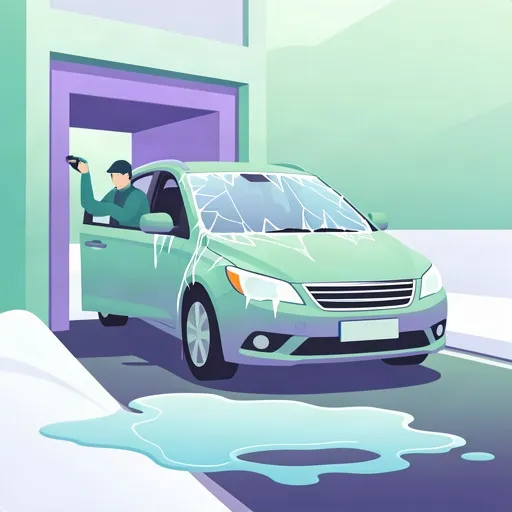
When the ambient temperature is near or below freezing, the water used in automated car washes does not evaporate; it begins a rapid transition into ice. This is particularly dangerous when the moisture clings to mechanical parts or exposed surfaces of your car. For instance, windscreen wiper blades can freeze solid to the glass or become encased in ice, rendering them useless during a snowstorm. Furthermore, door locks, hinges, and rubber seals can freeze shut, potentially trapping you inside or preventing secure closure of the vehicle.
Beyond the internal issues for your car, there is a severe risk to other road users. As you pull away from the wash facility, water dripping from the undercarriage or roof onto the freezing asphalt can create "flash ice" (Blitzeis). This localized ice patch is often invisible to following traffic, creating a high-risk zone for skidding and accidents.
In the Austrian legal framework, the driver is held strictly accountable for the state of their vehicle. Under §101 KFG (Kraftfahrgesetz), a vehicle must be maintained and equipped such that its operation does not endanger the safety of others. If you depart a car wash and immediately lose visibility because your windscreen freezes over, you are considered to be operating an unroadworthy vehicle.
If your vehicle causes an accident because of ice that formed due to poor post-wash maintenance, you may be held liable under §31 StVO (Straßenverkehrsordnung). This section prohibits any action that contaminates or damages the road surface, including the creation of hazardous ice patches.
Furthermore, the "load" of your vehicle—which includes the ice accumulation caused by improper washing—must be secured. Allowing ice to fall from your vehicle onto the road or impairing your own vision due to frozen components can lead to police intervention, fines, and in the event of an accident, complex insurance and criminal liability.
To remain compliant with Austrian traffic laws, you must proactively manage the post-wash process if you choose to use an automated wash in winter. After leaving the wash, ensure the vehicle is thoroughly dried, especially around door gaps, seals, and the wiper assembly. It is highly recommended to use a de-icing spray on all rubber seals and to manually clear any water residue from the mirrors and windscreen immediately.
This article addresses the specific risks of using automated car washes during Austrian winters, explaining how residual water can freeze on windscreen wipers, door seals, and locks, creating both safety hazards and legal liability. Austrian law under §101 KFG requires drivers to maintain roadworthy vehicles, while §31 StVO holds drivers accountable for hazardous conditions they create on public roads, including invisible ice patches. The key practical takeaway is that winter vehicle maintenance after washing requires immediate manual drying, de-icing treatment, and careful verification before entering traffic. Drivers must understand that leaving a car wash with frozen components or creating Blitzeis can result in police intervention, fines, and criminal liability if an accident occurs.
A short set of high-value points that capture the most important ideas from this article.
Using automated car washes in sub-zero temperatures can create dangerous ice that obstructs visibility and creates road hazards.
Under §101 KFG, drivers are legally required to ensure their vehicle is roadworthy before entering public traffic.
Frozen wiper blades, door locks, and seals can trap drivers or render critical systems unusable during winter conditions.
Ice falling from a vehicle or creating 'Blitzeis' on roads can result in legal liability under §31 StVO.
Post-wash maintenance in winter requires thorough drying and de-icing before departure.
§101 KFG (Kraftfahrgesetz) mandates that vehicles must not endanger others through improper maintenance.
§31 StVO (Straßenverkehrsordnung) prohibits creating hazardous ice patches on public roads.
Blitzeis (flash ice) forms when water from a vehicle freezes rapidly on cold asphalt.
Water used in car washes near freezing temperatures will not evaporate and will transition to ice on mechanical parts.
The driver's duty of care extends to managing all vehicle loads, including ice accumulation.
Assuming all ice will melt or evaporate after exiting a car wash in winter.
Failing to check wiper blades and door seals after washing, leading to frozen components mid-journey.
Not using de-icing spray on rubber seals and locks after an automated wash.
Ignoring water dripping from the roof or undercarriage that can create dangerous Blitzeis patches.
Driving away immediately without verifying brake performance after moisture exposure.
Article content overview
A short set of high-value points that capture the most important ideas from this article.
Using automated car washes in sub-zero temperatures can create dangerous ice that obstructs visibility and creates road hazards.
Under §101 KFG, drivers are legally required to ensure their vehicle is roadworthy before entering public traffic.
Frozen wiper blades, door locks, and seals can trap drivers or render critical systems unusable during winter conditions.
Ice falling from a vehicle or creating 'Blitzeis' on roads can result in legal liability under §31 StVO.
Post-wash maintenance in winter requires thorough drying and de-icing before departure.
§101 KFG (Kraftfahrgesetz) mandates that vehicles must not endanger others through improper maintenance.
§31 StVO (Straßenverkehrsordnung) prohibits creating hazardous ice patches on public roads.
Blitzeis (flash ice) forms when water from a vehicle freezes rapidly on cold asphalt.
Water used in car washes near freezing temperatures will not evaporate and will transition to ice on mechanical parts.
The driver's duty of care extends to managing all vehicle loads, including ice accumulation.
Assuming all ice will melt or evaporate after exiting a car wash in winter.
Failing to check wiper blades and door seals after washing, leading to frozen components mid-journey.
Not using de-icing spray on rubber seals and locks after an automated wash.
Ignoring water dripping from the roof or undercarriage that can create dangerous Blitzeis patches.
Driving away immediately without verifying brake performance after moisture exposure.
Explore related topics, search based questions, and concepts that learners often look up when studying Winter Car Wash Rules. These themes reflect real search intent and help you understand how this topic connects to wider driving theory knowledge in Austria.
Find clear and practical answers to common questions learners often have about Winter Car Wash Rules. This section helps explain difficult points, remove confusion, and reinforce the key driving theory concepts that matter for learners in Austria.
Under §101 KFG, the driver is responsible for ensuring the vehicle is in a safe, roadworthy condition. Residual water from a car wash that freezes on mirrors, wipers, or locks, or drips onto the road creating ice, constitutes a failure to meet these safety requirements.
Under §31 StVO, drivers are prohibited from contaminating the road surface. If ice formation caused by your vehicle leads to an accident, you may face legal consequences and civil liability for the resulting damages.
If a wash is essential, immediately dry all rubber seals, door locks, and wiper blades using de-icing agents. Ensure your windows are completely clear before entering public traffic to comply with visibility requirements.
Use the search bar above to delve deeper into any Austrian road rule, traffic sign, or specific driving procedure. Refine your understanding of complex theory concepts and fully prepare for your official driving licence examination. Start your targeted study now.