
The give way sign (in German: Vorrang geben) is a fundamental traffic sign in Austria that dictates priority at junctions, instructing drivers to yield. Unlike a stop sign, it doesn't always require a complete halt, but rather a careful assessment of oncoming traffic. Understanding its specific application is critical for both the Austrian driving theory test and safe practical driving.
Theory topic content overview
Read the full theory topic guide for Give Way Sign Rules with structured, easy-to-scan content built for learners in Austria. This detailed section explains the exact rule, meaning, traffic context, comparison points, and exam logic behind this Austrian driving theory topic so you can study faster, understand the concept more clearly, and avoid common interpretation mistakes on the theory test.
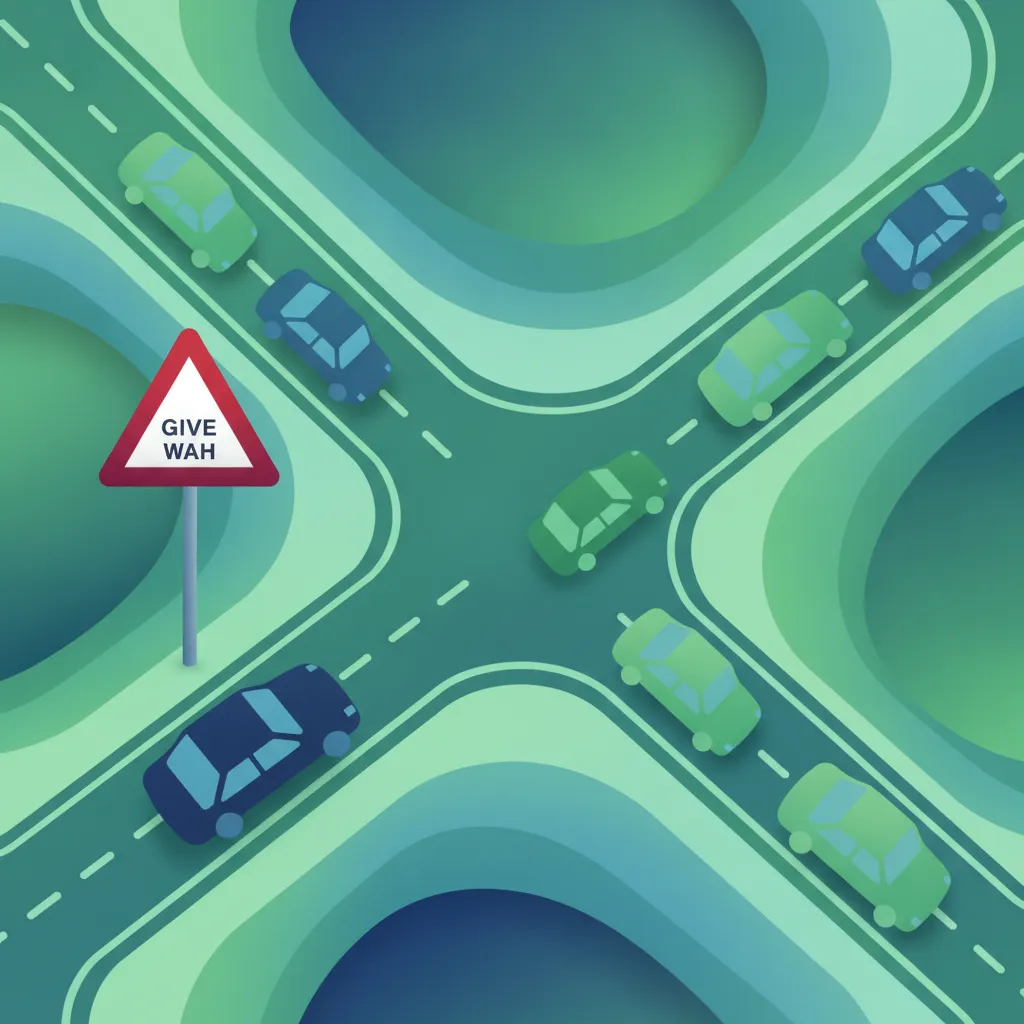
The "Give Way" sign, officially known as Verkehrszeichen Vorrang geben in Austria, is a critical triangular traffic sign with a red border and a white field, often featuring a black arrow indicating the flow of priority. Its fundamental instruction to drivers is to yield priority to other road users. This means you must allow traffic on the intersecting road, or certain other road users, to proceed first.
Crucially, "Vorrang geben" does not automatically mean you must come to a complete stop. Instead, it signifies that you must slow down significantly, be prepared to stop, and only proceed when it is safe to do so without forcing any priority traffic to alter its speed or direction. The concept is about avoiding obstruction and ensuring smooth, safe passage for those with priority.
Mastering the give way rule is paramount for every driver in Austria for several key reasons:
Approaching a give way sign on Austrian roads requires a systematic process of observation and decision-making:
Remember the core principle: never force priority traffic to react to your entry into the intersection.
Several elements influence your safe decision-making at a give way sign in Austria:
This is one of the most important distinctions for Austrian driving theory learners and practical drivers alike. Both signs regulate priority, but the required action is fundamentally different:
Failing to distinguish between these two signs can lead to serious errors on the road and immediate failure in the Austrian driving exam. Remember: "Vorrang geben" (give way) means be prepared to stop if needed; "Halt" (stop) means you MUST stop.
Let's look at common situations where you'll encounter the give way sign on Austrian roads:
Austrian driving students often make these errors related to the give way sign:
In Austria, the give way sign is a cornerstone of traffic management. You'll find it extensively where:
Understanding how the "Vorrang geben" sign fits into the broader Austrian system of road signs and priority rules is critical. It overrides general rules, ensuring safety and efficiency across diverse road environments, from mountain passes to urban intersections.
The give way sign (Vorrang geben) in Austria is about active, safe yielding, not necessarily stopping. Your core responsibility is to: reduce speed, observe all relevant traffic, and only proceed when you can do so without causing any priority road user to change their speed or direction. If there's any doubt, or if traffic is too close, stop completely and wait for a safe gap. This decision-making process is vital for both passing your Austrian driving theory test and ensuring a lifetime of safe driving.
The give way sign (Vorrang geben) in Austria instructs drivers to reduce speed and be prepared to stop while yielding priority to other road users on the intersecting road or path. Unlike a stop sign, a complete halt is only required when traffic conditions demand it for safety—if priority traffic is too close or too fast for you to enter safely, you must stop. The critical distinction for Austrian learners is that 'Vorrang geben' means slow down and stop if needed, while 'Halt' means you must stop completely at the stop line regardless of traffic. This understanding is essential for passing the Austrian driving theory exam and for safe practical driving on Austrian roads.
A short set of high-value points that capture the most important ideas from this theory explanation.
The give way sign (Vorrang geben) requires you to yield priority to other road users, but not necessarily to stop
You must slow down, observe all traffic directions, and only proceed when it is safe without forcing priority traffic to change speed or direction
A complete stop is only mandatory when traffic conditions actually require it for safety
The give way sign is fundamentally different from a stop sign (Halt) - it never requires a mandatory full stop simply because the sign is present
Poor visibility conditions like fog, rain, or snow may require you to stop and creep forward for a better view before proceeding
Approach a give way sign by reducing speed, scanning the intersection thoroughly, and assessing gaps in traffic before deciding to proceed or stop
The yield line (dashed white line) indicates where to yield, while the stop line (solid Haltelinie) requires a complete stop
Always check for vulnerable road users including pedestrians and cyclists who may be crossing or using the intersection
On higher-speed roads like Bundesstraßen, gaps must be much larger than on slower urban streets
When turning left at a give way sign, you must yield to oncoming straight-through traffic and oncoming traffic turning right (§19 StVO)
Making an incomplete stop or 'rolling stop' when traffic conditions actually require a full halt
Misjudging the speed and distance of approaching vehicles, especially on faster roads like Landstraßen or Bundesstraßen
Only checking traffic from one direction while neglecting the other or forgetting about vulnerable road users
Treating every give way sign as a stop sign, causing unnecessary stops that impede traffic flow
Assuming the priority road is always clear and becoming complacent about checking before proceeding
Start with a short, direct summary of Give Way Sign Rules before reading the full explanation below.
The give way sign (Verkehrszeichen Vorrang geben) in Austria requires drivers to yield priority to other road users, typically those on the intersecting road. This means you must slow down, be prepared to stop, and only proceed when it is safe and you will not force other vehicles to change speed or direction. A complete stop is only necessary if traffic conditions demand it to ensure safe yielding.
Review the most important terms, rule signals, and traffic concepts linked to Give Way Sign Rules.
Explore related theory topic pages connected to Give Way Sign Rules and continue with the next useful rule explanation.
See the common search queries learners use when trying to understand Give Way Sign Rules in Austria.

Ready to delve deeper into specific theory topics? Continue exploring detailed explanations of Austrian road signs, traffic rules, and critical driving situations. Solidify your knowledge, clarify any doubts, and ensure you're fully prepared for every aspect of your official driving licence theory exam.
Austrian Driving Theory TopicsTheory topic content overview
A short set of high-value points that capture the most important ideas from this theory explanation.
The give way sign (Vorrang geben) requires you to yield priority to other road users, but not necessarily to stop
You must slow down, observe all traffic directions, and only proceed when it is safe without forcing priority traffic to change speed or direction
A complete stop is only mandatory when traffic conditions actually require it for safety
The give way sign is fundamentally different from a stop sign (Halt) - it never requires a mandatory full stop simply because the sign is present
Poor visibility conditions like fog, rain, or snow may require you to stop and creep forward for a better view before proceeding
Approach a give way sign by reducing speed, scanning the intersection thoroughly, and assessing gaps in traffic before deciding to proceed or stop
The yield line (dashed white line) indicates where to yield, while the stop line (solid Haltelinie) requires a complete stop
Always check for vulnerable road users including pedestrians and cyclists who may be crossing or using the intersection
On higher-speed roads like Bundesstraßen, gaps must be much larger than on slower urban streets
When turning left at a give way sign, you must yield to oncoming straight-through traffic and oncoming traffic turning right (§19 StVO)
Making an incomplete stop or 'rolling stop' when traffic conditions actually require a full halt
Misjudging the speed and distance of approaching vehicles, especially on faster roads like Landstraßen or Bundesstraßen
Only checking traffic from one direction while neglecting the other or forgetting about vulnerable road users
Treating every give way sign as a stop sign, causing unnecessary stops that impede traffic flow
Assuming the priority road is always clear and becoming complacent about checking before proceeding
Start with a short, direct summary of Give Way Sign Rules before reading the full explanation below.
The give way sign (Verkehrszeichen Vorrang geben) in Austria requires drivers to yield priority to other road users, typically those on the intersecting road. This means you must slow down, be prepared to stop, and only proceed when it is safe and you will not force other vehicles to change speed or direction. A complete stop is only necessary if traffic conditions demand it to ensure safe yielding.
Review the most important terms, rule signals, and traffic concepts linked to Give Way Sign Rules.
Explore related theory topic pages connected to Give Way Sign Rules and continue with the next useful rule explanation.
See the common search queries learners use when trying to understand Give Way Sign Rules in Austria.
Ready to delve deeper into specific theory topics? Continue exploring detailed explanations of Austrian road signs, traffic rules, and critical driving situations. Solidify your knowledge, clarify any doubts, and ensure you're fully prepared for every aspect of your official driving licence theory exam.
Austrian Driving Theory TopicsUse this exam-focused revision tip to understand how Give Way Sign Rules is likely to appear in theory questions for learners in Austria. This section helps you identify the most testable part of the rule, avoid common traps, and remember the concept more effectively during Austrian driving theory exam preparation.
In the Austrian theory test, questions about the give way sign often focus on the distinction between yielding and stopping. Remember: 'Vorrang geben' means you must yield, but a full stop is only mandatory if safety requires it, or if a 'Halt' sign (stop sign) is also present. Pay close attention to vehicle speeds and distances in scenarios to judge when a stop is truly unavoidable.
Read direct answers to the most common learner questions about Give Way Sign Rules in Austria. This FAQ focuses on rule confusion, practical meaning, comparison with similar concepts, and the exact uncertainties that appear most often in Austrian driving theory revision and exam preparation.
The give way sign (Vorrang geben) in Austria means you must yield to traffic on the intersecting road. You must slow down, observe other vehicles, and only proceed when it is safe and clear, without obstructing or endangering other road users.
No, unlike a stop sign, a complete stop is not always required. You must slow down and be prepared to stop, but if the road is clear and safe to enter without impeding others, you may proceed without coming to a full halt.
A give way sign requires you to yield, stopping only if necessary. A stop sign (Halt) always requires you to come to a complete stop before the stop line, even if the road appears clear, and then proceed only when safe.
Approach cautiously, reduce your speed, and look for approaching traffic from the priority road. Be ready to brake and stop if necessary to allow other vehicles to pass before you continue.
If your view is obstructed, you must slow down sufficiently or even stop before the give way line to gain a clear view of the intersecting road. Only proceed when you can do so safely and without risk to other traffic.
The give way sign primarily regulates priority between vehicles at intersections. Separate rules apply for pedestrians at crosswalks and cyclists, which must also be considered in addition to the give way sign's instructions.
The official German term for the give way sign in Austrian traffic law is "Vorrang geben".
Give way signs are commonly placed on minor roads approaching major roads, at roundabouts, or at intersections where traffic from a less important road must yield to traffic on a priority road.
Failing to give way when required can lead to dangerous situations, accidents, and penalties. It is a serious traffic offense and will result in penalty points and fines, in addition to being a critical error on the driving test.
While the principle of giving way remains, signs like the give way sign are typically found at interchanges or entry points to different road types, not within the continuous flow of an Autobahn, where acceleration lanes and merging rules apply. Priority at specific junctions or exits will always be clearly indicated by signage.
You should signal your intended direction (left or right) if you are turning. If you are going straight and yielding, signaling is generally not required unless it clarifies your intentions for other road users, but your primary focus is yielding to priority traffic.
Refine your study plan by searching for specific Austrian driving theory practice sets. Pinpoint questions related to particular road rules, signs, or challenge levels, and begin practicing immediately to reinforce your knowledge and excel in your official exam with confidence. Get started with focused revision today.