
Right of way, or 'Vorrang' in German, dictates which road user has the right to proceed first in situations where paths conflict, particularly at intersections. In Austria, these rules are clearly defined by the Road Traffic Act (StVO) and are essential for maintaining smooth traffic flow and ensuring safety for all road users. Your ability to correctly interpret and apply these rules will be heavily tested.
Theory topic content overview
Read the full theory topic guide for Austrian Right of Way Rules with structured, easy-to-scan content built for learners in Austria. This detailed section explains the exact rule, meaning, traffic context, comparison points, and exam logic behind this Austrian driving theory topic so you can study faster, understand the concept more clearly, and avoid common interpretation mistakes on the theory test.
Right of Way, or Vorrang in Austrian German, is a foundational concept in road traffic that dictates which road user has the legal right to proceed first when paths conflict. Understanding Vorrang is absolutely critical for safe driving in Austria and is a major component of the official Austrian driving theory exam. These rules, primarily outlined in the Austrian Road Traffic Act (StVO), ensure predictable traffic flow and prevent collisions at intersections, merging points, and other conflict areas.
In Austria, Vorrang is determined by a strict, clear hierarchy. You must apply these rules in order, starting from the highest level of authority:
Vorrang in the direction indicated, provided it is safe to proceed.Vorrang signs include:
Vorrang geben (Give Way triangle sign)Halt (Stop octagon sign)Vorrangstraße (Priority Road diamond sign)Ende der Vorrangstraße (End of Priority Road sign)Vorrang determiners themselves, markings like stop lines (Haltelinie) or give-way lines (Wartelinie) reinforce the instructions of signs and are crucial for positioning.Rechtsregel (right-before-left rule).Traffic lights provide the clearest indication of Vorrang. A solid green light permits you to proceed, while a red light requires you to stop. Flashing amber lights typically indicate a potential hazard or that specific Vorrang rules (like Rechtsregel) or signs (like Vorrang geben) are now applicable. Always obey the traffic lights first.
Vorrang geben (Give Way) Sign (Vorschriftszeichen B1)This inverted triangle sign requires you to yield to traffic on the intersecting road. You must slow down, be prepared to stop, and only proceed when it is safe to do so without hindering or endangering vehicles on the priority road. Unlike the Halt sign, a full stop is not always mandatory if the way is clear.
Halt (Stop) Sign (Vorschriftszeichen B2)The octagonal Halt sign is the most demanding Vorrang sign. It requires a mandatory full stop before the stop line (or, if none, at a point where you have a clear view of the intersecting traffic). You must then yield to all traffic on the intersecting road, from both left and right, before proceeding. A common mistake in the Austrian theory exam is to forget the mandatory stop, even if the intersection seems clear.
Vorrangstraße (Priority Road) Sign (Vorschriftszeichen B3)This yellow diamond sign with a white border indicates that you are currently driving on a Vorrangstraße. Vehicles on a Vorrangstraße have Vorrang over all traffic entering from side roads or intersecting roads, unless traffic signals are active.
Crucially, additional panels (Zusatztafel) beneath a Vorrangstraße sign can illustrate the course of the priority road if it deviates from a straight path (e.g., a bend). If you are on a Vorrangstraße and follow its indicated curve (the thicker line on the panel), you retain Vorrang. Vehicles coming from the thinner lines (or leaving the priority road) must yield to you. This is a frequent point of confusion and exam questions.
Rechtsregel (Right-Before-Left Rule)The Rechtsregel is the fundamental general rule for determining Vorrang in Austria when no traffic signals or Vorrang signs are present. It states that at an uncontrolled intersection, you must yield to any vehicle approaching from your right-hand side. This rule applies unless specific exceptions (like trams, emergency vehicles, or vehicles exiting private property) are present.
Key points about the Rechtsregel:
Rechtsregel is superseded by traffic signals, Vorrang signs, and certain special vehicle rules.While the hierarchy above covers most situations, certain road users or circumstances have specific Vorrang rules:
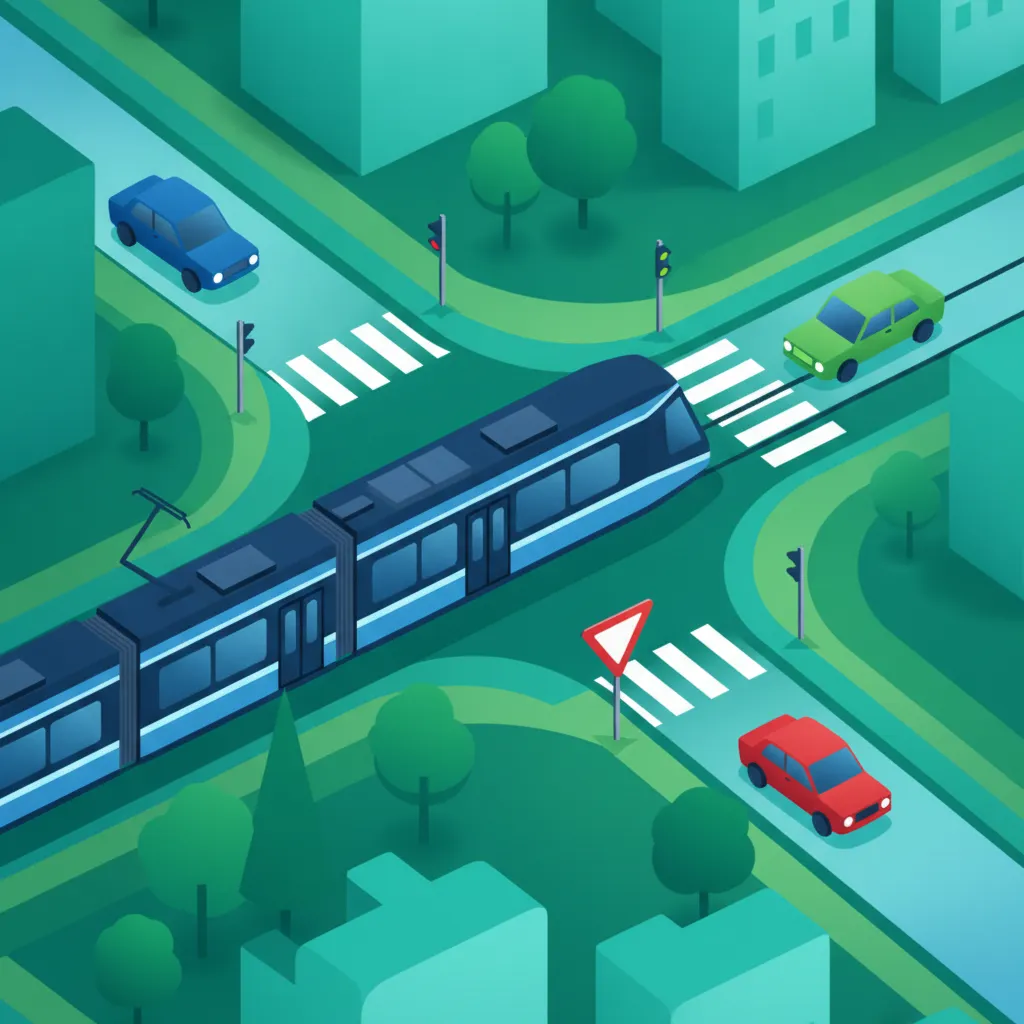
Vorrang over other road users, regardless of Rechtsregel or even some signs (unless explicitly directed otherwise by signals or a specific sign for rail traffic). This is a critical rule to remember (StVO §19, Ziffer 25).Vorrang and must be given free passage.Vorrang over vehicles. Drivers must slow down and stop if necessary.Vorrang.Vorrang if traffic conditions allow it to safely re-enter the flow. You should facilitate its departure where possible.Many learners struggle with nuanced Vorrang situations, particularly in the Austrian theory exam.
Vorrang geben vs. Halt: The critical difference is the mandatory full stop with Halt. Failing to stop is an immediate driving test failure and an exam mistake.Rechtsregel vs. Vorrangstraße: Remember the hierarchy. If you are on a Vorrangstraße, you do not need to yield to vehicles from the right at intersections unless the Vorrangstraße itself turns and the other vehicle is following the priority route.Vorrangstraße Signs: Always examine these. They explicitly show the path of the priority road. Misinterpreting these curves is a common exam trap. If you follow the thick line, you keep Vorrang. If you leave it (turn onto a thinner line), you yield.Vorrang: While defensive driving is crucial, you should not unnecessarily give up your Vorrang if you clearly have it. This can confuse other drivers and disrupt traffic flow. For example, if a car from the right has stopped and is clearly yielding to you (e.g., at an intersection where you have Vorrang), you should generally proceed cautiously. The exam often tests this – if you stop when you have Vorrang, you risk creating a hazardous situation or traffic jam.Vorrang in Austrian traffic.Vorrang rules. Your right of way does not mean you can proceed blindly.Rechtsregel, you must yield to the car from your right. You slow down, prepare to stop, and allow the other car to proceed before turning.Vorrangstraße with a Curve: You are on a Vorrangstraße in a rural area, indicated by the yellow diamond sign with an additional panel showing the road curving left. A car is approaching from the right on the intersecting road (a thinner line on the panel) and another car is coming from straight ahead, leaving the main curve of the Vorrangstraße. As you follow the main curve, you have Vorrang over both these vehicles. You would signal left, but maintain your speed (safely) as you have priority.Halt Sign: You approach a major road from a side street marked with a Halt sign. You must bring your vehicle to a complete stop before the white stop line, regardless of whether traffic is visible. After stopping, you carefully look left and right, and only proceed when there is no traffic on the priority road that you would hinder or endanger.Vorrang Mental ModelMastering Vorrang in Austria boils down to a clear mental model:
Halt, Vorrang geben, Vorrangstraße signs take precedence over general rules.Rechtsregel applies (yield to the right).Vorrang, defensive driving means being prepared for others' mistakes. However, don't unnecessarily give up Vorrang as this can cause confusion.By consistently applying this hierarchy and understanding the specific nuances of Austrian Vorrang rules, you will be well-prepared for both your driving theory exam and real-world driving situations.
Austrian Vorrang (right of way) rules establish a clear hierarchy that determines which road user proceeds first: active traffic signals take absolute precedence, followed by priority signs like Vorrang geben, Halt, and Vorrangstraße, then road markings, and finally general rules where the Rechtsregel (yield to vehicles from your right) applies at unmarked intersections. Key distinctions include the mandatory full stop at Halt signs versus the merely cautionary slow-down at Vorrang geben signs, and the fact that auxiliary panels on Vorrangstraße signs explicitly define who retains priority when the road curves. Special rules apply to trams, emergency vehicles, and pedestrians at crossings, and learners should remember that defensive driving means staying prepared even when you hold priority.
A short set of high-value points that capture the most important ideas from this theory explanation.
Austrian right of way follows a strict hierarchy: traffic signals override signs, signs override road markings, and general rules apply only when neither is present.
The Rechtsregel (right-before-left rule) only applies at unmarked intersections with no signals or priority signs—you must yield to vehicles approaching from your right.
A Halt (Stop) sign requires a mandatory full stop regardless of visibility, while Vorrang geben only requires you to slow and yield if necessary.
If you are on a Vorrangstraße, you retain priority even at intersections unless traffic signals are active or you leave the priority route.
Special road users like trams and emergency vehicles with blue lights have priority over other rules, including the Rechtsregel.
Traffic signals (red, amber, green) always decide priority before any sign or general rule.
Examine auxiliary panels (Zusatztafel) beneath Vorrangstraße signs—they show the priority road's curve and which paths retain or lose Vorrang.
When exiting private property, a driveway, or a parking space, you must yield to ALL traffic on the main road.
Pedestrians on marked crossings (Schutzwege) have priority over vehicles once they are on or clearly about to enter the crossing.
Turning left at an intersection generally requires yielding to oncoming traffic going straight or turning right.
Confusing Vorrang geben with Halt by forgetting the mandatory full stop required at a Halt sign, even when the intersection appears clear.
Applying the Rechtsregel when on a Vorrangstraße—priority signs override the right-before-left rule at intersections.
Misinterpreting auxiliary panels on Vorrangstraße signs and incorrectly yielding to vehicles that should actually yield to you.
Unnecessarily giving up Vorrang when you clearly have priority, which can confuse other drivers and disrupt traffic flow.
Assuming another driver will yield to you just because they should—always be prepared for others to make mistakes.
Start with a short, direct summary of Austrian Right of Way Rules before reading the full explanation below.
Right of way (Vorrang) defines which road user has priority to proceed in a given traffic situation, helping to prevent collisions. In Austria, this is determined by a hierarchy: traffic signals come first, followed by specific traffic signs like 'Vorrang geben' or 'Halt', road markings, and finally, general rules such as the 'right-before-left' principle (Rechtsregel) at unmarked intersections. Always be prepared to yield if there's any uncertainty.
Review the most important terms, rule signals, and traffic concepts linked to Austrian Right of Way Rules.
Explore related theory topic pages connected to Austrian Right of Way Rules and continue with the next useful rule explanation.
See the common search queries learners use when trying to understand Austrian Right of Way Rules in Austria.

Ready to delve deeper into specific theory topics? Continue exploring detailed explanations of Austrian road signs, traffic rules, and critical driving situations. Solidify your knowledge, clarify any doubts, and ensure you're fully prepared for every aspect of your official driving licence theory exam.
Austrian Driving Theory TopicsTheory topic content overview
A short set of high-value points that capture the most important ideas from this theory explanation.
Austrian right of way follows a strict hierarchy: traffic signals override signs, signs override road markings, and general rules apply only when neither is present.
The Rechtsregel (right-before-left rule) only applies at unmarked intersections with no signals or priority signs—you must yield to vehicles approaching from your right.
A Halt (Stop) sign requires a mandatory full stop regardless of visibility, while Vorrang geben only requires you to slow and yield if necessary.
If you are on a Vorrangstraße, you retain priority even at intersections unless traffic signals are active or you leave the priority route.
Special road users like trams and emergency vehicles with blue lights have priority over other rules, including the Rechtsregel.
Traffic signals (red, amber, green) always decide priority before any sign or general rule.
Examine auxiliary panels (Zusatztafel) beneath Vorrangstraße signs—they show the priority road's curve and which paths retain or lose Vorrang.
When exiting private property, a driveway, or a parking space, you must yield to ALL traffic on the main road.
Pedestrians on marked crossings (Schutzwege) have priority over vehicles once they are on or clearly about to enter the crossing.
Turning left at an intersection generally requires yielding to oncoming traffic going straight or turning right.
Confusing Vorrang geben with Halt by forgetting the mandatory full stop required at a Halt sign, even when the intersection appears clear.
Applying the Rechtsregel when on a Vorrangstraße—priority signs override the right-before-left rule at intersections.
Misinterpreting auxiliary panels on Vorrangstraße signs and incorrectly yielding to vehicles that should actually yield to you.
Unnecessarily giving up Vorrang when you clearly have priority, which can confuse other drivers and disrupt traffic flow.
Assuming another driver will yield to you just because they should—always be prepared for others to make mistakes.
Start with a short, direct summary of Austrian Right of Way Rules before reading the full explanation below.
Right of way (Vorrang) defines which road user has priority to proceed in a given traffic situation, helping to prevent collisions. In Austria, this is determined by a hierarchy: traffic signals come first, followed by specific traffic signs like 'Vorrang geben' or 'Halt', road markings, and finally, general rules such as the 'right-before-left' principle (Rechtsregel) at unmarked intersections. Always be prepared to yield if there's any uncertainty.
Review the most important terms, rule signals, and traffic concepts linked to Austrian Right of Way Rules.
Explore related theory topic pages connected to Austrian Right of Way Rules and continue with the next useful rule explanation.
See the common search queries learners use when trying to understand Austrian Right of Way Rules in Austria.
Ready to delve deeper into specific theory topics? Continue exploring detailed explanations of Austrian road signs, traffic rules, and critical driving situations. Solidify your knowledge, clarify any doubts, and ensure you're fully prepared for every aspect of your official driving licence theory exam.
Austrian Driving Theory TopicsUse this exam-focused revision tip to understand how Austrian Right of Way Rules is likely to appear in theory questions for learners in Austria. This section helps you identify the most testable part of the rule, avoid common traps, and remember the concept more effectively during Austrian driving theory exam preparation.
In the Austrian theory exam, pay close attention to complex intersection diagrams, especially those involving 'Vorrang geben' or 'Halt' signs combined with a 'Vorrangstraße' or the 'Rechtsregel'. Many questions test your ability to correctly identify the vehicle with priority or when you must yield, even if it feels counter-intuitive or if a vehicle has already stopped.
Read direct answers to the most common learner questions about Austrian Right of Way Rules in Austria. This FAQ focuses on rule confusion, practical meaning, comparison with similar concepts, and the exact uncertainties that appear most often in Austrian driving theory revision and exam preparation.
'Vorrang' is the German term for right of way, indicating which road user has the legal entitlement to proceed before others in a situation where traffic paths might conflict, such as at an intersection.
Determine right of way by following a hierarchy: first, observe traffic signals. If none, look for traffic signs ('Vorrang geben', 'Halt', 'Vorrangstraße'). If no signs or signals, apply the 'right-before-left' rule (Rechtsregel), meaning you must yield to traffic approaching from your right.
The 'Rechtsregel' is a general priority rule in Austria that applies at unmarked intersections without traffic signs or signals. It states that you must yield to any vehicle approaching from your right, unless another specific rule overrides it.
Both signs require you to yield, but a 'Halt' (Stop) sign additionally requires you to come to a complete stop before the intersection or stop line, even if there is no immediate cross-traffic. 'Vorrang geben' (Give Way) only requires you to slow down and yield without necessarily stopping completely if the way is clear.
A 'Vorrangstraße' sign indicates that you are on a priority road. Vehicles on a 'Vorrangstraße' have right of way over vehicles from crossing or merging roads. This priority usually extends until cancelled by another sign.
No, pedestrians do not always have absolute right of way. They have priority when crossing at a designated pedestrian crossing (zebra crossing) or when a traffic light indicates they may cross. Drivers must always be particularly cautious around pedestrians, especially children and the elderly.
Road markings can support or reinforce priority rules. For example, a give way triangle painted on the road (Haifischzähne) accompanies a 'Vorrang geben' sign. Stop lines accompany 'Halt' signs. However, signs and signals generally take precedence over markings if there is a conflict.
Refine your study plan by searching for specific Austrian driving theory practice sets. Pinpoint questions related to particular road rules, signs, or challenge levels, and begin practicing immediately to reinforce your knowledge and excel in your official exam with confidence. Get started with focused revision today.