
Roundabouts, known as 'Kreisverkehr' in Austria, are designed to improve traffic flow and safety by replacing traditional intersections. The fundamental rule for roundabouts in Austria is that vehicles already circulating inside have priority over those wishing to enter. Proper observation and signaling are crucial for safe navigation.
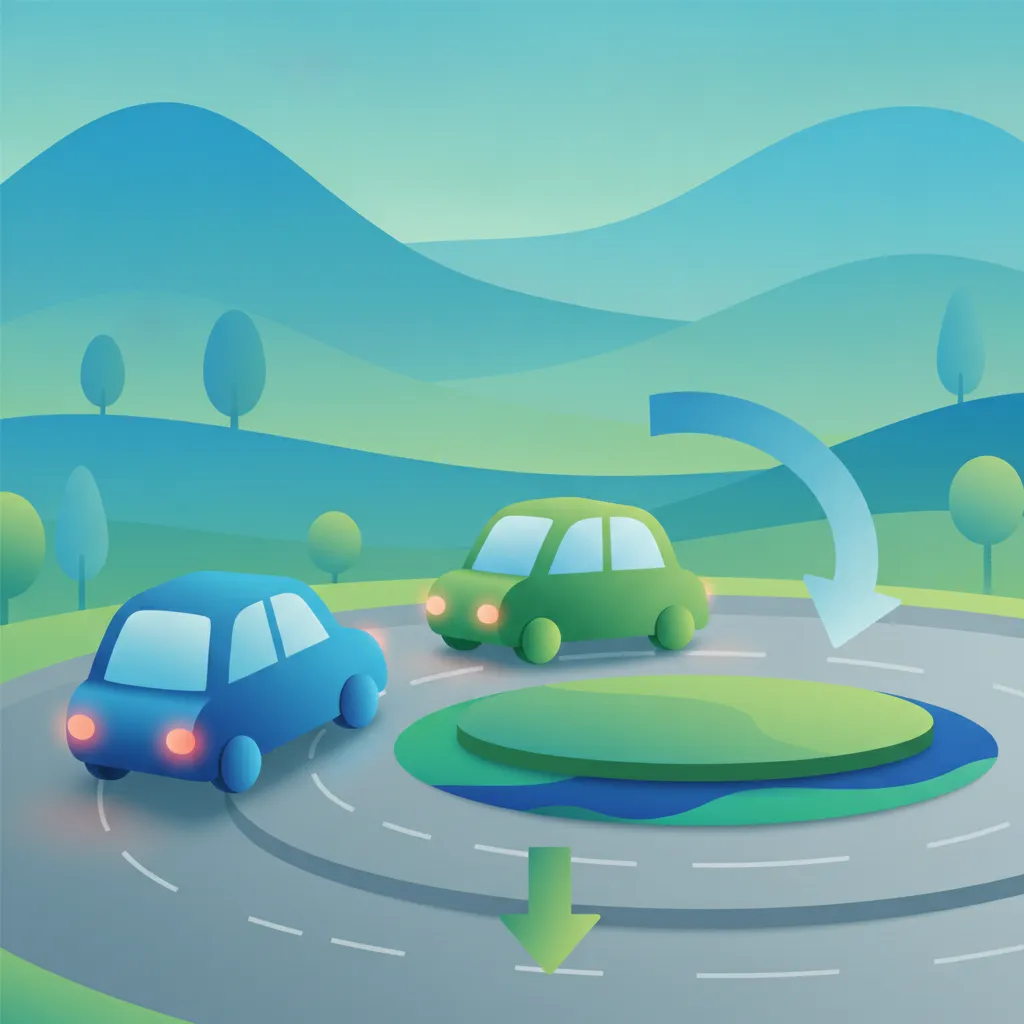
Theory topic content overview
Read the full theory topic guide for Austrian Roundabout Priority with structured, easy-to-scan content built for learners in Austria. This detailed section explains the exact rule, meaning, traffic context, comparison points, and exam logic behind this Austrian driving theory topic so you can study faster, understand the concept more clearly, and avoid common interpretation mistakes on the theory test.
Ein Kreisverkehr (oft auch als „Kreisel“ bezeichnet) ist eine spezielle Art von Kreuzung, die in Österreich und weltweit eingesetzt wird, um den Verkehrsfluss zu verbessern und die Sicherheit zu erhöhen. Die Kernidee ist, den Verkehr in eine einzige Richtung um eine Mittelinsel zu leiten. Die Vorrangregeln im Kreisverkehr legen fest, welche Fahrzeuge wann fahren dürfen, um Kollisionen zu vermeiden und einen flüssigen Verkehr zu gewährleisten.
In Österreich gilt als Grundregel: Fahrzeuge, die sich bereits im Kreisverkehr befinden, haben Vorrang vor Fahrzeugen, die in den Kreisverkehr einfahren wollen. Dies bedeutet, dass Sie als einfahrender Lenker stets die Wartepflicht (Wartepflicht) haben und dem bereits im Kreisverkehr befindlichen Verkehr den Vortritt lassen müssen.
Das Verständnis der österreichischen Kreisverkehrsregeln ist aus mehreren Gründen von fundamentaler Bedeutung:
Die sichere Navigation in einem österreichischen Kreisverkehr folgt einer klaren Abfolge von Schritten:
Annäherung:
Vorrang geben (B1) und gegebenenfalls auf Haifischzähne (dreieckige Fahrbahnmarkierungen), die Ihre Wartepflicht bestätigen.Einfahrt:
Zirkulation:
Ausfahrt:
Blinkpflicht vor dem Verlassen ist gesetzlich vorgeschrieben und signalisiert anderen Verkehrsteilnehmern (sowohl jenen, die einfahren wollen als auch Fußgängern), dass Sie den Kreisverkehr verlassen werden.Mehrere Faktoren können die Navigation und die Vorrangregeln im Kreisverkehr beeinflussen:
Vorrang geben-Schild (B1) ist das wichtigste Zeichen, das Ihre Wartepflicht anzeigt. Fehlende Beschilderung ist in Österreich selten, könnte aber zu Verwirrung führen (dann gilt Rechtsregel, aber Kreisverkehre sind fast immer vorranggeregelt). Haifischzähne auf der Fahrbahn verstärken die Bedeutung des Vorrang geben-Schildes.Um die Kreisverkehrsregeln in Österreich wirklich zu meistern, ist es wichtig, folgende Punkte klar zu unterscheiden:
Kreisverkehr-Zeichen und Vorrang geben-Zeichen) gekennzeichnet. Eine normale Kreuzung, die vielleicht eine optisch ähnliche Mittelinsel hat, folgt den allgemeinen Vorrangregeln (z.B. Rechtsregel), wenn nicht anders beschildert. Verwechseln Sie diese nicht.Wartepflicht zu respektieren. Fahren Sie niemals blindlings ein.Kreisverkehr-Zeichen und das dreieckige Vorrang geben-Schild. Im Kreisverkehr befinden sich bereits mehrere Fahrzeuge. Sie müssen verlangsamen, aufmerksam beobachten und warten, bis eine sichere Lücke entsteht, um einzufahren, ohne den fließenden Verkehr zu behindern. Sie blinken dabei noch nicht.Viele Fahrschüler und auch erfahrene Fahrer machen in Kreisverkehren oft ähnliche Fehler:
Die österreichische Straßenverkehrsordnung (StVO) definiert die Regeln für den Kreisverkehr präzise. Die wichtigsten lokalen Aspekte umfassen:
Kreisverkehr (nach StVO) sowie das Vorrang geben-Schild (B1) sind immer dort vorhanden, wo diese Vorrangregel gilt. Ohne diese Zeichen wäre es kein beschilderter Kreisverkehr im Sinne der StVO.Um den österreichischen Kreisverkehr souverän zu meistern, prägen Sie sich diese einfache Kette ein: Beobachten - Warten - Einfahren - Fahren - Blinken - Ausfahren.
Ihre Sicherheit und die Sicherheit anderer Verkehrsteilnehmer hängen davon ab, dass Sie die Vorrangregeln im Kreisverkehr genau kennen und präzise anwenden. Nehmen Sie sich Zeit beim Annähern, achten Sie besonders auf Radfahrer und verwenden Sie Ihr Blinklicht korrekt und rechtzeitig beim Verlassen. So tragen Sie zu einem reibungslosen und sicheren Verkehrsfluss auf Österreichs Straßen bei und meistern auch die Theorieprüfung erfolgreich.
Austrian roundabout rules give priority to vehicles already circulating inside the Kreisverkehr, requiring drivers to yield at entry using the Vorrang geben (B1) sign. A key distinction from many other countries is that drivers must not signal when entering but must activate their right-turn signal immediately after passing the exit before their intended one. Special attention is needed for cyclists under StVO § 11 Abs. 5, which grants them priority in certain urban situations when exiting parallel bike paths. Roundabouts are identified by the blue Kreisverkehr sign and are designed to reduce side-impact collisions while improving traffic flow.
A short set of high-value points that capture the most important ideas from this theory explanation.
In Austrian roundabouts, circulating traffic always has priority over vehicles entering
Do NOT signal when entering a roundabout in Austria - signal only when exiting
Activate right-turn signal immediately after passing the exit before your intended one
Cyclists on parallel bike paths who maintain direction when exiting have priority over your vehicle (StVO § 11 Abs. 5)
Always observe traffic to your left when approaching and entering a roundabout
Memory chain: Observe - Wait - Enter - Circulate - Signal - Exit
The Vorrang geben sign (B1) confirms your duty to yield at the entry
Multi-lane roundabouts: left lane for exits beyond halfway around, right lane for first exits
Trams generally have priority in Austrian roundabouts unless signs indicate otherwise
Never force entry - wait for a safe gap without disrupting the flow of circulating traffic
Signaling when entering instead of when exiting - the most common exam mistake
Insufficient observation to the left before entering the roundabout
Activating the turn signal too late when exiting, confusing other road users
Entering without a safe gap and forcing circulating vehicles to brake
Overlooking cyclist priority - cyclists maintaining direction when leaving parallel bike paths have right of way over exiting vehicles
Start with a short, direct summary of Austrian Roundabout Priority before reading the full explanation below.
In Austrian roundabouts, vehicles already traveling within the circular roadway always have priority over vehicles approaching to enter. Drivers must slow down, check for circulating traffic, and yield before entering the roundabout. Once inside, maintain your lane and signal clearly before exiting to inform other road users of your intentions.
Review the most important terms, rule signals, and traffic concepts linked to Austrian Roundabout Priority.
Explore related theory topic pages connected to Austrian Roundabout Priority and continue with the next useful rule explanation.
See the common search queries learners use when trying to understand Austrian Roundabout Priority in Austria.

Ready to delve deeper into specific theory topics? Continue exploring detailed explanations of Austrian road signs, traffic rules, and critical driving situations. Solidify your knowledge, clarify any doubts, and ensure you're fully prepared for every aspect of your official driving licence theory exam.
Austrian Driving Theory TopicsTheory topic content overview
A short set of high-value points that capture the most important ideas from this theory explanation.
In Austrian roundabouts, circulating traffic always has priority over vehicles entering
Do NOT signal when entering a roundabout in Austria - signal only when exiting
Activate right-turn signal immediately after passing the exit before your intended one
Cyclists on parallel bike paths who maintain direction when exiting have priority over your vehicle (StVO § 11 Abs. 5)
Always observe traffic to your left when approaching and entering a roundabout
Memory chain: Observe - Wait - Enter - Circulate - Signal - Exit
The Vorrang geben sign (B1) confirms your duty to yield at the entry
Multi-lane roundabouts: left lane for exits beyond halfway around, right lane for first exits
Trams generally have priority in Austrian roundabouts unless signs indicate otherwise
Never force entry - wait for a safe gap without disrupting the flow of circulating traffic
Signaling when entering instead of when exiting - the most common exam mistake
Insufficient observation to the left before entering the roundabout
Activating the turn signal too late when exiting, confusing other road users
Entering without a safe gap and forcing circulating vehicles to brake
Overlooking cyclist priority - cyclists maintaining direction when leaving parallel bike paths have right of way over exiting vehicles
Start with a short, direct summary of Austrian Roundabout Priority before reading the full explanation below.
In Austrian roundabouts, vehicles already traveling within the circular roadway always have priority over vehicles approaching to enter. Drivers must slow down, check for circulating traffic, and yield before entering the roundabout. Once inside, maintain your lane and signal clearly before exiting to inform other road users of your intentions.
Review the most important terms, rule signals, and traffic concepts linked to Austrian Roundabout Priority.
Explore related theory topic pages connected to Austrian Roundabout Priority and continue with the next useful rule explanation.
See the common search queries learners use when trying to understand Austrian Roundabout Priority in Austria.
Ready to delve deeper into specific theory topics? Continue exploring detailed explanations of Austrian road signs, traffic rules, and critical driving situations. Solidify your knowledge, clarify any doubts, and ensure you're fully prepared for every aspect of your official driving licence theory exam.
Austrian Driving Theory TopicsUse this exam-focused revision tip to understand how Austrian Roundabout Priority is likely to appear in theory questions for learners in Austria. This section helps you identify the most testable part of the rule, avoid common traps, and remember the concept more effectively during Austrian driving theory exam preparation.
A common mistake in Austrian theory exams regarding roundabouts is forgetting that you only signal *before exiting*, not when entering. Also, always remember that traffic already *in* the roundabout has priority. Look out for situations involving cyclists or trams, as their priority might be indicated by additional signs or specific local rules.
Read direct answers to the most common learner questions about Austrian Roundabout Priority in Austria. This FAQ focuses on rule confusion, practical meaning, comparison with similar concepts, and the exact uncertainties that appear most often in Austrian driving theory revision and exam preparation.
Vehicles already circulating within the roundabout (Kreisverkehr) always have priority over vehicles that are approaching and intend to enter. You must yield to traffic already inside.
No, you do not signal when entering an Austrian roundabout. Signaling is only required when you intend to exit the roundabout.
You must signal to the right when you are about to exit the roundabout. This informs other drivers, especially those waiting to enter, of your intention.
Drivers should approach roundabouts at a reduced speed, typically around 20-30 km/h, to allow for safe observation and yielding if necessary. Speed should be appropriate for traffic conditions and visibility.
For multi-lane roundabouts in Austria, the general priority rule remains the same (circulating traffic has priority). However, you must choose the correct lane based on your intended exit and ensure safe lane changes within the roundabout.
While most modern Austrian roundabouts clearly indicate priority with signs (like 'give way' signs) and road markings, the fundamental rule in a standard roundabout is that circulating traffic has priority. If unsure, always assume you must yield.
Refine your study plan by searching for specific Austrian driving theory practice sets. Pinpoint questions related to particular road rules, signs, or challenge levels, and begin practicing immediately to reinforce your knowledge and excel in your official exam with confidence. Get started with focused revision today.