
Explore comprehensive explanations of all essential Austrian driving theory topics. This hub clearly covers official road rules, traffic signs, priority regulations, speed limits, and specific Austrian conditions like Autobahn protocols and alpine driving. Prepare thoroughly by building solid knowledge to confidently pass your official theory exam and drive safely.

Develop a comprehensive understanding of Austrian traffic legislation by focusing on essential subjects like priority rules, road signs, and hazard perception. This structured approach ensures you are fully prepared for the theory test with in-depth knowledge.
10 topics
7 topics
6 topics
4 topics
3 topics
2 topics
2 topics
2 topics
2 topics
1 topic
1 topic
1 topic
Dive into specific Austrian driving theory topics to clarify rules and prepare for your exam. Browse our comprehensive set of theory subjects or use search to find answers to your driving theory questions.
Filter by category
10 theory topics found
The Stop Sign, officially known as 'Halt-Tafel' in Austria, is one of the most vital regulatory traffic signs. It dictates that drivers must bring their vehicle to a complete standstill before entering an intersection or crossing traffic. This rule is absolute, regardless of whether traffic appears clear, and is fundamental for safe driving and passing your Austrian theory exam.
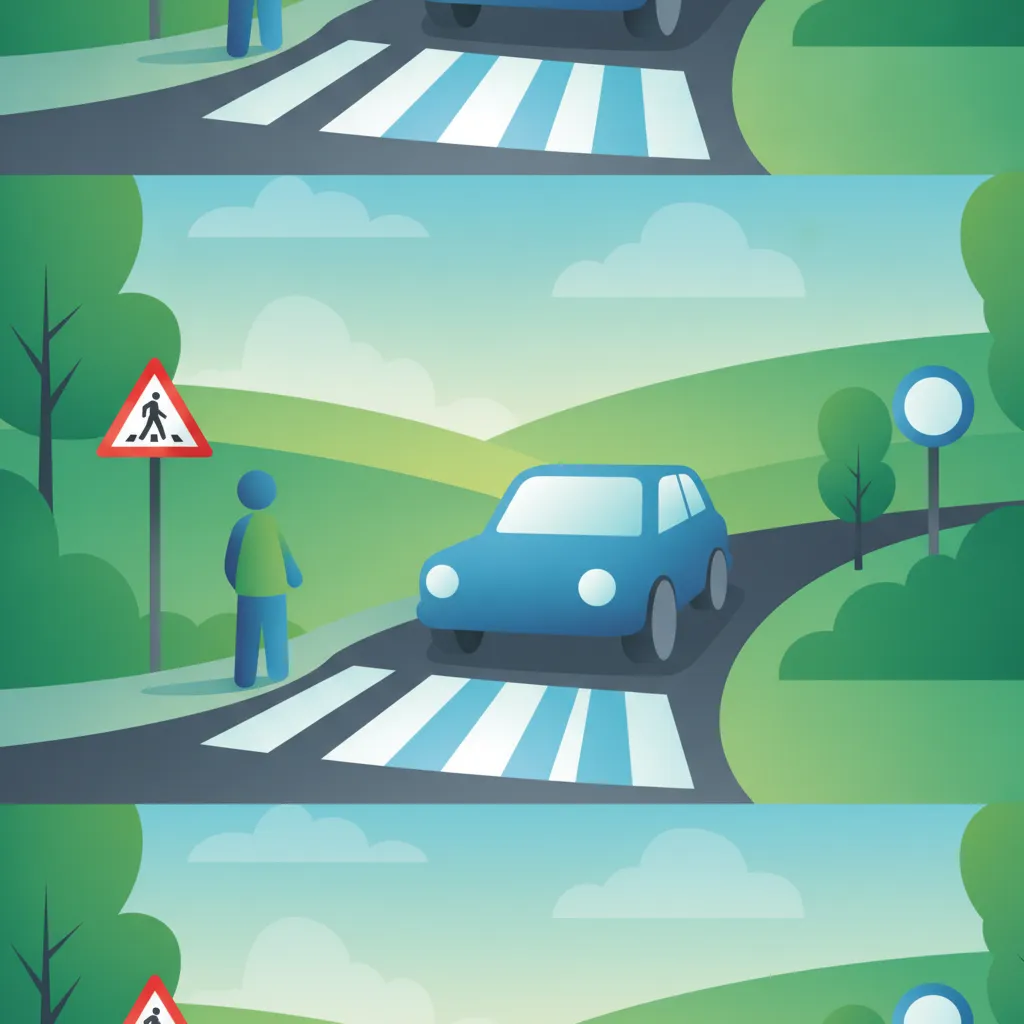
In Austria, specific rules govern when drivers must give way to pedestrians. As pedestrians are vulnerable road users, drivers carry a significant responsibility to ensure their safety. This page details the key situations where pedestrians have priority, such as at marked pedestrian crossings, and outlines the driver's obligations according to Austrian traffic law (StVO).

When an emergency vehicle – an Einsatzfahrzeug – such as an ambulance, police car, or fire truck is on an urgent mission, it uses flashing blue lights and often a siren. As a driver in Austria, you have a critical responsibility to react immediately and safely to ensure they have 'Freie Fahrt' (free passage). This page explains exactly what you need to do.
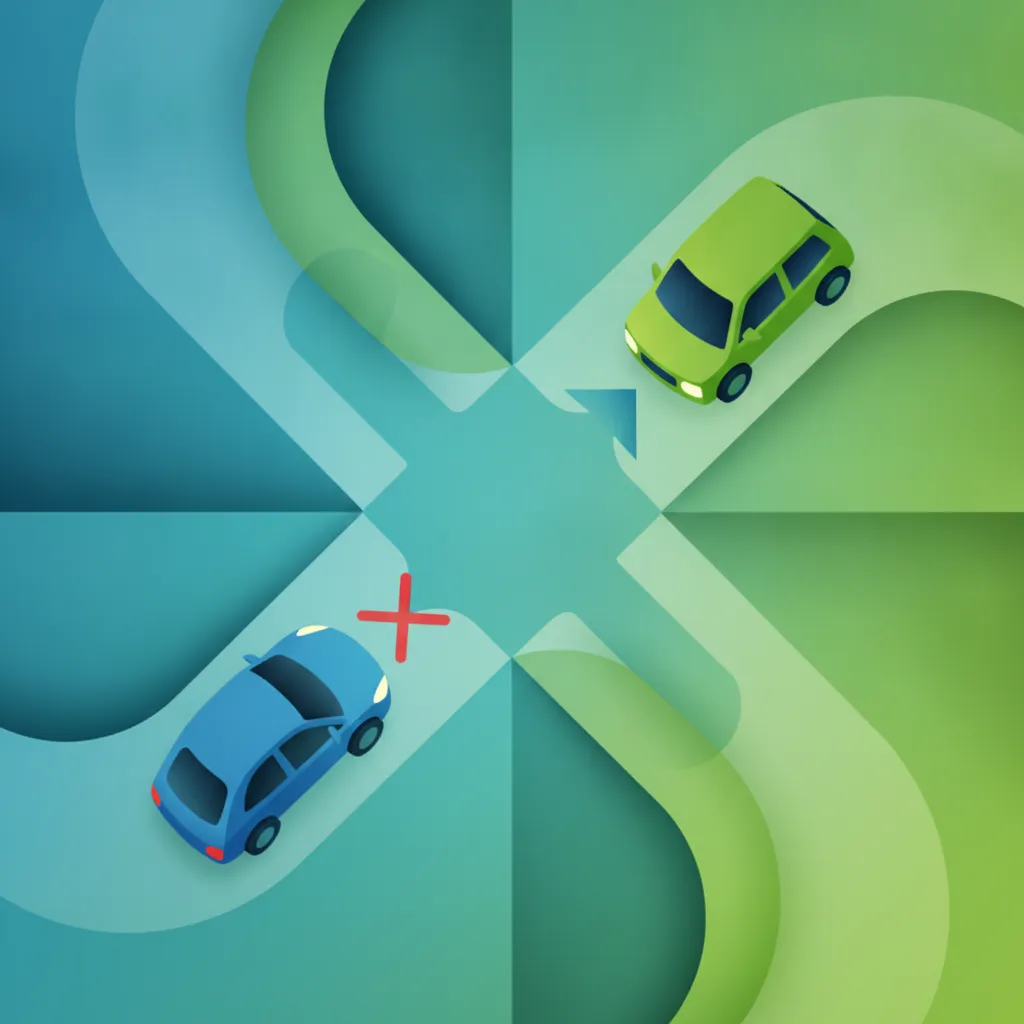
At many intersections in Austria, no specific signs, traffic lights, or road markings dictate who has priority. In these 'uncontrolled' situations, drivers must apply general right-of-way rules, primarily the 'right before left' principle (rechts vor links). This page will guide you through understanding these fundamental rules, how to observe your surroundings, and anticipate other road users to ensure safe passage.

Giving way means allowing other road users to proceed first to ensure safety and smooth traffic flow. In Austria, these rules are governed by the Straßenverkehrsordnung (StVO) and apply across various situations, including intersections, roundabouts, and pedestrian crossings. Understanding the 'Vorrang geben' principle is vital to prevent collisions and navigate complex traffic situations correctly and legally.
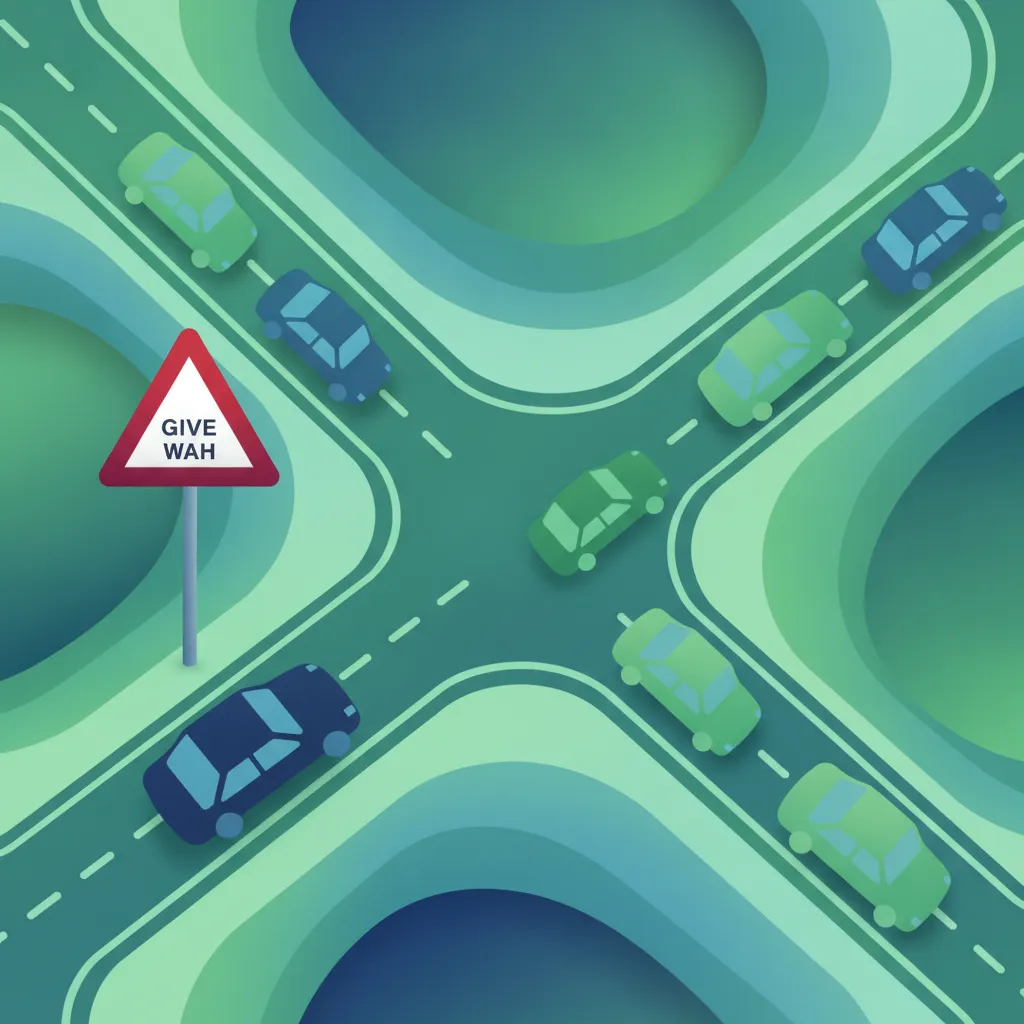
The give way sign (in German: Vorrang geben) is a fundamental traffic sign in Austria that dictates priority at junctions, instructing drivers to yield. Unlike a stop sign, it doesn't always require a complete halt, but rather a careful assessment of oncoming traffic. Understanding its specific application is critical for both the Austrian driving theory test and safe practical driving.

In Austrian urban environments, interacting safely with trams (Straßenbahnen) and other public transport like buses requires specific knowledge of priority rules. Unlike other vehicles, trams are bound to their tracks and have significantly longer stopping distances. This section clarifies when you must yield to these vehicles, helping you navigate complex traffic situations correctly and confidently.

A priority road, known as a Vorrangstraße in Austria, is a designated road where traffic has inherent precedence over vehicles entering from intersecting or merging roads. This system is crucial for managing traffic flow, especially at busy intersections. Understanding the signs that indicate a priority road and how they modify standard right-of-way rules is fundamental for all drivers in Austria.

Roundabouts, known as 'Kreisverkehr' in Austria, are designed to improve traffic flow and safety by replacing traditional intersections. The fundamental rule for roundabouts in Austria is that vehicles already circulating inside have priority over those wishing to enter. Proper observation and signaling are crucial for safe navigation.

Right of way, or 'Vorrang' in German, dictates which road user has the right to proceed first in situations where paths conflict, particularly at intersections. In Austria, these rules are clearly defined by the Road Traffic Act (StVO) and are essential for maintaining smooth traffic flow and ensuring safety for all road users. Your ability to correctly interpret and apply these rules will be heavily tested.
After reviewing these articles, continue your learning journey by exploring specific categories, related theory topics, or practice questions. Expand your understanding of Austrian traffic laws to ensure you are fully prepared for your driving licence exam.
All Austrian Driving Theory Articles