
As the season shifts, learner drivers must adapt their techniques to manage increased hazards like wet leaves, condensation, and reduced daylight. This guide explains how to adjust your driving style in accordance with the Highway Code to ensure you are ready for both the DVSA theory test and real-world road scenarios. Mastering these habits will help you maintain control and safely anticipate dangers in unpredictable autumn weather.
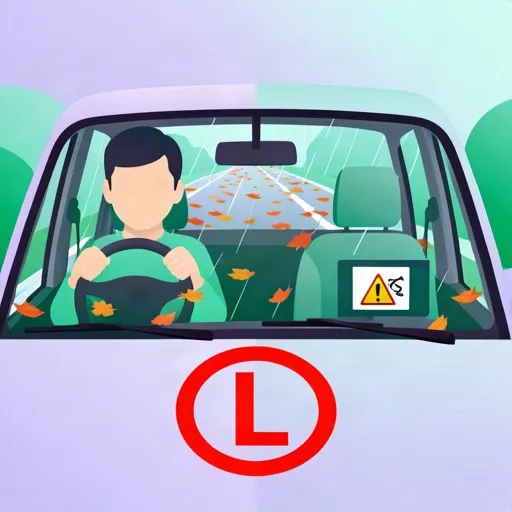
Article content overview
As the seasons change in Great Britain, learner drivers face a unique set of challenges that require a significant shift in driving technique. The transition from summer to autumn brings specific hazards, such as falling leaves, increased condensation, and earlier sunsets, all of which directly influence how you should interact with the road. Understanding these risks is not just vital for your personal safety; it is a core component of the DVSA theory test and your hazard perception skills. By mastering these Highway Code rules now, you will be better prepared to navigate unpredictable conditions with confidence.
One of the most immediate changes you will notice in autumn is the impact on your vehicle’s visibility systems. Condensation often forms on the inside of windscreens as temperatures drop, creating a serious hazard if not managed correctly before you begin your journey. According to the Highway Code, you must ensure your windows are demisted thoroughly and that your mirrors are clear. Never attempt to drive until you have full visibility, as restricted sightlines prevent you from identifying potential hazards in time.
In addition to condensation, autumn often brings fog, which can appear suddenly. When driving in fog, you must use your headlights as required and ensure you keep a safe distance behind the vehicle in front. Remember that rear lights can provide a false sense of security; do not rely on them to gauge your distance. Instead, always ensure you can pull up well within the distance you can see clearly, as this is the golden rule for visibility-related hazards.
Wet leaves are a classic autumn hazard that many new drivers underestimate. When leaves fall onto the road and become wet, they create a surface as slippery as ice, significantly reducing your tyre’s grip. This loss of traction can cause your vehicle to skid or slide during braking or cornering. To manage this risk, you should reduce your speed well in advance of bends and junctions.
Beyond just leaves, wet weather in general requires a fundamental change in your driving approach. In wet conditions, stopping distances at least double compared to those on dry roads because your tyres have less contact with the tarmac. You should keep a greater following distance from the vehicle in front, which gives you more time to react and plan ahead. If your steering suddenly feels light or unresponsive, ease off the accelerator immediately; this is a sign of aquaplaning, where water prevents the tyre from gripping the road surface.
Preparing for your journey is as important as your actual driving technique. In the autumn and winter months, always check the local weather forecast before you leave. If severe weather is predicted, avoid travel unless your journey is truly essential. If you must drive, ensure you have an emergency kit including an ice scraper, de-icer, torch, and warm clothing, in case you are caught in unexpected delays.
The DVSA theory test frequently assesses your knowledge of these conditions through hazard perception clips. You are expected to spot potential dangers, such as a vehicle suddenly braking in fog or a cyclist maneuvering around slippery debris, before they become immediate threats. Practice identifying these "developing hazards" rather than just static ones. By staying observant and keeping your speed appropriate for the road conditions, you demonstrate the proactive mindset that examiners are looking for during both the theory and practical tests.
Autumn driving in Great Britain requires learners to adapt their techniques for reduced visibility, slippery surfaces, and unpredictable weather conditions. The Highway Code mandates that all windows must be cleared of condensation before driving, and wet leaves create ice-like conditions that demand significant speed reduction before bends. Stopping distances at least double in wet weather, making increased following distances essential, while aquaplaning can be recognised by light or unresponsive steering requiring immediate accelerator easing. These seasonal hazards are directly assessed in DVSA theory test hazard perception clips, making thorough understanding critical for both test success and real-world safety.
A short set of high-value points that capture the most important ideas from this article.
Wet leaves create a surface as slippery as ice, significantly reducing tyre traction and requiring speed reduction before bends and junctions
Stopping distances at least double in wet conditions compared to dry roads due to reduced tyre contact with tarmac
Driving with obscured windows due to condensation is a legal requirement to clear before moving your vehicle
Aquaplaning is indicated by sudden light or unresponsive steering; ease off the accelerator immediately
Hazard perception tests focus on spotting developing hazards like a vehicle braking in fog, not just static obstacles
Always demist windows completely and ensure all mirrors are clear before starting your journey
Keep a greater following distance in poor weather so you can pull up well within the distance you can see clearly
Do not rely solely on the rear lights of the vehicle ahead to gauge distance in fog
Ease off the accelerator if steering feels light; this signals aquaplaning and loss of tyre grip
Check weather forecasts before autumn journeys and avoid travel unless truly essential in severe conditions
Assuming rear lights of the vehicle ahead give an accurate sense of stopping distance in fog
Underestimating wet leaves as a hazard and failing to adjust speed before reaching them
Driving with partial demisting, thinking visibility is adequate when windows are not fully clear
Relying on dry-weather stopping distances when roads are wet or leaves are present
Spotting only obvious, static hazards during hazard perception practice instead of developing hazards
Article content overview
A short set of high-value points that capture the most important ideas from this article.
Wet leaves create a surface as slippery as ice, significantly reducing tyre traction and requiring speed reduction before bends and junctions
Stopping distances at least double in wet conditions compared to dry roads due to reduced tyre contact with tarmac
Driving with obscured windows due to condensation is a legal requirement to clear before moving your vehicle
Aquaplaning is indicated by sudden light or unresponsive steering; ease off the accelerator immediately
Hazard perception tests focus on spotting developing hazards like a vehicle braking in fog, not just static obstacles
Always demist windows completely and ensure all mirrors are clear before starting your journey
Keep a greater following distance in poor weather so you can pull up well within the distance you can see clearly
Do not rely solely on the rear lights of the vehicle ahead to gauge distance in fog
Ease off the accelerator if steering feels light; this signals aquaplaning and loss of tyre grip
Check weather forecasts before autumn journeys and avoid travel unless truly essential in severe conditions
Assuming rear lights of the vehicle ahead give an accurate sense of stopping distance in fog
Underestimating wet leaves as a hazard and failing to adjust speed before reaching them
Driving with partial demisting, thinking visibility is adequate when windows are not fully clear
Relying on dry-weather stopping distances when roads are wet or leaves are present
Spotting only obvious, static hazards during hazard perception practice instead of developing hazards
Explore related topics, search based questions, and concepts that learners often look up when studying Autumn Driving Safety Tips. These themes reflect real search intent and help you understand how this topic connects to wider driving theory knowledge in Great Britain.
Find clear and practical answers to common questions learners often have about Autumn Driving Safety Tips. This section helps explain difficult points, remove confusion, and reinforce the key driving theory concepts that matter for learners in Great Britain.
In wet weather, your tyres have significantly less grip on the road surface, which means your stopping distance will be at least double that required on dry roads.
If your steering feels light or unresponsive, it indicates that water is preventing the tyres from gripping the road. Ease off the accelerator and slow down gradually.
When driving in fog, you must use your lights as required, keep a safe distance from the vehicle in front, and ensure you can pull up well within the distance you can see clearly.
Ensure all your lights are clean and working, clear all windows of mist or ice before setting off, and ensure your windscreen wipers are effective for managing increased rain and spray.
Explore our extensive library of Great Britain driving theory articles to clarify any topic, review specific road rules, or gain deeper insights into vehicle safety and the Highway Code. Use the search to find exactly what you need for comprehensive DVSA theory test preparation.