
Driving on rural routes requires heightened alertness and a proactive approach to potential dangers that are often absent in urban settings. This article covers the specific Highway Code requirements for managing hazards like narrow bends, hidden junctions, and livestock. By understanding these protocols, you will be better equipped to handle the unique challenges of country driving during your theory test and in your future practical driving.
Article content overview
Driving on rural routes in Great Britain presents a unique set of challenges that differ significantly from urban or motorway environments. When preparing for your DVSA theory test, it is vital to understand that country roads are often narrow, winding, and prone to unexpected hazards that require a proactive, defensive mindset. According to the Highway Code, your responsibility as a driver is to anticipate dangers such as hidden junctions, mud on the road, and the presence of vulnerable road users like horse riders or cyclists.
Rule 154 of the Highway Code serves as the foundation for rural driving safety. It mandates that you take extra care when navigating country lanes, specifically emphasizing the need to reduce your speed as you approach bends and junctions. Because these roads often feature sharp, hidden corners and narrow lanes, you must ensure that you can stop your vehicle well within the distance you can see to be clear. Relying on the assumption that the road ahead is empty is a common error that can lead to hazardous situations, especially when encountering slow-moving farm vehicles or pedestrians.
When driving through rural villages, you should anticipate transitions in speed limits and traffic density. Even if a road feels empty, always remain prepared for mud on the road surface, which significantly reduces tyre grip, or obstacles such as loose livestock that may have wandered onto the tarmac.
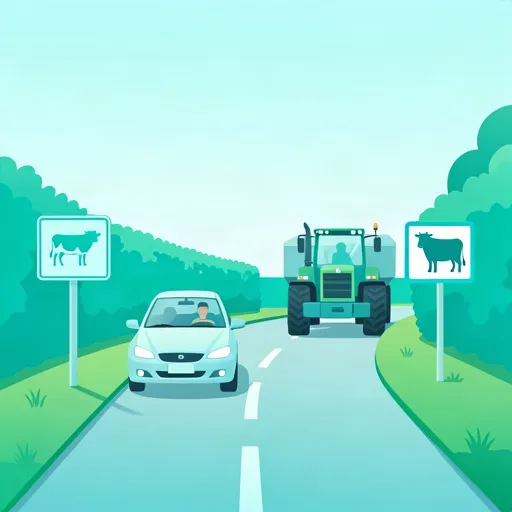
One of the most frequent topics in the Great Britain theory test involves the correct procedure for passing animals. Under the Highway Code, when you encounter animals being led, driven, or ridden on the road, your priority is to minimise the risk of frightening them. You must drive slowly, give them plenty of room, and be prepared to stop your vehicle completely if necessary.
If you find your path blocked by a herd of animals, the correct procedure is to stop and switch off your engine until they have safely cleared the road. This prevents the noise and vibration of the engine from agitating the animals, allowing the person in charge to manage the herd safely.
The theory test often evaluates your ability to adjust your driving to changing environmental conditions. On country roads, the national speed limit may technically apply, but the "safe" speed is often significantly lower. You should always adjust your speed based on visibility, road width, and the likelihood of meeting oncoming traffic or farm machinery. If you are blinded by the sun or distracted by the environment, your reaction time in a rural hazard perception scenario will be compromised.
| Situation | Required Action |
|---|---|
| Approaching a sharp, blind bend | Reduce speed and position yourself to remain visible. |
| Passing horse riders | Slow down, give them plenty of room, and pass quietly. |
| Meeting a tractor on a narrow lane | Slow down or pull into a passing place if necessary. |
| Encountering livestock on the road | Stop and switch off engine until they have passed. |
To excel in the hazard perception part of your exam, you must practice identifying rural-specific dangers early. Look for signs of "road furniture" changes, such as telegraph poles or hedgerows that suggest an approaching junction. Always keep an eye out for the "hidden" hazards that do not appear until you are very close, such as slow-moving cyclists or mud deposited by agricultural equipment. By understanding these rules, you move beyond mere memorisation and toward the practical awareness required to become a safe driver in Great Britain.
This article covers essential Highway Code requirements for navigating rural roads in Great Britain, focusing on Rule 154 for country road hazards and Rules 214-215 for safely passing animals. It emphasizes defensive driving techniques, including adjusting speed based on visibility and road conditions rather than relying on the national speed limit, and provides specific procedures for handling encounters with livestock, horse riders, and farm vehicles. The content prepares learners for theory test scenarios by highlighting early hazard recognition signals like hedgerows and road furniture changes, and reinforces that stopping distance depends on being able to see clearly ahead. Mastering these rural driving protocols is crucial for both passing the DVSA theory test and developing the proactive safety mindset required for real-world country road driving.
A short set of high-value points that capture the most important ideas from this article.
Country roads require extra care due to narrow lanes, sharp bends, and reduced visibility; always reduce speed approaching junctions and blind corners.
When encountering animals on the road, drive slowly, give them plenty of room, and be prepared to stop if necessary.
Never sound your horn, rev your engine, or accelerate rapidly when animals are present, as this can cause them to bolt unpredictably.
Adjust your speed based on visibility, road width, and the likelihood of meeting oncoming traffic or farm machinery, not just the national speed limit.
Recognize early warning signs of rural hazards such as telegraph poles, hedgerows, and road furniture changes that may indicate hidden junctions ahead.
Highway Code Rule 154 requires you to reduce speed on country lanes and ensure you can stop within the distance you can see to be clear.
If animals block your path, stop your engine and wait until they have safely cleared the road before continuing.
The national speed limit on single carriageways is 60mph, but the safe speed on rural roads is often significantly lower.
Look for 'road furniture' changes like telegraph poles or hedgerows as early indicators of approaching junctions in rural settings.
Mud on road surfaces significantly reduces tyre grip and requires reduced speed and increased following distances.
Assuming the road ahead is clear around a bend without reducing speed, which can lead to collisions with hidden junctions or oncoming traffic.
Sounding the horn when passing animals, which can startle them and cause unpredictable, dangerous behavior.
Relying solely on the national speed limit rather than adjusting speed for actual road conditions, visibility, and potential hazards.
Failing to anticipate slow-moving farm vehicles or pedestrians on rural roads, especially around blind bends.
Not recognizing hedgerows or telegraph poles as early warning signs of upcoming junctions or hazards.
Article content overview
A short set of high-value points that capture the most important ideas from this article.
Country roads require extra care due to narrow lanes, sharp bends, and reduced visibility; always reduce speed approaching junctions and blind corners.
When encountering animals on the road, drive slowly, give them plenty of room, and be prepared to stop if necessary.
Never sound your horn, rev your engine, or accelerate rapidly when animals are present, as this can cause them to bolt unpredictably.
Adjust your speed based on visibility, road width, and the likelihood of meeting oncoming traffic or farm machinery, not just the national speed limit.
Recognize early warning signs of rural hazards such as telegraph poles, hedgerows, and road furniture changes that may indicate hidden junctions ahead.
Highway Code Rule 154 requires you to reduce speed on country lanes and ensure you can stop within the distance you can see to be clear.
If animals block your path, stop your engine and wait until they have safely cleared the road before continuing.
The national speed limit on single carriageways is 60mph, but the safe speed on rural roads is often significantly lower.
Look for 'road furniture' changes like telegraph poles or hedgerows as early indicators of approaching junctions in rural settings.
Mud on road surfaces significantly reduces tyre grip and requires reduced speed and increased following distances.
Assuming the road ahead is clear around a bend without reducing speed, which can lead to collisions with hidden junctions or oncoming traffic.
Sounding the horn when passing animals, which can startle them and cause unpredictable, dangerous behavior.
Relying solely on the national speed limit rather than adjusting speed for actual road conditions, visibility, and potential hazards.
Failing to anticipate slow-moving farm vehicles or pedestrians on rural roads, especially around blind bends.
Not recognizing hedgerows or telegraph poles as early warning signs of upcoming junctions or hazards.
Explore related topics, search based questions, and concepts that learners often look up when studying Country Road Hazards and Rules. These themes reflect real search intent and help you understand how this topic connects to wider driving theory knowledge in Great Britain.
Find clear and practical answers to common questions learners often have about Country Road Hazards and Rules. This section helps explain difficult points, remove confusion, and reinforce the key driving theory concepts that matter for learners in Great Britain.
According to the Highway Code, you must stop your vehicle and switch off your engine until the animals have completely cleared the road.
Drive very slowly, give them plenty of room, and be prepared to stop. Do not sound your horn, rev your engine, or accelerate rapidly, as this can easily scare the animals.
Bends on country roads can be sharper than they appear, and there may be hidden hazards like pedestrians, cyclists, or slow-moving farm machinery around the corner.
You must ensure you can stop well within the distance you can see to be clear, as junctions and turnings may be partially hidden and road surfaces could be affected by mud or debris.
Explore our extensive library of Great Britain driving theory articles to clarify any topic, review specific road rules, or gain deeper insights into vehicle safety and the Highway Code. Use the search to find exactly what you need for comprehensive DVSA theory test preparation.