
Learners often mistake the posted speed limit for a mandatory target speed, but the Highway Code makes it clear that safety must always come first. This article explains how you must adapt your speed based on road layout, traffic, and environmental conditions to remain in control and anticipate potential hazards. Mastering this principle is a key requirement for success in both the DVSA theory exam and your future as a safe, responsible driver.
Article content overview
Highway Code Rule 125 clarifies that speed limits are absolute maximums, not targets. Safe driving requires constantly adjusting your speed based on road layout, weather conditions, visibility, and the presence of vulnerable road users. Understanding this distinction is essential for both the DVSA theory test hazard perception section and real-world safe driving. Learners should practise evaluating conditions ahead and reducing speed appropriately rather than defaulting to the posted limit.
A short set of high-value points that capture the most important ideas from this article.
The posted speed limit is the absolute maximum legal speed, never a target to be reached in every situation.
You must constantly evaluate road layout, traffic density, and environmental conditions to determine a safe speed.
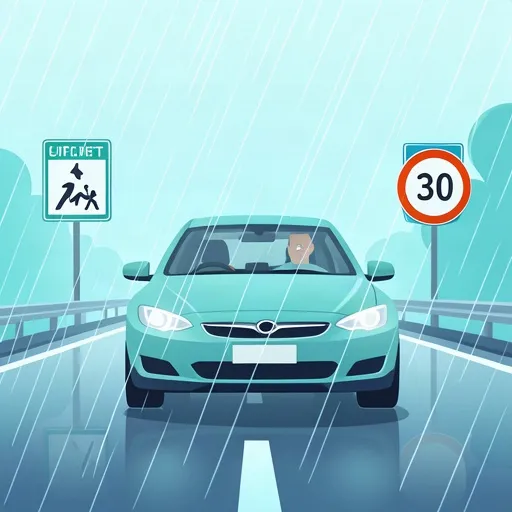
Reduced visibility from fog, rain, or darkness requires lower speeds because stopping distances increase significantly.
When sharing roads with vulnerable users such as cyclists and pedestrians, your speed must allow safe passing clearance.
Anticipating hazards depends on driving at a speed that gives you adequate time to react to developing situations.
Speed limit = legal ceiling, not a requirement to drive at that speed regardless of conditions.
Environmental factors (weather, visibility, road surface) directly affect stopping distances.
Sharp bends, roadworks, and narrow lanes demand speeds below the posted limit.
Hazard perception scores improve when you demonstrate understanding that safe speed varies with conditions.
It is always safer to travel slower than the limit than to follow traffic that may be driving dangerously.
Assuming the speed limit is a target speed to achieve rather than a maximum not to exceed.
Failing to reduce speed when visibility is reduced, such as in fog or heavy rain.
Not accounting for increased stopping distances on wet or icy road surfaces.
Driving at the limit near vulnerable road users instead of adjusting speed for their safety.
Reacting to hazards instead of maintaining a speed that allows proactive anticipation.
Article content overview
A short set of high-value points that capture the most important ideas from this article.
The posted speed limit is the absolute maximum legal speed, never a target to be reached in every situation.
You must constantly evaluate road layout, traffic density, and environmental conditions to determine a safe speed.
Reduced visibility from fog, rain, or darkness requires lower speeds because stopping distances increase significantly.
When sharing roads with vulnerable users such as cyclists and pedestrians, your speed must allow safe passing clearance.
Anticipating hazards depends on driving at a speed that gives you adequate time to react to developing situations.
Speed limit = legal ceiling, not a requirement to drive at that speed regardless of conditions.
Environmental factors (weather, visibility, road surface) directly affect stopping distances.
Sharp bends, roadworks, and narrow lanes demand speeds below the posted limit.
Hazard perception scores improve when you demonstrate understanding that safe speed varies with conditions.
It is always safer to travel slower than the limit than to follow traffic that may be driving dangerously.
Assuming the speed limit is a target speed to achieve rather than a maximum not to exceed.
Failing to reduce speed when visibility is reduced, such as in fog or heavy rain.
Not accounting for increased stopping distances on wet or icy road surfaces.
Driving at the limit near vulnerable road users instead of adjusting speed for their safety.
Reacting to hazards instead of maintaining a speed that allows proactive anticipation.
Explore related topics, search based questions, and concepts that learners often look up when studying Driving Too Fast for Conditions. These themes reflect real search intent and help you understand how this topic connects to wider driving theory knowledge in Great Britain.
Find clear and practical answers to common questions learners often have about Driving Too Fast for Conditions. This section helps explain difficult points, remove confusion, and reinforce the key driving theory concepts that matter for learners in Great Britain.
No, the speed limit is the absolute maximum speed allowed for that road. It does not mean it is safe to drive at that speed in all conditions.
If weather conditions are poor, the road layout is hazardous, or there are vulnerable road users like cyclists or children nearby, driving at the speed limit may be reckless and increase the risk of a collision.
You should reduce your speed when road layout or conditions present hazards like sharp bends, when sharing the road with pedestrians or cyclists, during bad weather, and when driving at night.
Explore our extensive library of Great Britain driving theory articles to clarify any topic, review specific road rules, or gain deeper insights into vehicle safety and the Highway Code. Use the search to find exactly what you need for comprehensive DVSA theory test preparation.