
Understanding the vehicle safety checks is a fundamental requirement for every learner driver preparing for their practical test in Great Britain. This article clarifies the specific procedures expected by examiners regarding fluid levels, lighting, and tyre condition. Following these guidelines will help you demonstrate proper vehicle knowledge and safety awareness during your official assessment.
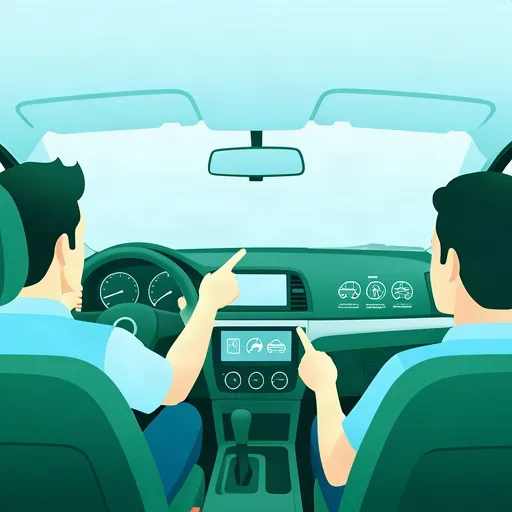
Article content overview
Passing your practical driving test in England, Scotland, and Wales requires more than just high-quality vehicle control; it demands a clear understanding of vehicle safety and maintenance. The "Show Me, Tell Me" component of your test is designed to assess your knowledge of essential safety checks that every driver in Great Britain must be able to perform. By familiarizing yourself with these requirements well in advance, you can approach your examiner with confidence and avoid unnecessary minor faults.
During your practical driving test, the examiner will ask you two vehicle safety questions. The first is a "Tell Me" question, which you must answer verbally while the vehicle is stationary at the start of your test. The second is a "Show Me" question, where you will be required to demonstrate how to perform a specific safety task, typically while you are driving. It is important to note that these questions are specific to the Great Britain testing system managed by the DVSA and differ from procedures found in Northern Ireland.
Failure to answer one or both of these questions correctly will result in a minor driving fault. While this won't automatically fail your test, collecting too many minor faults will lead to an overall fail, so it is vital to be well-prepared.
The "Tell Me" questions focus on your theoretical knowledge of vehicle maintenance and safety systems. You might be asked about how to check the condition of your tyres, the operation of your headlights, or how to verify that your brakes are working correctly before starting a journey. You are not expected to get out of the car for these; you simply need to explain the steps clearly and accurately to the examiner.
For example, when asked how you would check your tyre pressure, you should mention using a reliable pressure gauge, checking the pressures when the tyres are cold, and remembering to refit the valve caps. You must also mention that the correct pressure settings can be found in the vehicle manufacturer’s handbook.
The "Show Me" questions require you to operate vehicle controls while driving. These demonstrations must be done safely, ensuring that you maintain full control of the vehicle and continue to monitor your surroundings. If you are asked to show how to wash the windscreen, for example, you must be able to operate the relevant switch or lever without looking down from the road.
Preparation is key to succeeding in your practical test. Examiners frequently look for your ability to identify problems that could affect road safety, such as warning lights on the dashboard or issues with fluid levels. Understanding the difference between a simple warning and a critical mechanical failure is a core part of the DVSA syllabus.
Brake fluid should be kept between the minimum and maximum level markings on the reservoir. If it falls below the minimum, it could indicate a leak in the braking system or significant wear in the brake pads, both of which require professional attention.
The DVSA Show Me Tell Me questions assess your vehicle safety knowledge during the practical driving test in England, Scotland, and Wales. The Tell Me question tests verbal explanation of safety procedures while stationary, covering topics like tyre checks and brake verification. The Show Me question requires you to demonstrate a control operation safely while driving, such as activating windscreen washers or headlights, without taking your eyes off the road. Each incorrect answer results in a minor driving fault, and while one mistake is unlikely to fail your test, accumulating multiple minor faults will lead to failure. Thorough preparation of both the verbal explanations and practical control locations is essential for success.
A short set of high-value points that capture the most important ideas from this article.
The 'Tell Me' question is answered verbally while stationary at the start of the test, requiring you to explain a safety procedure.
The 'Show Me' question requires you to demonstrate a control while driving, maintaining full vehicle control and road observation.
Getting a Show Me Tell Me question wrong results in a minor driving fault, which can accumulate toward an overall test failure.
Show Me questions must be performed safely with your eyes on the road; if you cannot locate a control, inform the examiner immediately.
These vehicle safety questions are specific to the DVSA testing system in Great Britain and differ from Northern Ireland procedures.
Tell Me questions cover theoretical knowledge such as tyre pressure checks, headlight operation, and brake verification.
Show Me questions involve operating controls like windscreen washers or headlights while the vehicle is moving.
When demonstrating a Show Me task, always ensure you have a clear road ahead before operating any control.
Tyre tread must have a minimum depth of 1.6mm; tyre pressure should be checked when tyres are cold using the manufacturer's handbook settings.
Brake fluid level should be between the minimum and maximum markings on the reservoir; below minimum indicates a potential issue requiring professional attention.
Attempting to locate a switch or lever during a Show Me question by looking down at the dashboard instead of operating it from memory.
Confusing the timing of the two questions—Tell Me is at the start while stationary, Show Me is during driving.
Failing to mention key steps when answering a Tell Me question, such as not referencing the vehicle handbook for correct tyre pressure settings.
Continuing an unsafe demonstration when you cannot find the control, instead of informing the examiner promptly.
Assuming minor faults from Show Me Tell Me questions are unimportant; multiple minor faults lead to test failure.
Article content overview
A short set of high-value points that capture the most important ideas from this article.
The 'Tell Me' question is answered verbally while stationary at the start of the test, requiring you to explain a safety procedure.
The 'Show Me' question requires you to demonstrate a control while driving, maintaining full vehicle control and road observation.
Getting a Show Me Tell Me question wrong results in a minor driving fault, which can accumulate toward an overall test failure.
Show Me questions must be performed safely with your eyes on the road; if you cannot locate a control, inform the examiner immediately.
These vehicle safety questions are specific to the DVSA testing system in Great Britain and differ from Northern Ireland procedures.
Tell Me questions cover theoretical knowledge such as tyre pressure checks, headlight operation, and brake verification.
Show Me questions involve operating controls like windscreen washers or headlights while the vehicle is moving.
When demonstrating a Show Me task, always ensure you have a clear road ahead before operating any control.
Tyre tread must have a minimum depth of 1.6mm; tyre pressure should be checked when tyres are cold using the manufacturer's handbook settings.
Brake fluid level should be between the minimum and maximum markings on the reservoir; below minimum indicates a potential issue requiring professional attention.
Attempting to locate a switch or lever during a Show Me question by looking down at the dashboard instead of operating it from memory.
Confusing the timing of the two questions—Tell Me is at the start while stationary, Show Me is during driving.
Failing to mention key steps when answering a Tell Me question, such as not referencing the vehicle handbook for correct tyre pressure settings.
Continuing an unsafe demonstration when you cannot find the control, instead of informing the examiner promptly.
Assuming minor faults from Show Me Tell Me questions are unimportant; multiple minor faults lead to test failure.
Explore related topics, search based questions, and concepts that learners often look up when studying Show Me Tell Me Guide. These themes reflect real search intent and help you understand how this topic connects to wider driving theory knowledge in Great Britain.
Find clear and practical answers to common questions learners often have about Show Me Tell Me Guide. This section helps explain difficult points, remove confusion, and reinforce the key driving theory concepts that matter for learners in Great Britain.
'Tell me' questions are asked at the start of your test while the car is stationary, requiring you to explain how you would carry out a safety task. 'Show me' questions involve you demonstrating how to perform a safety task while you are driving.
No, the examiner will ask you one 'tell me' question at the beginning of the test and one 'show me' question while you are driving.
If you answer a question incorrectly, you will be given a driver fault. It is important to remain calm and focus on your driving for the rest of the test.
No, this guide covers the requirements for Great Britain (England, Scotland, and Wales) only. Northern Ireland follows different procedures through the DVA.
Explore our extensive library of Great Britain driving theory articles to clarify any topic, review specific road rules, or gain deeper insights into vehicle safety and the Highway Code. Use the search to find exactly what you need for comprehensive DVSA theory test preparation.