
Driving at night requires specific knowledge of lighting regulations to ensure you can see hazards while avoiding blinding others. This article explains when to switch between beam settings, how to minimise glare for surrounding drivers, and why awareness of vulnerable road users is paramount during the hours of darkness. Applying these principles will improve your situational awareness and help you correctly answer related questions on your DVSA theory test.
Article content overview
Driving at night introduces unique challenges that every learner must master to ensure road safety and succeed in their DVSA theory test. When natural light fades, your situational awareness must compensate for reduced visibility, which directly influences how you should interact with your vehicle's lighting systems. In Great Britain, the Highway Code provides strict guidance on when to use specific light settings to maintain your own visibility while ensuring you do not dazzle or endanger other road users, including pedestrians, cyclists, and horse riders.
The Highway Code defines "night"—or the hours of darkness—as the period between half an hour after sunset and half an hour before sunrise. During these times, it is a legal requirement to use your headlights. Understanding this specific timeframe is a common requirement in DVSA theory test questions, as it sets the baseline for when your vehicle's lighting must be fully operational and correctly configured.
One of the most frequent topics in the Great Britain theory test involves knowing exactly when to switch between dipped and main beam headlights. Using main beam headlights on well-lit roads or when following or approaching other road users can cause severe glare, potentially blinding other drivers and leading to dangerous situations.
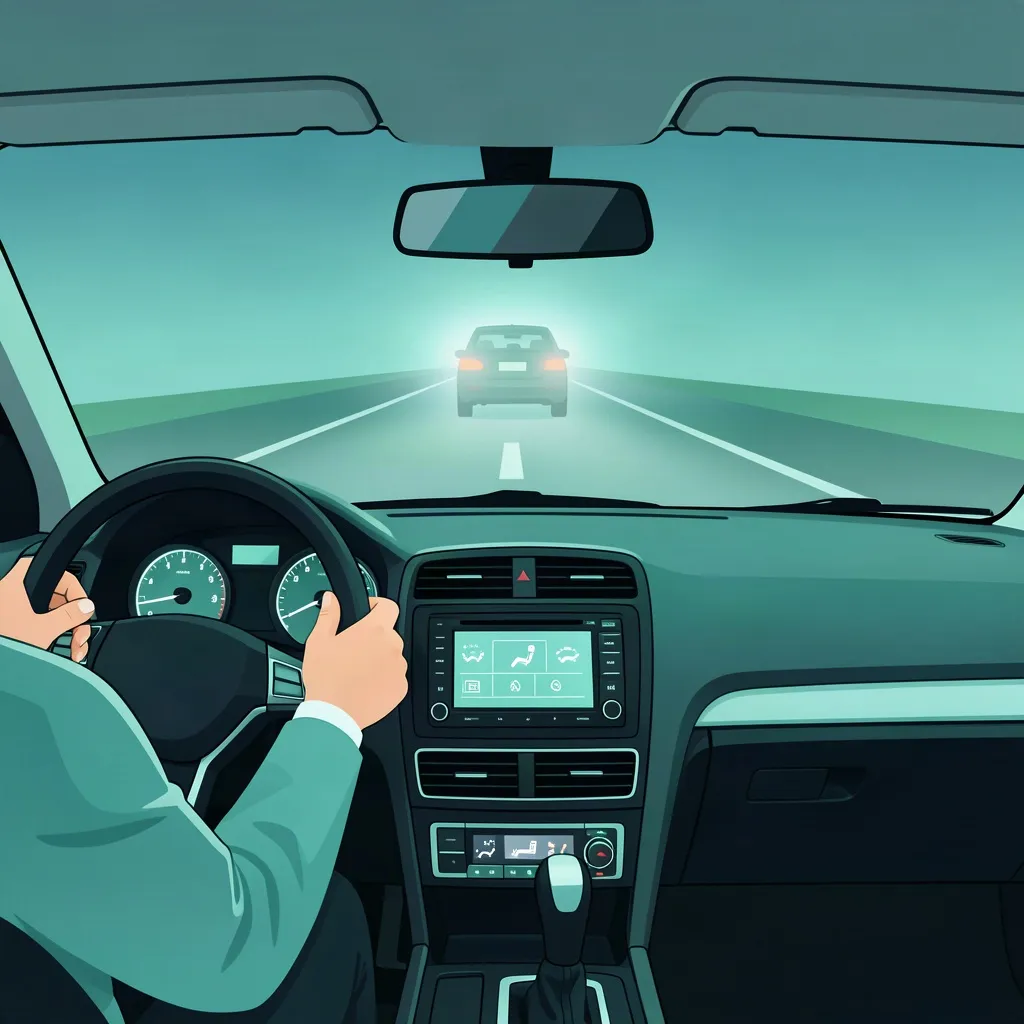
Glare from oncoming traffic can significantly reduce your ability to see the road, particularly in adverse weather conditions. If you find yourself dazzled by an oncoming vehicle, you must slow down and, if necessary, stop until your vision clears. Furthermore, when stuck in stationary traffic, the Highway Code advises you to apply the parking brake and take your foot off the footbrake. This action deactivates your brake lights, which helps prevent glare for the drivers behind you, showing that you are a considerate and observant road user.
Visibility is not just about seeing the road; it is about recognizing hazards that may not be obvious in the dark. Pedestrians, cyclists, and horse riders are significantly harder to spot at night, especially if they are wearing dark clothing or lack adequate reflectors. Always scan your surroundings carefully and anticipate that these road users may be present even on roads that appear empty.
| Lighting Condition | Recommended Action |
|---|---|
| Well-lit urban road | Use dipped headlights |
| Unlit open road | Use main beam (dip for oncoming traffic) |
| Following a vehicle | Keep headlights dipped |
| Stationary in a queue | Use handbrake and release footbrake |
This article covers the essential Highway Code requirements for night driving in Great Britain, including the legal definition of hours of darkness and the mandatory use of headlights during this period. It provides clear guidance on when to use dipped versus main beam headlights, with specific rules for built-up areas, unlit roads, and situations involving other road users. The content explains how to handle dazzle, when fog lights may legally be used (only when visibility is below 100 metres), and the correct procedure when stationary in traffic at night to avoid blinding following drivers. Understanding these rules is vital for both safe driving practice and success in the DVSA theory test, particularly given the specific time-based definitions and conditional requirements that frequently appear in exam questions.
A short set of high-value points that capture the most important ideas from this article.
Night driving legally starts half an hour after sunset and ends half an hour before sunrise, requiring lit headlights at all times during this period.
Use dipped headlights in built-up areas with street lighting and when approaching or following other vehicles to prevent dangerous glare.
Switch to main beam on unlit roads for maximum visibility, but always dip when approaching oncoming traffic or when following another vehicle.
If dazzled by an oncoming vehicle, slow down and stop if necessary until your vision clears.
Vulnerable road users such as pedestrians, cyclists, and horse riders are harder to spot at night and require extra vigilance.
Hours of darkness = half an hour after sunset to half an hour before sunrise.
Use dipped headlights when following another vehicle or when oncoming traffic is present.
Fog lights must only be used when visibility is seriously reduced, typically under 100 metres.
When stationary in traffic at night, apply the handbrake and release the footbrake to avoid dazzling drivers behind with your brake lights.
Never use main beam in built-up areas or whenever it might dazzle other road users.
Assuming night driving rules only apply after dark rather than understanding the half-hour sunset/sunrise margins in the legal definition.
Keeping main beam headlights on in well-lit urban areas where they will dazzle other drivers.
Leaving fog lights on in normal conditions, which is a road lighting regulation violation and can dazzle others.
Continuing to drive at normal speed when dazzled instead of slowing down or stopping until vision clears.
Failing to recognise pedestrians, cyclists, and horse riders in dark clothing as potential hazards requiring anticipatory driving.
Article content overview
A short set of high-value points that capture the most important ideas from this article.
Night driving legally starts half an hour after sunset and ends half an hour before sunrise, requiring lit headlights at all times during this period.
Use dipped headlights in built-up areas with street lighting and when approaching or following other vehicles to prevent dangerous glare.
Switch to main beam on unlit roads for maximum visibility, but always dip when approaching oncoming traffic or when following another vehicle.
If dazzled by an oncoming vehicle, slow down and stop if necessary until your vision clears.
Vulnerable road users such as pedestrians, cyclists, and horse riders are harder to spot at night and require extra vigilance.
Hours of darkness = half an hour after sunset to half an hour before sunrise.
Use dipped headlights when following another vehicle or when oncoming traffic is present.
Fog lights must only be used when visibility is seriously reduced, typically under 100 metres.
When stationary in traffic at night, apply the handbrake and release the footbrake to avoid dazzling drivers behind with your brake lights.
Never use main beam in built-up areas or whenever it might dazzle other road users.
Assuming night driving rules only apply after dark rather than understanding the half-hour sunset/sunrise margins in the legal definition.
Keeping main beam headlights on in well-lit urban areas where they will dazzle other drivers.
Leaving fog lights on in normal conditions, which is a road lighting regulation violation and can dazzle others.
Continuing to drive at normal speed when dazzled instead of slowing down or stopping until vision clears.
Failing to recognise pedestrians, cyclists, and horse riders in dark clothing as potential hazards requiring anticipatory driving.
Explore related topics, search based questions, and concepts that learners often look up when studying Night Driving and Headlight Rules. These themes reflect real search intent and help you understand how this topic connects to wider driving theory knowledge in Great Britain.
Find clear and practical answers to common questions learners often have about Night Driving and Headlight Rules. This section helps explain difficult points, remove confusion, and reinforce the key driving theory concepts that matter for learners in Great Britain.
The hours of darkness are legally defined as the period between half an hour after sunset and half an hour before sunrise.
You must use dipped headlights at night in built-up areas and in dull daytime weather to ensure you can be seen by other road users.
When waiting in a queue of traffic at night, apply the parking brake and take your foot off the footbrake to deactivate your brake lights, which reduces glare for drivers behind you.
If you are dazzled by oncoming headlights, you should slow down and, if necessary, stop until you can see the road ahead clearly again.
Explore our extensive library of Great Britain driving theory articles to clarify any topic, review specific road rules, or gain deeper insights into vehicle safety and the Highway Code. Use the search to find exactly what you need for comprehensive DVSA theory test preparation.