Turning right across traffic is one of the most critical manoeuvres for any driver in Great Britain, requiring precise timing, observation, and positioning. This guide breaks down the official requirements of Rules 179 and 180, helping you understand how to navigate junctions safely while avoiding common mistakes that lead to exam faults and real-world collisions.
Article content overview
Turning right across the path of oncoming traffic is widely considered one of the most demanding manoeuvres for learner drivers in Great Britain. Whether you are navigating a simple T-junction or a busy urban crossroads, the potential for conflict with oncoming vehicles, cyclists, and pedestrians is significant. The Highway Code provides clear, standardised rules to ensure that every driver understands their responsibilities, priorities, and necessary safety checks. Mastering these procedures is essential not only for passing your DVSA theory and practical driving tests but for maintaining safety on the road throughout your driving life.
The bedrock of any safe turn is the Mirrors, Signal, Manoeuvre (MSM) routine. This sequence should be initiated well before you reach the junction to provide other road users with sufficient warning of your intentions. Rule 179 of the Highway Code explicitly states that you must use your mirrors to assess the position and movement of traffic behind you, give a clear right-turn signal, and position your vehicle correctly.
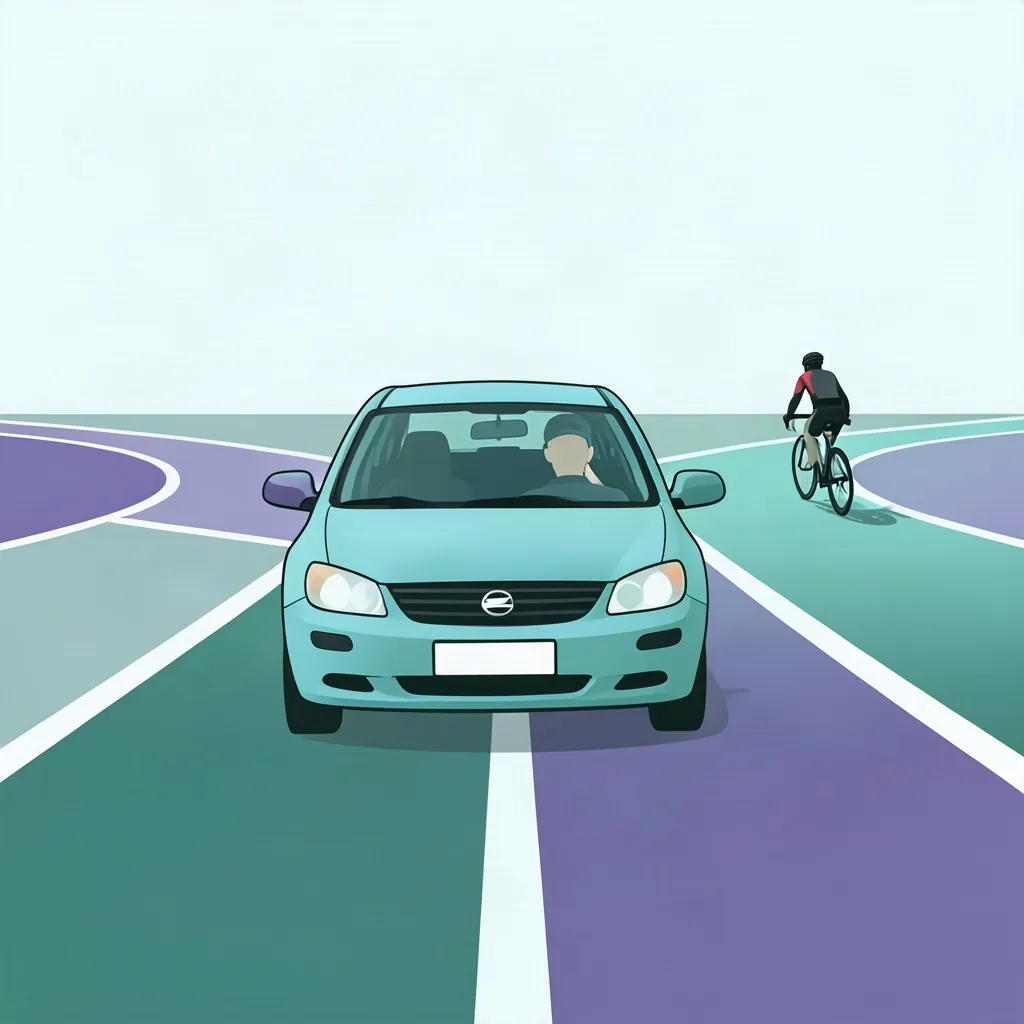
When approaching a junction or a crossroads, your road positioning is a vital safety tool. By placing your vehicle slightly to the left of the centre of the road, you allow other vehicles to pass on your left if the road width permits, which helps reduce congestion. When turning right at a crossroads where an oncoming vehicle is also turning right, you must decide between two methods. The "offside to offside" method (right-side to right-side) is generally considered the safest as it provides both drivers with a clearer view of oncoming traffic hidden behind the other vehicle.
Be especially vigilant for cyclists and motorcyclists who may be "filtering" or attempting to overtake on your left or right. They are often hidden from view when you begin your turn. Always double-check your mirrors and blind spots immediately before the final commitment to the manoeuvre.
In the theory test, you will frequently encounter hazard perception scenarios involving right turns. A common trap is assuming that because you have signalled, you have the right to proceed. You must always wait for a safe gap in the oncoming flow of traffic. Furthermore, remember that when turning into or out of a side road, you should give way to pedestrians who are crossing or waiting to cross that side road, as established under the updated Highway Code Rule H2.
| Situation | Safety Priority |
|---|---|
| Turning into a side road | Give way to pedestrians crossing the side road. |
| Turning right at crossroads | Choose 'right-side to right-side' for better visibility. |
| Approaching a junction | Always check mirrors and blind spots for cyclists. |
| Wait for a gap | Never force your way; ensure the gap is large enough to clear the junction safely. |
The DVSA theory test frequently assesses your knowledge of these rules through situational questions. Examiners look for a deep understanding of why we position the vehicle centrally and why we perform final shoulder checks. Failing to observe a cyclist in your blind spot or cutting a corner are common causes for "serious" faults during practical tests. By consistently applying the rules found in the Highway Code, you build the muscle memory required for safe, independent driving.
Turning right at junctions is one of the most demanding manoeuvres for learner drivers, requiring strict adherence to the Mirrors, Signal, Manoeuvre sequence from Rule 179 of the Highway Code. Correct road positioning—slightly left of centre when waiting to turn right—allows other traffic to pass safely, and at crossroads, the 'offside to offside' method provides the clearest view when meeting oncoming right-turning vehicles. Drivers must remain vigilant for vulnerable road users such as cyclists and motorcyclists who often filter through traffic and occupy blind spots. Under Rule H2, pedestrians crossing or waiting to cross the side road have priority, and no driver should proceed until the path is clear.
A short set of high-value points that capture the most important ideas from this article.
The MSM (Mirrors, Signal, Manoeuvre) sequence must be initiated well before reaching the junction to give other road users sufficient warning.
When turning right at crossroads where oncoming traffic is also turning right, use the 'offside to offside' method for maximum visibility.
Cyclists and motorcyclists filtering through traffic are often hidden in blind spots during turns—always perform final mirror and blind spot checks.
Giving a signal does not grant you the right to proceed; you must always wait for a safe gap in oncoming traffic.
Under Rule H2, you must give way to pedestrians crossing or waiting to cross the side road when turning in or out.
Rule 179 requires mirrors check, right signal, and correct road positioning before any turn.
Position just left of centre of the road when waiting to turn right to allow other vehicles to pass on your left.
Perform a final shoulder check immediately before committing to the turn to confirm you are not being overtaken.
Never cut the corner when turning right; maintain the correct curvature to avoid conflicting with oncoming traffic.
At junctions, pedestrians crossing or waiting to cross the side road have priority over turning vehicles.
Assuming that signalling right automatically means you have priority to proceed—always wait for a safe gap.
Failing to check blind spots for cyclists or motorcyclists who may be filtering past on either side.
Cutting the corner during a right turn, which places your vehicle in the path of oncoming traffic.
Not giving adequate time for mirrors checks, resulting in missed approaching vehicles or overtaking traffic.
Overlooking pedestrian priority at side road junctions by focusing only on vehicle traffic.
Article content overview
A short set of high-value points that capture the most important ideas from this article.
The MSM (Mirrors, Signal, Manoeuvre) sequence must be initiated well before reaching the junction to give other road users sufficient warning.
When turning right at crossroads where oncoming traffic is also turning right, use the 'offside to offside' method for maximum visibility.
Cyclists and motorcyclists filtering through traffic are often hidden in blind spots during turns—always perform final mirror and blind spot checks.
Giving a signal does not grant you the right to proceed; you must always wait for a safe gap in oncoming traffic.
Under Rule H2, you must give way to pedestrians crossing or waiting to cross the side road when turning in or out.
Rule 179 requires mirrors check, right signal, and correct road positioning before any turn.
Position just left of centre of the road when waiting to turn right to allow other vehicles to pass on your left.
Perform a final shoulder check immediately before committing to the turn to confirm you are not being overtaken.
Never cut the corner when turning right; maintain the correct curvature to avoid conflicting with oncoming traffic.
At junctions, pedestrians crossing or waiting to cross the side road have priority over turning vehicles.
Assuming that signalling right automatically means you have priority to proceed—always wait for a safe gap.
Failing to check blind spots for cyclists or motorcyclists who may be filtering past on either side.
Cutting the corner during a right turn, which places your vehicle in the path of oncoming traffic.
Not giving adequate time for mirrors checks, resulting in missed approaching vehicles or overtaking traffic.
Overlooking pedestrian priority at side road junctions by focusing only on vehicle traffic.
Explore related topics, search based questions, and concepts that learners often look up when studying Safe Right Turns at Junctions. These themes reflect real search intent and help you understand how this topic connects to wider driving theory knowledge in Great Britain.
Find clear and practical answers to common questions learners often have about Safe Right Turns at Junctions. This section helps explain difficult points, remove confusion, and reinforce the key driving theory concepts that matter for learners in Great Britain.
MSM stands for Mirrors, Signal, and Manoeuvre. You must check your interior and right-hand mirrors to assess traffic behind you, signal right in good time, and then position your vehicle correctly before beginning the turn.
Right side to right side means you pass behind the oncoming vehicle turning right, which usually provides a clearer view of oncoming traffic. Left side to left side involves turning in front of each other, which can block your view of hazards like cyclists and motorcyclists.
According to the Highway Code, you should position your vehicle just to the left of the middle of the road or in the designated space marked for traffic turning right, ensuring you leave sufficient room for other vehicles to pass on your left if possible.
Checking your blind spots is vital to ensure no cyclists, motorcyclists, or pedestrians are attempting to overtake you on the left or moving through the junction, as these vulnerable road users are often hidden from standard mirror views.
Explore our extensive library of Great Britain driving theory articles to clarify any topic, review specific road rules, or gain deeper insights into vehicle safety and the Highway Code. Use the search to find exactly what you need for comprehensive DVSA theory test preparation.