
Understanding how to correctly position your vehicle and judge safe gaps when turning across traffic is a cornerstone of the DVSA theory test. This guide breaks down the legal requirements from the Highway Code, helping you navigate complex junctions and avoid common test-day mistakes. By focusing on correct observation and signalling procedures, you will gain the confidence needed to handle intersections efficiently.
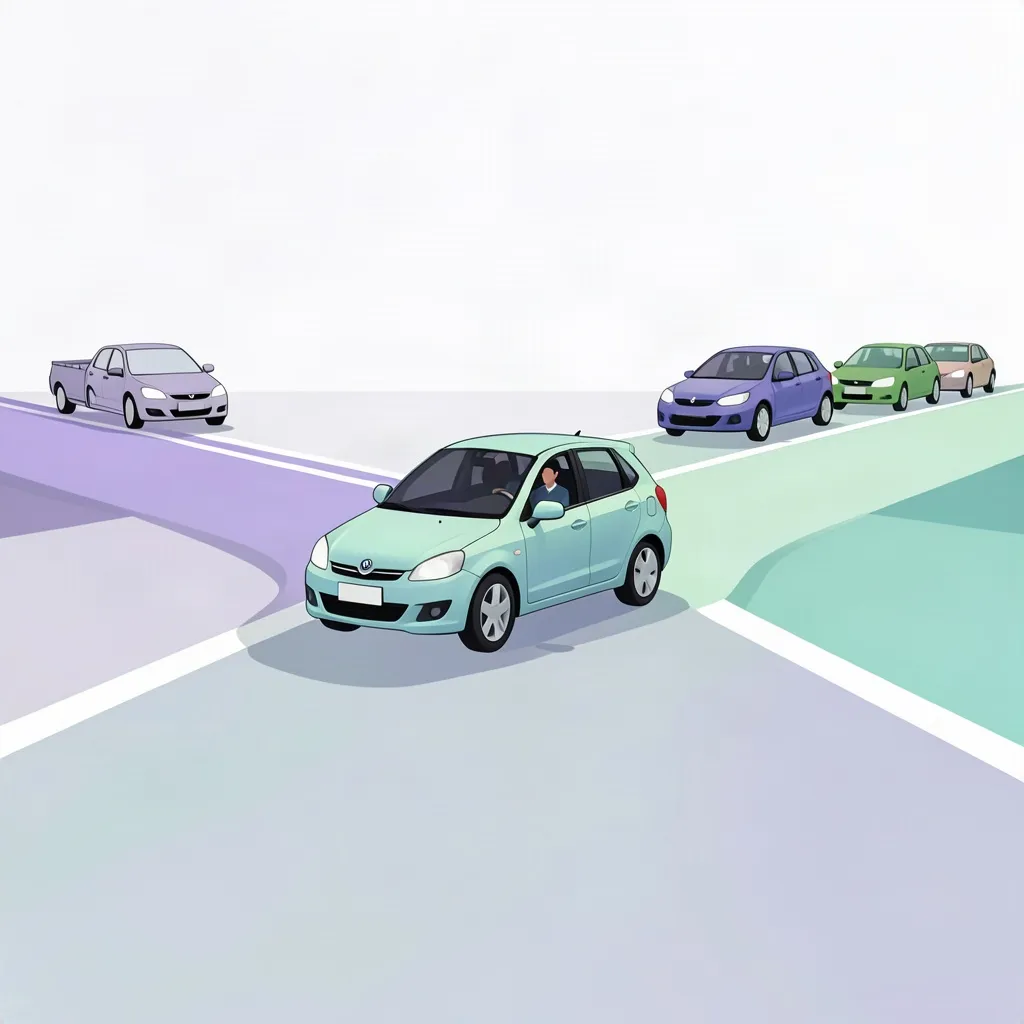
Article content overview
Navigating junctions and crossroads is one of the most fundamental skills you will need to master for your DVSA theory test and your future practical driving. Turning right across oncoming traffic flow requires a sophisticated balance of observation, positioning, and timing. In Great Britain, the Highway Code provides clear, mandatory guidance on how to perform these manoeuvres safely. Understanding these rules is not just about passing an exam; it is about protecting yourself and other vulnerable road users, such as cyclists and motorcyclists, who are often the most at risk during turning manoeuvres.
The secret to a successful right turn lies in the "Mirrors – Signal – Manoeuvre" (MSM) routine. This sequence must be second nature before you reach the junction. Well before you intend to turn, you must use your mirrors to assess the position and speed of traffic behind you, signal your intent clearly, and position your vehicle correctly. Failure to check your mirrors before signalling is a common mistake that can lead to hazardous situations, particularly if a faster vehicle or a cyclist is already attempting to overtake you.
When you reach a junction, your priority depends on road markings, traffic signs, and the layout of the road. At many crossroads, you may encounter oncoming vehicles that are also waiting to turn right. The Highway Code offers two main methods for dealing with this: the "near-side" (left-side to left-side) method and the "off-side" (right-side to right-side) method.
The off-side method—where you keep the oncoming vehicle to your right and pass behind it—is generally considered the safer option because it provides a clearer view of the road ahead, allowing you to spot any oncoming traffic or cyclists more effectively. Regardless of the method used, you must always be hyper-aware of your surroundings, as road layout and the position of other vehicles often dictate the most appropriate course of action.
Yellow box junctions are designed to keep traffic moving, and you must not enter them unless your exit road is clear. The only exception to this rule is when you are waiting to turn right; in this case, you may enter the box and wait provided you are not obstructing other vehicles that have the right of way. However, you must remain vigilant, as oncoming traffic can still catch you off guard if you misjudge the gap.
Furthermore, the introduction of Rule H2 in the Highway Code emphasizes that when turning into or out of a side road, you must give way to pedestrians who are crossing or waiting to cross. Cyclists, in particular, require extra care; never ride on the inside of a vehicle that is signalling or slowing down to turn left, as this puts you in a significant blind spot.
The DVSA theory test frequently assesses your knowledge of these priority rules through complex scenarios. You might be presented with an image of a junction and asked to determine who has the right of way or what the correct positioning for a specific vehicle should be. Always read the question carefully; sometimes, the simplest-looking question regarding a priority sign can be a trap if you ignore oncoming traffic that refuses to yield.
This article teaches the essential procedure for turning right across traffic in Great Britain, centred on the MSM (Mirrors – Signal – Manoeuvre) routine. It covers correct vehicle positioning before the turn, how to assess safe gaps in oncoming traffic, and the two methods for passing right-turning vehicles at crossroads. Key rules include yellow box junction restrictions and the requirement to give way to pedestrians and cyclists under Rule H2. Understanding these principles is critical for both passing the DVSA theory test and driving safely on real roads.
A short set of high-value points that capture the most important ideas from this article.
The MSM (Mirrors – Signal – Manoeuvre) routine is the foundation for all turning across traffic and must be automatic before you reach a junction.
At crossroads, the off-side method (passing behind the oncoming vehicle on your right) generally provides better visibility and is considered the safer option.
Yellow box junctions can only be entered when turning right if your exit road is clear, except when blocked by oncoming traffic with priority.
Rule H2 requires you to give way to pedestrians and cyclists crossing when turning into or out of a side road.
Correct vehicle positioning—slightly left of centre or in a marked right-turn lane—must be established before committing to the turn.
Check your mirrors before signalling to avoid surprises from faster vehicles or cyclists attempting to overtake.
Signal your intention in good time so other road users can react appropriately.
When positioning for a right turn, stay just left of the road centre or in a marked right-turn lane if available.
Always assess oncoming traffic, pedestrians, and cyclists before committing to the turn.
Cyclists can be hidden in your blind spot—never ride on the inside of a vehicle turning left.
Failing to check mirrors before signalling, which can catch faster vehicles or cyclists off guard.
Cutting the corner when turning right, risking collision with vehicles emerging from the side road or pedestrians crossing.
Misjudging the size and speed of safe gaps in oncoming traffic, leading to hesitation or dangerous commits.
Entering a yellow box junction when your exit is not clear (other than when waiting to turn right with oncoming traffic blocking you).
Assuming mirrors cover all angles—blind spots around the vehicle can hide cyclists, especially when turning left.
Article content overview
A short set of high-value points that capture the most important ideas from this article.
The MSM (Mirrors – Signal – Manoeuvre) routine is the foundation for all turning across traffic and must be automatic before you reach a junction.
At crossroads, the off-side method (passing behind the oncoming vehicle on your right) generally provides better visibility and is considered the safer option.
Yellow box junctions can only be entered when turning right if your exit road is clear, except when blocked by oncoming traffic with priority.
Rule H2 requires you to give way to pedestrians and cyclists crossing when turning into or out of a side road.
Correct vehicle positioning—slightly left of centre or in a marked right-turn lane—must be established before committing to the turn.
Check your mirrors before signalling to avoid surprises from faster vehicles or cyclists attempting to overtake.
Signal your intention in good time so other road users can react appropriately.
When positioning for a right turn, stay just left of the road centre or in a marked right-turn lane if available.
Always assess oncoming traffic, pedestrians, and cyclists before committing to the turn.
Cyclists can be hidden in your blind spot—never ride on the inside of a vehicle turning left.
Failing to check mirrors before signalling, which can catch faster vehicles or cyclists off guard.
Cutting the corner when turning right, risking collision with vehicles emerging from the side road or pedestrians crossing.
Misjudging the size and speed of safe gaps in oncoming traffic, leading to hesitation or dangerous commits.
Entering a yellow box junction when your exit is not clear (other than when waiting to turn right with oncoming traffic blocking you).
Assuming mirrors cover all angles—blind spots around the vehicle can hide cyclists, especially when turning left.
Explore related topics, search based questions, and concepts that learners often look up when studying Turning Right at Junctions. These themes reflect real search intent and help you understand how this topic connects to wider driving theory knowledge in Great Britain.
Find clear and practical answers to common questions learners often have about Turning Right at Junctions. This section helps explain difficult points, remove confusion, and reinforce the key driving theory concepts that matter for learners in Great Britain.
The generally safer method is to turn right-side to right-side, keeping the other vehicle on your right and turning behind it, as this provides a clearer view of oncoming traffic.
It involves checking your mirrors to assess the traffic behind you, giving a clear right-turn signal in good time, and then positioning your vehicle correctly before making the turn.
You must not enter a yellow box junction unless your exit road is clear, except when you are waiting to turn right and are prevented from doing so only by oncoming traffic.
You should be extra vigilant for cyclists, motorcyclists, and pedestrians who may be hidden from view by oncoming vehicles, and always ensure there is a safe gap before proceeding.
Explore our extensive library of Great Britain driving theory articles to clarify any topic, review specific road rules, or gain deeper insights into vehicle safety and the Highway Code. Use the search to find exactly what you need for comprehensive DVSA theory test preparation.