
Understanding how to approach and navigate roundabouts is a critical component of the Great Britain driving theory test. This article breaks down the official Highway Code requirements for lane selection, timely signalling, and managing priority, ensuring you can make confident, safe decisions in real-world traffic. Learn how to interpret road signs and markings correctly to maintain the right position throughout your journey.
Article content overview
Navigating roundabouts is one of the most essential skills you will need to demonstrate to pass your DVSA theory and practical driving tests in Great Britain. Whether you are dealing with mini-roundabouts in residential areas or large, multi-lane spiral roundabouts, understanding lane discipline, priority, and signalling is vital for your safety and the safety of others. The Highway Code provides clear guidelines to ensure that all road users can negotiate these junctions predictably and efficiently.
At any roundabout, you must give priority to traffic approaching from your right, unless road signs, markings, or traffic lights dictate otherwise. When you approach a roundabout, you should look well ahead, check all relevant signs, and identify your intended exit early. Maintaining a controlled speed allows you to observe traffic flow on the roundabout and make an informed decision about when it is safe to enter.
It is a common error for learners to focus too much on their own vehicle while ignoring the position of others. You must always watch for cyclists, motorcyclists, and pedestrians who may be using the roundabout. Because these vulnerable road users are often harder to see, you must exercise extra caution and provide them with plenty of space when sharing the road at an junction.
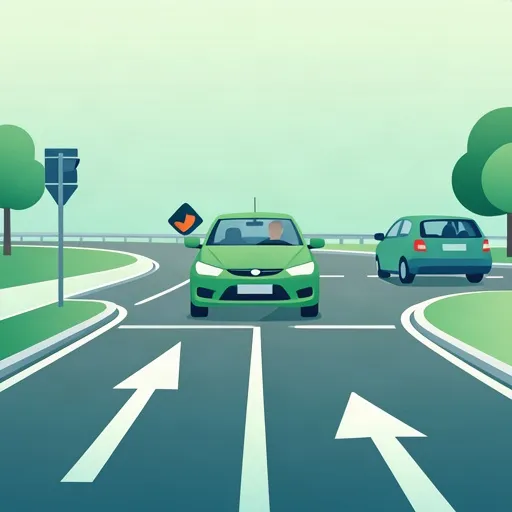
Selecting the correct lane before you reach the roundabout is critical to your success in the practical driving test. If you are taking an exit to the left, you should approach in the left-hand lane and signal left. If you are travelling straight ahead, you should normally approach in the appropriate lane, typically staying in the left lane unless signs or markings indicate otherwise, and you generally do not need to signal on the approach.
When you intend to turn right or go full circle, you must approach in the right-hand lane and signal right. As you travel around the roundabout, you should maintain your position in the right-hand lane until you are ready to move towards your exit, at which point you must signal left after passing the exit before the one you intend to take.
Always be aware that cyclists may choose to stay in the left-hand lane even when turning right, as they may feel safer doing so. Never attempt to overtake a cyclist within the roundabout; instead, allow them plenty of room and be prepared for them to change their direction at any time.
Great Britain features a variety of junction designs, ranging from small mini-roundabouts to complex signal-controlled intersections. Mini-roundabouts are designed to slow traffic and manage flow at smaller junctions, but the fundamental rules of priority still apply. You must treat them with the same care as larger roundabouts, ensuring you signal your intentions clearly to other road users.
On larger, multi-lane roundabouts, lane markings are your best guide. You should look for signs well before the junction that indicate which lane you should be in for your destination. If you find yourself in the wrong lane, do not attempt to force your way across or make sudden manoeuvres; continue in your lane and safely take a different exit if necessary.
| Feature | Standard Roundabout | Mini-Roundabout |
|---|---|---|
| Priority | Always to the right | Always to the right |
| Signalling | Mandatory for all exits | Mandatory for all exits |
| Speed | Maintain constant flow | Slow entry required |
| Lane Use | Use marked lanes | Generally one lane |
Navigating roundabouts requires mastering three core elements: priority, lane selection, and signalling. The fundamental rule is to give way to traffic from your right, and to select your lane early based on your intended exit before reaching the junction. Signalling must be timed correctly — left on approach for left exits, right on approach for right exits or full circle, and left after passing the exit before your destination when on the roundabout. Different roundabout types (mini, standard, multi-lane) all follow the same priority rules, though larger roundabouts require more attention to lane markings and signalling timing. Extra caution is needed around cyclists and other vulnerable road users who may not follow the same lane patterns as motor vehicles.
A short set of high-value points that capture the most important ideas from this article.
Always give priority to traffic approaching from your right at a roundabout, unless signs or markings indicate otherwise
Select the correct lane before reaching the roundabout based on your intended exit — left lane for left exits, right lane for right exits or full circle
Signal left after passing the exit immediately before the one you intend to take, not on approach for straight-ahead movements
Maintain lane discipline throughout the roundabout and avoid cutting across other drivers' lanes
Exercise extra caution around cyclists and motorcyclists who may be harder to see and may behave unpredictably within the roundabout
Left exit: approach in left lane, signal left on approach (if required by road markings)
Straight ahead: approach in appropriate lane (usually left), generally no signal on approach
Right exit or full circle: approach in right lane, signal right on approach
Mini-roundabouts follow the same priority rules as larger roundabouts — give way to the right
Never attempt to overtake a cyclist within a roundabout; allow them plenty of room
Focusing too much on own vehicle and ignoring the position of other road users
Failing to signal correctly — either not signalling at all or signalling too early before confirming lane position
Taking the wrong lane and then attempting to force across or make sudden lane changes
Not watching for vulnerable road users, particularly cyclists who may stay in the left lane even when turning right
Treating mini-roundabouts differently — the same priority rules apply as to larger roundabouts
Article content overview
A short set of high-value points that capture the most important ideas from this article.
Always give priority to traffic approaching from your right at a roundabout, unless signs or markings indicate otherwise
Select the correct lane before reaching the roundabout based on your intended exit — left lane for left exits, right lane for right exits or full circle
Signal left after passing the exit immediately before the one you intend to take, not on approach for straight-ahead movements
Maintain lane discipline throughout the roundabout and avoid cutting across other drivers' lanes
Exercise extra caution around cyclists and motorcyclists who may be harder to see and may behave unpredictably within the roundabout
Left exit: approach in left lane, signal left on approach (if required by road markings)
Straight ahead: approach in appropriate lane (usually left), generally no signal on approach
Right exit or full circle: approach in right lane, signal right on approach
Mini-roundabouts follow the same priority rules as larger roundabouts — give way to the right
Never attempt to overtake a cyclist within a roundabout; allow them plenty of room
Focusing too much on own vehicle and ignoring the position of other road users
Failing to signal correctly — either not signalling at all or signalling too early before confirming lane position
Taking the wrong lane and then attempting to force across or make sudden lane changes
Not watching for vulnerable road users, particularly cyclists who may stay in the left lane even when turning right
Treating mini-roundabouts differently — the same priority rules apply as to larger roundabouts
Explore related topics, search based questions, and concepts that learners often look up when studying Roundabout Lane and Priority Rules. These themes reflect real search intent and help you understand how this topic connects to wider driving theory knowledge in Great Britain.
Find clear and practical answers to common questions learners often have about Roundabout Lane and Priority Rules. This section helps explain difficult points, remove confusion, and reinforce the key driving theory concepts that matter for learners in Great Britain.
Unless signs or road markings indicate otherwise, you should approach in the left-hand lane and keep to the left throughout the roundabout, signalling left to leave.
You should signal left after you have passed the exit immediately before the one you intend to take.
Always give cyclists plenty of room. Be aware that they may stay in the left-hand lane even if they intend to turn right for safety reasons, and be prepared for them to change direction.
Unless signs or markings specify otherwise, you generally do not need to signal on approach. Stay in the appropriate lane and signal left only after you have passed the exit before the one you want.
Explore our extensive library of Great Britain driving theory articles to clarify any topic, review specific road rules, or gain deeper insights into vehicle safety and the Highway Code. Use the search to find exactly what you need for comprehensive DVSA theory test preparation.