
Driving at night presents unique challenges that require a solid understanding of the Highway Code and defensive driving strategies. You will learn the correct use of dipped and main beam headlights, how to safely mitigate the risk of glare from oncoming traffic, and the importance of speed control in reduced visibility. Mastering these concepts is vital for both your practical safety on the road and passing the theory test.
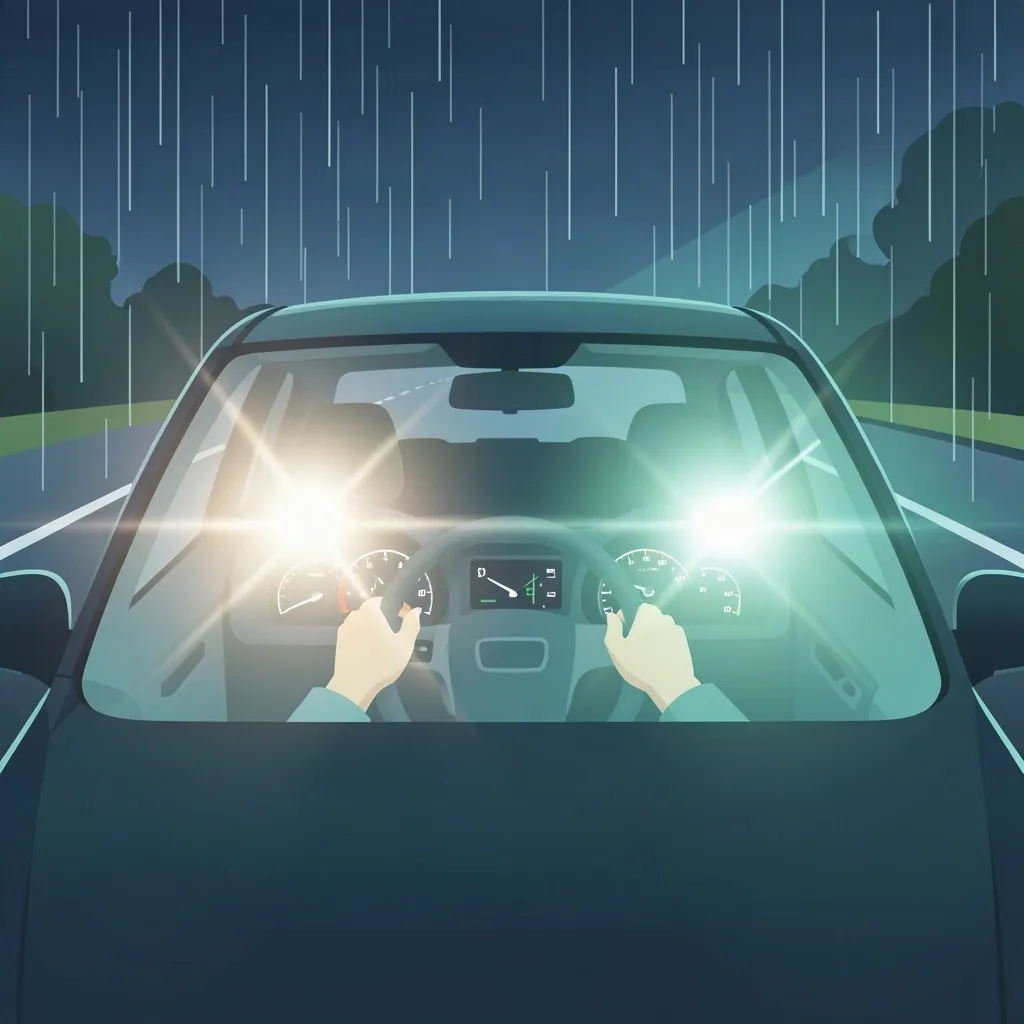
Article content overview
Driving after dark in Great Britain requires a heightened level of awareness and a thorough understanding of the Highway Code. As a learner driver, you must transition from relying on daylight visibility to managing reduced light conditions, glare, and obscured hazards. These skills are essential not only for your practical driving safety but are frequently tested in both the multiple-choice and hazard perception sections of your DVSA theory test.
According to Rule 110 of the Highway Code, night—or the hours of darkness—is legally defined as the period between half an hour after sunset and half an hour before sunrise. During this window, specific rules regarding lighting come into force to ensure you remain visible to others and can adequately perceive the road ahead. Failing to understand these timeframes can lead to errors in judgment, as lighting conditions change rapidly during dusk and dawn.
The period that begins half an hour after sunset and ends half an hour before sunrise. During these times, you must use your headlights to ensure you can see and be seen by other road users.
One of the most common topics in the theory test concerns the correct operation of your vehicle's lighting system. You should use dipped headlights at night in built-up areas and in dull daytime weather to ensure your vehicle is visible to pedestrians, cyclists, and other drivers. While main beam headlights provide superior visibility on unlit rural roads, they must be managed responsibly to prevent causing discomfort or danger to other road users.
Headlight dazzle is a significant safety hazard that theory test questions often highlight. When an oncoming driver fails to dip their lights, or when you are blinded by reflected light, your immediate reaction must be to maintain control and reduce speed. Glare does not only come from other vehicles; interior lighting and reflection from shop windows or bright dashboard displays can also impair your night vision.
You MUST NOT use any lights in a way that would dazzle or cause discomfort to other road users, including pedestrians, cyclists, and horse riders. This is a legal requirement under the Road Vehicles Lighting Regulations (RVLR) and is strictly enforced in the context of the Highway Code.
Even when your vehicle is not in motion, your lights play a role in safety. In stationary queues of traffic, you should apply your parking brake and take your foot off the footbrake once the following traffic has stopped. Deactivating your vehicle’s brake lights in this manner minimizes glare for the driver behind you, demonstrating a high level of hazard awareness and consideration for other road users.
The DVSA theory test frequently includes scenarios involving night driving. You may be asked about the correct reaction to an oncoming driver who refuses to dip their lights, or the specific situations where dipped headlights are mandatory. Always remember that your goal is to be defensive; anticipate that other road users—especially pedestrians or cyclists who may not have lights—will be harder to spot in the dark. Keeping your headlights clean and properly aligned is a simple but critical maintenance step that directly impacts your ability to pass the hazard perception test.
Night driving in Great Britain requires mastery of the Highway Code's lighting rules, most notably that the hours of darkness begin 30 minutes after sunset and end 30 minutes before sunrise. Learners must use dipped headlights in built-up areas, when following other vehicles, and when meeting oncoming traffic, reserving main beam for unlit roads where it is safe and appropriate. If dazzled, the correct response is to slow down or stop while maintaining control rather than continuing at speed. Understanding these procedures is essential for both safe driving and success in the DVSA theory test's multiple-choice and hazard perception sections.
A short set of high-value points that capture the most important ideas from this article.
The legal definition of night (hours of darkness) is from 30 minutes after sunset to 30 minutes before sunrise, per Highway Code Rule 110.
Use dipped headlights when following another vehicle, meeting oncoming traffic, or driving in built-up areas to avoid dazzling other road users.
Switch to main beam only on unlit roads where it is safe to do so, and return to dipped immediately if you risk dazzling oncoming users.
If dazzled by an oncoming vehicle's headlights, slow down or stop while maintaining control—never drive blind.
Your headlights must be clean and properly aligned, as poor visibility directly impacts hazard perception.
Hours of Darkness = 30 minutes after sunset to 30 minutes before sunrise—lighting rules apply during this entire period.
Dip headlights when following another vehicle to avoid dazzling the driver through their mirrors.
On unlit rural roads, main beam improves visibility but must be dipped immediately when meeting oncoming traffic.
When stationary in traffic, release the footbrake once traffic behind has stopped to prevent your brake lights causing glare.
Using any lights in a way that dazzles pedestrians, cyclists, or other drivers is a legal offence under the Road Vehicles Lighting Regulations.
Assuming main beam headlights are always correct at night—dipped headlights are mandatory in built-up areas and when following or meeting other traffic.
Failing to dip headlights when overtaking until you are level with the other vehicle, which dazzles the driver you are passing.
Not slowing down sufficiently when dazzled; some learners continue at speed despite temporarily impaired vision.
Overlooking non-vehicle glare sources such as interior lights, shop windows, or dashboard displays that can impair night vision.
Forgetting that pedestrians and cyclists may have no lights, making them especially hard to spot in the dark.
Article content overview
A short set of high-value points that capture the most important ideas from this article.
The legal definition of night (hours of darkness) is from 30 minutes after sunset to 30 minutes before sunrise, per Highway Code Rule 110.
Use dipped headlights when following another vehicle, meeting oncoming traffic, or driving in built-up areas to avoid dazzling other road users.
Switch to main beam only on unlit roads where it is safe to do so, and return to dipped immediately if you risk dazzling oncoming users.
If dazzled by an oncoming vehicle's headlights, slow down or stop while maintaining control—never drive blind.
Your headlights must be clean and properly aligned, as poor visibility directly impacts hazard perception.
Hours of Darkness = 30 minutes after sunset to 30 minutes before sunrise—lighting rules apply during this entire period.
Dip headlights when following another vehicle to avoid dazzling the driver through their mirrors.
On unlit rural roads, main beam improves visibility but must be dipped immediately when meeting oncoming traffic.
When stationary in traffic, release the footbrake once traffic behind has stopped to prevent your brake lights causing glare.
Using any lights in a way that dazzles pedestrians, cyclists, or other drivers is a legal offence under the Road Vehicles Lighting Regulations.
Assuming main beam headlights are always correct at night—dipped headlights are mandatory in built-up areas and when following or meeting other traffic.
Failing to dip headlights when overtaking until you are level with the other vehicle, which dazzles the driver you are passing.
Not slowing down sufficiently when dazzled; some learners continue at speed despite temporarily impaired vision.
Overlooking non-vehicle glare sources such as interior lights, shop windows, or dashboard displays that can impair night vision.
Forgetting that pedestrians and cyclists may have no lights, making them especially hard to spot in the dark.
Explore related topics, search based questions, and concepts that learners often look up when studying Night Driving and Dazzle Rules. These themes reflect real search intent and help you understand how this topic connects to wider driving theory knowledge in Great Britain.
Find clear and practical answers to common questions learners often have about Night Driving and Dazzle Rules. This section helps explain difficult points, remove confusion, and reinforce the key driving theory concepts that matter for learners in Great Britain.
According to the Highway Code, night is defined as the period between half an hour after sunset and half an hour before sunrise.
You must use dipped headlights at night in built-up areas and during the day in dull weather to ensure you are visible to other road users.
If you are dazzled by oncoming traffic, you should slow down and, if necessary, stop until you can see clearly again.
No, you must not use front or rear fog lights unless visibility is seriously reduced. They must be switched off once visibility improves to avoid dazzling other road users.
Explore our extensive library of Great Britain driving theory articles to clarify any topic, review specific road rules, or gain deeper insights into vehicle safety and the Highway Code. Use the search to find exactly what you need for comprehensive DVSA theory test preparation.