
Understanding the complex rules regarding overtaking is vital for both your practical safety and success in the DVSA theory test. This article breaks down the legal requirements for signal timing, mirror usage, and lane positioning as defined by the Highway Code. You will learn the importance of avoiding the mistake of cutting in and how to identify hazards associated with works vehicles to score higher on your theory and hazard perception exams.
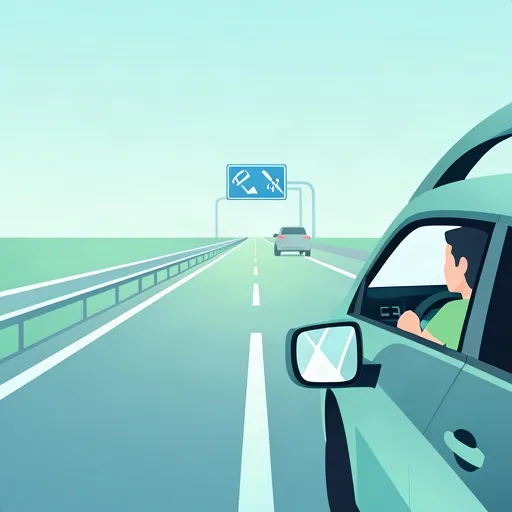
Article content overview
Overtaking on high-speed roads is a fundamental skill for any driver in Great Britain, yet it remains a significant area of focus for the DVSA theory test. Understanding the correct procedure for overtaking on motorways and dual carriageways is not just about passing your exam; it is a critical component of road safety. Whether you are navigating a standard two-lane dual carriageway or a complex three-lane motorway, the principles defined in The Highway Code remain consistent to ensure traffic flows smoothly and safely.
According to The Highway Code, lane discipline is the cornerstone of safe overtaking. On a two-lane dual carriageway, you should remain in the left-hand lane whenever possible. The right-hand lane is reserved specifically for overtaking or turning right. Once you have completed the manoeuvre and it is safe to do so, you are legally expected to return to the left-hand lane. Failing to return to the left lane after overtaking is a common bad habit that hampers traffic flow and is a frequently tested concept in theory exam scenarios.
On roads with three or more lanes, the rules become slightly more nuanced. While you may use the middle or right-hand lanes to overtake, you must return to the middle lane and subsequently the left-hand lane once it is safe. Constant lane hopping or lingering in the outside lane, often referred to as "lane hogging," is not only poor practice but is also contrary to the guidance provided by the DVSA.
One of the most common pitfalls for learners in the theory and hazard perception tests is underestimating the blind spot. Even if you have checked your mirrors, there is always a risk that a vehicle is positioned in that hidden area just over your shoulder. The theory test often includes questions that require you to identify the correct moment to signal and move out, emphasizing that mirrors alone are rarely enough.
It is essential to recognize when overtaking is prohibited or hazardous. Rule 161 of The Highway Code specifies that you should generally avoid overtaking on the left. However, there is a strict exception: you may only overtake on the left if the vehicle in front is signalling to turn right and there is sufficient space to do so safely. In dense urban traffic where lanes are congested, you may also pass on the left if traffic is moving slowly in queues.
When approaching road works, you must be particularly vigilant. Works vehicles may be used to close lanes, and they often display large signs instructing you to "Keep Left" or "Keep Right." You must obey these signs immediately. If you encounter a vehicle displaying a "CONVOY VEHICLE NO OVERTAKING" sign, you must not, under any circumstances, attempt to pass it.
The DVSA theory test frequently assesses your understanding of these rules through situational questions. You might be presented with an image of a multi-lane road and asked where a driver should position themselves. Remember, the focus is always on safety and the "left-is-best" principle. When you encounter hazard perception clips, look for drivers who fail to signal or who cut back in too aggressively, as these are classic indicators of developing hazards.
Safe overtaking on motorways and dual carriageways in Great Britain requires strict adherence to lane discipline and the 'left-is-best' principle. Before any overtaking manoeuvre, you must check your mirrors, signal your intention, and verify your blind spot—mirrors alone are insufficient. After overtaking, you must return to the left lane as soon as it is safe, never cutting in before the overtaken vehicle appears in your interior mirror. Overtaking on the left is generally prohibited under Rule 161, with narrow exceptions only when the vehicle ahead is turning right or in slow-moving queue traffic. Special restrictions apply near road works, and convoy vehicles displaying no-overtaking signs must never be passed.
A short set of high-value points that capture the most important ideas from this article.
The right-hand lane on dual carriageways is exclusively for overtaking; you must return to the left lane once it is safe to do so
Use mirrors, signal, and always check your blind spot before moving out to overtake
Never cut in after overtaking; ensure the overtaken vehicle is visible in your interior mirror before moving back
Lane hogging (lingering in the outside lane) is poor practice and contrary to DVSA guidance
On three-lane motorways, return to the middle lane before the left-hand lane as soon as it is safe
Rule 161 states you should generally avoid overtaking on the left, with exceptions only for vehicles turning right or slow-moving queued traffic
Works vehicles displaying 'CONVOY VEHICLE NO OVERTAKING' must never be passed under any circumstances
The 'left-is-best' principle is the foundation of lane discipline on all high-speed roads in Great Britain
Road works signs like 'Keep Left' or 'Keep Right' must be obeyed immediately when encountered
A vehicle pulling out ahead of you may only be filling a gap large enough for one vehicle—do not follow blindly
Assuming mirrors alone are sufficient—always perform a quick blind spot check
Failing to return to the left lane after overtaking, creating bottlenecks for following traffic
Cutting in too quickly after overtaking, forcing the overtaken driver to brake
Following another vehicle into a gap without checking whether the gap is large enough
Attempting to overtake on the left when the only justification is dense traffic rather than the vehicle ahead turning right
Article content overview
A short set of high-value points that capture the most important ideas from this article.
The right-hand lane on dual carriageways is exclusively for overtaking; you must return to the left lane once it is safe to do so
Use mirrors, signal, and always check your blind spot before moving out to overtake
Never cut in after overtaking; ensure the overtaken vehicle is visible in your interior mirror before moving back
Lane hogging (lingering in the outside lane) is poor practice and contrary to DVSA guidance
On three-lane motorways, return to the middle lane before the left-hand lane as soon as it is safe
Rule 161 states you should generally avoid overtaking on the left, with exceptions only for vehicles turning right or slow-moving queued traffic
Works vehicles displaying 'CONVOY VEHICLE NO OVERTAKING' must never be passed under any circumstances
The 'left-is-best' principle is the foundation of lane discipline on all high-speed roads in Great Britain
Road works signs like 'Keep Left' or 'Keep Right' must be obeyed immediately when encountered
A vehicle pulling out ahead of you may only be filling a gap large enough for one vehicle—do not follow blindly
Assuming mirrors alone are sufficient—always perform a quick blind spot check
Failing to return to the left lane after overtaking, creating bottlenecks for following traffic
Cutting in too quickly after overtaking, forcing the overtaken driver to brake
Following another vehicle into a gap without checking whether the gap is large enough
Attempting to overtake on the left when the only justification is dense traffic rather than the vehicle ahead turning right
Explore related topics, search based questions, and concepts that learners often look up when studying Safe Overtaking Rules. These themes reflect real search intent and help you understand how this topic connects to wider driving theory knowledge in Great Britain.
Find clear and practical answers to common questions learners often have about Safe Overtaking Rules. This section helps explain difficult points, remove confusion, and reinforce the key driving theory concepts that matter for learners in Great Britain.
You should return to the left-hand lane as soon as it is safe to do so after completing your overtake, ensuring you have left enough room so you do not cut in front of the other vehicle.
Yes, you may only overtake on the left if the vehicle in front is signalling to turn right and there is sufficient room for you to do so safely.
You must obey the direction indicated on the sign and move into the open lane, ensuring you do not return to the closed lane until it is safe to do so.
The blind spot is a critical safety zone that you cannot see in your mirrors; failing to check it before changing lanes is a common cause of accidents and a major point tested in the hazard perception section.
Explore our extensive library of Great Britain driving theory articles to clarify any topic, review specific road rules, or gain deeper insights into vehicle safety and the Highway Code. Use the search to find exactly what you need for comprehensive DVSA theory test preparation.