
This lesson guides you through the critical pre-journey inspection process required for all Category C goods vehicles. By mastering these systematic checks, you ensure your vehicle complies with DVSA roadworthiness standards and prepares you for professional driving responsibilities.

Lesson content overview
Operating a Category C goods vehicle on public roads carries significant responsibility, not just for the driver's safety but for that of all other road users. Before commencing any journey, every professional Category C driver must perform a thorough pre-journey inspection, often referred to as a "walk-around check." This meticulous examination is a fundamental part of a professional driver's duties, ensuring the vehicle is roadworthy, safe, and legally compliant.
This lesson details the comprehensive checklist and procedures involved in a pre-journey inspection for Category C goods vehicles in Great Britain, highlighting the legal framework, safety rationale, and practical steps to identify and report potential defects. Adhering to these guidelines is crucial for professional conduct and accident prevention.
The pre-journey inspection is not merely a recommendation; it is a mandatory legal requirement for professional goods vehicle drivers in Great Britain. This critical check serves multiple purposes, primarily safeguarding lives, preventing accidents, and ensuring compliance with stringent regulations.
Professional goods vehicle operations are governed by a robust framework of UK and retained EU law. Key regulations mandate that vehicles must be in a fit and roadworthy condition at all times when in use. These include:
Failure to conduct a proper pre-journey inspection or to address identified defects can result in enforcement action, including fines, points on a driving licence, vehicle prohibitions, and even the revocation of an operator's licence.
The primary purpose of the pre-journey inspection is to confirm the vehicle's roadworthiness. A roadworthy vehicle is one that meets all legal standards for safe operation. Defects, no matter how minor they seem, can escalate into serious safety hazards on the road. For instance, a small tyre bulge could lead to a catastrophic blowout at speed, or a faulty brake light could contribute to a rear-end collision.
By systematically checking critical components, drivers can identify potential mechanical failures before they occur, thus significantly reducing the risk of accidents. This proactive approach is fundamental to operating heavy goods vehicles safely and responsibly, protecting the driver, other road users, and the cargo being transported.
Beyond legal mandates, conducting thorough pre-journey checks is a cornerstone of professional responsibility for Category C drivers. It demonstrates competence, diligence, and a commitment to safety. Employers expect drivers to take ownership of these checks, as a well-maintained vehicle reduces vehicle downtime, minimises insurance claims, and upholds the company's reputation. A diligent driver contributes directly to the efficiency and safety of the entire logistics chain.
A systematic approach is essential for an effective pre-journey inspection. This "walk-around check" involves a comprehensive examination of the vehicle's exterior and key operational systems. The following checklist outlines the critical areas to inspect.
Tyres are the only contact point between the vehicle and the road, making their condition paramount for safety, braking performance, and handling. A thorough inspection of all tyres is crucial.
Tyre Pressure & Temperature: Remember that cold weather reduces tyre pressure, while driving generates heat, increasing pressure. Always verify the manufacturer's recommendations and adjust accordingly.
The braking system is critical for controlling vehicle speed and stopping safely. A defect here can have catastrophic consequences.
All external lights and signalling devices must be fully functional to ensure visibility and effectively communicate the driver's intentions to other road users.
Properly adjusted and clean mirrors are essential for safe driving, particularly for Category C vehicles with significant blind spots.
Mirror Blind Spots: Even with properly adjusted mirrors, Category C vehicles have significant blind spots. Always perform physical head checks and be aware of vulnerable road users like cyclists and motorcyclists who can easily disappear from view.
For articulated vehicles or those towing trailers, the security of the coupling mechanism is paramount to prevent accidental uncoupling.
The security and distribution of cargo directly impact the vehicle's stability, handling, and braking performance.
Checking essential fluid levels helps prevent overheating, steering issues, and other mechanical failures.
Proper documentation is a legal requirement and provides a critical record of vehicle condition and maintenance.
Identifying a defect is only the first step; proper reporting and rectification are crucial.
Immediate Reporting: Any defect that could affect the safe operation of the vehicle, or its legal compliance, must be reported immediately to your employer, fleet manager, or maintenance depot before the journey commences.
Accurate Documentation: Log the identified defect clearly and concisely in the vehicle's logbook or electronic inspection system, including the date, time, and a description of the fault.
Repair Authorisation: Do not operate the vehicle if the defect compromises safety or roadworthiness. Wait for authorisation to proceed, or for the defect to be rectified.
Follow-up: Ensure that once a defect is rectified, this is recorded, and the vehicle is re-inspected if necessary before it is put back into service.
Ignoring a defect, no matter how minor it appears, can lead to severe consequences, including accidents, legal penalties, and professional sanctions.
The pre-journey inspection is not a static process; it requires adaptation based on prevailing conditions and the specific nature of the journey.
The ramifications of a neglected pre-journey inspection can be severe, encompassing safety risks, legal penalties, and long-term professional consequences.
The most critical consequence of skipping or performing a shoddy inspection is an increased risk of accidents. Undetected defects can lead to:
DVSA reports consistently highlight that a significant percentage of heavy vehicle crashes involve defects that could have been detected during a thorough pre-journey inspection.
Neglecting pre-journey checks also carries substantial legal and professional penalties:
Immediate Hazard: Any defect that poses an immediate danger to road safety, such as complete brake failure, must result in the vehicle being immediately taken out of service until fully rectified.
The pre-journey inspection is a non-negotiable part of a professional Category C driver's routine. It is a comprehensive, systematic walk-around check covering every critical component of the vehicle and its load.
By adhering to a detailed checklist, inspecting tyres, brakes, lights, mirrors, coupling mechanisms, cargo security, and fluid levels, drivers fulfil their legal obligations and significantly enhance road safety. The process demands meticulous attention to detail, proper documentation, and prompt reporting of any defects. Embracing this responsibility not only prevents accidents and costly delays but also upholds the highest standards of professional conduct in the goods vehicle transport industry.
The pre-journey inspection is a mandatory, systematic walk-around check that Category C goods vehicle drivers must perform before every journey to ensure roadworthiness and legal compliance in Great Britain. This comprehensive checklist covers tyres (tread, pressure, sidewalls, wheel nuts), brakes (pedal feel, parking brake, fluid levels, warning lights), lights (headlamps, indicators, brake lights, fog lamps), mirrors (condition, cleanliness, adjustment), coupling mechanisms (kingpin engagement, safety locks, electrical and air connections), and cargo security (restraining methods, weight distribution). Drivers must document all findings in the vehicle logbook and report any defects immediately before commencing travel, as failures can result in enforcement action, prohibition notices, licence points, and serious accidents.
A short set of high-value points that capture the most important learning from this lesson.
The pre-journey walk-around inspection is a mandatory legal requirement for all Category C professional drivers, not an optional extra.
Tyre checks must verify tread depth (minimum 1.6mm, recommended 3mm+ for HGVs), correct pressure for the load rating, sidewall integrity, and wheel nut security.
A thorough inspection must cover tyres, brakes, lights, mirrors, coupling mechanisms, cargo security, and fluid levels before commencing any journey.
Any defect that affects safety or legal compliance must be reported immediately and documented in the vehicle logbook before driving.
Environmental conditions and load status require adjustments to the inspection focus and tyre pressures.
Explore all units and lessons included in this driving theory course.
Tyre tread depth minimum for Category C vehicles is 1.6mm across the central three-quarters of the tread; cold weather reduces tyre pressure.
Brake pedal must feel firm with no sponginess; parking brake must hold the vehicle on a gradient.
Fifth-wheel coupling must show a visible secure-lock indicator; all safety locks must be correctly engaged.
Load securing must comply with retained EU Regulation 2016/424 and DVSA guidelines.
Any defect rendering the vehicle unsafe must result in immediate removal from service until rectified.
Performing a visual-only inspection without physically testing brake pedal firmness and parking brake operation.
Checking tyre pressure when tyres are warm, leading to incorrect pressure readings and adjustments.
Failing to listen for air leaks around pneumatic brake couplings and components.
Overlooking the coupling safety lock indicator and secondary retaining devices on articulated vehicles.
Neglecting to complete and sign the daily inspection checklist, even when no defects are found.
Lesson content overview
A short set of high-value points that capture the most important learning from this lesson.
The pre-journey walk-around inspection is a mandatory legal requirement for all Category C professional drivers, not an optional extra.
Tyre checks must verify tread depth (minimum 1.6mm, recommended 3mm+ for HGVs), correct pressure for the load rating, sidewall integrity, and wheel nut security.
A thorough inspection must cover tyres, brakes, lights, mirrors, coupling mechanisms, cargo security, and fluid levels before commencing any journey.
Any defect that affects safety or legal compliance must be reported immediately and documented in the vehicle logbook before driving.
Environmental conditions and load status require adjustments to the inspection focus and tyre pressures.
Explore all units and lessons included in this driving theory course.
Tyre tread depth minimum for Category C vehicles is 1.6mm across the central three-quarters of the tread; cold weather reduces tyre pressure.
Brake pedal must feel firm with no sponginess; parking brake must hold the vehicle on a gradient.
Fifth-wheel coupling must show a visible secure-lock indicator; all safety locks must be correctly engaged.
Load securing must comply with retained EU Regulation 2016/424 and DVSA guidelines.
Any defect rendering the vehicle unsafe must result in immediate removal from service until rectified.
Performing a visual-only inspection without physically testing brake pedal firmness and parking brake operation.
Checking tyre pressure when tyres are warm, leading to incorrect pressure readings and adjustments.
Failing to listen for air leaks around pneumatic brake couplings and components.
Overlooking the coupling safety lock indicator and secondary retaining devices on articulated vehicles.
Neglecting to complete and sign the daily inspection checklist, even when no defects are found.
Explore search topics learners often look for when studying Pre‑Journey Inspection Checklist. These topics reflect common questions about road rules, driving situations, safety guidance, and lesson level theory preparation for learners in Great Britain.
Browse additional driving theory lessons that cover connected traffic rules, road signs, and common driving situations related to this topic. Improve your understanding of how different rules interact across everyday traffic scenarios.
Understand the official procedures for reporting vehicle defects for Category C and HGV licences in Great Britain. Learn what constitutes a reportable defect and the steps to ensure compliance and safety.

This lesson covers the critical legal requirement for accurate record-keeping in the transport industry. It provides detailed instruction on the correct use of both analogue and digital tachographs to record driving time, breaks, and other work. You will also learn about other essential documents that must be carried, such as load manifests and delivery notes, and the importance of keeping these records accurate and available for inspection by enforcement authorities.

This lesson provides a detailed map of the significant blind spots located to the front, sides, and rear of a typical heavy goods vehicle. It explains the purpose of the different classes of mirrors and how to adjust them correctly for maximum visibility. Learners will be taught effective scanning techniques—'mirror-signal-manoeuvre'—to actively check these zones before changing position, ensuring they are aware of any hidden hazards or other road users.

This lesson focuses on the specific rules and best practices for driving HGVs on motorways in Great Britain. It covers mandatory speed limits for goods vehicles, lane discipline including restrictions on using the outside lane, and procedures for safely joining and leaving the motorway. The lesson also includes up-to-date information on driving on smart motorways, including understanding the signs and using emergency refuge areas correctly.

This lesson addresses the serious danger of driver fatigue, a major cause of incidents involving commercial vehicles. It details the complex EU and GB domestic rules on drivers' hours, including driving limits and required rest periods. Learners will be taught to recognize the physical and mental signs of fatigue and understand the importance of taking quality rest to maintain alertness and ensure their own safety and that of others.

This lesson equips drivers with the knowledge to manage on-road emergencies effectively and safely. It provides clear, step-by-step procedures for vehicle breakdowns, including where to stop and how to use warning devices. It also covers initial actions at the scene of an accident, fire safety protocols including the use of an extinguisher, and the correct way to report incidents to emergency services and the transport office.

This lesson focuses on the importance of excellent lane discipline for drivers of large vehicles. It details the rules and best practices for lane selection on motorways and dual carriageways, emphasizing the need to stay in the appropriate lane and signal intentions early. Correct positioning within a lane to maximize safety margins and visibility, especially around vulnerable road users, is a key focus for maintaining professional driving standards.

This lesson provides a detailed focus on the specific road signs that directly affect drivers of large goods vehicles. You will learn to accurately interpret mandatory signs for weight, height, and width restrictions, as well as signs indicating lane usage and prohibited routes. Understanding these signs is not optional; it is a legal requirement for avoiding fines, preventing accidents, and ensuring the safe passage of your vehicle through the road network.

This lesson reinforces the vital safety rule of maintaining an adequate following distance from the vehicle ahead. It explains why the standard 'two-second rule' must be extended for heavy vehicles, especially in poor weather or when heavily laden, to account for longer stopping distances. You will learn practical methods for judging a safe gap in various traffic situations, creating a crucial safety buffer to react to unforeseen hazards.

This lesson teaches a structured approach to effective route planning, a critical skill for any professional driver. It covers the use of specialized HGV navigation software and traditional maps to account for vehicle dimensions, weight limits, low bridges, and delivery time constraints. The goal is to create routes that are not only the most efficient in terms of time and fuel but are also safe, legal, and responsive to potential disruptions like roadworks or traffic.

This lesson offers a deep dive into the specific regulations concerning weight, width, and axle load restrictions for goods vehicles. It covers how to read and comply with the associated road signs to avoid overloading weak bridges and entering restricted areas. Learners will understand the importance of correct load assessment and the serious penalties for non-compliance, which are enforced through DVSA roadside inspections and weighbridges.
Learn essential knowledge on load distribution, cargo security methods, and stability checks for heavy goods vehicles. This covers regulations and best practices vital for professional drivers in Great Britain.

This lesson delves into the core principles of correct weight distribution within a goods vehicle to ensure safety and stability. It explains how to balance a load evenly across the axles to prevent overloading and maintain optimal braking and steering performance. Learners will understand how incorrect load placement can dangerously affect vehicle dynamics, reinforcing the importance of careful planning before every journey to ensure stability on the road.

This lesson covers the principles of safe loading to prevent items from shifting or falling and causing a hazard. It explains that any load must be securely fastened and must not obstruct your view. You will also learn how overloading or distributing weight incorrectly can dangerously affect the vehicle's steering, braking, and overall stability.

This lesson provides a comprehensive guide to the various methods and equipment used for securing cargo in compliance with DVSA regulations. It covers the correct application of straps, chains, and other restraint systems based on the type, weight, and shape of the load. Proper inspection of securing equipment and understanding the forces acting on cargo during transit are emphasized to prevent load shifts that could lead to accidents or vehicle damage.
This lesson offers a deep dive into the specific regulations concerning weight, width, and axle load restrictions for goods vehicles. It covers how to read and comply with the associated road signs to avoid overloading weak bridges and entering restricted areas. Learners will understand the importance of correct load assessment and the serious penalties for non-compliance, which are enforced through DVSA roadside inspections and weighbridges.
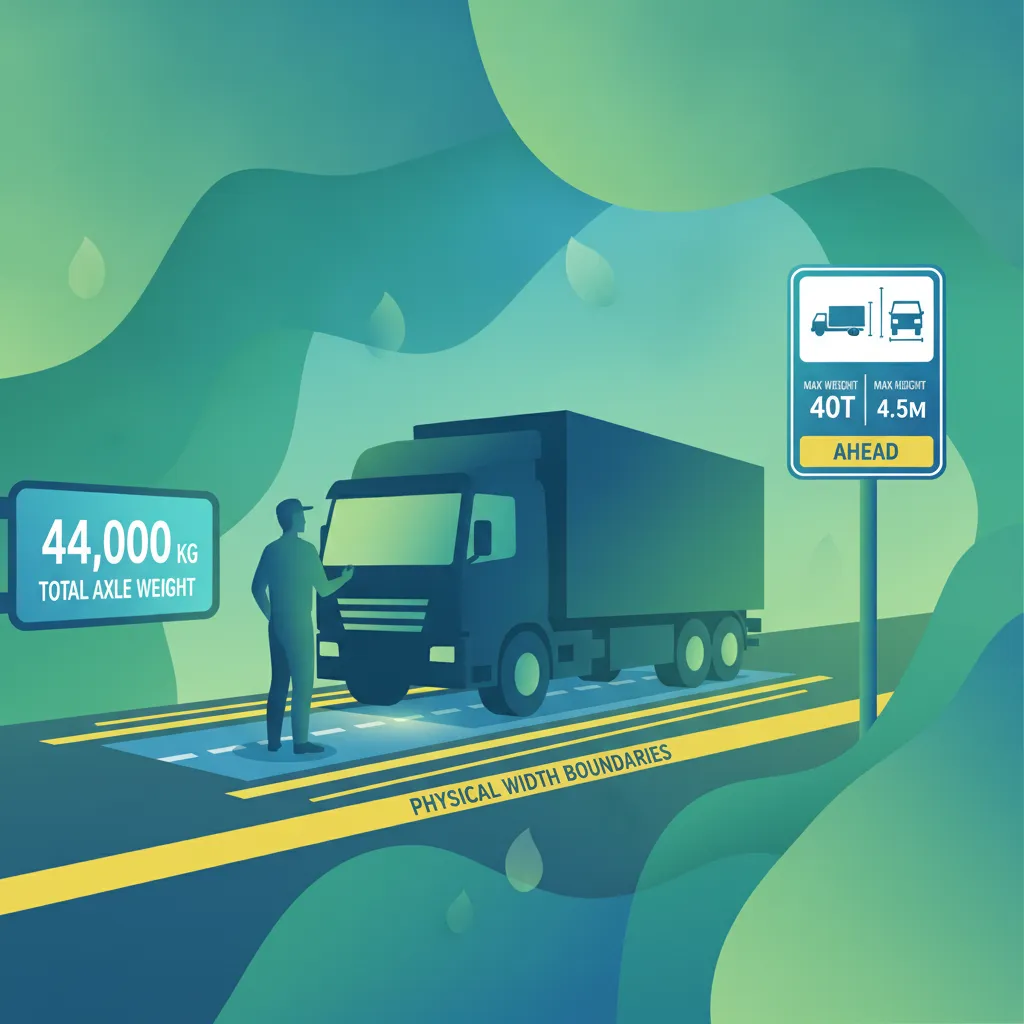
This lesson introduces the statutory limits governing the dimensions and mass of goods vehicles in Great Britain, including gross vehicle weight and individual axle loads. It explains how to calculate a vehicle's loaded weight to ensure it remains within legal parameters, preventing penalties and safety risks. Understanding these regulations is crucial for preventing damage to road infrastructure and ensuring the vehicle's stability and safe operation on every journey.

This lesson explains the critical concept of the centre of gravity (CG) and its direct impact on a vehicle's stability and rollover risk. It details how high or unstable loads raise the CG, making the vehicle more susceptible to tipping during cornering or sudden maneuvers. Learners will study techniques to assess and manage this risk, including adjusting speed and driving style, which is especially important for vehicles carrying liquid or hanging loads.

This lesson prepares drivers to recognize and react to a dangerous load shift while the vehicle is in motion. It covers the immediate corrective actions needed to maintain or regain control, and how to bring the vehicle to a safe stop. The procedures for assessing the situation, communicating the hazard to other road users, and correctly reporting the incident are also detailed to ensure safety and proper follow-up action is taken.
This lesson reinforces the vital safety rule of maintaining an adequate following distance from the vehicle ahead. It explains why the standard 'two-second rule' must be extended for heavy vehicles, especially in poor weather or when heavily laden, to account for longer stopping distances. You will learn practical methods for judging a safe gap in various traffic situations, creating a crucial safety buffer to react to unforeseen hazards.

This lesson provides detailed instruction on the geometry of loading bays and the precise techniques required for safe vehicle docking. Learners will understand how to align their vehicle correctly, manage clearance from structures, and interpret ground markings and signals. It emphasizes safety protocols for protecting personnel in the loading area and preventing damage to the vehicle, trailer, or docking equipment during these critical maneuvers.
This lesson teaches a structured approach to effective route planning, a critical skill for any professional driver. It covers the use of specialized HGV navigation software and traditional maps to account for vehicle dimensions, weight limits, low bridges, and delivery time constraints. The goal is to create routes that are not only the most efficient in terms of time and fuel but are also safe, legal, and responsive to potential disruptions like roadworks or traffic.
Find clear answers to common questions learners have about Pre‑Journey Inspection Checklist. Learn how the lesson is structured, which driving theory objectives it supports, and how it fits into the overall learning path of units and curriculum progression in Great Britain. These explanations help you understand key concepts, lesson flow, and exam focused study goals.
Professional drivers must conduct a thorough walk-around check before the first journey of the day and whenever a new vehicle or trailer is taken over. It is a legal responsibility to ensure the vehicle is safe for the road.
You must record the defect in the vehicle’s defect reporting system immediately. Depending on the severity, you may need to report it to your transport manager and ensure the vehicle is repaired before it is used.
Yes, cargo security is a critical part of the check. You must ensure that loads are properly distributed and secured according to the vehicle's capacity to prevent movement that could affect stability.
You must check the tyre pressure, tread depth, and general condition, ensuring there are no cuts, bulges, or embedded objects. For HGVs, checking the inner and outer tyre walls is vital for safety.
Dive into our comprehensive question bank to find exactly what you need for your Great Britain theory test. Use our advanced filters to pinpoint specific subjects or test your knowledge on challenging areas, ensuring you're fully prepared for success.