
Crossing the border from Germany requires an immediate shift in compliance, as local traffic laws apply as soon as you enter a new jurisdiction. This article outlines the specific legal obligations for drivers, including mandatory motorway toll stickers, strict speed limit enforcement, and the legal winter tire periods required in alpine regions. Mastery of these rules ensures you remain compliant with local legislation and avoid costly penalties during your journey.
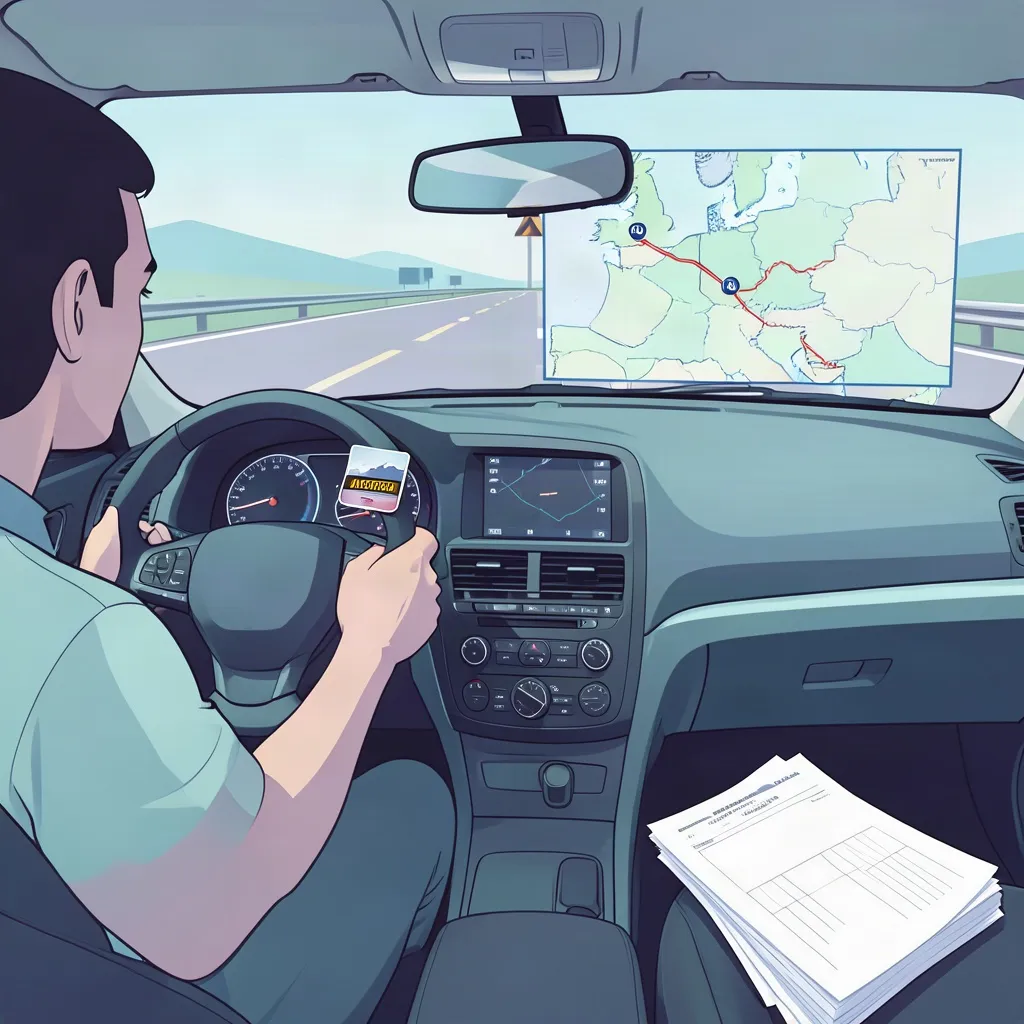
Article content overview
Crossing the border from Germany into Austria or Switzerland is a routine journey for many drivers, yet it represents a significant legal transition. While your German driving licence remains valid, you are immediately subject to the local traffic legislation of the host country the moment you cross the border. Ignorance of these local regulations is not considered a valid defense by authorities, and violations can result in heavy fines, immediate license suspension, or even criminal prosecution under local laws.
One of the most immediate differences you will encounter compared to the German Autobahn system is the requirement for a motorway toll, known as a Vignette. In Germany, motorway usage is generally free for passenger cars, but in both Austria and Switzerland, you must possess a valid toll sticker or digital registration before entering the motorway network.
In Austria, the Autobahnvignette is mandatory for all vehicles on motorways and expressways. You can purchase these as physical stickers or as an E-Vignette. Failure to display a valid sticker, or driving with one that is not properly affixed to the windshield, results in a significant "substitute toll" fine.
Switzerland has transitioned to a mandatory electronic vignette system (E-Vignette) for the use of motorways. This is tied to your vehicle’s registration plate. It is vital to ensure your digital registration is completed before you hit the road to avoid being stopped at the border or by motorway patrols.
Drivers used to the German Richtgeschwindigkeit (recommended speed of 130 km/h) often face challenges when adjusting to the rigid speed limits in neighboring countries. Speeding is enforced much more aggressively, and the thresholds for fines are significantly lower than what many German drivers might expect.
In Austria, the standard speed limit on motorways is 130 km/h, but you must be constantly vigilant for the "IG-L" (Immissionsschutzgesetz-Luft) speed limits. These are variable speed restrictions imposed to protect air quality, often reducing the legal limit to 100 km/h on specific sections of the Autobahn. Ignoring an IG-L sign is a frequent and costly mistake for drivers.
Switzerland enforces much stricter limits: 50 km/h in urban areas, 80 km/h on rural roads, 100 km/h on expressways, and a maximum of 120 km/h on motorways. The Swiss "Via Sicura" program is a critical legal framework that treats extreme speeding as a serious criminal offense. Under these rules, being caught driving significantly over the limit—a Raserdelikt—can lead to the immediate confiscation of your vehicle, hefty fines based on your personal income, and potential prison time.
Always pay attention to local signage regarding variable speed limits. In Austria, environmental speed limits (IG-L) take precedence over general motorway speeds, and they are strictly monitored by stationary and mobile radar installations.
While Germany operates under a "situative" winter tire requirement—meaning you must use tires appropriate for the weather conditions—Austria mandates a strict, date-based period. From November 1 to April 15, all passenger vehicles in Austria must be equipped with winter tires if road conditions (snow, slush, or ice) are present. Failing to adhere to this requirement during the mandatory period can lead to substantial fines, and in the event of an accident, it can lead to a total loss of insurance coverage.
| Feature | Germany | Austria | Switzerland |
|---|---|---|---|
| Motorway Toll | Free | Vignette required | E-Vignette required |
| Standard Limit | 130 (Recommended) | 130 km/h | 120 km/h |
| Winter Tires | Situative | Nov 1 – April 15 | Situative |
| Speed Enforcement | Moderate | Strict | Extremely Strict |
A Swiss legislative program aimed at increasing road safety by imposing severe criminal penalties, including vehicle seizure and imprisonment, for extreme speeding offenses known as Raserdelikte.
When driving from Germany to Austria or Switzerland, you must immediately comply with each country's traffic laws, which differ significantly from German practices. Austria requires a physical or digital Autobahnvignette and imposes IG-L environmental speed limits that can reduce motorway speeds to 100 km/h, while Switzerland uses only an E-Vignette system and enforces strict limits (120 km/h motorway, 50 km/h urban). Switzerland's Via Sicura program treats extreme speeding as a criminal offense with severe penalties including vehicle confiscation. Austrian winter tire requirements are date-bound (November 1–April 15), unlike Germany's situational approach, and violations can void insurance coverage.
A short set of high-value points that capture the most important ideas from this article.
Crossing a border immediately subjects you to the host country's traffic laws, not just German rules.
Both Austria and Switzerland require motorway tolls (Vignette/E-Vignette) unlike Germany's generally toll-free Autobahn.
Austrian IG-L environmental speed limits can reduce motorway speeds to 100 km/h and take precedence over standard limits.
Switzerland's Via Sicura law treats extreme speeding (Raserdelikt) as a criminal offense with vehicle confiscation and potential imprisonment.
Austria mandates winter tires from November 1 to April 15 when conditions require them, unlike Germany's situational approach.
Austria: physical sticker or E-Vignette required; improper display triggers substitute toll fines.
Switzerland: only E-Vignette tied to your license plate—no physical sticker option.
Switzerland's motorway limit is 120 km/h (vs Germany's recommended 130 km/h); urban is 50 km/h, rural 80 km/h.
Austria's IG-L speed limits are variable and strictly enforced by radar—watch for electronic signs.
Austrian winter tire failure during the mandatory period can void your insurance coverage after an accident.
Assuming German driving habits apply abroad, particularly regarding recommended speeds and free motorway use.
Missing IG-L variable speed limit signs in Austria and assuming the standard 130 km/h applies.
Underestimating how much lower Swiss speed limits are compared to German recommendations.
Driving in Austria during November–April without winter tires, even on dry days, if snow conditions exist.
Failing to register the Swiss E-Vignette before departure, assuming it can be purchased at the border.
Article content overview
A short set of high-value points that capture the most important ideas from this article.
Crossing a border immediately subjects you to the host country's traffic laws, not just German rules.
Both Austria and Switzerland require motorway tolls (Vignette/E-Vignette) unlike Germany's generally toll-free Autobahn.
Austrian IG-L environmental speed limits can reduce motorway speeds to 100 km/h and take precedence over standard limits.
Switzerland's Via Sicura law treats extreme speeding (Raserdelikt) as a criminal offense with vehicle confiscation and potential imprisonment.
Austria mandates winter tires from November 1 to April 15 when conditions require them, unlike Germany's situational approach.
Austria: physical sticker or E-Vignette required; improper display triggers substitute toll fines.
Switzerland: only E-Vignette tied to your license plate—no physical sticker option.
Switzerland's motorway limit is 120 km/h (vs Germany's recommended 130 km/h); urban is 50 km/h, rural 80 km/h.
Austria's IG-L speed limits are variable and strictly enforced by radar—watch for electronic signs.
Austrian winter tire failure during the mandatory period can void your insurance coverage after an accident.
Assuming German driving habits apply abroad, particularly regarding recommended speeds and free motorway use.
Missing IG-L variable speed limit signs in Austria and assuming the standard 130 km/h applies.
Underestimating how much lower Swiss speed limits are compared to German recommendations.
Driving in Austria during November–April without winter tires, even on dry days, if snow conditions exist.
Failing to register the Swiss E-Vignette before departure, assuming it can be purchased at the border.
Explore related topics, search based questions, and concepts that learners often look up when studying Driving Rules: Austria and Switzerland. These themes reflect real search intent and help you understand how this topic connects to wider driving theory knowledge in Germany.
Find clear and practical answers to common questions learners often have about Driving Rules: Austria and Switzerland. This section helps explain difficult points, remove confusion, and reinforce the key driving theory concepts that matter for learners in Germany.
No, Switzerland now uses the digital E-Vignette, which is linked to your vehicle's license plate, though physical stickers remain valid until they expire.
In Austria, a 'situational' winter tire requirement exists, but it is legally mandated from November 1st to April 15th if road conditions involve snow, slush, or ice.
Switzerland enforces very strict speed limits. Significant violations are prosecuted under the 'Via Sicura' initiative, which can lead to severe criminal penalties, including high fines and vehicle confiscation.
The IG-L (Immissionsschutzgesetz-Luft) is an environmental law in Austria that allows for temporary or permanent speed reductions on motorways to lower exhaust emissions, which you must strictly follow.
Didn't find what you were looking for? Continue your German driving theory preparation by exploring related articles, specific road sign categories, or in-depth guides on complex traffic situations. Deepen your understanding before the official test.