
Crossing the border from Germany changes more than just the scenery; it places you under different legal obligations and traffic enforcement systems. This article clarifies the must-know regulations, such as France’s radar detector restrictions, the Netherlands' strict automated speed enforcement, and Poland’s specific motorway speed limits, to help you navigate safely and avoid common legal pitfalls.
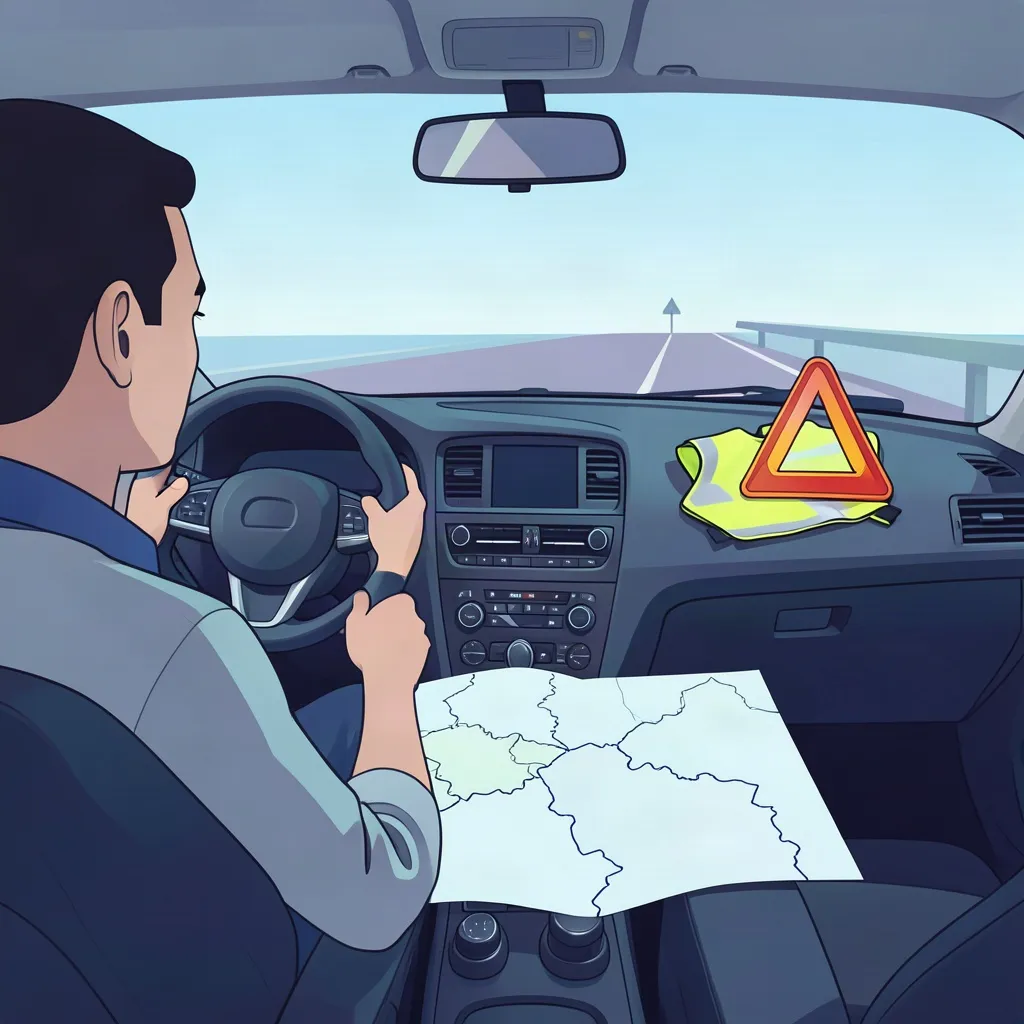
Article content overview
Crossing the border from Germany into a neighboring country is a common experience for many drivers, yet it involves shifting from the familiar German StVO (Road Traffic Act) into different legal frameworks. While the European Union promotes harmonized standards, specific national variations remain in place regarding speed limits, mandatory vehicle equipment, and enforcement protocols. Failing to adapt your driving habits immediately upon crossing the border can lead to substantial fines, as local authorities are often unforgiving toward foreign drivers who assume that German norms apply everywhere.
One of the most frequent sources of trouble for German drivers abroad is the assumption that speed limits are similar to those in Germany. While Germany is famous for its stretches of Autobahn with no general speed limit—where the Richtgeschwindigkeit of 130 km/h is merely a recommendation—neighboring countries enforce strictly mandated caps that carry significant legal consequences.
In the Netherlands, you will encounter some of the strictest speed enforcement in Europe. Motorways are generally limited to 100 km/h during the day, with only specific nighttime windows allowing for higher speeds. The Dutch system uses pervasive automated speed cameras, and fines for even minor infractions are notoriously expensive. Conversely, Poland presents a different challenge: motorways allow for speeds up to 140 km/h, which is faster than the German recommended speed. It is crucial to distinguish between autostrada (motorways) and droga ekspresowa (express roads), as the latter typically has a limit of 120 km/h. Always pay close attention to local speed limit signs rather than relying on the general rules you are accustomed to in Germany.
In France, rural roads were reduced to a limit of 80 km/h. Do not assume you can travel at the standard 100 km/h often seen on similar roads in other parts of Europe. Radar detector apps, or even the functionality within navigation systems that alerts you to speed cameras, are illegal in France and can result in the confiscation of your device and heavy fines.
Beyond speed limits, you must ensure that your vehicle carries the mandatory equipment required by the country of travel. For instance, while it is no longer common practice to verify, French law technically requires all vehicles to carry a breathalyzer. Failure to have one may lead to an inspection-related fine. Furthermore, documentation requirements can vary. If you are driving a rental car, ensure you have explicit written authorization from the rental agency to cross international borders, as standard insurance coverage often excludes certain countries or requires an additional "Green Card" (International Motor Insurance Card).
To help you prepare, the following table summarizes the primary differences between Germany and its neighbors. Keeping these figures in mind can prevent common errors during your transition across the border.
| Country | Motorway Limit | Rural Road Limit | Key Regulatory Focus |
|---|---|---|---|
| Germany | 130 (Rec.) | 100 km/h | StVO priority rules |
| France | 130 km/h | 80 km/h | No radar detectors allowed |
| Netherlands | 100 km/h | 80 km/h | Strict automated enforcement |
| Poland | 140 km/h | 90 km/h | Specific express road signs |
A recommended speed of 130 km/h on German motorways. Unlike the mandatory limits in France, the Netherlands, or Poland, exceeding this speed is not illegal, provided the driver maintains control and weather conditions are optimal.
When you are a guest on foreign roads, your defensive driving skills must be at their peak. Being unfamiliar with local exit ramp designs or priority rules at urban intersections requires extra vigilance. Remember that in many countries, traffic enforcement is not restricted to police patrols; it is heavily reliant on fixed, high-precision camera infrastructure. The best strategy is to adhere strictly to the signposted speed limits, even if local traffic appears to be moving faster.
Driving from Germany into France, the Netherlands, or Poland requires immediate adaptation to each country's specific speed limits and enforcement systems, as European Union harmonization has not eliminated national variations. Key differences include Poland's higher 140 km/h motorway limit versus the Netherlands' strict 100 km/h daytime cap, France's 80 km/h rural road limit and prohibition on radar detector functions, and the Netherlands' pervasive automated speed camera enforcement. Beyond speed rules, drivers must carry mandatory equipment such as breathalyzers in France and ensure proper documentation including Green Card insurance or written rental authorization for cross-border travel. The safest approach when crossing borders is to strictly follow all signposted limits and disable any speed camera warning features before entering countries where they are prohibited.
A short set of high-value points that capture the most important ideas from this article.
Speed limits change immediately upon crossing the border, so you must adapt your driving to the signposted limits of each country
France strictly prohibits radar detectors and speed camera warning functions in navigation apps, with severe penalties including device confiscation
Poland distinguishes between autostrada (up to 140 km/h) and droga ekspresowa express roads (typically 120 km/h)
The Netherlands enforces some of Europe's strictest speed limits with pervasive automated cameras, making day-time motorway limits of 100 km/h critical to observe
Mandatory vehicle equipment and documentation requirements vary by country, so always verify requirements before departure
France: 130 km/h motorways, 80 km/h rural roads (not 100 km/h), no radar detector or speed camera warning apps allowed
Netherlands: 100 km/h daytime motorway limit, strict automated enforcement, expensive fines for minor infractions
Poland: 140 km/h on autostrada motorways, 120 km/h on droga ekspresowa express roads, 90 km/h rural roads
Carry a breathalyzer in France (technically required) and ensure you have a Green Card or rental cross-border authorization
Richtgeschwindigkeit (130 km/h recommended) applies only in Germany and is not a legal limit like in neighboring countries
Assuming German rural road speeds (100 km/h) apply in France where the limit is 80 km/h
Relying on GPS speed camera warnings that are illegal in France without disabling the function
Confusing Poland's different speed limits for motorways (140 km/h) versus express roads (120 km/h)
Failing to verify rental car cross-border permissions, as standard insurance may not cover certain countries
Believing the German recommended 130 km/h Autobahn speed is a universal European standard that applies abroad
Article content overview
A short set of high-value points that capture the most important ideas from this article.
Speed limits change immediately upon crossing the border, so you must adapt your driving to the signposted limits of each country
France strictly prohibits radar detectors and speed camera warning functions in navigation apps, with severe penalties including device confiscation
Poland distinguishes between autostrada (up to 140 km/h) and droga ekspresowa express roads (typically 120 km/h)
The Netherlands enforces some of Europe's strictest speed limits with pervasive automated cameras, making day-time motorway limits of 100 km/h critical to observe
Mandatory vehicle equipment and documentation requirements vary by country, so always verify requirements before departure
France: 130 km/h motorways, 80 km/h rural roads (not 100 km/h), no radar detector or speed camera warning apps allowed
Netherlands: 100 km/h daytime motorway limit, strict automated enforcement, expensive fines for minor infractions
Poland: 140 km/h on autostrada motorways, 120 km/h on droga ekspresowa express roads, 90 km/h rural roads
Carry a breathalyzer in France (technically required) and ensure you have a Green Card or rental cross-border authorization
Richtgeschwindigkeit (130 km/h recommended) applies only in Germany and is not a legal limit like in neighboring countries
Assuming German rural road speeds (100 km/h) apply in France where the limit is 80 km/h
Relying on GPS speed camera warnings that are illegal in France without disabling the function
Confusing Poland's different speed limits for motorways (140 km/h) versus express roads (120 km/h)
Failing to verify rental car cross-border permissions, as standard insurance may not cover certain countries
Believing the German recommended 130 km/h Autobahn speed is a universal European standard that applies abroad
Explore related topics, search based questions, and concepts that learners often look up when studying Driving Rules for France, Netherlands, and Poland. These themes reflect real search intent and help you understand how this topic connects to wider driving theory knowledge in Germany.
Find clear and practical answers to common questions learners often have about Driving Rules for France, Netherlands, and Poland. This section helps explain difficult points, remove confusion, and reinforce the key driving theory concepts that matter for learners in Germany.
No, both radar detectors and apps that alert you to speed camera locations are strictly prohibited in France and can result in heavy fines and vehicle confiscation.
The Netherlands utilizes highly aggressive, automated speed enforcement and imposes some of the strictest and most expensive speeding fines in Europe, making it essential to strictly observe all posted limits.
The maximum speed limit for cars on motorways in Poland is 140 km/h, which is faster than the German recommended speed of 130 km/h.
While enforcement is rare, French law officially requires drivers to carry a breathalyzer in their vehicle, along with other standard safety equipment like high-visibility vests and a warning triangle.
Didn't find what you were looking for? Continue your German driving theory preparation by exploring related articles, specific road sign categories, or in-depth guides on complex traffic situations. Deepen your understanding before the official test.