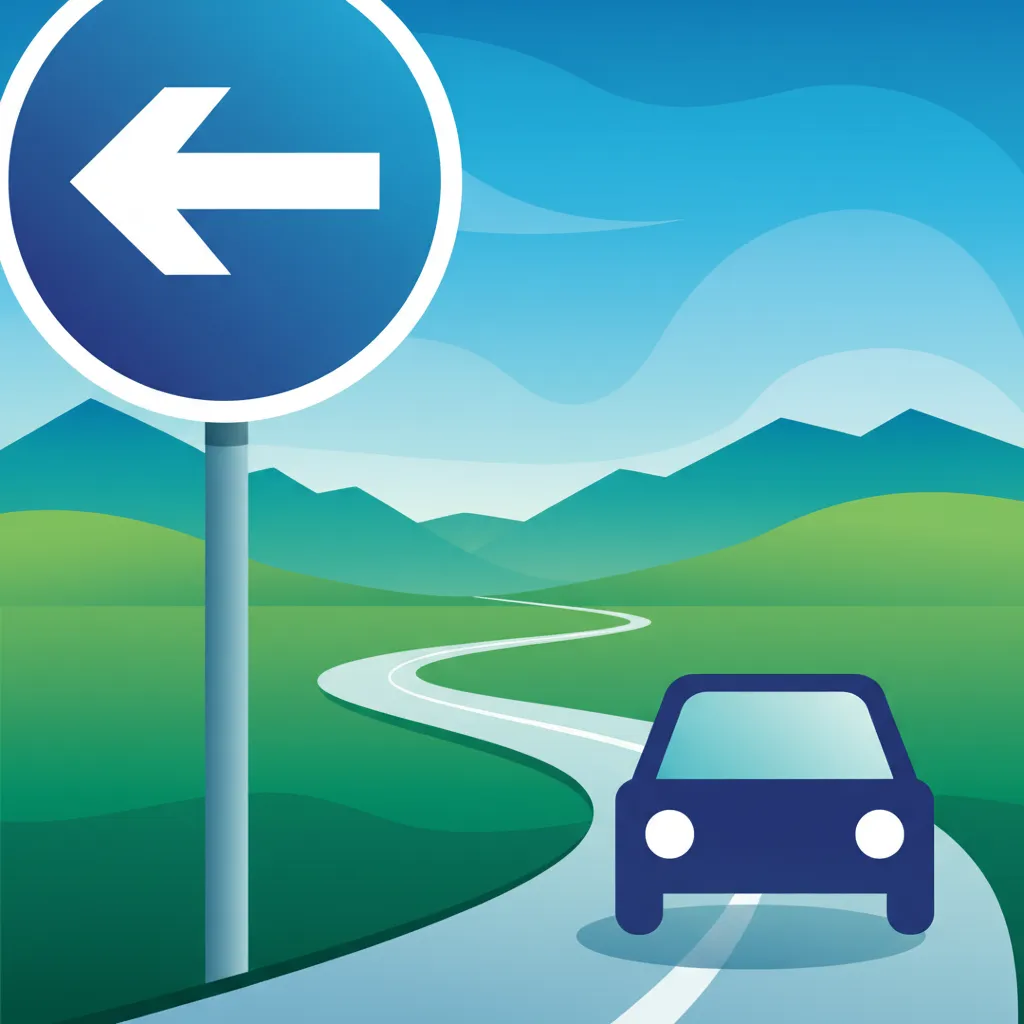
Mandatory signs are a fundamental category of road signs in Iceland, designed to instruct drivers on specific actions they must take. Unlike advisory or prohibitory signs, these signs convey direct commands, such as turning in a certain direction or using a designated lane. Recognizing and complying with these signs is crucial for maintaining orderly traffic and ensuring safety for all road users.
Theory topic content overview
Read the full theory topic guide for Mandatory Signs with structured, easy-to-scan content built for learners in Iceland. This detailed section explains the exact rule, meaning, traffic context, comparison points, and exam logic behind this Icelandic driving theory topic so you can study faster, understand the concept more clearly, and avoid common interpretation mistakes on the theory test.
Mandatory traffic signs are a vital category of road signs that issue direct, non-negotiable commands to drivers. In Iceland, as in many European countries, these signs are instantly recognisable by their circular shape with a blue background and a white symbol or arrow. They unequivocally tell drivers what they must do, ensuring specific actions are taken to maintain order and safety on the roads.
Unlike warning signs (red triangles) that alert you to potential dangers, or prohibitory signs (red circles with a diagonal line) that forbid certain actions, mandatory signs provide positive instructions. They are official directives from the Icelandic Transport Authority (Samgöngustofa), designed to guide traffic flow and prevent dangerous situations by making driver behaviour predictable.
Mastering the meaning of mandatory traffic signs is paramount for safe driving and passing your Icelandic driving theory exam. Here's why:
When you encounter a mandatory sign, it dictates your immediate or upcoming course of action. Their instructions are clear and universally understood, transcending language barriers through symbols.
For example:
These signs are strategically placed to manage traffic, often appearing before intersections, roundabouts, entry points to specific lanes, or areas requiring specific vehicle movements. As a driver in Iceland, you are expected to observe and react to these signs well in advance, planning your actions accordingly.
While the command from a mandatory sign is absolute, the context of the road environment always plays a role in how you comply safely:
A common point of confusion for learners is distinguishing mandatory signs from other sign types. Understanding these differences is crucial for the Icelandic driving theory test:
Mandatory Signs (Blue Circle): You MUST do this.
Prohibitory Signs (Red Circle with Diagonal Line): You MUST NOT do this.
Warning Signs (Red Triangle): Be AWARE of this danger.
Information Signs (Blue Square/Rectangle): This is useful information.
The key is the shape and colour: blue circles command, red circles forbid, red triangles warn, and blue squares inform. This framework is essential for quick identification on Icelandic roads.
Let's look at how mandatory signs guide you in typical Icelandic driving situations:
Learners often make these errors regarding mandatory signs:
Mandatory traffic signs are the backbone of orderly traffic management on Icelandic roads. Their blue circular design and white symbols are a clear, visual command: "You MUST do this."
Always remember that these signs are designed for your safety and the safety of others. Scanning ahead for them, understanding their precise instruction, and complying promptly and safely are fundamental skills for every driver in Iceland. Make it a habit to look for these crucial blue circles, especially when approaching junctions, roundabouts, or areas with specific lane regulations, to ensure you are always following the rules set by Samgöngustofa.
Mandatory traffic signs in Iceland are blue circular signs with white symbols that issue absolute, non-negotiable commands instructing drivers what they must do. They guide traffic flow at intersections, roundabouts, and dedicated lanes to maintain safety and order, functioning alongside road markings to reinforce the required action. The key distinction is their positive instruction versus prohibitory signs (red circles with diagonal) that forbid actions. For exam success, learners must read each arrow precisely, understand that 'turn left only' differs from 'go straight or turn left', and recognise that these signs are legal requirements from Samgöngustofa that cannot be overridden by any assumption about traffic volume.
A short set of high-value points that capture the most important ideas from this theory explanation.
Mandatory signs are blue circular signs with white symbols that command specific driver actions and are legal requirements under Icelandic law.
These signs guide traffic flow at critical points such as intersections, roundabouts, and dedicated lanes to prevent dangerous conflicts.
Mandatory signs often work in conjunction with road markings on the tarmac to reinforce the required action.
Traffic lights or police officer directions always override mandatory signs when present.
The directional arrow on a mandatory sign determines the exact action required—specificity matters for both safety and exam success.
Blue circle with white symbol = 'You MUST do this'; Red circle with diagonal line = 'You MUST NOT do this'; Red triangle = warning.
Individual arrows on signs indicate precise actions: turn left only, turn right only, go straight only, or combined directions—each is different.
Ignoring a mandatory sign in Iceland is a traffic offence, regardless of how light the traffic may be.
Specific vehicle signs (bus lane, cycle lane) mean drivers of other vehicles must not enter those lanes.
Poor weather visibility does not negate the command—drivers must observe signs early and plan accordingly.
Confusing mandatory signs with prohibitory signs, for example interpreting 'turn left only' as 'no right turn' or 'no U-turn'.
Glancing at the sign but missing the specificity of the arrow, for example not distinguishing 'go straight or turn right' from 'go straight only'.
Spotting the mandatory sign too late, which leads to sudden unsafe lane changes or missed required turns.
Assuming that light traffic means the mandatory instruction can be safely ignored—these are legal commands.
Failing to anticipate the required manoeuvre in advance, resulting in hesitation or incorrect lane positioning.
Start with a short, direct summary of Mandatory Signs before reading the full explanation below.
Mandatory traffic signs are regulatory signs that command drivers to follow a specific action, direction, or path. In Iceland, they are typically circular with a blue background and a white symbol or arrow, indicating what drivers 'must do'. These signs are essential for guiding traffic flow, preventing confusion, and enhancing safety in areas like intersections, roundabouts, and dedicated lanes.
Review the most important terms, rule signals, and traffic concepts linked to Mandatory Signs.
Explore related theory topic pages connected to Mandatory Signs and continue with the next useful rule explanation.
See the common search queries learners use when trying to understand Mandatory Signs in Iceland.

Ready to master Icelandic driving theory? Explore our comprehensive sections. Review road rules, traffic signs, and critical concepts. Build essential knowledge for confident and safe driving in Iceland. Start studying today.
Explore Icelandic Driving TheoryTheory topic content overview
A short set of high-value points that capture the most important ideas from this theory explanation.
Mandatory signs are blue circular signs with white symbols that command specific driver actions and are legal requirements under Icelandic law.
These signs guide traffic flow at critical points such as intersections, roundabouts, and dedicated lanes to prevent dangerous conflicts.
Mandatory signs often work in conjunction with road markings on the tarmac to reinforce the required action.
Traffic lights or police officer directions always override mandatory signs when present.
The directional arrow on a mandatory sign determines the exact action required—specificity matters for both safety and exam success.
Blue circle with white symbol = 'You MUST do this'; Red circle with diagonal line = 'You MUST NOT do this'; Red triangle = warning.
Individual arrows on signs indicate precise actions: turn left only, turn right only, go straight only, or combined directions—each is different.
Ignoring a mandatory sign in Iceland is a traffic offence, regardless of how light the traffic may be.
Specific vehicle signs (bus lane, cycle lane) mean drivers of other vehicles must not enter those lanes.
Poor weather visibility does not negate the command—drivers must observe signs early and plan accordingly.
Confusing mandatory signs with prohibitory signs, for example interpreting 'turn left only' as 'no right turn' or 'no U-turn'.
Glancing at the sign but missing the specificity of the arrow, for example not distinguishing 'go straight or turn right' from 'go straight only'.
Spotting the mandatory sign too late, which leads to sudden unsafe lane changes or missed required turns.
Assuming that light traffic means the mandatory instruction can be safely ignored—these are legal commands.
Failing to anticipate the required manoeuvre in advance, resulting in hesitation or incorrect lane positioning.
Start with a short, direct summary of Mandatory Signs before reading the full explanation below.
Mandatory traffic signs are regulatory signs that command drivers to follow a specific action, direction, or path. In Iceland, they are typically circular with a blue background and a white symbol or arrow, indicating what drivers 'must do'. These signs are essential for guiding traffic flow, preventing confusion, and enhancing safety in areas like intersections, roundabouts, and dedicated lanes.
Review the most important terms, rule signals, and traffic concepts linked to Mandatory Signs.
Explore related theory topic pages connected to Mandatory Signs and continue with the next useful rule explanation.
See the common search queries learners use when trying to understand Mandatory Signs in Iceland.
Ready to master Icelandic driving theory? Explore our comprehensive sections. Review road rules, traffic signs, and critical concepts. Build essential knowledge for confident and safe driving in Iceland. Start studying today.
Explore Icelandic Driving TheoryUse this exam-focused revision tip to understand how Mandatory Signs is likely to appear in theory questions for learners in Iceland. This section helps you identify the most testable part of the rule, avoid common traps, and remember the concept more effectively during Icelandic driving theory exam preparation.
In the Icelandic driving theory exam, pay close attention to the exact symbol on mandatory signs. They often test specific actions like 'turn left only' versus 'go straight or turn left'. Remember their blue circular shape means 'you MUST do this', which is crucial for distinguishing them from other sign types.
Read direct answers to the most common learner questions about Mandatory Signs in Iceland. This FAQ focuses on rule confusion, practical meaning, comparison with similar concepts, and the exact uncertainties that appear most often in Icelandic driving theory revision and exam preparation.
The main purpose of mandatory traffic signs is to give clear, explicit instructions to drivers about specific actions they are required to take, such as following a direction or using a particular lane, to ensure orderly traffic flow and prevent accidents.
In Iceland, mandatory signs are generally recognizable by their circular shape, blue background, and white symbol or arrow. This design helps differentiate them from warning (triangular) or prohibitory (red circle with diagonal line) signs.
Mandatory signs tell you what you 'must do' (e.g., 'turn right ahead'), while prohibition signs tell you what you 'must not do' (e.g., 'no entry' or 'no overtaking'). Both are regulatory, but their directives are opposite.
Mandatory signs are frequently found at intersections, roundabouts, the start of one-way streets, near lane divisions, and wherever traffic flow needs precise guidance, ensuring vehicles move in a specific, intended manner.
Ignoring a mandatory traffic sign can lead to dangerous situations, such as collisions with other vehicles, incorrect lane usage, or entering restricted areas. In Iceland, it can also result in fines or penalties as it constitutes a violation of traffic regulations.
Unless a mandatory sign explicitly specifies a particular vehicle type (e.g., 'buses only' or 'cyclists only'), it generally applies to all drivers operating vehicles on that part of the road in Iceland. Always pay attention to any supplementary panels.
Yes, some mandatory signs can indicate a minimum speed that vehicles are required to maintain, typically found on motorways or specific lanes. These are distinct from maximum speed limit signs, which are often circular with a red border.
Utilize our advanced practice set search to pinpoint the exact Icelandic driving theory topics you need to review. Filter by subject, difficulty, or question type to create a highly effective study plan and ensure you are fully prepared for your official driving licence test in Iceland.